Tag: Channel 4

All the latest breaking news on the UK broadcaster, Channel 4. Browse The THEGAYUK’s complete collection of features and commentary on Channel 4 and the LGBT+ community.

  • Do sexual health clinics use Penis Swabs, as they show on E4’s The Sex Clinic?

    Do sexual health clinics use Penis Swabs, as they show on E4’s The Sex Clinic?

    Channel 4 might be doing STI clinics a disservice when it comes to patient fears about what might happen to them when they go in for a sexual health checkup on their show, The Sex Clinic.

    Although The Sex Clinic is widely praised for the work that it does in educating us all about the importance of testing for sexually transmitted infections, there’s one thing that it shows, that isn’t quite right.

    The sexual health charity, Saving Lives took to Twitter to calm the fears of any guys out there worrying that a penis swab (that’s where they stick a swab down your pee hole) will be taken for testing and it turns out that the swabs that happen on the programme are actually done to fit in with the TV format, rather than refecting what actually happens.

    They wrote,

    We know we say this every week but: The penis swabs used on #TheSexClinic are NOT standard practice for routine STI screening in UK sexual health clinics. Usually, we just ask for a urine sample. The swabs are used on the show to give rapid results to fit the TV show format.

    So there you go, don’t fret. Go for a check-up. If you’re there for a regular and routine check-up it’s very unlikely you’ll have to even show the doctor or nurse your dick.

    Phew… right?

  • Olly Alexander to lead the cast of Russell T Davies’ next TV drama

    Olly Alexander to lead the cast of Russell T Davies’ next TV drama

    The Years and Years singer is set to join a host of other stars for Russell T. Davies’ next TV drama.

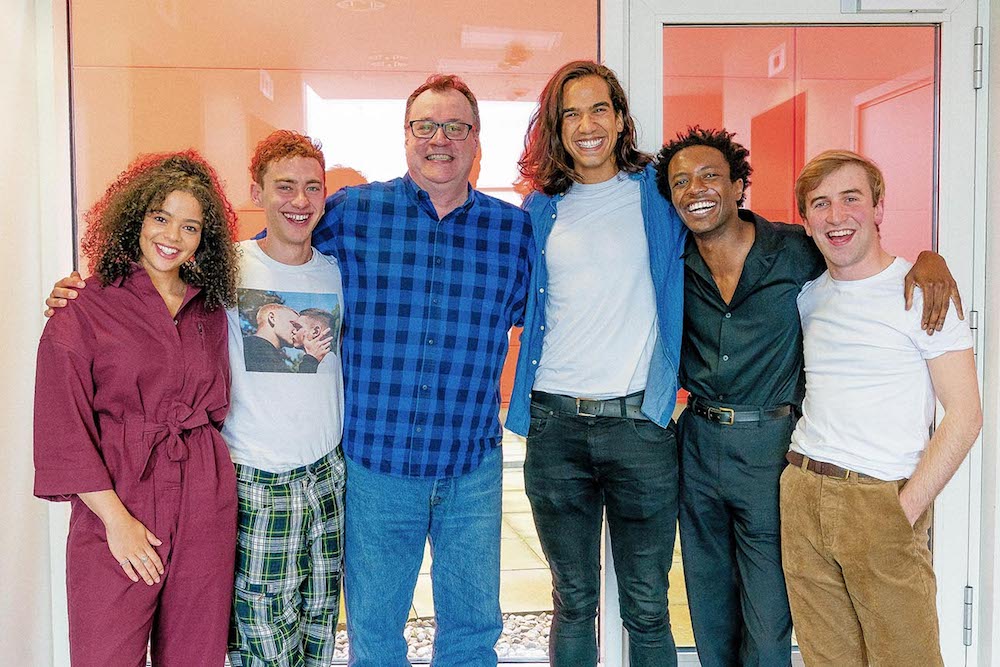
    Olly will be joining Keeley Hawes, Stephen Fry, Neil Patrick Harris, Tracy Ann Oberman, Shaun Dooley, Omari Douglas, Callum Scott Howells and Lydia West for a 5-part series charting the joy and heartbreak of four friends during a decade in which everything changed

    Casting has been announced on multi-BAFTA Award-winning writer Russell T Davies’ (Queer As Folk, A Very English Scandal, Years and Years, Doctor Who) brand new 5-part drama for Channel 4, Boys (working title) which will be produced by RED Production Company (a STUDIOCANAL company).

    It’s 1981, the start of a new decade and Ritchie, Roscoe and Colin begin a new life in London. Strangers at first, these young gay lads, and their best friend Jill, find themselves thrown together, and soon share each other’s adventures. But a new virus is on the rise, and soon their lives will be tested in ways they never imagined. As the decade passes, and they grow up in the shadow of AIDS, they’re determined to live and love more fiercely than ever.

    Embed from Getty Images

    Olly Alexander, from the band Years & Years, plays 18-year-old Ritchie Tozer, the family’s golden boy, though he’s determined to keep his secrets from them.

    Newcomer Omari Douglas plays London-born 17-year-old Roscoe Babatunde, a wild, brittle party boy, always on the run.

    Newcomer Callum Scott Howells plays Colin Morris-Jones, a quiet, unassuming, boy from Wales, about to become an apprentice on Savile Row.

    Lydia West (Years and Years) plays Jill Baxter, Ritchie’s friend from college, straight-talking, funny, and the rock on which they rely.

    Nathaniel Curtis plays Ash, a faithful friend through thick and thin.

    The cast also includes Keeley Hawes (Honour, Bodyguard, The Durrells, Line of Duty), who plays Valerie, Ritchie’s mum, Shaun Dooley (Gentleman Jack, Broadchurch, Woman in Black) who plays Clive, his dad, Neil Patrick Harris (How I Met Your Mother, Gone Girl, A Series of Unfortunate Events) as Henry Coltrane, Stephen Fry (Wilde, Gosford Park, Bones) as MP Arthur Garrison, and Tracy Ann Oberman (Friday Night Dinner, Toast of London, After Life) as Carol Carter.

    Olly Alexander says, “I feel like the luckiest boy in the world to be a part of this project, I’ve been a fan of Russell T Davies ever since I watched Queer As Folk in secret at 14 years old. His work helped shape my identity as a gay person so I’m absolutely over the moon we’ll be working together. The script was amazing to read, I laughed and I cried a lot, it’s a privilege to be helping to tell this story and I’m so excited.”

    Embed from Getty Images

    Neil Patrick Harris says: “I’m so pleased, and incredibly proud, to be a part of Russell T Davies’ new series. This drama, Boys, is two things: it is an irresistible, funny, jubilant story of young people discovering their true identities and the unalloyed joy of living life to the fullest, it is also a deeply resonant exploration of a decade when so many of these lives were cut short by the devastating effects of the nascent AIDS pandemic. Russell’s scripts chart the highs and lows of this time so beautifully and deftly, it’s an honour to help tell this story.”

    Filming begins next week and the series will air on Channel 4 in 2020. The series is overseen at Channel 4 by Lee Mason, Commissioning Editor and Caroline Hollick, Head of Drama. The series will be produced by RED Production Company (a STUDIOCANAL company) and executive produced by Nicola Shindler (Years and Years, Safe, Happy Valley, Queer As Folk, Cucumber) and Russell T Davies (Years and Years, Queer As Folk, A Very English Scandal, Doctor Who, Cucumber). Phil Collinson (Gentleman Jack, Good Omens, Doctor Who) is the producer. The series is directed by Peter Hoar (Umbrella Academy, The Last Kingdom, Da Vinci’s Demons).

    Boys is the 10th collaboration between Russell T Davies and RED Production Company. The partnership is known for producing relevant, timely and emotionally charged dramas having previously created hit series including Queer As Folk, Casanova, Cucumber, Banana, Bob & Rose and The Second Coming.

    All3media International are global partner.

  • MP Kate Hoey blasted over “supporting the suppression of journalism”

    MP Kate Hoey blasted over “supporting the suppression of journalism”

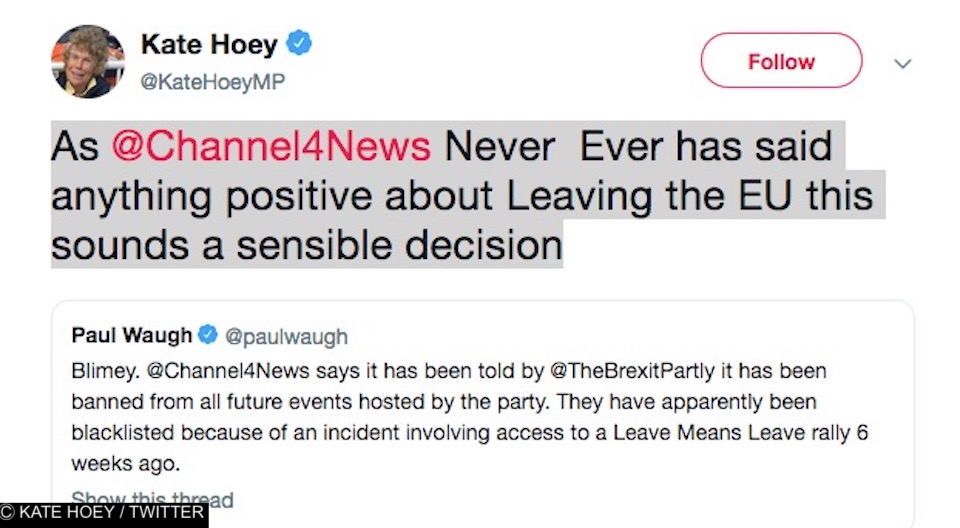
    The MP for Vauxhall, Kate Hoey has come under fire for a tweet in which she suggests that an alleged ban on Channel 4 news at political events is a “sensible decision”.

    Kate Hoey, the MP for Vauxhall and ardent Brexiteer, despite the majority (over 77 per cent) of her constituency voting remain in the 2016 EU Referendum, has been blasted for a tweet in which she appears to suggest that banning a mainstream broadcaster from attending a political rally was a “sensible idea”.

    In a reply to a claim that Channel 4 News had been banned from future Brexit Party events, the MP wrote, “As Never Ever has said anything positive about Leaving the EU this sounds a sensible decision”

    The tweet comes off the back off a tweet from Paul Waugh, HuffPost’s executive editor of politics, in which he reveals that he’s heard that the Brexit Party has banned Channel 4 from attending all future events hosted by the party, who counts Ann Widdecombe as one of its star players.

    Embed from Getty Images

    The journalist Patrick Strudwick was quick to comment on the tweet saying, “A member of parliament supporting the suppression of journalism – essential for democracy. This is astonishing.”

    Others were quick to suggest that Hoey was in the wrong, with one adding, “An MP supporting the suppression of journalism? You really should be ashamed of yourself” while another commented, “Censorship is, of course, one of the key weapons of the hard right with which Ms Hoey seems to be more and.more a fellow traveller. How is she still pretending to be a Labour MP?”


  • LEAVING NEVERLAND: Filmmaker Dan Reed talks about bringing the stories of the abused to life

    LEAVING NEVERLAND: Filmmaker Dan Reed talks about bringing the stories of the abused to life

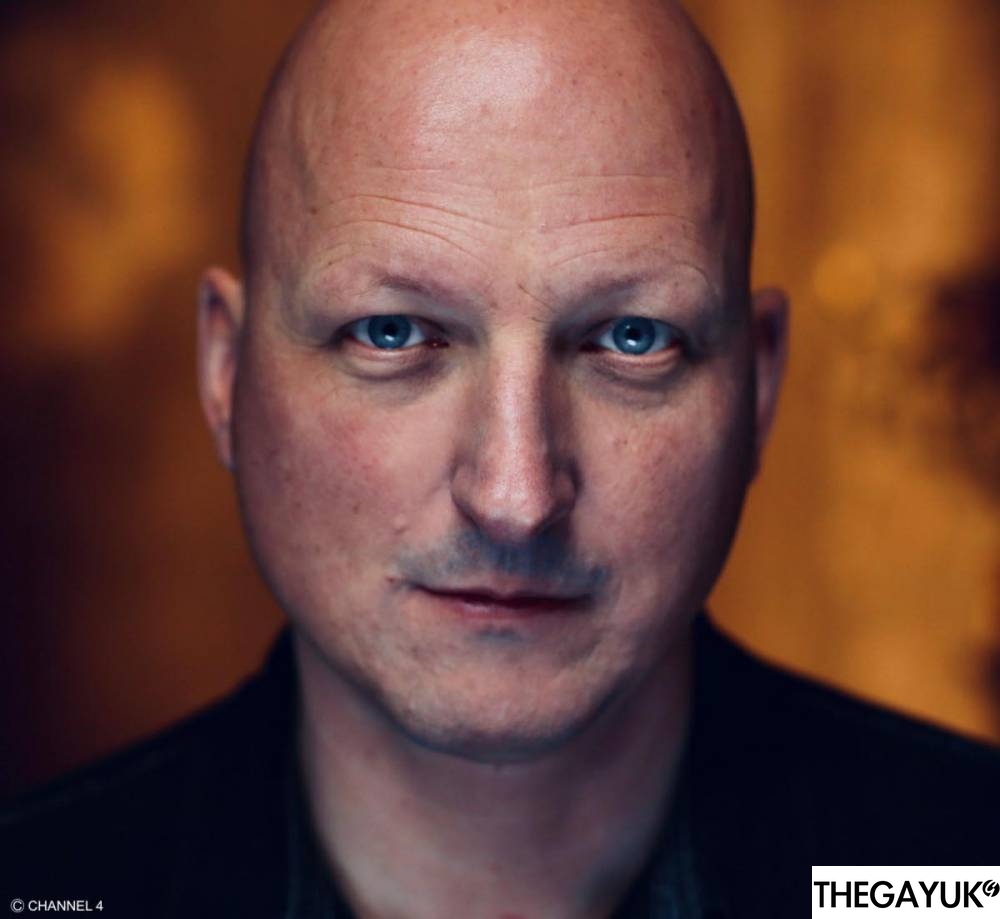
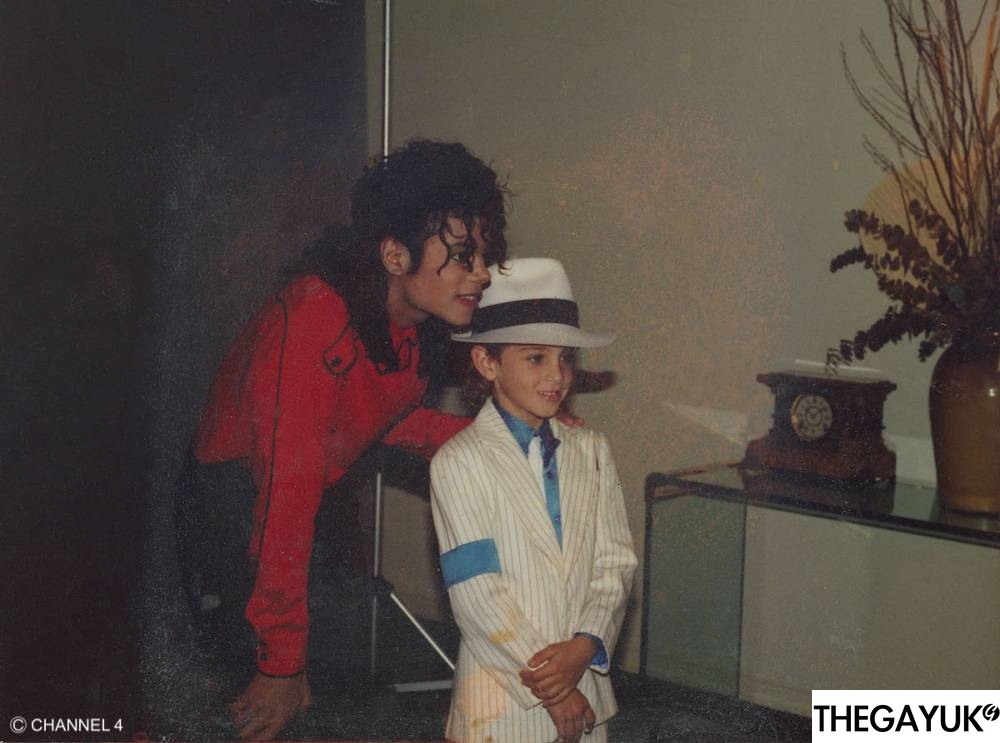
    Filmmaker Dan Reed talks about his filmmaking and about how he captured the stories of Wade Robson and James Safechuck and their life with Michael Jackson.

    Q: You are no stranger to controversial subjects in your documentaries, as you have made films about child predators, terrorists, and international politics. How did you approach the subject matter of this film, which takes place in the world of pop culture and celebrity?

    A: Well, the first point is, that this is not a film about Michael Jackson. It’s about two very ordinary families whose paths crossed with Jackson’s, and the incredible aspirations that he represented. The families fell in love with those good things, not understanding the long-lasting impact this relationship would have on their children and families.

    In my storytelling, I don’t choose to criticize Jackson directly or comment on his actions, motives, or reasons why. I’ve left it quite neutral, deliberately. But make no mistake, the story is one of a criminal sexual predator.

    I wanted people to understand that when a child is groomed by a predator, it’s a very complex relationship. The parents are manipulated. It’s all very gentle and often manifested as love to the child. The families still hang onto the mentorship, love and attention that Jackson brought into their lives, and find themselves grappling with the contradictions of their relationship. LEAVING NEVERLAND: MICHAEL JACKSON AND ME is about both what Michael Jackson gave to them, and what he took away.

    The focus of the documentary is deliberately narrow. I did interview former detectives and prosecutors from the two principal investigations into Jackson, but I realized that the families’ telling of the story was so complete already. The changes within the family – mothers and sons, sisters and brothers, husbands and wives – become the echo chamber of the story. You feel like you are inside the family, and I felt that interviews from the public sphere would break that spell and place us back on the outside.

    Q: What did you bring from your previous filmmaking experience that helped you find the focus of this documentary?

    A: I come from a world of war zones and crime and undercover work, places where I must show the hidden drama, the inner workings and the realities of the things that people don’t see in the headlines. These are the kinds of events that fill us with horror but are often portrayed in a very simplistic way by the 24/7 news media. Making the documentaries about terrorist attacks for HBO, for instance, I used extraordinary archival material and many months of exhaustive research to create a detailed account, told through intimate personal stories, of world events that people think they already know about.

    In many of my more recent films, these stories are in the past tense, and this is really about the drama of the interview, the human face and voice, which I treat with great care. You get a kind of intimacy in the account and the testimony, and the relationship with the interviewer, and that’s something I’ve fallen in love with – the power of testifying, the power of speaking out. The ability of a subject being able to say, “I’m not just going to repeat the official version, but my version, with all of the rich complexity of my own experience.”

    Q: It’s also quite an ambitious way to tell the tale – really limited to archival footage and a small number of sit-down interviews with family members, told in two 120-minute parts.

    A: It’s four hours long because it’s a story that takes four hours to tell in a way that makes it fully understandable in all its complexity. We’re involving our audience in the lives of these families and trying to get them to understand all the complicated family dynamics that evolved over years. Why was it the mothers never realized? How could this have gone on for so long? Why didn’t Robson or Safechuck tell anyone? And why have they decided to speak about it now, after denying it for so long? The answer to all of that is made plain in the film, but you need to watch the whole thing. So much of it is in the nuance of individual behaviour, relationships, and of the bonds between people. You must go on the journey of these relationships to see how all this went down in detail. We are asking people to dedicate some time to best understand and process this extraordinary testimony.

    Q: What was it like working with Safechuck and Robson, whose stories are incredibly complex as they sort through their contradictory feelings for Michael Jackson?

    A: I interviewed them in February 2017, before I interviewed anyone else. Prior to interviewing them, I was willing to give them the benefit of the doubt, but not ready to accept anything at face value. As a journalist and a filmmaker with 30 years’ experience, I approached them with a degree of skepticism, until I knew I could have some confidence, and that what they said was consistent and entirely credible.

    I interviewed Robson first. He’s been on television many times, and he is a very good storyteller – very sharp. We quickly struck up a comfortable relationship speaking very candidly and emotionally about everything. I interviewed him for three days, and my instinct very early was that he was telling the truth. Still, I challenged every aspect and detail of the story, looking for corroboration, interrogating every detail and looking for internal inconsistencies in his account. Then I began to understand what he had been through. I realized – and this was a shock – that from the age of seven he had been very much in love with Jackson, and that this sincere love for his abuser had shaped much of his future behaviour. Wade was very precise, composed and confident. He had already talked about the abuse once in public in an interview with Matt Lauer, but this was the first time he spoke about it in so much detail. And it’s really the detail that opens the way to understanding his story.

    With Safechuck, however, it was the first time he had ever talked to a journalist in his life. His story was completely unheard, and you could really sense him feeling his way through the two days of interviews. You can see from the tone of his testimony that he’s trying to find words, trying to come to terms with the memories, the conflicting feelings of admiration and horror, and it’s a lot more tentative. You can really feel the inner turmoil. The two subjects complement each other very well, and they’re perhaps the most remarkable interviews I’ve ever done because of that.

    Joy and Stephanie, their mothers, were not initially eager to share their story, but they showed a tremendous amount of courage, willing to open up about the mistakes they made. They provide the most essential context for the story of their sons’ sexual relationship with Jackson, of which they were entirely unaware, although it happened right under their noses. Now that they have seen the film, I think they get a sense of how powerful it is to witness someone speaking the truth. They’ve said that they hope their courage can help others speak up, giving permission to other victims and parents who have been fooled by sexual predators.

    Q: Jackson is so ubiquitous as a cultural icon that despite the detail with which the film supports the stories told by James Safechuck and Wade Robson, there are likely to be those who want to overlook, minimize or even ignore the claims of those who have accused Jackson of predatory behavior.

    A: During my research, I spoke to one veteran California investigator who had been involved in more than 4,000 child sexual abuse cases, including the 1993 LAPD investigation into Jackson. He claimed that the star’s MO “fit the true pattern of a paedophile.” Safechuck and Robson describe the classic, step-by-step playbook: you insert yourself into the family so that you can ultimately isolate and separate the child. You charm the parents, usually flattering the mother while keeping the father at a distance until you can substitute yourself – remember, Robson talks about wanting Jackson to be his “real father.” Privately, with the child, you undermine the parents, particularly the mother, which Jackson did to both boys, encouraging them to blame their mothers as their marriages started to fall apart. You become everything to the child: father, brother, mentor, then sexual abuser. The child is overwhelmed and can’t reach out and connect to the things that had previously formed their identity. The veteran detective also pointed out that it’s not unusual for victims to stay silent until many years after the sexual abuse has ended, once emotional and behavioural problems begin to surface.

    Leaving Neverland: Michael Jackson and Me, 6th & 7th March at 9 pm on Channel 4

  • LEAVING NEVERLAND: When is the Michael Jackson film on and what channel?

    LEAVING NEVERLAND: When is the Michael Jackson film on and what channel?

    The controversial documentary film, Leaving Neverland is coming to the UK and you’ll be able to watch for free.

    When is the Michael Jackson film on and what channel?

    Leaving Neverland is going to be broadcast in the UK on the 6th and 7th March 2019 on Channel 4. The film, which will be split into two episodes, documents alleged abuse against two boys James Safechuck and Wade Robson.

    The four-hour film, which will be shown in two, two hour programmes, has already proved controversial with fans of the late Michael Jackson and his family. It is due to broadcast on Channel 4 in the near future. The decision to broadcast the series has proved problematic for the channel after being deluged with messages of disapproval from users on Twitter.

    In the film, both Wade Robson and James Safechuck allege that Michael Jackson began a long-running relationship with them. The Jackson Estate released a statement denoucing the film as”yet another lurid production in an outrageous and pathetic attempt to exploit and cash in on Michael Jackson.”

    Speaking ahead of the documentary, filmmaker Dan Reed said in a statement, “If there’s anything we’ve learned during this time in our history, it’s that sexual abuse is complicated, and survivors’ voices need to be listened to.

    The film was produced by Dan Reed and edited by Jules Cornell.

  • INTERVIEW | Jamie Laing “Spencer and I nearly murdered each other”

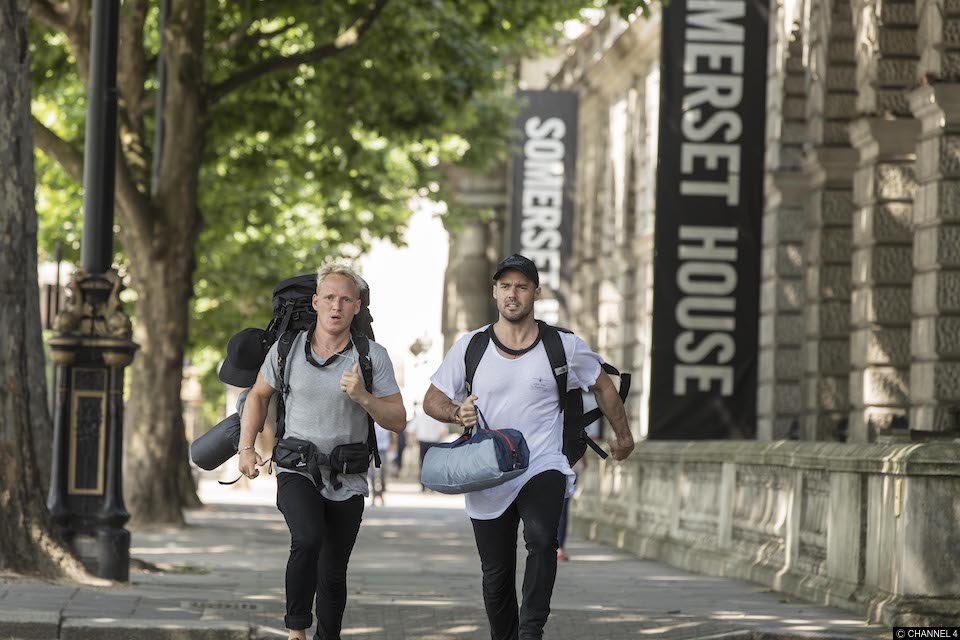
    Made In Chelsea star Jamie Laing talks about why he wanted to join Channel 4’s Celebrity Hunted and what item will keep him occupied during his boredom…

    Is Jamie Laing gay, who is Jamie Laing

    Jamie, why on earth do you want to do this?

    Two reasons. The obvious reason is it’s for Stand Up to Cancer. This douche of a disease affects so many people – we all know a family member or a friend who’s had cancer – so if we can raise a little bit of attention towards this and get people to donate, that’s pretty awesome. And the second thing is, it’s the ultimate game of Hide and Seek. This is like going back to your innocence, going back to your childhood, and playing this cops and robbers game of tag like you used to play in the playground. And I get to go and play this ultimate game with one of my best buds. So, in that way, I cannot wait to do it.

    Have you got any idea what your tactics will be?

    Charm! That’s literally what I’m going to depend on. At school, I got through with charm. One of my school reports said, “Getting cross with Jamie is like drowning puppies.” I was horrendously naughty, but I kind of got away with it. I honestly believe we live in this amazing country where the British public wants to help the underdog. If you are charming and pleasant and kind, people are going to help you, 100 percent. So I am basing everything on charm and luck.

    On Made in Chelsea, we see what a fantastic lifestyle you guys have. How are you going to get along with roughing it?

    That’s one of the things people always assume – that we lie on cotton pillows and float around the place being carried everywhere. But Spencer and I both went to boarding school from the age of eight, we were thrown into an environment where you have to be a chameleon, you have to make friends. We’re both pretty resourceful, we did army camps and these kinds of things. All of that stuff that everyone thinks we’re going to need, we’re both so fine without. Camping is what I used to do as a kid. I was a complete outdoors guy, so cutting back, getting rid of social media, not having luxuries, that’s the thing that excites me the most.

    “When you live with a best friend, and you suddenly realise that you can’t live with them, you fall out massively. It’s a huge thing. But Spencer and I have been through thick and thin together, we lived in New York together for two months and nearly murdered each other”

    How do you think you’ll get on when the chips are down and you’re in a hot tent with smelly feet?

    We’re going to hate each other. We actually aren’t that good friends, we don’t like each other very much! No, the good thing about it is that Spencer and I have lived together. When you live with a best friend, and you suddenly realise that you can’t live with them, you fall out massively. It’s a huge thing. But Spencer and I have been through thick and thin together, we lived in New York together for two months and nearly murdered each other – I’m not kidding. So we know we’re going to fight, we know we’re going to fall out, we know we’re going to argue, all of those things are going to happen. We’re prepared for that. If you think “Oh we’re best friends, we’re going to be absolutely fine,” you’re not. You’re going to fight. I know I will want to kill Spencer… give him credit, I reckon six hours in.

    What have you done by way of preparation?

    Ummm. Obviously we’ve got friends and family on board, which is great. And we’ve got a very, very cool exit out of London, which I don’t think I can tell you about, but it’s pretty sweet. So we’ve planned all that. And there’s this book called The Dice Man, which is about this guy who lived his life on the roll of a dice. So that’s pretty much what we’re doing. If it arrives, we’re going to take backgammon and play it, so whoever wins gets to choose where we’re going next. That’s pretty much how we’re doing it.

    Have you watched the show to pick up any tips?

    I’m a big fan of the show. When the first series came out, I spoke to the commissioner at Channel 4 and said “You should definitely do a celebrity version.” I’ve been a huge fan, so I’ve picked up tips. The problem is, the paranoia that kicks in is pretty intense, so you I have to remember that I can’t over-think it. I’m already doing it now. Who are you? Are you actually a journalist?

    Being a recognised face is going to make this even harder. How are you going to combat that?

    It’s a nightmare. I don’t think you can combat it. The more you try and hide, the more shifty you are, the more you’re going to be noticed. I think it’s pretty much down to being absolutely pleasant to everyone, explaining your situation, and pleading with them not to do anything about it. Hopefully they’ll listen. Otherwise, we’ll be spotted, and there’s nothing much we can do about it.

    What do you think will be the hardest thing about being on the run?

    I think the lack of sleep and food can be mentally pretty tough. I think, for me, it’s going to be the mental stuff, the paranoia that kicks in. So that’s going to be the biggest issue. And that’s why it’s so good to be going with Spencer, because he is so the opposite. He’s so relaxed, so chilled. So he will calm the situation down. And I think I’ve got as pretty good sense of when things are going well or when they’re not, so I think I’ll be able to sense when we’re in trouble.

    What do you think you’ll miss the most from everyday life?

    Oh, dude, shepherd’s pie and Bolognese. 100 percent. Bed. Baths. Friends, of course. I should probably say, my girlfriend.

    Are you taking any little luxury items with you?

    Yeah, tennis ball.

    A tennis ball?

    Yeah, I promise you. A tennis ball is the biggest luxury item you can come across. Steve McQueen, in The Great Escape, had his baseball, and it got him through it. A tennis ball can stave off boredom, and boredom can be a big thing.

    Lastly, is this just a bit of fun, and a chance to raise money for Stand Up to Cancer, or are you deadly serious about wanting to beat the hunters?

    Oh, I cannot tell you how serious I am. I’m possibly one of the most competitive people you could come across. To do something and not do it to your best ability is absolutely pointless. So I honestly wouldn’t sign up for things unless I knew I could win it. We’re in it to win it, 100 percent. The only thing that’s going to let me down are other people along the way. Or Spencer Matthews!

  • What time is Celebrity Hunted and what channel is it on

    The celebrity version of the hit real-life thriller continues, for Stand Up To Cancer.

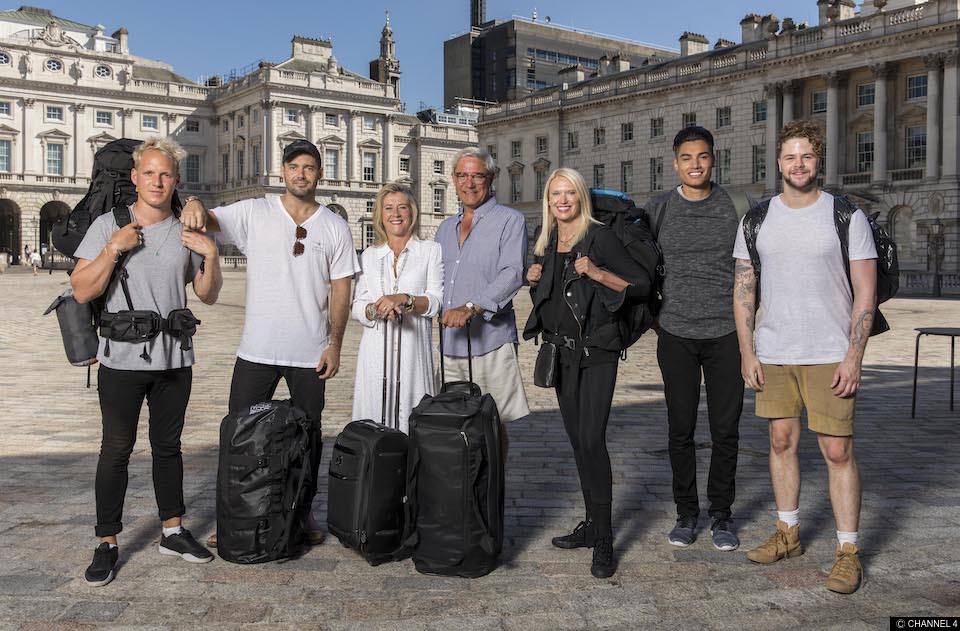
    All seven celebrities remain at large, but for how long? It’s a scramble for survival for Steph and Dom Parker, who believe the hunters are closing in after information is elicited from their manager.

    As confusion over addresses abounds, the pair have a chance to make their escape, but only if Steph can pack up her bras in time. With the hunters’ social media campaign up and running, Jay McGuiness and Siva Kaneswaran are the first to fall foul of the public’s hunger for cash rewards.

    Model fugitive Anneka Rice makes her first mistake, by contacting an associate who the hunters already have in their sights, and Spencer Matthews walks into the hunters’ trap when they set up a sting operation targeting his girlfriend.

    Series 1 – Episode 2  9:15pm – 10:25pm Channel 4

  • How They Met: George Michael and David Austin

    Director of the George Michael: Freedom, documentary speaks about he and George Michael met and why they created the film.

    How did you come to meet George? What was your relationship with him?

    Well, we were very old friends. Our mothers were best friends. We met at the grand old age of about six months I think it was. Our mothers’ sort of crossed prams in the street and that was when we met. We grew up together and went to school together and wrote our first song together at 6…

    Which was?

    I’ve actually got these recordings because we had this reel to reel that my mother and father had – you know those reel to reel recorders – and from a very young age my mother taught me how to use it so I used to record everything. So, eventually I got a guitar at 6 and George was a drummer, that’s what he started out doing and he sort of played on the pillows and I played the guitar and I’ve got these recordings actually and believe it or not, the first song we wrote was called ‘The Music Maker of the World’. True story.

    So your relationship developed into different roles?

    Well yeah, absolutely, it developed into different roles. Working, writing songs together, performing together and then into the studio and into production and then into management.

    So then, cut to 2015 when we (Jonny Rothery, Channel 4’s Commissioning Editor for Music) first met to start talking about this film… what was the reason for doing it at that time and how did the creative develop from there?

    Well the reason for making the film originally, we’d just finished working on the Symphonica project and I remember we had the launch at a place called Hamiltons in London and George’s publicist approached me and she said you know what the 25th anniversary for Listen Without Prejudice is looming, you need to go and see Sony. She set up some meetings, I went down there, I met with the CEO and realised that they were really into working this project. I talked to George about it and George said to me look we should make a film to support it, because I’m not going to promote it. He said I didn’t promote it the first time round, why am I gonna do it now?! And that’s when we (David and Channel 4) met – 2015.

    And obviously we spent many an afternoon up in your studio in Highgate? I think everyone would probably like to find out more about how you co-directed the film with George and how the creative process worked.

    Well you did, we spent a lot of time up there talking and the way it kind of worked was, initially we were just gonna make the film about the Sony court case and the period leading up to Listen Without Prejudice and just slightly after, so that was kind of the arc of the whole thing. But it soon became apparent that there was a bigger story to tell here, there was the loss of airplay in the US, there was the court case itself, there was Anselmo, there was his mother and once we’d realised that we had this mammoth project ahead of us the first thing that happened was, we discovered, I think it was 75,000 feet of 35mm that David Fincher had shot in the archives of Sony all restored and we started assembling as much of the archive footage as we possibly could and then there was all of George’s private home footage.

    The way it kind of worked was we’ve kind of mapped out exactly how we wanted the film to go, chose who we wanted to shoot for different parts and with that directive, I’d come in and I’d work with everybody, everyday assembling it with the editors that we worked with and I’d go back to the countryside to Goring where George lived, I’d go back every single night, we’d talk about it, we’d be over at the pub, we’d have dinner, every night really for a year and a half we did this and we went through the process of putting the film together. I’d come back the next day to London with directive from George and it was a back and forth thing like that.

    And then, once we’d kind of got the initial assembly together George would come to London and would edit the film which is what he did. Literally the film that you all saw today, was more or less George’s cut, you know apart from putting the lower thirds in, you know a few of the CG bits and the graphics, that was George’s film that you saw.

    And in actual fact, he was editing right up until the 23rd December we had Nile Rogers over in London filming his part and George was due to go back in on the 27th to continue editing which sadly didn’t happen. But he had basically finished working on the film and the what you see, that was his edit. And he was an editor, you know, all those videos throughout his career, he edited them all together. Freeek! he took over the edit from Joseph Khan. Freedom, David Fincher, same again. I mean George’s career is speckled with sacking directors and editors and taking it on himself and he had a great eye for it and the funny thing is we got the film to a certain place and it was great, it really felt great but as soon as George came in and stepped into the studio and started cutting himself, it just took that different corner. And then like I say, we found all this home footage, all his sort of Video 8 stuff and he edited that in, but that was pretty much the process.

    Did he mind looking back at archives and nostalgia?

    No, no he didn’t. I was a bit apprehensive to start with because what actually happened was, I was going through a cupboard one day and I found this little drinks bag, this Harrods cooler bag and I looked at it and opened it up and it had all of his home footage that he’d lost, that he shot himself, which is all that stuff you see in the centre of the film and I talked to him about it and he looked through it and I thought he’d be nervous to, I’d already cut a few little tiny bits of Anselmo into the film and I thought he’d be nervous about that, but he wasn’t he embraced it, he loved it and the more the merrier.

    The other stand out thing in the film is that George recorded a bunch of audio interviews that we placed into the film, mixed in with the archive audio. Tell us about that, because you spent quite a lot of time doing that.

    That’s right, yeah. There were two sets of recordings but the very last one with Kirsty Young in September last year, which is also George’s last interview. Kirsty came down to the house in Goring where George lived in the countryside. He worked with Kirsty before so he had a good rapport and he loved her and she was great. We chose Kirsty because we’d watched the David Attenborough 90th birthday and it was just obvious that she was the one to do it. She was brilliant. She came down, we were only looking for, he was just going to narrate it but this interview opened up and it lasted two and a half hours actually and so we put much of it into the film but actually there’s another hour that we’ve put together that’s going to be in a radio special that we’re putting together.

    You say it started as a straight narration but became a long-form interview so he obviously relaxed into it…

    Yeah well that’s how we started to do it. There are some bits that he did narrate actually but he decided he wasn’t going to sit in front of the film and say “this is what I did on Wednesday”. So we sent the film to Kirsty, Kirsty watched it, put a script together and came down and they did it like that. The interview started, it was very detailed like that, she went through everything that she had to do and then the last hour of it turned in to this general conversation which is where he really opened up and we got a lot of fantastic stuff from it.

    Going back to the body of the film itself, it breaks down into various chapters around a several year period but kind of taken them one by one. The first was the formative years and George’s rise which is kind of, fairly well documented. The court case was fascinating and for me personally, looking at a guy in his mid-20’s to go against a whole industry and at a point of his career where he really should’ve knuckled down and got on with it, that must’ve taken some balls to do. He was obviously driven, but how did he do that? Most of us would’ve just done the album and done as we were told right?

    I think when you’re that age and you have that kind of success. I mean I look at kids like Justin Bieber today and you think my god, look at this multi-million pound industry around them and you look back and you, when you’re in the eye of the storm you don’t realise, you’re just getting on with the job and rolling your sleeves up, I think it all just comes naturally. He was brave to do what he did, that’s for sure but a lot of people would’ve stepped back and would’ve done as they were told. But not George, he felt slighted and he believed in what he was saying and like Elton says, George is a very stubborn person and when George puts his mind to something he goes for it. And it was a big deal the court case, what could’ve come from that would’ve been incredible. Had he of won and had the standard contract changed, an incredibly brave thing to take on.

    Is it something he looked back on in later years with regret that he didn’t win that?

    Yeah, he did actually. He says it in the film and when I was, when we were talking last August about the court case and how we were going to handle it and I didn’t realise this at all but he turned round to me and said how he regretted it, how he wish he’d never taken Sony on in the first place because it dented the armour in his career in America. There was a guy who was firing on all four cylinders and it blew that candle out in the US without a doubt.

    But the stress and the strain at the time would’ve been so bad at the time, he couldn’t have done it. Yes, he regretted it but probably would’ve changed it…

    No, I think also the fact that he’d discovered Anselmo wasn’t well all these things happened at the same time. And what’s really interesting, what people don’t realise is that while this court case was going and he was in the stands, he was holding very close, nobody knew, he hadn’t come out at the time, his boyfriend was dying and he was holding this close to his chest which was incredibly, equally just devastating for him.

    And Anselmo obviously features heavily in the film, it’s something that you could’ve not included and people may not have noticed in terms of the film was originally meant around the album, the creative work but why did George feel it was so important to cover that off?

    I mean, all George’s idea, George’s cut, I would’ve never have gone as far as to use his personal footage… I think it was just something that George wanted to do. He loved Anselmo, he was an incredibly important person in his life and it just came from George’s heart, the way George wanted to do it.

    The film’s got a great array of contributors… Who knew Liam Gallagher was a fan? How did that happen? How did you find out Liam liked George? He doesn’t like anyone.

    Liam’s brilliant right? So we played the Olympics and we came back to the house and we had this party back at the house in Highgate, the house that you see on there, that’s George’s north London home and Liam was there and this story had gone on for ages that he and Noel hadn’t talked for ages so Liam was there and we were trying to get them together, we had a bar at the end of the garden, so we were trying to manoeuvre them both so they’d have to deal with each other and I think it did happen actually. It was a great, great night. Liam kept coming up to me and coming up to George and going “he’s got Lennon; he’s got fucking John Lennon in him man” and that kind of stuck. And then I bumped into Liam a few months after in a pub somewhere and he came up to me and he kept saying the same thing. George bumped into him and he said the same thing “you’ve got John Lennon in you, man” and so when we were doing it, when we were putting the list of people together, George said, we’ve got to get Liam in to talk, and he’s great. Liam had said that he loved ‘Praying for Time’ and thing is, I interviewed Liam actually and he knew his stuff and his contribution was amazing and funny and eloquent and right on the mark.

    How did George feel about people praising him while making the film?

    I mean he was incredibly touched but he was a bit overwhelmed actually. Yeah, I think he was just incredibly touched. These were his friends as well, I think just he was incredibly touched.

    You’ve known George a long time and you said you started writing songs with him as a child, and you’ve written quite a few iconic songs with him for a few albums… I just wondered if you could tell me which is your favourite and how it came about?

    I mean I absolutely love ‘You Have Been Loved’. It came about, we were working on Older, I was living in France at the time, he flew out and asked me to write something acoustically. I did that and just came up with the music… The way George and I used to write, the way we collaborated was, I would always do the music, completely, and then he would take it on do the melody and lyrics on top of it, that’s how we worked. I just came and put an acoustic piece together, flew to London and that kicked off the album. It was the first thing we recorded for the album actually and as the record went on and we hadn’t finished it and were two tracks left on it and we were thinking shit this isn’t good and it was the last thing we finished on the record. But that’s how that came about.

    George worked with many well-known singers throughout his career and he mentioned others that he’d never worked with on records, Madonna, Prince etc. Were they any that he really wanted to record with that he never got the chance to?

    I think probably Adele. He loved Adele, actually. You know, George had stepped back in recent years and hadn’t been as active musically. About three years ago, once he kind of stepped forward again and started writing and putting the film together, he would sing along with Adele actually. I wouldn’t say practice but you know, to warm up along to her, but Adele. I think he loved Lauryn Hill too; yeah he always wanted to sing with Lauryn Hill back in the day. I think him and Barbara Streisand, they talked many times about working together, it just never happened but they talked about working together.

    Apart from showing all the success of George and the talent, I found it very emotional being so honest and truthful and it made you wonder, because where you end and the rest of the story, did he ever find happiness?

    Oh yeah totally – he absolutely did. I mean with Anselmo and later on in his life, he absolutely did.

    I think the fans would like to know that.

    Yes – that’s a good question too – yes he did. He was a very happy, contented man. He found happiness in love; he found happiness in his friends and family. You know, we had a fantastic relationship, yeah he did find happiness.

    The way we decided to finish the film, so we could leave George’s edit, we opened it up with Kate at the beginning just saying a few words, that this was George’s film and it was his final work. You know, we didn’t want to mess with the film when George had finished working on it, so I decided to open it up with Kate just saying a few words, introducing the film. And then just added the performance, Chris [Martin], with the visual that I built for the Brits, Chris went in and re-recorded the duet again and I put it to the visuals so that’s how I kind of wanted to address that in the film.


    You can catch up on George Michael Freedom on Channel 4’s All4
  • David Mitchell and Robert Webb are back with a new show

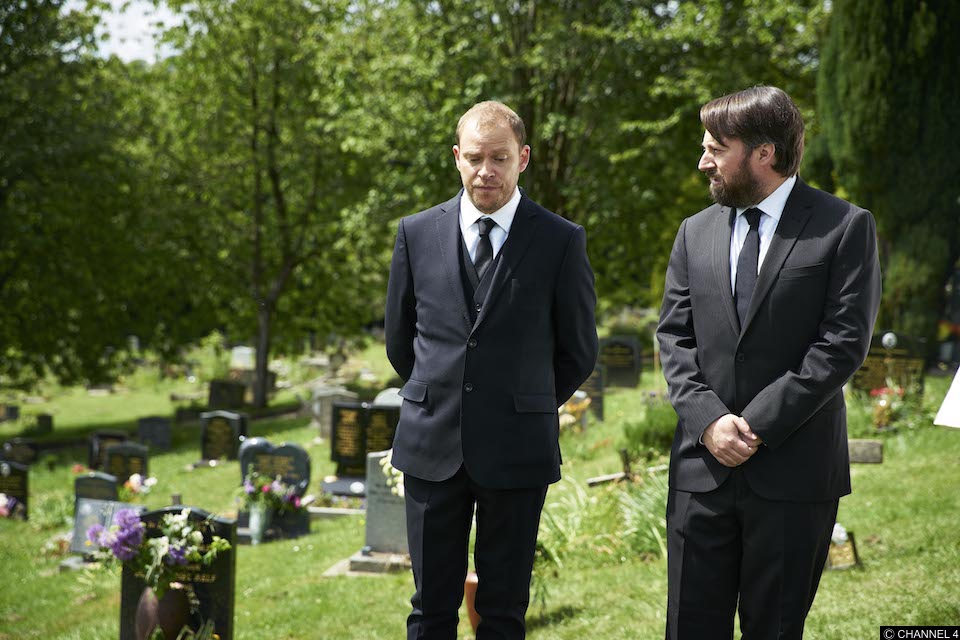
    Peep Show legends, David Mitchell and Robert Webb are back on Channel 4 with a brand new show called Back.

    Back is an acerbic new comedy, written by Emmy-award winning Simon Blackwell (Veep, In The Loop, Peep Show) and starring the inimitable and award-winning David Mitchell and Robert Webb (Peep Show, That Mitchell and Webb Look). The series marks the duo’s return to Channel 4. Back is directed by Ben Palmer (The Inbetweeners Movie, Man Up) and produced by Kate Daughton (Toast of London).

    Stephen’s (David Mitchell) father, a local legend and pub landlord, has died so Stephen is set to – finally – take over the pub. Mum Ellen (Penny Downie) and sister Cass (Louise Brealey) have no interest in the family business – they’re ‘creative’, with weed to buy and energy-centres to rebalance.

    With his dad dead, it’s now Stephen’s chance to shine. His only achievements so far have been marriage (followed by divorce), a failed stint as a lawyer in London and a slightly disappointing pub refurb. But when the charming Andrew (Robert Webb) turns up out of the blue at Laurie’s funeral, Stephen’s plans go awry. Charismatic Andrew has lived in Sydney, Amsterdam, Lisbon, Berlin and Limoges but crucially, spent five formative months fostered by Laurie and Ellen as a 12-year-old. To Stephen, Andrew was just one of a string of 30-odd foster kids who he spent his childhood resenting. But Andrew remembers every single detail and sees that time as the most important of his life.

    Now Andrew’s back, and keen to revisit the closest thing he’s ever had to a family. Ellen loves Andrew. Cass loves Andrew. Even Laurie’s erratic brother Uncle Geoff (Geoff McGivern) loves Andrew.

    But Stephen doesn’t love Andrew. He thinks he’s a glib, dangerous sociopath who’s about to steal his family, his business and his life.

    Back begins on Channel 4 this September.


  • WATCH: 16-year-old comes out to Number 1 mum!

    Meet Ben, he’s 16-year-old and just comes out to his mum during a car journey…

    It melted our cold, frozen hearts

    In this emotionally charged and heart-warming clip, Ben is speaking to his mum about coming out. Watch as you see his mum so proud and pleased for her son, finally being able to be himself.

    Taxi of Mum & Dad features 8 families who’ve rigged their cars with multiple cameras, allowing us to eavesdrop on their every conversation. This brand new programme explores the joys and challenges of parenting teenagers today. It’s set in the one place where conversations still take place: the family car. At home parents have to compete with technology for their teens’ attention and rarely have the opportunity to catch up and connect. But offering a lift provides the perfect opportunity for parents to find out what’s really going on. Relationships, parties, holidays, drinking, work, school and home life are all explored in fresh and unfiltered conversations, over the course of a month of recorded journeys.

    This is taken from Taxi of Mum and Dad which is on tomorrow (Thursday 17th) at 9pm on Channel 4.


  • What gay content is available on the Channel 4’s ALL 4?

    Channel 4’s ALL 4 has a huge library of LGBT focussed programmes and titles on it. We’ve listed the most current list of LGBT content available to stream for free from Channel 4.

    Updated: April 2020

    LGBT Factual on Channel 4

    The Bisexual WATCH NOW

    Realising that she’s living a lie, Leila makes a drastic decision with unexpected consequences

    Convicted For Love WATCH NOW

    Homosexuality was only partially decriminalised in England and Wales in 1967. This documentary meets four of the many men who suffered criminal or medical discrimination in the last 50 years.

    Coming Out To Class WATCH NOW

    Openly gay rapper Qboy finds out why 62% of gay teenagers now choose to come out to school.

    Epidemic: When Britain Fought AIDS WATCH NOW

    It’s the 50th anniversary of the Sexual Offences Act 1967 which legalised male homosexuality. Broadcaster and gay rights activist Simon Fanshawe examines this landmark change in the law and reveals the extraordinary story of the fight for equality through the colourful history of his hometown of Brighton

    Gaycation WATCH NOW

    VICE sends Ellen and Ian to Japan, on a journey which includes getting friend-married at a Buddhist temple, working at a rent-a-friend agency, and partying in the world’s smallest gay bar

    Gay To Z WATCH NOW

    This episode looks at young people looking for love, being in love and experiencing relationships. It shows different ways of meeting partners, ranging from the traditional to potentially dangerous.

    Gay Sex, Apps And Me WATCH NOW

    Harry is 19, gay and single. Everyone he knows seems to be using apps such as Grindr, Scruff and VGL. Harry’s not convinced. Watch as he gets to grips with the apps and finds out if they’re for him. Read Harry’s exclusive article for THEGAYUK.com

    Grayson Perry: Rites Of Passage WATCH NOW

    Grayson meets Roch, who has motor neurone disease, and Alison and Kevin, whose son Jordan was killed by a drink-driver, and helps them to devise personalised rituals that fit their situations

    Hollyoaks: Gay Dads Forever WATCH NOW

    Actor and gay dad Kieron Richardson explores same-sex parenting and introduces his twins

    Hollyoaks: Pride Documentary WATCH NOW

    A one-off documentary celebrating how Hollyoaks has supported the positive representation of LGBT issues and characters over the years.


    The Sex Testers WATCH NOW

    Three sexual health experts set up a pop-up clinic to unwrap Britain’s sex secrets.

    My Big Gay Prom WATCH NOW

    Documentary following five teenagers as they launch the UK’s first-ever gay prom. In the first programme, they visit the largest gay teen prom in the USA on a fact-finding mission.

    My Gay Dog and Other Animals WATCH NOW

    From dogs to apes and lions, this frank documentary explores something that traditional evolutionary theory can’t explain: gay behaviour in animals

    Our First Gay Summer: Mykonos WATCH NOW

    Our First Gay Summer: Mykonos follows young gay Brits Lewis (22), Ashley (18) and Curtis (21) in one of the most gay-friendly destinations in the world. They go to Mykonos to live, work and party over the summer.  Mykonos offers an exhilarating mix of acceptance, community and pleasure and it’s been hugely enjoyable to see Lewis, Ashley and Curtis go on this journey of self-discovery. All 8 episodes are available to watch through the below link:

    Trans Kids: It’s Time To Talk WATCH NOW

    Stella O’Malley considers the huge rise in numbers of young people embarking on gender transition, through the prism of the gender identity issues that she experienced when she was a child

    The Black Lesbian Handbook WATCH NOW

    A lively guide to the underground Black Lesbian scene in Britain and the US

    The Only Gay Bar In The Village WATCH NOW

    Why would a straight, teetotal family man set up a gay bar in a Northern Irish border town?

    The Stranger On The Bridge WATCH NOW

    The inspirational true story of Jonny Benjamin’s global search to find the stranger who talked him out of jumping off Waterloo Bridge in 2008. Read our exclusive interview with Jonny Benjamin.

    LGBT Comedy On Channel 4

    Terry And Julian WATCH NOW

    South London lad Terry places an ad for a flatmate. Moments later, Julian Clary turns up.

    LGBT Drama on Channel 4

    Banana WATCH NOW

    Witty, heartfelt and unique interlinked stories covering different aspects of LGBT life.

    Metrosexuality WATCH NOW

    Comedy drama series set in Notting Hill about gay dad Max and his friends and family.

    ? My Friend Dahmer WATCH NOW

    (2017) Ross Lynch portrays serial killer Jeffrey Dahmer at high school, in this biographical drama based on the graphic novel by John ‘Derf’ Backderf, who knew Dahmer in high school.

    Out On Strike WATCH NOW

    The humorous and candid true story of two miners’ wives who met and fell in love during the 1984 miners’ strike.

    Queer As Folk WATCH NOW

    Set in and around the Manchester ‘scene’, this groundbreaking Channel 4 drama written by Russell T Davies, documents the lives and loves of young gay men Stuart, Vince and Nathan.

    Sugar Rush WATCH NOW

    Drama series based on the novel by Julie Burchill. Teenager Kim has moved to Brighton and developed an earth-shattering, hormone-surging crush on her new best friend, Sugar.

    Tales Of The City WATCH NOW

    Anna Madrigal is the bohemian landlady with a mysterious secret. Mary Ann Singleton is the newcomer, a naïve young girl from Ohio eager to embrace SF and all it has to offer.

    Tofu WATCH NOW

    Do you know if you’re good in bed? The British public, and casts of Cucumber and Banana, talk openly about the importance of cumming, whether size matters, and their most explosive sexual encounters.