Tag: Arcola Theatre

  • CONCERT REVIEW | Ute Lemper’s Rendezvous With Marlene

    CONCERT REVIEW | Ute Lemper’s Rendezvous With Marlene

    ★★★★ ★| Ute Lemper’s Rendezvous With Marlene

    Ute

    ‘Falling in Love Again…’ an entranced Sasha de Suinn reviews Ute Lemper’s sold-out cabaret show Rendezvous with Marlene at the Arcola Theatre, London.

    Where were you when Princess Di died?

    Shocked, indifferent or simply unborn then? Like the Twin Towers, Di’s death instantly branded itself into cultural awareness worldwide, becoming a cultural landmark of collective disbelief. Still – if not quite on such an exalted plane – artistic earthquakes also create an enduring, seismic blip in public adoration and memorable regard. But forget the pointlessly premature – if still shocking – deaths of musical prodigies Prince, Amy Winehouse and Michael Jackson; they’re the negative downside of cultural lightning brilliantly caught in a bottle. Ah, but don’t despair – there’s always light in the darkness, a Dumbledore to every Voldemort! Why, given a convenient TARDIS like every cosy, pansexual Time Lord, who wouldn’t want to witness Maria Callas, Judy Garland and Bowie’s Ziggy Stardust shows at their iconic, history-making peak?

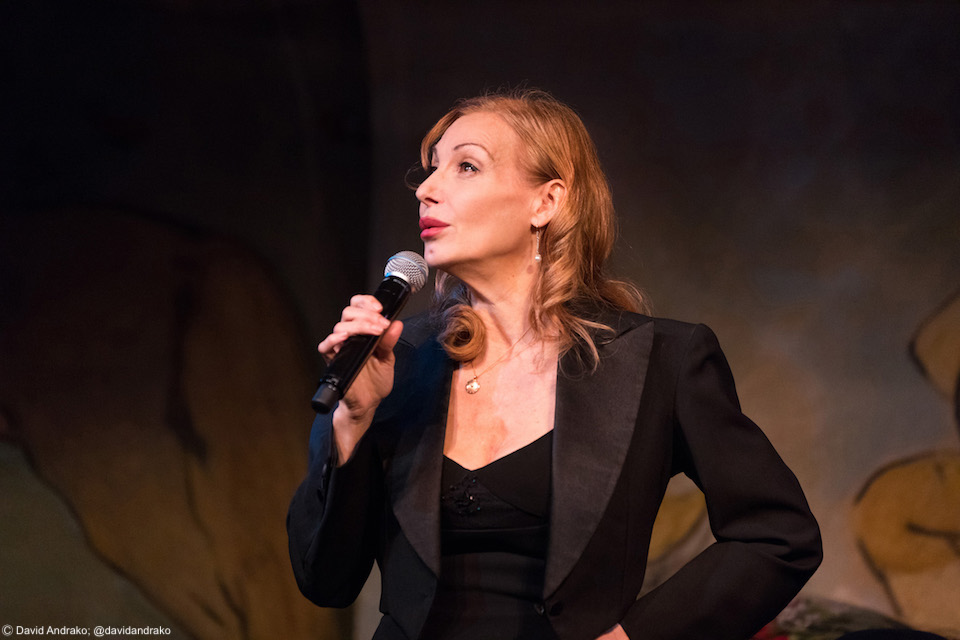
    Still, those moments, if rare, continue to persist as thrilling possibilities. And culturally – right here and right now – we’re incandescently privileged to witness Ute Lemper’s totally game-changing Rendezvous With Marlene. The work of a simply superlative artist at the top of her game, it’s a fearless exploration of Dietrich’s doubts, regrets and shockingly raw humanity.

    Like the finest, vintage Krug champagne – with all its’ attendant depth, resonance and complexity of flavour – Rendezvous has intensely benefitted from its’ long, thirty-year gestation in Ute’s mind.

    While playing Sally Bowles in a stage version of Cabaret in Dusseldorf back in 1992 when she was 24, Ute wrote a postcard to the 88-year-old Dietrich apologising for the constant barrage of spurious comparisons lazy journalists were drawing between the two artists. To call those journalists merely misguided would be ridiculously kind; they were wildly inaccurate. Where Dietrich was breezily, bisexually promiscuous, Ute was married with children; where Dietrich barely strayed beyond performing a narrow repertoire of expected classics, Ute’s range – including tackling songs by Nick Cave and Tom Waits – was eclecticism personified; and finally, while Dietrich stage’s act and barely-passable ‘singing’ remained essentially static and she explores no other creative pathways privately, Ute was a first-class chanteuse, actress and dancer, painting and song-writing in her precious downtime.

    Very different women, then, despite the most blatantly obvious, shared physical characteristics; blonde hair and shapely bodies. Still, both had a shrewd grasp of the human impact of restrictive politics – as in Dietrich’s profound disgust towards the Nazis, while Ute – pleasingly in an era of blanket, Trump idiocies – comes across as an electrifying, pro-choice Valkyrie at the Arcola, sharing Dietrich’s passion for strong, female self-determinism.

    Framed as a post-modern metafiction – Ute switching characters back and forth between herself and Dietrich, and exploring Dietrich’s memories in character en route – Rendezvous is almost an act of secular worship in performing, spontaneously eliciting an aura of hushed, quasi-religious devotion from the audience. Faultlessly exhibiting the high-functioning playfulness of an Alpha-class empath, Ute is so sensitive to nuance she virtually leads the audience en mass to the emotional mountaintops of Dietrich’s revelations. Throughout, Ute exhibits two exceptional qualities wholly lacking from the frenzied, truncated idiocy that passes as modern stage direction; dignity and restraint.

    Surely a reigning role-model of liquid-boned finesse, Ute’s slightest, rippling gesture speaks emotional volumes, and she has the incalculable, expressive gift of making even the most chronically over-exposed lyrics imaginable –Blowing In The Wind, anyone? – resonate with the shocking, public poignancy of Christine Blasey Ford testimony against the vile Brett Kavanaugh.

    A sheer master-class in memorial intimacy, stagecraft and the taut, emotional fury of suppressed pain and regret, Rendezvous With Marlene is an astounding instance of spiritual ventriloquism, of one acclaimed performer so prepared to relinquish egotism she’ll voluntarily become the mouthpiece of another.

    Utterly in tune with our present, diversity zeitgeist, Ute’s tribute is not only pansexual, acknowledging Marlene’s female and male lovers, but also – going even further than Russell T. Davies’ Years and Years – transageist, as a youthful, ebullient Ute assumes the serene gravitas of Dietrich herself. Masterly? Of course; and – by a huge margin – simply the finest act of sustained, emotional intensity and fearless self-revelation I’ve ever seen. Ute – like Bowie, Callas and Garland before her – is in an unprecedented class of her own.

  • THEATRE REVIEW | Callisto a queer epic, Arcola Theatre, London

    ★★★ | Callisto, Arcola Theatre London

    CREDIT Lidia Crisafull

    Callisto is four tales for the price of one in a time travelling epic concerning queer people in different eras. They’re not stand alone stories but are interspersed and entwined with each other. Basically, it’s a poor man’s ‘Cloud Atlas’ but with LGBT people. The first tale is about opera singer Arabella who’s married to another woman and about to be exposed and get herself in some serious trouble. Secondly, Alan Turing is talking to the mother of the boy who was his first love. Thirdly, Tammy is on the trail of a hot porn actress who she’s become infatuated with. Finally, CAL is an A.I. in the future who’s fallen for a human.

    They’re a mixed bag of plays which don’t all work as well as they might and there’s something derivative about the whole set-up at times. The scenes about the 17th-century female couple are the strongest and the Alan Turing scenes are cleverly written but lack much drive, floundering in parts. The other two sections fare less well, especially the futuristic part. If the future involves talking in strange mixed up speech whilst wearing bicycle lights shining down your legs and tee-shirt, culottes combos with odd side ties then count me out of it.

    The production has merits with strong acting and a wry sense of humour but doesn’t quite fill its potential. Regardless, it’s an engaging evening and worthy of a look.

    Callisto a queer epic is playing at the Arcola Theatre, London


  • THEATRE REVIEW | The Marriage of Kim K., Areola Theatre, London

    ★★★★ | The Marriage of Kim K.

    For a different night at the theatre, go see “The Marriage of Kim K.”

    Yes, you read that right. The famous opera “The Marriage of Figaro” has been modernised for the 21st century in a show now playing at the Arcola Theatre – it’s a show that reflects our appetite for all things reality. And there is no bigger reality star than Kim Kardashian. But the “Marriage of Kim K.” goes a bit further, it specifically looks at Kim K.’s 72-day marriage to American basketball star Kris Humphries in 2011. And this segment of their marriage is interspliced with a modern day couple watching television and a third couple actual performing scenes from “The Marriage of Figaro” opera. It’s a bit unusual, yes, but it works.

    For 90 minutes, all three couples have their moment. Kris (James Edge who plays the tall and dumb athlete very well) can only think of one thing – sex – with Kim K. (Yasemin Mireille – who’s got a butt to rival Kim K.s’). And newly-qualified lawyer and Keeping Up With The Kardiashian’s-watching fan Amelia (Amelia Gabriel – very good) and her yet to be successful songwriting husband Stephen (Stephen Hyde – good as well), and by the way who are a couple in real life, are all lovey dovey then bicker about her KUWTK addiction. And Emily Burnett (excellent) plays Countess Almaviva while Nathan Bellis (good) is Count Almaviva. The differences in their background – he comes from aristocracy while she has a less privileged background – causes rifts and tension in their marriage. And the finale of this show takes off in a crescendo-exploding battle of the singing divas and divos as they all fight to save their marriages (except Kim K. because before the end of her marriage to Kris she had already met Kanye West). And we all know that it took Kim and Kris two years to actual get their divorce final because Kim wanted an annulment while Kris wanted an actual divorce.

    Hyde, who wrote the music, and Leo Mercer, story and lyrics, have created a unique and timely piece of theatre that is innovative and timely. It’s very unique and is much more interesting that anything the Kardashians get up to themselves.

    The Marriage of Kim K. is part of Arcola Theatre’s Grimborn season, where bold new versions of classic operas, rarely-seen and long forgotten works, are being presented until September 2, 2017

    Get more information about Arcola Theatre


  • THEATRE REVIEW | Kenny Morgan at the Arcola Theatre

    THEATRE REVIEW | Kenny Morgan at the Arcola Theatre

    ★★★★ | Kenny Morgan

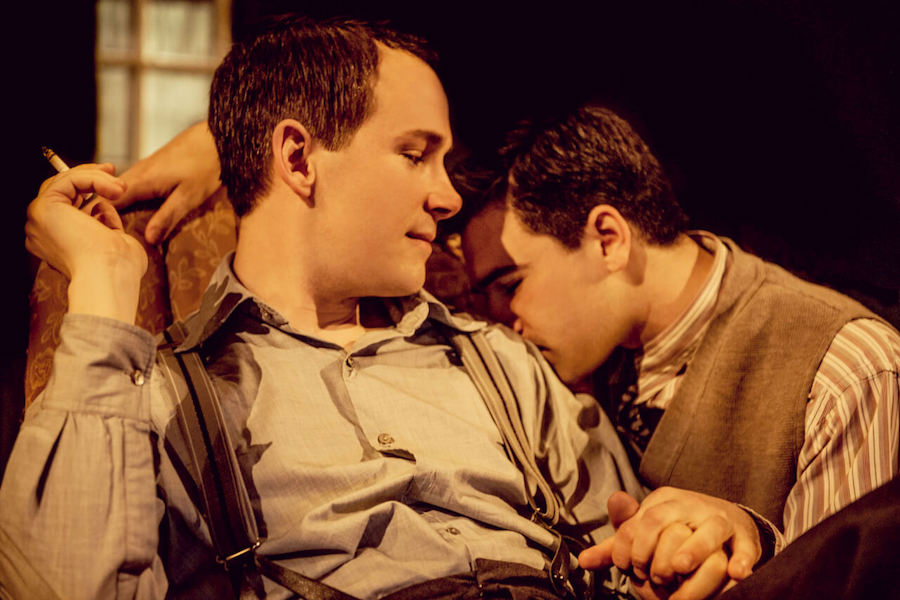
    If you missed “Kenny Morgan” this summer then you have a second chance. The play is back for four weeks at The Arcola Theatre in Dalston and remains an evocative and beautiful treat of a play with a host of polished performances.

    Theatre review for kenny thomas
    CREDIT: Idil Sukan


    Kenny Morgan was a young actor who had had a promising career in 1940’s British films. He had also had an on/off relationship for ten years with Terrence Rattigan, a high profile British playwright. In 1949 Kenny gassed himself to death in a down at heel Camden Town flat that he was sharing with a young actor who he’d left Rattigan for. Terrence Rattigan’s play “The Deep Blue Sea” echoes Kenny’s story to a degree but with gender switching to suit the times (and the Lord Chamberlain’s office).

    Set in a mould encrusted flat with gas pipes defining the space, this play depicts Kenny’s despair. Sounds grim but it’s not. It’s witty and warm as well as devastating. Paul Keating is superb as Morgan, delicately easing us into his despair and leaving the audience frustrated and helpless but never less than sympathetic. Mike Poulton’s script is tight and detailed and achieves a difficult task: retaining dramatic tension even when we know the inevitable ending. The dialogue and set feel wholly authentic, transporting the viewer to 1940s London along with its restrictions. There’s something claustrophobic and terrifying about Kenny’s world where being gay is illegal and can land you in prison, as can attempting suicide.

    Although Kenny is a different beast from most of us in contemporary Britain, there are plenty of parallels and as well as the beauty of the piece; this makes it well worth a visit. Who hasn’t felt heartbroken and despairing and been laid low by loving the wrong man? Kenny has fallen for a man who doesn’t even claim to love him, has stopped sleeping with him and is still sleeping with women and men behind his back. Not an unusual story. Neither is the story of his relationship with Rattigan. Unable to be out in public Rattigan maintained elaborate ruses to keep his homosexuality both from the public and from his family. I’m sure I’m not the only one who’s met men like that? Who hasn’t struggled to understand someone else’s depression or even their own? Although his misery is tangible, it’s difficult not to want to try to solve Kenny’s issues.

    The play isn’t as bleak as it sounds on paper. There are fine comedic moments and the pace is brisk. There are also touching moments of human kindness as the people around Kenny try their best to help. My recommendation is to just see this. You’re unlikely to see a finer play with a gay theme any time soon.

    Kenny Morgan plays at the Arcola Theatre until 15th October


    Follow Chris Bridges on Twitter

  • OPINION | Why “They” Matters

    In this game we weathered old showgirls have to sell ourselves to sell seats, giving interviews, waffling away on the radio, and generally generating promotional content (such as this very article) when we have an upcoming performance. There are protocols in place, one mustn’t swear on the BBC, one shouldn’t leave a journalist waiting in Pret for 45 minutes, and one should send one’s press releases out in clear, concise, proper English. Here we get to the cut of the jib…


    I prefer the pronoun “they”, with the understanding that it refers to me as a person who recognises themselves to be neither a man or a woman, but both simultaneously. This is pretty straightforward in practice, EG “Did you see La JJ on TheGayUK? Their article was so enjoyably informative! How do they do it?” As such I am using singular “they” in my press releases, to the chagrin of certain writers who feel it is incorrect English and therefore either decline to write about my new hit show GEIST (which is at the Arcola July 2nd & 3rd btw) or else just use the pronoun they feel best suits me, which is actually quite rude when you think about it.

    Perfectly reasonable people, people who are allied to queer and trans causes, will say, “I’m not opposed to using ‘they’ in principle, it’s just that it’s not grammatically correct.”

    But aren’t we already using it on the daily? Don’t we say things like, “Everybody wants to think that they’re cute”? That’s singular “they” right there babes! Technically we should be saying, “Everybody wants to think that he or she is cute”, but obviously we don’t because it’s such a cumbersome mouthful. Yet even that unwieldy sentence is a recent modification, made by the Feminist impulse to rectify a sexist bias in the English language. Why should every writer, “Pick up his pen and set about his work”? Exactly – it’s bulls*it.

    Victorian grammarians set “he” as the universal English pronoun, though a quick Google will tell you from around 1300, and through the Middle Ages, singular “they” was common. Chaucer uses it as does Shakey themselves, as in The Comedy of Errors, when Antipholus says, “There’s not a man I meet but doth salute me as if I were their well-acquainted friend.” Shakespeare chooses to use “they” instead of “his”, just as Jane Austen does countless times, 200 or so years later. Whilst we’re at it why is nobody up in arms over the loss of formal/informal distinctions in English? Why aren’t we upset that we can no longer choose to speak intimately by employing, “Thou art” (in place of “You are”) without coming off as a Fantasy Fiction dork?

    That’s because language evolves babe, for better or worse, even The Washington Post managed to get their heads around “they” when it was pulled into their style guide last year. People start sentences with “And” and “But” all over the shop with little furore arising, though until recently the very suggestion of it sent editors apoplectic. Likewise, when a writer asks if they can interview me, I don’t reply tartly, “No, but you may conduct an interview with me,” do I? (Well not unless I’ve had a double shot in my skinny latte at least). An insistence on alleged grammatical righteousness is actually a determination to prop up the prejudices built into the English language and shrug it off as out of one’s control. By dismissing singular “they” what you’re actually saying is, “I’d really love to help you feel like you have a place in the world, but sadly this copy of Grammar for Dummies from 1909 just won’t let me, sad face emoji.”

    Third gendered, non-binary, trans, gender fluid and transdrogynous people have tried out several new pronouns over the past few decades. From the lumpy “Zir” which was all the rage a decade ago, to Justin Vivian Bond’s famous “V”, and Theo Addams’ playful “tree”. All of those choices are beautiful and valid, but “they” works best for me. It’s already in the language we use, it expresses the multiplicity which many of us gender outlaws experience, and remarkably it’s 100% gluten free. Try it, you might like it! And share it with your lover – they may get a kick out of it too.

    Catch La JohnJoseph in GEIST at the Arcola Theatre 2nd and 3rd July at 8 pm. For a chance to win a pair of tickets to the show, simply enter your name below. The winner will be announced on the 30th June. Good Luck.

    THIS COMPETITION HAS NOW CLOSED

    Terms of Competition

    1. You have until the 30th June 2016 9:00 AM
    2. Entries made after this time will not be counted.
    3. Winner must be over 18 and reside in the UK.
    4. Offer is not-transferrable and no cash equivalent will be given.
    5. Entry is free of charge.
    6. Winners will be notified by email from TheGayUK by the 30th June 2016 by 2:00 PM.
    7. Winners will have one day to claim their prize. Afterwards, a new winner shall be drawn and previous claims will be forfeit.
    8. All entries will be added to TheGayUK and TheGayShop mailing list which you can unsubscribe from at any time.
    9. The prize is tickets only. Winners must make their own travel arrangements.
  • THEATRE REVIEW | Ghost from a Perfect Place: Arcola Theatre, London

    ★★★★★ | Ghost from a Perfect Place: Arcola Theatre, London

    Multi award-winning playwright Philip Ridley returns to the Arcola with his contemporary classic Ghost From A Perfect Place, a scorchingly dark comedy where a monster from the past meets the monsters of the present.

    Twenty years after its premiere at Hampstead Theatre, Ghost From A Perfect Place has its first major revival under the direction of Russell Bolam, following his critically-acclaimed production of Ridley’s Shivered (Southwark Playhouse 2012).

    Back in the 1960s, Travis Flood led a gang that terrorised East London. Now, after an absence of many years, he returns to find his old turf in the clutches of a new kind of gang with a new kind of leader. Rio, the ruler of a mob of girls, instantly captivates Travis with her haunting beauty but soon a shocking story begins to emerge and it is one that shatters both their distorted memories.

    A stark half burnt out council flat in Bethnal Green sees Torchie (played by the excellent Sheila Reid) entertaining the returning gangster, Travis Flood (Michael Feast) as he waits to meet up with her prostitute granddaughter, Rio for sex. Torchie fondly regales him with tales of their ‘heydays’ and unfurls the terrible story of how her life fell apart.

    Ridley’s play is both hilariously funny and horrific in equal measures. The audience both laugh and wince as the play hurtles towards (a not unexpected) yet shocking conclusion. The cast are excellent with Sheila Reid (Madge from Benidorm) showing her skill as an actress. Michael Feast is a superbly edgy yet absurd Travis Flood and the two are more than ably supported by a cast of three young actresses as the terrifying Rio and her disciples.

    This production is a real triumph for the Arcola and the staging and direction are faultless. This is theatre at its gritty best and Ridley’s play has lost none of its relevance to disconcert, even after twenty years.

    Ghosts from a Perfect Place runs until 11/10/14

    Buy tickets here: http://www.arcolatheatre.com/production/arcola/ghost-from-a-perfect-place-by-philip-ridley

  • THEATRE REVIEW | The Shape of Things, Arcola Theatre London

    ★★★★★ | The Shape of Things, Arcola Theatre London

    I’m sure you all know the scenario: you meet a man who you feel needs a few little tweaks just to make him perfect.

    Maybe he needs a new hairstyle or better clothes, maybe a better physique or a more sparkling repartee. Perhaps he needs to lose a few of his less desirable friends. What if this was to become the main feature of your relationship, though? What if changing him was the impetus of your bond? Where do you draw the line?

    This 2001 play from Neil LaBute (In the Company of Men, Your Friends and Neighbours, Fat Pig) is well worth this refreshing revival and is as pertinent today as it was the day it was written. The rapier sharp and pacey dialogue makes for a gripping piece that is both hilariously funny and chilling in equal measures. The cast of four are particularly strong with outstanding performances that draw you in to the narrative and the cunning use of an initially minimalist set underlines the play’s themes. The intimate space of the Arcola Theatre lends itself well to this intense and witty black comedy.

    It’s definitely well worth travelling out to the funky Arcola theatre to catch this modern classic with killer performances from a particularly strong cast.

    The play runs until the 21st of December

    Buy tickets here: http://www.arcolatheatre.com/production/arcola/the-shape-of-things