Tag: Bayard Rustin

All the latest breaking news on Bayard Rustin. Browse THEGAYUK’s complete collection of news, articles and commentary on Bayard Rustin.

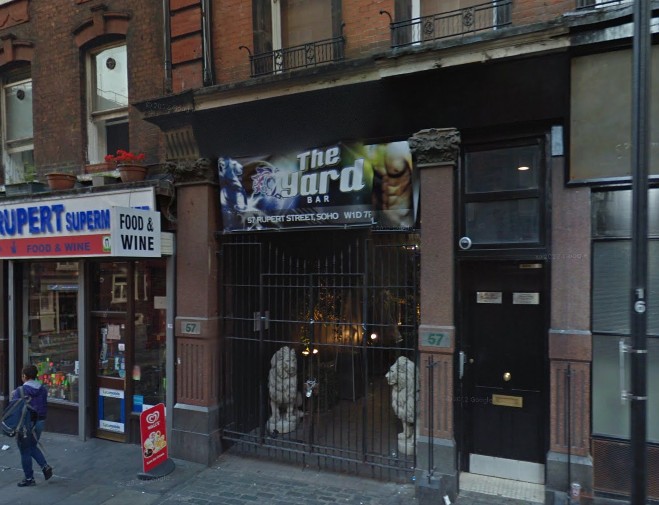
  • Yard Bar in Soho saved from the developers

    Yard Bar in Soho saved from the developers

    The historic Yard Bar in Soho has been saved after planning inspectors upheld Westminster City Council’s decision to protect it.

    The well-known LGBT venue in the heart of Soho found itself at risk, as the developer, Consolidated Property Corporation Limited, originally submitted plans to build flats over the courtyard area.

    Westminster City Council first blocked those plans in March 2015, but the developer submitted subsequent applications and launched two appeals that were finally rejected in the Planning Inspectorate on 10th August.

    In its final report, the appointed inspector described any move to build over the Yard’s courtyard as one which would “fundamentally alter” the character of the bar.

    The decision represents a full vindication of the council’s two-year battle to protect this much loved Soho bar, which received outstanding support from the local community and the bar’s owners, who led a high-profile ‘Save The Yard’ campaign.

    Cllr Robert Davis MBE DL, Westminster City Council’s Deputy Leader and Cabinet Member for the Built Environment, said,

    “Soho is one of the most iconic areas of Westminster, with a unique character that everyone at the council is committed to protecting.”

    “The Yard is a jewel in Soho’s crown and I am thrilled that we have joined forces with the ward councillors and the local community to ensure it remains open for business.”

    “I am absolutely delighted that Westminster City Council has been able to play its part in saving this long-standing example of Soho’s history, culture and diversity.”

    The proposals for the development of three flats meant that the courtyard would have been enclosed beneath a glass roof, something which the Soho Society and Historic England also strongly objected to.

    This would mean the loss of an “extremely distinctive feature of the bar and its related culture” said the planning inspector.

    The Yard Bar’s owner, Andy Jones, led the “Save The Yard” campaign which brought the issue to even greater attention.

    He said,

    “It has been a very long battle and we are so delighted that we have been successful. The support we got from Westminster City Council, ward councillors, Historic England, Soho Society, heritage experts and the LGBT, business and residential communities was huge and unbelievable. We can’t thank everyone enough. Ultimately, all of their support helped to overcome the multiple applications and common sense has prevailed. Long live The Yard!”

  • Unsung Gay Heroes In History

    We look back into history and highlight other unsung gay men who have made an incredible different to our lives.

    Alan Turing (1912–1954)
    Alan Turing was a British pioneering computer scientist, mathematician, logician, cryptanalyst, philosopher and mathematical biologist. During the Second World War, Turing worked for the Government Code and Cypher School (GC&CS) at Bletchley Park, Britain’s code-breaking centre. For a time he led Hut 8, the section responsible for German naval cryptanalysis and created the Turing Machine which decrypted the “unbreakable” German Enigma code. Turing’s pivotal role in cracking intercepted coded messages enabled the Allies to defeat the Nazis in many crucial engagements, including the Battle of the Atlantic. It is said by some historians that Turing’s work at Bletchley Park shortened the war by two to four years and saved approximately fourteen million to twelve million lives. Nevertheless, Turing led a sheltered and castigated life due to his homosexuality. Whilst he was briefly engaged to fellow Bletchley Park worker Joan Clarke, it was a purely plutonic relationship and they soon divorced. Turing was prosecuted by the police in 1952 for homosexual acts, when such behaviour was still criminalised in the UK. He accepted treatment with oestrogen injections (chemical castration) as an alternative to prison and became incredibly depressed. He committed suicide in 1954. Turing’s wartime heroics were not celebrated until he received an official pardon from Prime Minister Gordon Brown in 2009 following an internet campaign, and then a further royal pardon from Queen Elizabeth II in 2013. From 9th March, 2015, the biopic of Alan Turing’s life and heroics, THE IMITATION GAME, will become available on Blu-ray and DVD courtesy of StudioCanal.

    Bayard Rustin (1912-1987)
    Bayard Rustin was the brain behind Martin Luther King Jr. and the civil rights movement in 1960s America. Rustin was one of the driving forces behind the Congress for Racial Equality and the Southern Christian Leadership Conference (SCLC). Most significantly, Rustin organized the 1963 March on Washington — where King gave his legendary “I have a dream” speech. However, due to his homosexuality and his membership in the Communist Party, he has often received short shrift from historians and his integral role in the civil rights movement is often overlooked. At the time, Rustin selflessly avoided the limelight because he knew that elected officials and politicians would attempt to discredit the civil rights movement by pointing out his sexual and political leanings. Rustin was also heavily involved in the anti­–Vietnam War and gay rights movements before his death in 1987.

    Sergei Diaghilev (1872-1929)
    Sergei “Serge” Diaghilev was a Russian art critic, patron, ballet impresario and founder of the Ballets Russes, but also one of the first outspoken and unapologetically gay men of the early 20th century. Sergei Diaghilev reshaped that epoch’s ideas about art and performance, and was a pioneer in adapting new musical styles to modern ballet. He created the Ballets Russes mainly as a showcase for his lover and protégé Vaslav Nijinsky, who is still considered one of the greatest dancers who ever lived. Diaghilev had exquisite tastes, bringing the work of such artists as Balanchine, Picasso, Pavlova and Cocteau onto the stage in his cutting-edge productions, which were often unabashedly erotic. After the Russian Revolution of 1917, Diaghilev was condemned as an especially insidious example of bourgeois decadence and his contribution to Russian art was written out of history by the Soviets for more than sixty years.

    Larry Kramer (1935-present)
    Every movement needs a voice of anger and righteousness, and when the AIDS pandemic hit, the gay community was lucky to have Larry Kramer, whose editorials and plays (particularly The Normal Heart) demanded that the government take action and that gay men take responsibility for their health. A fascinating author and a rabble-rouser in the best sense, Kramer continues to be a vital and often infuriating presence. Kramer co-founded the Gay Men’s Health Crisis (GMHC), which has become the world’s largest private organization to raise funds for and provide services to people stricken with Acquired Immune Deficiency Syndrome (AIDS).

    Harvey Milk (1930–1978)
    Harvey Milk was an American politician who became the first openly gay person to be elected to public office in California when he won a seat on the San Francisco Board of Supervisor.
    Milk moved from New York City to settle in San Francisco in 1972 amid a migration of gay men to the Castro District. He ran unsuccessfully for political office three times. Nevertheless, his theatrical campaigns earned him increasing popularity, and Milk won a seat as a city supervisor in 1977. Milk served almost 11 months in office and was responsible for passing a stringent gay rights ordinance for the city. On November 27, 1978, Milk and Mayor George Moscone were assassinated by Dan White, another city supervisor who had recently resigned but wanted his job back. Despite his short career in politics, Milk became an icon in San Francisco and a martyr in the gay community. In 2008 a Hollywood biopic Milk, starring Sean Penn, honoured Harvey Milk’s transformation of San Fransisco into a mecca for LGBT Americans and in 2009 Milk was posthumously awarded the Presidential Medal of Freedom.

    The Imitation Game is out on Blu-ray, DVD and digital download platforms now , courtesy of StudioCanal
  • GAY HISTORY: Unsung Gay Heroes In History

    We look back into history and highlight other unsung gay men who have made an incredible different to our lives.

    Alan Turing (1912–1954)

    Alan Turing was a British pioneering computer scientist, mathematician, logician, cryptanalyst, philosopher and mathematical biologist. During the Second World War, Turing worked for the Government Code and Cypher School (GC&CS) at Bletchley Park, Britain’s code-breaking centre. For a time he led Hut 8, the section responsible for German naval cryptanalysis and created the Turing Machine which decrypted the “unbreakable” German Enigma code. Turing’s pivotal role in cracking intercepted coded messages enabled the Allies to defeat the Nazis in many crucial engagements, including the Battle of the Atlantic. It is said by some historians that Turing’s work at Bletchley Park shortened the war by two to four years and saved approximately fourteen million to twelve million lives. Nevertheless, Turing led a sheltered and castigated life due to his homosexuality. Whilst he was briefly engaged to fellow Bletchley Park worker Joan Clarke, it was a purely plutonic relationship and they soon divorced. Turing was prosecuted by the police in 1952 for homosexual acts, when such behaviour was still criminalised in the UK. He accepted treatment with oestrogen injections (chemical castration) as an alternative to prison and became incredibly depressed. He committed suicide in 1954. Turing’s wartime heroics were not celebrated until he received an official pardon from Prime Minister Gordon Brown in 2009 following an internet campaign, and then a further royal pardon from Queen Elizabeth II in 2013. From 9th March, 2015, the biopic of Alan Turing’s life and heroics, THE IMITATION GAME, will become available on Blu-ray and DVD courtesy of StudioCanal.

    Bayard Rustin (1912-1987)

    Bayard Rustin was the brain behind Martin Luther King Jr. and the civil rights movement in 1960s America. Rustin was one of the driving forces behind the Congress for Racial Equality and the Southern Christian Leadership Conference (SCLC). Most significantly, Rustin organized the 1963 March on Washington — where King gave his legendary “I have a dream” speech. However, due to his homosexuality and his membership in the Communist Party, he has often received short shrift from historians and his integral role in the civil rights movement is often overlooked. At the time, Rustin selflessly avoided the limelight because he knew that elected officials and politicians would attempt to discredit the civil rights movement by pointing out his sexual and political leanings. Rustin was also heavily involved in the anti­–Vietnam War and gay rights movements before his death in 1987.

    Sergei Diaghilev (1872-1929)

    Sergei “Serge” Diaghilev was a Russian art critic, patron, ballet impresario and founder of the Ballets Russes, but also one of the first outspoken and unapologetically gay men of the early 20th century. Sergei Diaghilev reshaped that epoch’s ideas about art and performance, and was a pioneer in adapting new musical styles to modern ballet. He created the Ballets Russes mainly as a showcase for his lover and protégé Vaslav Nijinsky, who is still considered one of the greatest dancers who ever lived. Diaghilev had exquisite tastes, bringing the work of such artists as Balanchine, Picasso, Pavlova and Cocteau onto the stage in his cutting-edge productions, which were often unabashedly erotic. After the Russian Revolution of 1917, Diaghilev was condemned as an especially insidious example of bourgeois decadence and his contribution to Russian art was written out of history by the Soviets for more than sixty years.

    Larry Kramer (1935-present)

    Every movement needs a voice of anger and righteousness, and when the AIDS pandemic hit, the gay community was lucky to have Larry Kramer, whose editorials and plays (particularly The Normal Heart) demanded that the government take action and that gay men take responsibility for their health. A fascinating author and a rabble-rouser in the best sense, Kramer continues to be a vital and often infuriating presence. Kramer co-founded the Gay Men’s Health Crisis (GMHC), which has become the world’s largest private organization to raise funds for and provide services to people stricken with Acquired Immune Deficiency Syndrome (AIDS).

    Harvey Milk (1930–1978)

    Harvey Milk was an American politician who became the first openly gay person to be elected to public office in California when he won a seat on the San Francisco Board of Supervisor.

    Milk moved from New York City to settle in San Francisco in 1972 amid a migration of gay men to the Castro District. He ran unsuccessfully for political office three times. Nevertheless, his theatrical campaigns earned him increasing popularity, and Milk won a seat as a city supervisor in 1977. Milk served almost 11 months in office and was responsible for passing a stringent gay rights ordinance for the city. On November 27, 1978, Milk and Mayor George Moscone were assassinated by Dan White, another city supervisor who had recently resigned but wanted his job back. Despite his short career in politics, Milk became an icon in San Francisco and a martyr in the gay community. In 2008 a Hollywood biopic Milk, starring Sean Penn, honoured Harvey Milk’s transformation of San Fransisco into a mecca for LGBT Americans and in 2009 Milk was posthumously awarded the Presidential Medal of Freedom.

    The Imitation Game is out on Blu-ray, DVD and digital download platforms now , courtesy of StudioCanal