Tag: Comedy

All the latest breaking news on comedy. Browse THEGAYUK’s complete collection of news, articles and commentary on comedy.

  • THEATRE REVIEW | The Play That Goes Wrong, Malvern Theatre, Worcestershire

    ★★★★★ – Dangerous, jaw-dropping and comedy genius!

    Mischief Theatre, in role as The Cornley Polytechnic Drama Society, brought to the Malvern Theatre stage an uproariously funny murder mystery entitled The Murder at Haversham Manor and it went south, literally.

    The Play That Goes Wrong was a comedic masterpiece, like its successor Peter Pan, Goes Wrong, with dangerous and risky tricks that left audiences clutching on to their seats as pieces of stage fell off and got thrown around, sometimes missing the actors by inches. The actors were so efficient in everything they did, from balancing three objects across two body parts, to expertly delivering their lines while dodging canvasses, candelabras and each other. What was sublime about The Play That Goes Wrong was that if ever you have seen an amateur, or a badly produced professional, play, this show embodies the different mistakes and disasters that have occurred in the former shows. There’ll be a moment where you cannot help but recall a bad production where sets had fallen down or actors had genuinely forgotten lines and asked for “line” throughout entire speeches.

    Jason Callender who plays Jonathan playing Charles Haversham was brilliant. His gag was always turning up at the wrong point in the play, revealing the ending every time. It was very comedic, too, when Jonathan was rarely allowed to play dead, for actors clumsily walked on him, sat on him, or fell on him. He made the audience laugh at his every entrance, and I chiefly loved his sneaking off stage wriggling subtly on the floor as if to kid the audience that we couldn’t see him depart. Patrick Warner who plays Chris playing Inspector Carter was a comedy genius. Every reaction was crafted to perfection, and his lines were well-timed with the action. The audience hung on to every word he said. He played the director too, so it was particularly hilarious when, under his breath, he would mutter a direction to understudies that had come on to fill in for a part. Ham acting is a feature often prominent in amateur murder mystery productions, and Alastair Kirton playing Max playing Cecil Haversham did a sterling job showcasing this. Max’s sawing the air with his hands and over dramatising his role while stopping to smile as the audience laughed during one of his lines, was incredibly entertaining. When Max changed role to be the Gardener he flashed his clothes to tell it was still him, and that he had returned, but as a different character. Absolutely hilarious. Lastly, Natasha Culley as Sandra Wilkinson enacting the role of Florence Colleymoore was a treat. Sandra was everything that had ever gone wrong with acting all sewn together in one actress. Her ticks, shallow demeanour, and not able to improvise without direction, was a great feast for the senses. Her overproduction of movement as she spoke, too, was hilarious. Overall, each cast member contributed to one of funniest nights I’ve had this year.

    The Play That Goes Wrong was especially entertaining for the set was a safety hazard, as the study, built atop of the drawing room, with no rails or support, collapsed gradually while the actors were still on there. It eventually fell down while an actor was under it, but the dexterity by which the actors moved and positioned themselves, made the accidents sort of safe, and we could exhale once again.

    Mischief Theatre is like Alton Towers, you queue to get on, you get several scares, and then you want to hop on again and again.

    The Play That Goes Wrong is playing at the Malvern Theatre until 22nd July 2017


    Originally reviewed at the Birmingham Rep

  • THEATRE REVIEW | The Faulty Towers Dining Experience, London

    ★★★★

    | The Faulty Towers Dining Experience, Kingsway Hotel, London

    The Faulty Towers Dining Experience review

    Believe it or not, I’ve never seen an episode of Faulty Towers. I knew that it is a British television institution, a classic, yet I’ve just never got around to watching it (plus I’m a bit too young to remember when it originally aired on television). So I didn’t know what to expect when I went to the Faulty Towers Dining Experience.

    It was hilarious! Taking place in the dining room at Kingsway Hotel in Covent Garden, the Faulty Towers Dining Experience is an interactive and immersive theatre at its best. Of course, there is a meal that’s included in the experience, but it’s all about the show that is unravelling (and falling apart) right before your very eyes as you’re tucking into your leek and potato soup – that is if Manuel hasn’t taken it from you.

    If you don’t know much about the television show, which would be hard to believe, it is about characters in a fictional hotel in the seaside town of Torquay. First off there is owner Basil Fawlty – a true Englishman – and his wife Sybil, who orders him around but she’s the one who wears the pants in the relationship. And then there is Manual – a short in stature Spanish waiter who practically speaks no English and gets the instructions from Basil all wrong. So it’s these characters from the show that you get to ‘enjoy’ your dining experience with.

    The show starts immediately when Basil (played by Benedict Holme) tells Manuel (Anthony Clegg as an exact replica to the Manuel played by Andrew Sachs) to take the glasses away, of course, Manuel takes people’s glasses off their faces and not the drink glasses! Then Basil tells Manuel to pass out the peanuts, so Manuel literally passes out the peanuts. It’s one thing after another, and once you sit down in the Faulty restaurant it’s only a matter of time until Manual interferes with you – he turns your napkin into a bib, tosses rolls around the room, does somersaults, and spends the entire time misunderstanding and misinterpreting everything Basils says. Lucky for us it’s Sybil (Suzanna Hughes) who manages, a bit, to keep the entire dinner from melting into complete chaos! It’s very physical comedy, but it’s also physical for the attendee because you’re laughing very hard and out loud too! It was the unlucky few who found a set of teeth in their soup – gags like this that make the whole thing hilariously fun and funny! No person is spared, and god forbid if you are celebrating a birthday or anniversary – you will get a special gift from Sybil – and boy is it special! It’s an experience that you will not forget – just don’t mention the war!!!

    It was a treat to be transported back to the 1970’s with being part of Fawlty Towers Dining Experience. The trepidation that you might be picked on was real and you almost expect the soup to end up on your lap? Sybil was so like the television character down to the scary laugh, while Manuel was brilliant and made the whole show so very reminiscent of the television snow. What a great way to spend a two and a half hours – to be part of this experience makes me want to watch the television series now.

    Tickets for the Fawlty Towers Dining Experience can be bought here:

    http://www.torquaysuitetheatre.com

    If you have any questions on the show, there is a Frequently Asked Questions on the first page.
    The London shows, held in the Torquay Suite Theatre at the Kingsway Hall Hotel, are held throughout the year, while there is also a version that tours the UK as well as Australia and the rest of the world. Yes, this is how popular this show is – continuously playing much to the delight of the television show’s fans – it’s the world’s most successful comedy dining show of it’s kind and now it’s time for you to experience yourself too!

  • Britain’s favourite sitcom is…

    Fawlty Towers is the greatest British sitcom of all time and Ab Fab gets a mention too – according to comedians.

    Jennifer Saunders
    at the 2007 TCA Winter Press Tour. Ritz Carlton Huntington Hotel, Pasadena, CA. 01-11-07

    Over 100 professional comedians and actors, including David Baddiel, Jenny Eclair, Reece Shearsmith and Alexei Sayle, were polled to find out their favourite sitcoms, moments and one-liners.

    The John Cleese-starring classic comedy received the most votes in the best sitcom category – despite originally airing over 40 years ago and lasting for just 12 episodes.

    While the favourite one-liner among comics is “Don’t tell him, Pike” from Dad’s Army as said by Captain Mainwaring to Pike when the young Private is asked his name by a German prisoner.

    And the most popular scene is from I’m Alan Partridge and sees Alan meet his biggest fan – only to discover he has an unhealthy obsession with the radio DJ, including a room dedicated to him.

    The research was commissioned by TV channel Gold to celebrate the launch of its first full series of We Have Been Watching

    Comedy critic Bruce Dessau, who compiled the audit of comedians, said,

    “We are well-known across the world for our ‘British sense of humour’, which is shown at its best in many of our best-loved and timeless comedy classics.

    “The art of comedy is almost impossible to define, but many of these characters, lines and sitcoms are brilliant examples of the very best in the history of British TV comedy.”

    Other favourite one-liners include Blackadder’s Lord Flashheart announcing: “I’ve got a plan, and it’s as hot as my pants” as he proposes running away with Kate.

    And Tony Hancock, upon on learning how much blood he has to give during a blood donation, saying,

    “A pint? Why that’s very nearly an armful!”

    In addition to containing the best comedy scene, I’m Alan Partridge is the second most popular sitcom among comedians – with Blackadder in third, The Office in fourth and Father Ted in fifth.

    Alan Partridge also overcame competition from Basil Fawlty, David Brent, Del Boy and The Young Ones’ Rick to be the named favourite male comedy character.

    While Steve Coogan, who plays the radio DJ from Norwich, topped the list of favourite male comedy actors, followed by Rik Mayall, Ronnie Barker and John Cleese.

    Joanna Lumley is the most popular female comedy actor among comedians – ahead of Caroline Aherne, Julia Davis, Penelope Keith and Victoria Wood.

    Absolutely Fabulous duo Patsy Stone and Edina Monsoon came first and second in the favourite female comedy character category – beating The Royle Family’s Denise and Father Ted’s Mrs Doyle.

    Bruce Dessau said,

    “Many of the moments found in this poll can be enjoyed again in a fresh take on the new series We Have Been Watching, as some of the top comedy folk share their views on the funniest moments telly has to offer.”

    We Have Been Watching is the first UKTV Original of 2017 for Gold, which celebrates its 25th birthday this year.

    The channel will also exclusively premiere the brand new series, Henry IX, penned by Dick Clement and Ian La Frenais and starring Charles Edwards, Sally Phillips and Kara Tointon.


    FAVOURITE BRITISH SITCOM (AS VOTED FOR BY COMEDIANS):

    1. Fawlty Towers
    2. I’m Alan Partridge
    3. Blackadder
    4. The Office
    5. Father Ted
    6. Peep Show
    7. Only Fools and Horses
    8. The Thick of It
    9. Absolutely Fabulous
    10. Porridge


    FAVOURITE SCENE FROM A BRITISH TV COMEDY (AS VOTED FOR BY COMEDIANS):

    1. Alan Partridge meets a super-fan who has a room dedicated to Alan Partridge (I’m Alan Partridge)
    2. Tim and Dawn finally get together (The Office)
    3. Basil Fawlty argues with the Germans, stressing “Don’t mention the war!” (Fawlty Towers)
    4. “Don’t tell him Pike” scene with German prisoners. (Dad’s Army)
    5. Del Boy falling through the bar (Only Fools and Horses)
    6. Father Ted and the terrified priests stray into the lingerie department (Father Ted)
    7. Mrs Richards complaining about her room to Basil Fawlty (Fawlty Towers)
    8. The entrance of Lord Flashheart in Blackadder II (Blackadder)
    9. Del Boy and Rodney running as Batman and Robin (Only Fools and Horses)
    10. David Brent begging for his job as he gets fired (The Office)

    FAVOURITE ONE-LINER FROM A BRITISH TV COMEDY (AS VOTED FOR BY COMEDIANS):

    1. Captain Mainwaring to Pike, when Pike is asked his name by a German prisoner: “Don’t tell him Pike.” (Dad’s Army)
    2. Tony Hancock on learning how much blood he has to give during a blood donation: “A pint? Why that’s very nearly an armful!” (Hancock’s Half Hour)
    3. Father Ted explains to Father Dougal the concept of perspective: “These [toy cows] are small. But those [real cows] out there are far away. [Points to toy cow] Small… [Points to real cow] far away.” (Father Ted)
    4. Manuel in response to Basil’s plea to confirm he placed a winning bet on a horse: “I know noth-ing.” (Fawlty Towers)
    5. Alan Partridge pitches programme ideas to the BBC Commissioning Editor, Tony Hayers. After a string of no’s, he desperately puts forward his last programme idea: “Monkey Tennis?” (I’m Alan Partridge)
    6. Patsy judging celebrities as she looks through magazines: “One more facelift on this one, and she’ll have a beard.” (Absolutely Fabulous)
    7. David Brent on the effect of his management skills in the workplace: “I suppose I’ve created an atmosphere where I’m a friend first, and a boss second. Probably an entertainer third.” (The Office)
    8. Alan Partridge explains who Wings are: “They’re only the band The Beatles could have been.” (I’m Alan Partridge)
    9. Lord Flashheart proposes running away together to Kate: “I’ve got a plan, and it’s as hot as my pants.” (Blackadder)
    10. Geraldine Granger introduces herself upon her arrival in Dibley as their new vicar: “You were expecting a bloke: beard, Bible and bad breath. Instead you’ve got a babe with a bob cut and a magnificent bosom.” (The Vicar of Dibley)
  • People are really not happy with BBC 2’s Real Housewives of ISIS sketch

    A comedy series on BBC 2 is being slammed by some very unhappy people.

    The real housewives of ISIS
    BBC

    A sketch on the BBC 2 comedy show, Revolting is getting people on social media very very angry. Why? Well, the sketch is called The Real Housewives of ISIS – so you can probably work it out from there.

    The clip, which is doing the rounds on Twitter pokes fun at the ‘ISIS housewives’ who are seen wearing and comparing suicide vests, complaining about having to compete with 40 virgins and using social media hashtags like #DeathToTheWest.


    The series has seen a massive backlash on social with many slamming the makers of making light of ISIS

    https://twitter.com/UncleMeraj/status/816672501833101312

    https://twitter.com/n_elhuda/status/816695986055741445

    https://twitter.com/Its_Rahmat/status/816689050211991554


    Heydon Prowse , Jolyon Rubinstein (L-R)
    BBC/Hat Trick/Stefan Sieler

    The series was created by comedy duo Heydon Prowse and Jolyon Rubinstein who reacted to the criticism by writing,

    “It’s important not to pull your punches in satire. You have to be fearless or it undermines your credibility.

    “You can’t go after David Cameron for five years like we did and not go after Islamic State.”

    Jolyon Rubinstein added,

    “It’s about people who are vulnerable to these kind of approaches. We’ve had the “White Widow”, so this is actually happening to women here.”

    The BBC declined to comment to both The Telegraph and Digital Spy.

    Revolting is on Tuesdays at 10PM.

  • THEATRE REVIEW | Victorian & Gay – where cooks cook, and ladies lady

    THEATRE REVIEW | Victorian & Gay – where cooks cook, and ladies lady

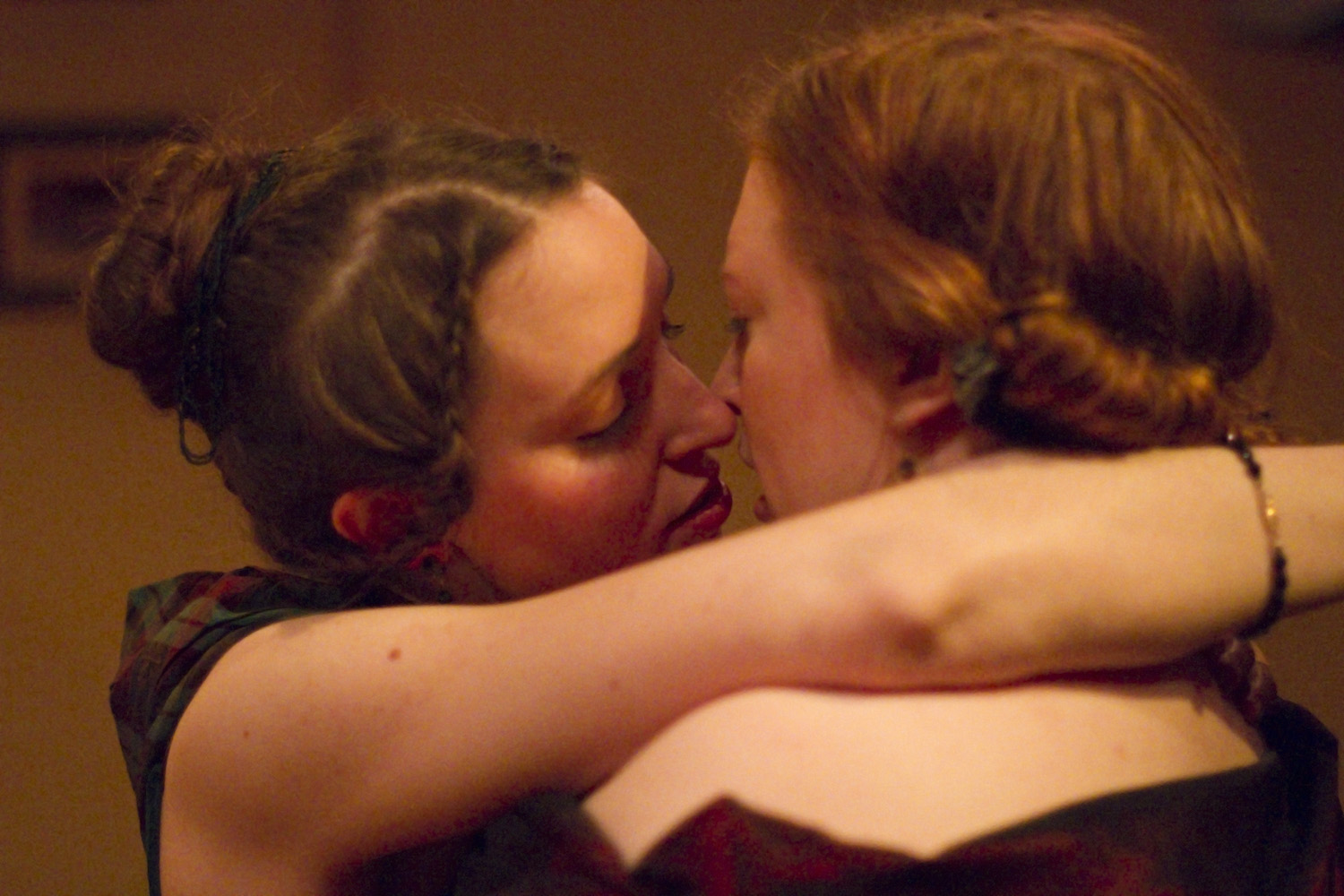
    What chestnut-cracking season’s complete without multiple bonkers reenactments of Dicken’s Scrooge, pussy jokes articulated in beautiful Victorian English, a couple of murders and some good old festive references to sodomy – falalalala la la la la? ★★★★

    (more…)

  • Theatre Review: How Does A Snake Shed Its Skin?

    What happens when you combine a squiffed-up Marilyn Monroe, a calorie conscious Margaret Thatcher and a suicidal Virginia Woolf – throw in three filing cabinets, a bucket and some schizophrenic-style storytelling? ★★★

    A trichotomy of a supposed glimpse into the minds of influential women, whisked in with a smidge of self loathing, bipolarism and an 11-year-old girl desperate for some love – we give you Susannah Hislop’s one woman show.

    Watching Hislop is sort of like watching Eddie Murphy playing numerous characters in the same scene, with a touch of Vanessa Feltz’s meltdown on the first Celebrity Big Brother, and a slight undertone of Edwina Currie’s parties-for-one on I’m A Celebrity Get Me Out Of Here. It’s an interesting combination.

    Diary reciting, grapefruit and pill lobbing, famous quotes and letters piece together this helter-skelter performance that unveils the implausible but believable similarities linking the trio. Susannah focuses on the not-so-positive elements of Thatcher’s, Woolf’s and Monroe’s lives and ultimately is doing so for the same reason why Eric Pickles avoids mirrors – to feel better about herself.

    Hislop has that Judi-Dench-being-interviewed draw – instantly likeable. But unlike the oven-timer for the Bake Off’s show-stopper, it could do with winding forward a few mins.

    Written and performed by Susannah Hislop

    Directed by Anna Ledwich


  • THEATRE REVIEW | Jeeves & Wooster in Perfect Nonsense: Hilarity at its best

    ★★★★ | Jeeves & Wooster in Perfect Nonsense

    Jeeves and Wooster played by Jason Thorpe and Robert Webb respectively, bring to The Birmingham Rep a delightful and hilarious performance of Perfect Nonsense with actor Christopher Ryan. There is an initial gag before the curtains go up by a speaker announcing that phones should be switched off, for it might interrupt the first performance of Mr Wooster and he might feel nervous. Of course, merriment ensued.

    Perfect Nonsense tells a story of Wooster and his butler Jeeves who are putting on a play, but it is Wooster’s debut so he starts the show with running through his part and calming himself by saying: ‘How hard can acting be?’ Jeeves had cleverly set everything up so Wooster pretty much walks on to the intricate set that he has just been describing, as it is rolled on, on wheels, and displayed behind him as he turns around. It was so efficient that it surprises Wooster every time.

    Perfect Nonsense, directed by Olivier Award winner Sean Foley, is currently touring the UK, and it is peppered with comedy, suspense, and a little drama, especially when Wooster is blackmailed by half the characters, who all want the silver cow creamer.

    Robert, Jason and Christopher combined made the show extra special, as each contributed to the amusement by exaggerating facial expressions that provided the effect they wanted: to bring the house down with laughter.

    Robert Webb, whose credits are endless, but one would immediately recognise him as Jeremy Usborne from the Peep Show, had an innate ability of moving his body to suit the action and it made the transition between scenes even funnier. He even simulated Michael Jackson’s famous moonwalk to travel between scenes. Webb reprised the role like a duck to water and carried the show with relentless energy and flair.

    Jason Thorpe, whose theatre credits include: From Morning to Midnight, His Dark Materials and What the Butler Saw, lends his ingenious acting ability and comedic timing to Jeeves, Wooster’s butler. He also convincingly multi-part plays other roles in the show, and to each one he gives a special touch that supports Wooster’s storytelling. His characterisation of Stiffy was sublime.

    Christopher Ryan most famous for playing Mike in 1982-1984 TV series: Young Ones, portrays the character of Seppings who plays all other roles with an enthusiasm and persistence that would put anyone my age to shame. Christopher dominates the stage with his flair of movement with one second portraying Wooster’s aunty Dahlia and in the next Roderick Spode who is described as being 6ft 9in when Ryan is nowhere near that height at all.

    The set was a masterpiece of the steady yet unpredictable design of Alice Power whose recent design credits include: The Walworth Farce; and A Mad World My Masters by Thomas Middleton. Power designed a set that was so effortlessly mutable, that it became part of the comedy, as the sets were pushed on and pictures were rolled up and down a photo frame via a rotating handle.

  • INTERVIEW | Kate Clinton, The First Lady Of Comedy

    Every summer for the past 15 years THEGAYUK’s British/American movie critic Roger Walker-Dack has hot tailed it to spend his entire summer in Provincetown on the tip of Cape Cod.

    A lot has changed since the first Brits landed there when the Mayflower docked in 1602. They only stayed five weeks then before sailing on to their final destination at Plymouth Rock, and they really don’t know what they missed. This captivating beautiful small seaside town has been an artist’s colony, a Portuguese haven, and now it is an enchanting gay mecca that each summer sees the all-year round population of less than 3000 swell to over 60000 people.

    In a series we are calling POSTCARDS FROM P.TOWN, Roger Walker-Dack will introduce some of the people and things that create the magic that make this such a ‘must see’ destination for gay people from all over the world.

    Kate Clinton describes herself as a faith-based, tax-paying, America-loving political humorist and family entertainer. She is also one of the funniest and quick-witted lesbian comics with her no-holds barred, often-controversial take, on all the hot button topics of the day. Now in her third decade of performing, the woman is seemingly unstoppable with TV appearances ranging from ‘The Rachel Maddow Show’ to ‘The L Word’, several off-Broadway shows, countless sold-out nationwide tours, movies, radio, MC‘ing events and even doing a turn at The Gay Games in Chicago one year. She has worked with some of the greatest performers of her time from Lily Tomlin to Oprah Winfrey. Her summer show is one of the first dates I put in my diary when I arrive here in P.Town. I’ve sat in her audience at least once a year for the past 15 years, and have also exchanged the odd quip or two as we passed each other at Joe’s Coffee Shop, but now she is taking time out of her busy schedule to give her first ever UK magazine interview to The Gay UK:

    RWD: You shocked me one year by revealing in your show that you were once a schoolteacher.
    KC: Yes, I taught English in High School for years but I always wanted to try my hand at Stand Up Comedy. In March 1981, after I only had just ‘come out’, a friend booked me into a local gay club in Syracuse New York. To my great relief it was a huge success, although it did help that all my friends had turned up to support me. However two weeks later I did the same show at a Women’s Club in Boston where they had no idea of who I was. And the same lines that had slayed them before, now just died an instant death, and from the back of the room a voice shouted out in a broad South End accent ‘you’re on your own now dahling!’ And I was.

    RWD: Did that floor you?
    KC: (laugh) No. I knew from Teaching just to go on regardless. So I did, and got through it.

    RWD: How long did you juggle both careers?
    KC: Actually I didn’t. My partner at the time said after my first show ‘I don’t know how to tell you this, but you have to do it again.’ So I immediately gave up teaching and went into performing fulltime and she became my manager. Then another good friend who used to perform in a band booked me for a first summer season touring the North West in a red camper van called Ruby, playing one nighters in an a varied assortment of small and… how can I put it politely… ‘interesting venues’.

    RWD. Wow! The touring part doesn’t amaze me but the camper van part is too hard to swallow. You are without doubt THE most elegantly-dressed woman in P Town and even when you whizz past on your bike here you look like you are suitably attired to have tea with The Queen…or a queen at least.
    KC: (laughing very loud) I only had a few outfits in those days. But in 1985 I started travelling more and Eastern Airlines had this amazing deal where you could fly to 21 cities for a pittance. The only catch was that you always had to fly through Atlanta, so if you wanted to go from Portland Oregon to Seattle it added 5000 miles to a 173-mile journey.

    1985 was also a turning point for me as the AIDS crisis started to hit hard and I played less lesbian only audiences and began playing more gay audiences along with fund raisers and benefits as well. And then I also went on to do memorials and services for friends that were lost.

    RWD: A very tough time…
    KC: Yes, but I also saw it as a great coming together of our community too, as a way of healing.

    RWD: Have you always been so very political?
    KC: Coming out as a lesbian in those days was in itself considered a political act. After all, some women can’t say the word lesbian… even when their mouth is full of one.

    But on a professional level I feel that we have to deal with a barrage of news and information on a daily basis and I think it is the job of the comic to filter and give it the benefit of a thought that people generally don’t tend to do. I like to contextualize it and to put it in historical context.

    RWD: I find what you do is to articulate something that concerns us all and put a funny spin on it, even topics that are considered very serious. You are unashamedly a fervent and passionate Democrat and so I love the stand you take on every issue as I feel completely in tune with your political beliefs, however I am wondering how they go down with an audience that is a tad more conservative?
    KC: Maybe it’s the teacher in me, but I think it’s all-educational still, and anyway I just presume that we are all in it together.

    RWD: Even though a third of gay people voted for George Bush. Twice?
    KC: That’s still hard to believe, but people do come up to me afterwards and say I’m a Republican BUT I loved your show.

    RWD: And those that don’t?
    KC: When they find it too tough to take, like when I was including pieces on the Iraq war, I simply pretended that all the people who walked out during my performance had just gone to the bathroom and so I carried on. And anyway, I’m a moderate lesbian, I only hold grudges for six generations.

    RWD: (laugh) But do you ever censor yourself thinking you may be going too far?
    KC: I don’t deliberately set out to provoke outrage. If I am confident in any piece and feel good about it, then I will do it.

    RWD: P Town is not just the place you perform. It is also very much home for you and your partner.
    KC: I came here first in 1984 and performed for a week. The next year I did two and so on, and I very quickly fell in love with the place. I started to think why am I going back to Upstate NY when this is the place to be all summer. I love all the natural beauty of the town, and the way that people still come here for both that, and also the wonderful sense of community we have here.

    RWD: The thing most baffling about you is why have you never ever performed in the UK? Many of your books and CDs are available on Amazon there and sell very well so I know you have a big British fan base.
    KC: I’ve got very close to it twice but on each occasion I had family emergencies and had to cancel. BUT I am really hoping it‘s going to be 3rd time luck. I do get a lot of Facebook mail from the UK from people who seem to like that my take on the US is quite raw.

    RWD: You would have a great deal of fun giving us your very incisive take on British politics too. I think if you had been born there you would have become one of our great stately Institutions, the sort of person the Queen would have made a Dame.
    KC: Thank you.

    RWD: Here in Provincetown despite all the many changing fads and trends that have occurred over the years you are still here, and obviously having a great deal of fun, and in fact this season you are the ONLY lesbian comic performing. Whilst all the other acts are ‘barking’ on the street trying to entice people in to see the shows, you don’t and yet you play to packed houses every night.
    KC: I think sometimes they come simply because I don’t plaster the beaches with flyers when everyone is simply trying to catch some rays! (laugh) But it’s also a longevity thing, as after all these years I have become part of people’s regular schedule. In the winter I travel a lot around the country: I do workshops, conferences, host award dinners etc. and so many of the people I meet there come to see me when they are on vacation here.

    RWD: Over all these years that you have been performing you have won countless Awards, been lauded with praise from the likes of writer TONY KUSHNER (Angels In America) who called you a ‘political visionary’ and ‘incredibly funny’, and rave reviews from the media such as the NY TIMES whose critic said he was in tears from laughing so much, but I am wondering what your favourite compliment is that you have ever received after a show.
    KC: After a show in Lexington, Kentucky, I was having dinner with the producers and a young woman came up to me and clapped me a good one on the back, and exclaimed, “Kate Clinton! You made me want to f**k again!”

    RWD: (laughing) I am for once speechless.

    Follow Kate Clinton on Facebook

  • COMEDY REVIEW | In The Midst Of Crackers

    On a journey through debauchery; silliness and hypocrisy, Reginald D. Hunter explores themes of human nature and the intrinsic nuances which make up our cultural world.

    In, In The Midst of Crackers, Hunter takes a more introspective and confessional approach to respond to the controversies which have surrounded his work and, in particular, his choice of language, by demonstrating the hypocrisies which exist hidden behind euphemism, within society.

    Exploring themes of Race; Sex and Relationships through, often, long philosophical ramblings whose only punchline seems to emerge from the need for a release from the awkward tension that has arisen, Hunter poses some difficult questions with a remarkable ability to silence his audience completely, before raising them into a fit of giggle fury.

    The more personal material presented through the discussion of relationships and, in particular, Hunters confessions of cheating on former girlfriends, leaves a slightly awkward and unsympathetic taste, despite the intellectual repartee with which the anecdote is staged, and leaves you feeling a little like you’re sat in the pub with a group of Blokes and a sign outside reading “Beer as cold as your ex-girlfriend’s heart”

    He has an ability to frame a discussion of some merit in rapturous silliness, drawing the audience in with philosophical smarts which endeavour to highlight and often shame the inequalities, hypocrisies and injustices of life and then ending on a butt joke. An altogether whimsy which just goes to show that life is really silly sometimes and so are the inequalities in it.

    The overall tone of the show is one of confession, as Hunter aims to respond to critique; controversy and personal failings, where he is more often than not painted as the “Bad Guy”.

    It is a show that, in its best moments, explores society with philosophical vigour and great intellect leaving the audience in a limbo of perplexing morality and a “whatever” giggle. At times, however, it feels lacking in clarity perhaps, as simply because; life, in itself, is lacking in the very clarity which Hunter aims to examine.

  • OPINION: Don’t Take It The Wrong Way: Homosexuality in Comedy

    In 1972, during an impromptu TV appearance with jazz singer George Melly, Monty Python star Graham Chapman, rather drunkenly, came out publicly as the first gay comedian in British history.

    This casual announcement caused no small amount of outrage – homosexuality had only been decriminalised three years previously and it was far from universally accepted. 41 years on, our attitudes have changed: the recent British Attitudes Survey revealed four-fifths of people now have no objection to homosexual relationships, and same sex marriage is soon to become law. But has the comedy world kept pace with this social change?

    Certainly, directly homophobic jokes are no longer accepted by audiences. Where you might have had a few non-ironic, ‘come over a little queer’, innuendos in working men’s clubs in the 1970s, these are now restricted to the school playground. But homosexuality still remains to some extent a taboo and therefore a basis – if not a target – for comedy.

    Consider, for instance, how a comedian can get a laugh out of allusion to a homosexual act or homosexual attraction, which wouldn’t be possible with the heterosexual equivalent. Comedians can also continue to spout gay-innuendo, as long as it is done from behind the mask of a character (cf Al Murray) or irony (cf Jimmy Carr).

    In other words, we as a nation no longer think homosexuality is wrong but are happy to laugh at it, provided we believe the comedy’s creators share our enlightened views.

    Chapman’s coming out in 1972 was closely followed by the premiere of Are You Being Served – perhaps the source of Britain’s most famous comic gay character.

    Though now dated, Mr Humphries camp behaviour crops up later in Gimme Gimme Gimme, Benidorm and Little Britain, while the trope of a closeted or secretly gay man resurfaces frequently, for instance Frasier’s Gil Chesterton, The Simpsons’ Smithers and Ted & Ralph from The Fast Show.

    On the live circuit, numerous all-male sketch groups coax wild laughter out of subtle suggestions of attraction between the actual cast members and their attempted or successful sexual advances (passionate snogs in male sketch groups are so frequent it’s a wonder anyone is still able to believe they are unplanned).

    A reasonable question is whether this is something we should be concerned about. I would not for one second suggest the people making the above work hate gay people or necessarily hold even slightly homophobic views. After all, comedy’s role is merely to play on taboos; it is society that is responsible for creating them.

    Comedy reflects the world and its prejudices and, if we don’t like what we see, this is just the rage of Caliban seeing his own face in a glass (to quote Oscar Wilde – perhaps the world’s most famously ill-fated homosexual comedian). One could easily claim that playing on gay taboos does not involve saying homosexuality is wrong, merely that it historically exists outside of the mainstream.

    But doesn’t comedy have a duty to question and to change the world, rather than simply playing to its basest interests?

    After all, no self-respecting comedian would tell racist jokes, even if their audience happened to consist entirely of BNP activists who genuinely enjoyed them. Isn’t laughing at a situation predicated on homosexuality saying, in some way, that to be gay is somehow slightly ridiculous – not wrong or evil – but somehow lesser, not ordinary, not completely sensible. There is perhaps a hint of macho culture at work – a culture often accused of pervading comedy – where the jokes of the playground are rejected but their underlying narrative is accepted and played on.

    It has been frequently noted that men playing women gets laughs but women playing men does not, and that this may be down to the gender-power-play at work. Perhaps the same process exists when a straight man ‘plays gay’. Certainly the reverse wouldn’t be funny – the heterosexuality of a straight man, in itself, is never made the basis for a joke.

    Doesn’t the mere fact of this suggest something not entirely comfortable at work behind homosexuality’s portrayal in comedy?

    It is also interesting to contrast how frequently, how well and from how early on drama – on stage and screen – has tackled the real life issues of homosexuality, gay life and gay culture, and has succeeded in presenting numerous three-dimensional gay characters. Perhaps comedy is starting to do this, although its tendency toward stereotype makes it not best placed for the challenge. But surely, through satire, it is perfectly positioned to tackle the existing power-play between gay-straight relations and the place of gay stereotypes in culture.

    Where are the stand-up routines and the sketches poking fun at the casually accepted cultural view of homosexuality as effeminate or butch, transgressive, ridiculous or naughty?

    Graham Chapman did much to advance gay rights, mainly by living in the public eye as a non-stereotypical, and successful, gay man. But his comedy work with the Pythons made as much comedy hay from ‘poofs’ as anyone else. Perhaps it’s time for comedy to take a more active approach to gay representation – to stop meeting expectations and start setting them. If homosexuality has become a cheap laugh and an easy target, why not take aim at the harder target – comedy itself.

    By Tom Crawshaw


    Opinions expressed in this article may not reflect those of THEGAYUK, it’s management or editorial teams. If you’d like to comment or write a comment, opinion or blog piece, please click here.


  • THEATRE REVIEW | Noises Off, National Tour

    ★★★★ | Noises Off, National Tour

    If someone had told me that I would sit through the first act of the same play three times in the same evening and actually enjoy it, I thought I would be laughing at them, not with them.

    But this cleverly written play, produced for this national tour by The Old Vic Theatre, amounted to a hilarious and thoroughly entertaining evening at the theatre.

    In Michael Frayn’s classic comedy, a group of actors initially find themselves rehearsing Act One of a play, “Nothing On” in the small frantic hours before the opening night of a regional tour. Nothing is ready, the cast don’t know their lines, there is a significant problem with the sardines and the director, Lloyd Dallas, is becoming increasingly agitated and frustrated at the lack of progress. The relationships between the actors become strained when their backstage shenanigans start to interfere with their professional integrity.

    Fast forward to the middle of the tour. Life on the road is taking its toll on the company and what we see is the view from backstage, as the cast perform Act One of “Nothing On” to an eager audience of pensioners and as jealously, rivalry and a quickly disappearing bottle of whiskey backstage all contribute to the sabotaging of each other’s performances whilst keeping the ‘noises off’ the main stage.

    The final scene is once again viewed from the auditorium, where the cast, on the last performance of the tour, perform Act One of “Nothing On” with a complete lack of enthusiasm, damaged props, an almost total disregard of the script and a ridiculous amount of improvisation as the performance spirals out of control.This incredibly cleverly written play was great fun. The first act centred on the rehearsal of a play within the play. The audience were treated to watching and engaging in the story and characters of the fictional play being rehearsed, which was actually a funny and traditional farce, with a story you could follow, plenty of well-timed entrances and exits and which was very much in keeping with the spirit of the genre. However, the parallel narrative of the lives, loves and inabilities of the cast and crew was equally engaging and sharply written. The interchange between the two stories was seamless as the audience switched between the two narratives with ease. Utilising the theatre as part of the set (by having the director try his best to control the stage from amongst the audience in the stalls) was a brilliant move, as it really drew in the audience, making them feel like part of the company.

    The backstage section was absolute comic genius and it is almost worth seeing the play for this section alone. This part of the play was virtually silent, as the now familiar story of “Nothing On” was being performed on stage whilst the company was falling apart off stage. The cast appeared and disappeared through various doors as the play continued whilst the crew physically fought, tied each other’s shoelaces together, hid items from each other and join forces to prevent one cast member from getting drunk. What followed was 30 minutes of simply brilliant, fast paced and perfectly directed and choreographed physical comedy. It was clear that the cast (and the director, Lindsay Posner) had worked very hard to achieve such impeccable comic timing and it was one of the finest pieces of stage comedy I have seen in a long time.

    The final section transported the audience back to sitting in front of the stage, where at the end of the run, the company and the play is falling apart. Wobbly scenery, failing props and stage fatigue all contribute to the increasingly crumbling performance. Whilst this section was enjoyable, it was here, where, after such an impressive second act, the final act paled slightly and the joke started to stretch a little compared to what had come before it, but to be fair, the second part was a very difficult act to follow.

    The cast were all first-rate, and as previously mentioned, had clearly worked incredibly hard to perform as they did. Neil Pearson was excellent as Lloyd Dallas, the frustrated director. You could feel his pain as he tried desperately to hold things together just before opening night. Maureen Beattie’s turn as Dotty Otley was also a particular pleasure. Her character could almost be a forerunner for Mrs Overall in Acorn Antiques or Mrs Doyle in Father Ted and not only was Beattie’s stage presence noticeable; her comic performance was on a par with Julie Walters performance as the aforementioned Mrs O. The very handsome Simon Bubb put in an incredibly good performance as the hapless and downtrodden Tim, a stagehand, understudy and general dogsbody. Bubb subtly generated a character that you couldn’t help but easily warm to and empathise with. The remaining cast were all incredibly good and there was no weak link in them, each of them, in their own way, deserving a specific mention. The relatively simple set was well utilised and the play as a whole had a good balance between sharp yet warm writing, likeable characters and hysterical physical comedy.

    The show was written in 1982 yet didn’t feel dated at all, giving off a real feel of a mixture of both the early Channel 4 (slightly anarchic) comedies such as “The Comic Strip” coupled with the charm of the 70’s sitcoms such as The Good Life, George and Mildred and Some Mother’s Do ‘Ave ‘Em. Noises Off had an infectious, almost naive allure which was positively delightful.
    Noises Off is currently playing at the Sheffield Lyceum Theatre before continuing its national tour.