Tag: Domestic Violence

All the latest breaking news on domestic violence. Browse THEGAYUK’s complete collection of news, articles and commentary on domestic violence.

  • Charity launches a forum for  LGBT+ survivors of domestic abuse

    Charity launches a forum for LGBT+ survivors of domestic abuse

    Galop has launched a Domestic Abuse Survivor’s Forum as part of its National LGBT+ Domestic Abuse Helpline Service.

    The Forum, which will go live on Thursday, December 10th, 2020, is a safe, anonymous, online space for LGBT+ people who have been affected by domestic abuse. The forum will allow users to share their experiences, support one another and receive information and support from the team at the National LGBT+ Domestic Abuse Helpline. 

    According to the charity the forum will introduce peer-to-peer support for its users.

    Historically, domestic violence services have demonstrated how vital peer support spaces are for survivors of abuse. There are very few spaces where LGBT+ people can come together and share their experiences with abuse and receive support from those with the lived experience of being LGBT+. The LGBT+ Domestic Abuse Survivors Forum will provide this safe space for LGBT+ people to support one another.  

    How does the forum work and how are users kept safe? 

    The forum is accessible to all LGBT+ survivors of domestic abuse so that they can read valuable information about abuse even if they do not feel ready to register and post themselves. In order to keep every user of the forum anonymous, all posts are moderated before they are made visible on the forum. This includes checks for identifying information (which is then edited out), abusive or harmful behaviour, and on the welfare of the poster. 

    The helpline team moderators can see the e-mails of users, so we can reach out to anyone if we’re concerned about their welfare or their behaviour on the forum. Our central focus is ensuring the forum is always safe and supportive for everyone that uses it, and at every stage of design and development, the needs of domestic abuse survivors and their safety have been key. 

    If someone wants to register, they can click ‘Join’ at the top of the forum, enter some demographic information that helps us understand who is accessing the forum, and register with an e-mail address and username. This is then checked by the team to ensure they can’t be identified from the username. The user is then sent a confirmation link, which takes them to set their password. This means no user is ever e-mailed their login details.  

    We’d welcome all our partners and other agencies that work with LGBT+ and/or domestic abuse survivors to promote the forum to their clients and service users, or to other organisations who can share this with LGBT+ survivors of domestic abuse. 

  • Are there helplines for male domestic abuse survivors?

    Are there helplines for male domestic abuse survivors?

    Millions of people unable to leave their homes due to new lockdown restricions enacted by the government, but it’s important to remember, that if you’re or you know someone who is in danger from someone you or they live with, that there are resources to help.

    Northumbria’s police force was keen to say that they were there to support survivors during the next month and beyond.

    If your home is not save seek support

    Northumbria Police’s Detective Superintendent Deborah Alderson, of the Safeguarding Department, said: “We know that home is not a safe place for those experiencing domestic abuse, and another lockdown vastly limits a physical escape and access to friends, family and support networks.

    “If your home is not a safe environment then we urge you to seek support, to contact police. We will do everything we can do to support you which can include finding safe accommodation for you and your children or removing abusers from homes.

    “The police are always here for you and lockdown should not mean locked up with your abuser. Anyone suffering abuse is allowed to leave their home and seek support from police, charities, friends or family.”

    What are the helplines available for victims of domestic abuse

    Domestic violence and abuse helplines
    Photo by Negative Space on Pexels.com

    National Domestic Abuse Helpline

    0808 2000 247

    The Men’s Advice Line, for male domestic abuse survivors

    0808 801 0327

    The Mix, free imformation and support for under 25s in the UK.

    0808 808 4994

    National LGBT+ Domestic Abuse Helpline

    0800 999 5428

    Karma Nirvana (support for “honour” based violence and forced marriage)

    0800 5999 247

    Samaritans

    116 123

    Respect Helpline

    0808 802 4040

  • DOMESTIC VIOLENCE | Am I A Survivor Yet?

    Well, what if ‘she’ wasn’t a she at all? For too long, the male victims of domestic violence have been just as ridiculed and silenced as women.

    I was nineteen years old, and the only care I had in this world was whether I could afford to go out drinking three nights that week or just the one. I had a lovely little life, a full-time job in a shop, money coming in, and good friends until I went on a night out in Manchester. It’s so melodramatic to say, but it’s true – that night changed my entire life. That night, I met a guy, who I will call He/Him. He was cheeky and confident and broad, and I fancied the pants off him. I ended up back in his bedroom with a group of his mates, all chilling and listening to music until I ended up dropping off to sleep. Nothing happened, and in the morning he took me back to my friend’s house. I left Manchester later that day, and we vowed that we would keep in touch.

    We visited each other once, maybe twice, before I decided I was going to spend the weekend with him in Manchester. There was a party at his place that weekend, and we were all dropping ecstasy like it was going out of style. In fact, a few years later it did go out of style, giving way to an assemblage of other drugs. The next morning I woke up next to him without any memory of the night before, how I’d gotten into bed, or how I was undressed. I should have known there and then. He told me, without an ounce of indignity, that we’d had sex while I was talking to two women who lived in the bedroom wall.

    I laughed.

    Laughed.

    I was nineteen. I can’t recollect what my thoughts on this were at the time, but apparently I saw nothing wrong in this. Now, over a decade later, I know what word I would use to describe this event.

    I don’t know what possessed me. I was having a good time, and I felt freer than I’d ever felt in my life, and I remember saying to him, “I don’t want to go home”, he said “Well, don’t.”

    I didn’t.

    I called my parents and informed them I wasn’t going to come home, and that I’d come back to collect my things. I had absolutely no thought in my mind of what this would do to my Mum and Dad, left in Liverpool wondering what their young son was up to in another city.

    The relationship continued to be fun, and I took more and more ecstasy, replacing alcohol almost completely on nights out. I hadn’t noticed the subtle ways in which he’d already begun to control me: “you don’t need to work, I can look after you”, “don’t wear that, wear this”, “what if you did your hair like this instead”. I got a job anyway as a supervisor in a now-defunct clothing store in Stretford Arndale. The job didn’t last long because of what happened next.

    We were out on a Sunday afternoon in a pub near the house. His friends were there, laughing and joking, and he said something sexual about me. I was mortified, because it was in front of everyone, and they all thought it was normal. I don’t remember what he said, but I remember feeling not just embarrassed, but defenceless. I excused myself and went outside to call my Mum. I explained to her that I wasn’t enjoying Manchester any more and that I wanted to come home.

    After I finished the call, I turned around and there he was – the angriest face on a man that I think I’ve ever seen. I didn’t know what he had to be angry about, and I was about to go back inside when he started shouting. I didn’t know what else to do so I ran off toward the house. I wasn’t used to confrontations. He chased after me, caught me on the main road, bashed my head five times into the metal poles of a fence, and stood over me shouting more abuse.

    Crying, I somehow managed to get to my feet and start running again. I thought I was being clever by taking some back roads toward the house, but these only led back onto the main road where he was waiting. He pushed me to the ground, I remember my jeans ripping, my front teeth scraping the floor, and him shouting “What? What are you looking at?” to two by-passers. They didn’t stop to help. The next part is a haze. I think one of his friends caught up and dragged him off toward the house. I followed some time after. I got to the mirror in the bathroom and saw blood all over my face and head. His friend told me to “wipe it off, he can’t see the blood on you”. I told him he was going to have to look at what he’d done.

    Then, he did something very clever. He came downstairs, took one look at me, started crying, took a knife from the kitchen and went out. Well, that was it. How could I leave a man, clearly emotional, on the streets with a knife, scared that he’d hurt himself. Needless to say, after hours of looking, I found him back at home. Unharmed.


    The next day he apologised. He apologised the next day after each occasion, even after the time he put me in the hospital with suspected broken ribs. They weren’t broken, and I was released with a few pamphlets on domestic violence. I threw them in the bin on the way to the police station to give a false statement to the kindest man I’d met. He told me there was no need to lie, there was no need to do anything but tell the truth and be happy again. I told him it was just two lads fighting, and in the morning he was released.


    Domestic violence isn’t just physical, we all know that; it’s the deliberate emotional and psychological demolition of a person.

    I was one of those people. I was smacked about and strangled and kicked, and had knives to my throat, but I was also told I couldn’t have dinner if I questioned his love for me, that I’d need to “think of what it would do to the relationship” if I learned to drive, or got a job again, the threats that his slightly-dodgy brother would do something to me, my friends or my family if I left.

    There was one last comment, the final straw that broke the proverbial camel’s back, one tiny little comment that made me think ‘you are never going to change.’

    He was talking to his friends in the living room about his ex-boyfriend, who once had sucked water up the hoover that he’d spilt, probably in a rush to do it before getting a smack for being clumsy. And he said, I can hear it now clear as a bell: “He got a hiding for that, I can tell you.”

    It clicked. I wasn’t the only one. I wasn’t the first, and I wasn’t going to be the last. But right then I decided that I wasn’t going to be the one right now.

    Now, I’d left multiple times with the help of friends. But a good friend of mine at the time came all the way from Liverpool to collect me and take me back. I packed my small amount of belongings and I left. You might think this is the end of the story, but it’s not.

    For months, I used to call and text and really long to go back to what I knew. I was beyond any level of damage that I, or my friends, knew how to handle. I’d go out every night drinking and not want to go home, I’d meet men and want them to hurt me. I felt nothing until I felt pain.

    Over ten years later, I sit writing this as a man looking back on a boy he used to know. I feared for that boy’s safety, and more than that, his life.

    He didn’t ask to be a victim of domestic violence, but he chose to survive it. He grew up, and he learned his own worth. True, the wind still blows the dirt and dust and uncovers some ancient archaeological history of that period in his life, but in the main he’s healthy and happy. Those who’ve lived through violent relationships are survivors only in the sense that they are no longer in that situation. You can’t, however, survive a memory that is always with you. You live alongside it. It’s your ghost.

    Over a year ago… I was in an ex’s bedroom, and we had an argument. He turned nasty, and his voice and face completely changed, I thought: “this is it. This is it all over again.” He didn’t hit me, and instead, he looked concerned. It took me a while to realise I was freezing cold and shaking all over. Now, before this, I’d always thought of myself as stronger than ever. But this was a reminder that I am not healed.

    In the years since then I’ve heard ridiculous questions, “why didn’t you just leave? Why didn’t you hit him back? You’re a man too, so it’s not really domestic abuse, is it?”

    Well… you try leaving someone who has made you feel like they’re the only person you can depend on. You lift up your hands and make them into a fist against someone you know you’re physically no match for, and you feel like you love. You try having your food taken off you, being beaten for having a smart mouth, and being told you can only do certain things and speak to certain people. Trust me, it really is domestic abuse. It’s no less of a crime, no less of a heart-breaking, world-shattering situation to have been in just because I’m a man too.

    All of the black eyes and cuts and bruised bones he gave me during those twelve months are healed, but the psychological and emotional scars are too deep to heal completely. I’m always questioning: am I a survivor yet or not? ?️‍?

    @sean_watkin

    For help or advice call Mankind on 01823 334244 or Men’s Advice Line on 0808 8010327

    This article was taken from Issue 20 – download our magazine app now and never miss a future issue and was very published on our website in May 2016. It has been updated with new and relative links.

  • What can you do if you’re in a violent LGBT+ relationship

    What can you do if you’re in a violent LGBT+ relationship

    LGBT and in a violent relationship? Your step by step guide to seeking help from the Family Courts

    I hope you have managed to read it in peace. I hope your friend, work colleague or family member has bookmarked it and saved it for you. I hope the person causing you pain sees this article and seeks out help for themselves. This article could save both of your lives.

    Am I a victim?

    This isn’t a silly question. Everyone reacts differently under pressure, everyone has failings. Everyone has lost their temper at some stage in their lives, and in doing so has reacted in a way they never thought they would. Some may even have behaved terribly for a few days or weeks or even months. However, you know this is not what I am talking about. 

    A victim of domestic abuse suffers harm at the hands of a family member or partner. The harm is physical, mental, financial or sexual. The abuser targets you, hounds you. You find yourself giving over personal details that you wouldn’t ordinarily, change your behaviour in an attempt to soften theirs and you lie to others about you’re suffering because your abuser has blamed you for their hideous behaviour.

    So what next?

    Do not feel alone, sadly, in such a small minority of just 1.1 million, at least 1 in 4 victims of domestic abuse are lesbian and nearly 1 in 2 victims are gay. The figure rises to nearly 80% if you identify as transexual. 

    If you reach out there are people there who can and will help, so ditch the embarrassment. There is nothing you can say to the charities listed below or perhaps your lawyer, that hasn’t been said, sadly, a million times before (over a million calls to the police are made every year citing domestic abuse).

    Charities will not only signpost you to other charities or support groups, but can also help identify legal routes available and continue to support you through the process. 

    Ⓒ Yogendra Singh / PEXELS

    If you do go down the legal route you will be offered protection and even protection for your home, whether you own it or not. This could be via the criminal courts or the police who have the power to offer immediate protection for up to a month, securing you and your home under a Police Protection Notice (or Order if there are children in the household). However, this could lead to criminal proceedings which would be public.

    Family Courts can offer you protection by making a Non Molestation Order (an injunction) and/or an Occupation Order (forbidding the abuser from returning to the home you shared) for a minimum of 6 months. Such an application can be made urgently, even over the phone during lockdown, and most importantly, it is private.  

    The statistics tell us that it takes on average 2 1/2 years for a victim of abuse to seek help. By reading this article you are taking the first step, take the next by making contact with one of the organisations below.

    Stonewall: https://www.stonewall.org.uk/help-advice/criminal-law/domestic-violence 

    Galop: https://www.galop.org.uk and their national helpline 0800 999 5428

    Government website: https://www.gov.uk/injunction-domestic-violence/eligibility-non-molestation 

  • “Common law husband” shoots and kills partner with a crossbow

    A man in his 50s was killed in a domestic-violence related homicide.

    John Likeness was killed on December 30th 2018 after an alleged domestic violence incident. Likeness who was in his early fifties lived in Menomonie, Wisconsin and was allegedly shot in the chest with a crossbow and died from his injury.

    The Anti-Violence Project reports that his alleged killer was Likeness’ “common law husband”, although some reports are calling him a “roommate” Richard W Seehaver took the shot before slitting his throat with a butcher’s knife to “put him out of his misery” according to the Star Tribune.

    Seehaver is currently in custody and charged with first-degree intentional homicide, domestic abuse being a repeat criminal offender and illegal use of a dangerous weapon according to the Anti-Violence Project.

    His bond has been set at $200,000 – $500,000 and is due back in court on the 28th Feb 2019.

    John Likeness was a veteran, who served his country for 10 years until 1993 after becoming disabled while in the military.

    His niece, Carrie Likeness said, “John was proud to have served our country and although a disabled veteran, he spent this last year embracing independence while exploring the U.S. by railway,”


  • COMMENT | Does the Roxanne incident highlight an ugly truth amongst us?

    COMMENT | Does the Roxanne incident highlight an ugly truth amongst us?

    Should the accuser of abuse always be believed? Writer Scott looks at how Roxanne Pallett’s actions may set back victims of abuse.

    Roxanne.

    For those of you that have not been following the whole thing here is a summary of what the Roxanne incident is. And for the record, I don’t follow Big Brother, but having watched and seen all the footage on this incident, it resonated with me as it’s something that affects us all.

    Roxanne in an ‘episode’ of Celebrity Big Brother accused Ryan Thomas of punching her live on television. The accusation was repeated more than once with Roxanne stating that the action by Ryan was abusive and deliberate in nature. For those that watched the scenes and subsequent scenes, it was made clear by Roxanne that Ryan was deliberate in his actions and that it was, in essence, abuse.

    The footage captured by Big Brother showed a different version of events but the whole thing has highlighted several issues that affect the LGBT and straight communities alike. The main one, which everyone regardless of sexual orientation agrees is a big one, is that Roxanne was able to make these accusations and, without the benefit of the cameras, everyone would have believed her. Ryan would then have been condemned as a violent man (even though he was clearly innocent).

    Roxanne and Ryan.

    The phrase “there is no smoke without fire” has been bounced about and this is a direct challenge to that, typically very British attitude, as it appears there indeed can be smoke without fire. The world is not as absolute as we would like to believe it is – but that isn’t something (especially in today’s climate) that we like to hear!

    In recent years a debate has done the rounds about accuser and accused anonymisation. For those that haven’t seen this argument, this basically looks at extending the privacy protections for the accusers of abuse to the people being accused. That way there cannot be a trial by social media or the press (or even public opinion). Instead, the case goes to court and after the trial, it is decided what should be released, especially if the person is found not guilty.

    This argument hasn’t really gone anywhere as there is still a strong belief that the accuser should always be believed. Having worked with matters like this before in a previous job, it is a difficult area to agree on a final solution for. However, this incident with Roxanne has injected fresh life into that debate as it has made it very clear and very public that people can, and often do, get things wrong and this something occurred when it did not.

    Personally, I am of the belief that we all live in our own little worlds and see the world in our own way. Our reality is not someone else’s reality and versions of events often get distorted by our emotions, prejudices and internal values. Even in everyday stuff, one person said it happened like this and another person says it happened like that. This incident is a golden reminder of that and strikes at the heart of who we are and how we all live with and work with each other.

    Victims of abuse should always feel able to report what has happened and get the support they deserve but the system (and indeed the public) should be mature enough to establish the facts first and ensure a crime doesn’t end up occurring because someone has been believed completely when they were wrong.

    This also highlights the power that a simple accusation can have. As someone that has had an unsavoury accusation thrown at me in the past (which was factually proven to be false) accusations alone can destroy lives. One of the things I hope does come of all this is that people do think before making claims public BUT that also doesn’t stop genuine victims from speaking out. It will always be balanced but it must remain a balance and not too much one way or the other as then nobody wins.

    For the LGBT community, this affects us most as one of our more well-known service/charities for supporting domestic abuse victims (Broken Rainbow) closed down a few years ago. Their work was phenomenal in supporting male victims of abuse but this dedicated service is now gone and instead, we have a fragmented service across the Police, Social Care and Health. In Manchester alone, from April 2017-2018 Manchester Police recorded 775 cases of LGBT Domestic Abuse just for their force alone.

    There are, however, still a number of organisations out there aimed at the LGBT community some of which I’ve listed below;

    LGBT Domestic Abuse Partnership – https://lgbtdap.org.uk/

    Stonewall – https://www.stonewall.org.uk/help-advice/criminal-law/domestic-violence

    GALOP – http://www.galop.org.uk/domesticabuse/

    Independent Choices – http://www.domesticabusehelpline.co.uk/our-services/lgbt-service/

    This argument won’t get solved overnight but if there is one positive side to the fuss of the last couple of weeks is that this discussion is on the national debate again and hopefully people will think before acting as judge, jury and executioner when anyone is accused and we let truth be our masters, not trial by mob!

  • What the UK Government says its going to do for LGBT+ safety in the UK

    The UK’s Government has launched an LGBT action plan, in which it wants to deal with issues facing the LGBT+ community in the UK, including tackling conversion therapy, LGBT homelessness and domestic violence.

    “This Government is committed to making the UK a country that works for everyone. We want to strip away the barriers that hold people back so that everyone can go as far as their hard work and talent can take them”.

    Big words, so what exactly are they promising?

    Penny Mordaunt, the Minister for Women and Equality has outlined 75  points she wants her office to push in order to achieve better rights, equality, safety and visibility for gay, lesbian, bisexual, transgender and intersex people of the UK.

    The LGBT action plan offered the following for LGBT+ policing and safety.

    “We want LGBT people to feel comfortable reporting incidents they experience, and we are not prepared to stand idly by as harmful practices such as conversion therapy happen in our country”

    We will bring forward proposals to end the practice of conversion therapy in the UK. These activities are wrong, and we are not willing to let them continue. Led by the Government Equalities Office, we will fully consider all legislative and non-legislative options to prohibit promoting, offering or conducting conversion therapy. Our intent is to protect people who are vulnerable to harm or violence, whether that occurs in a medical, commercial or faith-based context. We are not trying to prevent LGBT people from seeking legitimate medical support or spiritual support from their faith leader in the exploration of their sexual orientation or gender identity.

    We will improve the police response to hate crime and raise awareness of local support agencies for LGBT victims. The Home Office and Ministry of Housing, Communities and Local Government will refresh the 2016 Hate Crime Action Plan later this year. The refreshed Hate Crime Action Plan will include measures to improve the awareness and skills of police officers and staff to respond to the needs of hate crime victims – including LGBT victims. The Home Office and Ministry of Housing, Communities and Local Government will also fund a bespoke training package available to all police call handlers to help ensure victims are correctly identified and supported at this critical first point of contact. The refreshed plan will also set out action to support local agencies, particularly the police, to ensure they are well placed to direct victims of hate crime to appropriate support services. The refreshed plan will aim to support partners to review and assess the coverage and awareness of local services in their areas. This summer, Her Majesty’s Inspectorate of Constabulary and Fire & Rescue Services will publish the findings of its inspection of English and Welsh police forces’ effectiveness at identifying, recording, and responding to reports of hate crime. The Government is also looking at the responses to the National LGBT survey about hate crime legislation and will consider this and other evidence as part of the Hate Crime Action Plan refresh.

    We will improve recording and reporting for victims of hate crime and domestic abuse. The Crown Prosecution Service will work with the LGBT stakeholders and specialist press to raise awareness of successfully prosecuted cases involving LGBT victims to increase confidence in reporting crimes. The Crown Prosecution Service will work with partners to improve the recording and monitoring of equalities data for LGBT victims of domestic abuse, rape and hate crime.

    We will address domestic abuse of LGBT people with multiple and complex needs. The Ministry of Housing, Communities and Local Government has a Violence Against Women and Girls Strategy commitment to improve services for victims of domestic abuse with complex needs, which can include mental ill-health and substance misuse, and is working across government to ensure the needs of LGBT victims are represented. The Ministry of Housing, Communities and Local Government will also announce further significant funding for domestic abuse services across England, including refugees, as early as possible this financial year. In addition, the Ministry of Housing, Communities and Local Government are carrying out a comprehensive review of the funding and commissioning of domestic abuse services across England. The review will be informed by an audit, which will give us a picture of provision across England, including support for LGBT victims of domestic abuse, enabling government to assess what impact services are having and to identify any gaps in provision.

    We have collected evidence on the barriers faced by LGBT victims of domestic abuse when seeking support and we will consider how to address them as part of the Government’s wider work on Domestic Abuse. The Government’s consultation on ‘Transforming the Response to Domestic Abuse’ sought views on what steps can be taken forward through our landmark draft Domestic Abuse Bill and supporting non-legislative package. The consultation sought views on what government can do to better support victims who face multiple barriers to accessing support including, LGBT victims of domestic abuse. The Home Office will work with the Government Equalities Office to ensure the non-legislative package fully considers the needs of LGBT victims.

    We will increase awareness of support services for LGBT victims of sexual assault and abuse. NHS England will work with the police to increase awareness of services provided by Sexual Assault Referral Centres for LGBT victims and survivors who face additional barriers to reporting sexual assault and abuse. In April 2018, NHS England published the ‘Strategic Direction for Sexual Assault and Abuse Services – Lifelong care for Victims and Survivors: 2018-2023’. This strategy outlines how NHS England and agencies will improve the whole care pathway for victims and survivors of sexual assault and abuse over a lifetime. NHS England are also committed to having LGBT representation on the National Patient Participation Group for Sexual Assault Referral Centres.

    We will work to understand the causes of LGBT homelessness and how we can better support LGBT homeless people’s needs. From April 2018, local authorities have started collecting case-level data, through the Homelessness Case Level Information Collection data system, on the sexual orientation and gender identity of homeless people. We will analyse this data in order to better understand the nature and scale of the problem of LGBT homelessness, as well as how well frontline staff support individuals. The Government Equalities Office and the Ministry of Housing, Communities and Local Government will undertake qualitative research into the experiences of LGBT homeless people as well as conducting an audit of existing service provision. Non-statutory guidance for local authorities will be produced, raising awareness of the needs of LGBT homelessness people and ways to better support them. The Ministry of Housing, Communities and Local Government will ensure that LGBT homeless people’s needs are reflected across the Government’s forthcoming rough sleeping strategy.

    We will make sure that victims of crime continue to have access to support services, to help them cope with and, as far as possible, recover from the effects of crime. This year, the Ministry of Justice is providing around £96 million to support victims of crime; around £68 million of this will be allocated to 42 Police and Crime Commissioners to locally .commission or provide support services for victims of crime, including LGBT victims. In previous years, some Police and Crime Commissioners spent some of their grant funding on specific projects for LGBT victims. In 2018 to 2019 LGBT-specific providers will continue to deliver a range of services, including counselling, advocacy and befriending services to LGBT victims of hate crime, sexual violence and domestic violence.

    We will continue our work to ensure that the needs of all LGBT claimants are met in the asylum process, regardless of whether their claim was lodged on this basis. While the national LGBT survey did not ask questions about the asylum process, we remain committed to granting protection to all claimants who are found to be at risk of persecution or serious harm in their country of origin because of their sexual orientation or gender identity. The Home Office guidance for caseworkers on processing asylum claims on the basis of sexual orientation will be reviewed shortly. The Home Office will also publish guidance on asylum claims based on gender identity and expression in the summer. The Home Office published data on asylum claims made on the basis of sexual orientation for the first time in November 2017 and is committed to re-publishing annually. The Home Office will continue to review the training of immigration detention estate and healthcare staff to ensure that the specific needs of LGBT detainees are consistently met.

    We will ensure that the UK is the safest place in the world for all users, including LGBT people, to be online. The Government response to the Internet Safety Strategy, published in May 2018, set out details of our new code of practice with guidance for social media providers. The code will help ensure that clear and transparent reporting processes are in place so that users can report abuse targeting LGBT people. We are also introducing transparency reporting for social media providers. These reports will help us understand the amount of LGBT-related abuse reported and how providers deal with these reports. The Government response also announced that the Department for Digital, Culture, Media and Sport and Home Office would jointly work on a White Paper, to be published later this year. The White Paper will set out our proposals for future legislation that will cover the full range of online harms, including both harmful and illegal content. Potential areas where the Government will legislate include the social media code of practice, transparency reporting and online advertising.

    We will ensure LGBT young people have access to educational online safety interventions that address their needs and are informed by their experiences. The National Crime Agency’s ‘Digital Romance’ report showed that higher proportions of LGBT young people meet partners online. It also found that significantly more lesbian and gay young people had met up with an online contact who was not who they said they were. The National Crime Agency will develop effective and appropriate education interventions to ensure LGBT young people can be full, equal and safe participants in online activity and communities, and benefit from the full potential of digital technologies. This will include identifying areas of intervention to ensure young people develop the knowledge, skills and attitudes to stay safe online. They will work with LGBT young people, professionals and parents to develop the interventions and resources.

    We will ensure that transgender prisoners are treated fairly, decently, lawfully with their rights respected. Her Majesty’s Prison and Probation Service will continue to work with its advisory board to further review its Agency Instruction on the care and management of transgender offenders. Her Majesty’s Prison and Probation Service will commission research and will work collaboratively with partner organisations to better understand the transgender prison population and those serving sentences in the community, which will inform our ongoing work. We will consider the recommendations of the ‘Inside Gender Identity’ report into the health and social care needs of transgender offenders.

    Here’s what the government plans are in other key areas:

    Education | Healthcare | Representation | Workplace | International | Safety

  • Over 700 LGBT+ domestic violence incidents logged in Manchester last year

    “These figures are a positive step in supporting victims and ensuring they are signposted to the right services that are then able to provide appropriate care.”

    Over 700 domestic violence incidents recorded in manchester

    In the first year where Manchester’s police force recorded domestic violence incidents between same-sex and LGBT+ couples, 775 incidents were recorded.

    Last year the force created the D66 code, specifically to record incidents of domestic violence between LGBT+ couples.

    It is hoped that recording these incidents will identify trends and patterns which will help implement appropriate practices to support survivors of domestic abuse.

    “Positive Step”

    Detective Superintendent Denise Worth from Greater Manchester Police said, “These figures are a positive step in supporting victims and ensuring they are signposted to the right services that are then able to provide appropriate care.

    “The D66 coding is a simple process which enables us to identify the community affected and provide local authorities with latest figures which allows them to commission relevant services to support victims.

    “Our findings and processes have also been shared nationally and we hope this will assist other forces in adopting their own practices to help those victims.”

    The Force is also continuing its partnership with the national LGBT domestic abuse helpline at Galop to better understand the issues surrounding domestic abuse in the LGBT community and encourage victims and friends and family of victims to report the issue and have the confidence to come forward.

    Peter Kelley Head of Domestic Abuse Service at Galop said, “Every day staff at our National LGBT Domestic Abuse Helpline are contacted by LGBT+ people looking for help and support with domestic abuse and violence. It’s really important that victims and survivors get the help they need without facing additional barriers because of their sexuality and gender identity. Galop fully supports the continued efforts of Greater Manchester Police to increase the number of LGBT+ people reporting domestic abuse through the D66 initiative and we hope that its success over the last year will encourage other police forces across the UK to adopt similar initiatives.”

    Joanne Simpson, manager at Independent Choices said, “The implementation of the D66 code has revolutionised accessible and appropriate support for LGBT domestic abuse survivors. Independent Choices are proud to offer a domestic abuse support service that is Greater Manchester-wide in partnership with the LGBT Foundation. GMP using this code has meant that the service has run to capacity from the offset and that barriers have been broken down enabling LGBT Victim/survivors to receive appropriate, timely and accessible support.”

    Deputy Mayor for Policing and Crime Bev Hughes said: “Greater Manchester has led the way as the first area to record domestic abuse within LGBT communities and now, one year on, we can show the positive impact of this work. This reporting code is giving us a clearer picture of abuse, helping to break down barriers and encourage people to report it.

    “Vitally, this also means that we can ensure the right services are in place to support victims of domestic abuse while continuing to work with LGBT people to raise awareness of domestic abuse and empower more people to take that first step to seek help and support.”

  • Woman jailed for the murder of her girlfriend

    A woman in Wigan has been jailed for the murder of her girlfriend, following a campaign of domestic abuse.

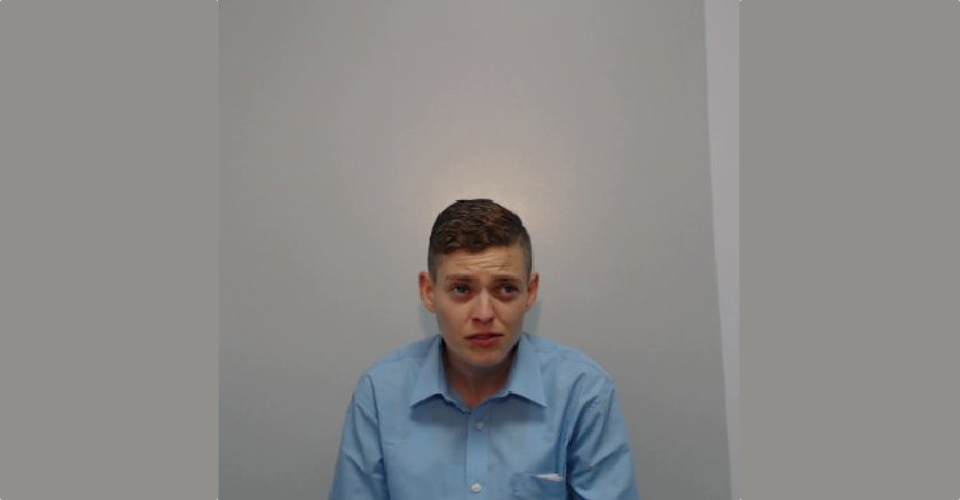
    Becky Reid (7/11/84) of Hayward Road, Atherton was found guilty of the murder of Lyndsey Vaux, and section 18 assault relating to another woman, aged 37, after a trial at Manchester Crown Court, Crown Square.

    Reid received a life sentence for the murder of her former partner Lyndsey Vaux, 30, a mother-of-one, and will serve a minimum of 20 years.

    On Sunday 22 May 2016, Lyndsey Vaux from Platt Bridge was taken to hospital in suspected cardiac arrest, where she sadly died later that morning.

    A Home Office post-mortem found that Lyndsey had died from multiple injuries and police launched an investigation into her death.

    Campaign of Domestic Abuse

    During the trial, the court heard how in 2014 Lyndsey lived with Becky Reid on Sydney Street in Platt Bridge. Over a number of years, Lyndsey was attacked and abused by Reid, with neighbours seeing her around the area with many different injuries including black eyes, cuts to the lip, a cauliflower ear, bruising to the face and body, and a heavy limp.

    Specific attacks were also seen with the court hearing how neighbours witnessed Becky Reid attacking Lyndsey in the street more than once.

    On one occasion, Lyndsey tried to walk away, but Becky punched her in the face, and she fell to the floor, pleading with her to stop. Becky continued to attack her and stamped on her face and body, whilst Lyndsey lay in the road.

    On another occasion, Lyndsey was stood in front of her house and Becky Reid was stood in the doorway. She attacked Lyndsey, punching and kicking her as she lay on the pavement, before dragging her into the house.

    The court also heard how mother and daughter, Gillian and Becky Reid also attacked another woman in 2008 causing her facial fractures.

    Senior Investigating Officer Bob Tonge of GMP’s Major Incident Support Unit said, “Lyndsey Vaux was subjected to years of horrific domestic abuse at the hands of her girlfriend, and no decision made here today can bring her back.

    “Some neighbours knew about this abuse and did nothing. Had they given us the information that they gave us after Lyndsey’s murder then we could have saved her life, and this should act as a stark reminder that we all have a responsibility to stand up to this kind of crime.

    “We’re working extremely hard to tackle domestic abuse in the LGBT community, having introduced a specific recording method to track it and taking our frontline officers through training on how best to support victims, but we do need the public’s help to continue to tackle domestic abuse in all of our communities.

    “My thoughts are with Lyndsey’s family at this difficult time, and I hope this sentence goes some way to finding them justice.”

    Help for Domestic Abuse victims

    Lydnsey was a victim of Reid’s “campaign of domestic abuse” she tragically died after being admitted to hospital following one attack.

    Victims in the LGBT community, and those worried about member of the LGBT community, can call Galop on 0800 999 5428.

    Female victims, and those worried about women, can call the Greater Manchester Domestic Abuse Helpline on 0161 636 7525. Male victims, and those worried about men, can call The Mens Adviceline on 0808 801 0327 or can visit www.mensadviceline.org.uk.

    Greater Manchester’s multi-agency response to same-sex DA, has also invested in a specialist LGBT Independent Domestic Violence Advisor, who works from Independent choices.

    There is lots of information for victims, offenders, loved ones and practitioners on the end the fear website at www.sittingrightwithyou.co.uk.


    Reporting: Greater Manchester Police

  • Manchester to become first UK city to officially record same-sex domestic abuse reports

    Greater Manchester police will be making history from today as it becomes the first city to officially record domestic abuse reports within the LGBT community.

    Following work between Greater Manchester Police, support service Independent Choices, LGBT Foundation and specialist trainers, code “D66” has been used in GMP’s City of Manchester division since June 2016 to record reports of domestic abuse in the LGBT community.

    Over 100 incidents have been logged in the pilot area since then and from today, Monday 10th April, officers in all areas of Greater Manchester will use the code.

    Since June, police and partners have had extra training to increase their understanding of the different needs of people who find themselves in domestic abuse situations. 

    No other police force in the UK has recorded this information before and it’s hoped that its introduction will add to Greater Manchester’s current work to capture trends and patterns and ultimately tackle the issue and support victims in the most effective way possible.

    Detective Chief Inspector Myra Ball from GMP said,

    “This is a huge step forward in tackling domestic abuse specifically within the LGBT community here in Greater Manchester, and shows our commitment to supporting all victims of domestic abuse in the best way possible, for them.

    “Over the six month pilot in just one area of Greater Manchester we logged over 150 incidents of LGBT domestic abuse. This code will help us to identify and monitor LGBT domestic abuse incidents, which in turn will help us shape any processes needed to tackle it.

    “Across the multiagency partnership we have identified the lack of monitoring in this respect and the partnership has funded a specialist LGBT IDVA (Independent Domestic Violence Adviser) at Independent Choices. We are also continuing our work on a national level with the national LGBT domestic abuse helpline at Galop to better understand the issues surrounding domestic abuse in the LGBT community and encourage victims and friends and family of victims to report the issue and have the confidence to come forward.”

    Nik Noone, CEO of Galop said,

    “Domestic abuse does not discriminate, and neither should the reporting of domestic abuse. The GMP’s D66 code will not only help break down barriers to reporting, we hope it will encourage other police forces across the country to roll out similar initiatives. Galop will be working hard to support this key development for LGBT survivors.”

    People in Greater Manchester are encouraged to get comfortable talking about domestic abuse in all its forms – including coercion and control – thanks to the ‘Sitting Right With You’ campaign. The campaign gets people thinking differently about domestic abuse and encourages victims or concerned friends and family to take that first step towards help and support.

  • Gay Couples Excluded From First Anti-Domestic Violence Laws In China

    Same-sex couples have been excluded from laws that protect straight couples from domestic violence.

    (more…)