Tag: Five Star Book Review

The latest Five Star Book Review from THEGAYUK.

  • REVIEW: Queer Tarot

    ★★★★★

    Are you a proud member of the LGBTQ+ community with a penchant for tarot readings? Well, brace yourself because the ultimate fusion of queerness and tarot landed in your vibrant shopping universe last year and it’s still making our queer little hearts sing!

    Ash & Chess, the powerhouse behind The Gay Agenda and a stellar LGBTQ+-owned stationery brand, has unveiled the highly anticipated Queer Tarot deck.

    After months of teasing on their social media channels, the dynamic duo, Ashley Molesso and Chess Needham, a queer and trans couple, graced us with an utterly gay tarot deck back in 2022.

    This deck is a kaleidoscope of bold colours and pride-flag imagery, fulfilling the desires of our gay hearts that have been yearning for such a creation. While some modern decks feature LGBT+ representation in select cards, the Queer Tarot goes above and beyond, portraying exclusively gay, trans, and queer individuals in every single card. It’s a challenge to articulate, but fellow LGBTQ+ individuals will undoubtedly recognize the indescribable magic that this deck captures—the essence of queer joy.

    Trust me, there’s not a single straight vibe in sight.

    Curious to know what I, a gay tarot card reader, really think about this wonderfully queer deck?

    Well, I’m head over heels for it. I love the colours, the vibe and the overall feel of this tarot pack. If you’ve been on the hunt for a tarot deck that authentically reflects you and your community, your quest officially concludes here.

    Keep scrolling to dive into the vibrant world of the Queer Tarot. 🏳️‍🌈🔮✨

    What’s in the box?

    Created by queer and trans artists, this reimagining of the classic figures in the Major and Minor Arcana showcases a wide range of gender expressions and sexual orientations and incorporates queer history and iconography throughout.

    Each card in Queer Tarot is based on real LGBTQ+ people and celebrates a full range of races, ethnicities, gender identities, sexual orientations, sizes, and abilities.

    Illustrated: 85 colour illustrations Pages: 176 Dimensions: 162x127mm

    Where to buy?

    THE PRIDE SHOP sells this item cheaper than most shops including Amazon. You can get it under the RRP here. Plus you’ll be supporting an LGBTQ+ company.

  • BOOK REVIEW | Two Jeeps, An American Road-Trip by Alex Kefford 

    BOOK REVIEW | Two Jeeps, An American Road-Trip by Alex Kefford 

    Rating: 5 out of 5.

    Have you ever wanted to take to the interstates of America in a vehicle of your choosing and explore the land of the free? That is exactly what author Alex and good friend Vince did with a few twists and turns more worthy of most tricky off-roading courses for any 4×4 out there.

    With the idea set into their minds in somewhere in 1998 where our intrepid travellers met as office workers, it wasn’t until much later that the idea started to become a reality when it was discovered Vince needed to be in Utah for a wedding. A plan to travel coast to coast across America in 2 Jeeps taking in as many national parks as they could was hatched.

    The twist, to import 2 UK righthand drive Jeeps to the starting line in Connecticut. The turn was to turn their UK road-ready Jeeps into weapons for the broken tracks they would encounter in the USA. The reasons for this was in the economies of scale it simply proved to be far more economical to have the Jeeps modified in the US by a company that had access to the many Jeep parts needed. And for the love of the mechanical appliance, there is something quite emotive about taking your own vehicle on holiday.

    So Alex (and Vince) starts the tale with a fraught check-in at Heathrow and cutting it to the wire with an unforgiving schedule that doesn’t stop over the next 17 of the 18 chapters, 222 pages and 5572 miles across 15 states of America. 

    Interspersed within the book are the joyless searches for various motels, the fact that Vince can’t handle his alcohol, the vast array of pancakes eaten and a nice touch of historical relevance to the places visited. It’s these little historical touches that help mark this out to be not another ‘man drives across America’ book. The chapters themselves are relatively short being around a dozen or so pages each and this is broken down into the journey, little snippets of fun in the narrative that carry the reader from one State to another. 

    With all States having their own peculiar ways not just in rules of the road but the local constabulary, the unfathomable way fuel is distributed and some of the crazy laws of the local eating establishments. It makes for an easy and interesting read like Alex is with you telling you the story first hand in a pub garden.

    “Two Jeeps” makes for a lovely travel companion too. It also goes some way into doing the route leg-work if this is something you planned on doing yourselves. You can access this from the website www.twojeeps.com. Fear not however because nothing about the book or the journey is given away on it.

    Within the chapters come the reason why they went through all they did to get here. To drive through the various national parks with their breathtaking views in vehicles capable of a lot more. The main focus for this comes halfway through the book but it is here were the short travelog of stories could be somewhat elaborated into a more in-depth talk about the surrounding land and the perilous passes endured. That is my only criticism of “Two Jeeps”.

    The ending is coming close for them and you the reader at chapter 15. In Hollywood fashion, they must depart Moab as a storm of unknown magnitude is brewing that could be seen in the distance and there are still over 700 miles to travel.

    So did they make it out past the storm and into LAX on time to depart for Blighty? The Cherokee had given trouble motoring along the way while the Wrangler had been free of problems. It would be telling to give away the outcome over the last 3 chapters but it is here that the reading intensifies to the books ends. So I suggest you buy the book and find out for yourself. 

    Available in paperback, ebook and audiobook from most notable online book retailers, including Amazon. More information on the website www.twojeeps.com

    Photos: Alex Kefford / PR SUPPLIED

  • BOOK & EXHIBITION REVIEW | Modern Couples: Art, Intimacy and the Avant-garde

    BOOK & EXHIBITION REVIEW | Modern Couples: Art, Intimacy and the Avant-garde

    ★★★★★ | Modern Couples: Art, Intimacy and the Avant-Guarde

    WET DREAMS DIVERSITY!

    BOOK & EXHIBITION: Modern Couples: Art, Intimacy & the Avant-Garde (Prestel Publishing, £45) 5 Stars! Eclectic Eroticism! 

    What is love? A closeted wank in a glory hole? Romeo and Juliet’s death pact? Bosie and Wilde’s co-dependency? Or – more unusually – gay star Lou Reed’s liaison with MTF transwoman Rachel? None of these? Oh, get real – me, I say all of them! How dare any single human being, institution or government have the audacity to dictate the shape, form and expression of pure, mutual bliss?

    But – inexplicably – every known form of unorthodox love is under unprecedented assault by a savage tsunami of spiritual and social bigotry masquerading as sacred self-righteousness. In Brazil, Bolsonaro’s freshly reinvigorated cutting-edge fascism, Russia and Chechnya enact vile, anti-gay torture pogroms, while Trump’s shockingly irrational resistance to trans rights and gay marriage threatens sexual freedom itself.

    In every case, there’s a suspiciously defensive denial of human sexual plurality, that latent potential in every individual ever born, whether blinded by self-induced, MAGA myopia or not.

    So, praise indeed to London’s Barbican, currently flipping two highly assertive and aesthetic fingers up to the furious intolerance threatening to drown sexual diversity discourse. The event? Modern Couples; Art, Intimacy and the Avant-Garde, which ran to January 27th, a startlingly innovative exhibition superbly replicated in the accompanying book from Prestel Publishing.

    And Modern Couples couldn’t be more culturally appropriate. With referrals soaring in every gender clinic worldwide, and gender-variant, non-binary and agender platforms mushrooming exponentially, it’s a perfect moment to artistically challenge sexual and biological essentialist stereotypes.

    Quite frankly, there haven’t been such fruitful, virtuoso assaults on patriarchy and chauvinism since Bowie’s Ziggy Stardust rock-messiah intrigued the pan-curious genitals of 1970s teenagers worldwide. And what shockingly exotic pansexual prophets we’re currently gifted with; leading the pack, there’s Lady Gaga, stealing the crown of polymorphous perversity from previous scene-queen Madonna, and Bitch! Dyke! Fag-Hag! Whore!, Penny Arcade’s perpetually relevant rite of interactive, sexual awakening and liberation. The UK’s equally blessed; we have the gloriously unfettered epiphanies of agender diva David Hoyle, the high-fashion media frenzies sparked by Monroe Bergdorf, and – less interestingly but arguably as provocative – the timid, opportunistic, non-binary cliche on autopilot, Travis Alabanza. I mean, come on – a burger thrown, with allegedly transphobic intent, hardly matches Tennessee Williams’ scathing dissections of performative divas as subject matter!

    So let’s applaud the Barbican’s exemplary, multisexual and multicultural values which have led to such a startlingly on-trend celebration of sexual diversity. But, be prepared – the book, as was the exhibition, is exhaustive, not to mention exhausting, so ration yourselves to brief bedtime reading to avoid genital options overload!

    Sadly, it’s impossible to do full -or even partial – justice to such overwhelming subject matter, especially in a brief review, so I’ve chosen to focus on just four of the marvellously atypical couples out of the total fifty-seven. First, there are the life-long, lesbian liaisons of Romaine Brooks, a pivotal member of salon doyenne Natalie Barney’s infamous Parisian, ladies-only soirees, which, intriguingly, included Dolly Wilde, Oscar Wilde’s knock-out drops addicted niece.

    Brookes – quite fittingly – was obsessed with the Marchesa Casati, a fabulously wealthy, freakishly tall socialite who’d dedicated her life to becoming an eccentric, living work of art, and was as elegantly emaciated as a filigree dildo. There’s a rivetingly severe, full-length painting of a nude Casati that exemplifies Brook’s style, painted with such luscious attention to skin textures one can almost relive Brook’s velvet, probing tongue cascading back and forth in Casati’s trembling, point-of orgasm crevice. It’s a lush, but suggestively non-specific art that echoes lesbian desire itself, a haptic, tactile exploration where ego and one-sided selfishness are submerged in an ocean of mutual pleasuring.

    How very different, then, to gay male lust, almost inevitably sparked and ignited by visual cues, as in the arrestingly modern photo-studies of George Platt Lynne. A huge influence on, and comprehensively anticipating Robert Mapplethorpe by decades, his aggressively sexual chiaroscuros – suggestive erotic shadowing – make his loving studies of Greek-god perfect hunks throb with the immediacy of superb, arthouse porn.

    Frankly, it’s the blatant need in these shots – so furiously kinetic and psychologically pumping – that so shrewdly captures and freezes textbook male lust on the page; it’s as in one’s face as a patiently erect penis dribbling with pre-cum waiting its’ turn at a bath-house orgy. Who, possibly, could resist the charms of Lynne’s angelically louche rentboys, posed to sensuous perfection? Utilising a forensic finesse worthy of fine art, Lynne legitimised and consolidated the notion of transcendent, homosexual love in an aesthetic lineage stretching back to the pre-Wilde concepts of ‘Uranian’ thinking, and the mutually male love poetry of Walt Whitman. Impressed? You should be – Lynne was the killer Caravaggio of lens-fuelled libidos, the master voyeur of vicarious arousal!

    Pleasingly, Modern Couples takes its’ inclusivity very seriously, so what a delight to have the singular story of Gerda Wegener and Lili Elbe – famous from the recent movie The Danish Girl – properly explored. A nascent transsexual – not even self-diagnosed until adulthood – Lili Elbe’s pioneering, gender voyage was initiated by her female lover, Gerda Wegener, encouraging her to dress en femme for portrait modelling. With an unsuspected, psychological femininity now fully untapped, Lili eventually progressed to primitive ovary implantation, the complications from which eventually killed her.

    Still, what’s often dismissed by bigoted critics as crude, surgical manifestation of deluded gender convictions – aka sex reassignment surgery – has since saved tens of thousands from once suicidal despair. And truthfully, Wegener’s portraits of Lili stunningly capture an ineffable androgyny, a jaw-dropping wonderland of the fascinating borderlands – and their gradual, transitional erasure – between strict definitions of male and female. In Wegenger’s canvases, one glimpses a sexuality thrillingly cut loose from genital specifics, an all-encompassing, erotic miasma that can colour an entire world with sensual potentials.

    One further lesbian couple – Claude Cahun and Marcel Moore – both prefigure and make redundant the modern rise of titillating, sexual selfie culture. Who needs a non-stop tidal wave of desperate dicks and flabby breasts and butts? Adopting a far healthier psychological perspective – dignity – Cahun and Moore bewitchingly transformed their mutual, life-long arousal into bravura, photographic icons of their then marginal, and socially dispossessed, sexuality. And early shots of the couple, especially, transpose their fleshy liaison into maverick, outsider tropes; specifically, characters from the Commedia del’arte, the theatrical epitome of misrule and disrupting the prevailing, social status quo.

    Strikingly timeless, the images brand themselves on our watching minds with the cheeky aplomb of a youthful Jean-Paul Gautier, who Cahun, quite uncannily, resembles in one shot. Unsurprisingly, both Cahun and Moore’s picture studies drip with erotic mystique; after all, who but a woman would instinctively know another woman’s gateways to shockingly sexual joy?

    And that same, charged magic is apparent in every example of Modern Couples’ gay, male partners; arguably, only male fingers can infallibly detonate the explosive euphoria of a fondled penis-tip. Forget bigoted dismissals of same-sex love as pathetic, narcissistic examples of arrested development, and proxy masturbation to one’s mirror image; on the contrary, there’s a pitch-perfect resonance of desire, arousal and consummation, one unfettered by pointless guilt or mismatched, biological imperatives that so often jar the intimacy between opposite sexes.

    Quite triumphantly, gay relationships are often stories of hugely soaring passions – hello, Oscar and Bosie. Almost effortlessly, they defy not only social and religious bigotry, but the arid reductionism of reproductive lust, and create ingenious alternatives to the dull limitations of functional, male/female sexual frictions. And surely, don’t the only limits to eroticism lie in the imagination itself – or its’ absence? Ah, dear, dear sexual diversity – it’s the perfect mindset for human happiness!

    Available to purchase now | Information on the Barbican’s Exhibition

    Photos by permission/supplied

  • My Ramones by Danny Fields reviewed

    My Ramones by Danny Fields reviewed

    Sasha Selavie reviews My Ramones by Danny Fields, a photo memoir of Punk Rock’s rawest Royal Family.

    Shocking Pink – Punk Perfection.

    Why do modern boybands suck so bad? Is their blatant, musical mediocrity a mirror image of our plunging expectations as LGBT pop fans? It wasn’t always the case. Once – in common with the marginal, semi-legal and barely-tolerated status of homosexuality in the UK itself – our idols were OTT and singular, role-model keys to experiences undreamt of by Joe and Jill Average. But ironically, maybe because of full, civil rights for our LGBT communities – our current idols have lost any extreme, lifestyle edge and signifiers, and become interchangeable, mainstream pop pap. It’s not surprising – in a 21st century inaugurated by 9/11, how could any performers hope to shock or surprise?

    Ah, but like sex, isn’t it the intensity of an experience that matters, and not that it’s served up in some arbitrary, on-trend, drag de jour? So, peel back your panties and preconceptions, and prepare to feast on possibly the hottest, unintentional pop erotica released the year – writer and author Danny Fields’ My Ramones.

    Never heard of Da Brudders Ramone, as they’re known colloquially in the rough-as-guts, NYC borough of Queens they hail from? Oh, then reader, don’t delay – Netflix and Google the boys today! And, no, they’re not remotely related, the name ‘Ramone’ being simply a cheeky tribute to Paul McCartney’s secret identity way back in the day. But please, screw the super-scrubbed, fluffy idiocy of Zayn Malik and his ilk – the Ramones’ aesthetic, especially contrasted with their contemporary, mainstream rivals, the Osmonds and Jackson Five- was pure badass motherf*ckers from no-hope avenue! Frankly, the boys spelled troubled from the get-go, and though gay punters have always adored pretty boys, there’s also another, undeniable aphrodisiac that seriously ignites panting, penile lust- rough trade!

    Still, I’m mindful that the Ramones – and the punk scene they so electrifyingly crystallised -are ancient history for most readers, so here comes instant context. Musically, 1974 was dead in the water, the pop charts choked with stodgy, overblown ballads, and toothsome pop stars barely more substantial than cream puffs. But, over in NYC, a certain Debbie Harry was forming a nascent Blondie, while four conflicted, working-class guys obsessed with pure, chemical kicks translated that rush into fierce, two-minutes tops, socially disadvantaged anthems, like nothing ever heard on purely pedestrian Planet Earth! Think a jackhammer doubling as lead guitar and maybe, just maybe, you’d be halfway there, but overnight, the Ramones kicked pop in the balls and dragged it screaming to their unique, fantastically abandoned level!

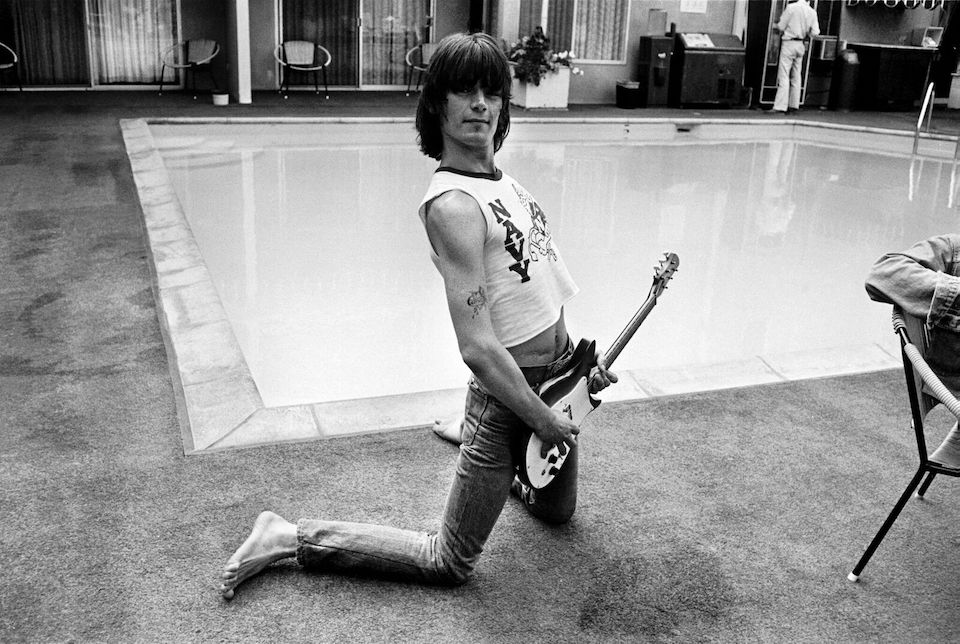
    Still, even that majestic, stone-killer sound would have meant absolutely nothing without the simmering, homoerotic beauty of the boys themselves. Like a fanatical leather queen’s horniest wet-dream made sullen, pouting reality, here were four guys uniformly dressed in perfect, 42nd Street, male hustler drag – white T-shirts, tight jeans, motorcycle jackets and sneakers, all irresistibly spiced by lashings of anti-social attitude.

    Were the boys knowingly channelling a specific, gay iconography that referenced stars as game-changing as James Dean and the casually bisexual Marlon Brando? Whatever the answer, they looked and behaved with the quasi-criminal swagger of Jean Genet’s hugely idealised prison inmate lovers, and, not surprisingly, lit admiring sparks in the intuitive gaydar of besotted fans. And those fans were, in one sense, completely on the money – Dee Dee Ramone, the band’s chief lyricist and composer, had unabashedly served time as a male prostitute and semi-fictionalised his escapades in his vividly noir novel, Chelsea Horror Hotel.

    I mean, come on, who hasn’t been thrilled by the thuggish, sexual aplomb of low-life, so much more, shockingly visceral than flirting with some clueless, clean-cut yuppie? Watching the Ramones, you’d be deliriously transported picturing rock-hard pricks straining against filthy denim, not airy, David Cassidy kisses. And visually, fronted by the freakishly tall, pipe-cleaner thin, 6’ 7’ Joey, the Ramones came across like a crack squadron of bullet-headed, sexual storm-troopers, the quintessence of Tennessee Williams’ Stanley Kowalski, shagging first and talking after!

    It’s that raw, blue-collar, erotic charisma that’s so beautifully, and blatantly, captured by My Ramones, an exceptional photo-memoir documenting the band at their peak, created by the band’s joint manager and head photographer at the time, Danny Fields. Such is the fierce, libidinous energy of even the most innocuous shots, that you’d be entirely forgiven for regarding My Ramones as an inadvertent stroke-book; the barely contained boy-flesh on view screams ‘touch me!’ to even the most constrained penis lurking in a reader’s pants.

    So, please, immediately dismiss thoughts of fellow photographers David La Chappelle’s baroque showboating, or Rankin’s achingly-ersatz authenticity. Rather, Fields deploys a stark, forensic honesty of photographic purpose, one that excludes anything but an ultra-candid, emotional honesty in any given shot. It’s an approach that recalls the deadpan clarity of an Andy Warhol, and – scrupulously removing any hint of intruding egotism – Fields lets his subjects powerfully speak for themselves. This, mercifully, is portraiture predating the utterly corporate, cynically-staged ‘controversies’ dominating current pop-star imagery, and these are shots that virtually sweat, breathe and spit with shockingly refreshing intimacy.

    Technically, too, we’re in the presence of a rare talent, one understanding negative space and black-and-white composition with the panache of a Helmut Newton or David Bailey. Jee-zuss, in 2018, living as we do with a hair-trigger fear of terrorism, it’s simply unthinkable pop-stars could even contemplate impromptu, unstaged shoots against national monument backdrops, but Fields’ images – like the Ramones’ music itself – are fierce, tasty, and totally focused!

    Still, there’s far more to Fields than his hugely impressive lenscraft – like the similarly shrewd Malcolm McLaren with the Sex Pistols, Fields’ fingers were firmly pressed on the cultural pulse. Who else could take shocking pink – a garish, almost puke-making shade invented by the surrealistic couturier Elsa Schiaparelli, and normally used to sedate female toddlers – and redeploy it as a violently aggressive design element for the Ramones’ Rocket To Russia album?

    In one simply extraordinary, cross-cultural flourish, Fields breathtakingly fused the US, slang overtones of ‘punk’ – a passive male partner in prison – with raw, rock ‘n’ roll raunchiness and socially disenfranchised sex-appeal. Forget Jackie Onassis or Bianca Jagger- briefly, in 1974, NYC’s straight and gay worlds bowed down to kiss the butts of faux brain-dead brilliance. And if that thrilling sexual democracy has a name, it’s My Ramones, the still jaw-dropping, cultural legacy of Danny Fields! Do yourselves a favour and feast on the man’s work ASAP!

    My Ramones By Danny Fields RAP Reel Art Press. £29.99

  • Want To Stop Drinking? This Book Might Help You

    Want To Stop Drinking? This Book Might Help You

    The Book That Changed My Life

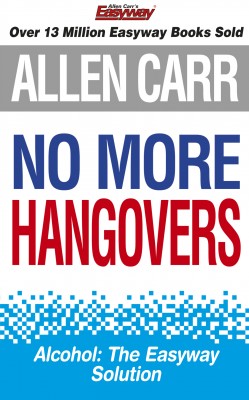
    No More Hangovers review
    CREDIT: Allen Carr

    There aren’t many books that lay claim to changing a life, but Allen Carr’s No More Hangovers is one that can claim first prize.

    Now, I’m not an alcoholic, but I did like a drink at wine time, usually at around 6:00 pm, if not GMT then it was always six somewhere in the world – and in amongst the press conferences, the champagne receptions, the tastings and press trips I had been taking in 2014, it occurred to me that I was perhaps drinking just a little too much.

    I knew that I should cut down, my once trim 30-inch waistline was telling me that. But I just didn’t think that I could. It felt as though I lived for the Champs and nibbles at the various dos I’d attend… and also wouldn’t people think me odd, not drinking, especially when the wine and gins would flow so freely?

    I’ve never been a ‘just have one’ type of guy, it’s all or nothing with me – and while that in itself can create crazy stories, which my friends are always happy to remind me of ‘what went down’. It’s not classy, to say the least.

    However, one night, when I was alone and I started to drink by myself and after the first half a bottle of Malibu, or whatever it was I was drinking, a thought popped into my head. What am I doing and why am I doing this? I wasn’t happy and jolly, I wasn’t being the life and soul of any parties and I certainly wasn’t looking, feeling or acting the sexy beast that I know myself to be. Looking into the mirror, I saw how miserable I had actually become.

    It occurred to me, in my slightly tipsy stupor that I wasn’t drinking socially, to be funny, or to fit in. I was drinking as a crutch. A coping mechanism perhaps. I’m not sure, but I definitely wasn’t happy – and I definitely wasn’t enjoying the drinking that I was doing.

    That was nearly three years ago. And not a drop of the poison has touched my lips since reading the book, and I’m not sure it ever will again. Ask any of my friends and they are quite amazed. I’ve had fully inclusive holidays, years of of press events and family functions, where drinking used to be an absolute, and I can, hand on heart say, I’ve not missed the wine, not once.

    I don’t know what the book does, but it changed me and if you’re looking to make a positive change in your life with regards to drinking, No More Hangovers, for me, has achieved full marks.


    Buy Allen Carr’s No More Hangovers at Amazon

  • REVIEW: Voices Of The Damned, Barbie Wilde

    REVIEW: Voices Of The Damned, Barbie Wilde

    Why does gay art – in every form – completely eclipse its’ timid, straight rival? Because – quite simply – it’s fuelled by overwhelming lust. From the lush, teeming criminality of Caravaggio’s canvases, to the pouting proportions and Apollonian aphrodisiac that is Michaelangelo’s David, gay aesthetics scream artistic arousal. ★★★★★ (more…)

  • BOOK REVIEW | Unbecoming by Jenny Downham

    Seventeen-year-old Katie is in a state of turmoil.

    (more…)

  • BOOK REVIEW | Jessica’s Ghost by Andrew Norriss

    ★★★★★ | Jessica’s Ghost

    “Why, Francis wondered, should ‘being different’ be so painful? Why did it matter so much when, if you thought about it, everybody was different in one way or another.”

    These days we seem to be hearing a lot more about suicide then we did a few years ago. Stories of people committing suicide for many reasons. But also people thinking about suicide and, thankfully, suicide prevention. Is it an epidemic or are we simply more aware thanks to social media? It’s unclear, but one thing that is obvious is that there is always a reason why people decide to end their lives and usually this reason is called depression.

    The largest group to feel driven to suicide are teenagers and they are often the ones that can’t understand what is going on with them. They are usually unaware of depression so don’t know why they feel the way they do.

    Depressed teens are more often than not the ones that are seen as “different” from the rest for whatever reason and the ones that are bullied. The combination of all this, and the fact that teens find it difficult to communicate their feelings is often what is behind a teenage suicide attempt.

    Knowing all of this it is strange that there are so few books for (pre-)teens that explain depression in a way that is clear but also entertaining at the same time, until now.

    Jessica’s Ghost written by Andrew Norriss is an amazing book that deals with three early teenagers and a (teenage) ghost whom have all experienced depression and feeling “an outsider” for different reasons.

    Most The Gay UK readers might remember Norriss as one of the writer/creators of the classic sitcom The Brittas Empire featuring not only the dishy Chris Barrie (in tight shorts) but also the first and (only) gay couple to feature in a prime-time family BBC1 show. This show was not afraid to tackle difficult subjects for family audience in a funny and witty way and this book is no different.

    Jessica’s Ghost starts with protagonist Francis whom is mocked at school for his love of fashion and sewing and just not fitting in with the crowd. One day he meets a young girl called Jessica and she just happens to be a ghost. Through her his life and the lives of several others change drastically.

    It is a wonderful book and the way it deals with depression and even suicide is beautiful. Even though these subject matters may seem dark, the book is written in a way that is funny and relatable. During the course of many adventures the book describes how depression feels, how important it is to talk and how yes, things will get better.

    Andrew Norriss’ book is a breath of fresh air in a time where many people – including writers- still shy away from discussing mental health issues especially for young people despite a clear need for this.

    I feel this book should be recommended by (child) psychologists to help bring a better understanding about depression. Having been through this myself as a teenager I know that a book like this would have certainly helped me a lot.


    Available on Amazon

  • BOOK REVIEW | The Art of Being Normal by Lisa Williamson

    ★★★★★ | The Art of Being Normal by Lisa Williamson

    I think it says a lot about me as an individual that my attention span in these social media days seems to have dwindled to the point where if it’s more than 140 characters, I get bored.

    I have a stack of great books waiting to be read, or started and tossed aside as one thing or another distracts me.

    That is until this book dropped through the letterbox.

    I honestly can’t remember the last time I relished an authors words so much, felt so deeply in-volved in the plot, felt it resonate on a personal level – basically, found that rare thing, a truly un-put-downable book.

    The storyline is one we can all understand to some point – the slightly kooky outcast group, not the A-crowd, but individuals who have their own voices. Think a good John Hughes film (Pretty in Pink, etc) Bullied at school? Tick.Small group of geeky friends? Tick. Fancy someone you can’t have? Tick. Odd family life? Tick.

    The list is endless, but Lisa Williamson, the book’s author, has the talent of drawing you in and making you feel this book could be about you (in a general sense) without detracting from her own storyline or making any of it seem trite or generic.

    Putting it bluntly, she makes you feel you belong to this story – and a bloody good story it is too.

    In a nutshell, it’s about 2 boys and their lives as they grow and meet. One is a troubled teen, shift-ing from school to school, not much of a family life, not much of a home, no real friends. The other is from a good family, good home, but has a deep secret and deals with it as only teenagers can, and do, daily.

    David Piper has the secret, he wants to be a girl. He’s obsessed to the point of writing everything down in his book, from his penis size to how visible his Adam’s apple is, all in the name of not wanting to look like a man.

    Leo Denton wants to simply be invisible. However, his first few days at his new school ensure that this is going to be impossible.

    After Leo stands up for David against the school bully, an unlikely friendship begins to form and grow – but the secrets they all have are about to come out and things will never be the same.

    This book isn’t another teen drama; it looks at the subjects it covers sensitively but also with humour. The subjects covered aren’t simple, and on some level may have been felt by most of us – being an outsider, wanting to belong, wanting to be invisible, fear of bullying, fear of our families, lack of friends… the list is endless but Lisa tackles these themes so well.

    If you are looking for a good holiday read, pick this. It’ll make you laugh, it’ll make you cry, but it’ll never bore you!


    by Chris Jones

  • BOOK REVIEW | The Queen Of Clubs

    ★★★★★ |The Queen Of Clubs

    There’s a quote at the front of this book that states:
    “Some people are born drag queens.Some people become drag queens. And some poor sods have drag queens thrust upon them.”

    And so it starts…

    Riding on a wave of drag queen interest, everywhere from the Facebook controversy over users having to use their real name (but only seems to apply to drag queens?) to RuPaul, this book tells a story – and a bloody good one at that!

    Tobias has taken some characters that could have been drawn as complete clichés and given them life – these characters, like ‘em or loathe ‘em, are real.

    From the still-in-the-closet virgin to the seen-it-all barman, from the abusive relationships to the fading glamorous drag queen – it’s all here and written large.

    The story follows one of our cast, Oliver, as he pops his drag club cherry and visits Divas, a seedy, rundown club run by Chris (not me!) It’s here that Oliver meets the rest of the cast – from deluded Robert Davies Junior (aka Wendy WolfWhistle) to the trio of cabaret queens Wendy aspires to join.

    The storyline moves along in short, sharp bursts, each chapter leading you into the next in a clever and addictive way. I’m not one to spoil a good plot, but there is lost love, unrequited love, love on the rocks, self-love and self-loathe, drugs, bad cabaret, cops ‘n’ robbers, and bad drag.

    This isn’t Drag Race calibre, there’s no Sharon Needles or Bianca Del Rio here – and that’s its charm. This is Everytown or Anytown, and these are people you could walk past on the street any day of the week, these aren’t the polished performers that may have to lip-synch for their lives… these couldn’t lip-synch to save their lives!

    This really is one you’ll love – from start to finish, it’ll entice you in, make you feel you know these characters (or someone very like them) and leave you with a shocker of an ending! This is low rent, low end, real life, warts and all stuff and I for one love it!