Tag: Four Star Car Review

Our four-star reviews for all motor vehicles, petrol, diesel, hybrid and electric

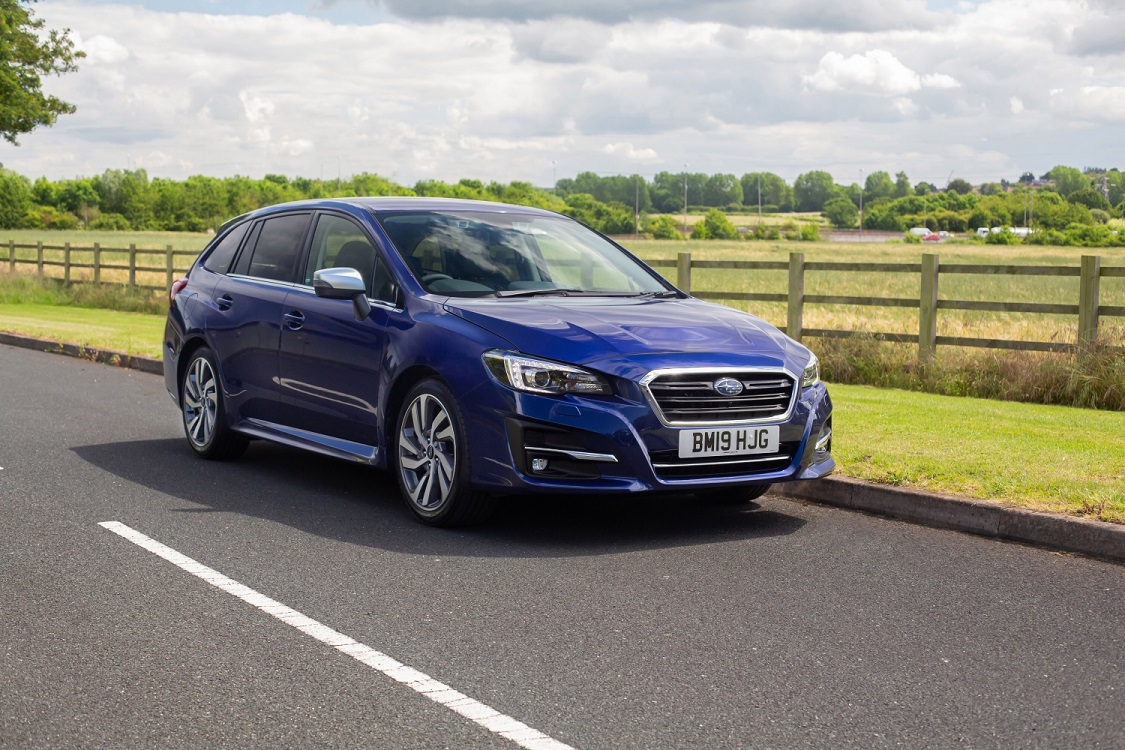
  • CAR REVIEW | Subaru Levorg

    CAR REVIEW | Subaru Levorg

    Rating: 4 out of 5.

    Subaru has kept things very simple with the Levorg. There is one body style, one engine option, one trim level and one gearbox.

    Actually now there are 2 engine options, but we’ll come to that.

    The body style is estate car, the trim level is GT, the engine is a 2.0 L petrol boxer engine which produces 147bhp and 198Nm torque and the gearbox is a lineartronic CVT (constantly variable transmission). This is basically an automatic gearbox but doesn’t have set gear ratios like a conventional automatic gearbox.

    With the Levorg, Subaru seems to have had a keen eye on active and passive safety. This is a very safe car with a 5 start Ncap rating.

    Literature and advertising around the Levorg point towards the active and passive safety features of the Levorg. To that end, it has just about every safety aid that you can find on modern cars. For example, it has Subaru’s EyeSight which is a form of driver-assist technology, a vision system working through a pair of cameras at the top of the windscreen monitoring the outside world, which feeds into the safety aides in the car adaptive cruise, pre-collision braking, pre-collision throttle management and lane keep assist with saw warning.

    This is a lovely car to drive, very smooth and the suspension is on the comfortable side of sporty. It’s not softly sprung which would bounce you around, but it’s not to stiff so doesn’t jar you or crash over potholes.
    Although the 2.0L boxer engine produces 147bhp, maybe it’s the CVT gearbox, but it isn’t fast. It’s fine around town, with plenty of initial acceleration, but when the road opens up and you want to press on, there’s not a great deal there. Then again, that’s not what the Levorg is about.
    Subaru symmetrical all-wheel drive is standard. On the Levorg it is a road-biased system which means it doesn’t have the off-road electronics like x-mode. Symmetrical all-wheel drive means that the drive shafts are all equal lengths and the engine and gearbox are placed further back for better weight distribution. This means power is transferred to all of the wheels equally, resulting in better road holding. The boxer engine also sits low, keeping the weight low, reducing body roll. It works well and holds the road very well.

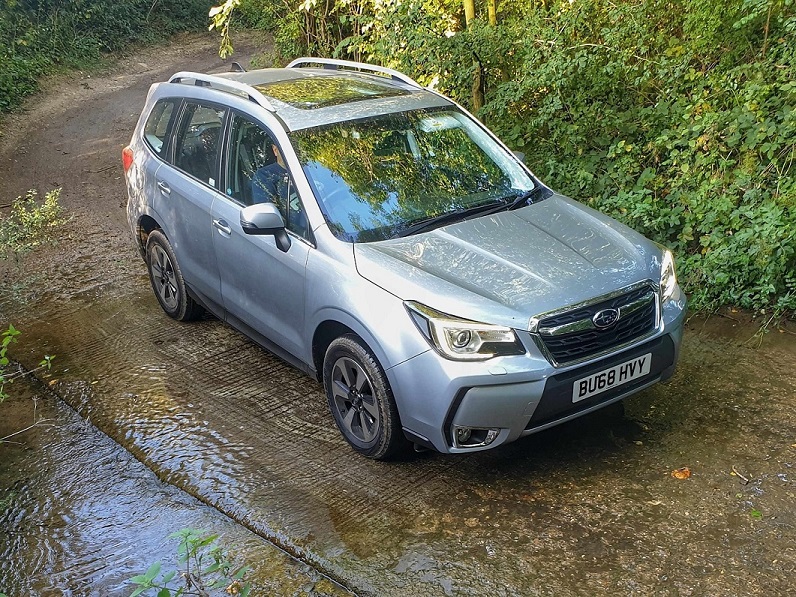
    It doesn’t have a great deal of ground clearance, and there is a subtle body kit on the car, so I wouldn’t be keen to take it off-road like the Forrester for example.

    The interior is excellent. Our test car had covered something like 11k miles and was like new. No rattles or squeaks and nothing broken, it really is a quality interior. The seats are full leather front and rear and are electrically adjusted and heated. They really hug you and are quite sporty but are nicely shapes and very comfortable. When you climb in, it feels great.
    You will find leather on the seats as mentioned, on the doors and centre console and some on the dash. Where there isn’t leather, the plastics are a high-quality soft touch.

    Our test car came in dark blue pearl, which I felt really suited the car. Exterior styling is sleek and sporty, but if I had one criticism I would say it’s a little anonymous.

    In summary, the Levorg drives well, is well priced, looks good, it’s not quick and handles well, in fact, it could easily handle more power I’d say. Maybe one day we’ll see an STi version.

    Subaru Levorg prices start at £34,770

  • CAR REVIEW | Vauxhall Corsa Elite Nav Review

    CAR REVIEW | Vauxhall Corsa Elite Nav Review

    Rating: 4 out of 5.

    The Corsa name was first unleashed onto the British public in 1993. Here, it superseded the Vauxhall Nova and had the model reference Corsa B. Over in Europe, the Nova was known as the Opel Corsa (Corsa A) but let’s not get bogged down with the details.

    It’s hard to appreciate the impact the humble Vauxhall Corsa has had on the automotive world. It’s not a particularly revolutionary, but man it had an impact.

    How many young kids have learnt to drive in a Corsa, or had a Corsa as a first car? Maybe you had one as a first car? As it happens, I have a Corsa C parked outside the house as I write this. It’s no2 son’s first car.

    In 2017, PSA bought the Vauxhall brand from GM and has been busy rejuvenating the brand since then. 

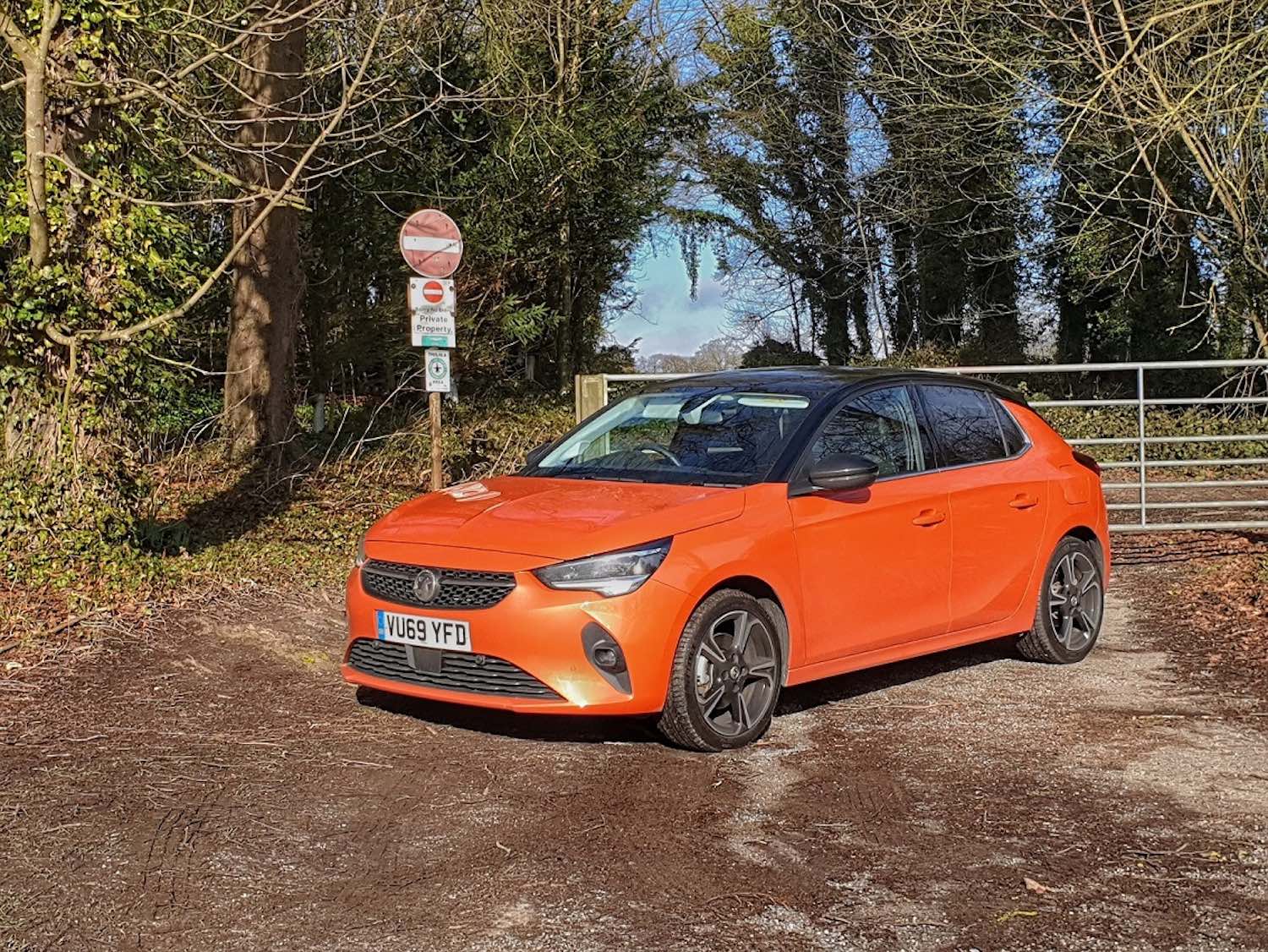
    This all-new Vauxhall Corsa is a result of the new PSA influence and is based on the EMP1 platform, the same platform that the excellent Peugeot 208 is built on.

    Our press car was the well-appointed Elite Nav, fitted with the 1.5 Turbo Diesel engine. It’s a peppy and frugal unit, producing 102PS (100bhp) and giving back up to 70mpg. You also have the choice of two petrol engines (75PS/74bhp non-turbo or 100PS/99bhp turbocharged) and even an electric variant.

    It had the 6-speed manual gearbox rather than the 8-speed automatic gearbox. My preference is a manual and it’s a good gearbox that suits the car.

    Vauxhall offers the new Corsa in 6 trim options. Ours was the Elite Nav, top of the family tree. This is a well-appointed car with standard equipment including; 10-inch colour touchscreen, IntelliLux automatic LED Matrix Headlights, 17-inch alloy wheels, keyless entry and start, adaptive cruise control, leather seat trim with driver seat massage function and front heated seats, auto wipers, power-folding door mirrors, front and rear parking sensors, a panoramic rear-view camera, privacy glass, black roof and much more. Very impressive for a small car.

    Vauxhall list up to 53.3mpg on petrol engines, with C02 from just 93g/km C02. With the diesel engine, up to 70.6mpg and from 85g/km CO2. This diesel Corsa was had a 0-60mph time of 10.2 seconds.

    Vauxhall’s new Corsa is fun to drive. I’m not a small guy and if I had a couple of criticisms, it would be that the driver’s seat was a little small. I found it a little short in leg support and not high enough at the back. Having said that, I’m not the target audience for this car. Also, the interior was very black.

    It has a great chassis, comfortable and fun, it works really well. 

    I enjoyed the diesel, it’s a good engine that suits the car. I’m keen to try the full-electric version, I think it would be a really good, fun car to drive. The new Corsa has a really good chassis and with an electric powertrain, should be very interesting. 

    In summary, the new Vauxhall Corsa is a good looking, well built, well-equipped car. It’s fun to drive, practical and economical. There’s a range of incentives and finance deals to make the Corsa a great buy too.

    It’s a tough sector with plenty of competition. Renault Clio, Volkswagen Polo, Ford Fiesta and of course the Peugeot 208. I’m no Clio or Polo fan and find the Fiesta a bit bland. The 208 could be a problem for the Corsa though.

    Vauxhall’s new Corsa starts from £15,925.00, with the Elite Nav starting from £30,310.00.

  • QUICK CAR REVIEW | Ford Ranger Raptor

    QUICK CAR REVIEW | Ford Ranger Raptor

    Toughened Up Toy Truck

    Rating: 4 out of 5.

    Ford take their Ranger workhorse pick-up and turn the volume to 11 making it into a BIG plaything. 

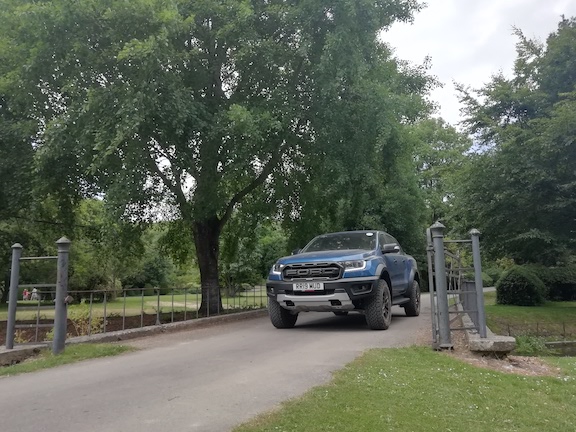
    Compared to the standard workday Ranger, the Ranger Raptor really is BIG. The reinforced chassis and body shell make it both imposing and rugged but does that make it massive and unyielding? 

    One thing to remember is that this is a European Raptor. It’s not the US Raptor which means it is suited to our roads and our unknown roads because it will travel well off-road.

    Off-road, its ability to cushion the ruts was astounding. The increases in height and track width playing a great part here. It all became a bit of a disappointment. Shocked by this admission, the man from Ford was intrigued by my statement and keen to find out why. The suspension soaks up the worst of the rough and smooths it like a cheesecake topping spread on a rough crumbly biscuit base.

    That capable suspension being made of linkages, coilover springs and Fox suspension systems in place of trusty but non-compliant leaf springs. It all comes together to make for a better than happy medium. 

    On-road this translates into a comfortable ride with very little road noise from the 30 plus inch wheel and purpose-built tyres with a 20 per cent strengthened sidewall. That said, push the mighty truck into a corner and you soon get complaints from the tyres.

    As is typical with a pick-up, the load bed area isn’t integrated with the main shell. This can have a detrimental effect with inertia shaking the rear end, more so when on the road than off-road. Like the main body, the bed is well bolted to the chassis.

    What doesn’t work is the engine and the 10-speed automatic gearbox. While the 10 speed is good at keeping the engine on the power band, in standard mode, it keeps it around 2500rpm. The changes are smooth and in some ways it behaves like a typical torque converter system with a bit of slush from the box. It belies the power outputs of the engine. 

    The engine, being a 2-litre turbo diesel, develops 213PS from a low 1500rpm and the 500Nm of torque is good in almost any situation. Mated to a 10-speed automatic gearbox, it has a ratio for every situation you are ever likely to encounter.

    On the road, it doesn’t quite work out as well as you’d think on paper. Power delivery is smooth but it doesn’t feel as quick as the stated 10 seconds quoted. Overtaking needs to be planned. It doesn’t quite fit in with the promise of power that you’d expect. 

    I do love a truck so performance of the 0-60 variety isn’t my thing. It’s no Ford F-150 Lightening. What I would be looking at when buying this at almost £50k as tested is its ability to go off-road but also be comfortable on-road and thankfully it does both. So it’s nice to see the inside logical, convenient and comfortable with the fit and finish perhaps a little too good for a workhorse.  

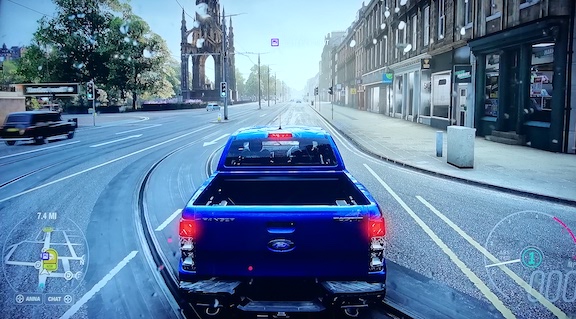
    Cheap it might not be but then most playthings aren’t these days and that’s sort of what you have here and it’s fabulous. Speaking of playthings, on its launch, computer game Forza launched the Ranger Raptor to the game. Former TGUK motoring journalist, Alan Taylor-Jones proved to be quite the whizz kid. I wasn’t. Thankfully for me, Ford doesn’t test us on computers simulators first before setting us free. If they did I might be writing this from the other side of the cabin on the comfortable passenger’s seat! 

    Love 

    The size

    Fit and finish

    Smooth on road driving

    Loathe

    The size

    Price

    Performance

    The Lowdown

    Car –  Ford Ranger Raptor

    Price – £ 48,000 (as tested)

    MPG – 24.4 mpg (combined)

    Power – 213PS

    0-62mph –  10.5 seconds

    Top Speed –  106 mph

    Co2 – 233 (g/km)

  • CAR REVIEW |Volvo V90 T8 Twin Engine AWD R-Design Plus

    CAR REVIEW |Volvo V90 T8 Twin Engine AWD R-Design Plus

    Volvo V90 T8 Twin Engine AWD R-Design Plus | The Versatile Rapid Tourer

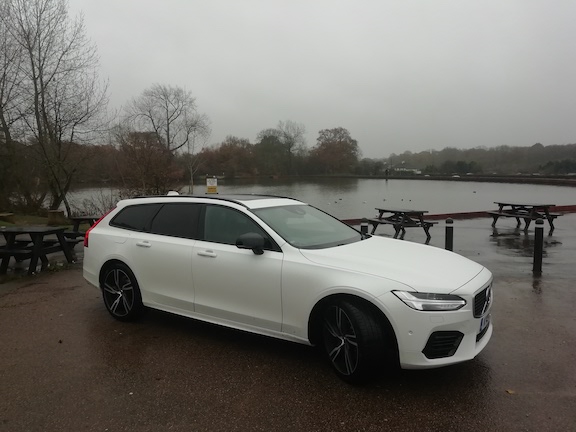
    Everyone is going hybrid these days and Volvo are no exception to this. The Swedes have been looking at ways of propulsion and with the help of sister company, Polestar, there is pretty much a T8 twin-engined model in every sector Volvo have entered. We look at the V for versatile V90 estate with the T8 setup.

    Let’s get my issue out of the way first. This model is Volvo’s largest of the ground-hugging saloon and estate cars and comes in R-Design. For a Luxo-barge, I had my reservations of the R-Design. It’s not a bad model in the range, but does this ‘sporty’ model get ruined by being made to feel dynamic for reasons that we Brits like it and more importantly, will I like it?

    The V90 comes with just 5 power sources across the range and the T8, with its 87hp electric motors powering the rear wheels is the most powerful out of them all. It’s available across the range except in the Cross-Country models. Those use a full 4WD system for obvious reasons. 

    The petrol unit powering the T8 is a 303hp petrol 4 cylinder. Combined with motor assistance on the rear wheels it will project the Volvo estate from 0-60 in just 5.0 seconds. In practice, it feels a touch more lethargic than that though this can perhaps be attributed to the beautiful way the car can glide away from a standstill without much noise at all. The electric motors go some way to eliminate the throttle lag of the petrol engine. It’s still a little hesitant but just enough to be worthy of a mention. 

    And 5.3 seconds 0-60mph isn’t to be scoffed at. Until recently it was the time set by the superstars like Lamborghini. Imagine the fun of being able to blow away a Countach with your 1,526-litre load-lugger with more space than a double bed in the rear. Admittedly you wouldn’t. You’d want to hear the sound of that Lamborghini V12 pull away.

    And here is the key to the V90 T8. Serenity. So perhaps it might come as a surprise that even in R-Design, the UK’s market leader in the range with dynamic feel, has this ability in almost any drive mode you select to isolate you from the harshness of what a 15mm lowered suspension set up could bring. From a spec sheet at least, it all seems superficial except for the said lowered sports suspension and 18-inch alloy rims.

    Inside is typical Scandinavian elegance. Ergonomic cockpit set up for driving pleasure and ease of use. The infotainment system allows for multiple changes and adaptions to suit you the driver and not the R&D departments preferences. And this allows you to set the car up to become more of how you want it and it’s A) surprising how specific we all are when given the chance and B) why more don’t offer this. This is your car after all. There ends up being very little to annoy and dare I say it, as a motoring journalist, not much to say any more about the insides of Volvo’s.  

    Driving is a pleasure and getting the best from the twin-engined set up is ease itself. The use of “twin-engine” is perhaps a little misleading when there is in-fact only one engine up front and two small electric motors at the back. By this calculation alone it should then perhaps be called a tri-engine. Anyway, I digress because the art of the system is beautiful. 

    Now 21 miles on the battery might not seem much distance at all but it’s more than you think. A drive home from visiting my father in Bognor saw me empty the battery packs by the time I arrived in Storrington. That was 22.1 miles of non-sympathetic motoring. The V90 T8 had the ability to carry itself quite rapidly at legal speeds on battery power down the A27. Not necessarily designed for rapid motoring over a distance like this, the batteries side of things did very well. And it’s this ability to have full use of the electric motors that makes it such an easy system to use. I do however struggle with its lack of ability to charge the batteries adequately when on the move unless you select it too. It’s sort of self-charging but by-passes the ability to use the hybrid system. 

    That said, I did calculate my fuel economy with the XC90 T8 being most favourable. With my daily commute now being just under 10 miles each way with the return drive home mostly being downhill (I’m not making that up), I could go for years without actually using petrol. But that really is exceptional usage.

    The Volvo V90 T8 is quite the Q-car then in terms of looks over function over ability. It carries stuff, lots of stuff. Cossets occupants in tranquillity and yet is as far removed from what you’d expect a Volvo estate to behave like. Forget the mind-blowing 850 T5R from the 90’s and their wake up call to the world as to what Volvo could do. That’s power dressed and old news. The V90 T8 is the future. For the moment at least.  


    Love

    Ease of use of the hybrid system

    Intelligent interior

    Serenity


    Loathe

    Unable to self charge adequately unless selected

    Aggressive pilot assist

    Some throttle lag from standstill


    The Lowdown

    Car  Volvo V90 T8 Twin Engine AWD R-Design Plus

    Price – £ 67,500 (as tested)

    MPG – 97.4 – 117.7 mpg (WLTP combined)

    Power – 317hp (petrol) + 87hp (electric)

    0-62mph  5.0 seconds

    Top Speed   115 mph

    Co2 –  49 (g/km)

  • CAR REVIEW | Audi A1 Citycarver 30 TFSI 116PS S tronic

    CAR REVIEW | Audi A1 Citycarver 30 TFSI 116PS S tronic

    Driving Out Of The City

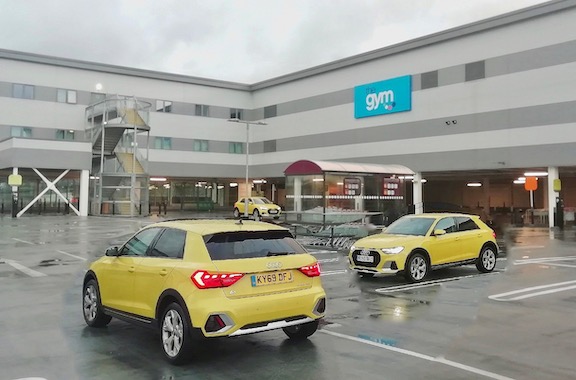
    Audi has just revamped their little A1 for the city giving it the “Citycarver” moniker. It sits high up in the A1 range and therefore towers above the Sportback model in the range in more ways than one.

    What we have here is an Audi A1 that has been lifted a huge 50mm. That’s 2 inches in old money. It’s also dressed up with some black wheel arch extensions like those from Audi’s Q range but this is no SUV.

    It’s still Audi’s little hatchback car. 

    For a start, the raise in rode height should, in theory, make for a lofty wallowing ride when compared to the Sportback that we at THEGAYUK liked very much. In some degree, it does but not in a notably loose way that you would expect. It’s rather less Germanic in comfort terms and it seems to be a trend I’m noticing from the ‘normal’ cars from Ingolstadt. The ride remains faithful to the A1 Sportback in being entertaining on A and B roads while also being just that much softer while retaining a semblance of body control.

    This floaty Audi was fitted with the engaging 999cc TFSI 3 cylinder petrol unit mated to a sort of hydraulic dry clutch gearbox. In essence, it’s an automatic with 3 drive modes. Auto, wheel paddles or selected on the gearstick in S mode. All three work well though on the stick shift it always feels wrong when knocking back goes up the gearbox. Many do it the other way around and that feels more natural. This gearbox has come in for some harsh criticisms for its lack of go-go-go when you floor it from a stand-still and I’m happy to report that the hesitation now almost link to this system was well muted. It felt better suited to the city fight for space when pulling out of a side road quickly. 

    It doesn’t try to be hot hatch despite its identical credentials of the other A1 in the range and it makes for the better car. However, it doesn’t all go its own way. For a start, as a car named for the city, it lacks protection. The city can be a brutal thing. Remember all the trouble Carrie and the girls had trying to navigate their way around Manhattan? It’s like that for the A1 Citycarver. It looks great but those looks won’t last long. The absence of door rubbing strips is noticeable. There isn’t even an option for them. It goes a little way in the fitment of black wheel arch extensions but these are hardly the things to preserve the flanks of the doors in a carpark.

    And then there is the interior. It’s just a bit business like inside. You can’t fault the ergonomics and driver comfort but the colours are more suited to a boardroom meeting with a packet of rich tea as the only available snack. Perhaps it was the £575 optional python yellow metallic paint that exaggerated this. The colour was bold and memorable and made a statement wherever it was parked. But the grey inside with the below par for Audi, silver trim across the dashboard just doesn’t cut it, well certainly not in a car that costs just under £23 grand before options. 

    It redeems itself inside with Audi’s 10.25 inch digitally adaptable facia display and 8.8-inch infotainment screen. This is thankfully angled towards the driver. The interface is easy to navigate around and responds to fingering inputs quickly. Annoyingly the lane keep assist system will always reset after you switch off. Its aggressive tugging can be quickly turned off from the end of the wiper stalk. 

    Despite my criticisms, it is a rather nice package let down perhaps by Audi being at the business end of the global company it comes from.

    A smattering of bright colour dotted around wouldn’t go amiss inside. That said, it’s the engaging enthusiasm the chassis affords you when you get out of the city. Kick-off those high heels and slip into those comfy trainers and your A1 becomes a Carver, cutting up the badly maintained back roads of England with aplomb and this time you’re allowed to keep the ESP off all the time!

    It’s just that I wouldn’t want to take it back into the big city without those door rubbing strips. They might be unfashionable but it’s cruel out there! 

    Love

    Engaging drive

    Ride comfort

    Infotainment system

    Loathe

    Price with options

    Business like interior 

    Lack of city parking protection

    The Lowdown

    Car –  Audi A1 Citycarver 30 TFSI 116PS S tronic

    Price – £ 28,035 (as tested)

    MPG – 45.6 – 46.3 mpg (WLTP combined)

    Power – 116PS

    0-62mph –  9.9 seconds

    Top Speed –  123 mph

    Co2 – 115 (g/km)

    ALL PHOTOS Ⓒ Stuart M Bird.

  • CAR REVIEW | Honda Civic EX Sport Line

    CAR REVIEW | Honda Civic EX Sport Line

    Rating: 4 out of 5.

    Civic Update

    What Do We Have?

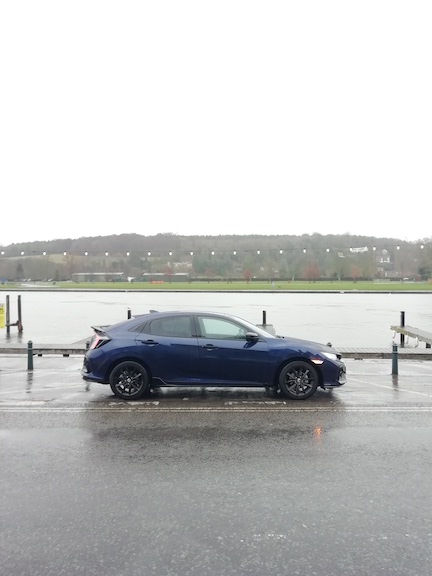
    Honda has been busy evolving their tenth-generation Civic in an attempt to keep it abreast of the new challenges it faces within the competitive, if sometimes over-looked mid-sized hatchback segment.

    Changes for the new 19MY Civic include smoother front and rear bumpers and changes to the plethora of grills that dress them. The new model we came to try is being called the EX Sport Line. There also comes a new rear spoiler.

    The new car is being marketed as a sort of cheaper alternative to the highly acclaimed Type R. A Civic that is worshipped better than the Sermon on the Mount by Jesus [citation needed] Except with the Type R, it’s more about how immoral it is.

    The EX Sport Lines on offer for testing were fitted with either the slick 6-speed manual or new CVT gearbox. This CVT replaces the conventional automatic with its confusing push button selector. Instead, the new CVT is fitted with a standard stick shift as you’d find in a normal automatic.

    Driving

    Fitted with a plucky 3 cylinder petrol that pushes out a respectable 126 PS from a 1-litre capacity. Now this engine might not be what you would be expecting to see fitted considering the Sport Line is a type of Type R alternative but let us just remember that this is a Civic that mixes everyday drivability without the heart attack.

    Torque outputs alter retrospectively between the 2 transmission types with the manual having 20 Nm more at 200. On paper at least you could say you shouldn’t notice with outright performance figures being so close. That said, it did feel like the CVT was a little lethargic to shift unless you selected |sport| mode and then it would alter.

    Inside

    Inside sees changes to some textured panelling on the dashboard and the supportive seats. Racy red stitching is used to further heighten the racing appeal of the Sport Line.

    Where major changes have been made is within the new climate controls and stereo system. Main changes are the addition of buttons to help navigate the often criticised complicated screens. These now allow the most used sub-menus to be reached with one button.

    It is just a shame that the satnav detailing isn’t up to spec. Thankfully this can be avoided with Apple Car Play and Android Auto. I used Android and it worked very well. 

    Living With It

    It really comes down to what type of driver you are. The Civic is a car that comes highly recommended and you’ll find it has a legion of fans out there no matter what model they drive.

    So if you are a more enthusiastic driver then the manual will whet your curiosity to explore a random B road to its limits. The CVT won’t disappoint that much but you will have to work it that much harder and it’s not that rewarding to do so. As a competent commuter car that will sit in the daily grind of the A-B  traffic, it will be of great comfort that the cog swapping is left to the machine.

    Verdict

    The majority of the changes Honda has carried out haven’t really altered much to the Civic and there really wasn’t any need to do this anyway. The Civic has always been an accomplished car as both a driver’s car and a striking visual.

    We did ask about the change to a CVT gearbox. Honda was quick to point out its economy benefits and value for money in being able to offer an auto system cheaper than the system used previously. That aside, I personally feel it is a step backwards when Honda has progressed the Civic forward with the MY19 model.

    With that in mind, you will find this Civic being recommended, but just think about what type of driver you are before parting with your money.

    Love

    Looks

    Compliant ride

    Useable performance

    Loath

    “Sport Line” moniker

    Satnav graphics

    CVT gearbox

    The Lowdown

    Car – Honda Civic EX Sport Line

    Price (as tested) –  26,035 MANUAL (27,435 CVT )

    MPG – 45.6 MAN (42.2 CVT) WLTP combined

    Power – 126PS

    0-60 – 11.2 MAN (11.0 CVT)        

    Top speed – 126mph MAN (124 CVT)

    Co2 – 110g/km MAN (107g/km CVT) New Civic

    All photos Stuart M. Bird

  • CAR REVIEW | Lexus LC500; big, striking and value for money

    CAR REVIEW | Lexus LC500; big, striking and value for money

    ★★★★ | Lexus LC500, Lexus Coast to Coast Cruiser

    The Car

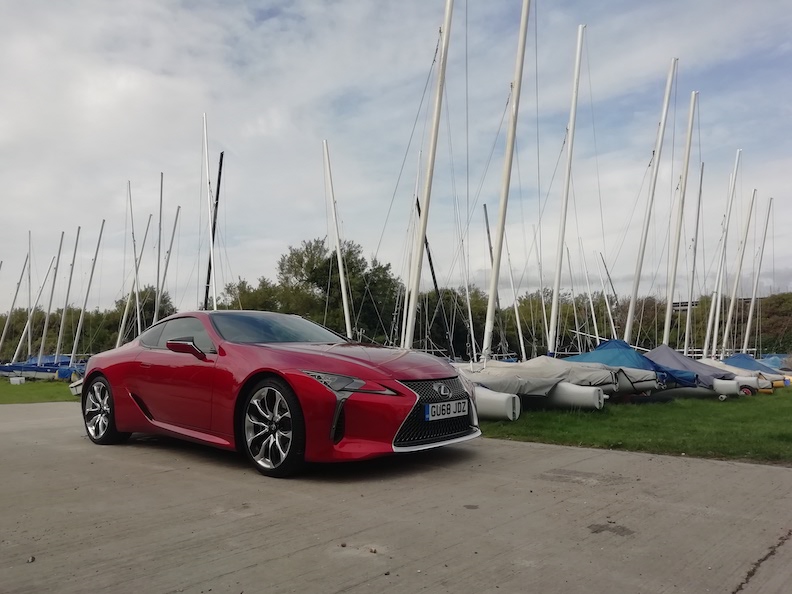
    What’s limited to 168mph, does 0-60 in 4.7 seconds, feels like nothing from its sister company and available at a rather affordable OTR price of £87,885? I’m talking about the Lexus LC500.

    The LC500, a 2+2 coupe, is the flagship model from Lexus. From a company that celebrates its 30th year in 2019, it seems quite a nice way to join the party and be given the keys to this. Lexus, sort of, came from nowhere. A subsidiary company with humble groundings, they set out to take on the finest from Europe. There was talk that they couldn’t do it. There was laughter from the power houses in mainland Europe. The laughter stopped. Now they are back with another attempt at making a luxury grand tourer.

    When I say back I am of course referring to the original 2001-2010 SC300/400 model. A luxury 2+2 with a retractable roof. It had the luxury appointments fit for a Lexus but sadly failed as a grand tourer. Fit for the time, it wasn’t able to take on Europe. The SC was a Boulevard cruiser of American tastes.

    With parent company pioneers in the field of hybrid drive systems, it’s pretty much impossible to find anything on their press fleet that doesn’t have that set up so I was pleasantly surprised and somewhat excited to be pointed into the direction of the all petrol LC500. And what a petrol model it is too. A normally aspirated 5 litre V8 packing 458bhp through a 10 speed automatic gearbox to the rear wheels. This has 4 valves per cylinder, 4 high lifting cams, VVT-i and VVT-ie and a redline at 7300rpm. On paper alone, this has almost super car potential. 

    Add that power to the striking looks that turn as many heads as the super powers from Stuttgart, Ingolstadt and Sant’Agata Bolognese and you’re rubbing shoulders in some high class company. But does the LC500 really have what it takes to mix with this crowd or is it an outsider?

    Playing to the Crowd

    It’s a bit yes and a bit no. I’ll start with the negatives first because there are plenty of positives. The handling is a mix of comfort and grand tourer. With 21” alloys, it’s surprisingly good in the comfort area but as an all-out sports car it isn’t quite good enough and belies its super car looks.

    Its mix of settings from comfort to sport are deceptive and not clearly different. On the one hand, the LC500 and all its power will cosset you on the motorways or entertain you on the fast B roads. Just be careful down those narrower lanes because the LC is wide at almost 2 metres!

    That cosseting comfort comes from the quietness of the V8 up front. Depending on how you feel, it can either be quiet and subdued or vocal but never brash. And that vocalisation doesn’t really alter when you select the drive modes, eco, comfort, normal, sport and sport +.

    Try using it as an all-out gung-ho sports car and until you switch the traction off (it never truly turns off) it will satisfy. Pulling away with a howl from the V8 engine and some kick out from the rear. The limited slip differential curtailing wheel spin from the loosest wheel. But you won’t use it like this all the time, it just doesn’t engage in this kind of behaviour. And that’s down to the many good things Lexus has bestowed upon it in terms of luxury.

    The 10 speed auto box changes gears with frightening smoothness and yet you are never left wondering if the gear selected is the correct one. Easy to use paddles allow quick up and down changes and considering its 399 Ib/ft of torque under 5000rpm, using the paddles allows blasts of power to be released quickly. And thankfully they do come quickly because the gearbox (in most modes) tends to keep the engines relaxed at under 2000. 

    That’s not really a hardship when the power surge is lag free thanks mainly to being normally aspirated. Where the LC500 does excel is being just that little it fun and cheeky. The limited slip differential does its job well in reducing spin from the wheel with the least grip but that doesn’t stop it from spinning the wheels when the throttle is pressed hard. And all this for a car that indicated 18-28mpg. Not bad in my book for such a large engine.

    There Are Some Problems

    If there are niggles to be picked at they are purely aesthetically challenging ones and I’m not talking about the design. While the angular grill looks somewhat a bit too much on the long faced SUV range, on the LC it looks just fine. What throws your eyes are the gaudy textured chrome plastic surrounds on the rear lights. It really doesn’t need to be there. 

    Likewise, carbon fibre and faux carbon fibre used on the door kick plates doesn’t suit the car in its application here. Yes the roof is carbon fibre and I’m OK with that, but not on the inside. Thankfully once you shut the door, you no longer see it. 

    I like the infotainment system. It contains everything you’ll need and responds quickly. Thankfully it does because it’s all controlled via a finger pad in the centre console. Where it falters is even on the less sensitive setting, it’s just too sensitive and wrong things were selected. 

    Paying Attention

    I’m happy to say that the interior is well laid out and the controls ergonomically placed and nicely weighted. There is incredible attention to detail in the fit and finish inside. It’s actually above and beyond anything Lexus has made in the past. The skills and fastidiousness of the Takumi master craftsmen is evident in the cabin even down to the often difficult to cover sharp angles on the door cards. It’s not often apparent unless you go looking for it. Textures and stitch work are seamless.  

    Night time comfort is exceptional. Complimented by footwell illuminations and lighting effects near the clock on the dashboard, the white neons running through a sculptured curve in the doors heighten a sense of luxury for those up front. Those in the rear are less well catered for. The seats, while generous in the ample size of the seat squab, are somewhat hampered by headroom or rather the lack of it for anyone over 5 foot tall. You do feel that the rear seat might have been better removed and the ample 197 litre sized boot space increased.

    There is a lot to like about the LC500. It’s big, it’s striking, it’s expensive but affordable. As a GT it makes such beautiful sense. I’ll leave you with the words of Miki Matsaburu who sums up the car in one of her songs, it’s so creamy.

    Love

    Serenity of the cabin

    Comfortable ride 

    Striking looks

    Loathe

    Rear seat room

    Drive modes difficult to differentiate in normal driving conditions

    Infotainment control pad over sensitive

    The Lowdown

    Car –  Lexus LC500 Sport + Pack

    Price – £87,885 (as tested)

    MPG – From 24.4 mpg

    Power – 458bhp

    0-62mph –  4.7 seconds

    Top Speed –  168 mph

    Co2 – 265 (g/km)

    (C) All Pictures Stuart M Bird
  • Quick Drive. Toyota Corolla Excel 5dr 2.0 Hybrid

    Quick Drive. Toyota Corolla Excel 5dr 2.0 Hybrid

    Rating: 4 out of 5.

    What Have We Got?

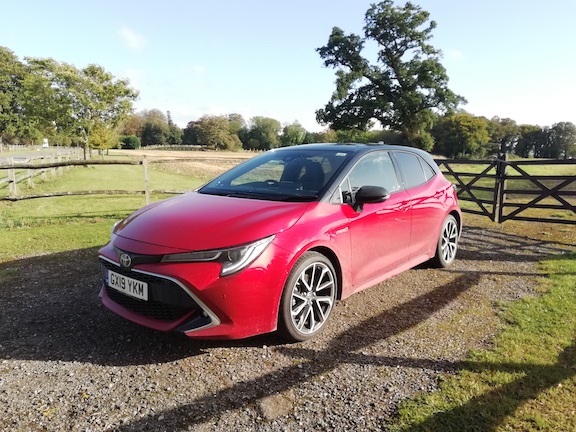
    Toyota and their never-ending array of hybrids brings back an old name with a modern twist. The Corolla is back. And back with a bang it would seem. We take one out for a drive around the lanes of Basingstoke.  

    Driving

    First thing that becomes apparent with the 2-litre petrol engine mated to the hybrid drive system in the Corolla is its normal driving ability. Only recently have I started to like the CVT gearbox system Toyota use. The Yaris showed a big improvement over the previous system. 

    Therefore I wasn’t sure what to expect in the Corolla. Not to get too complicated in describing it, I’ll say that for the most part, it felt like a normal automatic gearbox. It changed up and down like a normal auto box and this, in turn, made it rather nice to drive.

    And its “normal” behaviour could be had for much longer than any hybrid drive I’ve experienced from Toyota to-date. Only when you press on with the throttle to the floor does the CVT traits come through with the engine revving away upfront in a subdued vocal fashion. 

    This all goes in its favour too. The chassis is compliant and quiet and able to carry the Corolla around quickly. One thing that is missing is excessive body roll or body roll at all for that matter. It feels very planted to the road.

    Inside

    The cabin, nicely styled in a normal design from Toyota was pleasant to be in. Plastics where it mattered felt much better than previous models have shown. This it would seem was Toyota’s attempt to catch up with the market leaders from Europe and finally, they seem to have worked out what the Europeans want and where to place the quality materials. This is something Toyota haven’t always done well. 

    Living With It

    It would seem Toyota have a lot of high hopes for the return of the Corolla. In bringing it back, it looks like there is a new design language being adopted that is suited to European tastes. Its looks are both stylish and sophisticated. Despite its big grill and angled light units, it’s nice to see a softer-looking face to a car. 

    The hybrid drive systems are easy to use and altogether it feels a much better car.  It raises the theory of hybrid drive systems being good to actually being very good. It’s taken some time but finally, Toyota has made a better way.  

    The Verdict

    It comes at a price and this time Toyota are not messing around. For £29k, they have made a car that challenges some of your preconceived ideas of Japanese cars and turns them on their head. It’s still a Toyota so expect it to be more reliable than anything else out there, it’s just now it has a more familiar feel to it that you’ll greatly appreciate. The Corolla of the 70s had Europe worried.

    Once again, the Europeans are going to be on the run.

    The Japanese have done it again.    

    The Lowdown

    Car –  Toyota Corolla Excel 5dr 2.0 Hybrid

    Price – £29,075 (as tested)

    MPG – 50.43 – 60.62 mpg (WLTP combined)

    Power – 178bhp (total output)

    0-62mph –  7.9 seconds

    Top Speed –  112 mph

    Co2 – 89 (g/km)

    All pictures (C) Stuart M Bird 2019

  • VIDEO | Subaru Forester 2.0i XE Premium Lineartronic reviewed

    VIDEO | Subaru Forester 2.0i XE Premium Lineartronic reviewed

    Mark Turner takes us throught he Subaru Forester 2.0i XE Premium Lineartronic

  • CAR REVIEW | The ultimate gaymobile. The Queer As Folk Jeep

    CAR REVIEW | The ultimate gaymobile. The Queer As Folk Jeep

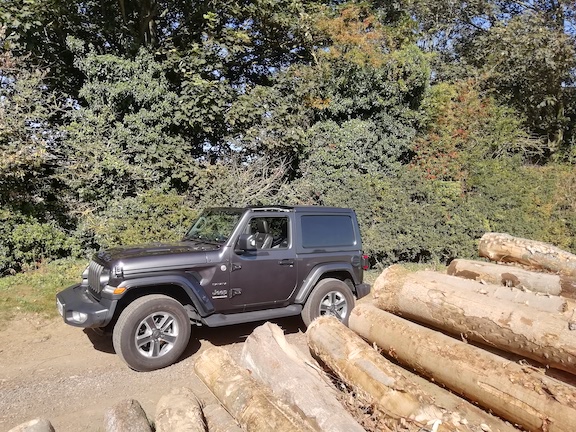
    Jeep Wrangler Sahara 2 door 2.2 Multijet-2 Nowt Queer About This.

    Bit of History.

    It has been 20 years since Queer As Folk, the groundbreaking Channel 4 show, hit our screens with a bang bigger than that from the pounding headache you’d get the next morning from sniffing all those poppers on the dance floor of The White Swan in the East End. 

    It was the first mainstream show that depicted gay life, cruising, pick-ups, recreational drug taking (with a tragic ending for one) and rimming. The first series opened up more than your eyes. The second series was a bit or a let down, so let’s remember the start and the stars that were made.

    What Have We Got?

    Apart from projecting Aidan Gillen, Craig Kelly and Charlie Hunnam into the hights of recognisable TV stars, there was also stared another star. A star that really did get bashed in the rear doors. I’m talking about the 1995 Jeep Wrangler. 

    Overnight, the short wheelbase Wrangler was thrown under the gay spot light and garnered a reputation as being a bit of a gays car. Wrong or right, who can tell. I couldn’t back then. I was 20 and didn’t really have much of a car history underneath me.

    So we at The Gay UK take on Jeeps smallest offering for a cruise around the streets of Surrey to find out if it’s any good as a daily city cruiser.

    Driving

    You must remember, as a tarmac driver, the Wrangler isn’t built for handling. Push it too fast into a corner and it will complain with tyre noise and understeer. On-road performance isn’t what you’d buy this kind of Jeep for. 

    Ride is a pleasant mix of body shake and exaggerated articulation. It takes a bit of getting used to before you become accustomed to its ways. It’s not unpleasant and surprisingly supple on most surfaces. 

    This suppleness and body isolation is thankfully there when on the motorway. At high legal speeds it’s very comfortable. Surprisingly more so than you’d thing and at speed, the wobble and float from the way the suspension works, doesn’t make it feel unwieldy or tiresome.

    Fitted with a 2.2 turbo diesel mated to an 8 speed automatic, it makes easy work of most situations with 450Nm of torque available at 2000rpm. On and off the road that figure means it has all its power almost ready whenever the throttle is pressed. 

    Off-road usability is second to none. That is what has made Jeep an off road force to be reckoned with. This Jeep will wade water up to 760mm and with a 37.4 degree approach angle, it is usefully greater than that of the rears, meaning you won’t find yourself bottoming as you come out of your sticky situation.  

    Inside

    For a utility vehicle, built to be exposed to the elements, both inside and out, you find the cabin appointed in luxurious feeling soft touch materials where it matters. You get electric front windows, air conditioning, heated leather seats and reversing camera to name the name luxuries. All great. 

    You also get tiny footwells up front and even less space in the rear for feet. The rear seat is a bit excessive because it’s not really that useful. 

    Living With It

    For me, with little use for a 4WD but loving the look, I’m willing to overlook its problems. You soon learn to ignore the wind noise when driving with the roofs off at motorway speeds.

    The boot is all but hopeless with just over 200 litres of space. Take the front roof panels off and you can kiss that space good-bye. And even with the rear seats folded, it is still no where near as useful as say a small hatchback like a Fiesta.

    What is a boon in this short wheel base, is parking. It’s short wheelbase makes it one of the easiest big car to park. And because it’s clad with a bench for a front bumper and the usual appendages you expect to find on a Jeep, parking dings won’t spoil your Jeeps good rugged looks.  

    The Verdict

    You shouldn’t like it. It’s heavily flawed in many areas and yet it’s excellent to cruise around in.  Which is surprising because the way it lurches around with a body that doesn’t feel connected to the chassis, it does make it remarkably comfortable. 

    The Wrangler is anything but queer. Give me a metallic brown one with a gold eagle on the bonnet and I’m sold. So that pretty much answers would I recommend one!

    Love

    Rugged good looks

    Ride quality better than you’d think

    Economy

    Loathe

    Zero boot space

    Zero rear leg room

    Zero front foot well space

    The Lowdown

    Car –  Jeep Wrangler Sahara 2 door 2.2 Multijet-2

    Price – £46,940 (as tested)

    MPG – 37.7 mpg (combined)

    Power – 200bhp

    0-62mph –  8.9 seconds

    Top Speed –  112 mph

    Co2 – 198 (g/km)

    PHOTOS: Ⓒ Stuart M Bird
  • CAR REVIEW | Volvo XC40 R-Design Pro Automatic AWDSwedish Seduction 

    CAR REVIEW | Volvo XC40 R-Design Pro Automatic AWDSwedish Seduction 

    REVIEWED: Volvo XC40 R-Design Pro Automatic AWD, Swedish Seduction

    What Have We Got?

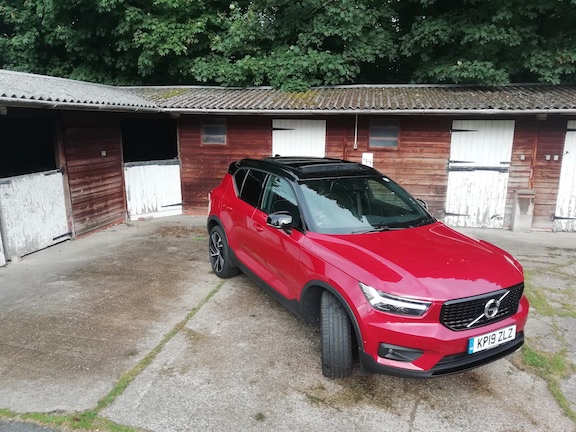
    Having recently tried Volvo’s smallest SUV offering with the competent XC40 Momentum Pro, we now jump seats and try their sporty XC40 R-Design fitted with the same 190hp T4 petrol engine.

    I’ve not been a fan of the R-Design spec Volvo’s, so does this R-Design “do it” for me?

    Driving

    First thing you notice about the XC40 R-Design is its ride. It’s notably firmer in its springing rates. Something you would expect from the sporty lineup. 

    Strangely I’m rather won over by it. For a high sided car, It felt composed and taught. And despite what I said about the Momentum and its perfect choice of gearing, the R-Design gives you wheel paddles that allow you to engage in a more enthusiastic driving experience.  The only problem with the sporty model is the throttle response to gentle pressings just didn’t feel as progressive or fluid. Here is where it encourages enthusiasm by having adopting its own driving style. 

    Adhesion, already impressive with FWD, is further boosted in this AWD system. It encourages you and rewards you with a drive that you should expect from a small SUV.

    Inside

    One thing that is worthy of note is the use of recycled bottles, turned into fluffy material and used in the door cards and transmission tunnel. It has a warmth and feels like a faithful dog pressing against your left leg. 

    R-Design also has such niceties as door illuminations making the car feel more affluent in the range than in some ways, it should feel. 

    The downside is that in the day, the R-Design is a touch too dark on the inside. What it gives you at night, it takes away in the day. 

    Living With It

    The XC40 R-Design is easy to engage with when you want to travel fast. It will reward you with its taught road behaviour and cosset you at night with its soothing ambience which feels a mile away from what it is.. 

    The Verdict

    I’ve not been kind to the R-Designs in the Volvo ranges and when driven back-to-back with other models I am still not sold. What then happened was I’ve been seduced by this R-Design. 

    Jumping from the Momentum Pro T4 in the range, you notice its driving manners immediately and this time, they really are noticeably different. But it’s not bad. I even contacted Volvo PR Barnaby Jones to tell him that I’ve changed. 

    Its sporty prowess is exaggerated by the use of a 4 wheel drive system. It gives added encouragement to really use the T4 petrols 190hp and though it does hit the economy, it’s the payoff you expect to pay in a sporty model. It’s just that, at almost £4000 more than the Momentum Pro, it has a lot to offer but does it justify that extra? I’ll let you decide when you go to Volvo to take a look.

    Love

    Minimal sharp edges within cabin trim

    Handling

    Supportive seats

    Loathe

    Price

    Dark interior 

    Lacking fluidity

    The Lowdown

    Car –  Volvo XC40 R-Design Pro Automatic AWD

    Price – £ 42,485 (as tested)

    MPG – 32.8 – 35.3 mpg (WLTP combined)

    Power – 190hp

    0-62mph –  8.2 seconds

    Top Speed –  130 mph

    Co2 – 163 (g/km)