Tag: Gay History

All the latest breaking news on Gay History. Browse THEGAYUK’s complete collection of news, articles and commentary on Gay History.

  • TODAY IN LGBT HISTORY | 1933: Nazis start the destruction of lesbian and gay culture in Germany

    TODAY IN LGBT HISTORY | 1933: Nazis start the destruction of lesbian and gay culture in Germany

    Today in 1933 the Nazis started their war against the gay and lesbian community in Germany by confiscating materials from the Institute of Sexual Science. The institute’s works were destroyed as part of the regime’s censorship programme, by youth brigades.

    The organisation was opened in 1919 and key in collecting and collating data concerning sexuality, gender and psychology.

    The Nazis burned the books and documents on the streets of Berlin as part of their censorship policy.

    Students organized by the Nazi party parade in front of the building of the Institute for Sexual Research in Berlin prior to pillaging it on May 6, 1933. They confiscated its books, photos and periodicals for burning. The Institute had been established by Magnus Hirschfeld, a Jewish homosexual doctor, as a center for sexology. It provided counselling and other services, and sought rights for homosexuals and transsexuals.

    The institute was opened by Magnus Hirschfeld and his collaborator Arthur Kronfeld in 1919.

    Embed from Getty Images Embed from Getty Images

    Magnus is also famous for coining the term transsexualism. The institute also employed transgender people. Pioneering modern sex reassignment surgeries were offered here in 1930.

    To find out more visit the wikipedia page

  • GAY HISTORY | Remember the opening of the Crew Gay Bar in London

    GAY HISTORY | Remember the opening of the Crew Gay Bar in London

    After being served one too many warm beers at a rival, Crews was born. “Chris” takes us down memory lane.

    CREWS: 1990-1998 St Martins Lane, next to Stringfellows

    Crews came about after I was served yet another warm beer at the Brief Encounter and the manager asked me what I would do, lose him his job?

    I said “no”, far worse. 

    From the outside, you could not see the 3000 sq ft inside and the plan was just to be the biggest gay bar in London, not nightclub.

    The agents were only interested in it being let as a restaurant until I told them that my cousin was, a renowned architect, and they thought we would spend a fortune on it. However, our plan was to be cheap and cheerful, cruising and carefree so dark blue paint and murals of sailors went up on the walls.

    After a hiccup with early management, the bar became the first to introduce straight forward pricing of £2.50 a pint, the reason being that there was no time to give change, such was the demand.

    In addition, free nuts and crisps were offered. Two GoGo dancers would give performances on the bar. Crews became the busiest gay bar in London and was responsible for dragging the gay scene from Earls Court to the West End. 

    The year Crews opened saw the Edge, CXR, Admiral Duncan, G-A-Y Bar and The Village really take off.

    Have you got memories of a venue from the past which has now closed? Check out our list of venues at our Lost LGBT Scene Project.

  • GAY HISTORY | Remembering the first time at The Catacombs

    GAY HISTORY | Remembering the first time at The Catacombs

    A contributor to our Lost LGBT+ Scene project left this recollection of his first encounter at The Catacombs as an 18-year-old in the heydays of the early 70s.

    Vivid memories of The Catacombs…..

    At the tender age of 18, new to London, very green and exceedingly shy and discovering freedom!

    Soon discovered Gay News (a now-defunct gay newspaper) and the gay scene at Earls Court. Must have been incredibly brave to go on my own.

    Saturday nights. There were bouncers on the door, and the club used to provide square gold coloured metal keyring fobs with raised lettering CATA top-line COMBS bottom line to help ID.

    There was a steepish narrow flight of steps down to the dance floor and a bar on the right I think. I THINK they did sell beer, but I only ever drank Coke, so might be mistaken.

    The dance floor was always dark, illuminated with numerous flashing disco spotlights. I vividly remember the packed floor and the heads bouncing to Motown, Stevie Wonder-Superstition, Temptations-The Law of the Land, Timmy Thomas-Why cant we live together.

    I hear those on the radio sometimes, shut my eyes and I’m back there in 1971/2 such was the huge impression. Around the dance floor which was circular or multi-sided such as Octagonal was a series of arches which led on to a corridor around the dancefloor.

    There was a series of arches into open rooms around the outside of this corridor, each room with tables and seating around. There was always a row of stationary figures around the wall just watching the dancefloor and a similar row around the corridor, all awaiting the next pickup. I don’t remember where the toilets were, very shy and maybe didn’t use them, nor the disco, nor if there were any emergency exits and looking back.

    I always think the place could have been an inferno if the worst happened, but oh! such happy memories.

    Written by Paul

    Have you got memories you’d like to share? Check out our list of now-closed LGBT+ venues and leave you recollections in the comments.

  • GAY HISTORY | Remembering sexual encounters at Biograph cinema

    GAY HISTORY | Remembering sexual encounters at Biograph cinema

    Oh, the “Biograph” was a grubby, run-down, sordid, glorious place. I’d first heard about it in 1965, from friends that lived in Pimlico, and who constantly made jokes about the alleged goings-on.

    I already knew that I wouldn’t be averse to something like this. I’d had a friend in school that I used to “play” with, but that had been more adolescent discovery than anything serious.

    I’d left school in 1962, started work, got a girlfriend, who wouldn’t go all the way, because nice girls didn’t do that, but she provided “relief”. Even with this, I still couldn’t get the stories of the “Biograph” out of my head.

    A couple of times, after work, I’d saunter past on the other side of the road, watching the men going in. This graduated to crossing the road and slowly walking past the entrance, but I couldn’t get up courage to go in.

    Eventually, my thoughts and feelings became so overpowering that, one evening in 1966, 20-years-old, with my heart beating loudly, I entered the cinema, paid my money, and stepped into the darkness.

    “Nobody stood up to let me pass; instead, they would half-swivel in their seats, clutching their coats in position over their laps as I squeezed past”

    Turning left, I walked to the start of the left aisle and stood there, letting my eyes get used to the darkness, and the movements of the audience. The cinema was full but seats were constantly being vacated and occupied. As my eyes got accustomed to the darkness I spotted 3 empty seats in the middle of a row, eight or nine rows down, so, taking a deep breath, I walked down the aisle to the row and started to squeeze past the sitting members of the audience. Nobody stood up to let me pass; instead, they would half-swivel in their seats, clutching their coats in position over their laps as I squeezed past.

    This worked until I reached the first person who didn’t move his knees, forcing me to step over him, one leg at a time. Standing with my back to him, with my legs astride his knees, his hand coming up to grope me from behind caused me to moan, which drew the attention of the people in the row in front of me to my predicament. As I stepped over the second person, he also groped me, whilst the first person proceeded to massage my arse. Then someone in the row in front turned around and squeezed my cock through my trousers. I was in heaven! I finally made it to a seat and almost fell into it, with my heart fluttering wildly.

    Whilst I was recovering from this greeting, the two empty seats to my right had been occupied.

    The serious stuff quickly started, with a slow, steady, mounting pressure of a thigh against my left thigh. I returned the pressure and was rewarded with a hand slipping over my knee, and then moving up my thigh to squeeze me between my legs. After helping the fumbling hand to undo me, I half-sat half-lay there, being wanked off, encouraged by the man on my right who proceeded to kiss me.

    I couldn’t hold on; with spunk shooting out, my half-stifled cry of horrified joy caused those sitting around to laugh, with one man saying “Oh, you really must come again!”.

    I slowly cooled down and began to play with my new friend on the left, managing to help wank him off, before doing the same to the one on the right.

    I left the cinema floating on air.

    Photo by Adrien Olichon from Pexels

    After that, there was no holding back, and I was there at least once a week, sometimes twice.

    I was young, hot, and eager, so I was popular with the middle aged guys, which turned me into a bit of a precocious tart!

    The encounters developed into their own routine – knee pressure, the hand up the thigh, then both sitting there rubbing each other’s cock. If the other one was fanciable, there would be the furtive whispering of “Where do you live? Can we go there?”, then the zipping up and leaving together.

    One American was so overjoyed to find that I was wearing stockings, a suspender belt, and black satin panties (all bought from Axford Clothing Store, 306 Vauxhall Bridge Road. The two male owners were so kind and understanding to a young man exploring a facet of his sexuality) that we jumped straight into a taxi to get to his hotel as quickly as possible.

    The audience always varied; on the weekends the place was full, whereas in the week it could be half-empty and quiet, with nothing going on at all.

    Then you watched the films before going to the toilet to wank yourself off in front of anyone who cared to watch, usually with them staring at your cock and furiously wanking themselves off.

    Over the years the “Biograph“ changed; there was with more hassle from the usher, although once he’d gone past it was back to normal until his next round; the lights were turned up, but it was still possible to have fun.

    Walking down the right-hand aisle, towards the screen, led to the first door to the men’s toilet. Opening this led you into a fairly dark passage, about 5 yards long, at the end of which was another door which opened to the toilet proper .

    This passage could also be a source of enjoyment, especially when the cinema was full, and the passage crowded, with the fanciable ones going in having their thighs rubbed, or even being groped, in passing by the fanciable ones coming out, and vice versa.

    The men’s toilet itself could also be lively, depending on how crowded; I got there one time and stood next to a young guy who was being seriously sucked off. As I rubbed his arse, he looked round to his right at me, and I was kissing him as he came. I can still feel him trembling!

    One thing that I eventually noticed was that there being only men in the cinema, the women’s toilet was never used, and so, if I met someone who was very nice, we could discretely go to the women’s toilet for a fuck!

    Buying a motorbike gave me a justification for wearing tight jeans and knee-high leather boots.

    With braces to hold up my jeans and no panties, I would arrive, undo the top button and unzip my jeans, sit down with my long jacket undone but covering me, and wait for the first knee pressure and hand moving up my thigh. There was no more fumbling, just a hard cock, ready and waiting!

    I went to the “Biograph“ for 13 years, until I moved.

    Even after all these years, after relationships, experiments with SM, and cross-dressing, I have never experienced anything to match the sheer excitement of my first visit to the “Biograph”. It was simply wonderful!

    This post was uploaded anonymously. If you’re the author please get in contact if you’d like to be credited.
  • Where and how did pride begin? How a riot at Stonewall led to a world-wide pride movement

    Where and how did pride begin? How a riot at Stonewall led to a world-wide pride movement

    In Part two of Simon Sayers-Franklin’s Pride series, he explores the origins of Pride at the Stonewall riots and why we fly our Rainbow Flag!

    How Did Pride Begin?

    Pride originated on 28th June 1969. Back then police raids on gay bars, like the Stonewall Inn, were common. The authorities would come in, push people around, display violence, intimidate, bully and randomly arrest people. The arrests were frequently made for tiny, inconsequential things such as drag queens wearing more than one or two items of ladies clothing or being caught in compromising positions.

    Often the bars, which were largely owned by the Mafia, would bribe the police to tip them off when raids were due to occur. The gay bars would often have two rooms – a bar in the front and a dance floor in the back. Dancefloor lights could be triggered from the bar to send a secret message to the people next door that a raid was about to happen. This allowed them to stop dancing or quickly find an opposite-sex partner if they wished to continue dancing.

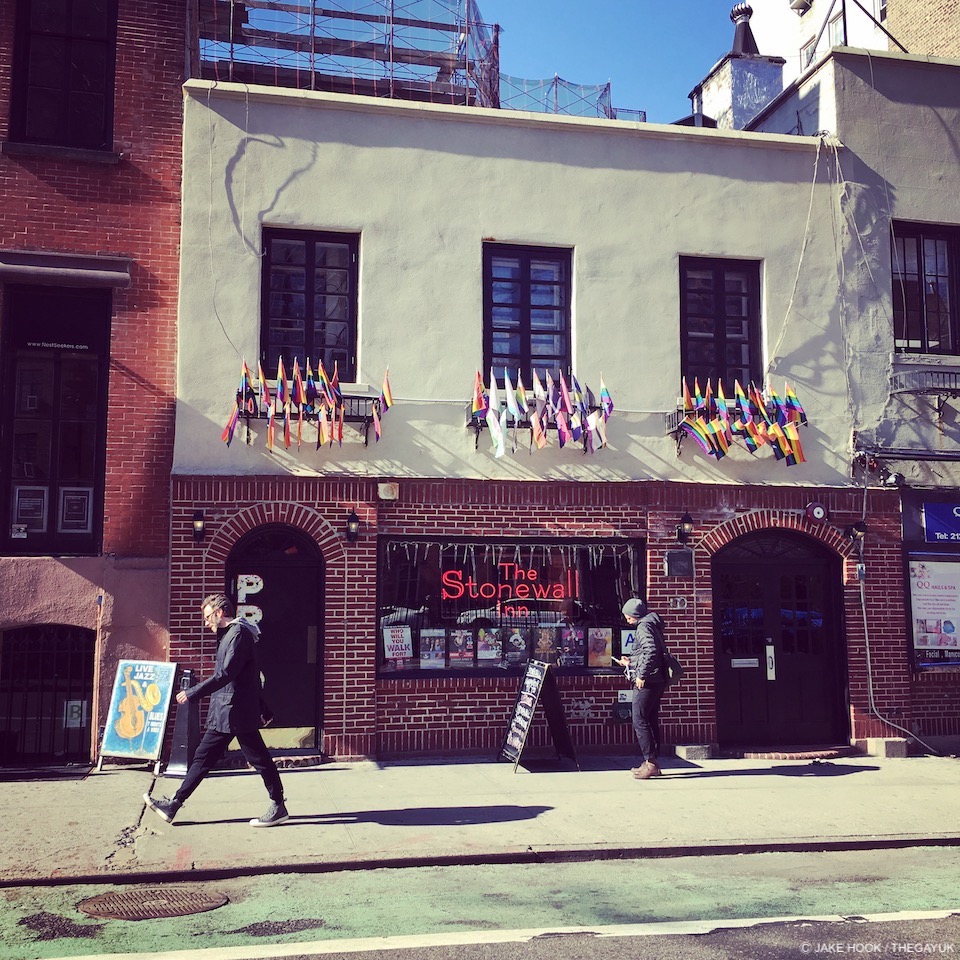
    It was in the early hours of the morning on June 28th 1969, that an LGBT friendly bar in New York was subject to a raid – something that was all too common in gay bars. This bar, however, was one of those owned by the Mafia and catered to transgender people, drag queens, effeminate men, sex workers and homeless people of many backgrounds. The bar in question was the Stonewall Inn.

    a sign from Stonewall that police used to raid the premises

    This raid, however, was different from the beginning. Firstly, the owners were not tipped off, secondly, it happened very late; around 1:20 am. There had been rumours about a raid that night but it was dismissed as inaccurate information.

    The night it all began, two undercover policemen and two undercover policewomen came in and gathered evidence while the rest of the team waited outside. When those who had gained entry called for backup the music died, the house lights came up and those who realised what was happening ran for the doors and windows in the bathrooms but were blocked in by the police.

    There were reportedly over 200 people in the Stonewall Inn that night. Little did the police know, that this as not going to go the way they expected.

    Usually, the police would line up the people, check ID and then the female officers would escort those wearing female clothing to the toilets, where they would be subject to physical checks and if men were found wearing female clothes they would be arrested. Not this night. This night everybody refused to produce their ID and those in women’s clothing resisted being taken to the bathrooms. This resulted in high tensions, only made worse by the police who became inappropriate while frisking some of the lesbian patrons.

    The police had been sent to seize all of the alcohol, which was apparently bootlegged. While this happened, the people inside were made to wait in the line. Those who hadn’t been arrested were allowed to leave but they congregated outside. It wasn’t long for the crowd to grow – a mix of those who had been released and those who had seen the disturbance and joined out of curiosity. Those who were released exited the bar to rounds of applause and they bowed and posed and it was all very theatrical.

    By the time the first police wagon arrived, the crowd had multiplied as much as ten times and as the Mafia were escorted out and put in the van people started shouting “Gay Power.” and others started singing. An officer pushed a drag queen who hit him with her purse. People threw debris at the wagon and that was when a woman, thought to be, Stormé DeLarverie, was dragged out in handcuffs. She kept escaping and fought four police officers. When she complained the handcuffs were too tight she was hit over the head with a baton and screamed: “Why don’t you guys do something?”

    It was this moment that triggered the riots that would go on to last six days!

    Who threw the first brick at the Stonewall Riots

    The patrons of the bar had taken enough and were sick of being pushed around. It was reported that the drag queens and trans women of colour were among the first to fight back. It was Marsha P. Johnson, a black, gender non-conforming, sex worker, a founding member of Gay Liberation Front and a popular member of the New York gay and art scenes, who was apparently one of the first to kick off her heels and fight the police. It is, however, unclear what role Johnson played in the events that night. She disputed that she was the one to start the riot by claiming she arrived at 2 am when the place was already on fire – a fire she claimed was started by the police.

    did Martha P Johnson throw a brick at Stonewall

    These riots were a major moment for LGBT people and Stonewall became an iconic image of rebellion and resistance. It stood for our strength and our refusal to back down.

    It was the next year, 1970, that the first Pride march was held in New York on the anniversary of the Stonewall riots. From that moment we have continued to celebrate Pride in the month of June to honour those who kickstarted a revolution. We march to represent our strength and unity. Our community is strong together and Pride shows just that! In modern days it still has political undertones but these days in the western world particularly, our events stand for inclusivity, visibility, having fun and celebrating love and equality rather than fighting for it.

    Why Do We Have a Rainbow Flag?

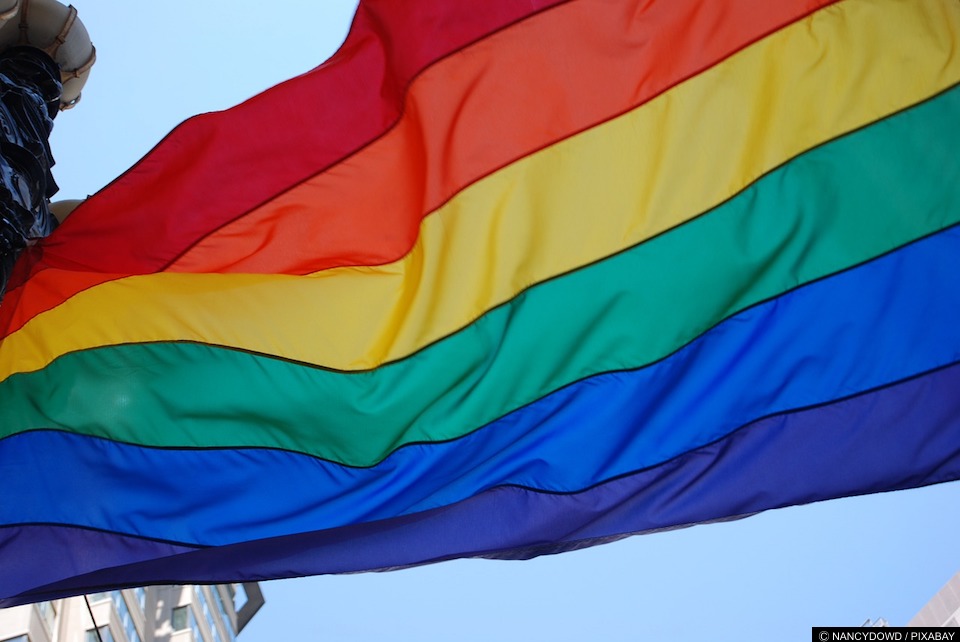
    The flag was devised by artist Gilbert Baker after he was challenged by Harvey Milk (another hero and martyr for the LGBT community), to create a “symbol of Pride” to represent the LGBT community. It debuted at the 1978 Gay Freedom Day Parade and has been an icon of our community from that day.

    what does the rainbow LGBT flag stand for
    The original rainbow flag as created by Gilbert Baker

    There were originally eight colours in the rainbow instead of six:

    Hot Pink represented sex/sexuality. It was taken out due to manufacturing issues after Baker approached a company to mass produce the flag. Apparently, the hot pink fabric was too expensive to make.

    Turquoise, representing magic and art, was lost when the Pride Parade Committee wanted to fly the flag in two halves along both sides of the street for the 1979 Gay Freedom Day parade. Turquoise was dropped to leave six stripes, therefore, leaving an equal number to split.

    Red is life.

    Orange is healing.

    Yellow is sunlight.

    Green is nature.

    Indigo is serenity

    Violet is spirit.

    A modern variation, created in 2017, added black and brown stripes to highlight the People of Colour within the LGBT community. There were a mixed reaction and a lot of controversies because of how the flag never represented “race” and was always meant to represent aspects of life that apply to everybody, regardless of ethnicity. It also caused upset by changing the artist’s original vision.

    The Stonewall uprising would go on to inspire the LGBT movement across the globe. In London, the first-ever march by the Gay Liberation Front happened in November 1970.

  • OPINION | It may not be an obligation to learn LGBT history, but you really should

    OPINION | It may not be an obligation to learn LGBT history, but you really should

    Next year sees the 50th anniversary of The Stonewall Riots, which I’ve written about before here, yet still, there are some people out there who feel that the younger generation doesn’t need to care about the violent history of struggling for gay rights because they are too busy having a good time.

    “What they fail to understand is that they can have that “good time” because of countless LGBT+ men and women who have lived through hell and to this day still fight to protect the rights of the community.”

    Having a fluff piece opinion that completely misses the point of what Pride stands for is utterly disgraceful. And it saddens me that people who are only a few years younger than me have absolutely no clue about why that is. I have a huge amount of respect for the generations that gave me the rights I have today, and I also understand exactly why they would get angry at a group of gays who don’t show that level of respect or a willingness to learn about their own community’s history.

    They aren’t asking anyone to know every tiny little detail about gay history, but a basic knowledge of the big events certainly wouldn’t go amiss. Just to afford these brave men and women from all walks of life an iota of dignity and a thank you. An unsettling thing that I have been witness to, is when an older generation LGBT+ person is in a bar or club, and the younger gays either laugh at them, ignore them or worse, insult them and say they shouldn’t be there and even call them gross. We’re not asking you to hook up with them, we’re asking you to acknowledge them.

    Embed from Getty Images

    You don’t even need to make a song and dance about it, just be willing to talk to them if they talk to you. You never know, you could make a new friend. One has to remember that it was only in 1967 that homosexual acts were decriminalised in the UK. There are people alive today that lived through the fear that they could be arrested, simply for being who they are and to see younger people completely ignore that fact because they are too busy having fun must really hurt them.

    Men and women in the UK were some of the earliest to form well organised groups such as the Homosexual Law Reform Society, (founded in 1958) which surprisingly was started by many non-homosexual members, such as Sir Stephen Spender and MP Kenneth Younger and the Campaign for Homosexual Equality, an offshoot of the HLRS founded in Manchester in 1964 by more prominently homosexual people like Allan Horsfall and Colin Harvey. It was a direct result of these groups that the 1967 Sexual Offences Act was passed in the UK.

    I don’t pretend to fully understand what it was like because I didn’t live through it, but I have empathy for anyone that did and I’m always willing to be told something new. It helps me grow as a person. And you can be damn sure that next year I will be finding any events that honour and remember the events and people of Stonewall, and I’ll be there waving my rainbow flag with pride and with respect.

    “I’m not for one second saying we shouldn’t have fun, of course, we should.

    Enjoy life, go to the clubs, wear a pair of heels and a dress, sing bad karaoke, have a regrettable hookup at a Pride event, but please stop and think about why these things can be done, and learn from the past.”

    But I digress, why has this irked me so much? It seems like the social media generation has this shocking sense of entitlement, everything is very much “Me, Me, Me and Kylie Jenner” There’s such a disconnect from people, that real and horrifying events are forgotten because they weren’t a Twitter moment. But this stuff happened, and it’s time that they understood who people like Marsha P Johnson, Gilbert Baker and anyone else from that era are.

    I’m not here to belittle the people who subscribe to the social media way of thinking, it is kinda the way of the world now, but I feel that having such a selfish attitude, not only hurts them, it hurts a whole community. Now I’m not for one second saying we shouldn’t have fun, of course, we should. Enjoy life, go to the clubs, wear a pair of heels and a dress, sing bad karaoke, have a regrettable hookup at a Pride event, but please stop and think about why these things can be done, and learn from the past. There’s already this underlying feeling of separation within the community if we don’t look or act a certain way.

    We are ALL a part of this beautiful Rainbow Community, let’s treat everyone who is a part of it, or who is an ally, as a friend and learn from each other’s experiences. It’s not a crime to not know something, but it’s a wise choice to educate oneself by talking, being open and learning. It could be something that really opens your eyes to a world that you didn’t know about.

    Seek out the people who can enrich you, learn their story and tell them yours.

    Opinions expressed in this article may not reflect those of THEGAYUK, its management or editorial teams. If you’d like to comment or write a comment, opinion or blog piece, please click here.