Tag: GMFA

All the latest breaking news on GMFA. Browse THEGAYUK’s complete collection of news, articles and commentary on GMFA.

  • Ground-breaking HIV testing campaign ‘Me. Him. Us.’ returns to the streets of London.

    Ground-breaking HIV testing campaign ‘Me. Him. Us.’ returns to the streets of London.

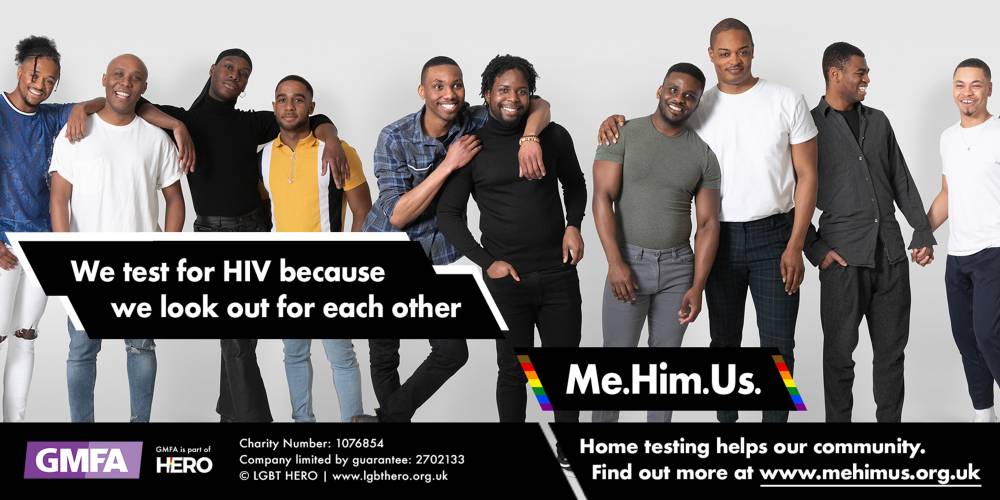
    The campaign by GMFA, which was developed by and for black gay and bisexual men, will appear on a digital billboard in Lambeth and on digital advertising hubs across East London.

    After the incredible impact of the original Me. Him. Us. campaign in March 2018, GMFA – the gay men’s health project has launched a second phase of the campaign, focusing on community, representation and home HIV testing.

    GMFA brought together 17 young black gay men to lead in the latest iteration of the campaign and to effect a positive change in their community, as well as making sure that black gay men are properly represented in sexual health campaigns.

    Marc Thompson, Co-Editor of BlackoutUK, who worked as an advisor on the campaign, explains why he came back to the project: “The reason I took part in Me. Him. Us. again was to build on last year’s success. The first Me. Him. Us. campaign focused on the role of the individual, but with the new campaign we have a larger group of men, so it was really about stressing the importance of community involvement and how we can all play a part in ending HIV.

    “The day of the photo shoot was powerful and moving. We had 17 black gay men who came together to make a difference in their community. They wanted to make sure that their diversity was represented. It highlighted that the needs of black gay men, and the fact we are disproportionally effected by HIV, is still at the forefront of the work we do. Leading these campaigns and being represented is still incredibly important.”

    Activist and writer, Phil Samba who starred in and helped develop last year’s campaign said, “It’s important for us black men to take care of our sexual health and get tested regularly because sadly we are disproportionately affected by HIV.

    “We deserve to have the sex we want, which is right for us, with the least amount of harm. If other queer men are the main source of sexual health information for queer men, it is extremely vital that we all teach ourselves and others about all the preventative tools available today, how they work and how to access them. Black queer men especially need to be able to have open and honest conversations destigmatising sexual health among themselves and their friends from different backgrounds.”

    Gus, 24, one of the men to lead this year’s campaign, told us why he wanted to take part in Me. Him. Us. “I originally wanted to do the campaign because it’s something fresh and new. You don’t see it every day. It’s nice to finally be represented in a positive way. Usually you don’t see black men in a photo shoot or a campaign when you’re walking down the street. It’s refreshing to be shown in a positive way too, and not just seen in a negative stereotype. It’s something beautiful to be a part of, knowing that we are helping to effect a change.”

    Tre, 19, said: “It was empowering to be surrounded by so many young gay black men who are so passionate about spreading awareness of HIV testing. Everyone who took part in the shoot came from a variety of different backgrounds and it’s powerful to see the representation of people from the gay black community from all different parts of the country as well. I think it’s really important for young gay black men, especially for people who might be struggling with their own identity, to see people that look like them on billboards and social media, talking about the important of getting tested.”

    Ian Howley, Chief Executive of LGBT HERO, the parent organisation of GMFA said: “When Me. Him. Us. launched last year we saw something I have never seen in HIV prevention. There was a movement behind Me. Him. Us. black gay men felt emotionally connected to this work and helped us spread the campaign’s important message about looking after your own health, your partner’s health and your community’s health to over five million people. So, I was delighted that we were able to continue this important work in partnership with black gay and bisexual men. These men deserve more than one-off campaigns or to be involved in a tokenistic way without any say. And they deserve to create work that is by them, for them, and empowers their community. I hope that through GMFA, LGBT HERO can continue this successful partnership for years to come.”

    The Me. Him. Us. campaign will feature on billboards and digital hubs in London and online over the course of the summer.

  • Sexual health charity is encouraging black gay and bi men to get tested

    “The lack of visibility of men from black, Asian and other ethnic minority communities in sexual health promotion has been well documented”

    The campaign was created, at a “grass-roots” level by BAME men for BAME men.

    A poster campaign has been launched by leading sexual health charity GMFA to encourage BAME (black and minority ethnic) gay men to get tested for sexually transmitted diseases more regularly. It is also hoped that the campaign will increase the representation of the LGBT+ black and Asian community.

    The first set of posters have been released and they will be displayed in south London specifically: Brixton, Streatham, Kennington and Waterloo.

    Increasing Representation

    The charity revealed that the campaign was developed by “BAME gay and bisexual men for BAME gay and bisexual men” and it aims to increase testing among BAME gay and bisexual men but also to increase representation of BAME gay and bisexual men in public health campaigns.

    Ian Howley, Chief Executive of HERO – Health Equality and Rights Organisation, the parent organisation of GMFA, explains, “Over the last few years, HERO has been working closely with the BAME LGBT+ community. One of the issues that kept on coming up was the lack of representation, especially in mass media health promotion campaigns. At HERO we listened and acted on this feedback. What people see is completely developed by BAME gay and bisexual men for BAME gay and bisexual men. From the concept, to the models, to the design, all parts of this campaign came from a grassroots level.”

    Lack of Visibility

    Marc Thompson, Co-Editor of BlackoutUK who worked as an advisor on the campaign, explains, “Most health professionals don’t like to admit it, but reflecting diverse audiences can be challenging for them. It’s difficult, especially if you don’t come from those communities or understand how to reach us effectively. The lack of visibility of men from black, Asian and other ethnic minority communities in sexual health promotion has been well documented as having an impact on BAME men’s sexual health and risk-taking, which ultimately plays a role in the disproportionate rates of HIV infection in this population.

    “This is why the Me. Him. Us. campaign is so important. It was created by BAME gay and bisexual men for BAME gay and bisexual men. This campaign speaks to us. The imagery is beautiful and it shows black men being loving, caring and compassionate with each other. It reflects the community as it really is. It’s what we need and it’s the work we deserve in our community. The work should represent us.

    “Although this campaign will increase testing and awareness around testing which is the aim, it will do something much more important. young men from the diverse range of Black, Asian and other minority ethnic communities and young black gay men in particular, will see themselves represented in a mass media sexual health campaign. We hope the campaign will inspire more young black gay men get tested, take care of themselves and their partner and will engage with the work we do in our communities to improve the health of all of us.”

    One of bus stop posters featuring a same-sex couple which will be cropping up in South London.

    “I do not feel accurately represented”

    Phil Samba, one of the stars of the campaign and key to the development of Me. Him. Us. explains why he wanted to get involved, “As a black gay man, I personally do not feel accurately represented at all in media or the gay community. There is already a small amount of positive black male role models that steer away from stereotypes and there are even less ones that are gay. Black gay men are atrociously misrepresented as either being aggressive and hypersexual. When I was younger I never saw anyone who was like me on TV or heard anyone on the radio who was like me either and I think honest visibility and representation is so important for young black boys to feel comfortable in their sexuality however they see fit.”

    Ian Howley adds, “Although this campaign is focused on representation, it also has an important message. Black and minority gay and bisexual men are more likely to be diagnosed with HIV and at a later stage too. It’s important that we increase the need for frequent testing for HIV and STIs for black gay and bisexual men. At HERO we recommend that all sexually active men are tested for HIV every six months. Early diagnosis of HIV infection enables better treatment for you and reduces the risk of transmitting the infection to others.

    “I’m proud that HERO is in a position to develop this work in partnership with BAME people. It’s important that BAME people have a platform to create personal and social change in our community. Although this campaign will run for at least three months, this is just the beginning. HERO will continue to work closely with BAME LGBT+ people to build on this work, develop it further and help make a positive change in our community.”

    The Me. Him. Us. website will have information on HIV, types of HIV testing and where to get tested, as well as stories from black gay and bisexual voices.

  • Over half of gay and bi men cheat on their partners, research finds

    New research has found that the majority of gay and bi men cheat on their partners.

    A survey of gay and bisexual men has found that 52 percent had cheated on their boyfriends and nearly 60 percent said they had been cheated on by their partners.

    Despite over half of partners cheating on their lovers, only 45 percent of these men said that their partners had found out about their unfaithfulness.

    The research, conducted by FS Magazine asked 961 gay and bisexual men about the times they had cheated and been cheated upon.

    Here’s what they found out:

    • 58% of respondents said a partner has been unfaithful
    • 52% said they had been unfaithful
    • 45% of these men said that their partner never found out
    • 17% said that they’d got an STI from being unfaithful
    • 61% of these men did not inform their partner
    • 40% of people in an open relationship said that either they or their partner has broken the rules of that relationship.

    Ian Howley, Chief Executive of HERO – the Health Equality and Rights Organisation, notes that communication is a fundamental issue in the relationships of gay men, “What’s clear to us from the results of the survey and what gay men told us about their experiences is that some gay men are making the same mistakes regarding communication, trust and boundaries.

    “There’s huge issue of gay men not being able to talk to one another about what they want sexually. We grow up in a very heterosexual society where ‘cheating’ is enough to end relationships and long-standing marriages because that’s what society has told us to do. And it’s not shocking to find that these standards are also put on gay men.”

    Ian adds: “I’ve met lots of gay couples who are perfect for each, emotionally, but sexually they didn’t work, or it just fizzled out but rather than work together on this, one or both of them cheats on their partner leading to the eventual breakdown of their relationship.

    “Now ‘cheating’ may start with flirting with a stranger or sliding into someone’s DMs on Twitter, but it only takes a few conversation exchanges before thoughts are put into action and then you have an issue that might bring the end to your relationship.

    “Of course sex is important for any relationship to work but you cannot and never will be able to meet the needs of someone 100% of the time. And we are foolish to put that pressure on ourselves.

    “If you are lucky to find someone that does it for you, is there for you emotionally, physically and treats you with the respect you deserve, then you must work on the relationship. Letting a relationship die because of sex is silly. More often he will work with you and you can work together to explore options that will keep your relationship tight.”

    HERO are also recommending that gay men in relationships get tested for STIs and HIV regularly. Ian said, “17% of the gay men who admitted to cheating on their partner got an STI or HIV. We recommend that all sexually active gay men, whether in a relationship or not, gets tested for HIV and STI at least twice a year.”

    The new issue of FS magazine is now available to download on iOS and via Pocketmags.

  • Gay men just aren’t using condoms… new research finds

    New research by GMFA has shown that the majority of gay men asked didn’t use condoms the last time they had sex.

    Gay men just aren't using condoms... new research finds

    A new report from GMFA has revealed that gay and bisexual men aren’t using condoms when they have sex. Sixty-five percent of those surveyed said that they didn’t use a condom the last time they had anal sex. Eight percent who had bareback sex were on PrEP.

    “The results of the survey has shown that sex is complicated and there is no one size fits all safer sex strategy,” says Ian Howley, Chief Executive of GMFA. “First we need to define what is risky sex in this day and age.”

    “Safer sex in 2017 is more complicated than it was twenty years ago when your only options were condoms or abstinence as a way to protect yourself from HIV and STIs. The advancement of treatment, the fact that gay men who are on HIV treatment and have an undetectable viral load so can’t pass on HIV, added to the increased number of gay men who are taking PrEP, means that gone are the days when sexual health education was just about telling people to use condoms. We now must do more to increase gay men’s knowledge about all the options open to them.”

    “Of course condoms still play an important role in preventing other STIs and should still be a major part of a safer sex strategy, however, it’s not a one size fits all approach anymore. We need to meet gay men where they are in their lives. We need to keep on pushing the message that there is more than one safer sex strategy. We need to increase people’s knowledge about PEP, PrEP and what HIV-undetectable actually means in the real world.”

    Just what is “risky sex” in 2017?

    PrEP and successful HIV treatment has changed the landscape of what it means to have ‘risky’ sex, particularly when it comes to HIV. FS surveyed 523 gay and bi men and asked them about the last time they had sex, what type of sex it was, when they were last tested and what risky sex means to them.

    They discovered,

    • 65% of respondents said that they didn’t use condoms the last time they had anal sex.
    • 32% of those respondents said it was bareback but they knew the other guy was HIV-negative
    • 14% of them said it was bareback but one or both were HIV-undetectable
    • 11% said it was bareback but didn’t think about or worry about the risk.
    • 8% said it was bareback but one or both were on PrEP.
    • 27% of total respondents consider themselves to have a risky sex life

    Ian Howley goes on to say,

    “We at GMFA recommend the following. If you are someone who is comfortable using condoms then keep on doing that. It’s the best strategy that helps prevent HIV and STIs. If you are someone who is HIV-negative and has condomless sex then we would recommend that you get yourself on PrEP. It won’t stop STIs but it’s been proven to stop people becoming HIV-positive. Also check out PEP. It can help if you’ve put yourself at risk.

    “If you are living with HIV and undetectable then keep on taking your medication. HIV-positive men who are undetectable cannot pass on the virus to anyone. If you are living with HIV and are not undetectable yet then we suggest you still use condoms with HIV-negative men, unless they are on PrEP. And all sexually active men, whether HIV-negative or HIV-positive should have regular check-ups at a GUM clinic. We recommend once every six months or more often if you are having condomless sex. Gay men need to learn about the option open to them. It’s the only way we can finally stop HIV transmissions.”

  • GMFA turns 25 today

    GMFA turns 25 today

    One of the gay community’s most respected charities, GMFA turns 25 today.

    To celebrate its 25th birthday, GMFA has launched a fundraising appeal to raise £25,000 to invest in its future.

    The charity was started 25 years ago, in 1992, by a group of gay men who saw that there was a lack of resources specifically for people like themselves. Since its inception, it has tirelessly worked to bring awareness about the sexual health issues facing gay and bisexual men in the UK.

    It even produced one of the sauciest magazines available in the UK, FS magazine, which was distributed amongst London’s gay bars.

    Ian Howley, Chief executive of GMFA says,

    “Over the last 25 years, GMFA has been at the forefront of innovated measures of HIV prevention. Since 1992, GMFA has provided frank and honest information about HIV, STI and safer sex. We’ve also supported gay men living with HIV and led with powerful HIV stigma campaigns. We reach over 1.5 million people through our website alone. Our campaigns have a social reach of over 4 million. And our FS magazine is leading the way by highlighting issues that gay men face on a daily basis.”

    Despite the important role that GMFA plays in the sexual health arena, it receives no statutory funding.

    Ian continues,

    “The future of GMFA is uncertain, but we believe that we are the best in this sector to help gay men take control of their own lives.  And we do this as five men sitting in an office with the help and support of our volunteers and donors”.

    In 2013 the charity had its funding cut from the Pan-London HIV Prevention Programme, which was funded by the NHS. The cuts came at a time when new HIV infections amongst gay men were at an all time high. Higher than the levels recorded in the 1980s.

    Donate to the GMFA25 appeal: https://www.gmfa.org.uk/appeal/gmfa25-appeal

    Donate by text: GMFA25 £10 to 70070

  • GMFA confirms new CEO

    GMFA confirms new CEO

    Ian Howley has been confirmed as GMFA’s permanent Chief Executive Officer. Ian has been with GMFA/HERO since 2010 and took over as Interim Chief Executive in August 2016.

    Alan Palmer, Chair of Health Equality and Rights Organisation (HERO), the parent organisation of GMFA said,

    “I’m delighted that the Board has confirmed Ian Howley as Chief Executive. Since being appointed as Interim Chief Executive, Ian has demonstrated the values, knowledge and commitment needed to lead this organisation. He has managed a hugely successful relaunch of FS as The LGBT Fact Site, enabling HERO to build on our achievements in providing accurate information to gay and bisexual men to ensure that we can do the same for the wider LGBT communities. Under Ian’s leadership, HERO has had its best ever World AIDS Day campaign, raising vital funds to help us continue our work into and beyond our 25th year.”

    Ian commenting on his appointment said,

    “I am delighted to have been confirmed as Chief Executive of GMFA/HERO after a successful interim period. When I first joined GMFA in 2010 I knew I was part of something special and have given my all to make sure that GMFA and HERO makes a difference to LGBT people. In the last seven years, we have worked hard to help GMFA make a difference in the community. While we are still in uncertain times, and there will be challenges ahead, I promise that GMFA and HERO will fight to help and support LGBT people to create personal and social change in their own lives and community. As GMFA enters its 25th year of existence, we need a focused and united approach to LGBT health inequalities such as the high rate of suicide in gay and bisexual men, mental health support, HIV prevention and sex and relationship education – all of which are important issues in the LGBT community. I’m proud to lead a team that’s dedicated in achieving this.

    “There is more to HIV prevention than just telling gay and bisexual men to wear a condom or just take PrEP. How we view ourselves, our self-esteem and self-worth all plays a part. We are also entering a mental health time bomb. Suicide is at its highest it’s ever been for gay men. Chemsex and the affect it has on gay men’s mental health is also becoming an issue. The battle for health equality is still ongoing and we here at GMFA and HERO promise to try our best to create personal and social change for gay and bisexual men and in the wider LGBT community.”

  • Nearly 40 per cent of gay men are having unprotected sex

    As STI infections soar in gay and bisexual men across the UK, a poll released by GMFA shows that a staggering 39 per cent of gay and bisexual men are having unprotected sex.

    FS155-cover


    Nearly 40 per cent of gay and bisexual men are having unprotected anal sex the majority of the time. A poll by GMFA has revealed that condom usage has “slipped back” since the early days of HIV and the height of the AIDS epidemic.

    Of the 40 per cent that have unprotected sex 49 per cent of them identified their relationship status as single, dating or in an open relationship.

    Despite the lack of protection nearly half of those surveyed also stated that they do in fact worry about STI infections and becoming infected with HIV.

    Matthew Hodson [outgoing CEO] of GMFA said,

    “Condom use has slipped back a little since the early days of HIV, partly because HIV is no longer a death sentence, and partly because we’re not seeing the same investment in sexual health that we saw a decade ago. With resources deployed to promote condoms and sexual health, encourage testing, challenge stigma, ensure that all gay men are well educated about HIV prevention and PrEP provided, we could end HIV within a generation.”

    The latest issue of GMFA’s FS examines the current state of sexual health of gay and bi men in the UK. According to the editor, Issue 155 takes an honest look at how much unprotected sex they are actually having, and asks the question: do we need to rethink HIV prevention?

    Ian Howley, [incoming Interim CEO] of GMFA believes that relationship status has to be taken into account,

    “We know that the majority of gay and bisexual men use condoms some of the time. There is an idea out there that everyone doesn’t use condoms, and for a lot of people who responded to this survey this is the case. But many of these men are in long term relationships, or are married/civil partnered or said they were in a monogamous relationship. When you look at these stats, it’s only a small percentage of gay men, who are having lots of unprotected anal sex, who are at a high level of risk.”


  • The Most Disturbing Use Of An Emoji Yet

    This morning something quite brilliant and disturbing turned up in our inboxes…

    GMFA the sexual health bods have released their new sexual health awareness campaign called More To Safer Sex which features seven brand new adverts which use stickmen and emojis to teach us all a lesson or two about safer sex.

    Well we were down with that until we got to number 3… Which disturbed us a bit – (see above)

    GMFA’s Liam Murphy said,

    “We aren’t telling gay men not to use condoms, just that there’s more to consider when preventing HIV. The ‘More To Safer Sex’ webpage will provide education around HIV, help gay men to assess the riskiness of different sex acts, provide information about safer sex practices, PEP, PrEP and the impact of being undetectable on transmission risk, and let gay men know where to go to get tested.”

    Anyways see what you think and enjoy…

  • HIV Infections Continue To Rise In The Gay Community

    New HIV infections amongst men who identify themselves as gay or bisexual have continued their upward rise.

    New infections of HIV in gay and bisexual men in 2014 increased by 110 new cases over the 2013 statistics. In total 3360 gay and bisexual men were diagnosed with HIV during the 2014 period. Despite being a small minority in the UK’s population gay and bisexual men account for 54% of new HIV diagnoses.

    New diagnoses are higher in 2014 than they were than at the height of the AIDS crisis during the late 80s and early 90s.

    In the period of 2012-2013 new HIV infections increased. The rise of HIV in the gay community has risen from 2450 in 2004 to 3360 in 2014. The National AIDS Trust estimates that there are nearly 110,000 people living with HIV in the UK and around 26,000 living with undiagnosed HIV.

    For the 150th issue of FS Magazine, the magazine published by sexual health charity GMFA, a survey found that around a third of gay men did not use a condom the last time they had penetrative sex.

    Seventy-one per cent of gay men said they would use PrEP immediately if it were available on the NHS. PrEP is a medicine when taken daily is extremely effective in stopping the transmission of the HIV virus.

  • DEPRESSION CRISIS: One Quarter Of Gay Men Surveyed Tried Committing Suicide

    Shocking new statistics from GMFA’s FS magazine show that nearly one quarter of gay men who have suffered from depression have tried to kill themselves.

    A startling survey in the latest issue of FS magazine uncovers the true extent of the effects of depression on gay men. Around 600 men, who identified that they had or were suffering from depression, were asked if they had tried to commit suicide and around 24%, nearly one quarter, said they had, that number increased to over half when asked if they had had suicidal thoughts.

    Around 54% of gay men surveyed said that they had considered ending their lives, with self-esteem being the biggest contributor to their thoughts.

    For those men living with HIV, 66% identified their diagnosis as the leading cause of depression and suicidal thoughts.

    Simon, 36 from Oxford, is one of the many HIV-positive gay men who responded. He says: “I was diagnosed with HIV in January 2012. I was having lots of risky sex and I knew eventually it would happen but didn’t really care. It wasn’t until I was diagnosed that reality set in. I wasn’t ready for it and became depressed. It affected my job. It affected my social life and I became a recluse.”

    Anthony is 26 and from London. He told FS that after his diagnosis he couldn’t handle it. He said: “About three months after I was told I was HIV-positive I tried to overdose. I didn’t cope at all with being told I had the virus. I thought my life was over and suicide was the best option. Luckily my attempt failed.”

    When asked, what were the main reasons HIV-positive gay men felt suicidal or why they attempted suicide, 66% said ‘Living with HIV’ was the main issue with ‘Low self-esteem (60%) and relationship issues (39%).

    “HIV remains one of the most stigmatised of all health conditions,” says Matthew Hodson, Chief Executive of GMFA. “Rates of depression among gay men with HIV are twice as high as they are among other gay men, affecting about one in every four men. And depression in men with HIV can lead to poor adherence, which can have a major impact on their physical health as well.

    “Depression also has an impact on someone’s likelihood of becoming HIV-positive,” adds Matthew. “A recent study showed that men with depressive symptoms were more likely to have unprotected sex, and to have unprotected sex with several partners. Tackling the mental health challenges faced by gay men is crucial if we are going to reduce the high levels of sexual risk-taking and high incidence of HIV in our community.”

    Ian adds:

    “Gay men are just as likely to face the same everyday struggles straight people face on a day-to-day basis with the added pressure of their sexuality. For HIV-positive gay men the issues they faced were greater due to their diagnosis. The gay men in our new issue wanted to share their stories in a bid to help other gay men realise that they are not alone. The first thing to do when trying to fix a problem is admitting you have one. So, hello gay people… we have a problem.”

    Last year helpline charity Samaritans revealed that 1 in ten male callers were worried about their sexuality.

    The new issue of FS magazine can be read online for free by going to: www.fsmag.org.uk

    If you’d like support Please call 08457 90 90 90 (UK) 1850 60 90 90 (ROI), email jo@samaritans.org, or visit www.samaritans.org to find details of the nearest branch.

    Or phone Switchboard on 0330 330 0630

  • Rain Did Not Hamper The Gayest Sports Day Of The Year

    Yesterday the GMFA held the 9th annual GMFA/RVT Sports day.

    The rain and wind didn’t deter the hardcore fans of the event, which is now in its 9th year.

    Matthew Hodson, CEO of GMFA said, ‘This was the ninth year of the revived GMFA / RVT Sports Day and it was the first one where we had torrential rain. Truthfully, it feels like we’ve just dodged that bullet for all these years. What was brilliant though is that the wet weather didn’t dampen the atmosphere. Moving some of the events indoors, or under the arches, and just accepting that at other times we’re going to get wet, we still managed to have a great games. And we’ve raised a few thousand pounds to support GMFA’s HIV prevention work, including our website and FS magazine, which receive no Government funding, as well as the local charities, Vauxhall City Farm and the Friends of Vauxhall Pleasure Garden.

    ‘I’d like to say a huge thanks to all the teams for competing so gamely, to the staff and management at the Royal Vauxhall Tavern and to the GMFA volunteers who kept the event running so smoothly, to Timberlina, Nicholas Heath and Bob Ballard for hosting and commentating on the sporting events and LaVoix for hosting the auction – and to everyone else who came along, helped to raise funds and made it such a great atmosphere.

    ‘We’ve finally proved that we can still have a great Gay Sports Day, even if it rains. But some sunshine next year will be greatly appreciated, all the same.’