Tag: Legal

Read the latest news and analysis of legal issues surrounding the LGBT+ community. Browse THEGAYUK’s entire archive on news on legal issues.

  • Court rules Jewish trans parent cannot see her children

    Court rules Jewish trans parent cannot see her children

    A British court has ruled that the children of a Jewish transgender woman may not see their parent due to the likelihood that they will be “marginalised or excluded by the ultra-Orthodox community”.

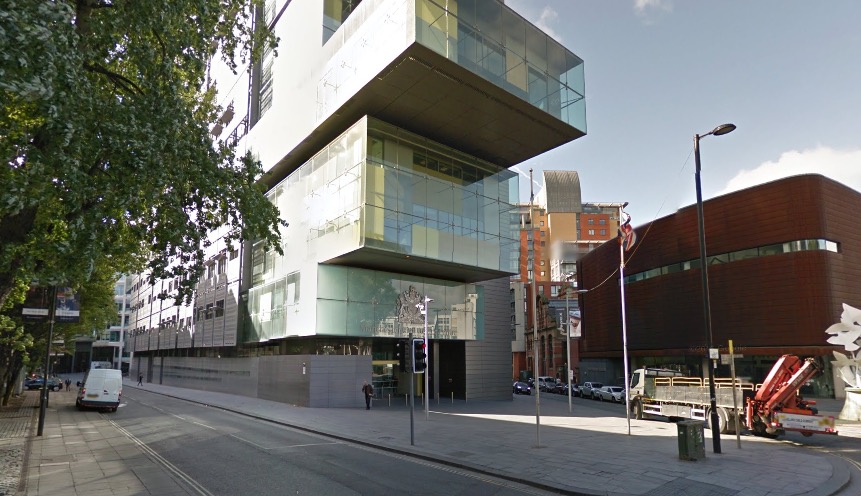
    Manchester Court
    CREDIT: Google Maps 2016

    The Independent reports that a transgender parent has had access to her children denied by a family court in Manchester. The ruling, the first of its kind, found that the children and the biological mother could be “marginalised or excluded by the ultra-Orthodox community”. The family is part of the ultra-orthodox Jewish Charedis.

    The trans parent, who is living as a woman is only allowed “indirect” contact to her children four times a year. The ruling comes despite Orthodox Jewish rabbis suggesting that Judaism should not punish transgender people in this way.

    Justice Jackson concluded that there was a “risk” that the mother and her children could be rejected by their community, if they had direct, “face to face contact with their father”. He express regret before his ruling saying, that the “father’s” application for contact would be refushed.

    He said,

    “I therefore conclude with real regret, knowing the pain that it must cause, that the father’s application for direct contact must be refused.”

    The Independent has the full story

  • “Non-conventional” sex acts censored by UK Government

    Sex scenes described as “non-conventional” could be banned in the UK under a little-discussed clause in the Digital Economy Bill.

    The UK government could censor porn or filmed sex scenes it deems “non-conventional” under a proposal which is part of the digital economy bill. The proposal would enforce a strict age verification and force Internet Service Providers to block access to footage which couldn’t be classified by the British Board of Film Classification (BBFC) for sale to the public under the R18 certificate.

    The BBFC’s classification system has been described as controversial and lacking in scope for modern viewing habits.

    A spokeswoman for MindGeek, one of the world’s biggest pornographic website operators, said,

    “Many of the sexual activities prohibited from R18 [the BBFC’s most explicit certification] are normalised and accepted aspects of healthy sexuality, and are proudly celebrated by the feminist, queer and ethical porn movements internationally,” she said.


    “Non-conventional” scenes could include fisting as it falls under the “four finger rule” as well as female ejaculation.


  • Yep. Those Christian bakers are going to appeal. Again

    They aren’t giving up. Those Ashers Bakery owners are now going to appeal to the UK’s highest court.

    Despite two court rulings defining their decision not to bake a “gay cake” as discriminatory and unlawful, Ashers Bakery owners, the McArthurs, are appealing to the UK’s Supreme Court according to The Evening Standard.

    Gareth Lee the LGBT activist who initially ordered a cake in 2014 which bore the inscription “Support gay marriage” had his order denied by the company whose bosses cited that the “order was at odds” with their beliefs. They added that the supportive message was “in contradiction with what the Bible teaches.”

    An original court case found that the bosses had acted unlawfully. District Judge Isobel Brownlie ordered the firm to pay damages of £500 after ruling that religious beliefs could not dictate the law.

    Last month judges at the Court of Appeal upheld the original judgement. However, the family behind the bakery is not satisfied and the family’s legal team have written to the Appeal Court judges in Belfast, “to consider giving a short ruling on the question of whether (an) appeal to the United Kingdom Supreme Court is available in this case”.

    The McArthurs have insisted that the issue was never with Mr Lee’s sexuality, but with the message that he had requested on the cake.

  • Yikes. You could go to prison for sharing a SNAPCHAT image

    Yikes. You could go to prison for sharing a SNAPCHAT image

    Ever thought of screengrabbing someone’s Snapchat and sharing it? Well, be careful because if you do, you could face two years in prison.

    can sharing pictures put me in prison

    So Snapchat is home to a lot of naughty pictures (apparently). We’ve not spent too much time there, obvs, but reliable sources tell us this is the truth. Well, you could face up to two years in prison if you share “private” pictures of someone without their permission under British copyright law.

    That news might come as a bit of welcome relief for certain male celebrities who have had their private stash of naughty pictures released to the world recently.

    In March this year the then culture minister Ed Vaizey was asked whether steps “to prevent Snapchat images being made public without the consent of the image owner”, would be presented, by MP Jim Shannon.

    Vaizey replied,

    “Under UK copyright law, it would be unlawful for a Snapchat user to copy an image and make it available to the public without the consent of the image owner.

    “The image owner would be able to sue anyone who does this for copyright infringement.”


    © belchonock Depositphotos


    Sharing private or sexual images without permission could get you into prison type of trouble.

    We spoke with lawyer, Phil Gorski at Blacks Solicitors who told us,

    “Last year there was a new piece of legislation introduced, which actually set out the specific crime of revenge porn. There is a specific charge that can be brought and so the option is there and should probably be taken if the information has been distributed to a large number of people.

    “What the legislation says is that where you’ve got photographs and the phrasing is, “… of a private or sexual nature …” That doesn’t mean you have to be showing intimate body parts or anything like that. It can be in a sort of context that’s perceived to be sexual.

    “If they are disclosed and it’s done without consent and the purpose of disclosing them was to cause distress or embarrassment, which when you think about it, it would be very difficult to not be the case. Then, there’s a potential crime that’s taken place.”


    Of course, if you’re worried about your pink bits being on display to the entire world it might be best never to put them on the web in the first place. Remember nothing you share on the internet is secure.

    Gorski continued,

    “Where these images are taken consensually then you need to be thinking very carefully about whether you actually want to do it or not. Not putting yourself in the position where there are images around in the first place is the easy fix but not necessarily something that someone will always want to do.”

  • What to do if your naked pictures are leaked online

    Over the last month, a number of high profile male celebs have had private pictures hacked and leaked onto the internet.

    © belchonock Depositphotos

    We spoke to Phil Gorski at Blacks Solicitors about what steps you can take to protect your data and your private pictures if you become a victim of hacked data or revenge porn.

    Be sure before you send…

    “The sort of easy thing to say but rather difficult thing to do is, where these images are taken consensually then you need to be thinking very carefully about whether you actually want to do it or not. Not putting yourself in the position where there are images around in the first place is the easy fix but not necessarily something that someone will always want to do.”

    Get in contact with the publisher of the picture.

    “If something does get out there, then the first thing that anybody should do is get in touch with the site concerned if it’s an online publication. Because, by-in-large, if a site has a good reputation, if it’s a Facebook or a Google or whatever, they will react very quickly to remove the images.

    “There are systems in place where users can actually click on the right place and say, ‘This is what it is, this is where it is and you need to take it down.’”

    Revenge porn is a crime. Report it.

    “Last year there was a new piece of legislation introduced, which actually set out the specific crime of revenge porn. There is a specific charge that can be brought and so the option is there and should probably be taken if the information has been distributed to a large number of people.

    “What the legislation says is that where you’ve got photographs and the phrasing is, “… of a private or sexual nature …” That doesn’t mean you have to be showing intimate body parts or anything like that. It can be in a sort of context that’s perceived to be sexual.

    “If they are disclosed and it’s done without consent and the purpose of disclosing them was to cause distress or embarrassment, which when you think about it, it would be very difficult to not be the case. Then, there’s a potential crime that’s taken place.”

    An injunction?

    “All of these images would be considered to be of a private nature regardless of the criminal side of things. You would, where someone like me might be involved, a civil litigation lawyer would be, think about whether there’s a possibility of an injunction on privacy grounds.

    “That’s something that you would have to be a rich celebrity to afford, unfortunately.”

    Remember the Barbara Streisand effect.

    “There’s a really interesting case in relation to privacy law that dates back a while involved Barbara Streisand and … and it’s led to something called the Streisand effect, which basically (means) sometimes you’re much better off not making a fuss because the coverage of your legal proceedings lead to far more attention than there was in the first place.”


  • Christian bakers lose “gay cake” appeal

    BREAKING: Northern Ireland Christian bakers, Ashers Bakery, have lost their “gay cake” appeal at an appeal court.

    baker loses gay cake appeal
    (C) Londondeposit Depositphoto

    This story is being updated, please refresh to see new content.

    A bakery in Northern Ireland has lost its appeal against a court ruling that its decision to refuse to bake a “gay cake” as discriminatory.

    The judge said according to the BBC that “it did not follow that icing a message meant you supported that message.”

    In 2014, gay rights activist Gareth Lee tried to order a cake which the bakers refused to make because it had the inscription “Support Gay Marriage”.

    The Christian-run Ashers Baking Co. in Northern Ireland refused to make a pro-gay marriage cake, which featured a slogan “Support Gay Marriage – Queer Space Born 1998” with a picture of Sesame Street characters Ernie and Bert, because it says it clashed with the ethos of their company, saying,

    “We thought that this order was at odds with our beliefs, certainly was in contradiction with what the Bible teaches.”

    In May 2015, a UK Court has found that the bakery had acted unlawfully when it refused to fulfil the order.

  • So Italy just made public masturbation legal

    So Italy just made public masturbation legal

    Italian courts have just ruled that masturbation in public is legal – unless it’s done in the presence of minors.

    Peep Show Wanker

    The Supreme Court of Cassation (Italian: La Corte Suprema di Cassazione) in Italy has ruled that getting yourself off in public is not illegal unless it’s done in front of minors.

    The case came about because a 69-year-old man was caught red handed in Catania pulling his pork on the University of Catania campus and he was convicted in May 2015.

    Originally he was sentenced to 3 months in prison and fined €3,200.

    However in light of a law change last year, which makes public masturbation a crime only if a minor witnesses it, the court overturned his sentence.

    According to CNN “Judges ruled that public masturbation out of the presence of minors is no longer deemed criminal conduct due to a change in the law last year, which decriminalized the act.”

  • Australia still hasn’t equalised the age of consent for gay men

    Australia still hasn’t equalised the age of consent for gay men

    It might surprise you to know that Australia still hasn’t equalized the age of consent for gay males in all its territories.

    Gold Coast
    CREDIT: Pixabay


    Australia is still lagging behind in terms of equality for gay and bisexual men. Not only is same-sex marriage still not available for couples but the age of consent is higher for gay or bisexual men who want to have penetrative sex. More accurately anal sex in some territories attracts a higher age of consent, despite the fact that the age of consent for vaginal or oral sex being equal across the country.

    The age of consent for heterosexual and homosexual couples is 16 except in Queensland where the age of consent for male on male penetrative sex is 18. This law is also applied to heterosexual couples who may want to have anal sex too.

    Vaginal and oral sex is legal from the age of 16 – regardless of sexuality,  the penalty if you break this law is 14 years in jail.


    ALSO READ: Where can homosexuality land you the death penalty


    Homosexuality was made legal across the country in 1994. However Queensland, the Northern Territory and South Australia still lag behind in many areas of equality with no provision in law for civil partnerships or adoption rights for LGBTs in those territories.

    The Queensland parliamentary committee have now recommended that the sexual age of consent be standardised and the word “sodomy” be removed from the territory’s criminal code. The committee have suggested that the word “sodomy” be replaced with the term “anal intercourse”.

  • Gay relationships become legal in Belize

    A bold and legal step for LGBT rights has been made in Belize after its Supreme court ruled that sex between two men was now legal.

    A law in Belize that disproportionately affects gay men was last night ruled unconstitutional by the country’s Supreme Court after a three-year wait for the judgment.

    Section 53 of Belize’s Criminal Code, an old British colonial law, banned ‘carnal intercourse against the order of nature’ and thereby made consensual gay sex between adult men in private illegal in Belize. The legal provision has been ruled ‘unlawful’ to the extent that it can be applied to same-sex activity.

    In handing down the judgment, Chief Justice Kenneth Benjamin agreed that Section 53 amounts to a violation of the constitutional rights to dignity, privacy, equality and non-discrimination on grounds of sex. He found that there was no justification in the form of ‘public morality’ and therefore the law must be modified. He awarded costs to the Claimaint, Caleb Orozco.

    The case is the culmination of years of work by a Caribbean-led coalition of lesbian, gay, bisexual and trans (LGBT) activists, academics and legal experts. The individual claimant is Caleb Orozco, a Belizean gay man and prominent LGBT human rights advocate.


    Today Orozco said:

    “This is the first day of my life in which it is legal for me to be me.

    This is a history-making judgment for Belize, the country which I am proud to call home.

    Our judicial system has been proven to be robust and unprejudiced. This judgment should give other oppressed minorities the confidence to speak up and stand up for themselves in situations of human rights abuse in the way I have. Our courts really are there to protect us all.

    In striking down Section 53, Belize has also rejected a poisonous remnant of colonial rule. We have reaffirmed ourselves as a society built on dignity and respect for all our people.

    This is a proud day.”

    Simone Hill, President of the United Belize Advocacy Movement (UNIBAM) said before the judgment:

    ‘This is about our human rights. As citizens of this country our rights should be respected without fear or favour. Win or lose, we will continue the fight to ensure the victory of the protection of our rights.”

    The case was heard in May 2013 and presided over by Chief Justice Kenneth Benjamin. Today’s ruling – some three years and three months later – upholds Belize’s LGBT (lesbian, gay, bisexual and trans) community’s human rights to privacy, equality, dignity and non-discrimination, all of which are protected under the country’s constitution.

    Meanwhile, the International Commission of Jurists, the Commonwealth Lawyers Association and the Human Dignity Trust were joint ‘Interested Parties’ in support of Mr Orozco.

    Téa Braun, Legal Director of the Human Dignity Trust, said:

    “This is a great victory for human rights and the rule of law.

    Intimacy in private between two adults of their own free will should not be a matter for the law. The only outcome of such laws is to blight the lives of members of the LGBT community by fostering a climate of oppression and state-sponsored discrimination.

    The bravery and resilience of colleagues across the Caribbean who have worked tirelessly on this case is an inspiration. Caleb Orozco is a hero and a trailblazer. The Human Dignity Trust is immensely proud to have worked alongside him and his legal team.”

    Alex Ward, President of the Commonwealth Lawyers Association, which passed a resolution on the ‘Decriminalisation of Sexual Orientation’ in 2009, said,

    “This is a sound and just ruling which we wholeheartedly welcome. It is the CLA’s mandate to uphold the rule of law across the Commonwealth and today marks a considerable success in maintaining the integrity of the Belizean Constitution and protecting its citizens’ fundamental rights.”

    Livio Zilli, Senior Legal Adviser at the International Commission of Jurists (ICJ), said,

    “The ICJ hails the courage, commitment and tenacity of the entire LGBT movement in Belize, and Caleb Orozco’s in particular, and salutes this decision as a critical contribution to upholding people’s human rights whatever their sexual orientation or gender identity.”

    While convictions under Section 53 in Belize were rare, the law carried a sentence of up ten years’ imprisonment effectively for consensual homosexual sex.

    There are still 76 legal jurisdictions across the world that make same-sex intimacy between consenting adults a crime. Of these, 38 countries are, like Belize, members of the Commonwealth.
  • Seychelles End Legal Ban On Gay Sex

    The Seychelles’ government have passed a bill which repeals the ban on sex between gay men.

    The Seychelles has decriminalised homosexuality in a historic move which the government hopes will lead to a growth in LGBT travellers to the region.

    The  Seychelles, which is made up of 115 islands in the western Indian Ocean was part of a number of countries where homosexuality is illegal. The law, which was introduced in 1955 was a hangover from British colonial rule – although convictions were very rare, but those found guilty could be sentenced to prison for up to 14 years.

    Female same-sex relationships were not legislated against.

    Section 151 of the Penal Code read,

    Any person who –

    (a) has carnal knowledge of any person against the order of nature; or

    (c) permits a male person to have carnal knowledge of him … against the order of nature,

    is guilty of a felony, and is liable to imprisonment for fourteen years.

    ALSO READ: Places in the world that still have the death penalty for homsexuality

    ALSO READ: Surprisingly homophobic holiday destinations

    The government signalled their intent in 2011 to remove the ban, but the penal code amendment has only just taken place, without a referendum.

    According to the Seychelles News Agency (SNA), 28 members of the National Assembly were present for the vote on Section 151’s amendment.

    Fourteen voted in favour of scrapping the homophobic law, whilst Fourteen abstained. Four members did not show for the vote.

    Parti Lepep, a representative from the ruling party said, as well as appreciating diversity in terms of race and religion, politicians also needed to fight for sexual orientation equality.

    The founder of The Seychelles’ only advocacy group for LGBTS, Fabianna Bonne,
    told SNA,

    “The loudest message that abstaining sent was that they were not going to stand in the way of this change of law happening and we at LGBTI Seychelles appreciate that,” said Bonne.

    “Our focus will now be more on educating all of our society about LGBTI as we have noted that misconceptions and negative stereotyping is very widespread on this subject. Our aim however remains full equality across all aspect of citizenship for after all, we pay our equal share of taxes and participate actively in the development of our country,”

  • Court Forces ID Scanner Use At Brighton Gay Bar

    A court has ruled that a gay bar in Brighton must install an ID scanner if it is to stay open until 4AM.

    (more…)