Tag: Margaret Thatcher

All the latest breaking news on Margaret Thatcher. Browse THEGAYUK’s complete collection of news, articles and commentary on Margaret Thatcher.

  • Was Margaret Thatcher anti-gay?

    Was Margaret Thatcher anti-gay?

    Margaret Thatcher, the former British Prime Minister, had a mixed record on gay rights.

    In the 1980s, she supported Section 28 of the Local Government Act, which prohibited local authorities from promoting homosexuality or presenting it as a “pretended family relationship” in schools. This legislation was widely seen as discriminatory and harmful to the LGBTQ+ community.

    However, towards the end of her time as Prime Minister, Thatcher did begin to shift her views on homosexuality. In 1987, she expressed support for a report by the Church of England that called for the decriminalization of homosexuality. And in 1989, she appointed the openly gay Chris Smith as a minister in her government.

    (C) BIGSTOCK

    It is also worth noting that Thatcher’s government played a significant role in the fight against HIV and AIDS in the 1980s, providing funding for research and treatment, and promoting public awareness campaigns.

    Was the Thatcher Government anti-gay?

    Thatcher’s government’s support for Section 28 of the Local Government Act, which prohibited local authorities from promoting homosexuality in schools, is often seen as having a harmful impact on LGBTQ+ young people.

    Section 28 was introduced in 1988, and it was not repealed until 2003. During that time, many LGBTQ+ children and young people were left without support and resources, as teachers and school administrators were afraid to discuss issues related to sexual orientation and gender identity.

    Overall, while Thatcher’s record on gay rights was certainly not perfect, it is not accurate to say that she was uniformly anti-gay. Like many politicians, her views on these issues evolved over time, and her legacy in this area is complex.

  • Was Margaret Thatcher anti-gay?

    We look at the legacy of gay rights during the time Margaret Thatcher was the British Prime Minister.

    Was Margaret Thatcher anti-gay?

    Margaret Thatcher was in power during 1979 and 1990. It was during this period that gay people suffered the worst healthcare crisis, thanks to AIDS and HIV, the Government’s response was markedly better than that of the US’s.

    However, Ms Thatcher was hesitant on some of the languages surrounding the information campaign which would be communicated to the citizens of the UK. In annotations on official documents distributed by Norman Fowler, the Secretary of State for Social Services, Thatcher asked, “Do we have to have the section on risky sex? I should have thought it could do immense harm if young teenagers were to read it”.

    During Thatcher’s time in power, a new law aimed specifically at those in education was adopted in 1988 called Section 28 in the UK and Section 2A in Scotland. This law prohibited teachers from “intentionally promoting sexuality” or talking about same-sex relationships in any way that would equal them to traditional families.

    Needless to say, this policy undoubtedly added to the confusion and fear surrounding HIV and AIDS amongst the younger generation and possibly put back its decrease for decades.

    After her time as the country’s PM, Thatcher voted negatively on a number of bills affecting the lives of LGBT people in Britain, including adoption rights for same-sex couples, she also voted yes on the Human Fertilisation and Embryology Bill, which requires the need for a father and voted yes on timescale conditions of the repeal of Section 28.

    She was absent for a number of votes including, The repeal of Section 28 and on the Equality Act (Sexual Orientation).

    Did her government pass any anti-gay laws during Margaret Thatcher’s Premiership?

    Yes, in 1988, the Government of the day introduced a piece of legislation called Section 28. This law fundamentally restricted people working for the local education authorities from talking about any sexuality other than heterosexuality to school age children. It was a very similar law to the one that Russia passed in June 2013.

    What did Margaret Thatcher say in her Anti-Gay Speech

    Ms Thatcher barely spoke publicly about homosexuality during her time as PM. In fact, there’s only one speech that she made in which she spoke about homosexuality. It’s widely regarded as her anti-gay speech. This section is just a small portion of a much larger and longer speech, the topics of which reached further than education.

    During a speech to the Conservative Party Conference in 1987, Thatcher spoke directly about homosexuality, saying,

    “To compete successfully in tomorrow’s world—against Japan, Germany and the United States—we need well-educated, well-trained, creative young people. Because if education is backward today, national performance will be backward tomorrow.

    But it’s the plight of individual boys and girls which worries me most. Too often, our children don’t get the education they need—the education they deserve.

    And in the inner cities—where youngsters must have a decent education if they are to have a better future—that opportunity is all too often snatched from them by hard left education authorities and extremist teachers.

    And children who need to be able to count and multiply are learning anti-racist mathematics—whatever that may be.

    Children who need to be able to express themselves in clear English are being taught political slogans.

    Children who need to be taught to respect traditional moral values are being taught that they have an inalienable right to be gay

    All of those children are being cheated of a sound start in life—yes, cheated.”.

    Positive steps

    During the vote to decriminalise homosexuality 51 years ago this year, Ms Thatcher, way before she was Prime Minister, voted to decriminalise it.


  • ANSWERS | What did Margaret Thatcher say about gay people?

    Margaret Thatcher was the British Prime Minister between 1979 and 1990 – a time where gay and LGBT+ rights were hard fought but seldom won.

    What did Margaret Thatcher say about gay people?

    It was during this period that gay people suffered the worst healthcare crisis, thanks to AIDS and HIV, the Government’s response was markedly better than that of the US’s. However, Ms Thatcher was hesitant on some of the languages surrounding the information campaign which would be communicated to the citizens of the UK. In annotations on official documents distributed by Norman Fowler, the Secretary of State for Social Services, Thatcher asked, “Do we have to have the section on risky sex? I should have thought it could do immense harm if young teenagers were to read it”.

    During Thatcher’s time in power, a new law aimed specifically at those in education was adopted in 1988 called Section 28 in the UK and Section 2A in Scotland. This law prohibited teachers from “intentionally promoting sexuality” or talking about same-sex relationships in any way that would equal them to traditional families.

    Needless to say, this policy undoubtedly added to the confusion and fear surrounding HIV and AIDS amongst the younger generation and possibly put back its decrease for decades.

    After her time as the country’s PM, Thatcher voted negatively on a number of bills affecting the lives of LGBT people in Britain, including adoption rights for same-sex couples, she also voted yes on the Human Fertilisation and Embryology Bill, which requires the need for a father and voted yes on timescale conditions of the repeal of Section 28.

    She was absent for a number of votes including, The repeal of Section 28 and on the Equality Act (Sexual Orientation).

    The Anti-Gay Speech

    Ms Thatcher barely spoke publicly about homosexuality during her time as PM. In fact, there’s only one speech that she made in which she spoke about homosexuality. It’s widely regarded as her anti-gay speech. This section is just a small portion of a much larger and longer speech, the topics of which reached further than education.

    During a speech to the Conservative Party Conference in 1987, Thatcher spoke directly about homosexuality, saying,

    “To compete successfully in tomorrow’s world—against Japan, Germany and the United States—we need well-educated, well-trained, creative young people. Because if education is backward today, national performance will be backward tomorrow.

    But it’s the plight of individual boys and girls which worries me most. Too often, our children don’t get the education they need—the education they deserve.

    And in the inner cities—where youngsters must have a decent education if they are to have a better future—that opportunity is all too often snatched from them by hard left education authorities and extremist teachers.

    And children who need to be able to count and multiply are learning anti-racist mathematics—whatever that may be.

    Children who need to be able to express themselves in clear English are being taught political slogans.

    Children who need to be taught to respect traditional moral values are being taught that they have an inalienable right to be gay

    All of those children are being cheated of a sound start in life—yes, cheated.”.

    Positive steps

    During the vote to decriminalise homosexuality 50 years ag0 this year, Ms Thatcher, way before she was Prime Minister, voted to decriminalise it.


  • Trump, Thatcher even Putin are some of the UK’s favourite Politicians

    Trump, Thatcher even Putin are some of the UK’s favourite Politicians

    A study of 2000 Brits has revealed that the UK has a bit of a love affair with some very conservative politicians, including Thatcher, Trump, Putin and Palin.

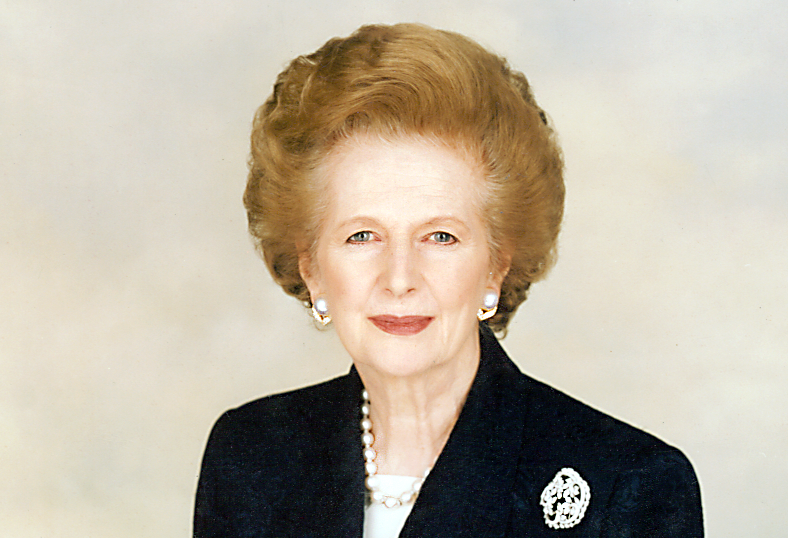
    Margaret Thatcher
    By work provided by Chris Collins of the Margaret Thatcher Foundation – Margaret Thatcher Foundation, CC BY-SA 3.0, https://commons.wikimedia.org/w/index.php?curid=5185418

    The research conducted by CamRate, found that Brits found Margaret Thatcher to be the most popular female politician followed by Theresa May. The Scottish first minister, Nicola Sturgeon was voted in third place, while Germany’s Angela Merkel came fourth. Angela Merkel is against same-sex marriage equality, having already outlined that she regards marriage as “marriage is the coexistence between a man and a woman”.

    Margaret Thatcher, who died in 2013, led the Conservatives from 1979 to 1990 and was instrumental in enforcing Section 28 in schools.

    Worryingly Brits seemed to love Republican Sarah Palin (9), whose stance on LGBT rights is horrifying. Former PM hopeful Andrea Leadsom, Priti Patel, and Nicky Morgan also appear in the top 20 all of whom have a less than perfect score when it comes to gay equality votes.

    Brits also voted Vladamir Putin in 14th place ahead of Nick Clegg (15) and Tony Blair (16). Tony Blair’s government played a key part in the introduction of Civil Partnerships for gay people in 2004.

    It wasn’t all bad news from an LGBT perspective when it came to nation’s favourite politicians, Barack Obama won the vote, with UK Foreign Secretary Boris Johnson and Opposition leader Jeremy Corbyn taking second and third place.

    CREDIT: By Michael Vadon [CC BY-SA 2.0 (http://creativecommons.org/licenses/by-sa/2.0)], via Wikimedia CommonsUS President-Elect Donald Trump came fourth, ahead of ex-UK Prime Minister David Cameron.

    Here are the top 20 male politicians

    1.    Barack Obama
    2.    Boris Johnson
    3.    Jeremy Corbyn
    4.    Donald Trump
    5.    David Cameron
    6.    Sadiq Khan
    7.    Bernie Sanders
    8.    Bill Clinton
    9.    Gordon Brown
    10. Alex Salmond
    11. Andy Burnham
    12. Ian Duncan Smith
    13. Ed Miliband
    14. Vladimir Putin
    15. Nick Clegg
    16. Tony Blair
    17. Chuka Umunna
    18. Mitt Romney
    19. Paul Ryan
    20. Zac Goldsmith
    And the top 20 female politicians.

    1.    Margaret Thatcher
    2.    Theresa May
    3.     Nicola Sturgeon
    4.    Angela Merkel
    5.    Caroline Lucas
    6.    Hilary Clinton
    7.    Ruth Davidson
    8.    Harriet Harman
    9. Sarah Palin
    10. Mhairi Black
    11. Angela Eagle
    12. Priti Patel
    13. Andrea Leadsom
    14. Diane Abbott
    15. Justine Greening
    16. Natalie Bennett
    17. Theresa Villers
    18. Nicky Morgan
    19. Amber Rudd
    20. Elizabeth Truss


    Interestingly, those who were polled preferred their male candidates to be of a Liberal persuasion, with 12 politicians affiliated with liberal or left-wing parties, to eight who are either Republican or Conservative. Voters showed that they preferred the exact opposite with female politicians, with 12 being of a right-wing or Conservative ideology, with eight being part of liberal or left-wing parties.

  • OPINION | Now, but, then

    “It’s a funny old world…” Supposedly the words of Margaret Thatcher to her cabinet on her resignation and, well, I suppose like many, I have found my thoughts turning more reflective points in the last month.

    I’ll state here and now that I was a great admirer of the Iron Lady and, yes, I voted to keep her in back in 1987. We’ll none of us pretend that she was perfect and I’m sure someone will mention Section 28, but how many will recall that she was one of the last three surviving Tory MPs who voted to decriminalise us in the 1960s?

    I think then, perhaps rather naively, that I was rather surprised to be on the receiving end of some really nasty homophobic abuse at a point when so much has changed since that vote almost 50 years ago. We know now that sexuality is innate, not chosen, as hard wired as the colour of one’s eyes. I firmly believe that, had such scientific proof been available when our only scientist Prime Minister was in office, Section 28 would never have been passed. Yet, although knowledge has changed, attitudes haven’t and thank brings me back to the abuse I received.

    It was such a modern form. Not for me the cat-calling in the street, or sneers in the staff room (they wouldn’t dare!); it was over twitter of all places, about as public as one can be in the social media. Now I am no shrinking violet, but there are words one should never use, and that was used in the insult, as was an emoticon of a pile of poo – how erudite! His parents must have been so proud. Yes, I was somewhat shocked and felt “yucky” afterwards and it did make me wonder how it must feel, in this day and age to be confronted face-to-face. For those of you wondering, yes I did forward the tweet both to Stonewall and my local police, strangely though, it appears I would have to make a complaint over the telephone and that’s where I hit that barrier that stops so many from reporting hate crimes. I was embarrassed and too ashamed.

    I realised that I did not want the interference and the intrusion into my world. What if they decided that I was in the wrong for sending a silly message to someone? What if my job came into play – I have to be very careful… What if the police simply did not believe me or thought I was wasting their time? It was, after all said and done, no more than an insult, something I had learned to deal with every day of my secondary school life in the 1980s. But I still felt the same shame I had felt then, somehow, my 44 year old self could no more confront the modern insult than the punch, the trip, the “accidental shove” and mutterings, or the cat-calls of “Are you a gay Christian?” (The “Not The Nine O’Clock News” sketch) bellowed from a common room window. And that was IT, the nub of the problem – fear.

    Back at school, the fear was discovery, I didn’t come out until my late 30s, after a failed marriage and two children; but what was the fear now? The most peculiar part is that I do not actually know. I am always fearful of the impact upon my career, having seen a colleague be forced to fall on his sword because of online indiscretion. I think it was a fear of being judged by others. That is now the fear I must overcome.

    To my long-term shame, I did not go to the Police. I let the fear overcome me and for that I am sorry. I feel I have let-down those who have been subjected to face-to-face abuse. Were I to make a resolution, it would be not to allow my fearful, 1980s teenage self to overcome what I thought was my twenty-teens forty-something person. And to the writer of the abuse, while you may have deleted your tweet, it did go to the LAGLO, Stonewall and was reported by a friend, braver than I. Courage will overcome abuse.


    Opinions expressed in this article may not reflect those of THEGAYUK, its management or editorial teams. If you’d like to comment or write a comment, opinion or blog piece, please click here.
  • COMMENT | Thatcher’s Legacy: The 28ers: The Silent Generation

    As a child of the eighties, I thought Maggie cut a rather marvellous figure, sailing through the decade with her shoulder power-pads, furs and that bulletproof hair – lacquered to within an inch of its existence.

    I was far too young to understand the political ramifications of her tenure: the hardship that fell upon millions in towns where industry was decimated, the rights to buy, or the silencing of a generation’s gays – instead as I played, building my own Lego empire in front of the Beeb’s 6 o’clock news I saw this rather robust and resilient red-lipped woman disembark the steps of yet another 747, shake the hands of craggy leaders around the world and uttering the iconic words ‘Vanity, vanity vanity. ‘ I thought, looking up from my empire construction, ‘this is a woman I should take note of.’

    When Section 28 was introduced I was a pre-teen. What could it possible mean to an eight year old boy, who preferred theatre and designing clothes for Barbie?

    In fact if asked what Section 28 was, I’m sure I would have pointed at the largely ignored volumes of red ultra-bound Britannica Children’s Encyclopaedias my mother had purchased, ‘at great expense’ she constantly reminds us, for the education of her offspring.

    However Section 28 lived on much longer than Thatcher’s premiership. In fact it wouldn’t be repealed until I was 21 – out of school and out of the closet.

    I was unaware that in the mid nineties sitting in a classroom at my north London comprehensive for a PSR lesson (yes that’s Personal Social Responsibility) I would be made to feel dirty, embarrassed and illegal.

    It was 1995. Six years away from the repeal of Section 28. Section 28 of the Local Government Act, prohibited the promotion of homosexuality in schools. It was enacted in 1988.

    Somewhere in among ‘Energy Saving’ and ‘Litter Picking’, Homosexuality was brought up by the teacher, who promptly said: “We can’t talk about this – but one in ten people are gay, that means at least two people in this class room will be gay’ and with that sword-swipe of a statement turned his back on the room as hands started to raise and a united ‘eurgggh’ sound resounded. All eyes it felt, fell on me.

    Turning a shade of Maggie’s Lips, I felt strangled. The teacher refused to say anymore in fear of having a legal case brought against him.

    Where was the explanation of homosexuality?

    Where were the ‘It’s Ok To Be Gay’ badges?

    The Tote Bags of Equality?

    The “So You Think You’re Gay” pamphlets?

    In that moment I became the love that dare not speak it’s name, too risky and illicit to talk about. Now that I write that down, it feels sexy and very Jilly Cooper, but at the time my head was exploding with questions, with the need to be reassured, to be rescued from the looming, baying mob, who were suspiciously eyeing up their classmates to see which one was the homo. I had my mark. My path was set.

    So what are the long-term effects of Maggie’s rule to my illicit generation?

    It’s hard to say.

    Had the children of the 80s and 90s been able to talk more freely of their sexuality would we be more politically focussed rather than a numbed number? Aren’t we a little guilty for using Pride as an excuse to drink and meet with friends to commiserate times past? Rather than the political statement it was intended? Aren’t we guilty of being a little bit apathetic when it comes to rallies and demonstrations?

    Do we feel stymied by our formative years? We are proud, but not with a capital P.

    I recently attended an Anti-Gay Marriage rally in Trafalgar Square. The ‘Pro’s’ far outweighed by the ‘Anti’s’ – but as I glanced around my fellow queers and allies, I wondered where were my generation?

    It felt all these people were 5 to 10 years older or younger than me. They were far more politically charged.

    Why is it that the 80’s babies aren’t fighting as hard as those born in the 70s or 60s? Maybe it’s because our predecessors had their milk taken away by mother Maggie. Is their political protesting born out of some sort of fight for survival?

    Maybe they are the generation that could actually understand the implications of Section 28 and remember the times where homosexuality was still illegal.

    I sit and talk to my peers about the passing of the Iron Lady and we shrug. Muted. Nonplussed by it all, but feel nostalgic as we watch our childhood play out in the nightly news – reruns of Maggie – once again, dressed in cobalt blue power suits, surrounded by aids and bodyguards blazing through international conferences or sat atop a tank blasting cannons into a field.

    Meanwhile students, who weren’t even twinkles in their parents’ eyes at the time of her resignation rejoice at her passing, while the generation above sneer and remember songs by Billy Bragg and Morrisey.


    Opinions expressed in this article may not reflect those of THEGAYUK, it’s management or editorial teams. If you’d like to comment or write a comment, opinion or blog piece, please click here.


  • PETER TATCHELL | Thatcher Extraordinary But Heartless

    The gay human rights activist and campaigner Peter Tatchell has released a strong statement on his website explaining his thoughts about the late Baroness Thatcher.

    Taking to Twitter earlier today Mr Tatchell wrote: ‘Margaret Thatcher: I commiserate, as with the death of any person. But she showed no empathy for the victims of her harsh, ruthless policies

    ‘…an extraordinary woman but mostly for the wrong reasons. Emasculated local government & civil liberties. Section 28.’

    Taking to his website at www.petertatchell.net Tatchell has released an article entitled ‘Margaret Thatcher: Extraordinary but heartless.’ Below is the article:

    “Margaret Thatcher was an extraordinary woman but she was extraordinary for mostly the wrong reasons. So many of her policies were wrong and heartless. Nevertheless, I don’t rejoice in her death. I commiserate, as I do with the death of any person. In contrast, she showed no empathy for the victims of her harsh, ruthless policy decisions,” said human rights campaigner Peter Tatchell.

    “Thatcher initiated policies that paved the way for the current economic crisis: the decimation of Britain’s manufacturing base, the get-rich-quick business mentality, the promotion of the free market and the poorly regulated banking sector. This led to imbalances in the economy. The financial sector gained undue influence, with few checks and balances. These distortions were exacerbated by Blair and Brown but Thatcher began the train of events that led to the present economic meltdown.

    “In 1988, the Thatcher government legislated Britain’s first new anti-gay law in 100 years: Section 28. At the 1987 Conservative party conference she mocked people who defended the right to be gay, insinuating that there was no such right. During her rule, arrests and convictions for consenting same-sex behaviour rocketed, as did queer bashing violence and murder. Gay men were widely demonised and scapegoated for the AIDS pandemic and Thatcher did nothing to challenge this vilification. 

    “To her credit, she shattered the sexist glass ceiling in politics and got to the top in a man’s world. However, on becoming Prime Minister she did little for the rights of women. She was a macho, testosterone-fuelled right-wing politician.

    “Her political agenda was almost entirely divisive and destructive, including mass unemployment and urban decay. She emasculated local government and boosted police powers to the detriment of civil liberties. The striking miners and their families were ruthlessly crushed on her orders. She oversaw the use of police state methods. Baton-wielding police struck down peaceful miners. People travelling to support the strikers were pre-emptively arrested. Protesting miners at Orgreave were framed on false police evidence.

    “On a personal note: Thatcher once unintentionally praised me. It happened in 1981 in the House of Commons. SDP MP James Wellbeloved urged Thatcher to denounce me for advocating extra-parliamentary protests against Tory policies. She responded by saying that she had not read the remarks by the “honourable person.” This was the first and last time she ever described me as honourable,” said Mr Tatchell.

    Section 28 of the Local Government Act 1988, stated that local authorities in the United Kingdom: “shall not intentionally promote homosexuality or publish material with the intention of promoting homosexuality” or “promote the teaching in any maintained school of the acceptability of homosexuality as a pretended family relationship”

    The Act was enacted on May 24th 1988 during Thatcher’s leadership. Section 28 was eventually repealed in 2001.

    In spite of the controversy surrounding Section 28, Baroness Thatcher supported legalising homosexuality In the 1960s and in 1967 voted in favour of the decriminalising of homosexuality in England and Wales.

    Baroness Thatcher died “peacefully” today (8th April) at the age of 87, following a stroke according to her family.

    Lady Thatcher was the Conservative prime minister from 1979 to 1990. She made history as she was the first and – so far, only female to hold this position.

    She had suffered poor health for a number of years and her husband Denis died in 2003.

    In 2011 a biography film of her life was released starring Meryl Streep, grossing $114m worldwide.

  • Peter Tatchells Calls Baroness Thatcher “Extraordinary” For All The “Wrong Reasons”

    Peter Tatchell Tweets His Condolences For ‘Extraordinary’ Thatcher.

    (more…)