Check out these 12 questions to find out how similar you are to other gay guys!
Poll may take a moment to load… please wait a mo!
[socialpoll id=”2163118″ type=”set”]
All the latest breaking news on Survey. Browse THEGAYUK’s complete collection of news, articles and commentary on Survey.

Poll may take a moment to load… please wait a mo!
[socialpoll id=”2163118″ type=”set”]

The majority of LGBT+ people questioned in a recent poll by THEGAYUK revealed that people do not think the term “queer” is appropriate as an umbrella term for the community. The poll, which was made available on Twitter, was answered by over 500 people.
The word queer has increasingly become prevalent as an umbrella term to describe LGBT+ people over the past three decades however many in the community find the word triggering and offensive.
In a separate poll, the majority of people questioned (fifty-three percent) also found that non-LGBT organisations, such as the BBC, National Theatre, National Trust and the Tate Gallery that use the word “queer” to promote its programming of LGBT+ content was also inappropriate.
The word queer has a controversial history and is listed in the dictionary as an informal offensive noun to describe gay men. It was first used to mean homosexual in the late 19th century. It was used in a pejorative and offensive manner. Since the 1980s the term has developed to include people outside of homosexuality, but who fall outside of heterosexual norms.
https://twitter.com/mstevnz/status/887328265358065664
https://twitter.com/GRALambo/status/887408838734958599
Others were happy for the term to be used by other people, but didn’t find that the word defined them.
https://twitter.com/MrDanielBrowne/status/887292859262619648
https://twitter.com/JossJaycoff/status/887512825119334400
THEGAYUK recently undertook a survey to ask readers who identify as gay, bisexual and male what they thought of the term “Men Who Have Sex With Men” or the initialism MSM. The term’s use has become more and more prevalent by health organisations, pharmaceutical companies, educational establishments and other specialists when talking about health or sexual issues to do with gay and bisexual men.
The results were unequivocal. 80 percent of those surveyed said that their preferred term when grouping gay and bisexual men was simply, the usage of “gay and bisexual men”. It was the number one preference by a landslide.
Only 13 percent of those who took part in the poll replied that MSM was their preferred term. Even less popular was the term Queer men.
Only 7 percent said that was the preferred terminology.
When we delved into why MSM was so unpopular. Forty-four percent of those who took part in the poll thought it was “too clinical” whilst 31 percent thought that the terminology added to gay and bisexual erasure. Sixteen percent were keen to point out that organisations wishing to communicate with heterosexuals or non-LGBT people wouldn’t use the terms “men who have sex with women” or “women who have sex with men”.
Just under 10 percent thought that the term negated other struggles of LGBT people.
Editor in Chief of THEGAYUK, Jake Hook said,
“I was told, by one pharmaceutical company that the words “gay” and “bisexual” weren’t reaching all the clients that they were hoping to reach – that “MSM” was more inclusive and less alienating.
“Well, If a man who is having sex with men, but doesn’t want to label himself as gay or bisexual, I doubt that he’ll gladly attach MSM as a label to himself. I’d argue that MSM actually is alienating those who have come out as gay or bisexual. It’s clunky, it’s purely sexual and it’s already a messaging service from Microsoft.”

Referendum day is upon us and up and down the United Kingdom today millions of people will be casting their votes to secure Britain’s future in or out of the European Union.
Over the past months we’ve polled our readers in a series of flash polls to get a feeling about how people are planning to vote today.
Here are our findings:
Polling date: 23rd March
25% Vote Leave
61% Vote Stay
14% Undecided
Polling date: 24th April
82% Better In
18% Better out
Polling date: 22nd June
56% Remain
32% Leave
10% Still undecided
If you’ve voted today on the #EURef how did you vote?
— TheGayUK Magazine (@TheGayUK) June 23, 2016
Pride in London is one of the city’s biggest one-day events, with as many as 1m people coming to the festival to support the UK’s LGBT+ community. It is run entirely by volunteers, with more than 800 volunteers helping on the day.
Chair of Pride in London, Michael Salter-Church said,
“Great progress has been made in the name of LGBT+ equality in recent years, but these figures show the striking reason why Pride is still as important as ever.
“People in Britain who are LGBT+ still face the need to filter their true selves, and hide affection to their loved ones. At its heart, Pride in London is a community led movement that recognises the struggles and successes of everyone in our community.”
Marketing Director of Pride in London, and Deputy Chair at Quadrangle Research, Alison Camps said,
“As well as changing laws we need to change hearts and minds. Pride in London gives us an incredible day to celebrate who we are, and give people the confidence to be proud.
“This is what this year’s campaign #nofilter is all about. We will recognise those people who must live life under a filter, fight for them, and celebrate a day of #nofilter.”
David Ames, who plays Dominic Copeland in Holby City, and appears in the #nofilter campaign said,
“My chosen career asks of me to wear a mask, to tell someone else’s story and to put myself in someone else shoes. Well, that’s all very well when it’s work and I’m being paid.
“In my personal life, however, I don’t want to have to wear a mask. I want to be the narrator of my own story and I certainly don’t want to wear someone else’s grotty shoes.
“So, I fully support and applaud this year’s Pride in London for its #nofilter campaign.
“Showing others that you’re proud, encouraging those who need it to stand tall and making sure those most vulnerable know at all times that, as a community, we’ll do all we can to support you.
“Leave your filters for your Instagram and go and celebrate being you.”
The research finds:
74% of LGBT+ respondents still feel the need to lie about their sexuality or gender identity
2% of the population has been bullied at work because of their gender, compared to 10% of LGBT+ respondents in our survey
77% of LGBT+ respondents felt uncomfortable being their true self in public, compared to just 23% in the general population
21% of LGBT+ respondents felt completely comfortable being themselves in all situations, compared with 41% of straight respondents
75% of LGBT+ respondents were out to all their friends, but only 50% were out to all their colleagues
Friends are by far the most common group to be out to, and men are much more likely to be out in the workplace (89% of our male survey respondents) than women (76% of our female survey respondents)
59% of LGBT+ respondents had felt threatened by other people’s attitudes and behaviours towards them, compared with 16% of the wider population
While only 5% of people think twice about holding a partner’s hand in public, 30% of LGBT+ respondents were uncomfortable with this, rising to 41% of gay men
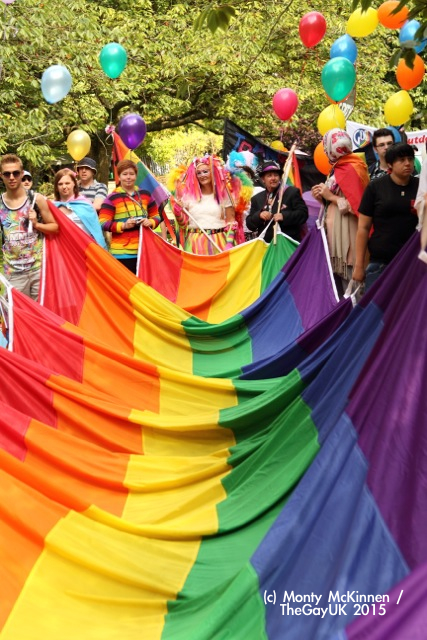
The LGBT+ community remain on high alert after an attack on a gay club in Orlando left 49 people dead.
In a flash poll conducted by THEGAYUK 23% of people surveyed said that they were afraid for their safety after the deadly attack in Orlando.
When asked if the attack in Orlando directly affected their feelings of safety in going out on the gay scene 23 per cent said that they were afraid.
Seventy-seven per cent of those questioned said that they would not allow “hate to win” and they would not be put off going to gay clubs and bars.
ALSO READ: Man arrested after threatening to come back “Orlando-style” at gay bar security staff.

Sponsored by

We would like to hear from as many people as possible including in the gay community with their views on cosmetic surgery (e.g. breast enlargement or reduction, face-lifts, tummy tucks, etc.) and non-surgical procedures (e.g. chemical peels, injections to remove wrinkles, skin lightening procedures, etc.).
The online survey is made up of 15 questions and should take around 10 minutes to complete. You can fill out below or at www.surveymonkey.co.uk
Create your own user feedback survey The survey will help to inform the evidence gathering of an inquiry run by the Nuffield Council on Bioethics on the ethical and social questions that are raised by the growing use of cosmetic procedures. This is one of many ways we’ll be making sure we hear from a diverse range of people with personal or professional experience of cosmetic procedures, or opinions about the impact of the growing availability of such procedures on social attitudes to appearance. More information can be found at www.nuffieldbioethics.org/project
In our snapshot survey, porn topped the list of vices of gay men of the United Kingdom, with 42.4% of those polled owning up to viewing porn at least a few times a week (30%), watching it on a daily basis (28%), and over a quarter admitting to watching the bad boy stuff a few times a day.
Other vices topping the list were Drinking 34% Sex 32% and Smoking 19%.
Only 1.7% of people revealed that gambling was their vice.
In order (respondents could choose more than 1 vice):
Porn 42.4%
Drinking 33.9%
Sex 32.2%
Smoking 18.6%
Chocolate 16.9%
Working 15.3%
Drugs 11.9%
Shopping 11.9%
Fast Food 10.2%
Cruising 5.1%
Adultery 3.4%
Gambling 1.7%
Just over half said that they would consider giving up their vice, with 50% of all respondents saying that their addiction wasn’t a problem for them.
Is the gay community actively looking for help or booking into the Priory any day soon – don’t bet on it, only 13.6% said that they had sought any kind of professional help in dealing with their vice or addiction.
59.3% of those questioned said that they had been addicted for over 10 years – and openly discussed their issues with their peers (66.1%)
If you need to talk to someone with anything that concerns you call the London Lesbian And Gay Switchboard on 0300 330 0630 or visithttp://www.nhs.uk/conditions/Addictions/Pages/Introduction.aspx for more details.