Tag: Travel Guide

The official GAY UK travel guide. Bringing you the latest from the travel world and reviews of the most gay-friendly holiday destinations and where they go the extra mile to make you feel welcome.

  • TRAVEL GUIDE | Feel The (gay) Love In Slovenia

    The verdant rolling hills, the typical southern European countryside, mountainous vistas that even Maria would be satisfied with, a jewel-like coast and buzzing city centre with street side coffee bars and nic-nacky marketplaces. Slovenia is a country teeming with history and it is dying to share it with you.

    It has to be said my knowledge of Slovenia is as fully fledged as my understanding of the offside rule – next to zero. In fact, when asked, I racked my brain to my 12-year-old self to the history lessons we were made to endure and all my frazzled brain could make out was three words: Yugoslavia, the colour grey and political unrest. When I shared my thoughts to the head of tourism over dinner, her face fell, ‘We certainly have our work cut out for us then’ she sighed, but spend just a few days in Slovenia and the country sells itself.

    Slovenia, for those of you not in the know, is a small central/southern European country, nestled in between the Alps, the Pannonia Plain and the Mediterranean. It borders with Austria, Italy, Hungary and Croatia.

    One of Slovenia’s biggest assets is its people. Friendly, accepting and warm. Almost every sentence begins with ‘Of course…‘ and with such a positive affirmation, you realise that the people here are longing for you to have an excellent time.It might not be the most obvious of European getaways, but Slovenia is a gem, a relatively unknown paradise for those who love city breaks, spas, skiing, Nordic walking and Riviera living.

    THEGAYUK were invited to celebrate the inaugural PinkWeek, the brainchild of Mattej and Matej, real life and business partners who founded luxuryslovenia.eu, and who now hope to bring LGBT tourists to Slovenia to enjoy its rich heritage, hospitality and gay life.

    Our hosts ensured that every moment of our stay was filled with sensory delights from the moment we arrived at Slovenia’s laid back main, international airport in Ljubljana. We were met and driven through the picturesque countryside to Otočec Castle Hotel, a sublime, five-star hotel, situated on an islet in the middle of the Krika River. Stunningly peaceful and mesmerisingly beautiful. The service was incredible, whilst the culinary experience was outstanding, catering for even the most discerning tastes. As you stand in the history rich courtyard of the hotel you take a moment to enjoy the serenity of the surroundings; the gentle rushing of the river in the distance and melodic song of birds that inhabit the small island.

    A special mention here of the many spa options open to you whilst staying in Slovenia, which is famous for its live-well establishments. Close to the hotel is the Terme Krka Spa, which you have the full use of. Here you will find world-class health treatments and fitness experts, which promise to have you feeling leaner, healthier and more youthful than you’ve felt in a long time with its extensive slimming and detox programmes. Again, you will revel in the sheer luxury of the culinary delights that await you, should you wish to take full advantage of the programmes.


    Although small, Slovenia packs an interesting excursion, with something for everyone. Whether you love rock climbing (the Alps), caving (Postojna Caves), skiing, boating (Lake Bled, above) or just lazing in the Mediterranean sunshine it’s all here.
    The climate is wonderful. During the summer months, the weather is sunny and warm. The average temperature being in the high 20s throughout the summery months. Winters can be harsh and freezing, but the locals inform me that December is known as ‘Happy Month’, with thousands of people taking to the city centre streets for all manner of fairs and celebrations.

    If you manage to get to the coast (Slovenia has around 60kms of coastline) you should stay at the incredible Kempinski Palace in Portorož. While one-half the hotel retains its old fashioned, colonial feel, with wonderfully appointed rooms and public spaces, it also offers a newer, fresher building, which blends seamlessly, to create a world-class hotel, with, it has to be said a stunning breakfast – and stunning sea views.

    Take a coastline stroll to the next town Piran (below), to experience a quaint and patchwork seaside town, with all the charm and rustic beauty that you’ll expect from any southern European country, perhaps picking up a little sea-salt souvenir, one of Slovenia’s many exports. It has to be said that dining so close to the sea, that food is best served straight from the ocean. You should visit the Fritolin fish restaurant, which is famously popular with the locals, after take in a chilled by-the-sea drink at Paprika.

    As the week progresses, the gayness of Pinkweek starts and our first introduction was cocktails at the Park Hotel in Ljubljana, where we were treated to a special drag show with Mataina and Casper, whose dulcet tones managed to attract children playing in the local park who soon joined the drag act on stage, dancing along. I’ve never seen a sight like it as one excessively excited girl was thrown into the air by a drag queen, miming to Kylie. So laid back are the locals, that not one parent batted an eye, as the two queens cavorted and put on a mid-afternoon show in the afternoon Slovenian sun.
    The next day we had the honour of visiting Lake Bled, one of the most breathtakingly beautiful places on earth. Located in a natural basin, surrounded by mountain reaches, Lake Bled’s azure waters lap gently onto the shore. We were greeted on one of the jetties with a glass of bubbles and canapés, whilst we looked out, our tired eyes were revitalised by the sun and glittering jewel-like ripples in the water. Later we took a boat trip across to the monastery on the small island in the middle of the lake. There is a bell tower and it is said that if you ring the bell three times, your wishes will come true.
    In terms of a gay scene, Slovenia’s is intimate but incredibly friendly. The two main haunts are Tiffany, which is to be found in the middle of a teeming and crowded complex of bars and clubs, catering for every type of person. There is also the bigger more dance oriented Klub K4, which is popular with the LGBT community on a Saturday night.

    The scene is laid back, with an ‘anything’ goes attitude.

    Later that evening we were treated to Champagne and cocktail at the AS Apertivo Restaurant, whilst the Eurovision semi-finals played in the background.

    Whilst in Ljubljana, we stayed at the boutique and centrally positioned Cubo Hotel, which as the name suggests provided compelling design concepts, with tight lines and cube features. It also had wifi included and interestingly complimentary mini-bar, yes you read that right.

    Ljubljana is a beautiful bustling city, with a population of around 200,000 and with that you get a feel of small town living. Friendly faces, excellent café culture and if you get a moment, do go to a local karaoke bar to get the real feel of the Slovenes letting their hair down. We went with two drag queens and nobody blinked an eye – and that’s Slovenia all over. It seems everybody is happy to let everybody else just get on with it. If you are looking for more culture and history, you won’t be left bored. There is a world class Opera house, open air concert and theatre spaces and museums to while away the hours, filling your mind with Slovenia’s rich and varied history. It’s easy to forget that this country was once in the grip of a communist government and that Slovenia now, is still creating its own exciting identity. However step into any government building and the reminiscence of that bygone time can still be felt – and it’s fascinating.

    If you’re feeling a little jaded after a night on the town, (take note that wine and beer is cheap), a cable car ride and brisk mountain walk (accompanied by the sexiest accordion player, you’re ever likely to find) up the Velika Planina will invigorate the senses and clear the head. Take a moment to enjoy the awe-inspiring vista and breath in the cooler, fresher air.

    Learn about the incredible herdsmen and their historic significance and listen to the story of the Trnič cheese. Famous for its likeness to breasts, which were given by the herdsmen to the girl they wanted to marry. You’ll never look at cheese in the same way again.

    The week’s trip climaxed with an extravagant event inLjubljana Castle (above), which was decorated and lit atmospherically for the evening’s festivities, which coincided with the Eurovision finals, which played on a giant screen. Three internationally renowned chefs provided mouth watering food for the assembled elite, whilst the Slovenia Army Big Band serenaded the crowd. Guests of honour included the Ljubljana mayor who during his speech, informed the crowd that he could not wait for the first same-sex couples to be legally wedded in the historic building.

    For more information please visit pinkweek.eu. Find more LGBT-friendly places to visit here.

  • TRAVEL GUIDE | Gay Berlin: Bring down those walls

    Berlin might not be the first place you think about when you want to have a romantic weekend away; most people head to Germany’s largest city for the history, wild parties, and relaxed sexual liberty. However there is another side to this amazing city, a romantic, softer side that most people miss out on.

    My boyfriend and I visited Berlin over the Valentine’s Day weekend to check out what the city had to offer.
    Berlin was founded in the 1300s and is the capital of Germany. It is also one of the largest metropolitan cities in Europe. With nearly 8 million people residing in its boundaries, there really is something to excite everyone’s tastes. Berlin and its people (and yes, they are ‘Berliners’) are well known for their love of a good party. From weekly romps at the many and varied night clubs, to Pride festival, film festivals, and a myriad of other cultural festivals, it’s almost impossible to come to Berlin and not find anything of interest to do. The hard part can be deciding which of them we should do first.

    After arriving in the city we checked into our simply beautiful room in the Radisson Blu hotel in the Mitte area, a short walk from Alexanderplatz. The hotel itself is quite incredible, with an enormous aquarium tank in the foyer, stretching almost from floor to ceiling commands most of the attention of everyone in the room, whether you’re checking in or enjoying a drink in the foyer bar, or even riding in the glass-lifts to and from your room, it’s hard not to stare into the water watching the fish swim around.

    Once we checked in, we got to our room and found we had an excellent view of the Berliner Dom.

    After my boyfriend prized me away from the window looking at the view, we headed into the city for a little sight-seeing. As we walked down the street towards the Brandenburger Tor (which I am pretty sure seemed closer on the map) the sun started to set behind the Tor, providing for some engaging photos and a great atmosphere.

    After spending a couple of hours wandering around the Tor, Jewish and Gay & Lesbian Memorials, the Tiergarten Park, we headed back to our hotel to begin the search for a place to have dinner. Since we’re pretty lazy, but enjoy something a bit different, we decided to check out 360, the revolving restaurant in the TV Tower. (Fehrnseheturm) This is a well-known Berlin landmark, the giant tower can be seen from anywhere in the city. It’s located in Alexanderplatz, and we paid the €23 fee to ride to the top and guarantee a table at the restaurant. The restaurant revolves once every hour, providing a wonderful view of the entire city as you enjoy your veal roulade and red wine. This is without a doubt the best view of the city, and it is totally worth the entry fee. (Buy your ticket online to save waiting in the sometimes massive queues.)

    Later that night we hit the town and headed over to the world famous Kit Kat Club (yes, like in Cabaret) for the monthly Revolver Party. Easily one of the best parties in Berlin, this monthly event brings in some of the hottest DJ’s, floor shows, and men from around the world. A word to the wise: Don’t follow regular German clubbing tradition here: arrive shortly after 12 for speedy entry, arriving after 1am might see you stranded on the street for a couple of hours waiting to get in. Once you’re inside, the venue has an in ground pool and lounge area, several bars, dance floors, and darkrooms/areas to keep everyone busy until well into the next morning.

    It was just after leaving Revolver that I was very happy to have booked the breakfast buffet at the hotel. After a long night of clubbing, one thing I didn’t look forward to was searching the streets of Berlin for breakfast. Luckily, with the wide variety of food available from the hotel’s buffet, we didn’t have to worry about that at all. The breakfast was a welcome way to start the day, and (to my boyfriend’s delight) included an egg chef to prepare your eggs exactly as you like them, while you wait.

    After a short nap it was time to discover some more of fun Berlin. Since the weather was playing ball, we headed into the Kreuzberg area to wander around the markets and stores that line the streets. Since it’s very un-German to give things a name that describes a specific thing, without that thing being there, you may be unsurprised to find that there is, in fact, a Kreuzberg, in Kreuzberg (crossing mountain). It’s pretty generous to call this a mountain, but considering how flat everything else in Berlin is, it’s pretty high. From the summit you can look out over almost all of Berlin.

    While in the area we took a little stroll through the market hall in Kreuzberg, and grab a little bit of Spanish tapas from a stand there. I also found this very cool little store that sold various household items and gift ideas

    A quick subway trip back to the hotel to rest and refresh was well deserved. We had thought about heading down to the basement level and having a couple’s massage or a dip in the pool, but the overly comfortable bed got the better of us. As the night rolled in we enjoyed a couple of glasses of Champagne before heading out to dinner and a show. Berlin has, unsurprisingly, a plethora of cultural events to see. From live theatre, musicals, classical music at the Philharmonie, there’s so much to choose from. We decided on a personal favourite: The Rocky Horror Picture Show. Check out the English Theatre for an excellent program of events this year.

    If you head over to Potsdammer Platz, where you can find the Philharmonie, Mall of Berlin and the Sony Centre, which has an awesome indoor ceiling design and a lot of touristy restaurants, you can catch a tuk-tuk style trip around the city from one of the many riders waiting on the corner. The very best of these is the rolling bed. Basically a guy on a bike pulling a double bed. You hop in, snuggle up under the blankets and enjoy a tour of the city while warm and cozy in the bed. A great idea for a coldish winter night. Prices vary depending on how far or how long you want a ride, but if you’re keen to try something different, this is certainly that.

    The following morning saw us getting up a little earlier to grab another buffet breakfast. The hotel’s team are awesome about late checkouts, with the regular checkout being at 12, and you can of course leave your bags in the hotel so you can spend your day doing something more interesting than waiting around for your taxi to the airport. Next time you’re planning a romantic getaway, give Berlin a try, you’re sure to fall in love.

    The reporter stayed as a guest of Radisson Blu Berlin.

    REVIEW AND PHOTOS BY: Aaron Holloway
    Rainbow Pride Watch by Be Pride – www.bepride.it

  • TRAVEL REVIEW | Hot In Palm Springs

    Why not revel in Palm Springs, where you are surrounded by some of California’s most breathtaking settings.

    Choose from an unparalleled array of hotels and resorts to stay at including this highly recommended East Canyon Hotel + Spa. Nestled in a quiet residential street this haven is a stone’s throw away from the bustling nightlife where the temperatures continue to rise after hours. Embrace luxury in one of East Canyon’s incredibly clean, lavish, spacious exquisitely stylish suites.

    Restore body and soul in their heated 24-hour pool and Jacuzzi along with their spa menu to compliment your relaxation. Enjoy the very height of excellent service, complimentary continental breakfast that is highlighted by the ultra-friendly environment that you cannot help but to embroil yourself in. Experience for why this inspiring haven is quite simply Palm Springs new level of supreme perfection for the professional gay clientele.

    Travellers that are staying in Los Angeles will find that Palm Springs can be a convenient getaway as a vacation from a vacation. The most convenient way to get to Palm Springs from Los Angeles is to drive.

    Driving time will take 2 hours with no traffic (approx 120 miles from Los Angeles).

    Palm Springs is also served by a small International airport, therefore continuing your journey by air within the USA from Palm Springs is possible.

    Palm Springs is a desert city, therefore, the heat here can be extremely over bearing, occasionally you will feel a breeze, however, it will be conditioned with high temperatures of heat!

    Many businesses (including the East Canyon Hotel + Spa) have water misters in the outer areas that will dust sprinkle mist to keep you cool. All venues have air conditioning.

    Don’t let the heat put you off, after you have soaked yourself in the hotel’s pool venture out to the local attractions such as The Aerial Tramway, Joshua Tree National Park, Palm Springs Air Museum, Palm Canyon Drive and the highly recommended Red-Jeep tour, where you will be guided by a local, transporting you in a red jeep discovering the gems that make Palm Springs a place that is blissfully manicured.

  • TRAVEL GUIDE | Malmo, Somewhere different, somewhere fresh

    Malmo is the third largest city in Sweden, but, if you’ve heard of it at all, it’s most likely to be because of Eurovision or because of the popular Danish/Swedish crime drama “The Bridge”, the first series of which concerned the discovery of a body on the Oresund Bridge that joins Copenhagen to Malmo.

    Well, there is a lot more to Malmo, and the surrounding county Skane, than that, as I was to discover on a long weekend in mid-June, just before midsummer, when the sun barely sets.

    On the Friday morning, we flew into Copenhagen, from where it is normally a short train journey across the bridge to Malmo.

    Unfortunately there was a strike at the Swedish end that week, so we had to use a replacement bus service. No matter, with typical Scandinavian efficiency, buses proved to be frequent and luxurious. I doubt we’d have got into Malmo very much quicker if the trains had been running.

    Malmo itself is a pretty flat city, but towering over all is the distinctive shape of their new landmark Twisting Torso, a high rise building consisting of nine cubes twisting towards the waterfront. Completed in 2005, it was designed by Santiago Calatrava and is the second tallest residential tower in Europe.

    Once at central station, we stopped for lunch at the newly opened Bistro Royal, once the royal waiting rooms for the station, and only recently opened to the public. The warm sunshine was beckoning so we took a table outside, but you really must go inside and see the elaborate décor, still in pristine condition and just as it was when designed for the use of royalty.

    We then went to check in at the Hotel Master Johan, arguably the most elegant hotel in Malmo, and situated just a few yards from nightlife hub Lila Torg. Rooms are spacious and luxurious and, for all that you are right in the centre, wonderfully well sound proofed. The rooms are arranged round a central courtyard, which is now covered by a glass atrium, and where you can enjoy coffee or a drink and an excellent breakfast in the morning.

    The afternoon was spent on a brief shopping tour of the city. Malmo abounds in stylish clothing shops, knickknack stores and locally made furniture. Also an old style gentleman’s barbershop called Roy and Son. Malmo centre is not especially large so it is easy to cram in quite a lot in a short space of time. That said, by 4pm I was longing for a sit down, and was pleased when our travels led us to Sockerbit in Holmgangen, where we stopped off for a coffee and, in my case, a delicious Swedish bun. The Swedes call the act of having coffee and cake “fika”, though it’s more about socialising than drinking coffee, and a tradition I wholeheartedly approve of.

    Dinner that night was at the popular restaurant Bastard, which specialises in modern classic European cuisine using the best produce they can get, often organic and from local small-scale suppliers. Head chef Andreas Dahlberg believes in the ethos simple and seasonal, using regional produce whenever possible and offcuts of meat to keep creativity up and prices down. Beverages are chosen with a similar passion, and they have a large selection of natural wines and beers from small producers and breweries. It being summer, seating was in the outside courtyard, but, be aware, even in summer, the evenings can get quite cool. Blankets were on hand, but not plentiful enough. It might be wise to take a sweater or warm jacket.

    We were treated to a taster menu, which gave us a good idea of the range of food on offer, all of it delicious, particularly the famous Bastardplanka, or platter of cold meats, which comprised our starter.

    Having had a very early start, it was a pleasure to return to the comfort of the Johan Master Hotel, and drift off into sleep.

    Next morning after breakfast we were met by a tall Norse Goddess going by the name of Catarina Rolfsdotter- Jansson, a journalist, moderator and innovator, who was to take us on a sustainability tour to the Western Harbour. Like most cities in northern Europe, Malmo is extremely cycle friendly, so this was to be our mode of transport. Indeed it is one of the best ways to get around the city and cycle hire stations are plentiful, with most hotels also having bikes for hire.

    We cycled through some lovely parkland before finally making it to the Western Harbour, where we chained the bikes so we could walk around and see the true wonders of how sustainability can work. Though small in size, Western Harbour could act as a blueprint for how we progress in the future, and attracts visitors from all over the world, including China, where pollution is a massive problem. Certainly Western Harbour is close to some kind of Utopian ideal of the future, a world which is completely self-sustaining. Built on the old Kockums shipyard, a contaminated and run-down area, Malmo, with the help of internationally renowned property developers and architects has turned the area into a paragon of sustainable living and working. Quality of life is expressed here in the daring architecture of its residential and business and civic properties, and in the attractively laid out canals, ponds and watercourse, as well as green spaces, some actually on top of the buildings. Taking full advantage of its location by the water, the beachfront here is packed with restaurants, bars, cafés and nightclubs, and is bursting with life, especially in the summer months. What a pleasure it must be to live in this beautiful area. It is also the home of the fantastic Twisting Torso tower, which is every bit as impressive close to as it was from a distance.

    Catarina left us at lunchtime where we retired to Salt & Brygga, a completely organic and sustainable restaurant and the first of its kind in Scandinavia. Restaurateur Bjorn Steinbeck’s philosophy is, “Swedish food inspired above all by the Mediterranean, but also by other food cultures. The region’s best ingredients. Friendly atmosphere, exquisite wine and great beer. A broad way of thinking that arises directly from nature and the environment – for body and soul.”

    So after body and soul were satisfied, we walked on to the famous old bathhouse at Ribersborg, a beloved tradition amongst locals. Bathing costumes are forbidden, though you are given a towel and a square of cotton to sit on.

    The changing areas are divided into women’s and men’s but there is one sauna in the middle that is mixed, and which seemed to be the busiest, though I was happier in the all-male saunas, all of which have a huge window with a view of the sea. After heating up n the sauna, the idea is that you then take a plunge in the sea, pretty cold you might think, but actually thoroughly invigorating, and then what pleasure to lie out naked on the wooden slatted walkways, drying out in the sun. Northern Europeans are completely unselfconscious about their bodies; nobody indulging in a ridiculous towel dance in an attempt to hide their naughty bits, they just let it all hang out. In fact you’d be a lot more conspicuous if you did try to cover up. For me it was the perfect afternoon, thoroughly and enjoyably relaxing, but then I am something of a nudist. Hanging out naked is completely natural to me.

    Having spent several hours at the bathhouse, and as the sun was beginning to lose its heat, I cycled back to the hotel. After a quick beer with one of my colleagues in Lila Torg, which was already buzzing with life, I went back to my room to change for the evening.

    Dinner was at Beebar, which endearingly bills itself as a straight friendly restaurant. Certainly very busy, with an extremely friendly atmosphere. On their website, they say, “With us is diversity important. All humans are equal whether you are yellow, black, white, red, blue, green, like girls, guys, – or plastic dolls! As long as we can hang out under the same conditions and have fun together. We are clear about not accepting the prejudices, racism and injustice. You can even call it respect,” a statement that seemed to ring true wherever we went actually.

    Food was excellent and we were fortunate enough to be there on an evening when Nick Ofverman, a wine importer from Goteborg, was promoting some of the rose wine he was importing from France, so we were plied with copious amounts before rolling out at about 10pm. It was so light outside that it felt as if it was only around 7. No doubt because they have so little daylight during the cold winter months, the streets were packed with people enjoying the summer evening. We made our way to the nightclub Babel, a fantastic converted church, where a rock concert was taking place. This not being much to our taste we walked to the Moriska Paviljongen Park, where a completely free Festival of Feminism was coming to a close. The park was packed with revellers, drinking and enjoying the cool summer evening. Apparently the park is host to some sort of free festival most weekends during the summer.

    Finally we made our way to Wonk, Malmo’s only gay club, which is on every Saturday night from 11.30 to 5am. It’s a luxurious venue with drinks prices to match and staffed with gorgeous topless barmen, and, like any provincial gay club anywhere in the world, a few too many hen parties for my liking. Quite often straight women outnumber gay men two to one, and here it was no different. Thoroughly exhausted, and remembering that we had an early start the next morning, I made my way back to the hotel and crawled back into bed around 3am.

    Next morning rather later than planned, and with one or two of our party looking a little the worse for wear, we left Malmo by car for a tour of the Hällåkra Vingård, where we were to have a light lunch and get to taste some of the local wine. Yes, Sweden produces wine and surprisingly good it is too. It may not taste like French wine, but as owner Hakan Hansson explained to us, he is not trying to reproduce French wine, just good wine, which seems to me to be an excellent philosophy. All the wine is organic, as was the delicious lunch provided by Mrs. Hansson, with locally produced cold meats and cheeses.

    Feeling well fed and ever so slightly tipsy, apart from our driver of course, we piled into the car for the drive south to Angavallen, an organic farm, which also serves as a hotel, restaurant and conference centre. Set in the heart of the beautiful Skane countryside, this is certainly a place to get away from it all. After checking into our luxury rooms, the owner and proprietor Rolf Axel Nordstrom came to show us around the farm. A gently spoken man, Nordstrom is a passionate believer in the benefits of organic and compassionate farming. Given the necessity of breeding animals to provide food, he strives to give them the best life possible when alive and even to give them a pain and stress-free death. No animal ever sees another one die; no animal ever smells the blood of another animal that has been killed. His approach is akin to the caring way in which we kill our pets, when they have come to the end of their lives. This caring approach even means that the meat will taste better, as animals release a hormone into their bodies when they are panicked, which affects its flavour.

    After being shown around the farm, we were taken to the kitchen to engage in a spot of sausage making, our efforts accompanied by the imbibing of several glasses of organic beer. I’m not sure if it made the sausages taste any better. It certainly meant the sausage-making went with a swing.

    An early dinner of home produced meats and cheeses was absolutely delicious before we all retired to the peace of our rooms for a much needed early night.

    Angavallen, which is set in stunningly beautiful countryside, is the perfect place to retreat for a few days. It also serves well for wedding receptions and team building conferences.

    The next morning, after a scrumptious breakfast, made up for the most part of home-produced organic fare, we were on our way, for the final leg of our trip, to the coast down at Falsterbonasett, and for a morning’s sailing with Peter Malmquist.

    This part of Sweden was once part of Denmark and many of the natives take pride in their Danish heritage. It is a great place for long walks, for stunningly beautiful white sand beaches, including, naturally, a nudist beach. Also a place to go horse riding and discover Viking trails; in all a good place for an action holiday, somewhere to enjoy sailing, swimming, hiking and riding. During our invigorating sailing trip Peter Malmquist, and Petra Strandberg of the Skane Tourist Board told us tales of the area’s Danish ancestry.

    After docking we went to the Skanors Fiskrogeri, a famous fish restaurant which opened 14 years ago. All the food was beyond delicious and I had the best sole I’d ever tasted.

    Lunch over, it was time to make our way back to Malmo and thence to Copenhagen for our flight home.

    If you are looking specifically for a gay holiday then Malmo and Skane are probably not the place for you. If, however, you feel like going somewhere different, getting some fresh air and enjoying the hospitality of a people who don’t care whether you are gay or straight, then it is certainly worth a look. You can find plenty to do over a long weekend, or maybe even a week and I would definitely recommend hiring a car and exploring the beautiful country in Skane as well.

    I’d relish the idea of being able to spin it out a little longer and take time over its many attractions.
    Back to part one

    Reviewed by Greg Mitchell

    For more details on travelling to Sweden visit: http://www.visitsweden.com

  • TRAVEL: Lessons From Auschwitz

    TRAVEL: Lessons From Auschwitz

    So, finally, it hit me. One week to the day since my visit. Wave after wave of uncontrollable sobbing, shaking, tears, snotty nose, feeling total despair over events that happened nearly 70 years ago.

    They say the visit changes you, and its effects may not be immediate.

    They hope it changes you for the good, ensuring that what happened there is never forgotten or repeated.

    Where is there? Auschwitz.

    Believe me, I’m not being melodramatic. Actually, I’ve spent the last week feeling guilty as I haven’t cried once – and I usually cry at the drop of a hat. But this time – nothing. The only time I felt anything like emotion connected to this event was when we saw items, personal belongings, something to humanise the enormity of the situation, something that gave sense to the figures mentioned.

    But let me take you back a week. Having done a mad dash to Luton from Manchester overnight for my 5am check in, I joined the others as part of the Holocaust Educational Trust’s (HET) Lessons From Auschwitz visit to both Auschwitz and Birkenau camps.

    My knowledge was sadly lacking in much of the details around this topic – I thought there was only one camp, but there is the original one at Auschwitz and the larger one at Birkenau; along with a chemical factory site, that used forced labour from the camps, and around 40 satellite sites of farms and factories, that used and housed slave labour.

    We were sorted into manageable sized groups comprising of students, teachers, staff from HET and the visitors, usually journalists. We boarded our allotted coaches and headed to the Polish town of Oswiecim, or as we know it Auschwitz. Once there, we visited one of the few remaining Jewish cemeteries – scene of vandalism and some restoration. It seems ironic that there are no Jewish people living here now, the few that returned after the war either left or have died. Maybe as a result of its legacy, who knows.

    The coach took us to the camp of Auschwitz where we met our guide for the day. It all seemed odd. You expect a peaceful, almost reverent place, but what you get is a full car park, visitors of all colours and nationalities, all set against a backdrop of the site of one of the worst human atrocities ever.

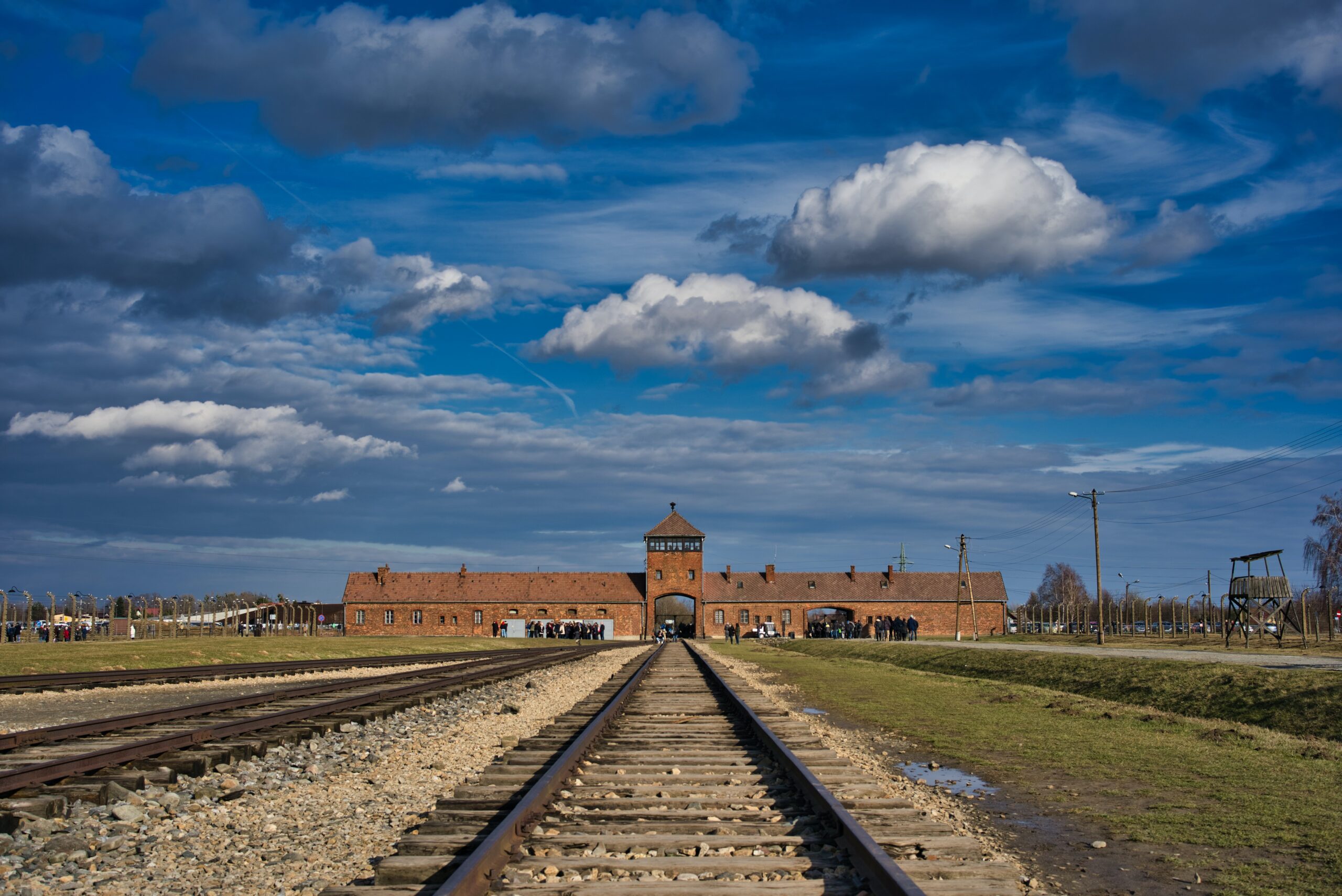
    Auschwitz felt like a proper camp. Brick barracks and offices, electric fences, guard posts whereas Birkenau felt temporary as if its main purpose was well thought out and planned into the temporary structures it used for shelter from its very first day. Auschwitz was a political prisoner camp initially, but it developed. It grew to provide a solution to a very Nazi problem. What to do with all those undesirables? Those political opponents who won’t go away? Those sexual deviants we don’t want to talk about in polite society. Those of a slightly different skin colour, and then there were Jewish people… What to do?

    I always thought that Auschwitz and all those other camps would be in Germany itself, but no, this one and its close neighbour, Birkenau are in southern Poland.

    I always thought Auschwitz was the main, and possibly only camp in this area, I hadn’t really heard of Birkenau. But Auschwitz, when you visit, has the feel of being a testing area. Its only gas chamber is a reconstruction as the Nazis tried to destroy all evidence of what happened here when the allies advanced. The first gas chambers were simply well sealed rooms, used to test the mechanised killing system on Russian prisoners – at first anyway.

    When you visit some of the areas of both camps, you are asked not to take photos, and I can understand why. The reconstructed gas chamber in Auschwitz is one of these. It is slightly below ground, but still has the original walls, complete with marks. It took our HET guide to explain that these were nail marks, scratched into the plaster, made by the inmates while they asphyxiated on the Zyklon-B poured into the room from above

    Some of the barrack buildings house exhibitions. Explanations of what happened here. The numbers, the process. Photos of people being herded like cattle, emaciated workers, striped pyjamas, and then there is the hair.

    The inmates were shaved – totally. Male and female and their hair packaged and sent to German weavers to aid the war effort. All displayed in the one room. Nothing prepares you for the effect of walking into a room, walls of glass, packed full of human hair, floor to ceiling, matted, discoloured.

    Then there are the artificial limbs, collected from the less able bodied, less able to work and earn their meagre keep, so not even worth registering or lodging. That’s how it went once both camps were in full “production”.

    The cattle trucks arrived, offloading their cargo, and an instant decision made about whether you lived or died. Right or left, simple little words but all the meaning in the world in that situation. The ever-efficient Nazi machine finding ever more inventive ways to save time by bringing the railway lines right into the camp, closer to the gas chambers and crematoria.

    The items that got to me the most, and I can’t get out of my head? The toothbrushes, the toy doll, the wire-rimmed glasses and the house keys. Everyday objects we’d all pack, wear or make sure we have on us. Here they were, 70 years later, still awaiting their owners to come back and collect them.

    Watch any film like Schindler’s List or Sophie’s Choice and you feel that Hollywood has over-dramatised the story for effect. They haven’t. They didn’t. It’s how it was.

    Children taken from their mothers, the elderly kicked and shoved, human beings being treated in unimaginable ways. The worst is knowing you are standing somewhere where 1.5 million died, on this spot, this little piece of Poland.

    My reason for going? For putting myself through this? Simple, I don’t want it to happen again, I don’t understand how it happened, how it was allowed to happen, why people allowed sectors of a population to have their basic human rights eroded to the point they were no longer seen as human. Then I look around me, and realise that we’ve had genocides since, we are living in societies that are already limiting some people’s civil liberties, simply because they are the wrong colour, wrong religion or wrong sexual orientation.

    I’m not naive enough to think that I can change the world alone, I can’t, but one thing I took away from this visit is that I may only be able to do small thing: vote, sign petitions, lobby MPs, write articles like this, but I form part of a bigger entity. Like-minded individuals who want to do the same, make the same changes, let governments, political parties, big business know that we are here, and we won’t let anything like this happen again or let this event be forgotten or questioned. There are nay-sayers out there, holocaust deniers, but programmes like Lessons From Auschwitz ensure that the facts are there. They cannot be disputed and are there to be witnessed by future generations.

    I was amazed by the maturity with which some of the students handled this situation. I fully expected to be a puddle on the floor most of the time and packed tissues accordingly. But they handled everything so well.

    The HET do a pre-visit briefing, organise the visit and then do a post-visit debrief with all those who attend. The students become “ambassadors” of sorts, producing projects that encourage debate and educate others around this subject. So, now to you.

    brown concrete building under blue sky during daytime
    Photo by Fadjar Djulizar on Unsplash

    Firstly, if you get the chance, visit these places. They are life-changing and should be supported. Secondly, when you next see a petition on your social media feed, read it before ignoring it. Your voice makes a difference, and thirdly, take note of the items in the news, and act on those that affect you.

    Don’t forget, we can still use our toothbrush, play with those dolls, put on our specs, and lock our doors, we’re the lucky ones.

    Resources:

    The Holocaust Educational Trust:
    www.het.org.uk

    State Museum of Auschwitz:
    www.auschwitz.org.pl

  • TRAVEL GUIDE | Christmas in Budapest

    An authentic Christmas Market cannot fail to get you in the mood for the festive season, so why not treat yourself to a break in the run up to Christmas. Often described as “the Jewel of the Danube”, Budapest is a spectacular city, which is easy to get to and can make an excellent city break for a long weekend or an extended stay.

    Christmas is a big deal in Budapest, with the main attraction being the Christmas Market held in the heart of the city at Vörösmarty Square, which is at the top of the main shopping district, Vaci Utca. As you approach, you can smell the scent of mulled wine, home-made biscuits, cinnamon and fir trees luring you into the square. The square is filled with little wooden huts, selling a selection of gifts, from woolly hats and nick naks to handmade Christmas tree decorations and gifts. There are a number of traditional foods available and locals huddle together to chat in the seating areas, warming their hands on cups of mulled wine and eating the fresh street food served up.

    The square itself is dominated by Gerbeaud Coffee House, a traditional and lavish patisserie, which serves a vast and tempting array of handmade cakes. But from the end of November, the building turns itself into a giant advent calendar, with numbered windows. At 5pm daily, there is a light show, a brass band emerges onto the balcony and the crowd gather to watch the day’s picture being revealed. It is a lovely tradition which never fails to charm its audience. There are also two stages which have performances on them throughout the day, ranging from marionette shows to world music. The town is dotted with nativity scenes around the streets and outside the churches. Christmas trees line the streets, with the biggest outside the Parliament building and outside St Stephens Basilica.

    St Stephens Basilica is a simply stunning cathedral and they often hold classical concerts in the evenings. Hearing the elegant sounds of opera and classical music, alongside the huge church organ, soaring into the dome and echoing around the cathedral is breath-taking. You can also climb the dome for great views of the city.

    Heading out of the town centre a little, there is an open air ice rink just behind Hero’s Square at the entrance to the City Park and if you are lucky enough to have snow, walking around the park and the area where the Vajdahunyad Castle stands is a joy. The weather in Budapest can be variable, but one thing for sure is that it will be cold at this time of year, so thermals, coats, hats and gloves are strongly recommended. That said, there are often cold, crisp, clear and sunny days which will give you chance to explore.

    But Budapest has much more to offer than solely a festive atmosphere. Taking time to explore this beautiful city by day and by night is well worth it and the place as a whole is very easy to get around. There is an efficient public transport system, combining trams, busses and a subway which make this city very accessible. Tickets can be bought from tobacconist stands and the public transport operates the European method of validating your tickets immediately before or at the time of travel. Beware, plain clothes ticket inspectors are rife, so don’t get caught out.

    You can’t walk very far in Budapest without stumbling across a park, square or statue, so there is plenty to look at and explore by foot. Whatever you do, don’t miss the opportunity to have a walk down the banks of the Danube at night. Walk on the Pest side to get great views of the castle and Fisherman’s Bastian lit up and check out the illuminated bridges which span the river – the Chain Bridge being the most spectacular. If you want piece of tranquillity in the middle of the city, head to Margaret Island, where you can have a stroll around the open spaces away from the hustle and bustle of the city.

    One of the first things you will notice about Budapest is the eclectic mixture of architecture – ranging from historic buildings and cathedrals in a variety of styles which have survived war and revolution to the concrete blocks built during the Russian occupation and the modern architecture springing up. Budapest is city not only straddling both banks of the Danube, but is a city which straddles both historic and modern.

    The city itself is split into two halves, divided by the River Danube – namely Buda and Pest. Buda is the more historic part of the city and is dominated by Buda Castle, which stands over the city, aside the Fisherman’s Bastion and the Matthias Church with its ornately decorated roof. From the castle district, there are superb panoramic views over the entire city, and in amongst the medieval, Baroque and 19th Century architecture are a number of museums, shops and restaurants. The castle itself houses the Hungarian National Gallery for those interested in art. The interior of the Matthias Church has to be seen to be believed, with its warmly coloured and intricately detailed decoration. It is truly unique. The Fisherman’s Bastian also provides stunning photo opportunities and beautiful views of Pest, Margaret Island, the Hungarian Parliament Building and the Danube. Access to the castle district is either by walking up the steep streets or by funicular railway which runs up the steep hill from the Buda side of the Chain Bridge. For those up for a steep hike, there is a small museum, some military vehicles and stunning views of the city and surrounding area at the summit of Gellart Hill which can be accessed by a maze of criss-crossing paths that wind their way up the hill.

    Pest is the more modern side of the city, with its shopping and business districts. The main shopping area is Vaci Utca, which is bookended by the historic market at one end and Vörösmarty Square at the other. A number of restaurants line the street at the bottom end and yield to a number of clothing shops as you progress, ideal for picking up those Christmas gifts.

    Wherever you go in Budapest, you are never very far away from a patisserie. Taking afternoon tea is the done thing and generally, each patisserie makes their cakes every morning and they all have a special, unique signature cake which is exclusive to them. Sitting with a huge slab of cake and a hot chocolate whilst watching the world go by is the perfect way to spend an hour in the afternoon.

    There are a number of museums dotted around the city, although they are all closed on Mondays. The National Museum presents a broad history of Hungary, whereas the Ethnographic Museum is more focussed on the people of Hungary rather than the country itself. But for an experience which is both fascinating and humbling, the Terror House is a must see. This museum is set in the building which had been the headquarters of the Nazi’s during their occupation of Hungary in World War Two and subsequently occupied by the secret police after Stalin imposed a communist government on the people of Hungary after the war. This brilliantly put together museum deals sensitively with a dark period of recent history. There is also the Museum of Fine Art and the Palace of Arts which flank opposite sides of Hero’s Square.

    Budapest is also a spa town, with bathing being a huge tradition. There are a number of thermal baths around the city. The Rudas Baths is one of the oldest in the city and the coloured glass stars in the dome of the building penetrate the steam rising from the warm waters with beams of coloured light. The stone building also houses a sauna and steam room and you can have a massage there, but it is more akin to a Turkish massage than anything relaxing. Prepare to be roughly manhandled if you decide to give it a go. The bathhouse operates separate days for male and female guests, and still operates the apron policy – where all bathers are nude save for a small apron worn at the front for modesty and turned around to the rear when seated. Very little is left to the imagination once you have dipped yourself in the water. For mixed bathing, head to the Gellart Spa and Hotel, which is luxurious and welcoming. Standard swimwear is required at the Gellart. But for those who are brave enough or want a slightly different experience, then head to the Széchenyi Baths in the City Park, which has huge outdoor pools, where you can sit and enjoy the thermally heated mineral waters whilst it is snowing around you.

    Budapest offers a lot to the gay traveller, with a broad range of places to suit everyone. There are a number of gay pubs, clubs and restaurants which range from the discrete and low key to brash and sleazy. The rainbow flag is often displayed in venues and restaurants and the Hungarian word for gay is “Melag”, meaning gentle.

    If you want a gay friendly place to eat, then head to the Pizzeria Club ’93 which offers an abundance of pizza and pasta in a low key atmosphere and Ruben which offers a reasonably priced menu of traditional Hungarian and international food.

    For pubs and clubs, gay men are catered for more than lesbians, although there are some venues including Club Underground have a mainly lesbian clientele (although there is a minimum drink policy at this club). For gay men, there are an abundance of pubs and clubs ranging from the quiet to the cruisy. Action bar and CoXx are both well known for their cruising and darkrooms, whereas Why Not and the Mystery Bar are more social. Just beware that a number of the bars don’t have an entrance fee, but have a minimum drinks policy which can prove quite costly, so be careful. One thing that is common in all of the bars are the number of male escorts offering sex quite openly and freely. Even if you are sat with your boyfriend, they will come and talk to you, and some of them can be quite persistent.

    Alterego is a cabaret bar and club which is very popular with both locals and tourists, with a nightly cabaret show, and Score is the newest gay club in Budapest. The Capella Club has a nightly drag show, but has a more straight clientele base than a gay one.

    There are a number of sauna’s in the city, including the Magnum Sauna, but a lot of the thermal baths are quite cruisy in any event.

    Getting to Budapest is fairly easy, with a number of budget airlines offering flights or flights and accommodation packages. There are plenty of apartments for rent and these can be fairly easily tracked down on line. Hotels can be booked separately online, or a number of travel agents offer a package deal, which are usually quite reasonably priced.

    There are a number of hotels in the city, ranging from traditional to modern. For sheer Art Deco indulgence, stay at The Astoria Hotel, with its beautiful patisserie which transports you back to the decadent age of the 1920’s and 30’s. For something luxurious, stay at the Gellart hotel with its quality food, famous buffet breakfast and grand, opulent thermal bath.

    Vegetarians may find it difficult to eat out, as the Hungarian diet is very meat based, so unless you fancy living on chips and cheese sandwiches for the duration of your stay, then you may prefer staying in a self-catering apartment. Unfortunately, vegans will really struggle to eat out.

    Most people in shops and restaurants are able to speak English and most tourist information can be found online or at access points which are written in English (especially useful when buying tickets etc at the stations).

    So what are you waiting for? Wrap up warm and head out to see what this superb city has to offer.

    Useful links
    For general information, head to http://www.budapest.com/ which also has a gay section. A lesbian website can be found at http://www.labrisz.hu/ and plenty of information for the gay traveller can be found at http://budapest.gayguide.net/

    by Paul Szabo

  • TRAVEL: British Pullman Winter Day Trips

    TRAVEL: British Pullman Winter Day Trips

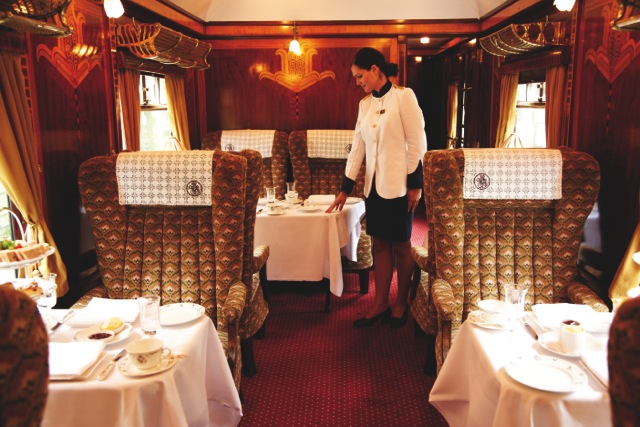
    If you’re looking for a special treat this Christmas then why not take a loved one or a special friend on one of the UK’s most opulent days out aboard the British Pullman, sister train to the Venice Simplon- Orient Express.

    (more…)

  • TRAVEL GUIDE | Melbourne

    TRAVEL GUIDE | Melbourne

    I fully expected to be greeted by a throbbing crowd of Hemsworths when I got off the plane at Melbourne Tullamarine airport a few months ago. That didn’t quite happen – but there are still plenty of hotties to stare at…

    gay melbourne
    CREDIT: Pixabay / Skeeze

    Unlike its sister city and rival for tourists attention Sydney, Melbourne doesn’t scream gay. It simply comments on it every now and then without overstating. I think the best way of describing gay Melbourne is to picture how gay you are throughout the week. If Sydney is you being gay on a Saturday, Melbourne is how gay you are on Monday. You’re still plenty gay but you’re less likely to be dancing in a parade in skin-tight silver hot pants on a Monday … Less likely but still could be.

    So the gay things you enjoy mid-week are what Melbourne has to offer in spades! Fantastic restaurants, a barrage of cafés on every street corner, wine bars and wineries, spas, museums, theatres, concert halls and festivals. Melbourne is everything a trendy gay could ever want.

    gay melbourne
    CREDIT: Pixabay / Wimkantona

    Let’s start with Chapel Street, a stretch of road that runs through several of Melbourne’s precincts that if you can remember their names you’ll sound less like a tourist. It runs from South Yarra through Prahan (pronounced puh-ran… seriously), Windsor and St Kilda. If you’re ever feeling homesick for trendy shopping and pretentious twink shop assistants this is the place for you. Famously the home of Melbourne’s first Top Shop as well as a myriad of other brand-name stores, restaurants and cafes, this may be the reason all the gays flock here. Or the fact that all the gays flock here is why they opened a Top Shop; chicken vs egg.

    If you’re in the mood to have a few drinks and people-watch or get together over dinner and bitch about what people are wearing, this is where I’ll be doing just that so come join me.

    Another thing that Melbourne does well is a good festival. It seems that pretty much every weekend the city centre is shutting down in celebration of one thing or another, and for 3 weeks in the summer Melbourne celebrates all things gay with the Midsumma Festival. A huge range of shows, exhibitions, concerts and events culminating in the Pride March in St Kilda (the area by the beach where all the Brits and gays tend to flock) topped off with a massive beach party towards the end of March.

    At the same time of year, there is also the Melbourne Food and Wine Festival, Melbourne Queer Film Festival and the Melbourne International Comedy Festival (See I told you they do a good festival.) This makes January – March an ideal time to visit with so much going on and weather in which short-shorts are almost compulsory.

    ferris-wheel in Melbourne
    CREDIT: Pixabay

    If you fancy a break from the hustle and bustle of the city, Daylesford is just a 90-minute drive away and is more than gay-friendly; in fact it’s gay-centric. The area boasts the highest concentration of mineral springs in the country and so spa breaks, massage and holistic treatments are in abundance out here combined with breath-taking mountain views it makes for the perfect little romantic getaway.

    Clubbing:
    Having said all that, you’re gonna want to go out and get drunk at some point and while there is no dedicated gay area as in some cities there are still some great haunts for a great gay night out.

    The first venue that people mention is the Greyhound Hotel, this is a massive venue with several different rooms within and always a great show to be seen. The greyhound is a gay venue from Wednesday – Sunday but it open for other events and functions throughout the week.

    Another great venue is The Peel Hotel over in Collingwood (not quite in the city centre or as the Melbournians call it the CBD but close enough to walk/stumble). The Peel is a great venue if you want a wide variety of music throughout the night and, as it opens at 9pm until 8 am, it’s usually the place to go after you’ve been kicked out everywhere else.

    The imaginatively titled Poof Doof is a Saturday night event held in the CBD (central business district, in case you didn’t know) on Little Collins St. Not so much a gay club Poof Doof is held in the equally suggestively titled Bottom End Pub, which believe it or not isn’t a gay bar! It’s just a cool, trendy pub/bar/dance floor that is transformed into a perfectly seedy gay disco from 11 pm on Saturdays.

    There’s a hidden upstairs entrance that I could not find the first two times I went there and a strict “no photos” policy which means what happens in the disco, stays in the disco.

    Other gay venues include but are not limited to: IQ in Collingwood, Pretty Please in St Kilda and Love Machine over in Chapel Street; all of which have been described as young and a bit pretentious… which maybe your thing or not.

    Lesbian club-wise there are a few gay-friendly and centric venues geared towards the ladies such as Alia bar in Collingwood and DnM in South Yarra. Having said that when I was there, DnM had a drag show with hot male AND female dancers, alongside Carly Rae Jepsen remixes and break-dancing miniature lesbians … now that was a fun night.

    Melbourne is a fantastic city and one of my absolute favourites in all the world; and just because it isn’t in your face gay, doesn’t mean it can’t be.

  • TRAVEL GUIDE | Valencia

    TRAVEL GUIDE | Valencia

    A Gay In Valencia


    CREDIT: TheGayUK
    CREDIT: TheGayUK

    The sun poured down upon me as I stepped off the jet for my 36 hours non-stop whirlwind tour of Valencia. Now this is the kind of article I like to write. Sun, sea and Spain. I was in Valencia, Spain’s third largest city, for the launch of Ford’s brand new Kuga, but why not kill two birds with one stone, look at the car and marvel at its wondrousness and secondly get some quality time in Spain and write about one of the most gay friendly cities in Spain.

    Even though it was the 1st of February the temperature soared above 26 degrees and even the locals admitted it was a bit of a rarity for so early on in the year, however I didn’t mind having only just hours before left the grey, dank and ever so depressing 4.00AM morning of Great Britain.

    Almost a second home for us Brits, Spain has it all, great wines, great food and abundance of sunshine and the lesser known destination of Valencia is an incredible jewel on Spain’s eastern seaboard, nestled a few hundred miles below Barcelona. It has it all, azure seas, miles of soft, spongey sands, bustling cafes, shopping, culture and art.

    Ciutat de les Arts i les Ciències by Marcp Dmoz
    Ciutat de les Arts i les Ciències by Marcp Dmoz

    First stop on my gay in Valencia was the iconic and otherworldly Ciutat de les Arts i les Ciències (City of Arts and Sciences). Extraordinary in their design, these incredible structures rise out of crystal pools of water and house an array of the weird and wonderful. Take a moment to just marvel at the sheer engineering of these iconic buildings, you could be on the set of a futuristic Hollywood blockbuster. The first of these sheer enamel coloured forms is the L’Hemisfèric which was completed in 1998, it houses Valencia’s IMAX, Planetarium and Laserium, other buildings include L’Oceanogràfic (the largest open air oceanographic park in Europe, and the immense El Palau de les Arts Reina Sofia, Valencia’s own opera house, giving even Sydney’s superstar Opera House a run for its money.

    Valencia
    CREDIT: TheGayUK

    After lunch, hot foot it over to the Institut Valencià d’Art Modern (Valencian Institute of Modern Art) to catch up on the latest and greatest from the world of modern art, however if this is all too much like hard work, you could always grab a coffee at one of many downtown cafes and simply watch life go by.

    After a quick refreshment, off to the shops to emerge yourself in the many little boutiquey fashion outlets, many of them carrying some rare vintage pieces, and the owners are always happy to help, and even converse in English if Spanish isn’t your strongest talent.

    Valencia
    CREDIT: TheGayUK

    If you want to get trendy, then head over to Ruzafa, which is the place for all your exclusive, concept shopping needs. You simply must check out Caroline, one of coolest places in Valencia. The shop aims to boost designers’ profiles, but allows only products that fall into Caroline’s exclusive product philosophy. Whilst there check out Garage Vintage for vintage 70s, 80s and 90s clothing and Gnomo, where you can find decor, lighting toys and all manner of gadgets. However if you’re looking for more recognisable high-street names then head over to Colon, which is the main shopping street.

    The marvellous thing is that almost everywhere in Valencia is walkable and because the weather is usually so fine, it’s lovely to meander down the back streets of this ancient, dusty romantic city.

    So onto dinner, well Valencia isn’t short of a few places to eat and if your into extreme dining pleasure than I can only recommend dining at the 3 Michelin starred Vuelve Carolina for some sensational cuisine. The chef upon hearing I was vegetarian, did not scream obscenities at me and chase me down the street with a carving knife in one hand and a leg of pancetta in the other – but made a bespoke, gorgeous plate of fresh sea vegetables and fresh baked breads, hummus and other tapas delights. Don’t forget the Spanish don’t tend to eat till late so don’t expect the party to get started until ten.

    After dinner you might want to experience a bit of the gay nightlife in Valencia, well there are some great little hotspots in town. The majority of Valencia’s gay area is centred around the old town in the Barrio Del Carmen. Valencia is said to be more liberal than both Madrid and Barcelona. There are plenty of bars, clubs, saunas and accommodation options in Valencia.

    Valencia
    CREDIT: TheGayUK

    I stayed at the five-star Hotel Santos Las Arenas, a beautiful, plush hotel which boasts sea views and is planted right on the beach front. The bedrooms are cool and decorated in typical elegance, whilst you can lavish and de-stress in your room’s shower/bathroom, with high end cleansing products. I’ve never quite experienced a shower like it, you’ll just have to believe me when I say, even your feet will thank you for the hydro massage. The numerous spas, pools and relaxation spaces will invigorate as well as rejuvenate the senses before you leave for a brisk walk along the promenade taking in the sites of beach life in Valencia, catch early morning joggers and yoga practitioners as they shape up for the day ahead. The staff are trained to an exceptional level and nothing is too much trouble and many, if not all, are multi lingual. You can call the hotel directly at +34 963 120 600.


    Before you head off back home make sure you visit the Modernist Mercado Central, it’s one of

    Valencia
    CREDIT: TheGayUK

    Europe’s largest indoor markets. The vendors and stalls sell a remarkable array of goods from fresh fruits and vegetables to robust wines and brawny cheeses, and in the middle of it all you’ll find a Tapas haven, perfect for a spot of lunch before boarding the jet back to Blighty.

    SwissAir, Iberia, British Airways, Ryanair and easyJet all fly to Valencia from various airports around the UK, from £48 return RyanAir Flights leaving on Saturday 20th April – Tuesday 23rd April 2013, or £110 /£191 easyJet / AirFrance