Tag: Twitter Storm

All the latest breaking news on Twitter Storm. Browse THEGAYUK’s complete collection of news, articles and commentary on Twitter Storm.

  • Gay celebs top the list of most “cancelled” on social media in 2020

    Gay celebs top the list of most “cancelled” on social media in 2020

    Both Ellen DeGeneres and Jeffree Star, have found themselves atop the unpopular list in 2020, as fans abandoned the pair after a rather controversial year.

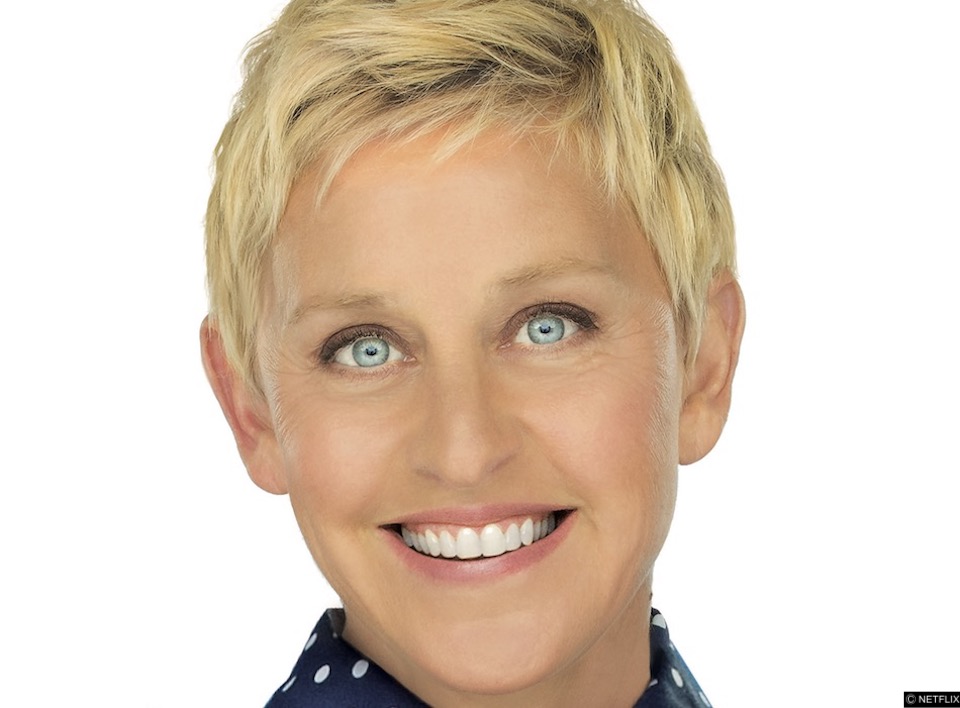
    The celeb who lost the most followers on their social media in 2020 was Ellen DeGeneres. The talk-show host lost over half a million followers on Instagram (estimated potential loss of £1,706.69 per sponsored post) and over 612,000 followers on Twitter. Earlier this year she became embroiled in controversy over the treatment of staffers on her show.

    Ellen is known for her world-famous talk show, The Ellen Show, which is what caused her dispute – current and former employees accused Ellen and other senior team members of harbouring a toxic work environment.

    Coming in second was makeup guru Jeffree Star, who lost over 487,000 followers on Twitter and 444,000 followers on Instagram.

    Jeffree Star’s cosmetic account ranks third with a loss of nearly 445,000 Instagram followers. Jeffree is a well-known influencer, makeup artist (MUA) and Youtuber. Star has been repeatedly accused of using racist language and most recently accused of manipulation regarding one of the most dramatic public feuds within the beauty industry.

    How many fans did J.K. Rowling lose?

    Embed from Getty Images

    Following a backlash over the writer’s stance on transgender people, J.K Rowling lost nearly 351,000 followers on Twitter.

    With cancel culture being such a volatile concept, GamblingDeals.com were keen to investigate the impact surrounding celebrity controversies in 2020. They analysed the statistics of notorious figures on SocialBlade.com to see who lost the most followers and whether their estimated potential earnings took a hit as a result.

    How long does “cancel culture” actually last?

    Embed from Getty Images

    Ellen DeGeneres places first again as the celebrity with the most Twitter unfollows with a loss of 612,005 followers. However, she still has 79,539,440 followers and ranks as the ninth most-followed account on Twitter. 

    In second place is Jeffree Star with a loss of 487,151 followers between June and September. Jeffree is the cover picture of controversy yet somehow survives the scandals, considering since September 2020 to the end of October he has already gained 12,616 followers – this begs the question of is ‘cancel culture’ effective?

    GamblingDeals.com can reveal that JK Rowling ranks third. The Harry Potter author lost nearly 351,000 Twitter followers from May to the middle of October 2020 – however, her follows are on the rise again. 

    Interestingly, a few celebrities such as Jeffree Star, Kanye West and JK Rowling are now recovering since their controversy as their followers are back on the rise, indicating that cancel culture has an expiry date. Kanye West, for example, now boasts 1,703,314 more followers since his lowest number in June.

    Who else lost followers?

    Embed from Getty Images

    Jimmy Fallon, Tyra Banks, Kanye West, Lana Del Ray and Nick Cannon all lost tens of thousands of followers following various controversies in 2020.

    GamblingDeals.com scoured SocialBlade.com to find the top ten celebrities with the highest Instagram and Twitter unfollowing in 2020. Estimated maximum potential earnings per sponsored post on Instagram was calculated by the number of followers*£0.00313.
  • Here’s what you should do if you ever find yourself in the centre of a Twitter storm

    Here’s what you should do if you ever find yourself in the centre of a Twitter storm

    PhotoMIX-Company / Pixabay

    It can happen over the most seemingly innocuous thoughts and actions and can be incredibly distressing and sickening if you happen to be at the centre of people’s fury on social media.

    Twittersphere can be one mean place if you, in the eyes of some of its users, get things wrong. Being at the centre of a Twitterstorm or a pile on can be a horrible experience lasting over a 24 to 48 hour period.

    So here’s what you should do if you ever find yourself in a twitter backlash.

    Delete the tweet

    Although this might seem like curtailing your speech or what you want to say, removing the “offending” tweet means that it can’t be retweeted or quoted – leading directly to your account.

    It’s the quickest way to stop a pile on in its tracks. Yes, some people will have screenshotted the tweet and they will continue to tweet it or may even tweet it at you, but its reach will be far less felt than if you were to leave it on your timeline.

    Just turn it off

    Turn off Twitter, in fact, delete the app for a few days, so you don’t feel the need to keep on checking what’s going on or what’s been said about you. Ride it out and try not to let your imagination run wild.

    A Twitter pile on can last from 24 hours to 48 hours and will then, most likely fade away as people move on. You may get a few tweets after this, but mostly people will have moved on.

    Just remember, people’s memories can be short on social media and there’s always someone else to distract and attract a Twitterstorm away from you.

    Make a decision on whether to apologise or not

    If you come to the conclusion on whether what you’ve tweeted is offensive and Twittersphere has a point, then apologise.

    Recently social media star Trisha Paytas found herself in the middle of an epic Twitterstorm after coming out as a “transgender gay man”. The tweet, which actually led people to a YouTube video was immediately met with scorn and derision.

    https://twitter.com/trishapaytas/status/1181270127947350016/

    The tweet became quickly ratio’d meaning that the comments outranked the number of Retweets and likes, meaning that in Twitter world you’ve usually done something very very wrong.

    Trisha made an apology video within 48 hours and the pile on continued on with that Tweet, receiving over 700 comments and only 49 retweets, which meant that her apology wasn’t widely shared, so only a fraction of those aware of the story actually heard her apology.

    Meanwhile, her original “I Am Transgender” tweet continued to grow and was even picked up by the editorial team at Twitters’ moments, boosting the Tweet even further.

    If you do make an apology tweet, post or video- make it heartfelt and true and don’t use phrases like “I’m sorry you were offended”. These often PR managed tweets are met with even more backlash because people don’t and won’t believe it – and can even serve to elongate the storm.

    If you don’t feel you need to apologise – don’t. There’s nothing worse than someone apologising for something they’re not sorry for.

    Ignore it

    You can always ignore it, which is what Cosmopolitan Magazine did after it tweeted about gender critical feminists, called, “What you need to know about TERFS”

    The tweet saw thousands of people complaining about the article’s content. The magazine’s official Twitter account – which usually sees an interaction rate of 1 to 2 retweets or likes per post and rarely ever any comments, suddenly had over 7,000 retweets and thousands of comments.

    Dozens of people took to Cosmopolitan‘s timeline to say they had reported the tweet for hate speech, yet the magazine stood resolute, did not delete, did not apologise – basically it didn’t acknowledge the storm that it had created.

    Seek legal advice

    If you’ve tweeted something you shouldn’t have, like a high court’s super injuction or something that’s libelous or slanderous you might need to seek legal advice.

    You may also want to take legal advice or action if people are tweeting something about you that is factually incorrect, libellous or slanderous, as journalist Jack Monroe did against Katy Hopkins. The fallout from which saw the former TV star, journalist and radio presenter left with a huge legal bill after she lost.

  • Brands are receiving backlash over healthy eating social posts

    Brands are being warned over the posts they publish on social media, particularly over the subject of healthy eating.

    CREDIT: ©-belchonock-Depositphotos

    Topics covered over social media in 2019 cover a variety of subjects, the one surrouding healthy eating can cause a Twitter storm if not handled in the right way warns industry experts, which came with the warning “For brands venturing into this topic, it is essential to consider planning in advance and staying away from political and divisive subjects”.

    The latest immediate future report, using data analysed from Brandwatch, looks at the rising ‘healthy eating’ and ‘healthy food’ conversations on social media in the UK. Whilst most posts are positive, there is a significant number of passionately angry and disgruntled ones. The backlash spikes around those organisations pushing the healthy eating agenda such as brands, government and celebrity chefs.

    Anger drives social sharing.

    Katy Howell, CEO at immediate future, says, “Shares, accounting for almost 40% of social posts, are driven by two core behaviours: anger (and some pretty spicy language), at the affordability and cost of eating healthy food; and the making of healthy foods, from recipes and planning, to food origins.”

    Social data analysed using social intelligence tool, Brandwatch, shows that 39% of posts around cost, mention the issue of affordability of healthy food options and 30% declare eating well is expensive. And it’s the 42% men on social, talking healthy eating, that tend to rant the most!

    Rising year on year healthy eating is predicted to continue an upward trend on social. The conversations don’t just spike in January, they run through the year as UK consumers are increasingly conscious of, and educated about, what they eat. For relevant brands this is an opportunity to raise awareness and engage with consumers in a shopping category that is burgeoning.

    Katy continues, “Joining the healthy food trends is perfect for food, fitness and weight-loss brands. However, companies must plan. Awareness of the topics that both spark debate and anger should form part of your brand’s approach. Transparency and authenticity are key if you don’t want to be battling negativity on social.”

    The report, reviews a year’s worth of social data, looking at posts that mention healthy eating and healthy foods and it’s available for free at http://po.st/eatwell

  • Should Rita Ora Have Apologised for Girls?

    When Rita Ora announced a song with Cardi B, Charli XCX and Bebe Rexha, the world imploded, and we were ready for a huge collab that hasn’t been seen since “Lady Marmalade”.

    Should Rita Ora Have Apologised for Girls?
    Progressive or regressive? Lyrics from the song, Girls.

    Whilst not quite on the level of “Lady Marmalade” – an opinion not shared by me – the song came out on Friday and was consumed quickly by fans of the four rising members in popular culture. But many people were quick to say that song was offensive to the LGBT community.

    The track references Rita Ora’s sexuality as a bisexual woman. Lyrics in the song include ‘I’m 50/50 and I’m never gonna hide it’, and talks about an experience with a girl called Lara. After the release, many people were quick to voice their concerns with the lyrics, believing it to be exploitative and even tone deaf.

    When I first heard the song, I appreciated the way the song fit the pop mould, but lyrics such as ‘red wine, I just wanna kiss Girls’ did seem problematic even to me. Yet I was misinformed and did not realise that Rita Ora is actually bisexual, instead hearing the lyrics and thinking that the song was pandering to a straight male fantasy.

    After finding that out, I realised that the song was not intended to be harmful, but the world of Twitter continued to discuss the song.

    Pop star Hayley Kiyok tweeted that the song did ‘more harm than good’, with followers agreeing that the lyrics were clumsy, even if not intended to be, and gave the wrong impression to straight men. The pop star continued to say that the song ‘belittles’ the community, stating that she doesn’t need alcohol to show love of the same sex.

    Yet other Twitter users didn’t think the same way, stating that they didn’t even think of how it could be interpreted. Such was the debate and ‘backlash’, Ora took to Twitter to apologise to her fans. In her statement, shared on Twitter, Rita says that the song ‘was written to represent my truth and is an accurate account of a very real and honest experience in my life. I have had romantic relationships with women and men throughout my life and this is my personal journey.’

    Rapper Cardi B also tweeted about the backlash, saying the song was never intended to cause harm, and even revealed that she has been with many women.

    Whilst I admit that I thought the song could indeed be problematic, I was seeing it from the angle of many others, that lyrics glorifying a bisexual female relationship could cater to people that only believe women’s bisexuality is ‘a phase’. Yet seeing Rita explain the situation, it’s pretty clear to see that she is writing from personal experience, and why is that a bad thing? It may be because until now, the general public had no knowledge of Rita’s sexuality. But should that really matter? A certain One Direction member can continuously hint at bisexual relationships himself, yet never disclose his sexuality, but instead of backlash, the man gets elated feedback from excitable fans.

    Sexuality is a very complex situation, and we all have different experiences in discovering who we are, and realising the people we like. It’s important that the idea of being PC, of analysing everything to a point where backlash can literally ruin a career, does not infringe on artistic expression.

    Whilst the lyrics in Girls are a little clumsy, it’s important to remember where they come from; a young woman that has become an LGBT ally, expressing who she is, and writing songs about her own experiences.


    Opinions expressed in this article may not reflect those of THEGAYUK, its management or editorial teams. If you’d like to comment or write a comment, opinion or blog piece, please click here.