Tag: Stonewall Inn

  • Where and how did pride begin? How a riot at Stonewall led to a world-wide pride movement

    Where and how did pride begin? How a riot at Stonewall led to a world-wide pride movement

    In Part two of Simon Sayers-Franklin’s Pride series, he explores the origins of Pride at the Stonewall riots and why we fly our Rainbow Flag!

    How Did Pride Begin?

    Pride originated on 28th June 1969. Back then police raids on gay bars, like the Stonewall Inn, were common. The authorities would come in, push people around, display violence, intimidate, bully and randomly arrest people. The arrests were frequently made for tiny, inconsequential things such as drag queens wearing more than one or two items of ladies clothing or being caught in compromising positions.

    Often the bars, which were largely owned by the Mafia, would bribe the police to tip them off when raids were due to occur. The gay bars would often have two rooms – a bar in the front and a dance floor in the back. Dancefloor lights could be triggered from the bar to send a secret message to the people next door that a raid was about to happen. This allowed them to stop dancing or quickly find an opposite-sex partner if they wished to continue dancing.

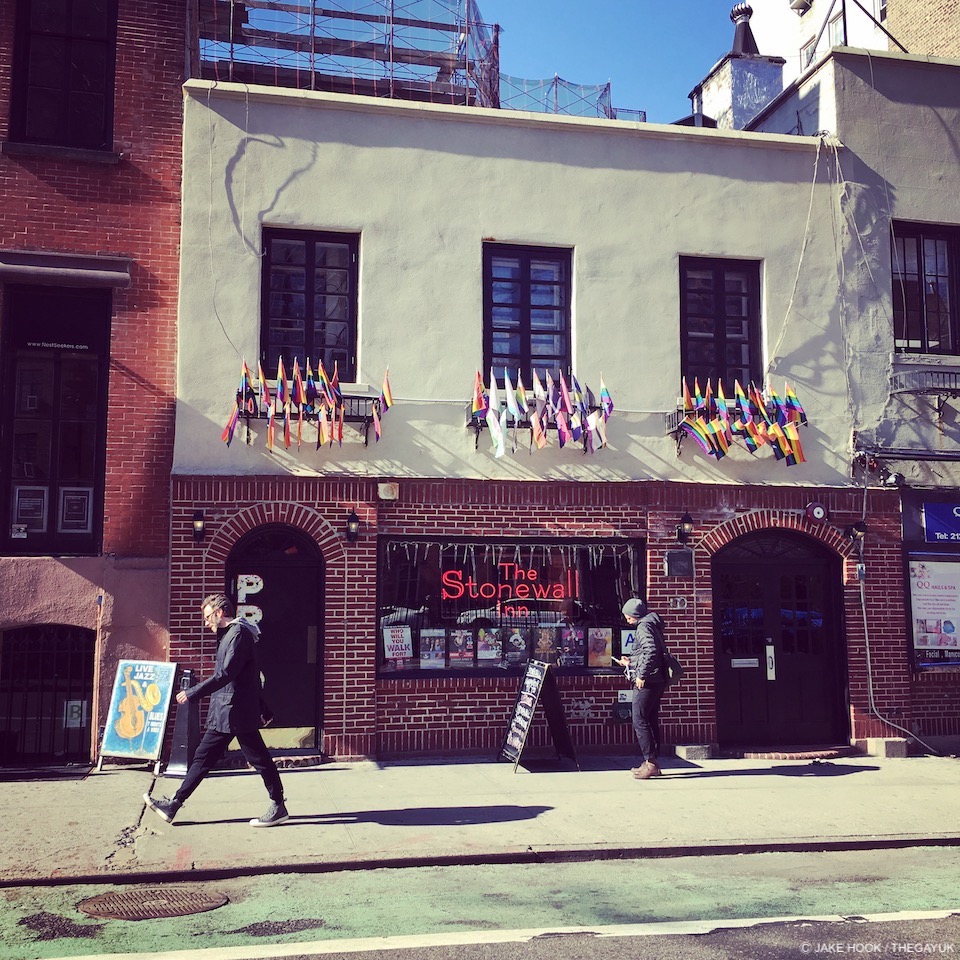
    It was in the early hours of the morning on June 28th 1969, that an LGBT friendly bar in New York was subject to a raid – something that was all too common in gay bars. This bar, however, was one of those owned by the Mafia and catered to transgender people, drag queens, effeminate men, sex workers and homeless people of many backgrounds. The bar in question was the Stonewall Inn.

    a sign from Stonewall that police used to raid the premises

    This raid, however, was different from the beginning. Firstly, the owners were not tipped off, secondly, it happened very late; around 1:20 am. There had been rumours about a raid that night but it was dismissed as inaccurate information.

    The night it all began, two undercover policemen and two undercover policewomen came in and gathered evidence while the rest of the team waited outside. When those who had gained entry called for backup the music died, the house lights came up and those who realised what was happening ran for the doors and windows in the bathrooms but were blocked in by the police.

    There were reportedly over 200 people in the Stonewall Inn that night. Little did the police know, that this as not going to go the way they expected.

    Usually, the police would line up the people, check ID and then the female officers would escort those wearing female clothing to the toilets, where they would be subject to physical checks and if men were found wearing female clothes they would be arrested. Not this night. This night everybody refused to produce their ID and those in women’s clothing resisted being taken to the bathrooms. This resulted in high tensions, only made worse by the police who became inappropriate while frisking some of the lesbian patrons.

    The police had been sent to seize all of the alcohol, which was apparently bootlegged. While this happened, the people inside were made to wait in the line. Those who hadn’t been arrested were allowed to leave but they congregated outside. It wasn’t long for the crowd to grow – a mix of those who had been released and those who had seen the disturbance and joined out of curiosity. Those who were released exited the bar to rounds of applause and they bowed and posed and it was all very theatrical.

    By the time the first police wagon arrived, the crowd had multiplied as much as ten times and as the Mafia were escorted out and put in the van people started shouting “Gay Power.” and others started singing. An officer pushed a drag queen who hit him with her purse. People threw debris at the wagon and that was when a woman, thought to be, Stormé DeLarverie, was dragged out in handcuffs. She kept escaping and fought four police officers. When she complained the handcuffs were too tight she was hit over the head with a baton and screamed: “Why don’t you guys do something?”

    It was this moment that triggered the riots that would go on to last six days!

    Who threw the first brick at the Stonewall Riots

    The patrons of the bar had taken enough and were sick of being pushed around. It was reported that the drag queens and trans women of colour were among the first to fight back. It was Marsha P. Johnson, a black, gender non-conforming, sex worker, a founding member of Gay Liberation Front and a popular member of the New York gay and art scenes, who was apparently one of the first to kick off her heels and fight the police. It is, however, unclear what role Johnson played in the events that night. She disputed that she was the one to start the riot by claiming she arrived at 2 am when the place was already on fire – a fire she claimed was started by the police.

    did Martha P Johnson throw a brick at Stonewall

    These riots were a major moment for LGBT people and Stonewall became an iconic image of rebellion and resistance. It stood for our strength and our refusal to back down.

    It was the next year, 1970, that the first Pride march was held in New York on the anniversary of the Stonewall riots. From that moment we have continued to celebrate Pride in the month of June to honour those who kickstarted a revolution. We march to represent our strength and unity. Our community is strong together and Pride shows just that! In modern days it still has political undertones but these days in the western world particularly, our events stand for inclusivity, visibility, having fun and celebrating love and equality rather than fighting for it.

    Why Do We Have a Rainbow Flag?

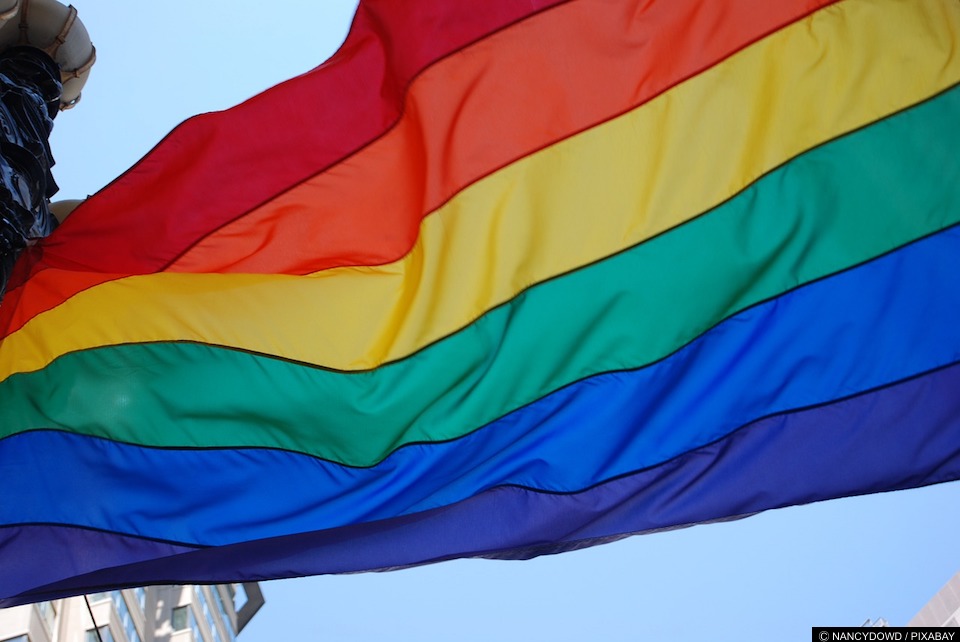
    The flag was devised by artist Gilbert Baker after he was challenged by Harvey Milk (another hero and martyr for the LGBT community), to create a “symbol of Pride” to represent the LGBT community. It debuted at the 1978 Gay Freedom Day Parade and has been an icon of our community from that day.

    what does the rainbow LGBT flag stand for
    The original rainbow flag as created by Gilbert Baker

    There were originally eight colours in the rainbow instead of six:

    Hot Pink represented sex/sexuality. It was taken out due to manufacturing issues after Baker approached a company to mass produce the flag. Apparently, the hot pink fabric was too expensive to make.

    Turquoise, representing magic and art, was lost when the Pride Parade Committee wanted to fly the flag in two halves along both sides of the street for the 1979 Gay Freedom Day parade. Turquoise was dropped to leave six stripes, therefore, leaving an equal number to split.

    Red is life.

    Orange is healing.

    Yellow is sunlight.

    Green is nature.

    Indigo is serenity

    Violet is spirit.

    A modern variation, created in 2017, added black and brown stripes to highlight the People of Colour within the LGBT community. There were a mixed reaction and a lot of controversies because of how the flag never represented “race” and was always meant to represent aspects of life that apply to everybody, regardless of ethnicity. It also caused upset by changing the artist’s original vision.

    The Stonewall uprising would go on to inspire the LGBT movement across the globe. In London, the first-ever march by the Gay Liberation Front happened in November 1970.
  • Top 10 free things to do in Manhattan, New York

    Top 10 free things to do in Manhattan, New York

    The city that doesn’t sleep isn’t cheap. In fact, you’ll find it hard to find free things to do, but here are 10 of our favourites.

    Empire State Building, Midtown, Manhattan, NYC

    Planning on going to New York? Well, as a gay traveller there are certain things you have to do, like visiting the Stonewall Inn or even planning a night out at the infamous Cock bar. But, if you’re on a budget here are some of our favourite things to do for free, or just the price of a drink, in one of the greatest cities in the world.

    Staten Island Ferry

    Staten Island Ferry, View of Boat

    This is one of the go-to free things to do while in the city of New York. The 5.2-mile trip takes you right past the Statue of Liberty giving you an outstanding opportunity to take a full-on frontal picture of the great lady. The cruise takes about 25 minutes and runs every 15 to 30 minutes depending on the time of day. Many people disembark once arriving at Staten Island and get straight back on the boat for the return journey.

    The Central Park Reservoir

    On a sunny day, the 1.5-mile walk around Central Park’s reservoir will enliven the senses and make you feel like you’re a world away from the hustle and bustle of Midtown and Downtown Manhattan. It stretches from 86th to 96th Street (very close to the Guggenheim Museum).

    The decommissioned reservoir holds over a billion US gallons of water and covers 106 acres. One of the best times of year to walk around the reservoir is when the cherry blossoms are blooming.

    The High Line

    Take a stroll along the disused and abandoned railway track set above the streets of Lower Manhattan. It’s a 1.45-mile walk which leads you through landscaped gardens over the roads. The High Line has been repurposed from a former railroad, which was created to ship goods from one part of the city to the other. It runs from 34th Street to Gansevoort Street, in the Meatpacking District. After “getting off” the high line, head for the Bus Stop Cafe on the corner of Bethune and Hudson for a spot of lunch.

    Stonewall Inn

    Where it all began. The birth of the modern gay rights movement in the USA. Located in the gay/gay-friendly neighbourhood on Christopher Street, a trip to the famous Stonewall Inn should be high on your list of gay things to do in New York. Entry is free, but please do buy a drink and support this historic, legendary venue.

    Christoper Park

    Situated outside the Stonewall Inn in the centre of Christopher Street is Christoper Park. Christopher Street is the oldest street in the West Village and in the 1970s became the “Main Street” of gay New York. Over the decades, numerous shops, bars and other businesses that cater for the LGBT community have populated the street. Make sure you get your photo at the Gay Street sign which coincidentally intersects with Christopher Street.

    In Christopher Park, there’s a Gay Liberation Monument where numerous bonze statuses, covered in white lacquer sculptures commemorate the Stonewall Riots, which took place in 1969. It features four people. Two men and two women.

    9/11 Memorial Park

    A humbling experience awaits at the 9/11 memorial. Take time to reflect and remember.

    A humbling experience awaits in the mass of skyscrapers at the lower end of Manhattan. This is where, in the footprints of the original World Trade Centre twin towers, you’ll find the names of nearly 3000 people, who died on September 11th, 2001, etched into bronze, on the outer rim of the two reflecting pools where the towers once stood. There is a museum as well. However, queue lines are long, and the entry ticket costs a whopping $44 each for admission and the tour. You can get significantly reduced entry by purchasing a New York CityPASS.

    The Buildings

    Empire State Building, Midtown, Manhattan, NYC

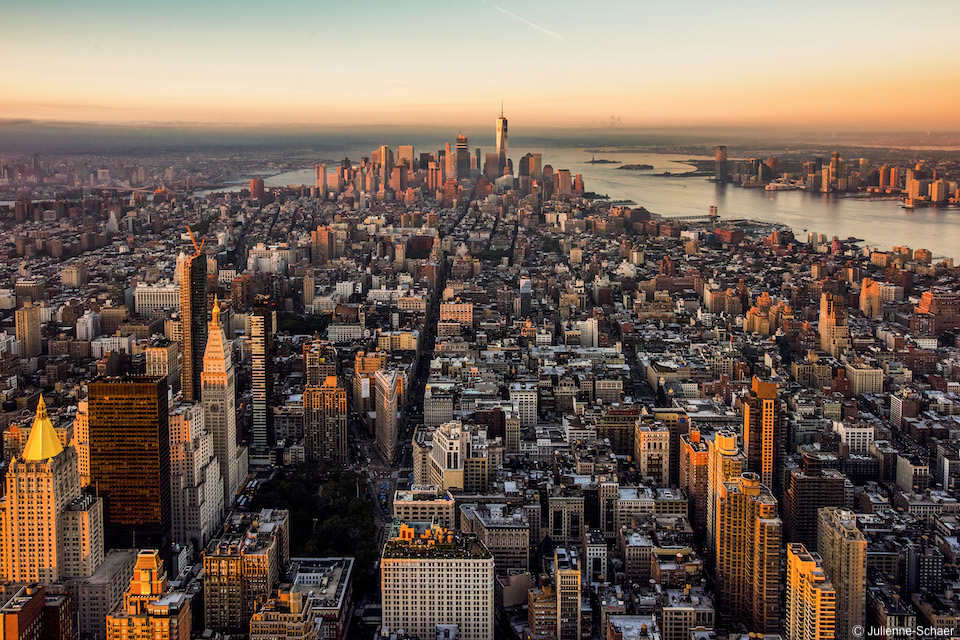
    One of greatest attractions of New York is its buildings and where NYC is concerned, bigger is best. Across Manhattan, you’ll discover icon after icon. There’s the Empire State Building, The Rockefeller Center, Radio City, Carnegie Hall, New York Times, Times Square, The Chrysler Building, The United Nations building, One World Trade Center, the former PamAm building (now MetLife), The Guggenheim and Madison Square Gardens. The list goes on and on.

    Pier Life

    Pride Kickoff Rally 2013, Tribeca, Manhattan

    If you’ve ever watched Paris Is Burning, you’ll know that the piers played a considerable part in LGBT+ life in New York especially during the 70s, 80s and 90s. The dilapidated piers reaching out into the Hudson River became a hang out for those on the fringes of society. Some of the piers have been redeveloped and given a new lease of life. Take a walk to the piers at the end of Christopher Street. It’s not uncommon to find all manner of activities taking place, like dance classes or music to listen to.

    This year’s pride parade takes place on the 24th June. Check out the parade route here.

    Walk the Brooklyn Bridge

    Walk the walk. 10,000 people every day cross the Brooklyn Bridge

    This famous bridge is well worth the walk – despite the crowds (apparently 10,000 people use the footbridge part every day). The views of Lower Manhattan from the centre are breathtaking. The Brooklyn Bridge is one of the oldest bridges in the USA. It was finished in 1883 and was designated a National Historic Landmark in 1964. Look out for the 3500 bikers who use the bridge every day too. They aren’t particularly friendly towards pedestrians who walk on the cycle lane!

    Once in Brooklyn make the short walk to Brooklyn Bridge Park for some impressive views of the waterway between Brooklyn and Manhattan and the famous NYC skyline.

    Big Apple Greeter

    Believe it or not, you can get a free walking tour with the Big Apple Greeter organisation, whose team of volunteers will show you New York in a totally personal light. You should request your greeter at least three to four weeks before your trip to New York. The Big Apple Greeter has a no tipping policy, but they do ask you to consider donating to help continue the non-profit service.

    Marie’s Crisis Bar

    Ask anyone where to go for a good night out that’s camp and gay and they’ll probably suggest this legendary piano bar, where show tunes and awesome singers are the promised offering. It’s a gay bar just off 7th Avenue behind Christopher Street on Grove Street. Be prepared for how busy it gets and bring cash for drinks and tips. We loved this Yelp review from Niall and it pretty much sums up this venue:

    “While this is a gay bar it is also a musical bar. There are two types here; gays who love musicals and everyone else who loves musicals. If you are a member of either tribe you are family, if not, please keep it moving!”

    How to get to NYC?

    Wondering on the cheapest way to get to Manhattan after arriving from JFK – check out our guide here.

    Our top tip is if you’re going to be a total tourist – which you totally should be in this magnificent city, then purchase yourself a CityPASS. It will give you access to numerous tourist destinations, like the Empire State Building and the Statue of Liberty for 40 percent off. It costs around £96.27 and is well worth the price if you plan on visiting all of the destinations on offer.

    Numerous airlines fly from the UK to New York. Check out the best deals from British Airways, Virgin Atlantic, Norwegian, Delta, American, United

    Looking for great deals on Hotels in New York, check out Hotels.com


  • OPINION | It may not be an obligation to learn LGBT history, but you really should

    OPINION | It may not be an obligation to learn LGBT history, but you really should

    Next year sees the 50th anniversary of The Stonewall Riots, which I’ve written about before here, yet still, there are some people out there who feel that the younger generation doesn’t need to care about the violent history of struggling for gay rights because they are too busy having a good time.

    “What they fail to understand is that they can have that “good time” because of countless LGBT+ men and women who have lived through hell and to this day still fight to protect the rights of the community.”

    Having a fluff piece opinion that completely misses the point of what Pride stands for is utterly disgraceful. And it saddens me that people who are only a few years younger than me have absolutely no clue about why that is. I have a huge amount of respect for the generations that gave me the rights I have today, and I also understand exactly why they would get angry at a group of gays who don’t show that level of respect or a willingness to learn about their own community’s history.

    They aren’t asking anyone to know every tiny little detail about gay history, but a basic knowledge of the big events certainly wouldn’t go amiss. Just to afford these brave men and women from all walks of life an iota of dignity and a thank you. An unsettling thing that I have been witness to, is when an older generation LGBT+ person is in a bar or club, and the younger gays either laugh at them, ignore them or worse, insult them and say they shouldn’t be there and even call them gross. We’re not asking you to hook up with them, we’re asking you to acknowledge them.

    Embed from Getty Images

    You don’t even need to make a song and dance about it, just be willing to talk to them if they talk to you. You never know, you could make a new friend. One has to remember that it was only in 1967 that homosexual acts were decriminalised in the UK. There are people alive today that lived through the fear that they could be arrested, simply for being who they are and to see younger people completely ignore that fact because they are too busy having fun must really hurt them.

    Men and women in the UK were some of the earliest to form well organised groups such as the Homosexual Law Reform Society, (founded in 1958) which surprisingly was started by many non-homosexual members, such as Sir Stephen Spender and MP Kenneth Younger and the Campaign for Homosexual Equality, an offshoot of the HLRS founded in Manchester in 1964 by more prominently homosexual people like Allan Horsfall and Colin Harvey. It was a direct result of these groups that the 1967 Sexual Offences Act was passed in the UK.

    I don’t pretend to fully understand what it was like because I didn’t live through it, but I have empathy for anyone that did and I’m always willing to be told something new. It helps me grow as a person. And you can be damn sure that next year I will be finding any events that honour and remember the events and people of Stonewall, and I’ll be there waving my rainbow flag with pride and with respect.

    “I’m not for one second saying we shouldn’t have fun, of course, we should.

    Enjoy life, go to the clubs, wear a pair of heels and a dress, sing bad karaoke, have a regrettable hookup at a Pride event, but please stop and think about why these things can be done, and learn from the past.”

    But I digress, why has this irked me so much? It seems like the social media generation has this shocking sense of entitlement, everything is very much “Me, Me, Me and Kylie Jenner” There’s such a disconnect from people, that real and horrifying events are forgotten because they weren’t a Twitter moment. But this stuff happened, and it’s time that they understood who people like Marsha P Johnson, Gilbert Baker and anyone else from that era are.

    I’m not here to belittle the people who subscribe to the social media way of thinking, it is kinda the way of the world now, but I feel that having such a selfish attitude, not only hurts them, it hurts a whole community. Now I’m not for one second saying we shouldn’t have fun, of course, we should. Enjoy life, go to the clubs, wear a pair of heels and a dress, sing bad karaoke, have a regrettable hookup at a Pride event, but please stop and think about why these things can be done, and learn from the past. There’s already this underlying feeling of separation within the community if we don’t look or act a certain way.

    We are ALL a part of this beautiful Rainbow Community, let’s treat everyone who is a part of it, or who is an ally, as a friend and learn from each other’s experiences. It’s not a crime to not know something, but it’s a wise choice to educate oneself by talking, being open and learning. It could be something that really opens your eyes to a world that you didn’t know about.

    Seek out the people who can enrich you, learn their story and tell them yours.

    Opinions expressed in this article may not reflect those of THEGAYUK, its management or editorial teams. If you’d like to comment or write a comment, opinion or blog piece, please click here.

  • COMMENT | Why everyone should understand Stonewall

    Why everyone should understand Stonewall

    CREDIT: © evgeshag Depositphotos
    CREDIT: © evgeshag Depositphotos

    To some people Stonewall is just an organisation for LGBT people, for others they have no clue what the word “Stonewall” actually means, and this is concerning. For something that happened less than 50 years ago, it’s not good that there are some gay people who have absolutely no clue what Stonewall represents to a community they are part of, and that without they wouldn’t be where they are today.

    So… a little history lesson.

    In the early 20th century, the world for LGBT people was still a horrifying place, jobs were refused, and legally they had very little protection from the law. They were vilified and shunned and violence was common, and even the FBI has a list of known homosexuals and their frequented places and would regularly conduct operations to “clean up” the areas and either arrest homosexuals or ship them off the mental institutions, but by the early 60s small establishments (mostly organised crime run) were starting to appear, providing a safe haven for homosexuals to go to, despite the poor quality of alcohol and unsanitary conditions. The crime syndicates who owned the venues would pay off the police to keep the raids less frequent. By the late 60s especially in New York, the venues were starting to get larger and were some of the few places that allowed LGBT people to dance together.

    But what was Stonewall, and why is it so defining in LGBT history? In 1967 in New York City, The Stonewall Inn was (after much renovation) opened as a gay bar and space for the much maligned LGBT community in New York, and was one of the largest in the US at the time. Over the upcoming turbulent 2 years, the bar was raided at least monthly by the police, but due to mafia payoffs these raids were forewarned to the business and patrons and were conducted in the early evening before business really got going and the night would continue after the police left.

    By 1969, the payoffs from the Mafia were starting to have less and less effect on the police, and the raids were coming later in the evening, and were becoming more violent, with more arrests. By June that year the Mafia was starting to exploit the wealthier patrons of the bar, especially those from the Wall Street business district and were not using this money to pay the police. This started to come to a head on June 24th 1969 with one of the usual raids at The Stonewall Inn where several drag queens were arrested or forced to leave the bar, the atmosphere was starting to become dangerous, and the police, who were no longer being placated with bribes decided to shut the inn down by force. And with a spurious reason from the Bureau of Alcohol, Tobacco and Firearms who were allegedly searching for bootlegged liquor, in the early hours of the Saturday June 28th, four plain clothes police officers who had been in the bar all evening making visual observations made their presence known by loudly announcing “Police! We’re taking the place!” The music was turned off, and the main lights turned up. Several of the 205 people in the inn that night made a run for the doors, and the windows in the toilets, but were stopped from leaving. The usual tip-off about a raid had never come, and now all the patrons who were thought to be cross-dressing were separated, as per standard procedure, in order to identify the gender of those dressed in female attire, but unlike before, the patrons started to refuse to produce identification and a sense of disquiet spread quickly amongst the patrons who objected to the treatment of the lesbians present by the rough handed male police officers.

    Those not being arrested were forced out of the inn by the police but were not leaving the immediate area, and this attracted other bystanders who came to watch what was going on. As the stories of the police treatment from inside began to filter into the steadily growing crowd, the sense of unrest was becoming obvious. Due to a delay in the patrol wagons that were meant to transport the alcohol and anyone who had been arrested, the crowd had swelled to nearly 150 people standing outside. And once the first trickle of officers and their detainees had begun to leave the bar, the hostility was as boiling point. One officer shoved an African American drag queen (rumoured to be Marsha P Johnson) out of the way who responded by hitting him on the head with her handbag. To the sound of the crowd booing the police and singing “We Shall Overcome” a lesbian was seen battling with the police who had allegedly already struck her for complaining her handcuffs were too tight. And as she was about to be hauled into the back of the waiting wagon, it took one small sentence to change everything. She stared at the crowd and shouted “Why don’t you guys do something?”

    And the crowd that that now swelled to 500 took her to her word and fought back, breaking the police line and fighting their way towards the arrested patrons to try and release them from police custody. There was no organised group, just the final straw of feelings from a group of people who had finally had enough of the treatment that they had been dealing with for years.

    For the next 3 hours the police and crowd battled each other causing thousands of dollars worth of damage to the inn, until both groups retreated from the scene. Although not the first backlash against the police treatment against the community, Stonewall the first time the LGBT community had taken a more concerted stand and the police hated it, They’d never had that kind of reaction from the gays before and during the daylight hours of June 28th the unrest continued, and many of the protestors from the previous riot were in the area of The Stonewall along with curious bystanders came to stare at the now burnt and blackened inn. The protestors took the opportunity to entertain and enlighten the crowd to their cause.

    The following night another riot broke out, which lasted until after 4:00am again with more violent clashes amongst the protesters and police and over the coming six days various scuffles and smaller scale riots were reported, but by now it was already too late for the police to stop the movement that had started, and less than 2 weeks after the first riot, the usual quiet and meek annual protestations by LGBT empowerment group The Mattachine Society were changing and The Gay Liberation Front was formed, a more vocal and out there group.

    Over the next 12 months the very first Pride style event was organised along the street the Stonewall Inn had been on (Christopher Street) which took place a year to the day after the riots, and the following year 7 more cities worldwide, including London held pride marches and events and in 1972, 8 more cities were added to the list of locations and it has grown ever since, with there now being hundreds of pride events around the world.

    So as you go to your local gay club, or attend one of the many gay pride events this year, stop and think for a second of the brave men and women in 1969 who shouted back to give you the right to do these things.

    @AndyEG1982

    Opinions expressed in this article may not reflect those of THEGAYUK, its management or editorial teams. If you’d like to comment or write a comment, opinion or blog piece, please click here.

  • TODAY IN GAY | Stonewall Riots

    TODAY IN GAY | Stonewall Riots

    The Stonewall riots were a series of spontaneous, violent demonstrations by members of the gay community against a police raid that took place in the early morning hours of June 28, 1969, at the Stonewall Inn in the Greenwich Village neighbourhood of New York City. They are widely considered to constitute the single most important event leading to the gay liberation movement and the modern fight for gay and lesbian rights in the United States.[2]3

    Gay Americans in the 1950s and 1960s faced a legal system more anti-homosexual than those of some Warsaw Pact countries.[4] Early homophile groups in the U.S. sought to prove that gay people could be assimilated into society, and they favored non-confrontational education for homosexuals and heterosexuals alike. The last years of the 1960s, however, were very contentious, as many social movements were active, including the African American Civil Rights Movement, the Counterculture of the 1960s, and antiwar demonstrations. These influences, along with the liberal environment of Greenwich Village, served as catalysts for the Stonewall riots.

    Gay Americans in the 1950s and 1960s faced a legal system more anti-homosexual than those of some Warsaw Pact countries.[4] Early homophile groups in the U.S. sought to prove that gay people could be assimilated into society, and they favored non-confrontational education for homosexuals and heterosexuals alike. The last years of the 1960s, however, were very contentious, as many social movements were active, including the African American Civil Rights Movement, the Counterculture of the 1960s, and antiwar demonstrations. These influences, along with the liberal environment of Greenwich Village, served as catalysts for the Stonewall riots.

    Very few establishments welcomed openly gay people in the 1950s and 1960s. Those that did were often bars, although bar owners and managers were rarely gay. At the time, the Stonewall Inn was owned by the Mafia.[5][6] It catered to an assortment of patrons and was known to be popular among the poorest and most marginalized people in the gay community: drag queens, representatives of a newly self-aware transgender community, effeminate young men, male prostitutes, and homeless youth. Police raids on gay bars were routine in the 1960s, but officers quickly lost control of the situation at the Stonewall Inn. They attracted a crowd that was incited to riot. Tensions between New York City police and gay residents of Greenwich Village erupted into more protests the next evening, and again several nights later. Within weeks, Village residents quickly organized into activist groups to concentrate efforts on establishing places for gays and lesbians to be open about their sexual orientation without fear of being arrested.

    After the Stonewall riots, gays and lesbians in New York City faced gender, race, class, and generational obstacles to becoming a cohesive community. Within six months, two gay activist organisations were formed in New York, concentrating on confrontational tactics, and three newspapers were established to promote rights for gays and lesbians. Within a few years, gay rights organizations were founded across the U.S. and the world. On June 28, 1970, the first Gay Pride marches took place in New York, Los Angeles, San Francisco7 and Chicago commemorating the anniversary of the riots. Similar marches were organized in other cities. Today, Gay Pride events are held annually throughout the world toward the end of June to mark the Stonewall riots.[8]

    The Raid

    At 1:20 AM on Saturday, June 28, 1969, four plainclothes policemen in dark suits, two patrol officers in uniform, and Detective Charles Smythe and Deputy Inspector Seymour Pine arrived at the Stonewall Inn’s double doors and announced “Police! We’re taking the place!”[56] Stonewall employees do not recall being tipped off that a raid was to occur that night, as was the custom. According to Duberman (p. 194), there was a rumor that one might happen, but since it was much later than raids generally took place, Stonewall management thought the tip was inaccurate. Days after the raid, one of the bar owners complained that the tipoff had never come, and that the raid was ordered by the Bureau of Alcohol, Tobacco, and Firearms, who objected that there were no stamps on the liquor bottles, indicating the alcohol was bootlegged. David Carter presents information[57] indicating that the Mafia owners of the Stonewall and the manager were blackmailing wealthier customers, particularly those who worked in the Financial District. They appeared to be making more money from extortion than they were from liquor sales in the bar. Carter deduces that when the police were unable to receive kickbacks from blackmail and the theft of negotiable bonds (facilitated by pressuring gay Wall Street customers), they decided to close the Stonewall Inn permanently. Two undercover policewomen and two undercover policemen had entered the bar earlier that evening to gather visual evidence, as the Public Morals Squad waited outside for the signal. Once inside, they called for backup from the Sixth Precinct using the bar’s pay telephone. The music was turned off and the main lights were turned on. Approximately 205 people were in the bar that night. Patrons who had never experienced a police raid were confused. A few who realized what was happening began to run for doors and windows in the bathrooms, but police barred the doors. Michael Fader remembered, “Things happened so fast you kind of got caught not knowing. All of a sudden there were police there and we were told to all get in lines and to have our identification ready to be led out of the bar.” The raid did not go as planned. Standard procedure was to line up the patrons, check their identification, and have female police officers take customers dressed as women to the bathroom to verify their sex, upon which any men dressed as women would be arrested. Those dressed as women that night refused to go with the officers. Men in line began to refuse to produce their identification. The police decided to take everyone present to the police station, after separating those cross-dressing in a room in the back of the bar. Maria Ritter, who was known as Steve to her family, recalled, “My biggest fear was that I would get arrested. My second biggest fear was that my picture would be in a newspaper or on a television report in my mother’s dress!”[58] Both patrons and police recalled that a sense of discomfort spread very quickly, spurred by police who began to assault some of the lesbians by “feeling some of them up inappropriately” while frisking them.[59]

    The police were to transport the bar’s alcohol in patrol wagons. Twenty-eight cases of beer and nineteen bottles of hard liquor were seized, but the patrol wagons had not yet arrived, so patrons were required to wait in line for about 15 minutes.[58] Those who were not arrested were released from the front door, but they did not leave quickly as usual. Instead, they stopped outside and a crowd began to grow and watch. Within minutes, between 100 and 150 people had congregated outside, some after they were released from inside the Stonewall, and some after noticing the police cars and the crowd. Although the police forcefully pushed or kicked some patrons out of the bar, some customers released by the police performed for the crowd by posing and saluting the police in an exaggerated fashion. The crowd’s applause encouraged them further: “Wrists were limp, hair was primped, and reactions to the applause were classic.”[60]

    When the first patrol wagon arrived, Inspector Pine recalled that the crowd—most of whom were homosexual—had grown to at least ten times the number of people who were arrested, and they all became very quiet.[61] Confusion over radio communication delayed the arrival of a second wagon. The police began escorting Mafia members into the first wagon, to the cheers of the bystanders. Next, regular employees were loaded into the wagon. A bystander shouted, “Gay power!”, someone began singing “We Shall Overcome”, and the crowd reacted with amusement and general good humor mixed with “growing and intensive hostility”.[62] An officer shoved a transvestite, who responded by hitting him on the head with her purse as the crowd began to boo. Author Edmund White, who had been passing by, recalled, “Everyone’s restless, angry, and high-spirited. No one has a slogan, no one even has an attitude, but something’s brewing.”[63] Pennies, then beer bottles, were thrown at the wagon as a rumor spread through the crowd that patrons still inside the bar were being beaten.

    A scuffle broke out when a woman in handcuffs was escorted from the door of the bar to the waiting police wagon several times. She escaped repeatedly and fought with four of the police, swearing and shouting, for about ten minutes. Described as “a typical New York butch” and “a dyke–stone butch”, she had been hit on the head by an officer with a baton for, as one witness claimed, complaining that her handcuffs were too tight.[64] Bystanders recalled that the woman, whose identity remains unknown,[note 3] sparked the crowd to fight when she looked at bystanders and shouted, “Why don’t you guys do something?” After an officer picked her up and heaved her into the back of the wagon,[65] the crowd became a mob and went “berserk”: “It was at that moment that the scene became explosive”
    Read more from Wikipedia

    [4] Carter, p. 15.

    [5] a b c Duberman, p. 183.

    [6] Carter, pp. 79–83.

    [8] “Pride Marches and Parades”, in Encyclopedia of Lesbian, Gay, Bisexual, and Transgender History in America, Marc Stein, ed. (2004), Charles Scribner’s Sons.

    [56] Carter, p. 137.

    [57] Carter, p. 96–103

    [58] Carter, p. 142

    [59] Carter, p. 141.

    [60] Teal p.2

    [61] Carter, p. 147.

    [62] Carter, p. 147–148.

    [63] Carter, p. 148.

    [64] Duberman, p. 196.

    [65] Carter, p. 152