Author: Sasha Selavie

  • My Ramones by Danny Fields reviewed

    My Ramones by Danny Fields reviewed

    Sasha Selavie reviews My Ramones by Danny Fields, a photo memoir of Punk Rock’s rawest Royal Family.

    Shocking Pink – Punk Perfection.

    Why do modern boybands suck so bad? Is their blatant, musical mediocrity a mirror image of our plunging expectations as LGBT pop fans? It wasn’t always the case. Once – in common with the marginal, semi-legal and barely-tolerated status of homosexuality in the UK itself – our idols were OTT and singular, role-model keys to experiences undreamt of by Joe and Jill Average. But ironically, maybe because of full, civil rights for our LGBT communities – our current idols have lost any extreme, lifestyle edge and signifiers, and become interchangeable, mainstream pop pap. It’s not surprising – in a 21st century inaugurated by 9/11, how could any performers hope to shock or surprise?

    Ah, but like sex, isn’t it the intensity of an experience that matters, and not that it’s served up in some arbitrary, on-trend, drag de jour? So, peel back your panties and preconceptions, and prepare to feast on possibly the hottest, unintentional pop erotica released the year – writer and author Danny Fields’ My Ramones.

    Never heard of Da Brudders Ramone, as they’re known colloquially in the rough-as-guts, NYC borough of Queens they hail from? Oh, then reader, don’t delay – Netflix and Google the boys today! And, no, they’re not remotely related, the name ‘Ramone’ being simply a cheeky tribute to Paul McCartney’s secret identity way back in the day. But please, screw the super-scrubbed, fluffy idiocy of Zayn Malik and his ilk – the Ramones’ aesthetic, especially contrasted with their contemporary, mainstream rivals, the Osmonds and Jackson Five- was pure badass motherf*ckers from no-hope avenue! Frankly, the boys spelled troubled from the get-go, and though gay punters have always adored pretty boys, there’s also another, undeniable aphrodisiac that seriously ignites panting, penile lust- rough trade!

    Still, I’m mindful that the Ramones – and the punk scene they so electrifyingly crystallised -are ancient history for most readers, so here comes instant context. Musically, 1974 was dead in the water, the pop charts choked with stodgy, overblown ballads, and toothsome pop stars barely more substantial than cream puffs. But, over in NYC, a certain Debbie Harry was forming a nascent Blondie, while four conflicted, working-class guys obsessed with pure, chemical kicks translated that rush into fierce, two-minutes tops, socially disadvantaged anthems, like nothing ever heard on purely pedestrian Planet Earth! Think a jackhammer doubling as lead guitar and maybe, just maybe, you’d be halfway there, but overnight, the Ramones kicked pop in the balls and dragged it screaming to their unique, fantastically abandoned level!

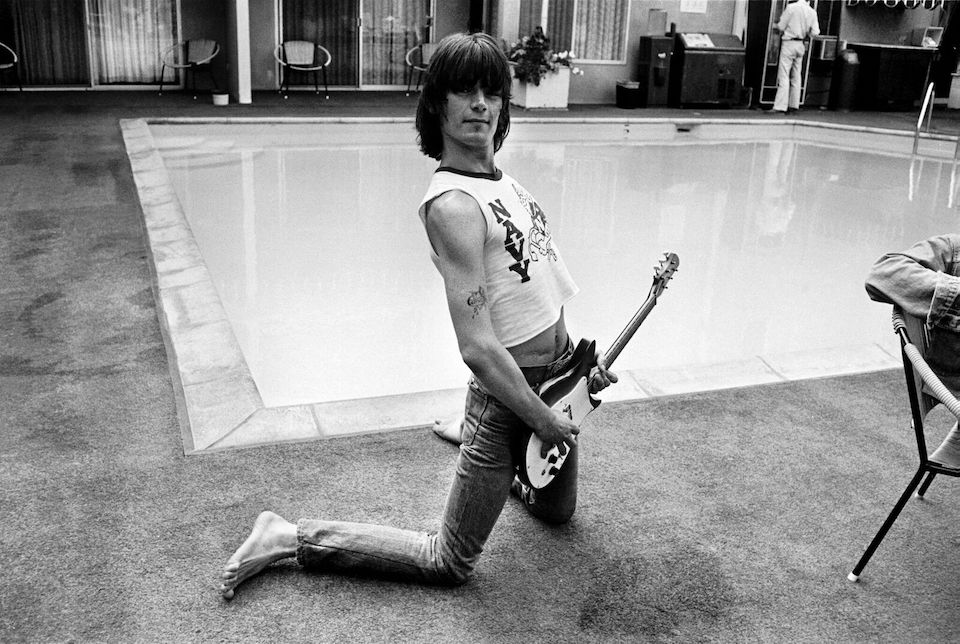
    Still, even that majestic, stone-killer sound would have meant absolutely nothing without the simmering, homoerotic beauty of the boys themselves. Like a fanatical leather queen’s horniest wet-dream made sullen, pouting reality, here were four guys uniformly dressed in perfect, 42nd Street, male hustler drag – white T-shirts, tight jeans, motorcycle jackets and sneakers, all irresistibly spiced by lashings of anti-social attitude.

    Were the boys knowingly channelling a specific, gay iconography that referenced stars as game-changing as James Dean and the casually bisexual Marlon Brando? Whatever the answer, they looked and behaved with the quasi-criminal swagger of Jean Genet’s hugely idealised prison inmate lovers, and, not surprisingly, lit admiring sparks in the intuitive gaydar of besotted fans. And those fans were, in one sense, completely on the money – Dee Dee Ramone, the band’s chief lyricist and composer, had unabashedly served time as a male prostitute and semi-fictionalised his escapades in his vividly noir novel, Chelsea Horror Hotel.

    I mean, come on, who hasn’t been thrilled by the thuggish, sexual aplomb of low-life, so much more, shockingly visceral than flirting with some clueless, clean-cut yuppie? Watching the Ramones, you’d be deliriously transported picturing rock-hard pricks straining against filthy denim, not airy, David Cassidy kisses. And visually, fronted by the freakishly tall, pipe-cleaner thin, 6’ 7’ Joey, the Ramones came across like a crack squadron of bullet-headed, sexual storm-troopers, the quintessence of Tennessee Williams’ Stanley Kowalski, shagging first and talking after!

    It’s that raw, blue-collar, erotic charisma that’s so beautifully, and blatantly, captured by My Ramones, an exceptional photo-memoir documenting the band at their peak, created by the band’s joint manager and head photographer at the time, Danny Fields. Such is the fierce, libidinous energy of even the most innocuous shots, that you’d be entirely forgiven for regarding My Ramones as an inadvertent stroke-book; the barely contained boy-flesh on view screams ‘touch me!’ to even the most constrained penis lurking in a reader’s pants.

    So, please, immediately dismiss thoughts of fellow photographers David La Chappelle’s baroque showboating, or Rankin’s achingly-ersatz authenticity. Rather, Fields deploys a stark, forensic honesty of photographic purpose, one that excludes anything but an ultra-candid, emotional honesty in any given shot. It’s an approach that recalls the deadpan clarity of an Andy Warhol, and – scrupulously removing any hint of intruding egotism – Fields lets his subjects powerfully speak for themselves. This, mercifully, is portraiture predating the utterly corporate, cynically-staged ‘controversies’ dominating current pop-star imagery, and these are shots that virtually sweat, breathe and spit with shockingly refreshing intimacy.

    Technically, too, we’re in the presence of a rare talent, one understanding negative space and black-and-white composition with the panache of a Helmut Newton or David Bailey. Jee-zuss, in 2018, living as we do with a hair-trigger fear of terrorism, it’s simply unthinkable pop-stars could even contemplate impromptu, unstaged shoots against national monument backdrops, but Fields’ images – like the Ramones’ music itself – are fierce, tasty, and totally focused!

    Still, there’s far more to Fields than his hugely impressive lenscraft – like the similarly shrewd Malcolm McLaren with the Sex Pistols, Fields’ fingers were firmly pressed on the cultural pulse. Who else could take shocking pink – a garish, almost puke-making shade invented by the surrealistic couturier Elsa Schiaparelli, and normally used to sedate female toddlers – and redeploy it as a violently aggressive design element for the Ramones’ Rocket To Russia album?

    In one simply extraordinary, cross-cultural flourish, Fields breathtakingly fused the US, slang overtones of ‘punk’ – a passive male partner in prison – with raw, rock ‘n’ roll raunchiness and socially disenfranchised sex-appeal. Forget Jackie Onassis or Bianca Jagger- briefly, in 1974, NYC’s straight and gay worlds bowed down to kiss the butts of faux brain-dead brilliance. And if that thrilling sexual democracy has a name, it’s My Ramones, the still jaw-dropping, cultural legacy of Danny Fields! Do yourselves a favour and feast on the man’s work ASAP!

    My Ramones By Danny Fields RAP Reel Art Press. £29.99

  • THEATRE REVIEW | Reuben Kaye, Soho Theatre

    ★★★★★ | Reuben Kaye, Soho Theatre

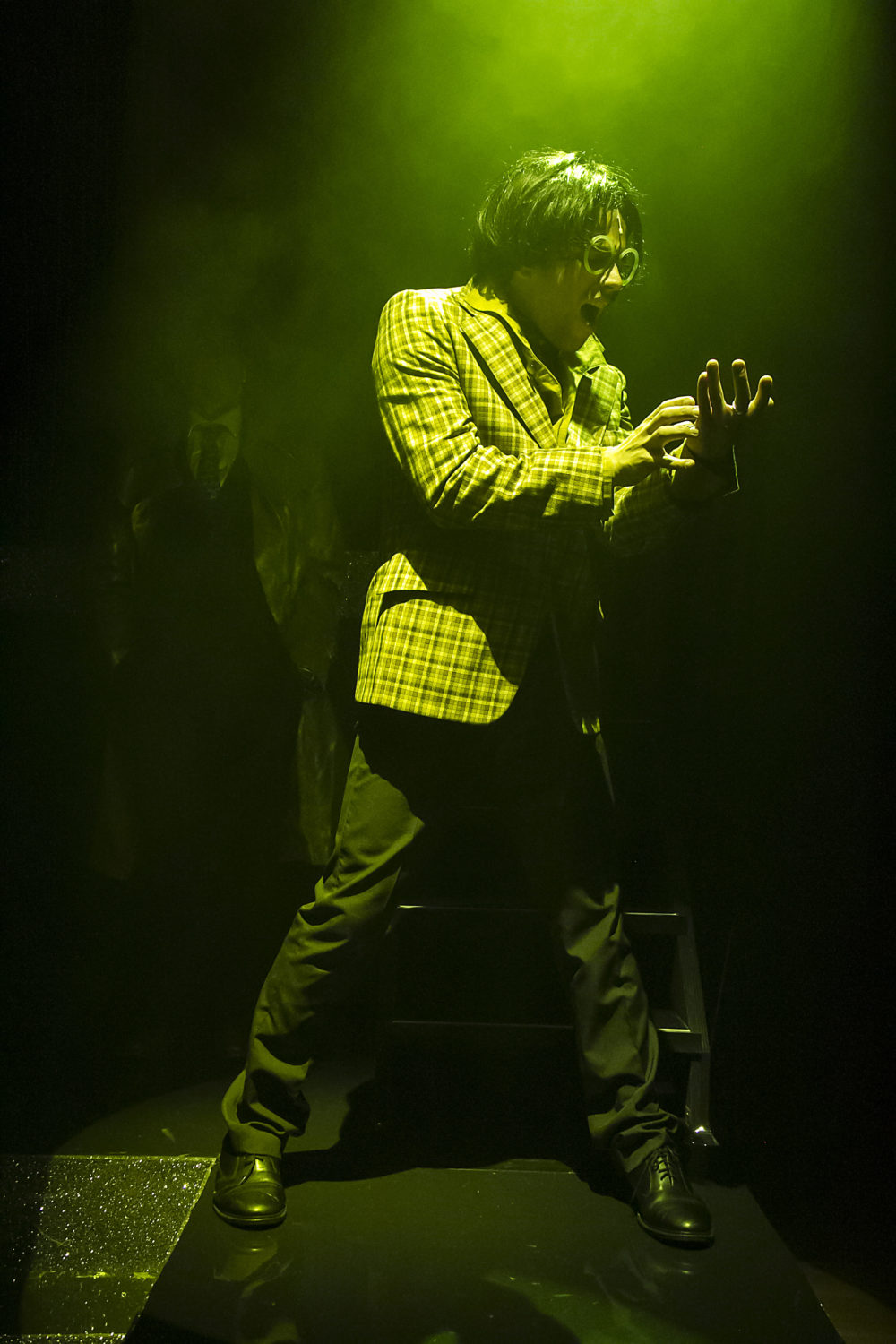
    Never heard of Reuben Kaye? You will! Sick, slick, as gorgeously filthy as a pouting penis, Kay’s a living bigot’s nightmare, spunking left, right and centre over every sacred cow possible! Think a Dale Winton on acid, but – thank f*ck -one blessed with the chiselled, Greek-statue perfection of a 1950’s beefcake idol. Yes, this face, this presence, this glorious insult personified, is the joint king and queen of Australian cabaret, briefly condescending to take one awesome, comic dump on the UK’s half-starved notions of hilarity.

    Bursting on stage like some Satanic, lobster-red supernova awash with sequins and buoyed on precarious platforms, Kaye immediately sucks up every fraction of potential ridicule from tonight’s blackly comic zeitgeist. Like some fantastical Shirley Bassey reincarnated as a ripped gay ninja, Kaye’s scorchingly weaponised his scattergun satire, raising it – quite effortlessly – to the status of a lethally funny martial art.

    But, WTF? Let’s backtrack one moment, because frankly, context is everything, so pardon my presumption while I pump you full of backstory! In common with his closest, possible rival, the inexplicably ubiquitous but dramatically tepid Dusty Limits, our Reuben’s a gay Aussie, but – and it’s a huge butt – the comparisons stop right there. If Limits seems content to peddle mildly risque double entendres like some Poundland Julian Clary, Kaye is a living menage a trois, a one-man queer, Holy Trinity, the three queens of Priscilla compounded in one fabulously provocative presence!

    No wonder, then, he’s enjoyed rapturously received residencies at London’s Savoy and Rosewood hotels, in addition to constant bookings worldwide. And tonight – fittingly – he’s on brilliantly non-PC fire. His advice on drugs? Try them on someone else first, and if they’re still alive in an hour, do them, drugs and asshole! And he skewers the pitfalls of drug-f*cked sex perfectly: ‘Doing it doggy-style? Maybe turn around once in a while, check that it’s still the same person you started with!’.

    Get the picture? Yes, nothing and no one’s safe, especially the audience. ‘Ohh, I’d like you to clean my dildo’ Kaye quips to a shell-shocked punter, ‘I can literally feel your arsehole clenching in fear’. Christ, screw priests, parents and anguished, clueless counsellors- a Kaye a day keeps a gayboy at play! And forget Trump on Twitter -nothing escapes Kaye’s killer, cultural scalpel. ‘Consent? A term unknown to straight men…’. Too true, but there’s also praise for supernatural sluttishness; ‘Jesus – I love a man who can be nailed for three days straight and come back for more…’. Well, don’t we all, and Kaye’s scathing tornado of sexual surrealism is like first-time penetration – give in, and you’ll love it! Where else could a mutual love of Grace Jones and civil rights get mashed-up as ‘12 years a slave…to the rhythm?’.

    Exhilarating? You bet, and sure, Reuben gleefully slaughters three furiously sacred cows – racism, sexism and homophobia. Still, unlike the far fiercer David Hoyle, Kaye never critiques or challenges the LGBT moral axis underpinning his whole act. If brash, apparently fearless and flamingly flamboyant, Kaye shrewdly avoids any lurking, intersectional minefields of identity politics. And ironically, though he spits bile, venom and shade in a virtuoso blizzard of genderqueer radicalism, Kaye’s comedy is hamstrung by the binary assumptions he conforms to, but also attacks.

    So, unfortunately, in 2018, Kaye’s keynote, us and them stance is completely irrelevant to gender-fluid millennials like Cara Delavigne and St.Vincent, who see pansexuality as just another box to be ticked in today’s current, sexually unbounded pleasure menus. Oh, don’t get me wrong – Reuben is, by far, the most brilliant avatar of his chosen cul-de-sac, but his brand of oppositional comedy depends on totally punctured paradigms, and he’s been made obsolete by changes in gender discourse itself.

    But, who really cares? Who the hell goes to a comedy show seeking philosophical enlightenment? Sometimes- as Sigmund Freud once said -‘a cigar is just a cigar’, not a blatant penis metaphor, and sometimes, killer comedy is f*cking hilarious, whatever the subtext! So, let’s give a big hand – with optional, rectal consent – to Reuben Kaye, the living Shakespeare of confrontational cabaret. Comedy really doesn’t get any better than being mentally masturbated by a tall, dark stranger!

    At the Soho Theatre in London until the 16th June 2018

  • THEATRE REVIEW | How It Is By Samuel Beckett, Coronet Print Room Theatre

    ★★★★☆ | How It Is

    How It Is By Samuel Beckett, Coronet Print Room Theatre
    How It Is By Samuel Beckett, Coronet Print Room Theatre

    Do I have to slide cocks up my a** to write about gay theatre? Or shag up-for-it nymphomaniacs to dissect heterosexual art? By that logic, I’d have to be a practicing serial killer, a Jeffrey Dahmer in pantyhose, to appreciate Silence of the Lambs! So – having exposed and pushed the absurdities of that laughably reductive thinking waaaay to one side, let’s objectively appraise How It Is, a purgatorial, afterlife masterpiece from the fevered genius of Samuel Beckett, one of Ireland’s greatest ever writers!

    Never heard of him? Oh come now, that’s barely credible. Why, Waiting for Godot, Beckett’s theatrical debut, revealed prodigious, game-changing talent, sufficient to alter the entire course of the Western world’s modes of dramatic discourse. Simply put, Beckett, most often, dramatises monologuing consciousness on either the point of death, or immediately beyond, in some utterly unknowable afterlife. And it’s that sense of psychological extremity – going where no queens have gone before – that knots his artistic DNA firmly into the fabulous beyond that defines so much LGBT theatre. Again and again – as in Alexis Gregory’s recently-staged Sex/Crime – diversity drama routinely accesses states of mind, situations and politically contested identity wholly unknown to heterosexual, mainstream audiences. To name just three, K-holes, cum lollies and sauna-house sex-orgies barely enter the dreams, or stain the yearning nightmares, of Joe and Jill Public. Frankly, considered as the ripe, luscious and shockingly perverse fruits of an entire community, LGBT artistry has charged and enlarged subject matter inconceivable to previous, genteel and sexually lobotomised, generations.

    Still, Beckett – even if his work owes virtually nothing to any known form of sexual persuasion – takes us on exhilarating journeys to the limits of human consciousness. Think viciously addictive K-holes laced with severe existentialism, as we’re plunged, repeatedly, into theatrical experiences offering little more than static performers ranting in sparsely-lit spaces. How, then, can such raw, spartan materials provide riveting, arse-clenching excitement?

    Easily. Take the Republic of Ireland’s Gare St. Lazare theatre company, currently unleashing Beckett’s How It Is at Notting Hill’s breathtakingly gorgeous, Art Deco Coronet Print Room theatre. This, frankly, is theatre as psychological assault course; immediately, we’re metaphorically kidnapped, trussed up, and – quite probingly – interrogated. How? Well, by deploying the dramatic equivalent of anal sex – reversing the so-called, ‘natural’ order, replacing exits with unexpected entrances. Which, here, means sitting an audience on the stage and setting the actors – and action – in the raked stalls and balcony circling that stage.

    Disconcerting? As f*ck – instantly, and just as in consensual S&M, one’s constrained yet feels a paradoxical sense of liberation, of being fed carefully-rationed ecstasies that permit joy only by strictly-directed pathways. And – make no mistake – theatre rarely comes any bleaker, with such huge demands blissfully rewarding rapt attention.

    Ultimately, this is theatre raw, stripped and immediate, with a narrative as brief, stark and thrillingly erotic as Christ being summarily condemned and crucified. Initially, one lone voice in the darkness – an unnamed narrator – speaks of three states of existence, being alone, with, and finally without ‘Pim’, his or her presumed companion. Three performers – Conor Lovett, Stephen Dillane and Mel Mercier – tackle Beckett’s dense, repetitive text like an overlapping, choral immersion in stately sonic tidal waves, as, gradually, a narrative – of sorts – emerges.

    Naked, an unnamed soul slithers in endless mud and darkness clutching a sack inexhaustibly – and inexplicably – replenished with cans of sardines. He’s joined -again inexplicably- by another, communicating by jabbing a can-opener in the other’s buttocks, stabbing out Morse code messages. Yes, it’s a submissive, role-playing queen’s ultimate wet-dream, but – with nothing except intermittent bursts of light, dry ice, and the hoarse rubbing of actor’s voices in transfixed cadences – we’re collectively cajoled into instantaneously synthesising Beckett’s purgatorial hell inside our minds. If theatre, finally, is nothing, but voices, lights, gestures and consenting imagination, the Gare St. Lazare company take that haphazard, shockingly artistic marriage to sheer transcendence. We wait, quite simply, in delighted awe for their future liaisons with the shatteringly bleak -but dramatically irresistible- voices of Samuel Beckett.


    How It Is By Samuel Beckett @ Coronet Print Room Theatre, Notting Hill Gate to May 19th. 0203-642-6606. 4 Stars!

  • REVIEW | John Cale at Barbican, London

    ★★★★★ | John Cale at Barbican, London

    John Who??? Sasha Selavie on ex-Velvet Underground Icon John Cale, the non-gay, uber gay-friendly genius equal to Bowie!

    MUSIC John Cale @ Barbican March 9th. 5 Stars! Eclectic Ecstasies!

    Should gay men -especially pop music fans -adore non-gay artists? Oh Hell, yeah! Take John Cale, the legendary other half of the totally transgressive, sicker-than-sick shock-jocks of the 1960s, the Velvet Underground. Sure, okay, they were spearheaded by uber-gay, ex-street hustler Lou Reed, but if not gay himself, Cale was most certainly GBA – Gay By Association! How could he not be? The Velvets’ first two albums literally drip with metaphorical semen from the grooves, and – once you slap those vinyl platters on antediluvian turntables – you’ll be conceptually violated by blistering. sonic portraits of smack dependency, botched, D.I.Y sex-change ops, brutal – if unintentional- murder, and mass, totally fucked-up drag queen orgies!

    Holy Jesus Christ on a hot-wired crucifix – what’s not to like? But, if less flamboyant than Lou, Cale brought a hugely disturbing, forensic stripping of human foibles worthy of the Marquis de Sade to the Velvets’ awesomely experimental table. And please, remember – unlike today, in a social media climate which smugly prides itself on clunky expressions of gender fluidity, in the mid-to-late 60s, nobody gave the slightest f*ck what clunky acronym you chose to publicly parade under! Simply, you’d just screw whoever – or whatever- turned you on, with no big deal, a far less heavy-handed sexual etiquette than now!

    But why, pray tell, am I resuscitating tales of John Cale for readers who, quite understandably, are pumpingly content with semi-sexualised, fanboy fantasies centred on Rihanna and current trans poster saint Ezra Furman, who – FYI – has just released his rather staggeringly good latest opus, Transangelic Exodus? Well, duh, because knowledge is power, an ability to counter, decisively attack and enlighten dumb, bigoted assaults on gay musical excellence, so it’s vital to recognise and be aware of a major, gay-friendly musician at least equal to Bowie!

    But, let’s not forget the one utterly magical, essential link that chained the fifth, fury and shockingly transcendent perversions of Lou Reed and John Cale together; Andy Warhol. Possibly the ultimate gay icon, Warhol was a furious, non-stop workaholic. Perpetually partying, even more fiercely than the equally manic-for-inspiration Alexander McQueen, Warhol had one, pathological pet hate – laziness. Famously, he called Lou Reed – the amphetamine cranked, 24-7 sensation junkie – ‘a rat’, the most poisonous put-down poor tongue-tied and socially timid Andy could manage. Ah, but beneath the badly-fitting, signature, snow-white nylon wigs, Andy’s inner bitch was barreling along with frightening, freight-train venom. Okay, granted, it didn’t surface in print until years later – in Andy’s smash, publishing sensation, ‘The Diaries’ – but especially then, as inescapable fact, Andy’s bile crushed poor Lou.

    Tough. The lazy bum should’ve – as Andy hissed – written more songs. Warhol, after all, was publicly billed as the producer of the Velvet Underground’s still-astounding first album, with Lou as front-man, so why shouldn’t Andy insist on humanly impossible excellence?

    Lou, after all, was risking nothing – back in ‘67, he was just a snotty queen and junkie hustler, but Andy was America’s pop-art God supreme. Sure, Lou, later – with methamphetamine poked in every possible orifice – excelled himself with stacks of respected vinyl, but arguably, it’s John Cale – the John Lennon to Lou’s Paul McCartney – who blew the roof off Andy’s inhuman expectations.

    Yes, granted, their respective, public outrages are a matter of permanent, media record – Lou sporting fascist, Iron Crosses shaved in his peroxide hair and John publicly decapitating a dead chicken – but what rock star doesn’t aspire to memorable excess? And image-wise, it’s an extreme, maverick dead-heat between the two, Lou all mean, speed-freak scowl and chemically-chewed cheekbones, but John much more some romantic, gay wet dream, lean, long-locked and saturninely sinister!

    So, back to John, who briefly flamed down this March in London town, still crackling with all the brutal, insolent genius of a singed Satan gunning to kill – stupidity, that is. So he should – John’s back, hell, even his current catalogue – backs down to nobody in inventive brilliance, not even Bowie. And if Bowie – for the better part of a decade – retreated into past mystique, John, non-stop, gleefully trashes his own legacy, and re-arranges it as something far more rich and deranged.

    It shows. Not content with producing stellar, landmark albums by Patti Smith, Iggy and the Stooges, Brian Eno and junkie diva Nico, he’s still creatively frenzied. In London, that’s signposted – quite obviously, tonight – in the ripped shrapnel dissonance of his dress-sense, a classical musician’s frock-coat and street-scum sneakers.

    Mercifully – unlike Lou – John exhibits no desire to perma-bond himself to past glories, in Lou’s case as the sullen, presumed Poet Laureate of Perversion. Rather, he’s refined the fierce, forensic intellect exhibited on his Paris 1919 album, and the razor-cut, dandy’s discrimination iconically frozen on that record sleeve.

    And tonight – as always – is totally uncompromising, all shrieking tsunamis of sonic, grievous bodily harm, a signature, 1960s, Velvet Underground legacy. It’s a sound later popularised by Berlin band Einsturzende Neubauten, who savaged raw metal with pneumatic drills and power saws, but John, tonight, is beyond compare.

    And please, gleefully flush any notions of crawling, sycophantic X-Factor stage presentation straight down the shit-caked sewers they so perfectly deserve. Unlike Beyonce, Gaga or the flocking legions of sub-prime lingerie models pathetically doubling as auto-tuned divas, John – rightly – doesn’t give a fuck about sartorially simpering to the audience. Jesus, he even manages-with superbly blasé aplomb!- to make the clunky cast on his right foot instantly achieve the aura as a must-have, cool-as-fuck religious relic from the body of a still stubbornly living, genuine rock Messiah!

    Better yet-with a casual, Roman emperor arrogance female foghorn Adele would die for -John chooses to leaves his full, onstage orchestra largely redundant, as if they might, just perhaps, add a possible classical flourish at John’s passing whim. Oh, it’s such moments that make one ache that John’s not gay – that ruthless, dictatorial streak would go down (ha, ha) stormingly in S&M sex!

    Still, even for me – a devoted fan – John’s chosen, blinding, banshee holocaust tonight makes almost every song unrecognisable. Yes, maybe, there are ringing, guitar chords and a full orchestral heft identifying Cale staples ‘Dying On The Vine’, and ‘Half Past France’ in the eye of the sonic storm, but so what? Complete irreverence for his work is John’s fabulously unique, to-die-for appeal, and tonight, he’s stunningly massacred Lou Reed’s iconic ‘Waiting For The Man’, an acknowledged masterpiece, making it stronger still. So what raging idiot would want – or even need? – some knackered burn-out screeching excruciating parodies of their finest, long-gone moments? Frankly, that’s best left to failing show-tunes divas, superglued like rotting corpses to the screamingly obvious!

    But John – like Brian Eno and Bjork – is continually scaling unexplored, creative heights. Who else would dare imagine deploying an orchestra of flying drones at the Barbican, or blatantly re-working the Velvet Underground’s iconic, pansexual legacy, although bureaucracy crippled the drones idea? Still, no wonder John’s smiling as he leaves, as ragged chants of ‘Happy Birthday’ intermittently pepper his set. Always totally non-precious, unlike Mariah Carey clones who dictate backstage comforts with the ferocity of a third-world dictator, John even treats his 76th birthday as just another gig. An undoubted, trans-genre genius, he may have released ‘Music For A New Society’ way back in 1982, but tonight, his audience – still basking in his scorching afterglow – have almost caught up with him!

  • THEATRE REVIEW | Barry Humphries’ Weimar Cabaret featuring Meow-meow

    THEATRE REVIEW | Barry Humphries’ Weimar Cabaret featuring Meow-meow

    ★★★★★ | Barry Humphries’ Weimar Cabaret

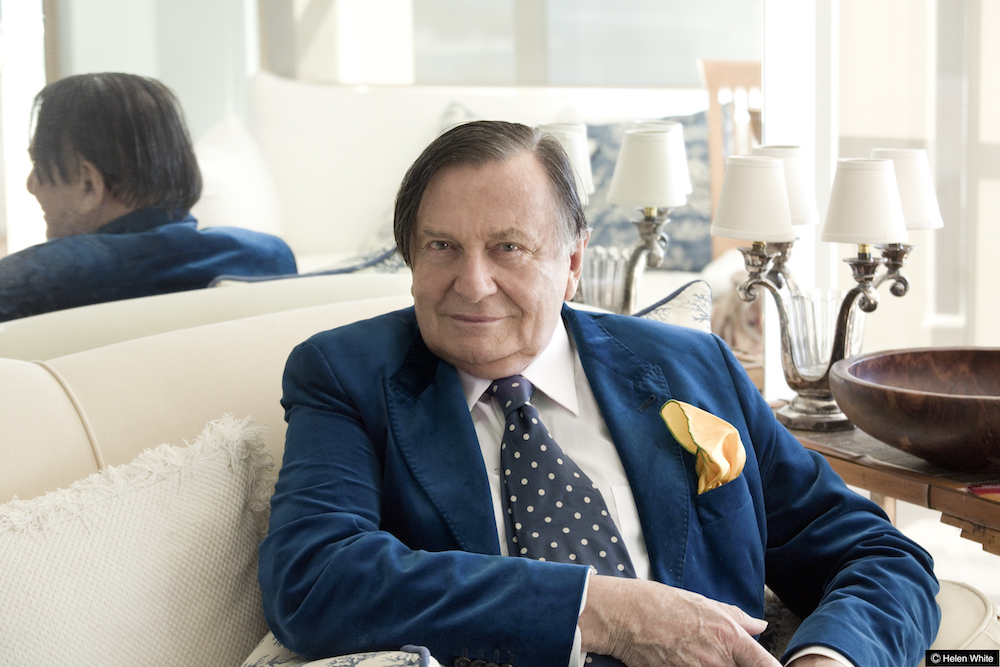
    What’s your deepest impression of Barry Humphries? The tacky, kitsch-bitch supreme Dame Edna Everage, all ghastly, C&A drag and granny glasses, or worse, the snot-and dandruff spattered Sir Les Patterson?

    Barry Humphries
    CREDIT: Helen White – PR Supplied

    Hopefully, it’s neither. See, the true Barry Humphries is a deeply cultured graduate of the fine arts, and has written definitive articles on eccentric, human sexuality. He’s also a superb character actor, to the extent audiences mistake his Sir Les Patterson creation for a genuine Ambassador of Australian culture! And if Brits, unfairly, accuse Americans of misunderstanding irony, it’s sheer, poetic justice that they’re completely insensitive to Barry Humphries’ deathly dry, Australian wit.

    There’s a reason for that, of course – what ex-colonial, reactionary, right-wing regime can bear ridicule?

    Not Little Britain, that’s for sure, and Humphries, initially, works hard to win over a cold, deeply monied and highly privileged Chelsea audience. Still, he’s a charming and infectiously erudite bon vivant, all barrel-chest, squat neck and deliberately ironic, his physicality eluding rigid, anal-retentive analysis. Quite simply, the audience – many of whom have never seen the real Humphries – don’t know what to make of him, suspending their typical, pack-mentality persecution prejudices. Oh, don’t get me wrong, many hardcore Conservatives adore the arts – remember David Mellor, anyone? – but often, they view culture as shockingly disposable.

    Not tonight, perhaps. ‘I’m doing my hardest impersonation ever tonight’ Humphries quips, ‘myself’.

    Too true, and Humphries’ actual, authoritative, deeply knowledgeable self is instantly seductive company. Always ferociously anti-fascist and bitterly opposed to any suppression of human diversity, he’s a tireless champion of Berlin’s Weimar Republic, immortalised by Christopher Isherwood’s Cabaret.

    Never heard of the Weimar Republic? Google it ASAP – it’s essential queer history. An inter-wars, sexually diverse paradise, the Republic briefly flourished from 1919-1933, an intense island of queer resistance against crushing, hetero-normative banality. And Humphries, obviously, is in his element, showcasing the cream of Weimar musicality – his entire career has hilariously skewered homophobia on the spot.

    So naturally, his Weimar night shares a treasure-chest of subversive memories. Discovering stacks of obscure, German sheet-music in late 1940s Melbourne, Humphries, enthralled, tracked down any possible recordings and information on the Weimar Republic. Many otherwise utterly obscure composers – Krenek, Spoliansky, Schulhoff and Hollaender – set cynical, Weill and Brechtian lyrics into thrillingly mutated music fusing American jazz and indigenous folk motifs.

    And that music, of course – soon becoming the vital staples of furiously transgessive cabaret throughout Berlin – was pure poison to Germany’s ultra-reactionary, proto-Nazis. Physical, sexual and emotional spontaneity – all encouraged and cemented by Weimar’s signature, polyrhythmic musical delights – was seen as instantly inflammatory, undermining every fascist orthodoxy.

    Tragically, with the brutal rise of Nazi supremacy in 1933, Weimar was immediately suppressed, but Humphries’ gorgeously provocative time-capsule of the era suggests what we’ve lost. Appropriately, he’s accompanied by mischievous, multi-talented diva Meow-meow, channelling as always the spirit, attitude and killer glamour of every possible living drag queen! Yes, Meow-meow is a biological female, but far more than fellow, drag manqué Holestar, Meow-meow performs her femininity as an intoxicating artificiality she’s just discovered. Does it work? Oh god, yes – as sublimely as Ru Paul in full, killer-queen mode, and visiting and inhabiting Weimar’s music simply demands a hugely exaggerated reality!

    CREDIT: Harmony Nicolas PR SUPPLIED
    CREDIT: Harmony Nicolas PR SUPPLIED

    It’s a theme that extends, even, to Humphries’ backing chamber orchestra, all uniformly dressed in sharp, Bohemian black, all Joel Grey trilbies for men and women. And the music’s a revelation, all instantly contagious, colloquial melodies grafted to the spare bones of classicism and non-European, imported tonalities. Yes, there’s some expected, Weimar favourites – ‘Pirate Jenny’ and ‘Surabaya Johhny’ – but the stand-out is Erwin Schulhoff’s ‘Dada masterpiece’, the Sonata Erotica.

    Bearing radical, avant-garde comparison to John Cage’s 4.33’ – four minutes of silence with the score considered any random sounds within that time – Sonata Erotica still startles. Exuberantly performed by Meow-meow, it’s orgasmic moaning, pants and screeching delivered as fine, operatic art, the most joyous, unrestrained expression of subversive sexuality possible!

    No wonder Humphries, after an awkward but endearing dance with Meow-meow, finally exits with an ecstatic grin- he’s just mentally liberated yet another slice of Little Britain!


    Follow Sasha DeSuinn on Twitter

  • Rotterdam: A Gender-Comedy Interview

    Alice wants to come out as a lesbian. Her girlfriend Fiona wants to start living as a man. It’s New Year in Rotterdam, and Alice has finally plucked up the courage to email her parents and tell them she’s gay. But before she can hit send, Fiona reveals that he has always identified as a man and now wants to start living as one named Adrian. Now, as Adrian begins his transition, Alice must face a question she never thought she’d ask… does this mean she’s straight?


    But how a non-trans writer and actress approach portraying the trans experience for mainstream audiences? Transsexual writer and performer Sasha de Suinn interviews director Jon Brittain and actress Anna Martine in an informative, ground-breaking discussion.

    SASHA: Is Rotterdam primarily aimed at mainstream audiences unacquainted with gender fluidity? If so, is the show’s sub-text entry-level in terms of that subject, or is presuming some awareness of gender questions from an audience?

    Jon: I guess the answer to the first question is yes and no. It’s certainly accessible for audiences who are less informed and I made a conscious effort to make sure that was the case. However, at the same time I didn’t want to write something that had nothing in it for people who had first-hand experience of the subject matter. A lot of the writers and artists I admire find a way of unpacking complicated issues in a way that is satisfying for those in the know, but that brings the less knowledgeable along with them, and that was my aim too. I don’t want to be as trite as to say Rotterdam is for everyone, but I certainly hope that it doesn’t alienate anyone by presuming too much prior knowledge or, on the other hand, by presenting something that is too simplistic and familiar. I think we get into some interesting conversations throughout the play about gender, sexuality and the clash between our sense of personal identity and how others perceive us, but I think different people will get different things out of them.

    Anna: The response we had when we premiered at Theatre503 was incredible. I had people coming up to me after the show from across the board telling me how moved and connected they were to the play, this included people within the queer community, as well as people who were less acquainted with these worlds. Because although it deals with complex issues about gender and sexuality, its inclusive, there are different access points into the play through the four very different characters and with its humour it reaches out beyond these labels and specific identities and connects with the audience on a human level.

    SASHA:What is your artistic background and focus of interests as a writer / director? When did you first become interested in the notion of gender as a performative inquiry? What sparked the initial idea of Rotterdam?

    Jon: I actually only wrote Rotterdam, Donnacadh O’Briain directed it (and did a fantastic job, too). I’ve been working as a writer and director now in some capacity for the last seven years and have quite an eclectic body of work. I’ve written plays, sketches and cartoons, and I’ve worked as a director on my own shows and other people’s, as well as with comedians such as Tom Allen and John Kearns. As a result, I can’t really claim to have a focus, although I am always attracted to stories in which characters are their own worst enemies – I like to see people struggle against themselves as much as against other people. In terms of when I first became interested in gender and gender fluidity as a subject to write about, I’ve been interested in it for a while and I tried to write a few things about it when I was younger which were all well-intentioned but also quite bad! I had the idea for Rotterdam about six years ago after a couple of my friends had come out as transgender. I was struck by how few well-rounded (or indeed any) transgender characters there were in drama and comedy. At the same time, I had started to think about sexual identity and how it changes or stays the same over a lifetime. These two ideas sort of merged into one and Alice and Adrian popped into my head. The story of Rotterdam is about these two characters, their relationship and how they reconcile their sense of their own identities with their love for each other.

    SASHA:How are the actors involved approaching the notions of gender fluidity, and how does that shape and affect their performing process?

    Jon: Over to you Anna!

    Anna: I have a deep empathy and connection to my character – I identify as queer and so this play resonates with me on a personal level – the issues are aligned with what I care about personally and so I’m really excited to be exploring gender, identity and sexuality in this way. What’s brilliant is that throughout the development of the play the creative team had an open dialogue with people and organisations within the trans community, so when it came to approaching my character and his journey I felt confident and excited!

    There’s such a strong supportive online transgender community, so as well as talking to trans people within my community and researching online, I’ve also been exploring and observing gender expression out in the world: What it’s like to step inside the body and experience of a man compared with a woman and then these glorious, complex and interesting places in between and around these binary ideas of gender.

    SASHA:How do you feel about the debate, which is hotly contested in some quarters, that trans characters on stage, screen and television should only be played by genuine trans actors, as they’re hugely still hugely under-represented in terms of media visibility, and non-trans actors have a huge range of acting options available to them by comparison? For example, why, except for box-office reasons – was Eddie Redmayne cast in The Danish Girl? Trans actresses like Adele Anderson would, arguably, have brought a greater emotional weight to the role.

    Anna: It is definitely a debate that needs to be had. I feel we should also look towards an industry where gender doesn’t come into play at all, where roles are just as open to trans actors etc. I’m really passionate about gender neutral casting – i.e. removing gender as a divide or indicator of how best to play a character or tell a story – and look to more diverse casting choices across gender, race and class, like Phyllida Lloyds powerful all female production of Julius Caesar or Regent’s Park Open Air Theatres recent production of Henry V with Michelle Terry as the title role and her bride to be played by the male actor Ben Wiggins.

    Jon: It’s a difficult one for me personally because I was very passionate about trying to cast a trans actor in Rotterdam but although the people we saw were of a very high quality none of them quite fit the character. When Anna walked into the room, she did. I feel confident saying that we made the right decision because I know how fantastic and truthful the performance she gives is, but I can also appreciate how frustrating it must be to be a trans actor who’s seeing yet another trans role going to a non-trans person. I do think there needs to be a proactive campaign throughout theatre and TV to be more inclusive – both in front of and behind the scenes. I’ve met quite a few trans actors through doing Rotterdam and through the Gendered Intelligence trans acting course and I know how talented many of them are, but more opportunities need to be made available to them. As Anna says, an ideal world would be one where gender doesn’t come into it at all, I don’t know how realistic a possibility that is, but there are definitely things we can do in the here and now to make things better.

    SASHA: Do you think Rotterdam is artistically advancing theatrical notions of gender-variance on stage or simply trivialising genuinely ground-breaking issues? There’s a world of difference between the transgressive works of Nina Arsenault and Amanda Lepore and the awful, cosy and one-dimensional treatment of trans characters in soap-operas, where they’re often served up as exotic tokenism, or presented as arbitrary life-style choices with little real weight or consequence.

    Jon: I certainly hope I’m not trivialising anything. I became very aware, very early on, of the danger of creating something that did a disservice to trans people. I felt a keen sense of duty not to screw it up and to try not to fall into the traps that people who went before me, often with noble intentions, sometimes fell. The notion of the ‘cosy’ character is something I was very keen to avoid. Sometimes trans characters can be portrayed as faultless angels with no personality flaws – but who is like that in real life? Being trans does not mean that someone cannot be flawed, or funny, or difficult, or sarcastic, or inappropriate, or silly. With Adrian, as with all the characters, I strove to create a well-rounded, three-dimensional person whose gender identity is only one aspect of him. He’s not perfect – he sometimes gets things wrong or makes mistakes or pushes people away, but for me, that’s more interesting than seeing someone who has no lessons to learn and whose sole function is to teach other people tolerance. I can’t claim Rotterdam is as subversive or provocative as the work of Nina Arsenault or Amanda Lepore, but I certainly think there’s more than one dimension to it.


    SASHA: It’s evident that Rotterdam will be a comic and thought-provoking delight for mainstream audiences for whom it might be an eye-opener, but what do you think the show’s bringing to gay and trans audiences deeply acquainted with gender-fluid theatre? It’s quite sad that arguably the biggest, so-called gender-fluid theatrical show ever is the deeply reactionary Rocky Horror Show, which actually advocates sexual irresponsibility, blanket promiscuity and sexual predation without any sense or consideration of the emotional consequences for those involved.

    Anna: As part of the queer community I’m genuinely proud of this play; it’s funny and moving where the queer characters don’t die, go straight or end up crazy. It’s so refreshing to move away from these awful clichés that the queer community are used to seeing on stage and screen. We get used to cringing, not identifying with the narrative or saying “it’s good for a lesbian film’ or “yeah it’s not bad for a gay play” and we keep seeing a similar narrative play out on screen and stage that is often tragic. This play joyfully connects to people because and despite it being a ‘queer play’! It is both enjoyable and welcoming to new-comers but also joyfully familiar and better connected to the LGBTQIA+ community than I’ve experienced on stage before.

    Jon: Well, one thing I can say about Rotterdam is that it is very concerned with the emotional consequences of the characters’ actions (and inactions) as that is what drives most of the play. As for what it brings, I hope I’m not giving too banal an answer by saying it brings these characters and this story. There is a huge amount of diversity in the LGBTQIA+ community and the number of plays, performance pieces, comedy shows and one-person shows that could be created is infinite. With this play, I wanted to honestly, humorously and sensitively tell the story of the relationship between Adrian and Alice. As with any piece of theatre, you have a limited amount of time, and there are loads of interesting discussions to be had about gender-fluidity, the sexuality spectrum, and identity that I wasn’t able to get into in this show because they didn’t apply to these characters. But I think it’s good that there is a plurality of work being created, and that each piece can occupy its own space and talk about its own things. Rotterdam is a big hearted comedy-drama about a relationship between two people who are their own worst enemies. It won’t be for everyone, but I do hope that it will be as funny and emotionally involving for people well acquainted with the themes as it is for those new to them!

    Rotterdam is a new, gender-fluid comedy directed by Donnacadh O’ Brian running at Trafalgar Studios, Whitehall, London from Tuesday, 26th July to Saturday, August 27th. Box Office Ticket number: 0844-871-7632.


    Follow Sasha DeSuinn on Twitter

  • THEATRE REVIEW | The Stripper, St. James Theatre Studio

    THEATRE REVIEW | The Stripper, St. James Theatre Studio

    ★★ | The Stripper, St. James Theatre

    CREDIT: Origin8 Photography
    CREDIT: Origin8 Photography


    Ever heard of the biographical fallacy? No, it’s not a handy, dictaphone dildo, but a warning to never, ever judge an author’s work by his life. See, back in the 19th Century, critics actually believed in pure, spun-from-thin-air fantasy, that plays and novels came from sheer imagination, not hard, lived experience.

    Oh really? Tell that to gay, smack addict and novelistic genius William Burroughs, whose entire output mirrored his self-chosen squalor. And he’s merely the tip of a non-stop, thinly-fictionalised iceberg – every second, every minute, we’re swamped by tsunamis of blogs, memoirs and blatant self-mythologizing.

    So unsurprisingly, critical theory’s undergone a complete reversal, and currently, all creative writing is viewed as ultimately flowing from biographical facts. Oh dear. That’s very bad news for Rocky Horror creator Richard O’ Brien’s latest show The Stripper, which once again showcases his low-brow, pop-culture fixations. It’s a heavy-handed, sleazy, musical theatre adaptation of a disposable, pulp-fiction, private-eye novel by hack Carter Brown, and as dire as it sounds.

    Me, I pity the show’s outstanding actors. Despite being crippled by O’Brien’s clueless, misogynistic lyrics, an uninspired score and lazily generic stage design and costuming, they often touch real brilliance. In particular, Gloria Onitiri’s lead stripper Dolores has the raw, diva heat of a young Grace Jones, while Sebastian Torkia’s private eye Wheeler is magnificently moody. More quirkily, Hannah Grover, Michael Steedon and Marc Pickering all triple-up to flesh out The Stripper’s seedy, eccentric cast. Sadly, they inhabit a world of laughably clunky exposition, with composer Richard Hartley’s score merely a serviceable, degraded blizzard of inept doo-wop and leaden jazz.

    Immediately, it’s obvious that nothing but instant closure can rescue this glacially-paced, Z-grade murder mystery.

    Yes, every possible cliché is alive and unfeasibly surviving here. There are one-note tough guys, vapid femme fatales and even – shades of Rocky Horror’s Riff-raff – a two-timing hunchback.

    Speaking charitably, it’s more Roger Rabbit than Jason Bourne. My god – didn’t it even occur to O’Brien that Carter Brown was parodying hard-boiled prose and attitudes? How could it? Peel away all the frothy, feel-good kitsch from Rocky Horror onwards and what’s left are O’Brien’s deeply unpleasant, highly reactionary, sexual politics.

    Frankly, nothing else explains such shockingly offensive lyrics as ‘I wanna fondle your tits/Baby you give me a hard-on’. There’s a simply appalling sub-text here – f*ck whoever possible and totally abuse their feelings – a textbook, sexual predator sense of intimate entitlement and presumed consent. Sure, as a songwriter, O’Brien is hardly Noel Coward or Cole Porter, but surely he’s capable of finer artistry than this abysmal, teenage smut? Honestly, do audiences really need such insensitivity casually inflicted on them in 2016?

    And even more disturbingly, O’Brien’s lyrics don’t even attempt irony – the object of their lust is meant to feel privileged! Gee, whatever happened to any notions or awareness of sexual dignity, humanity or compassion here? Heartless but superficially attractive, The Stripper is a coldly cynical exercise in period sleaze, but ultimately, one best left unattended in a forgotten, theatrical morgue.

    The Stripper run at the St. James Theatre Studio until 13th August

    Reviewed by Trixabelle del Mar

  • THEATRE REVIEW |Geist, by La John Joseph

    ★★★ | Geist, High-Camp Hedonism!

    Is there anything more delicious than desecrating a dead, pandrogynous diva? What could possibly beat the sick, violating kick of shredding every scrap of their scanty, psychic lingerie, rooting out lies, betrayals and filthily addictive truths? Someday, perhaps – long after privacy laws expire in a surveillance culture feeding-frenzy – we can feast on Bowie’s secret excesses, but meanwhile, there’s fictional meta-scandal Geist.

    The latest, multi-media assault on mediocrity by self-styled fascinatrix La John Joseph, Geist comprehensively dissects its’ messianic star’s life and legacy. Like Orson Welles’ towering Citizen Kane, the ambition is grand; a retrospective, faux-documentary excavation of deceased celebrity myth-making, of conflicting public and private truths.

    Better yet, Geist forcibly marries Kane’s scope to Malcolm McLaren’s viciously precise, punk-rock irreverence and the stinking, incest brats of Freudian guilt and raw egotism. It’s a sublime, sick-f*** polygamy, a Sid and Nancy puke on propriety and startlingly provocative theatre, an All About Eve reconfigured as snotty, waspish, rock ‘n’ roll swindle.

    So why, overall, is Geist unsatisfying? Certainly, La John bleeds visual charisma from every skin-pore, an unlikely but striking collision of Lucille Ball and effeminate, Cecil Beaton-immortalised Oxford dandy. Like fellow, flamboyant predecessors Brian Howard and Stephen Tennant – both icons of the 1930-33 Pansy Club Craze – La John fuses soignée aplomb with savage arrogance. And that – despite Geist’s visual and thematic brilliance – is precisely the problem.

    Just like Dorothy’s Tin Man in Oz, Geist comes across, ultimately, as a show without a heart. Somehow, we never warm to La John’s portrayal of Alexander Geist, his mercurial alter-ego. Possibly, that’s a result of deliberate distancing strategies, such as the preference for gender-neutral grammar that La John habitually employs. But why – speaking as a devil’s advocate – apply that strategy to an evidently cisgender, aggressively narcissistic male? Whatever La John’s intentions, what comes across is feminine mystique forcibly misappropriated and superglued to masculine rage. It’s an intensely jarring mix brilliantly avoided by David Hoyle, who radically transcends the car-crash insensitivity of an indiscriminate, pick ‘n’ mix plundering of gender politics.

    Yes, every artist is free to explore any subject, but why not avoid ham-fisted disconnects via empathy and respect for one’s mode of expression? That’s why the work of physically trans-morphing artists Nina Arsenault and Genesis P-Orridge is so passionately human; it’s a textbook, orgasmic intercourse of form, intention and content. La John, by contrast, unwittingly embraces the fallacy so brilliantly skewered by Joan Didion’s Year Of Magical Thinking, presuming that wishful dreaming always trumps reality. Ideally, he’s hoping to embody some transcendent, omnisexual Puck or Ariel, but the actuality onstage is mere pretty-boy petulance.

    So it’s a pity La John never risks exploring emotional vulnerabilities; Geist cries out for moments of soft, lyrical exposure beneath an inflexibly brittle surface. Ideally, I’d prefer to view the show’s smug, one-note waspishness as a deliberate critique of celebrity solipsism, but nothing here seduces the heart and soul.

    Rather, Geist’s appeal remains purely analytical, the solving of a performance art puzzle-box frustratingly devoid of divine madness. And who needs a faux film-noir inhabited by a non-stop, Mariah Carey diva strop? Hopelessly, I prayed that Alexander Geist would experience Marquis De Sade moments, the shocking, anecdotal bites of exceptional depravity that forcibly challenge all conventional moralities.

    Oh, don’t get me wrong; there’s much to enjoy in Geist, especially the multiple shoals of Hitchcockian red herrings cunningly orchestrated by director Robert Chevara. Still, creating intriguing innovations hugely challenges every contemporary director – virtually every pop-culture and media motif has been ruthlessly recycled, so even sheer brilliance seems passé. Not here. Staging Geist as a restless, cinema verité investigation, Chevara splits our focus between La John live, performance footage, and Geist’s sister/former/future self? – being video-interviewed.

    And choosing to include actress Francis Lima as a deliberate, unspecified sea of possibilities – who or what is she/he? – is Chevara’s directorial master-stroke. Instantly, Geist’s resonances deepen, as Lima’s serene, fascinating ambiguity provokes comparison with searing, Roman Polanski psychodramas – Repulsion and The Tenant – far beyond La John’s dazzling flippancy.

    Still, Geist is very much a work in progress, but even now, has the fabulous, if very faint, imprint of Michael Moorcock’s Jerry Cornelius novels. Never read Jerry? Don’t delay– he’s a multi-gendered, rock ‘n’ roll assassin simultaneously exploring contradictory versions of his own reality. Just like La John Joseph, in fact, who – with just a little fine tweaking – will emerge as Bowie’s flaming, ambisexual heir. We’ll all be watching with breathless awe.

    Follow Sasha Selvie on Twitter

  • THEATRE REVIEW | Tristan and Isolde, English National Opera

    ★★★★★| Tristan and Isolde

    Ever had your genitals unbearably pleasured in an opera house, and felt on the endless brink of a shattering orgasm? That’s the metaphorical rapture provoked by Wagner’s deliriously gorgeous Tristan and Isolde, the most awe-inspiring evocation of delayed gratification ever written.

    So, just how long does this particular, Wagnerian masterpiece take to climax? Oh, a mere five and a quarter hours, perhaps – in an averagely paced production – but doesn’t appreciating superhuman rapture also require superhuman, receptive discipline? Put bluntly, that means developing transcendent, buttock-muscle control, as passively sitting for so long – except for deliberate, committed masochists –is pure, exquisite torture.

    Still, grand opera certainly sorts out the dilettantes from the diligent, and it’s a defiant, demanding, take-no-prisoners corrective to the infantile immediacy of pop-culture. Shouldn’t we all be pig-sick, by now, of Big Brother, Twitter and non-stop media idiocy violating every possible moment 24/7? Sigmund Freud – still a very shrewd, cultural analyst if viewed with a necessary degree of retrospective scepticism – saw instantly gratifying every desire as profoundly immature.

    I won’t disagree. Culturally – gay, straight and undecided – we’ve regressed to squalling toddlers, instantly swiping-left, Grindr-style, on anything requiring even a fractional attention span. But naturally, you get what you give, so every dumb sap addicted to social media inhabits, unsurprisingly, a constant, solipsistic void of existential emptiness.

    Is there any known cure? Of course, darlings – simply embrace substantial culture. Why waste an instant, mental w*nk on tabloid trash-icons, when – much more thrillingly – you can step beyond kindergarten consciousness and relish the compound pleasures of deferred, adult anticipation?

    It’s a deeply ravishing state of mind superbly portrayed by Oscar Wilde’s stellar comrade-in-adversity, Aubrey Beardsley. Perfectly mirroring the heady, suffocating thrills of his closet transvestism and suppressed, incestuous lust for his sister, Beardsley’s The Wagnerites is brooding, unsettling and utterly overwhelming. Just like Tristan and Isolde itself, of course, conspicuously name-checked in the lower, right-hand edge of Beardsley’s drawing.

    But if Beardsley’s brilliantly acknowledging Wagner’s deep, disturbing power, he’s also viciously satirising the corrupt, unaesthetic, socialite scumbags attending opera purely for vapid prestige. Shockingly, it’s often still the case – opera-houses worldwide are swamped with corporate seats crammed with snoring, unappreciative oafs who leave at the first possible moment.

    That – surprisingly – is hardly the case here, and ENO’s first production of Tristan and Isolde in twenty years is packed to the thrillingly expectant rafters. Why shouldn’t it be? Do love, desire and death – the three, rock-solid fascinations of human nature – ever become passé? Yes, from Michael Jackson’s autopsy reports to the appallingly improbable marriage of Jerry Hall and Rupert Murdoch, we’re more riveted by grand excess than hillbillies – quite ecstatically – eating fresh roadkill.

    And grand excess, of course, always remains cutting-edge – just look at Lady Gaga, the patron saint of calculated, designer-team extremity. Mercifully, Tristan and Isolde’s collaborative brilliance is far less cynically on-trend, and is, quite genuinely, astonishing. It’s not surprising; internationally acclaimed artist Anish Kapoor’s set designs fuse Wagner’s timeless raptures to the startling, audacious modernity of 21st Century London.

    Thrillingly, Kapoor makes no concessions whatsoever to cosy, theatrical banality, so his work’s more shockingly joyful than an electrified dildo. Act one, fearlessly, splits the immense, Coliseum stage in tripartite sections with the aggressive beauty of high, sloping metal walls that tightly compartmentalize Wagner’s drama. It’s a sublime, pressure-cooker staging that unbelievably, ramps up Wagner’s protracted, sexual tension still further, and provokes mass, erotic exhaustion by just the first interval.

    Phew – who needs iPhone porn? Frankly, the most ferociously sexual function we have is the imagination, which is where every form of conceivable arousal begins, and here, it works overtime! But – in a world inescapably acquainted with the anatomical intimacies of every Kardashian and Caitlyn Jenner – it’s easy to forget Wagner’s somewhat off the cultural radar. So, cue a handy Instagram, flash-memory synopsis for queens unacquainted with ancient, Arthurian legends.

    Irish princess Isolde is being escorted by gallant knight Tristan to forcibly marry Cornish King Mark. She’s previously healed a shipwrecked Tristan despite his killing Morold, her intended fiancé, in combat, and then fallen irretrievably in love with Tristan.

    But, he’s stubbornly determined to fulfil his duty and deliver Isolde to Mark despite his mutual love for her. Distraught, she pressures him to drink poison in a suicide-pact, but her servant, Brangane, exchanges it for an irresistible love-potion. Instantly stripped to pure, raging love more frantically real than any social niceties or pretence, they adore each other to death – and beyond.

    Overwhelmed? You should be – in lesser, soap-opera producer’s hands, the story’s pure, prime-time Viagra, enough for decades of brain-dead, Hollyoaks sleaze. But Wagner – more fanatically committed to his art than any suicide-bomber – gave Tristan and Isolde a towering, life-changing intensity that demands, but ravishingly rewards, total intoxication from an audience.

    Still, it’s no easy ride for the singers, either, a punishing, five-hour, emotional assault course that stretches even phenomenal talents to the limit. But, we’re in superbly capable hands – soprano Heidi Melton’s Isolde breezily marries ferocious passion to a radiant, diva mystique Celine Dion would kill for. And tenor Stuart Skelton’s shockingly devoted Tristan provides a bedrock, vocal grounding, seamlessly unifying the often chaotic costuming choices – Samurai armour and bouffant wigs? – displayed.

    Just as compellingly, there’s bass-baritone Craig Colclough’s sonorously persuasive Kurwenal, Tristan’s staunch servant, and mezzo-soprano’s Karen Cargill’s mellifluous Brangane, Isolde’s lady-in-waiting. It’s all beautifully sustained by conductor Edward Gardner’s subtle grasps of emphasis, but tonight, this is Wagner on crack, with Kapoor’s astounding, never-static set-designs.

    Inside a huge, split amethyst hemisphere that also suggests an immense, suspended womb, Wagner’s lovers sing themselves to fatal, devouring ecstasy. By act three, negative lighting makes the sphere a black, hovering void on a white backdrop, streaming startling torrents of moving blood. Stunningly, it’s realising Wagner’s most cherished ideal – the gesamtkunstwerk, a spectacle simultaneously combining art, music and design- which, as a frenzied, mystical hedonist, he’d simply adore.

    So let’s pity poor, often cash-strapped Wagner – he barely came close to staging adequate versions of his soaring visions in his lifetime.

    Thankfully, a brief patronage from beyond-eccentric King Ludwig of Bavaria did allow one luxury – Wagner indulged his transvestite need to compose wrapped in yards of sheer, saffron silk, but it was too little, too late. Still, why complain? Sure, Wagner’s long gone, but his legacy’s the most shattering, exhausting, but most delirious love music ever made, and – like sexual diversity itself – permanently enhances human happiness. There’s really no better epitaph than that.

    Tristan and Isolde plays at the London Coliseum, St. Martin’s Lane to 9th July.

    Follow Sasha de Suinn on Twitter

  • OP ED: In The Bar Of A Tokyo Hotel By Tennessee Williams Lethal Lounge Lizardry!

    Ever felt the fabulous joys of faux-suicide? Ever wanted to? Arguably, Peter Pan said it best; ‘To die will be an awfully big adventure’. Damn right.

    No wonder gay art-gods galore have jacked, inhaled or orally abused hardcore narcotics and been half in love with easeful death. And, truthfully, what’s not to like? What paltry social thrills can possibly beat the incomparable rush of cheating death by mere micrograms again and again? It’s faux-suicide as a bizarre, repeat leisure option, the manic craving for ultimate euphoria trumping possible fatality every time. An intoxicating, irresistible dynamic, it’s one squarely shaping the brilliant, barbiturate addict core of an incomparable gay dramatist – Tennessee Williams. Time and again, Williams’ protagonists ache for a transcendent escape, and time and again, mundane necessity intervenes.

    But forget clichéd preconceptions of blowsy, theatrical transvestism, of Tennessee ventriloquising unresolved angst and frantic, female denials of time and lost desirability via his leading ladies. The real Tennessee, as acclaimed director Robert Chevara’s astonishing revival makes clear, is as savagely modernist as uncompromising, enfant terrible Sarah Kane. Especially, post-1957 and a chance, street-walking meeting with gay maverick author Yukio Mishima, Williams’ language became a forensic instrument of lethal brevity. Or, more probably, the meeting simply reactivated a pre-existing precision; Williams’ first play, Not About Nightingales, has a demotic bite worthy of Harold Pinter.

    So forget Blanche Dubois’ ‘kindness of strangers’; this set-up’s as brutal as a gangland massacre, with no baroque, hothouse excess in speech or decor. A ravishingly raked, minimalist set comprises a full-length bar back-stopped with disquieting, lava-lamp patterns in queasy motion. It’s an aptly sinister, imminent emotional killing field for William’s cast, celebrity artist Mark and viciously embittered wife, Miriam.

    Appropriately – given William’s lifelong adoration of feminine beguilement – Miriam’s given the bloodiest share of the verbal meat, which, quite meticulously, she tears to vindictive shreds. Bored, and blatantly sexually promiscuous, she’s superbly played by vintage Stephen Berkoff muse Linda Marlowe, as severely, facially elegant as an Egon Schiele sketch.


    ALSO READ: THEATRE REVIEW | In A Bar In A Tokyo Hotel


    But crucially, the full potency of Williams’ witches’ brew only fully gels with one truculent ingredient – Mark. Played with bedraggled magnificence by David Whitworth in a suit spattered with kinetic, Jackson Pollack-style paint splashes, he’s an alcoholic void howling for impossible sublimity. Hopelessly shipwrecked on the shores of his own, hugely self-denigrated talent, vain, manic and despairing, he completes tonight’s savagely theatrical autopsy.

    It’s uncomfortable viewing, of course; almost hateful, even, as a dead, but co-dependent marriage fuels impotent speech drained of love, life or hope. All shot-gun, gnomic haikus, Mark and Miriam are plainly the warring sides of Williams’ psyche, his most shockingly direct self-portrait yet. But never remotely predictable – even in his least assured work – Williams suddenly extends this brutal marriage, implicating audiences lounging imperiously smug offstage. Shockingly, we’re immediately complicit in a vile, incest ménage of pointless sex, vapid euphoria and maddeningly absent, inner meaning.

    Still – to quote two infamous, patron saints of mediocrity – we’ve only just begun. For Williams, a Marquis de Sade of self-recrimination, this is barely entry-level abuse. If the semantic violence, so far, has lashed like a frenzied, sexually-crazed serial killer, the tone, the comportment, has been impeccably restrained. Almost, it’s old-world depravity, as seductive as Truman Capote elisions, a constant slippage of imminent catastrophe between word and action tautly drawn throughout. Then – with no prior warning – the directorial gloves slip off with the shattering force of a guillotine decapitation.

    Mark, in cardiac arrest, dies onstage, and Miriam, her fixed rock irretrievably gone, instantly collapses inside herself. Stark, brutal and visceral, it’s an ejected, projectile pregnancy moment, all possible futures splashed bloody and impotent wall to emotional wall. In one indelible, theatrical moment for the ages – Miriam, utterly vacant, declaring ‘I have no plans and nowhere to go’ – director Robert Chevara creates a harrowing tour-de force worthy of Samuel Beckett at his bleakest. Intriguingly, however, one suspects Chevara’s barely begun to hit his interpretive stride, and the best – wherever it may lead – is surely yet to come.


    by Fraulein Sasha de Suinn | @MsSashaDarling


    Opinions expressed in this article may not reflect those of THEGAYUK, its management or editorial teams. If you’d like to comment or write a comment, opinion or blog piece, please click here.

  • GIG REVIEW: The Double R Club at Bethnal Green Working Men’s Club

    Louche By Name, Louche by Nature? Fraulein Sasha de Suinn reviews The Double R Club@Bethnal Green Working Men’s Club. 4 Stars! The Dark Palace Of Depraved Delights!

    (more…)