Category: Entertainment

  • THEATRE REVIEW | Tommy The Musical, Birmingham Rep

    ★★★★ thrilling and emotional

    One of the most influential UK rock and roll bands, The Who were formed in 1964 in Shepherd’s Bush, London. In 1969 The Who created a unique concept album called Tommy, and it quickly became a cultural fete. In 1975, Ken Russell adapted the album into one of the best and biggest films with an all-star cast starring Tina Turner, Elton John, Eric Clapton, Jack Nicholson, and more.

    New Wolsey Theatre and Ramps on the Moon collaborated to bring to life Tommy The Musical to the main stage as a daring musical. The Who’s Tommy musical was a sad, gritty and powerful tale about a boy who is ‘deaf, blind and dumb’ and at the mercy of Uncle Ernie (Garry Robson) who ‘fiddled about’ with him at night; Cousin Kevin (Lukus Alexander) who bullied and taunted Tommy, and a thug of a stepdad Frank (Alim Jayda), relentlessly trying to ‘solve’ Tommy’s disabilities.

    Tommy The Musical, directed by Kerry Michael, was extra special for it allowed the opportunity for actors who are D/deaf, disabled and non-disabled to work together to produce an eerie and fantastic production with all-audience accessibility. Through embedded audio description, creative captioning and integrated British Sign Language, everyone could engage and be a part of the musical.

    Tommy (William Grint) was phenomenal. William really brought to life the chronicles of Tommy’s life and was sublime in the delivery. What Tommy went through, was hard and gruelling, and William did an amazing job showcasing the outcomes of so much abuse. His two voices (Julian Capolei and Matthew Jacobs-Morgan) were perfect for Tommy’s voice, in particular, Julian’s voice, which was so powerful and pleasing to the ear. Tommy’s mother, Nora (Donna Mullings) was also formidable, really conveying emotion without speaking a lot, and when she did, it was potent and emotionally charged. The best voice in the production was the actor playing Nora’s voice (Shekinah McFarlane).

    The outstanding performer of The Who’s Tommy was Acid Queen (Peter Straker). In the film, Acid Queen is played Tina Turner, and for this production, it was a man dressed in drag, which was a very progressive touch to the production. Peter’s voice was stunning and his overall performance was commanding – this was the highlight for me.

    This is an excellent idea, and we need to see more theatre productions reflecting stories through actors who are physically affected by the context of the plays.


  • THEATRE REVIEW | Kings Cross [Remix], Camden People’s Theatre, London

    ★★★★ | Kings Cross [Remix], Camden People’s Theatre, London

    Take a journey to 1980’s London, specifically the King’s Cross area, through the storytelling of Tom Marshman, in the new show Kings Cross [Remix]. The one-man show, at the Camden People’s Theatre, is a tour de force performance by Marshman, too young to remember the stories he’s telling, yet he tells them so vividly, with such authority and believability that he makes us actually believe he was there.

    Through the use of video and audio tape recordings of the people who were actually around during those times, Marshman weaves together these stories in a 60-minute show to great effect. He talks about the long gone disco Bagely’s nightclub, the denizens of King Cross including the hookers and the club kids, a unique story about the late and great Leigh Bowery, and grainy video footage of the once popular gay bar and club The Bell (this footage can also be found on Youtube). But Marshman also transports us to this decade when lots of our fellow friends were dying of AIDS, and one audio clip of a man who is a patient representative at a local clinic remembers the days when gay men were diagnosed with GRID (Gay Related Immune Deficiency) and were in their last days as there no hope for them. Marshman also chillingly brings up the arrival of patient zero – the man who introduced HIV into England. This and more is all told with the songs of Donna Summers’ “Last Dance” and lots of other disco classics as the soundtrack, and footage of Jimmy Somerville in his early days who can now be found from time to time drinking at his local bar Central Station. Marshman’s show celebrates a time when the scene in Kings Cross was more fun but also a bit dangerous and not posh as it is now. I

    It’s a great show and Marshman does a very good job in telling these stories.


    Kings Cross (Remix) plays at Camden’s People’s Theatre until 26th May.

  • TRAILER | Netflix’s The Keepers

    From the man who brought us the landmark documentary, The Case Against 8, Netflix presents The Keepers

    Ryan White’s determination for justice as seen in his last documentary The Case Against 8 about the legal challenge to California’s marriage equality ban is continued in his upcoming docuseries The Keepers on NetFlix bringing light and justice to the 50-year-old unsolved murder case of a Baltimore nun.

    The Keepers examines the investigation of an unsolved murder of this 26-year-old nun, Cathy Cesnik, who taught at Southwest Baltimore’s Archbishop Keough High School and the horrific secrets and pain that still linger nearly 50 years after her death. Striving for an answer of what happened to their high school teacher, these two female novice detectives, Gemma & Abbie, lead the investigation efforts as they guide the viewer through countless accounts from friends, relatives, journalists, and government officials. The film encompasses clergy abuse, government and religious institutions, and repressed memories of what really happened behind closed doors or more importantly were covered up at Archbishop Keough.

    Netflix’s new riveting 7-part true crime docuseries is available to Netflix members worldwide on May 19, 2017 at 12:01 a.m. PT.

  • Ben Whishaw, Russell Tovey and Alan Cumming join stellar cast for Gay Britannia

    A stellar cast is to appear in BBC Four’s Queers. Ben Whishaw, Alan Cumming, Rebecca Front, Russell Tovey, Gemma Whelan, Ian Gelder, Kadiff Kirwan and Fionn Whitehead will star in eight 15 minute monologues.

    Curated and directed by Mark Gatiss, Queers sees eight new and established writers respond to the 50th anniversary of The Sexual Offences Act which partially decriminalised homosexual acts between men. The series will be broadcast as part of the BBC’s Gay Britannia season this summer.

    Taking in 1957’s Wolfenden Report, the HIV crisis and the 1967 Sexual Offence Act itself, the monologues will explore some of the most poignant, funny, tragic and riotous moments of British gay history and the very personal rites-of-passage of British gay men through the last one hundred years.

    In ‘The Man on the Platform’, Ben Whishaw (London Spy, Spectre) returns from the trenches of the First World War, whilst a hundred years later, Alan Cumming (The Good Wife) reflects on gay marriage in ‘Something Borrowed’.

    ‘More Anger’ finds Russell Tovey (Him & Her, Being Human) playing a gay actor in the 1980s, and Rebecca Front (War and Peace, Humans) contemplates her very particular marriage in ‘Missing Alice’.

    Gemma Whelan (Game of Thrones, Decline and Fall), Kadiff Kirwan (Black Mirror, Chewing Gum), Ian Gelder (Snatch, Game of Thrones) and Fionn Whitehead (Dunkirk, HIM) appear respectively in ‘A Perfect Gentleman’, ‘Safest Spot in Town’, ‘I Miss the War’ and ‘A Grand Day Out’, each examining the very different attitudes and social changes in gay men’s lives over the century.

    The plays are written by Matthew Baldwin, Jon Bradfield, Michael Dennis, Keith Jarrett, and Gareth McLean, who are writing for television for the first time, alongside established screenwriters Jackie Clune, Brian Fillis and Gatiss himself.

    The 8×15 mins series was commissioned by Cassian Harrison and Mark Bell, Head of Commissioning, Arts and is made by BBC Studios. The Executive Producer is Pauline Law.

    Queers is being produced in partnership with The Old Vic theatre who will stage all eight of the monologues in July, in the run up to the television transmission. Tickets for the live staging are on sale now, with casting to be announced.

  • Gay films to be shown at the 70th Cannes Film Festival

    The 70th Annual Cannes Film Festival has started today and will show many films from all over the world, including films that will compete for the prestigious Queer Palm Award.


    These films are:

    How to Talk to Girls at Parties, by John Cameron Mitchell (Hedwig and the Angry Inch), stars Nicole Kidman (who is in four films at the festival), Elle Fanning and Matt Lucas and is about a couple of British 1970’s teen-aged boys who go to a party to meet girls, only to find that the girls are very different from their expectations.

    Coby. A 21-year old Ohio woman changes her gender and becomes a boy in this very intimate movie about Coby’s journey to manhood.


    They – Mass Ornament Films

    They is a coming of age drama where ‘J’ has been diagnosed with Gender Identity Disorder and decides to go by the name ‘They’ and then proceeds to take hormone blockers to suspend their puberty. Directed by Iranian Anahita Ghazvini Zadeh.

    Marlina the Murderer in Four Acts. A woman is robbed in her home by a gang but accidentally she kills the leader. She is then haunted by him which in turn completely changes her life. Directed by Indonesian Mouly Surya.

    Nothingwood is a documentary about Salim Shaheen, the most popular and prolific actor-producer of Afghanistan, who makes relentless Z series films in a country at war for more than thirty years. Directed by Sonia Kronlund, who says that Shaheen like a sort of Ed Wood, but on a much grander scale.


    120 beats per Minutes – Les Films de Pierre

    120 beats per Minutes (120 Battlements Par Minute) is a French drama which depicts a group of HIV/AIDS activists associated with the Paris chapter of ACT UP.

    Golden Years premise revolves around newlyweds Paul and Louise as World War I breaks out. Paul, a soldier, maims himself and deserts his post. So Louise dresses him up as a woman called Suzanne, and they hand out in the debauched Paris of the Golden Twenties and he earns quite a reputation for himself. Directed by prestigious French film director André Téchiné.

    Other films to be shown at the festival include:

    -Sofia Coppola’s American Civil War thriller The Beguiled, a remake of Clint Eastwood’s 1971 film, with high wattage stars Colin Farrell, Nicole Kidman, and Kirsten Dunst.

    Okja and The Meyerowitz Stories are two films produced by Netflix. Okja stars Jake Gyllenhaal and Tilda Swinton about a girl who risks everything to prevent a powerful multi-national company from kidnapping her best friend – a massive animal, while The Meyerowitz Stories stars Adam Sandler, Ben Stiller, Emma Thompson and Dustin Hoffman about siblings dealing with an ageing father.

    Amazon is also in the game with:


    Wonderstruck – Amazon Studios
    Wonderstruck, starring Julianne Moore and Michelle Williams and tells the story of two deaf children living parallel lives in the 1920s and 1970s, and
    You Were Never Really Here starring Joaquin Phoenix as a war veteran who tries to save a sex-trafficking victim.
    Good Time. Robert Pattinson plays a bank robber who struggles to evade the police.
    Happy End. Isabelle Huppert, fresh from her award-winning performance in Elle, is in this family drama that is set against the backdrop of the European refugee crisis.
    The Killing of a Sacred Deer. Kidman and Farrell (again) star in this tale of a boy attempting to bring a talented surgeon into his family, with disastrous consequences.
    L’Amant Double (The Double Lover). Popular French Director Francois Ozon’s thriller about a young woman who falls in love with her therapist before realising he’s not who she thinks he is.
    A Gentle Closure. A Ukrainian film that tells the bleak tale of a woman trying to learn the truth about a prison in remote Russia.

    The year’s film festival includes 49 films from 20 countries, including nine feature debuts. Kidman will also be seen in a screening of Jane Campion’s television series “Top of the Lake.” The Cinéfondation is the short film section of the festival, to be be presided over by Romanian Director Cristian Mungiu. And Italian actress Monica Bellucci will host the open and closing ceremonies.

    Members of this year’s main jury include gay filmmaker Pedro Almodovar who will be joined by American actress Jessica Chastain, among others. One of the prizes to be given out is the Caméra d’or, awarded for best first feature film (which was won by British Director Steve McQueen in 2008 for Hunger). And the town of Cannes will be taken over by the attendees of this film festival which is a must to attend for anyone in the film industry, and even if you are not, it’s just great to soak up and take in the glitz and the glamour, and it will make you feel like you are really part of something special.

  • THEATRE REVIEW | Room, Theatre Royal Stratford East, London

    ★★★ | Room, Theatre Royal Stratford East, London

    Theatre review of Room at Theatre Royal Stratford East

    The story of a mother and son held captive in a room was so beautifully and emotionally told in last year’s film Room. There is now a stage adaptation of that Oscar-winning film playing at Theatre Royal Stratford East.

    Emma Donoghue, who wrote the book in which the film was based on, also wrote the stage adaptation, and it’s an interesting one. The stage show mimics the plot of the movie, however, more elements are added to it. First off, there’s a narrator who speaks out loud the thoughts of 5-year old Jake (ably played by Harrison Wilding on the night I saw it); it’s Jack’s perspective this show is told from (as in the book); and surprisingly the show is also told via songs – effective at times but a bit inappropriate at other times.

    Room, in case you missed the film, is about a woman and her son who are being held hostage by a man simply known as Old Nick (Liam McKenna). The mother, Ma (excellently played by Witney White), has been imprisoned by him for seven years. Ma and Jack are unable to leave the room, locked in by the man who is Jack’s father who takes his liberties with Ma whenever he wants. And Ma has to be ever so grateful when he brings her and Jack the staples and necessities they need to live on. But it’s Jack who has adapted to living in the room – it’s all he knows. He also knows to hide in the wardrobe when Old Nick comes to visit – it’s these time that the show takes, to great effect, a dark and eerie tone. It’s complemented by the set – a room in the middle of the stage – that cleverly swings around when Nick is ‘visiting’ – so we see Jack’s frightened viewpoint from the wardrobe – which is also his bed – it’s expertly thought out. Jack’s thoughts come via the narration by Fela Lufadeju – Big Jack – who is Little Jacks’ voice and his conscience. It’s narration that at times is cute and funny and at times very serious, but it also does get in the way of the very dramatic story unfolding on stage.

    Without giving too much away, and as mentioned above, the rest of story plays out in similar parallel with the movie, with the second half taking place in a home (as opposed to a room), where Ma and Jack have to adjust to life outside the room. It’s with the help of Ma’s mother (a good performance by Lucy Tregar) that shifts the second half into another gear, a bit slower and less intense than the first, but dramatic nonetheless.

    Room has elements that work and don’t work. Room’s premise is very theatrical, with the whole story being told inside four walls, which this production excellently shows. In the first room there are the items that Jack has named (plant, TV, etc..), then there’s a hospital room, and then on to Grandma’s house, it’s a set superbly designed by Lily Arnold. And there is also excellent use of lighting and visuals on the walls that are characters and images seen through the eyes of a child. The cast does a very good job and it’s a helluva emotional show to be performing seven times a week (three young actors take turns playing the role of Jack). But the use of Big Jack is a device that doesn’t quite work, and some of the songs (music by Kathryn Joseph) in the second half just don’t quite work with the dark theme of the show. Nonetheless, if you loved the movie and read the book, then this is must-see theatre, and only it’s playing until June 3rd.

    Room plays at Royal Theatre Stratford East until the 3rd June 2017. Other dates include:

    Dundee Rep
    13 June – 17 June 2017
    01382 223530
    www.dundeerep.co.uk

    Abbey Theatre, Dublin
    24 June – 22 July 2017
    +353 (0) 1 87 87 222
    www.abbeytheatre.ie


  • Fox about to make Rent into a live TV musical

    Fox has unveiled plans to make Rent into its next live musical.

    rent to made into a TV musical by fox

    Producer Marc Platt has announced that Rent, one of the 90’s most enduring LGBT musicals is to get the Live TV experience. The show was written by Jonathan Larson who died in 1996 the morning of the first preview performance of Rent Off Broadway. His estate and the Mr Platt will produce the show together.

    Rent is a modern take on the Puccini opera La Bohème and is a story of young impoverished artists overcoming adversity and gentrification to save their creative space. In Rent, the HIV/AIDS crisis of the 80s and 90s replaces tuberculosis from La Bohème’s eraThe musical has won numerous awards including Tonys, a Pulitzer Prize and a Drama Desk Award.

    The show is planned for broadcast in 2018.

    Marc Platt has also produced Wicked, Into The Woods, and La La Land.


  • BFI marks 50th anniversary of landmark in LGBT rights with major film and TV programme

    The BFI today announces its full programme marking the 50th anniversary of the Sexual Offences Act 1967 from June onwards. This includes a major two month film and TV season GROSS INDECENCY and a one month JOE ORTON season at BFI Southbank, a new online BFI Player collection LGBT BRITAIN ON FILM, a UK-wide touring programme of archive filmkicking off at Pride in London, an international touring programme of classic LGBT shorts from directors including Derek Jarman, Isaac Julien and Terence Davies and a new BFI release of Stephen Frears’ and Hanif Kureishi’s groundbreaking Oscar nominated My Beautiful Laundrette (1985) onBlu-ray for the first time. Though the ’67 Act, which saw the partial decriminalisation of male homosexuality in England and Wales, didn’t put a stop to persecution, it was a step forward in a climate of fear and ignorance. The films and television programmes presented reveal Britain’s pioneering yet problematic relationship with on-screen homosexuality. BFI Southbank will host a major two month film and television season from 1 July – 31 August; GROSS INDECENCY will span two decades from the late 50s, around the time of the Wolfenden Report, to the late 70s. Sheffield Doc/Fest will offer a sneak preview of the season with a Drag Double-bill capturing the UK drag scene of the late 60s, from the northern drag circuit to London’s legendary Royal Vauxhall Tavern. Also taking place at BFI Southbank in August will be a season dedicated to the masterful JOE ORTON, a playwright and author whose work was imbued with themes of sex, death and homoeroticism, and whose life was cut brutally short when he was murdered in 1967. As part of the BFI’s ongoingBritain on Film project, there will be a new online collection of films available to view on BFI Player from 1 June; LGBT BRITAIN ON FILM will comprise more than 50 films, shorts and features, fiction and documentary, looking at LGBT life in the UK. The BFI will also partner with the Independent Cinema Office (ICO) to present a feature length compilation of material drawn from the BFI National Archive in partnership with the Media Archive for Central England (MACE). The curated programme will launch on Tuesday 27 June as part of the Pride in London Festivalbefore touring cinemas and community groups nationally. The BFI will also take part in the PRIDE parade on the Saturday 8 July with a BFI Pride Bus. Hanif Kureishi and Stephen Frears’ groundbreaking Oscar®-nominated drama My Beautiful Laundrette (1985) will be presented on Blu-ray in the UK for the first time, released by the BFI on 21 August. Internationally, the BFI will partner with the British Council to present a touring programme of classic British LGBT features and shorts including films by Derek Jarman, Terrence Davies, Isaac Julien, Bill Douglas, Ron Peck and John Maybury. GROSS INDECENCY – TWO MONTH SEASON AT BFI SOUTHBANK (JULY – AUGUST) British cinema boasts a long history of carefully coded queers, but taboo-busting gathered steam from the late 1950s. The two-month season GROSS INDECENCY: QUEER LIVES BEFORE AND AFTER THE ’67 ACT spans two decades, bracketed by the 1957 Wolfenden Report and the onset of AIDS. A highlight of the season will be a screening of Daisy Asquith’s Queerama (2017), the World Premiere of which will open this year’sSheffield Doc/Fest. Created from historical footage held by the BFI National Archive, Asquith’s film tells the story of gay life in Britain since the end of the First World War, taking us into the relationships, desires, fears and expressions of gay men and women throughout the 20th Century, against a soundtrack that includes John Grant, Goldfrapp and Hercules & Love Affair. Also included in the season will be special previews of BBC documentary The People’s History of LGBT+ (2017) and new drama The Man in the Orange Shirt (BBC, 2017). Part one of the season in July looks at the lead-up to the Act, notable for the cinematic milestoneVictim (Basil Dearden, 1961), which will be re-released by Park Circus on Friday 12 July and screen on extended run during the season. Victimdenounced the poisonous, institutionalised homophobia gay men of all classes faced, and cleverly packaged the politics within an accessible crime-thriller. The film, and Dirk Bogarde’s courageous appearance in it, helped propel public discourse towards the 1967 Act and beyond – changing lives in the process. This period also saw major progress on the small screen. Britain’s earliest surviving gay TV drama South (Play of the Week, Granada Television, 1959), starred Peter Wyngarde as Lt Jan Wicziewsky, who visits a southern plantation as the American Civil War looms; Peter Wyndgarde will take part in a Q&Afollowing a screening of the drama on Monday 3 July. The season will be launched with a screening of On Trial: Oscar Wilde (Granada Television, 1960), the gripping recreation of one of the most infamous trials in British legal and queer history. The screening will be followed by a stimulating discussion with experts who will explore the significance of Wilde as a queer historical icon and discuss the role of TV and film in shaping public moral attitudes towards homosexuality in the UK. Other highlights of part one will be two provocative BBC documentaries broadcast just weeks before the legislation was passed (Consenting Adults 1. The Men and Consenting Adults 2. The Women), British cinema’s first film to hint at a lesbian relationship The World Ten Times Over (Wolf Rilla, 1963) and a story of ‘Romeo and Romeo in the south London suburbs’ The Leather Boys (Sidney J Furie, 1964). Part two in August will focus on television and film made after the Act, showing that it was a double-edged sword in its effect on real lives and on depictions of the LGBT community. Queer London was reimagined to misanthropic, even exploitative effect on foreign soundstages for The Killing of Sister George (Robert Aldrich, 1968) and Staircase (Stanley Donen, 1969); a world away from the tender bisexual love triangle of Sunday Bloody Sunday (John Schlesinger, 1971). We hope to welcome star of Sunday Bloody Sunday Glenda Jackson to take part in a Q&A following a screening of the film in August. TV mined the drag renaissance for anarchic performances and we’ll screen some of the best in a special drag double-bill of the riotous What’s a Girl Like You… (LWT, 1969) and Black Cap Drag (Dick Benner, 1969); the screenings will be followed by an after-party in BFI Southbank hosted by alternative queer East End night-spot The Glory. Audiences will also be able to see television’s first gay kiss between Ian McKellen and James Laurenson in the BBC’s broadcast of the Prospect Theatre Company production of Christopher Marlowe’s Edward II (BBC, 1970), Two Gentlemen Sharing (Ted Kotcheff, 1969) featuring a rare black gay character, and I Want What I Want (John Dexter, 1972), which saw cinema highlight trans issues. In 1975, Quentin Crisp put queerness on our cultural radar and the season will feature a screening of the newly remastered The Naked Civil Servant (Thames TV, 1975) starring the late John Hurt, as well as a screening of documentary World in Action: Quentin Crisp. Completing this survey, as the tragedies and triumphs of the 80s beckoned, will be Britain’s first explicitly gay feature filmNighthawks (Ron Peck, Paul Hallam, 1978). JOE ORTON SEASON (AUGUST) Original, controversial and obscenely witty, these are just some of the descriptions used to reference the work of playwright Joe Orton. Like all great geniuses, Orton was ahead of his time, as the initial failure of the theatre production of Loot attests (the 1970 film version will screen here), but as the austerity of the 50’s gave way to the sexual revolution of the 60’s, his work caught the spirit of the age. Ruthlessly exposing the hypocrisies of the establishment his delight in causing offence is palpable in every play, but always harnessed to a razor sharp wit and purpose. Across the TV plays and films presented in this season it is possible to chart his ever growing mastery of both stage and screen as he sets out his overriding themes of sex, death and homoeroticism from their first incarnations in The Ruffian on the Stair (ITV, 1973) to his perfectly formed last great masterpieceWhat the Butler Saw (BBC, 1985). 50 years since Orton’s bizarre murder that so strangely mirrored the world of his plays, he deserves reassessment as a most singular talent. The season will include an extended run of Stephen Frears’ Prick Up Your Ears (1987), re-released on Friday 4 August by Park Circus and starring Gary Oldman, Alfred Molina and Vanessa Redgrave. Based on the life of Orton and his relationship with Kenneth Halliwell (his lover who ended up killing Orton), the screenplay was written by Alan Bennett and won acclaim on its initial release, including the prize for Best Artistic Contribution at Cannes in 1987. Other titles screening in the season will include Funeral Games (ITV, 1968), Entertaining Mr Sloane (Douglas Hickox, 1970) and an Arenadocumentary Genius Like Us A Portrait of Joe Orton (BBC, 1982). LGBT BRITAIN ON FILM LGBT life is explored in an online collection of over 50 newly digitised archive film and television titles taken from the BFI National Archive and other regional archive partners. LGBT Britain on Filmwill be made accessible to audiences in the UK via the BFI Player, with many titles free to view. These newly digitised titles from 1909 through to the mid-1980s, span film and television drama, documentary, current affairs and amateur footage. The collection includes Miss Norah Blaney (1932), where the pioneering lesbian music hall star performs ‘Masculine Women and Feminine Men’, and David is Homosexual (1978), a new BFI National Archive acquisition. This Super8 educational film made by the Lewisham branch of the Campaign for Homosexual Equality (CHE) follows David and the support he receives in coming out as well as featuring rare footage of the 1976 Gay Pride march in London. ITV’s leading current affairs TV slot, This Week, broadcast two groundbreaking LGBT documentaries; This Week: Homosexuals (1964) and This Week: Lesbians (1965). This wasthe first time that the topic of homosexuality was directly addressed on British television, including interviews with gay men and women about their experience of social ostracism, miserable marriages and homophobia, as well as some tales of contentment. Although presented through a conservative lens, these documentaries marked a broadcast watershed moment in representation, and a major step for visibility. LGBT Britain on Film also includes material from the Yorkshire Film Archive (YFA); We Who Have Friends (1969), looking at contemporary views on homosexuality and gay life in Leeds and London in the wake of the Sexual Offences Act, plus fromMedia Archive for Central England (MACE);What Am I? (1980), a very rare regional television documentary about the life of a trans woman andGay Black Group (1983), exploring the formation of the landmark group in gay black history, featuring interviews with members about their experience, including filmmaker Isaac Julien. All ofthese archive offerings will be available to view on the BFI Player from June alongside contemporary queer hits such as Weekend (Andrew Haigh, 2011) and classic LGBT shorts and features including the work of Derek Jarman, Terence Davies and more. The Independent Cinema Office (ICO) will tour a special feature length compilation of archival material from LGBT Britain on Film to cinemas and community groups nationally, in partnership withMACE, launching with a special screening at Pride in London Festival on Tuesday 27 June. MY BEAUTIFUL LAUNDRETTE Presented on Blu-ray in the UK for the first time,Hanif Kureishi’s and Stephen Frears’ Oscar®-nominated, My Beautiful Laundrette (1985) will be released by BFI as a Dual Format Edition onMonday 21 August. Their first film collaboration, Kureishi and Frears’s cross-cultural gay love story starring Gordon Warnecke and Daniel Day-Lewis was a cultural landmark of Thatcher-era film representing South Asian British experience on screen.
    Sent from my iPhone

  • FILM REVIEW | The Kaos Brief

    FILM REVIEW | The Kaos Brief

    ★★★★ | The Kaos Brief

    the kaos brief review

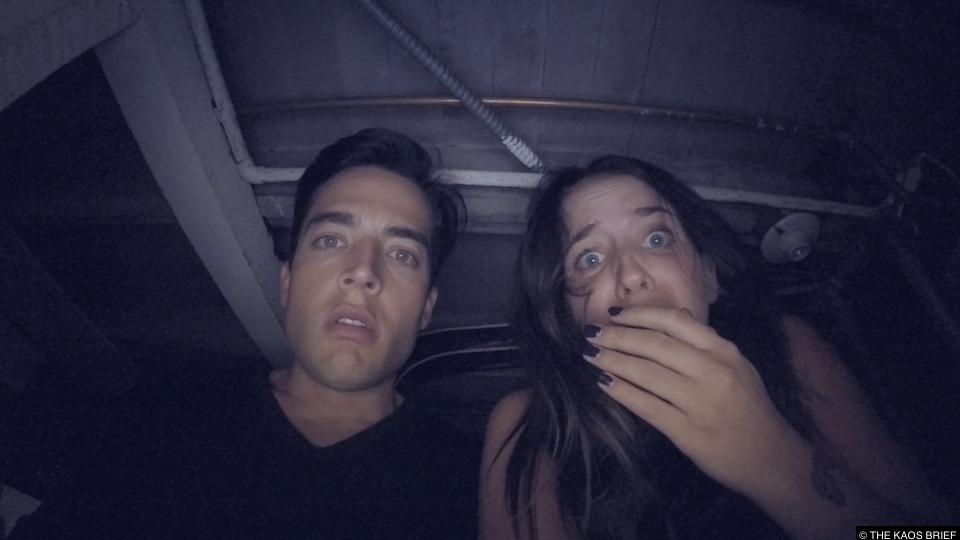
    Meet Skylar (Drew Lipson), his twin sister, Dakota (Charlie Morgan Patton) and their boyfriends Corey (Marco DelVecchio) and Tren (Akanimo Eyo). The foursome decide to go for a romantic camping weekend to find themselves and be at one with nature, in the wilderness. It’s a chance for them to unplug and unwind. Except Skylar, an up and coming Vlogger, has brought what seems like an entire Apple store with him. He has his iPad, iPhone, Macbook and a footage drone. He’s also bringing his YouTuber followers with him, whom he keeps updated with his every move. Despite the seclusion of their surrounding in the middle of the woods, they are not alone.

    After a disturbed night in the middle of nowhere, they are woken by strange lights in the sky and they become the hunted. What they uncover (which they film) was found, by an activist organisation called KAOS, they allege, in the mass data dump by Edward Snowdon and now the Government wants to cover the whole thing up.

    CREDIT: The Kaos Brief

    The Kaos Brief brings a super cool edge to the found-film genre and its millennial cast means that the constant filming and the documenting of their lives feels completely natural and genuine. After all, they are all friends, who are hanging out, recording their lives for the world to see. It’s the horror movie for the Snapchat, Facebook Live, Periscope generation.

    It allows filmmakers to squeeze so much more from their budgets, without it impacting on the overall sheen of the production values. Much of the footage was shot on the actors’ iPhone cameras and the director, J P Mandarino uses CCTV footage to good and unnerving effect.

    Oh yes and the gay bit. What the producers have managed to do, in which so many other films that have gay characters in principle roles have failed, is that The Kaos Brief is not a “gay” film. It’s a film that happens to have a gay character in a lead role – and that’s totally refreshing.

    During a press conference, I asked about the decision to make a lead character gay and whether the producers thought that it could be a barrier to mainstream audiences, Executive Producer Aaron Kuhl said that as the LGBT community became more and more mainstream and audiences had become more and more accepting, the barrier wasn’t that there were gay characters in it, it was possibly that the film wasn’t gay enough!

    That aside, The Kaos Brief is a brilliant example of how to make a mainstream film, with gay characters and where sexuality isn’t the main strand of interest.

  • Did you see the bare bottom on Eurovision

    We may not have won the competition, but we did get to see a cute ass on stage (and not we’re not just talking about Mr Italy)

    via GIPHY

    A guy, who draped himself in an Australian flag guy managed to sneak up on stage during the 2017 Eurovision and bare his ass to around 200 million viewers. Which by our estimation makes him the world’s most famous ass (not Boris Johnson as previously thought – we kid we kid).

    According to the Sun, the man behind the bum flash was Vitalii Sediuk, a Ukrainian prankster.

    It’s not known if the man himself was Australian, but bravo that man.


    Eurovision 2017 was won by Portugal, the UK came 15th with 111 points.

  • THEATRE REVIEW | Salomé, National Theatre, London

    THEATRE REVIEW | Salomé, National Theatre, London

    ★★★★| Salomé, National Theatre, London

    Johan Persson

    It was always going to be hard to produce a version of Salomé on the stage. It’s a story that’s mythical, biblical, violent, and perhaps a bit confusing. A new version of the show is now playing at The National Theatre, and it’s executed beautifully.

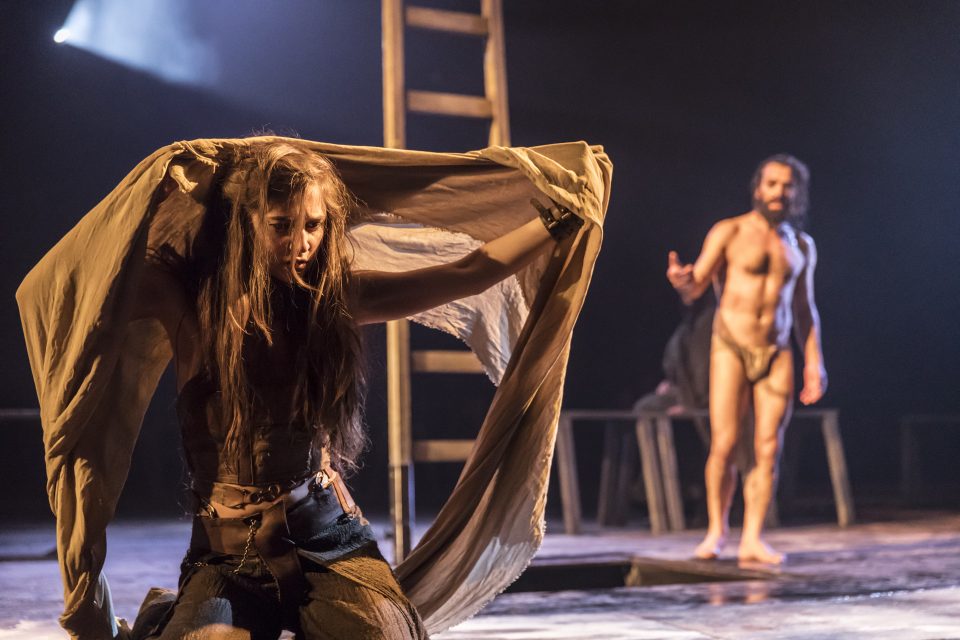
    Staged by Director Yael Farber, this version of Salomé, at a short 110 minutes with no interval, will mesmerize you but may also confuse you as the story is told through song and dance and imagery and hebrew, and lots of sand and water. But it’s the story of Salomé who was born the daughter of Herodia who was a princess of the Herodian Dynasty of Judea during the time of the Roman Empire. Salomé, as you may or may not know, is infamous for receiving the head of John the Baptist. Played in this show by Isabella Nefar, Salome is not very respected, stands naked on the stage, has sand thrown all over her, but it’s at the end that she’s redeemed and resurrected, but the road to get there is an intense one.

    A character by the name of Nameless (Olwen Fouéré) tells the story of Salomé, as Salomé the character doesn’t speak, and takes place in Roman occupied Judea. She’s yelled at and ridiculed by her stepfather Herod (Paul Chahidi), but finds something, perhaps a kindred spirit, in Iokanaan – John the Baptist (Ramzi Choukair).

    But it’s not just the story, it’s the design of the show, by Susan Hilferty, that takes us on a journey, or perhaps better worded – on a ride – a ride that’s both luminous and heavenly, with lighting that adds mystery and darkness. It’s also the haunting vocals and chanting of Israeli folk musician Yasmin Levy and Syrian soprano Lubana Al Quntar that will take your breathe away. Their vocals that accompany the story told on stage is the most memorable part of the show – their voices are out of this world, and listening to them is well worth the price of the ticket.

    Salomé will be broadcast by NT Live on Thursday 22 June 2017. For further details visit NTLive.com

    Below is a list of connected talks and events for Salomé:
    Acts of Violence and Salomé, Monday 12 June, Cottesloe Room, 2-5pm
    Mothers/Daughters/Sisters, Wednesday 21 June, Cottesloe Room, 6-7pm
    Yaël Farber, Friday 14 July, Olivier Theatre, 6-6.45pm

    To buy tickets, please go here:
    https://www.nationaltheatre.org.uk