Category: Theatre

  • THEATRE REVIEW | Vincent River, Trafalgar Studios

    THEATRE REVIEW | Vincent River, Trafalgar Studios

    ★★★★★ | Vincent River

    Lady Sasha de Suinn reviews director Robert Chevara’s highly-praised take on Philip Ridley’s Vincent River, the gripping, LGBT psychodrama now running at the West End’s Trafalger Square Studios to June 22nd.

    Ever had a loved one viciously murdered by homophobic thugs? Shockingly frequent, it’s a homicidal hate-crime that’s an appalling indictment of the mindset and culture responsible, and the emotional impact on those left behind grieving forms the premise of author Philip Ridley’s taut, tense, Vincent River.

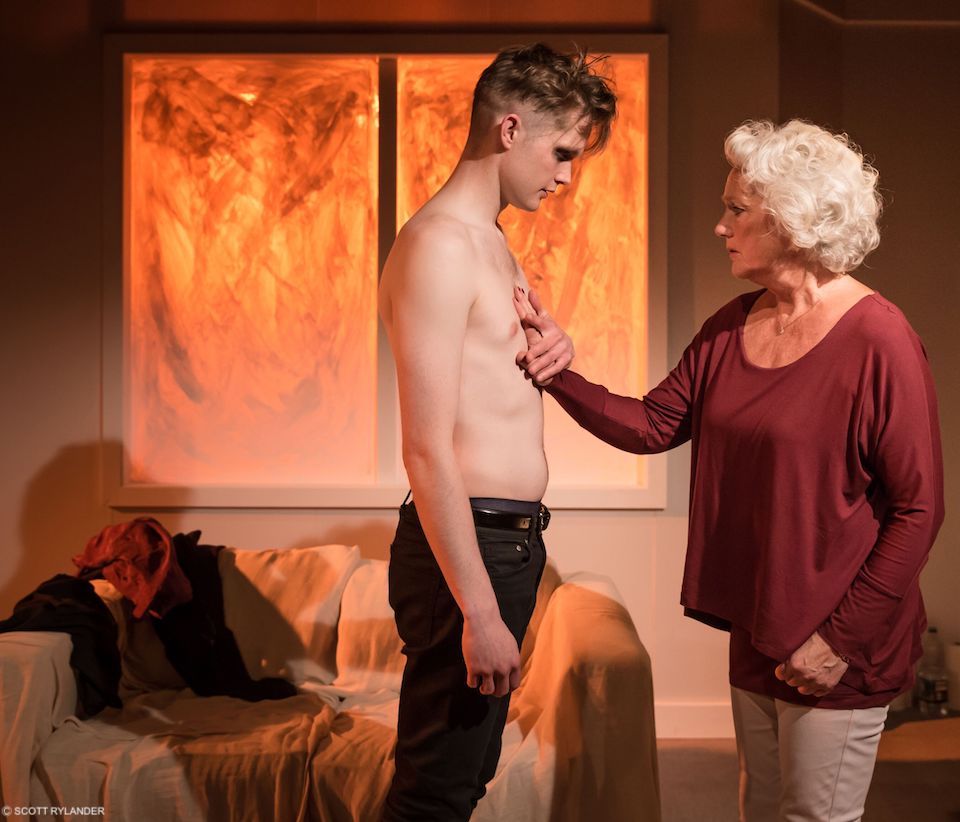
    The scene? Night, in an East London council flat; a tall, lithe boy in a hoodie – Davey – walks in on Anita, a much older, white-haired woman, her body language simply sizzling with barely-suppressed emotional cyclones and explosive attitude. The static, living-room set epitomises sink-estate notions of chic, a relentless tsunami of IKEA décor, as utterly unmemorable and stripped of personal panache as a freshly-embalmed corpse. A deliberately bland, dramatic arena, it’s a staging choice that subtly deflects audiences from imposing spurious subtexts on anything but the raw, visceral performances themselves.

    Still, perhaps even author Ridley himself overlooked one interpretation of his play; it’s certainly possible, as I do, to view Vincent River as a schizophrenic Armageddon, staged Samuel Beckett-style inside the metaphysical confines of the protagonist’s skull. A tempting take, sure, but which would severely impoverish Ridley’s magisterial excavation of the nuances of human grief.

    Effortlessly displaying the sure-footed, forensic finesse of a Jed Mercurio police procedural, Vincent River meticulously unpicks the mingled rage, denial and loss seething in the toxic glories of motherly grief.

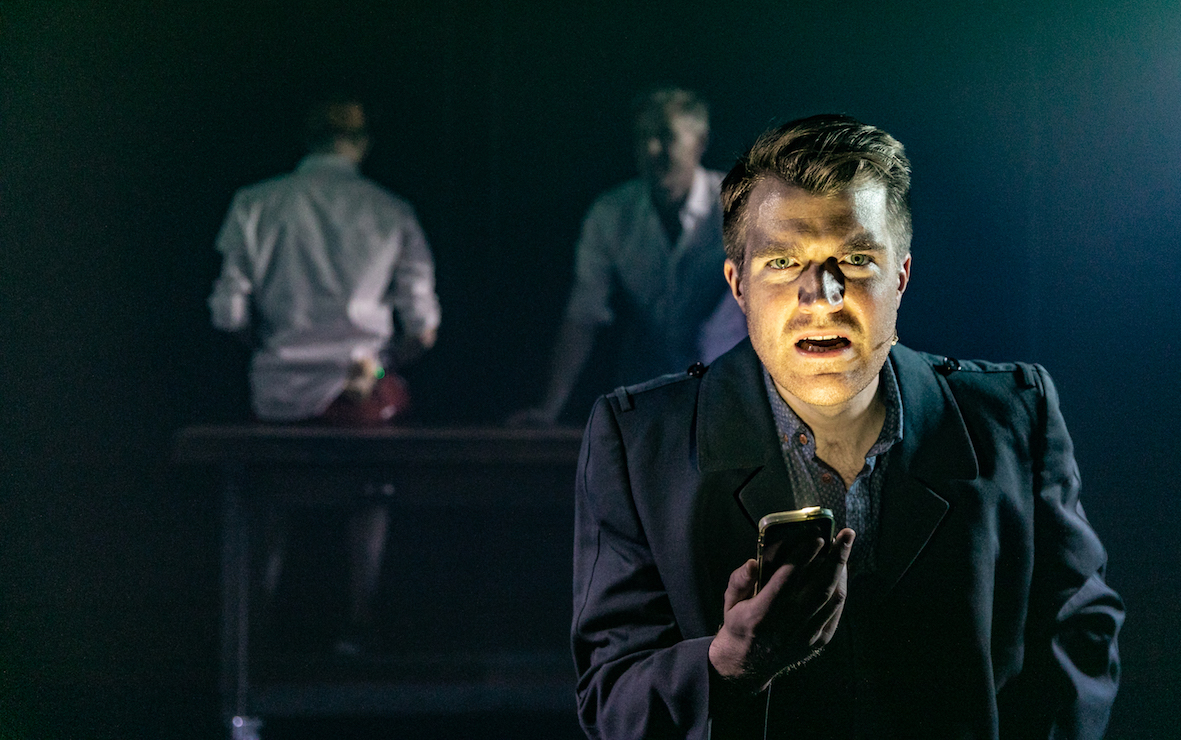
    Let’s get specific; the action throughout probes the fraught, powder-keg dynamics between hooded youth Davey (Thomas Mahy) and grieving mother Anita (Louise Jameson). Unexpectedly – considering he’s gained only limited, professional acting experience since recently graduating – Thomas Mahy is hugely impressive, his quicksilver body language adroitly mimicking his character’s kaleidoscopic shifts of youthful moods and nuances; the emotional awkwardness and naivety of Harry Enfield’s Kevin re-imagined with the forensic finesse of a Dostoevsky.

    And (much) older readers might fondly remember Jameson as Dr Who’s companion Leela, way back in the late 1970s, but please, forget the threadbare, cartoon character development she was insultingly offered there; Ridley’s challenging, meaty script grips like a Shakespearian pit-bull on crack. Thrillingly, it fully stretches Jameson’s hugely fluent emotional reach; here, she’s been unavoidably weathered by life, but also gained a gnomic, Delphic oracle of the streets wisdom. She’s spiky, defensive – but also strangely unflustered. In a subsequent, staccato blizzard of character-revealing small talk – done with aplomb that, by brilliant contrast, exposes TV soap dialogue as the chronically one-dimensional trash it is – we learn the bare bones of Anita and Davey’s intimately connected dilemma.

    Initially assuming Davey’s a stalker – he’s been conspicuously lurking in her vicinity ever since her son was murdered – Anita jumps to clichéd, wholly unjustified and negative conclusions. Most obviously, she’s completely wrong-footed by Davey’s unselfconscious, wholly natural adoption of ‘Ebonics’, the swaggering patois of sussed, urban black kids, endearingly mimicked by clueless white boys craving instant street credibility. But, she’s hardly some morally-impeccable Disney mom, presented as an admirable and infallible role-model. Rather, she’s given to snap, ethically-dubious judgements, her blanket dismissal of neighbours with ‘names you can’t pronounce’ exposing her subconscious problem with diversity,  socially and sexually.

    Still, we’ve barely scratched the poisons lurking behind Davey and Anita’s initially benign shadow-boxing. And thank Lord Buddha on benzedrine for that serious, internal darkness powering the action – the last thing serious drama needs is a crippling attack of snowflake hypersensitivity. But guess what? Unpleasant moral ambiguities make fascinating theatre, but while King Lear might not require trigger-warnings – except for Instagram-deluded addicts suffering terminal fluffy-bunny syndrome – Vincent River, quite gloriously, hurts to watch!

    Oh, not in some negative, so bad it’s painful sense, of course; rather, what director Chevara has crafted is a riveting, hyper-refined master-class in one of the least explored theatrical modes of the 20th Century; Antonin Artaud’s Theatre of Cruelty. Put off by the name? Don’t be – we’re not talking lame flourishes of public, S&M sex for knackered libertines and mistresses. No, Artaud wanted theatre that raged with the incandescent fury and passion of a Nelson Mandela intoxicated by the unstoppable conviction of his own belief, of performances so committed and emotionally fluent the only ‘cruelty’ they’d inflict, ideally, was provoking some reaction from terminally apathetic audiences, and maybe, just maybe, challenging and changing their petrified points of view!

    Does Vincent River do that? Oh god, yes –  in spades. Jamming a theatrical pedal to the metal from Moment One, the pace – as in Mad Max: Fury Road– never lets up. Davey, it transpires, didn’t kill Vince, but found his butchered corpse, and he’s been haunted by intrusive memories ever since. And one (possible) solution? A devil’s advocate pact; Davey (often prompted under pressure) gradually discloses the circumstances surrounding Vince’s murder. Simultaneously, a startlingly courageous Anita gradually strips off her emotional armour, revealing her love, scalding grief, and – most shockingly – subconscious unease with her son’s sexuality.

    Building a ferocious, cumulative intensity courtesy of its’ strict compliance to the rather grandly-termed ‘Aristotelian Unities’ – which simply means unfolding a drama in a fixed location in real time – Vincent River scalds itself into the mind’s eye. But that’s not because of the graphic descriptions of Vince’s murder, and critiques dwelling on that trope completely miss the point. No, what’s startlingly atypical in Vincent River is the implication that – quite miraculously for a culture brutalised by shockingly routine sadism and unprecedented war atrocities – Davey and Anita’s capacity to grieve and navigate loss is still inexplicably intact.

    So, it should come as no surprise that Anita’s given profession is a seamstress; after all, what else do seamstresses do but fit seemingly unrelated patterns together?

    Deftly, she unpicks the successive, chameleon layers of misdirection Davey’s employed to hide the truth, perhaps most risibly in an abortive masquerade at becoming engaged to ‘Raytch’ – AKA Rachel, his supposed girlfriend.

    Still, a boy-friendly penis never lies, and – sparked to phallic rigidity by a pouting, pop-rag photo of a six-packed boy band idol, Davey meets, woos, is fascinated by and seduces Vince. It’s a whirlwind bromance, taking a fatal turn following sex in a disused, off-the-beaten-track loo, with Vince insisting they leave separately. Cue five drunk, homophobic thugs cornering an isolated Vince and Davey – unnoticed in the shadows – paralysed by fear and helplessly witnessing his lover’s savage murder.

    It’s that retrospective revelation that sparks a pivotal scene inexplicably seen by many as shockingly contentious. Recounting – and almost reliving – his euphoric, sexual encounter with Vince, Davey inadvertently kisses Anita, and her physical body blindly supersedes societal taboos, aching to sexually touch the flesh that last intimately touched her son, her grief given some holy transfiguration as a form of chaste, morally neutral, vicarious incest.

    Tragically, she’s physically wet with passion, but the crushing, societal norms that cripple and censor diversity- condemning countless millions to live in denial- shockingly reassert themselves; she screams in blood-curdling, conflicted agony, unable to sanctify her bereavement – and son’s memory – with her body’s spontaneous offering of an involuntary, ego-free orgasm.

    The possibility of redemption, however, still exists, and if Davey and Anita have failed to banish their mutual pain, it’s at least been decisively lanced. And author Philip Ridley’s closing message? That there is always hope – even in the most appalling circumstances.


    Vincent River plays at Trafalgar Studios until 22nd June 2019, Book tickets here
  • THEATRE REVIEW | Jeremy Goldstein’s Truth To Power Cafe

    THEATRE REVIEW | Jeremy Goldstein’s Truth To Power Cafe

    ★★★★★ | Truth To Power Cafe

    Lady Sasha de Suinn explores acclaimed, LGBT producer Jeremy Goldstein’s latest, gorgeously provocative project.

    RESISTANCE IS NEVER FUTILE!

    What is speaking truth to power? Imagining a rabbi spitting in Hitler’s face? Legendary black activist Martin Luther King publicly denouncing racism? Or – quite stunningly – Mahatma Gandhi defying the full might of the British Empire with passive resistance?

    The answer, quite obviously, is all of the above – resistance can be unspoken, psychological resolve, as well as direct action, and crucially, I’d add the 1969, Stonewall riots as a pivotal moment that decisively empowered our current, LGBT activism. Ironically, it wasn’t butch clones that beat back the pounding police truncheons in Christopher Street, but frenzied drag-queens on the warpath, non-binary Valkyries completely defying the passive expectations of the riot squad, completely queering the sociological pitch as LGBT mindsets – quite magnificently – have always done to heterosexual stereotypes.

    Which brings us to acclaimed, LGBT theatre producer Jeremy Goldstein, and the Truth to Power Café, his latest, ongoing project. Goldstein’s possibly familiar to radical, queer theatre aficionados as the producer of NYC gay icon Penny Arcade’s sublime Bitch! Dyke! Fag-hag! Whore! which I’d never demean and insult by inserting prissy asterisks instead of vowels, as was the case with Penny’s London shows, an abject pandering to the easily shell-shocked constitutions of super-fragile English snowflakes.
    Screw that. Goldstein’s previous productions have included a show raging against creeping gentrification at Soho Theatre, and one suspects a penchant for articulate, public rebellion runs in his blood – his father, Mick Goldstein, was a member of the acclaimed, literary Hackney Gang, which included Harold Pinter, and another member, Henry Woolf, gifted Jeremy with the beguiling, evocative text he recites in every show.

    So, what precisely is Goldstein’s Truth to Power Café in practice? Briefly, it’s a touring production, and – at each unique venue – Goldstein assembles a one-off cast of speakers he’s previously drawn and selected from online and media application calls. Still – besides Jeremy himself – there’s one constant in every show, the differently-abled actor Otto Baxter, a potent, beautifully visible symbol of applied diversity in action; unlike far too many LGBT ventures that merely pay the notion of inclusivity empty lip-service – Jeremy – quite admirably – talks the talk and walks the walk.

    Thankfully, the Truth to Power café is hardly some indulgent producer’s whim, some reluctantly provocative showcase airing spikily contentious rants from disgruntled individuals. Examined more closely, Jeremy’s offering his chosen cast a safe, publicly theatrical space to vent their (mostly) unedited spleen and discontent with lovers, personal and work issues, or – more rarely –pithy, philosophical assaults on the constipated, capitalist thinking which underpins a global tyranny of exploiting and dividing those desperately in need.

    And – much more uniquely –Jeremy is one producer who’s not only living, but is also a crucial part of his incandescently passionate dream project. Having never previously performed in public, he’s been so creatively fired by the processes involved in concretely manifesting the show that he’s chosen to risk the adulation – and sometimes, unfortunately – critiques, which go hand in hand with making one’s self and words publicly accountable and vulnerable. Thankfully, he loves it, blooming from a hesitant, nascent performing to assured command of a stage in barely a few, short months.

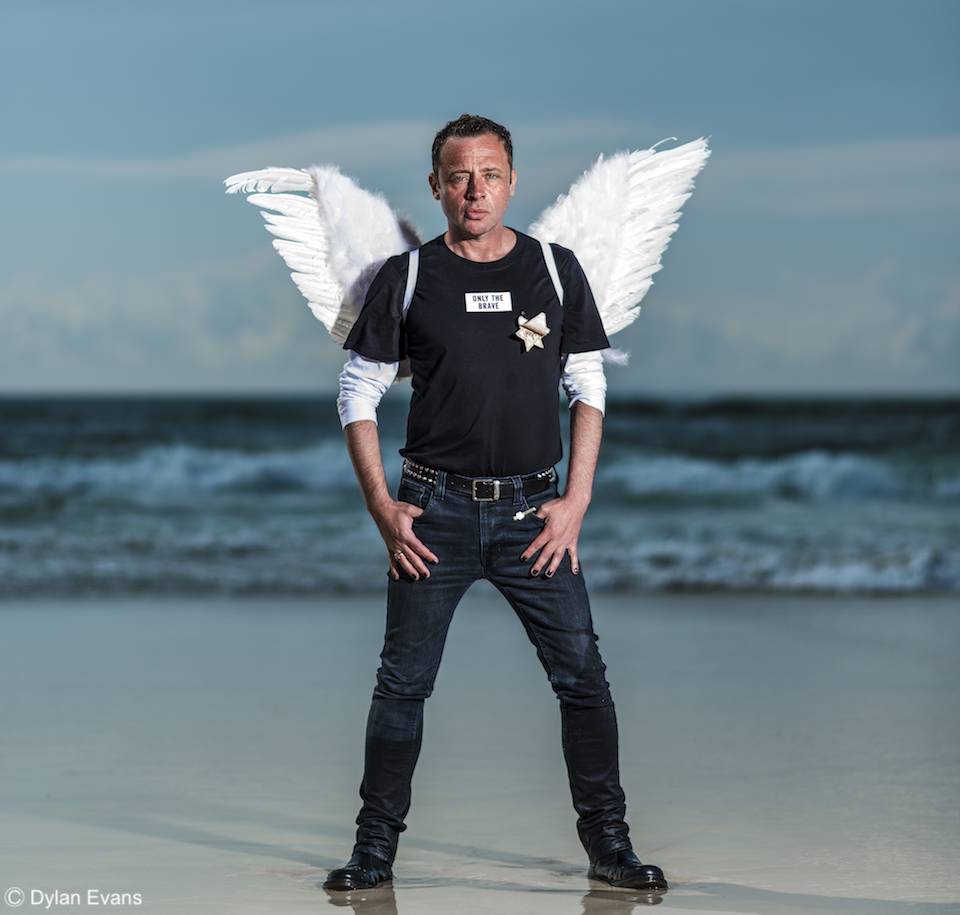
    The shows, typically, begin with Jeremy opening with Henry’s Woolf’s poetic monologue, a tender ode of salvation and consolation to the dispossessed, and Jeremy’s initial stage presence is a hyper-kinetic master-class in restrained finesse. One would, in fact, assume his superlatively assured, theatrical body language was the end product of years of study at the French, Lecoq Institute, the unparalleled doyennes of physical theatre. Slowly smiling, with an uncanny, cocky warmth hugely reminiscent of the infectious, beautifully humane charisma of mime artist Lindsay Kemp, Jeremy prowls, pads and declaims with slow-motion sublimity, at points gently settling a crown on his head and brandishing angel wings, visual cementing the sanctity of the myriad truths being so fearlessly exposed.

    Gently giving way to the respective members of the cast, Jeremy then sits in the sidelines, serenely grinning like a satiated Buddha, as each individual in turn denounces, exorcises, or reaches an accommodation with the truths they’ve chosen to confront. Ideally, of course, there would be no limits on the truths expressed, or their contents, but the distressing, current reality is that passionate opinions are routinely misconstrued as potential, legally culpable hate-crimes or slander; so, unfortunately, it’s best not to name identifiable names.

    Still, to date, Jeremy’s project of gathering, then detonating, driven, compassionate and articulate voices of dissent has produced pure, magically spontaneous, theatrical gold. And arguably, his ongoing, Truth to Power concept is the most influential and important showcase of LGBT activism currently being staged; it’s pumping with lived, grass-roots queer passion with every thrilling beat of its’ astonishingly gracious, grandly compassionate heart. This, truly, is theatre to terrify the bigoted tyrannies of a Donald Trump, but why wait? Lucky audiences up North can see the show in all its’ blisteringly urgent, irrefutable glory this Saturday, June 1st, 9 pm sharp, at Hull City’s sumptuous Hull Minster Cathedral, 10a-11 King Street, Parish Centre, Hull HU1 2JJ. Be there – this is theatre re-imagined as life-changing art!

    Lucky audiences up North can see the show in all its blisteringly urgent, irrefutable glory this Saturday, June 1st, 9 pm sharp, at Hull City’s sumptuous Hull Minster Cathedral, 10a-11 King Street, Parish Centre, Hull HU1 2JJ.

    Be there – this is theatre reconfigured as life-changing art!

    See other dates, click here

  • THEATRE REVIEW | Myra Dubois: We Wish You A Myra Christmas,  Soho Theatre, London

    THEATRE REVIEW | Myra Dubois: We Wish You A Myra Christmas, Soho Theatre, London

    ★★★★★ | Myra Dubois: We Wish You A Myra Christmas, London

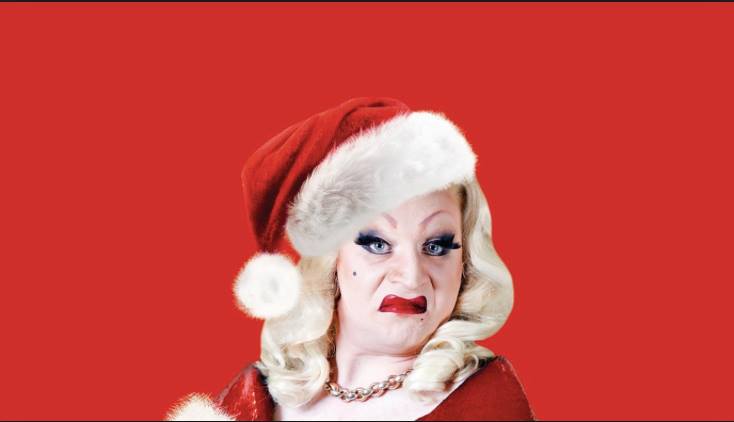
    It’s Christmas at the Soho Theatre in the Myra Dubois: We Wish You A Myra Christmas show.

    And what a Christmas, and show, it is. Myra Dubois, the award-winning as seen on television, and perhaps the hardest working drag queen on the scene has brought a Christmas show to London, in May, and it works!
    Dubois, who just last month was in Bernie Dieters Little Death Club at the Underbelly, and regularly performs at Vauxhall’s Royal Vauxhall Tavern and Clapham’s Two Brewers, is in top form in her ill-timed Christmas show, and all the favorite Myra gags and jokes are there for you adMyra-ers, including bits where she picks on the audience and gives one lucky audience member a gift in the form of a christmas jacket (and hat) that Myra takes back at the end of the show – the scrooge!
    But it’s her version of “The Twelve Days of Christmas” that will have you, and the rest of the audience, laughing in tears. Go see Myra Dubois: We Wish You A Myra Christmas show pronto, it ends this Saturday!
    Myra DuBois: We Wish You A Myra Christmas plays at Soho Theatre until the 1st June, book tickets here.
  • Theatre Review | Matthew Bourne’s Swan Lake – Sheffield Theatres

    Theatre Review | Matthew Bourne’s Swan Lake – Sheffield Theatres

    ★★★★★ | Matthew Bourne’s Swan Lake

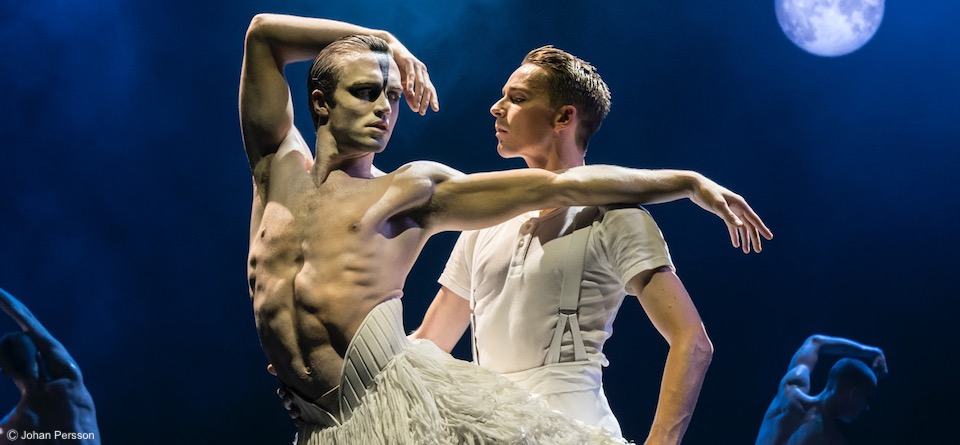
    Matthew Bourne’s Swan Lake beautifully reimagines the traditional and well- loved ballet. Bringing the story into modern, regal times, it tells the story of The Prince who struggles with the repression of his life, but this changes when he meets The Swan, a powerful yet tender figure who offers comfort, solace and the belonging that The Prince longs for.  But as The Prince struggles with his relationship with his icy mother, things start to unravel as a familiar looking stranger attends the Royal Ball.

    Bourne’s signature contemporary twist on the classic ballet is simply outstanding and leads to a beautiful, moving and breath-taking piece of theatre. This version is perhaps best known for using an all-male ensemble for the bevy of swans, but whilst there is no denying the spectacular and dramatic impact of that, there are so many other elements which elevate this piece of dance to the dizzying heights it reaches. From the almost monochrome opening scenes in the palatial bedchamber to the vibrant explosion of colour in the Swank Bar, the modern twists provided by Bourne culminate in a fresh and vivacious production which constantly surprises and delights in equal measures

    Utilising his flawless cast, Bourne’s choreography flows back and forth from the frenetic to the tender and from the comedic to the dramatic; infusing many different styles of dance seamlessly with the traditional Tchaikovsky score. Whilst the replacing of the female swans with a male ensemble brings with it a sensual homoeroticism to the piece, it also provides for a beautifully told love story between two men, something seldom seen in dance theatre.

    Both Will Bozier as The Swan and Dominic North as The Prince simply excelled in their lead performances, with Bozier’s strength and fierceness being beautifully counterbalanced by North’s vulnerability and yearning.  Equally Katrina Lyndon was utterly delightful as The Girlfriend, but it seems slightly unfair to single out any dancer from an ensemble who universally oozed such talent and charisma.

    From the opening scenes to the terrifying and tearful finale, this show has everything to recommend it including humour, style, spectacle, originality and genuine emotion; and as the curtain fell, I could have happily had them reset the stage and start again. As a piece of theatre, Matthew Bourne’s Swan Lake is simply sublime.

    Swan Lake is rounding off its national tour at Sheffield Theatres, so don’t miss your last chance to see this magnificent production. Matthew Bourne’s New Adventures are also currently touring his new ballet, Romeo and Juliet, and his award winning The Red Shoes will be returning for another UK tour commencing in November 2019.  

  • CONCERT REVIEW | Ute Lemper’s Rendezvous With Marlene

    CONCERT REVIEW | Ute Lemper’s Rendezvous With Marlene

    ★★★★ ★| Ute Lemper’s Rendezvous With Marlene

    Ute

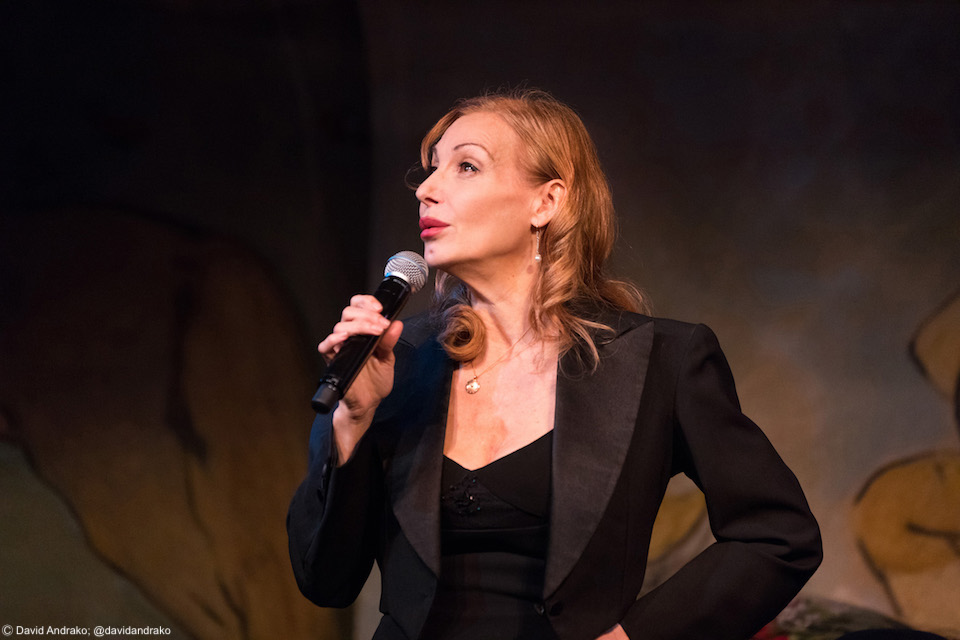
    ‘Falling in Love Again…’ an entranced Sasha de Suinn reviews Ute Lemper’s sold-out cabaret show Rendezvous with Marlene at the Arcola Theatre, London.

    Where were you when Princess Di died?

    Shocked, indifferent or simply unborn then? Like the Twin Towers, Di’s death instantly branded itself into cultural awareness worldwide, becoming a cultural landmark of collective disbelief. Still – if not quite on such an exalted plane – artistic earthquakes also create an enduring, seismic blip in public adoration and memorable regard. But forget the pointlessly premature – if still shocking – deaths of musical prodigies Prince, Amy Winehouse and Michael Jackson; they’re the negative downside of cultural lightning brilliantly caught in a bottle. Ah, but don’t despair – there’s always light in the darkness, a Dumbledore to every Voldemort! Why, given a convenient TARDIS like every cosy, pansexual Time Lord, who wouldn’t want to witness Maria Callas, Judy Garland and Bowie’s Ziggy Stardust shows at their iconic, history-making peak?

    Still, those moments, if rare, continue to persist as thrilling possibilities. And culturally – right here and right now – we’re incandescently privileged to witness Ute Lemper’s totally game-changing Rendezvous With Marlene. The work of a simply superlative artist at the top of her game, it’s a fearless exploration of Dietrich’s doubts, regrets and shockingly raw humanity.

    Like the finest, vintage Krug champagne – with all its’ attendant depth, resonance and complexity of flavour – Rendezvous has intensely benefitted from its’ long, thirty-year gestation in Ute’s mind.

    While playing Sally Bowles in a stage version of Cabaret in Dusseldorf back in 1992 when she was 24, Ute wrote a postcard to the 88-year-old Dietrich apologising for the constant barrage of spurious comparisons lazy journalists were drawing between the two artists. To call those journalists merely misguided would be ridiculously kind; they were wildly inaccurate. Where Dietrich was breezily, bisexually promiscuous, Ute was married with children; where Dietrich barely strayed beyond performing a narrow repertoire of expected classics, Ute’s range – including tackling songs by Nick Cave and Tom Waits – was eclecticism personified; and finally, while Dietrich stage’s act and barely-passable ‘singing’ remained essentially static and she explores no other creative pathways privately, Ute was a first-class chanteuse, actress and dancer, painting and song-writing in her precious downtime.

    Very different women, then, despite the most blatantly obvious, shared physical characteristics; blonde hair and shapely bodies. Still, both had a shrewd grasp of the human impact of restrictive politics – as in Dietrich’s profound disgust towards the Nazis, while Ute – pleasingly in an era of blanket, Trump idiocies – comes across as an electrifying, pro-choice Valkyrie at the Arcola, sharing Dietrich’s passion for strong, female self-determinism.

    Framed as a post-modern metafiction – Ute switching characters back and forth between herself and Dietrich, and exploring Dietrich’s memories in character en route – Rendezvous is almost an act of secular worship in performing, spontaneously eliciting an aura of hushed, quasi-religious devotion from the audience. Faultlessly exhibiting the high-functioning playfulness of an Alpha-class empath, Ute is so sensitive to nuance she virtually leads the audience en mass to the emotional mountaintops of Dietrich’s revelations. Throughout, Ute exhibits two exceptional qualities wholly lacking from the frenzied, truncated idiocy that passes as modern stage direction; dignity and restraint.

    Surely a reigning role-model of liquid-boned finesse, Ute’s slightest, rippling gesture speaks emotional volumes, and she has the incalculable, expressive gift of making even the most chronically over-exposed lyrics imaginable –Blowing In The Wind, anyone? – resonate with the shocking, public poignancy of Christine Blasey Ford testimony against the vile Brett Kavanaugh.

    A sheer master-class in memorial intimacy, stagecraft and the taut, emotional fury of suppressed pain and regret, Rendezvous With Marlene is an astounding instance of spiritual ventriloquism, of one acclaimed performer so prepared to relinquish egotism she’ll voluntarily become the mouthpiece of another.

    Utterly in tune with our present, diversity zeitgeist, Ute’s tribute is not only pansexual, acknowledging Marlene’s female and male lovers, but also – going even further than Russell T. Davies’ Years and Years – transageist, as a youthful, ebullient Ute assumes the serene gravitas of Dietrich herself. Masterly? Of course; and – by a huge margin – simply the finest act of sustained, emotional intensity and fearless self-revelation I’ve ever seen. Ute – like Bowie, Callas and Garland before her – is in an unprecedented class of her own.

  • Martyn Hett’s mother will talk to students about his life

    Martyn Hett’s mother will talk to students about his life

    Martyn Hett’s mother to speak to students following a show dedicated to the memory of the Manchester bombing victim.

    Figen Murray, the mother of Martyn Hett, who lost his life in the 2017 Manchester Arena bomb, will address school pupils at The Lowry following a performance of #BeMoreMartyn: The Boy with the Deirdre Tattoo.

    The play, which begins rehearsals this week, takes its dialogue from interviews with eight of Martyn’s closest friends. Created by Adam Zane and Mike Lee of Hope Theatre Company the script takes audiences on a journey through Martyn’s friendships and celebrating some of his most popular online videos.

    #BeMoreMartyn: The Boy with the Deirdre Tattoo opens at London’s Pleasance theatre on Tuesday 21st May and will mark the second anniversary of the attack the following day with a one-minute round of applause.

    Talking about the play, Hope Theatre Company’s Artistic Director, Adam Zane commented:

    “Martyn’s family have been overwhelmingly supportive of the project from the very beginning, they put us in touch with the eight incredible friends that audiences get to know throughout the production. After hours of interviews with them, we are in awe of how Martyn transformed people.

    “It feels fitting that we commemorate the anniversary of the attack with a round of applause for Martyn and the other 21 people who lost their lives that day. Audiences will learn that Martyn wasn’t a quiet or shy person and so a round of applause seemed appropriate over the traditional silence.” He added.

    Following the run in London the production will tour to Brighton Fringe, Sheffield and Newcastle before closing at The Lowry in Salford. The free school’s performance has been arranged in conjunction with The Lowry and will allow the pupils in attendance to ask Mrs Murray questions once the performance has concluded.

    Commenting on the production Figen said:

    “As Martyn’s mum I am delighted to see that #BeMoreMartyn is coming back to Greater Manchester after being on tour. I feel very honoured that Mike and Adam have asked me to come and meet around 400 schoolchildren who are coming to watch the show. This is a show about friendship and loyalty, living life to the max and about what is really important in life, namely the people we love and value.

    “There will be a post-show discussion which will enable me to answer any questions the children may have about Martyn and why the play is so important. Since Martyn’s death I visit a lot of schools, colleges and universities and talk to young people about kindness, forgiveness, stronger communities and that they can take ownership for a better future if they set their mind to it.” She concluded.

    The show will tour in London, Brighton, Newcastle, Sheffield and Salford.

  • THEATRE REVIEW | Little Death Club, Underbelly Southbank, London

    THEATRE REVIEW | Little Death Club, Underbelly Southbank, London

    ★★★★★ | Little Death Club, London

    The best type of shows at the theatre have always been the ones that give you a bit of everything; comedy, singing, live music, and perhaps throwing in some death-defying performances, drag, and gratuitous nudity is always welcome. Little Death Club gives us this and more!

    Playing until Sunday June 23rd, 2019, Little Death Club has literally something for everyone (the straights, the gays and all the in betweens).

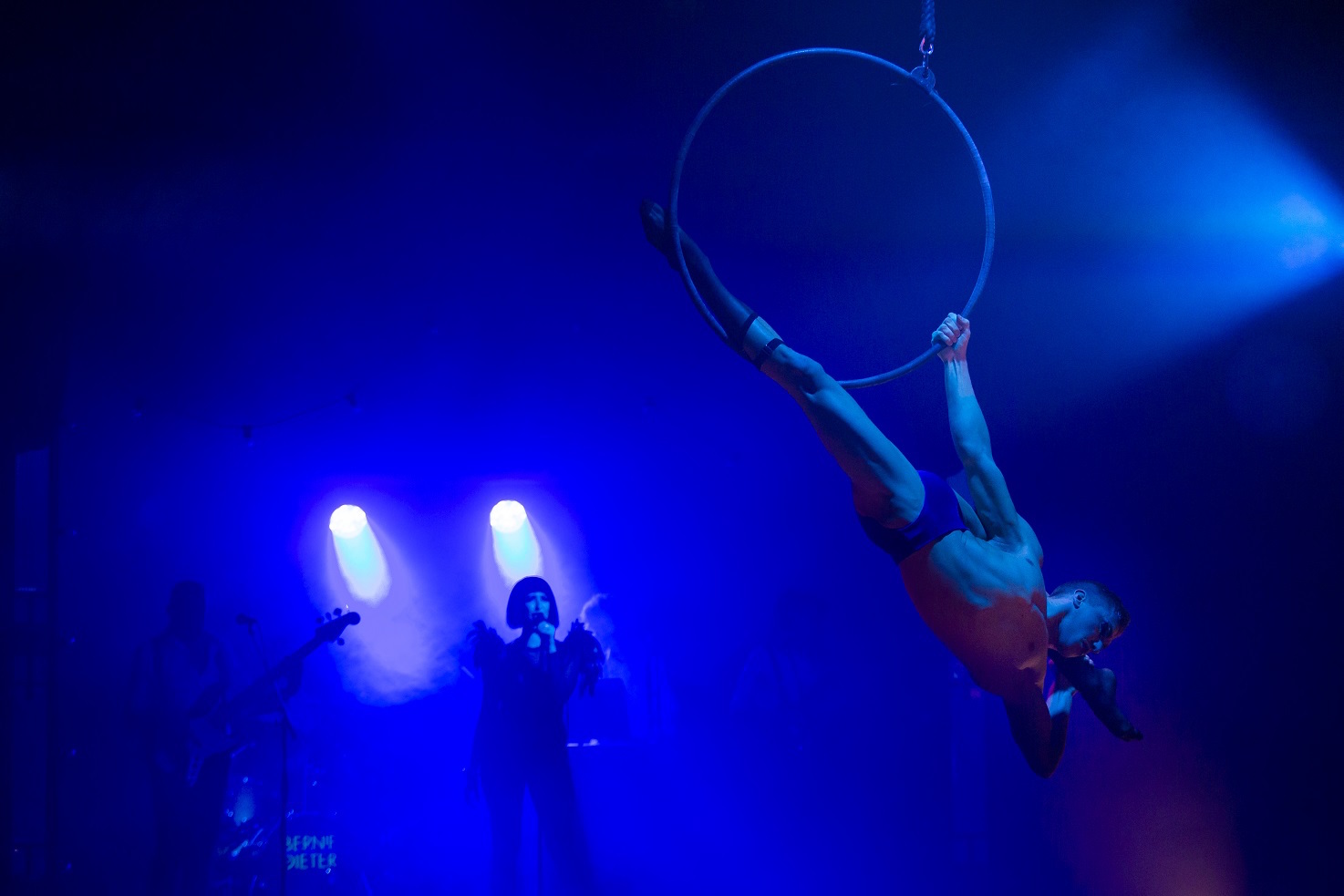
    Compered by the sexy and slutty Bernie Dieter, she guides us through the all too short (one hour) show and introduces the acts, but she is an act unto herself. She sarcastically delivers with a Berlin/Rocky Horror sluttiness style, all with a bang, and involving some lucky male audiences members whom she involves in a bit of mischievous. But then immediately the acts come out fast and furious. The lithe and built body of the ever so graceful Beau Sargent who wows the crowd, scantily clad of course, as he does acrobatics and does bends and turns where the audience can see every line on his body; to the amazing Fancy Chance who hangs and spins by her hair – literally – and then decides she doesn’t need to wear any clothes – and does the spinning again – in the nude.

    Myra Dubios provides laughter and glamour to the proceedings, while disgruntled Josh Glanc tells why he is not a happy mine. But the show ends with a bang by the amazing Kitty Bang Bang, who eats fire and spits it out – so don’t get too close to her. This and more is showcased to a very happy audience at the Underbelly in the Southbank. You get a lot of bang for your buck, and you’ll want to go back and see it again (I will). The Spiegeltent, which has been home to many many cabaret and burlesque shows, might have found it’s best one yet. It’s excellent, breath-taking, hilarious, sexy, and with a bar attached to quench your thirst. What more could you ask for in a night at the theatre? It sure beats watching Dame Maggie Smith delivering a 100 minute monologue that’s for sure.

    Little Death Club plays at the Underbelly Festival Southbank until 23rd June 2019, click here for more details

  • THEATRE REVIEW | Tumulus, Soho Theatre, London

    THEATRE REVIEW | Tumulus, Soho Theatre, London

    ★★★★ | Tumulus, London

    (C) Darren Bell

    There’s a mound in Hampstead Heath where dead bodies of gay men are being found. It’s a tumulus (a mound), and the story behind the tumulus is disturbingly and jarringly portrayed and performed in a show of the same name at The Soho Theatre.

    It’s a life of drugs, sex, parties, and unfortunately murder in this production where gay men PnP (Party and Play – code words for drugs with sex). But in particular one gay man, Anthony, who works at the British Museum as a curator (a fantastic Ciaran Owens), through phone apps (we know which ones), finds himself in this world of chemicals and sex.

    In this world he encounters men around his age (Ian Hallard) and much younger men (Harry Lister Smith), who are also like him – living a life where there are no bounds and no boundaries. But gay men are winding up dead in Hampstead Heath, and Anthony might have just stumbled on the idea that there is a serial killer of gay men out there. All this happens in an explosive one hour of theatre that will awaken your senses and your mind.

    Tumulus is a show that is taut, tight, but never loses it’s edge, thanks to sharp writing by Christopher Adams and direction by Matt Steinberg. It’s got a great cast, especially Owens as the lead character.

    He takes us on this journey with him, in our face and right up our arses.

    Tumulus plays at the Soho Theatre until 4th May 2019

  • Theatre Review | Rough Crossing – National Tour

    ★★☆☆☆ | Rough Crossing

    As a theatre company board a cruise ship to cross the Atlantic to New York for the premier of their new piece, it’s not just the waters that become choppy. Following the overhearing of an ill-timed romantic interlude between his two leads, Hungarian playwright Turai tries to keep his upcoming production on track, by re-writing parts of his script to cover up for their indiscretion. But with only four and a half days to rewrite and rehearse the play, it is all hands on deck to keep things afloat.

    Turai is played with an air of camp sophistication by John Partridge (EastEnders) and bounces nicely off Matthew Cottle (Spooks) as his downtrodden writing partner; whilst rising star Charlie Stemp outshines them both with a confident portrayal of the cabin boy, Dvornichek.

    Despite an impressive and lavish art deco set, sadly, the play holds little else in terms of appeal. The script is neither witty nor amusing, eliciting only the briefest isolated pockets of laughter (primarily from the same audience member); whilst the direction is lacklustre at best and inexplicably tacks on a wholly misplaced musical number at the end of each act. The whole thing doesn’t really know quite where to put itself – it is not quite sophisticated comedy, not quite farce, not quite “Carry On” and not quite musical comedy. Sadly, unlike the fictional ship, the whole story seems to go absolutely nowhere.

    Tom Stoppard’s play is a wordy affair with a rapidly delivered script which is awash with very gentile and outdated comedy and a smattering of physical slapstick thrown in; and fans of Stoppard’s work will no doubt relish the opportunity of seeing one of his lesser revived pieces performed in a professional, touring production.

    Despite a few issues with diction at times, the production is competently presented, but ultimately the show itself never really sets sail and ends up casting the audience member’s interest adrift.

    Rough Crossing is currently at the Sheffield Lyceum until 27th April 2019 before continuing on its national tour.

  • THEATRE REVIEW | Calendar Girls The Musical – National Tour

    ★★★☆☆ | Calendar Girls The Musical

    When Annie’s husband John dies from leukaemia at an early age, her close friend Chris, suggests that they raise funds though their Women’s Institute group to purchase a comfortable sofa for the visitor’s lounge in the hospital where John was treated. But Chris’ plans are to forego the usual Jam and Jerusalem traditions of the organisation and to get the girls to agree to pose for a nude calendar with only WI pastimes to hide their modesty.

    Based on the well-known true story, Tim Firth’s script vacillates between tickling the funny bone and tugging on the heart strings as it works its way to a laughter inducing denouement and a touching closing scene; but never at the expense of (if you’ll pardon the pun) fleshing out the main characters and the supporting cast. Gary Barlow’s accompanying music is pleasant and carries forward the narrative with a mix of the catchy and the bittersweet, with Anna Jane Casey’s heart-breaking rendition of Kilimanjaro, a song about the struggle to carry on after the loss of a loved one, a real highlight.

    But the show is rightly all about the girls, and Casey is just superb playing the bereaved Annie, bouncing nicely off Rebecca Storm as her best friend Chris. Thrown into the mix, amongst others, are Denise Welch (TV’s Loose Women), Fern Britton (This Morning) and Karen Dunbar, who all come together to give you a group of ladies who form a formidable ensemble cast.

    Based on the true story, Calendar Girls follows in the footsteps of the film and original stage play in celebrating the remarkable achievement of the group of women. Whilst is it a little twee at times, it carries a strong story about friendship, challenging expectations and taking a risk, as conventions and traditions are dropped as quickly as the girls’ clothes.

    Calendar Girls The Musical is at the Sheffield Lyceum until 13.04.19 before continuing on its national tour.

  • THEATRE REVIEW | American Idiot – National Tour

    THEATRE REVIEW | American Idiot – National Tour

    ★★★☆☆ | American Idiot – National Tour

    In a post 9/11 America, three friends go their separate ways to try to find both themselves and where they belong in society. Will stays in suburbia to try and make his relationship with his pregnant girlfriend work, Tunny joins the army and Johnny stays in the city to find friendship but finds a part of himself he never expected. But it doesn’t take long for the American Dream to come crashing down around them as they become increasingly disenfranchised trying to fit into a world where they don’t seem to belong.

    Based on the songs of pop-rock band Green Day, America Idiot presents itself as a sing-through rock opera, where the relentless barrage of songs tells the story and there is little room for any script. The show opens with the title song and, for the first act, literally doesn’t let up from there. Tom Milner (Waterloo Road) as Johnny is a charismatic lead with a performance brimming with cocksure swagger and confidence, whilst Joshua Downen portrays Tunny’s journey from angry young man to war veteran with subtlety.

    After exploding onto the stage, the first act is loud, bold, brash, rebellious, angry and exhilarating; and has an unyielding, in your face energy which carries the audience along for the ride, assaulting their senses and reverberating the bass guitar in their chest. However, the second act doesn’t maintain the energy of the first, and as they story grows very dark and the pace slows down, the show loses some momentum.

    America Idiot reflects a warts and all portrayal of a recent time in American politics and a biting attack on a divided society which will be recognisable to angst ridden teens; whilst Green Day’s music continues to speak to a generation and still maintains relevance in today’s current political climate.

    America Idiot is at the Sheffield Lyceum until 30th March 2019 before continuing on its national tour. The show contains adult themes and strong language.