Category: Front Page

  • Shane Bitney Crone: My connection with Tom – his spirit and soul – can’t be buried

    “Sometimes I am overwhelmed by my desire to see him again, even just one more time. I would give anything to give him one more hug, to have one more conversation, to share one more laugh.”

    Shane Bitney Crone has shared an incredibly emotional tribute to his late former partner Tom Bridegroom. Tom’s life and death became the subject of an award-winning documentary called Bridegroom which tackled the issue of marriage equality and the discrimination many same-sex couples faced, in the US, before gay marriage became legal.

    After Tom fell to his death in 2011, his parents would not allow his partner, of six years, to be part of, or even attend the funeral. They even, he alleges, threatened violence if he dared to show up.

    During a recent visit to Indiana, where Tom is buried, Shane stopped to visit the graveside which years before he was denied access to.

    Happier times: Shane and Tom stand in front of the Eiffel Tower in Paris, France during their six-year relationship.

    Shane, who has become an LGBT+ advocate and speaker, published a heartwrenching post on Instagram after he visited the grave of his former partner.


    The rain was heavy and the wind was strong as I drove through Indiana yesterday. While on my way to the next stop on my fall college speaking tour, I decided to take a detour and visit Winamac Cemetery, where Tom is buried. ———————————————————- Every time a car drove by me while I stood at his grave, I held my breath, worried that it was someone from Tom’s family: the family from whom I’ve been estranged since his death; the family who threatened me with violence if I dared to show up for Tom’s funeral. I got angry at every car driving by, projecting my fear and resentment of some of his family onto the unassuming inhabitants. I felt like I was being robbed of my time with Tom, which made me more upset. ———————————————————- It took a long time for me to accept that Tom’s body would forever rest in the ground, in a place from which he had felt completely disconnected during the years before his death. But I’ve finally come to terms with the fact that where his physical remains lie is of no consequence. I know that my connection with him—his spirt and soul—can’t be buried, and the memories we shared travel with me wherever I am, transcending time, space, and six feet of dirt. Sometimes I am overwhelmed by my desire to see him again, even just one more time. I would give anything to give him one more hug, to have one more conversation, to share one more laugh. I know it’s impossible, but I’ll never stop wishing he was still here, for my sake and the world’s. Fortunately I know that in a way, he will always be here, making the world a better place, through everyone he ever met and/or inspired. ———————————————————- Tom’s grave serves as a potent reminder that life is fragile and tomorrow is never promised. I hope that by sharing this photo and these thoughts with you, you’ll be reminded to tell those who are special to you that you love them. Kiss your loved ones. Hug them. Cherish every moment. You can never show too much love to the people who matter because one day, you may not have the chance.

    A post shared by Shane Bitney Crone (@shanebitneycrone) on


    The comment in full reads,

    The rain was heavy and the wind was strong as I drove through Indiana yesterday. While on my way to the next stop on my fall college speaking tour, I decided to take a detour and visit Winamac Cemetery, where Tom is buried.

    Every time a car drove by me while I stood at his grave, I held my breath, worried that it was someone from Tom’s family: the family from whom I’ve been estranged since his death; the family who threatened me with violence if I dared to show up for Tom’s funeral. I got angry at every car driving by, projecting my fear and resentment of some of his family onto the unassuming inhabitants. I felt like I was being robbed of my time with Tom, which made me more upset.

    It took a long time for me to accept that Tom’s body would forever rest in the ground, in a place from which he had felt completely disconnected during the years before his death. But I’ve finally come to terms with the fact that where his physical remains lie is of no consequence. I know that my connection with him—his spirt and soul—can’t be buried, and the memories we shared travel with me wherever I am, transcending time, space, and six feet of dirt. Sometimes I am overwhelmed by my desire to see him again, even just one more time. I would give anything to give him one more hug, to have one more conversation, to share one more laugh. I know it’s impossible, but I’ll never stop wishing he was still here, for my sake and the world’s. Fortunately I know that in a way, he will always be here, making the world a better place, through everyone he ever met and/or inspired.

    Tom’s grave serves as a potent reminder that life is fragile and tomorrow is never promised. I hope that by sharing this photo and these thoughts with you, you’ll be reminded to tell those who are special to you that you love them. Kiss your loved ones. Hug them. Cherish every moment. You can never show too much love to the people who matter because one day, you may not have the chance.

  • Gay man beaten in Chechen blood soaked prison cell speaks out about his ordeal

    The first victim to speak out publicly about his treatment by Chechen authorities has revealed shocking details about his treatment.

    Maxim Lapunov, a gay man living Chechnya held a press conference to reveal the stark and shocking details surrounding his detention and imprisonment by Chechen police. He is the first victim to publicly reveal details since the plight of gay and bisexual men in the Muslim majority region made headlines in March 2017.

    Revealing details about his detention, he says he was captured in the street by men in plain clothes and taken to a police station, where he was imprisoned for 12 days. During his stay, he alleges that he was physically beaten and given death threats. He told the press conference that he was beaten with sticks until he collapsed.

    He said,  “The main accusation against me was that I’m gay.” The police “would shout that I’m gay, that people like me should be killed.”

    Fresh blood on the cell floor

    Speaking about the confines he was detained in, Lapunov described the cell as having fresh blood on the floor.

    “The cell was around two by two metres and about a quarter of the floor was just covered in blood — it was quite fresh blood,”

    During his stay, Lapunov said that the police beat him with sticks for “a very long time”.

    He said, “they hit me on the calves, they put my face to a wall and beat me on the legs, thighs, buttocks and back, until I started to fall.”

    The country’s leader, Ramzan Kadyrov stated in April that he wanted all gay people to be eliminated by the start of Ramadan.

    According to a Russian newspaper, Novaya Gazeta,  men, suspected of being gay, disappeared overnight in the Russian Republic of Chechnya. Previously a spokesperson for the leader of the Republic denied the reports and claimed that gay people did not exist in the region.

  • How They Met: George Michael and David Austin

    Director of the George Michael: Freedom, documentary speaks about he and George Michael met and why they created the film.

    How did you come to meet George? What was your relationship with him?

    Well, we were very old friends. Our mothers were best friends. We met at the grand old age of about six months I think it was. Our mothers’ sort of crossed prams in the street and that was when we met. We grew up together and went to school together and wrote our first song together at 6…

    Which was?

    I’ve actually got these recordings because we had this reel to reel that my mother and father had – you know those reel to reel recorders – and from a very young age my mother taught me how to use it so I used to record everything. So, eventually I got a guitar at 6 and George was a drummer, that’s what he started out doing and he sort of played on the pillows and I played the guitar and I’ve got these recordings actually and believe it or not, the first song we wrote was called ‘The Music Maker of the World’. True story.

    So your relationship developed into different roles?

    Well yeah, absolutely, it developed into different roles. Working, writing songs together, performing together and then into the studio and into production and then into management.

    So then, cut to 2015 when we (Jonny Rothery, Channel 4’s Commissioning Editor for Music) first met to start talking about this film… what was the reason for doing it at that time and how did the creative develop from there?

    Well the reason for making the film originally, we’d just finished working on the Symphonica project and I remember we had the launch at a place called Hamiltons in London and George’s publicist approached me and she said you know what the 25th anniversary for Listen Without Prejudice is looming, you need to go and see Sony. She set up some meetings, I went down there, I met with the CEO and realised that they were really into working this project. I talked to George about it and George said to me look we should make a film to support it, because I’m not going to promote it. He said I didn’t promote it the first time round, why am I gonna do it now?! And that’s when we (David and Channel 4) met – 2015.

    And obviously we spent many an afternoon up in your studio in Highgate? I think everyone would probably like to find out more about how you co-directed the film with George and how the creative process worked.

    Well you did, we spent a lot of time up there talking and the way it kind of worked was, initially we were just gonna make the film about the Sony court case and the period leading up to Listen Without Prejudice and just slightly after, so that was kind of the arc of the whole thing. But it soon became apparent that there was a bigger story to tell here, there was the loss of airplay in the US, there was the court case itself, there was Anselmo, there was his mother and once we’d realised that we had this mammoth project ahead of us the first thing that happened was, we discovered, I think it was 75,000 feet of 35mm that David Fincher had shot in the archives of Sony all restored and we started assembling as much of the archive footage as we possibly could and then there was all of George’s private home footage.

    The way it kind of worked was we’ve kind of mapped out exactly how we wanted the film to go, chose who we wanted to shoot for different parts and with that directive, I’d come in and I’d work with everybody, everyday assembling it with the editors that we worked with and I’d go back to the countryside to Goring where George lived, I’d go back every single night, we’d talk about it, we’d be over at the pub, we’d have dinner, every night really for a year and a half we did this and we went through the process of putting the film together. I’d come back the next day to London with directive from George and it was a back and forth thing like that.

    And then, once we’d kind of got the initial assembly together George would come to London and would edit the film which is what he did. Literally the film that you all saw today, was more or less George’s cut, you know apart from putting the lower thirds in, you know a few of the CG bits and the graphics, that was George’s film that you saw.

    And in actual fact, he was editing right up until the 23rd December we had Nile Rogers over in London filming his part and George was due to go back in on the 27th to continue editing which sadly didn’t happen. But he had basically finished working on the film and the what you see, that was his edit. And he was an editor, you know, all those videos throughout his career, he edited them all together. Freeek! he took over the edit from Joseph Khan. Freedom, David Fincher, same again. I mean George’s career is speckled with sacking directors and editors and taking it on himself and he had a great eye for it and the funny thing is we got the film to a certain place and it was great, it really felt great but as soon as George came in and stepped into the studio and started cutting himself, it just took that different corner. And then like I say, we found all this home footage, all his sort of Video 8 stuff and he edited that in, but that was pretty much the process.

    Did he mind looking back at archives and nostalgia?

    No, no he didn’t. I was a bit apprehensive to start with because what actually happened was, I was going through a cupboard one day and I found this little drinks bag, this Harrods cooler bag and I looked at it and opened it up and it had all of his home footage that he’d lost, that he shot himself, which is all that stuff you see in the centre of the film and I talked to him about it and he looked through it and I thought he’d be nervous to, I’d already cut a few little tiny bits of Anselmo into the film and I thought he’d be nervous about that, but he wasn’t he embraced it, he loved it and the more the merrier.

    The other stand out thing in the film is that George recorded a bunch of audio interviews that we placed into the film, mixed in with the archive audio. Tell us about that, because you spent quite a lot of time doing that.

    That’s right, yeah. There were two sets of recordings but the very last one with Kirsty Young in September last year, which is also George’s last interview. Kirsty came down to the house in Goring where George lived in the countryside. He worked with Kirsty before so he had a good rapport and he loved her and she was great. We chose Kirsty because we’d watched the David Attenborough 90th birthday and it was just obvious that she was the one to do it. She was brilliant. She came down, we were only looking for, he was just going to narrate it but this interview opened up and it lasted two and a half hours actually and so we put much of it into the film but actually there’s another hour that we’ve put together that’s going to be in a radio special that we’re putting together.

    You say it started as a straight narration but became a long-form interview so he obviously relaxed into it…

    Yeah well that’s how we started to do it. There are some bits that he did narrate actually but he decided he wasn’t going to sit in front of the film and say “this is what I did on Wednesday”. So we sent the film to Kirsty, Kirsty watched it, put a script together and came down and they did it like that. The interview started, it was very detailed like that, she went through everything that she had to do and then the last hour of it turned in to this general conversation which is where he really opened up and we got a lot of fantastic stuff from it.

    Going back to the body of the film itself, it breaks down into various chapters around a several year period but kind of taken them one by one. The first was the formative years and George’s rise which is kind of, fairly well documented. The court case was fascinating and for me personally, looking at a guy in his mid-20’s to go against a whole industry and at a point of his career where he really should’ve knuckled down and got on with it, that must’ve taken some balls to do. He was obviously driven, but how did he do that? Most of us would’ve just done the album and done as we were told right?

    I think when you’re that age and you have that kind of success. I mean I look at kids like Justin Bieber today and you think my god, look at this multi-million pound industry around them and you look back and you, when you’re in the eye of the storm you don’t realise, you’re just getting on with the job and rolling your sleeves up, I think it all just comes naturally. He was brave to do what he did, that’s for sure but a lot of people would’ve stepped back and would’ve done as they were told. But not George, he felt slighted and he believed in what he was saying and like Elton says, George is a very stubborn person and when George puts his mind to something he goes for it. And it was a big deal the court case, what could’ve come from that would’ve been incredible. Had he of won and had the standard contract changed, an incredibly brave thing to take on.

    Is it something he looked back on in later years with regret that he didn’t win that?

    Yeah, he did actually. He says it in the film and when I was, when we were talking last August about the court case and how we were going to handle it and I didn’t realise this at all but he turned round to me and said how he regretted it, how he wish he’d never taken Sony on in the first place because it dented the armour in his career in America. There was a guy who was firing on all four cylinders and it blew that candle out in the US without a doubt.

    But the stress and the strain at the time would’ve been so bad at the time, he couldn’t have done it. Yes, he regretted it but probably would’ve changed it…

    No, I think also the fact that he’d discovered Anselmo wasn’t well all these things happened at the same time. And what’s really interesting, what people don’t realise is that while this court case was going and he was in the stands, he was holding very close, nobody knew, he hadn’t come out at the time, his boyfriend was dying and he was holding this close to his chest which was incredibly, equally just devastating for him.

    And Anselmo obviously features heavily in the film, it’s something that you could’ve not included and people may not have noticed in terms of the film was originally meant around the album, the creative work but why did George feel it was so important to cover that off?

    I mean, all George’s idea, George’s cut, I would’ve never have gone as far as to use his personal footage… I think it was just something that George wanted to do. He loved Anselmo, he was an incredibly important person in his life and it just came from George’s heart, the way George wanted to do it.

    The film’s got a great array of contributors… Who knew Liam Gallagher was a fan? How did that happen? How did you find out Liam liked George? He doesn’t like anyone.

    Liam’s brilliant right? So we played the Olympics and we came back to the house and we had this party back at the house in Highgate, the house that you see on there, that’s George’s north London home and Liam was there and this story had gone on for ages that he and Noel hadn’t talked for ages so Liam was there and we were trying to get them together, we had a bar at the end of the garden, so we were trying to manoeuvre them both so they’d have to deal with each other and I think it did happen actually. It was a great, great night. Liam kept coming up to me and coming up to George and going “he’s got Lennon; he’s got fucking John Lennon in him man” and that kind of stuck. And then I bumped into Liam a few months after in a pub somewhere and he came up to me and he kept saying the same thing. George bumped into him and he said the same thing “you’ve got John Lennon in you, man” and so when we were doing it, when we were putting the list of people together, George said, we’ve got to get Liam in to talk, and he’s great. Liam had said that he loved ‘Praying for Time’ and thing is, I interviewed Liam actually and he knew his stuff and his contribution was amazing and funny and eloquent and right on the mark.

    How did George feel about people praising him while making the film?

    I mean he was incredibly touched but he was a bit overwhelmed actually. Yeah, I think he was just incredibly touched. These were his friends as well, I think just he was incredibly touched.

    You’ve known George a long time and you said you started writing songs with him as a child, and you’ve written quite a few iconic songs with him for a few albums… I just wondered if you could tell me which is your favourite and how it came about?

    I mean I absolutely love ‘You Have Been Loved’. It came about, we were working on Older, I was living in France at the time, he flew out and asked me to write something acoustically. I did that and just came up with the music… The way George and I used to write, the way we collaborated was, I would always do the music, completely, and then he would take it on do the melody and lyrics on top of it, that’s how we worked. I just came and put an acoustic piece together, flew to London and that kicked off the album. It was the first thing we recorded for the album actually and as the record went on and we hadn’t finished it and were two tracks left on it and we were thinking shit this isn’t good and it was the last thing we finished on the record. But that’s how that came about.

    George worked with many well-known singers throughout his career and he mentioned others that he’d never worked with on records, Madonna, Prince etc. Were they any that he really wanted to record with that he never got the chance to?

    I think probably Adele. He loved Adele, actually. You know, George had stepped back in recent years and hadn’t been as active musically. About three years ago, once he kind of stepped forward again and started writing and putting the film together, he would sing along with Adele actually. I wouldn’t say practice but you know, to warm up along to her, but Adele. I think he loved Lauryn Hill too; yeah he always wanted to sing with Lauryn Hill back in the day. I think him and Barbara Streisand, they talked many times about working together, it just never happened but they talked about working together.

    Apart from showing all the success of George and the talent, I found it very emotional being so honest and truthful and it made you wonder, because where you end and the rest of the story, did he ever find happiness?

    Oh yeah totally – he absolutely did. I mean with Anselmo and later on in his life, he absolutely did.

    I think the fans would like to know that.

    Yes – that’s a good question too – yes he did. He was a very happy, contented man. He found happiness in love; he found happiness in his friends and family. You know, we had a fantastic relationship, yeah he did find happiness.

    The way we decided to finish the film, so we could leave George’s edit, we opened it up with Kate at the beginning just saying a few words, that this was George’s film and it was his final work. You know, we didn’t want to mess with the film when George had finished working on it, so I decided to open it up with Kate just saying a few words, introducing the film. And then just added the performance, Chris [Martin], with the visual that I built for the Brits, Chris went in and re-recorded the duet again and I put it to the visuals so that’s how I kind of wanted to address that in the film.


    You can catch up on George Michael Freedom on Channel 4’s All4

  • Gay Russian speaks out on police torture in Chechnya

    A gay man living in Chechnya on Monday went public to describe his detention and torture by police during a crackdown on homosexuals in the region ruled by strongman Ramzan Kadryov.

    Due to licensing this article must be read on our website

    Maxim Lapunov, who gave a press conference in Moscow, is the first victim to come forward since reports emerged in March of gay men being imprisoned and beaten in the mainly Muslim region where homosexuality is taboo. (more…)

  • Trump Mocks Pence For Wanting to ‘Hang All Gay People’

    Trump Mocks Pence For Wanting to 'Hang All Gay People'

    Due to licensing this article must be read on our website

    Donald Trump loves reminding his underlings who is in charge, and gets a kick out of joking about Mike Pence’s bigoted, anti- gay ideologies to his face. Those are just two examples from an inside look at the pair’s relationship, as well as the vice president’s rise to the White House, published in a bombshell New Yorker article Monday morning. (more…)

  • Reality TV star Sean Pratt’s outline leaves NOTHING to the imagination

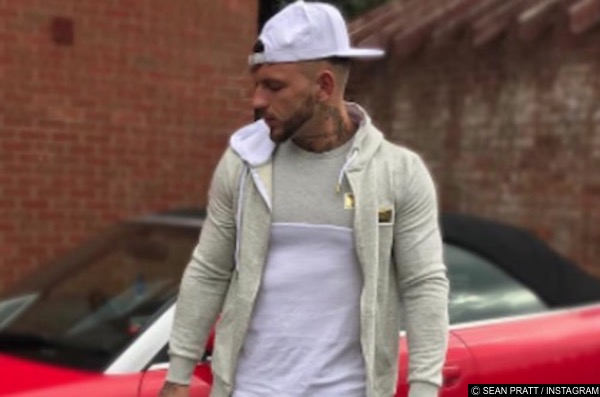
    Ex On The Beach star Sean Pratt has basically left many (us included) speechless.

    Sean Pratt has had a wardrobe malfunction (read basically forgotten to wear his knickers or as we like to say, JBNK) whilst being photographed for his Instagram channel. Well, it’s certainly got him some publicity!

    The post, which was published over the weekend, has already attracted nearly 4000 likes and nearly 150 comments – and all people can talk about is the size of his package.


    It’s time!! Heading to Essex for @mokoevents_ @maisonsbar_essex wearing full @iiwii.uk ????

    A post shared by S E A N – P R A T T ✌? (@sean9pratt) on


    One fan asked if all British men had big appendages like Sean’s, before adding that they would have to “relocate” if that was the case, whilst another added, that his package was “impressive”.

    The reality TV star is not afraid of showing some skin and regularly uploads half-naked pictures of himself on social media.

    Back to reality soon – rollercoaster few months but time to focus on the future

    A post shared by S E A N – P R A T T (@sean9pratt) on


    Reacting to the social storm on his channel, Sean made a video rant about how much attention the photo has received.

    He said,

    “I uploaded a photo in my tracksuit pants yeah… f*** me I didn’t have boxers on,”

    “The whole world has gone crazy because I went commando.

    “Don’t worry about it anyway, why you all so desperate?”

    “You never having nothing of it anyway – it is all Zahida’s.

    “Stop being beggy little fuc**s.


  • NHS staff to ask about patients’ sexuality

    NHS staff in England are set to ask about their patients’ sexuality to ensure “that no patient is discriminated against” new guidelines have promised.

    The new policy, which will require healthcare professionals to ask patients who are over the age of 16 about their sexuality, are part of new guidelines to help ensure that patients aren’t discriminated against.

    The new policy, which was constructed with NHS England and the LGBT Foundation applies to all healthcare professionals including local councils who are responsible for adult social

    A spokeswoman said: “It will have no impact on the care [people] receive.”

    She added: “All health bodies and local authorities with responsibility for adult social care are required under the Equality Act to ensure that no patient is discriminated against.”

    Staff will ask people whether their sexuality falls into four main categories: Straight, Gay or Lesbian, Bisexual and “other – not listed”.

    Which of the following options best describes how you think of yourself?
    1. Heterosexual or Straight
    2. Gay or Lesbian
    3. Bisexual
    4. Other sexual orientation not listed
    U. Person asked and does not know or is not sure
    Z. Not stated (person asked but declined to provide a response)
    9. Not known (not recorded)

    People who aren’t sure about their sexuality will be marked with a U, those who do not state their sexuality will be marked with an Z and those who’s sexuality was not recorded will be marked with a  nine.

    Patients will be asked at “every face to face contact with the patient, where no record of this data already exists”.

  • Woman jailed for the murder of her girlfriend

    A woman in Wigan has been jailed for the murder of her girlfriend, following a campaign of domestic abuse.

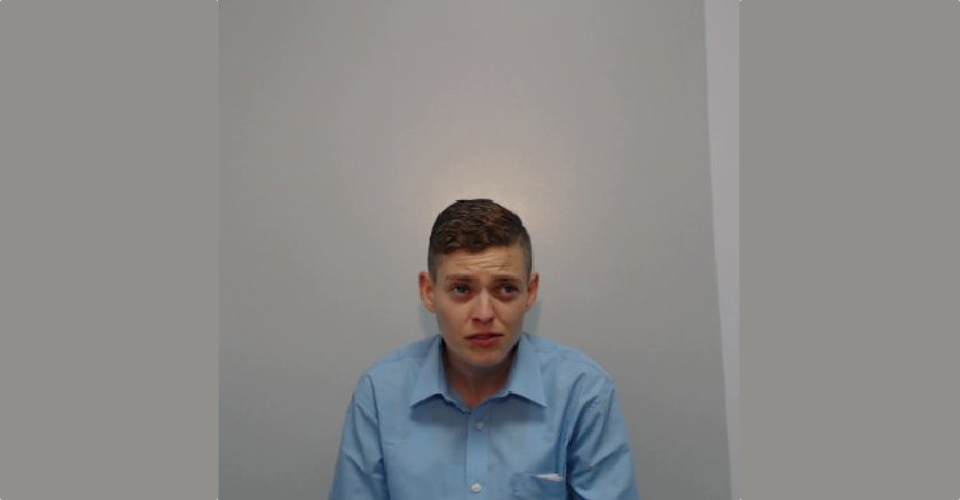
    Becky Reid (7/11/84) of Hayward Road, Atherton was found guilty of the murder of Lyndsey Vaux, and section 18 assault relating to another woman, aged 37, after a trial at Manchester Crown Court, Crown Square.

    Reid received a life sentence for the murder of her former partner Lyndsey Vaux, 30, a mother-of-one, and will serve a minimum of 20 years.

    On Sunday 22 May 2016, Lyndsey Vaux from Platt Bridge was taken to hospital in suspected cardiac arrest, where she sadly died later that morning.

    A Home Office post-mortem found that Lyndsey had died from multiple injuries and police launched an investigation into her death.

    Campaign of Domestic Abuse

    During the trial, the court heard how in 2014 Lyndsey lived with Becky Reid on Sydney Street in Platt Bridge. Over a number of years, Lyndsey was attacked and abused by Reid, with neighbours seeing her around the area with many different injuries including black eyes, cuts to the lip, a cauliflower ear, bruising to the face and body, and a heavy limp.

    Specific attacks were also seen with the court hearing how neighbours witnessed Becky Reid attacking Lyndsey in the street more than once.

    On one occasion, Lyndsey tried to walk away, but Becky punched her in the face, and she fell to the floor, pleading with her to stop. Becky continued to attack her and stamped on her face and body, whilst Lyndsey lay in the road.

    On another occasion, Lyndsey was stood in front of her house and Becky Reid was stood in the doorway. She attacked Lyndsey, punching and kicking her as she lay on the pavement, before dragging her into the house.

    The court also heard how mother and daughter, Gillian and Becky Reid also attacked another woman in 2008 causing her facial fractures.

    Senior Investigating Officer Bob Tonge of GMP’s Major Incident Support Unit said, “Lyndsey Vaux was subjected to years of horrific domestic abuse at the hands of her girlfriend, and no decision made here today can bring her back.

    “Some neighbours knew about this abuse and did nothing. Had they given us the information that they gave us after Lyndsey’s murder then we could have saved her life, and this should act as a stark reminder that we all have a responsibility to stand up to this kind of crime.

    “We’re working extremely hard to tackle domestic abuse in the LGBT community, having introduced a specific recording method to track it and taking our frontline officers through training on how best to support victims, but we do need the public’s help to continue to tackle domestic abuse in all of our communities.

    “My thoughts are with Lyndsey’s family at this difficult time, and I hope this sentence goes some way to finding them justice.”

    Help for Domestic Abuse victims

    Lydnsey was a victim of Reid’s “campaign of domestic abuse” she tragically died after being admitted to hospital following one attack.

    Victims in the LGBT community, and those worried about member of the LGBT community, can call Galop on 0800 999 5428.

    Female victims, and those worried about women, can call the Greater Manchester Domestic Abuse Helpline on 0161 636 7525. Male victims, and those worried about men, can call The Mens Adviceline on 0808 801 0327 or can visit www.mensadviceline.org.uk.

    Greater Manchester’s multi-agency response to same-sex DA, has also invested in a specialist LGBT Independent Domestic Violence Advisor, who works from Independent choices.

    There is lots of information for victims, offenders, loved ones and practitioners on the end the fear website at www.sittingrightwithyou.co.uk.


    Reporting: Greater Manchester Police

  • Jane Fonda knew of Weinstein claims, ‘I should’ve been braver’

    Jane Fonda, star of Netflix’s Grace and Frankie goes on the record about Harvey Weinstein

    Jane Fonda knew of Weinstein claims, ‘I should’ve been braver’

    Jane Fonda, the two-time Academy Award winning actress, on Thursday said she knew of the accusations against movie mogul Harvey Weinstein and “should’ve been braver” in voicing the claims. In an interview with the BBC’s “Hardtalk” programme to air next Monday, she said Weinstein had been able to sexually harass women for decades “because he’s powerful”. (more…)

  • Trump fails to recognise National Coming Out Day

    Another day, another snub from America’s number 1.

    CAGE SKIDMORE / FLICKR

    President Donald Trump’s claim of being a better ally to the “gay community” is fast unravelling after failing to recognise yesterday’s National Coming Out Day. This is in stark contrast to the former President, Obama, who used social media to send a message of solidarity during his time in office.

    This is just one of his failures to support or recognise LGBT people since coming into office in January 2017.

    Trump didn’t mention the day at all – an echo of his failure to recognise LGBT+ Pride Month in June earlier this year, instead opted to make the month about: National Caribbean-American Heritage, African-American Music Appreciation, National Oceans, National Home Ownership, Father’s Day and National Flag week.

    June had been LGBT Pride month for the past 8 years.

    National Coming Out Day is an annual event, which takes place on the 11th October to celebrate and spread awareness of the process and experiences faced by LGBT+ people. The first one was celebrated in 1988.

    So instead of reminding his 40 million followers on Twitter about the day, his took the opportunity to call out NBC for “fake news” and seemingly challenged their right to a broadcasting license. He also slammed NFL players who chose not to stand during the American National Anthem – a protest undertaken by many players to protest police brutality towards BAMEs.

    The #NationalComingOutDay trended on Twitter all day and had over 500,000 tweets using the hashtag.

  • President Trump Ignores National Coming Out Day

    If you’re reading on Apple News or via our App due to licensing, this article must be read on our website

    President Donald Trump has once again failed to acknowledge a day relevant to the LGBTQ community, as he mentioned nothing about National Coming Out Day. Unlike Trump, President Barack Obama shared messages of support to the LGBTQ community during his tenure. He encouraged Americans to celebrate Pride Month and posting Twitter messages on National Coming Out… (more…)