Category: Motoring

  • CAR REVIEW | Abarth 595 Competizione 1.4 T-Jet 180HP

    CAR REVIEW | Abarth 595 Competizione 1.4 T-Jet 180HP

    ★★★★☆ | Abarth 595 Competizione 1.4 T-Jet 180HP

    Bad Boy Abarth.

    What Have We Got?

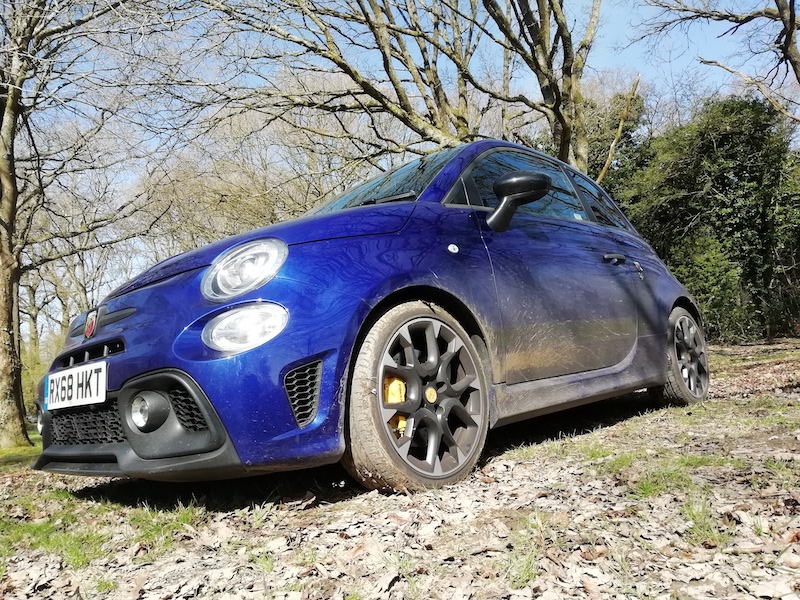
    We have here something we shouldn’t have. The Fiat 500 I had booked wasn’t ready, so Tom at FCA offered me the Abarth 595 Competizione. I pondered if I could find more words for another brutal 500 Abarth. We’ve had the 695 Biposto and the 595 Rivale and they don’t get any better than those two.

    It just so happens that I was able to find some words for this model. A model that left me in a bit of a predicament.
    Driving

    From turning the key and switching it on, to arriving at your destination and switching it off, both you and the surrounding area will know of your departure and arrival. The exhaust note from the Monza quad tailpipes of this 1.4 180 hp turbo engine bark and growl their intention.

    And driving is what this car is all about. As for driving aids, you get reverses parking sensors. No frontal crash mitigation, no radar, no auto dip/full beam headlights, no cruise control. You are in total control. What you do is down to you. You literally are at one with the machine.

    Inside

    The interior of the Competizione is taken over by supportive cloth and suede covered Sabelt seats. You can tell they were not designed for the 595. The backrest adjuster is so close to the door that you have to open it to adjust.

    The suede on steering wheel and binnacle was a nice touch. Shame then about the rather drab grey plastic of the dashboard and door cards. You feel a bit of body colour would add to a stripped out racy interior.


    Living With It

    Let us forget about practicalities here. The rear seat is no more than a padded parcel shelf and the boot is OK for a car of this size. You do however get climate control and a rather good thumping Beats Hi-Fi.

    So let’s look at living with it as a driving machine. Here is where it excels. The ride is hard, leading to even harder, depending on the road surface. And this is a fun element because with the wide 205/40 tyres on 17” alloys, it tends to tramline quite a lot and this is exaggerated on hard acceleration where the steering wheel fights with torque steer. Hit the TTC button (Torque Transfer Control) and it will put the power to either front wheel with the most grip, and it makes it quite riotous.

    Add that to the power of the engine and the lightning speed it responds to inputs from the loud pedal, and you soon find yourself behind the wheel of a car that you can exploit its high levels of adhesion. It will understeer momentarily until the TTC kicks in and then you find you are flicking it around with gusto.

    The Verdict

    You have to LOVE this car a lot to want one. As an everyday proposition, I can’t really recommend it. It’s not a bad car, quite the contrary, it’s just that it is ‘on the go’ all the time, sport mode on or off. As a weekend toy, you won’t find much better.

    In many ways, the 595 Competizione is the bad boy of the Abarth range. The adrenaline-fuelled addiction borders on lustful cravings and coercion. It’ll lead you into a secluded carpark, shove its hands down your pants, make you do things you didn’t want to do and then leave you wanting more.

    We’re off for a cigarette now. I don’t smoke but I need to gather my senses. I’m flustered and wasted!

    Love

    Snap happy handling

    Speed

    Intoxicating at its limits

    Loathe

    Drab interior

    Ability to drink fuel

    Lousy self-control to drive it normally

    The Lowdown

    Car –Abarth 595 Competizione 1.4 T-Jet 180HP

    Price – £ 22,535 (as tested)

    MPG – 47.1 mpg (combined)

    Power – 180HP

    0-62mph – 6.8 seconds

    Top Speed – 140 mph

    Co2 – 139 (g/km)
  • CAR REVIEW | Jaguar F-Type Flying the Flag of a 70 year Tradition

    CAR REVIEW | Jaguar F-Type Flying the Flag of a 70 year Tradition

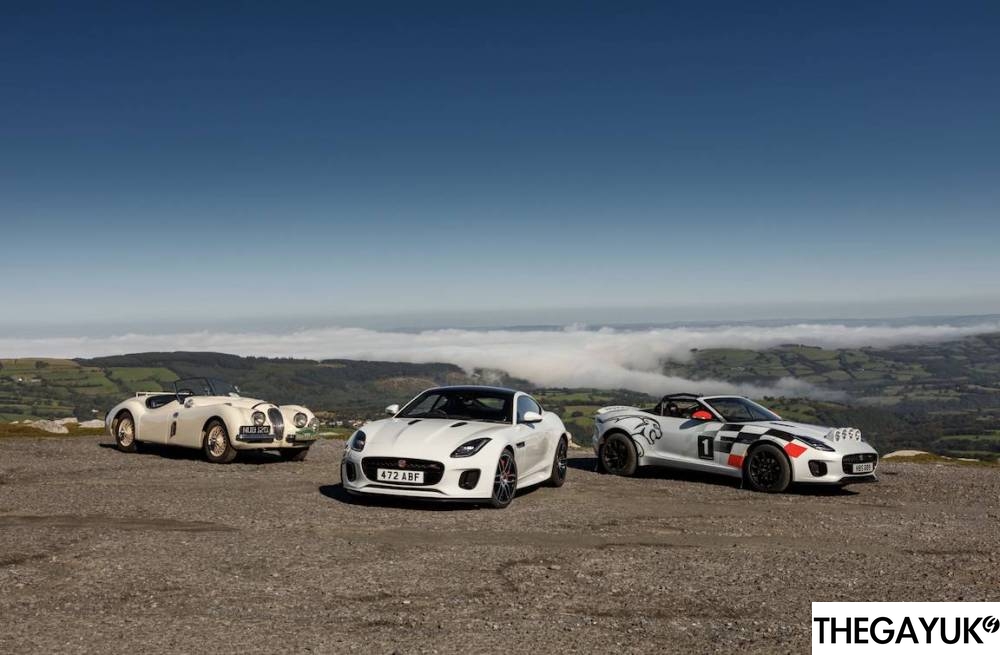
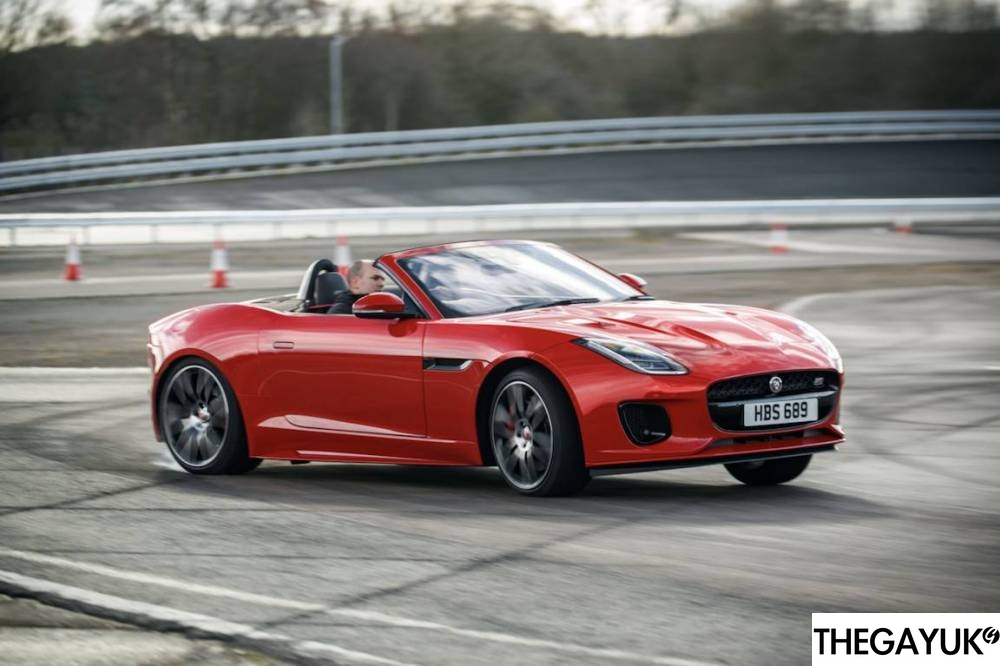
    Jaguar has a rich a varied history when it comes to sports cars and this year, they are celebrating 70 years of their sporting cars with the launch late in 2018 of the F-Type Chequered Flag editions, there are 3 engines 300PS 4 cylinder, 340PS V6 and the 380PS V6 that comes with RWD or AWD transmissions. All set-ups are covered in either the coupe or convertible body variants.

    All models come with a host of extras over the standard R-Dynamic that they are based on. 3 colours available, Caldera red, Fuji white or Carpathian grey metallic.  

    Ian Callum, Director of Design said: In creating the Chequered Flag, we’ve focused on details which enhance F-Type’s presence and the promise of performance and in doing so, made a fitting celebration of 70 years of beautiful, fast, Jaguar sports cars.

    Highlights include a luxurious Windsor Leather interior featuring sports seats with embossed headrests, a dark brushed aluminium centre console trim finisher and in recognition of Jaguar’s motorsport successes, a steering wheel with discrete Chequered Flag logo and red leather band to mark the 12 o’clock position. Coupe models also come with a black contrasting roof.

    Driving styles, it has to be said that the lower powered of the 3, to me at least, is the better to drive. For what it lacks in grunt measured in torque at 44Ib.ft less than the 339Ib.ft of the more powerful V6 with all-wheel drive, it makes for a more responsive car when it comes to the handling. 

    On the limit, the AWD V6 weighing 125 kg more, feels the more heavy, especially at the front. The front, where you want grip and feedback from the steering. The AWD model has a tendency to plough on with some understeer if you behave stupidly or apply the power at the wrong time. There is a fine balancing act to it. It’s rewarding when you get it right. The grip of the AWD system making for quick exits out of the corners. And the growl from the V6 is intoxicating.

    The 4 cylinder RWD model, lighter and less powerful, is more fun to throw around. You can have some fun playing with weight bias more towards the rear on this car. It doesn’t require much thought when putting the power down but it will still bite if you overindulge your skills.

    I’ve said it again and I’ll say it now, out of the 2 bodies, the convertible wins for me. In this Chequered Flag edition, it is now a bargain £5,000 more. Not so long ago it was £10k. 

    So the big question is, is the Chequered Flag edition worth the extra £6k more than the equivalent R-Dynamic models? It’s all in the little details that add up and any special edition comes with an extra premium price. It’s just that, yes, I do like it, I just wish it shouted about it a bit louder like the rally model.

    Now THAT does shout out! 

    The Lowdown

    Car –  Jaguar F-Type Chequered Flag edition. Coupe or Convertible 300PS 4 cylinder

    Price – From £62,335 (Coupe) £67,185 (Convertible)

    MPG – 31 mpg – (combined)

    Power – 300PS

    0-62mph – 5.7 seconds

    Top Speed –  155 mph

    Co2 – (g/km) 179
    Car –  Jaguar F-Type Chequered Flag edition. Coupe or Convertible 340PS V6

    Price – From £66,615 (Coupe) £71,465 (Convertible)

    MPG – 28.3 (combined)

    Power – 340PS 

    0-62mph – 5.1 seconds

    Top Speed –  161 mph

    Co2 – 224 (g/km)

    Car –  Jaguar F-Type Chequered Flag edition. Coupe or Convertible 380PS V6

    Price – From £72,715 (Coupe) £77,565 (Convertible)

    MPG – 26.6 mpg(combined)

    Power – 380PS 

    0-62mph – 4.8 seconds

    Top Speed –  171 mph

    Co2 – (g/km) 223

  • MOTORBIKE REVIEW | MotoShed’s ‘Road Runner’ Indian Scout Sixty

    MOTORBIKE REVIEW | MotoShed’s ‘Road Runner’ Indian Scout Sixty

    ★★★★★ | MotoShed’s ‘Road Runner’ Indian Scout Sixty

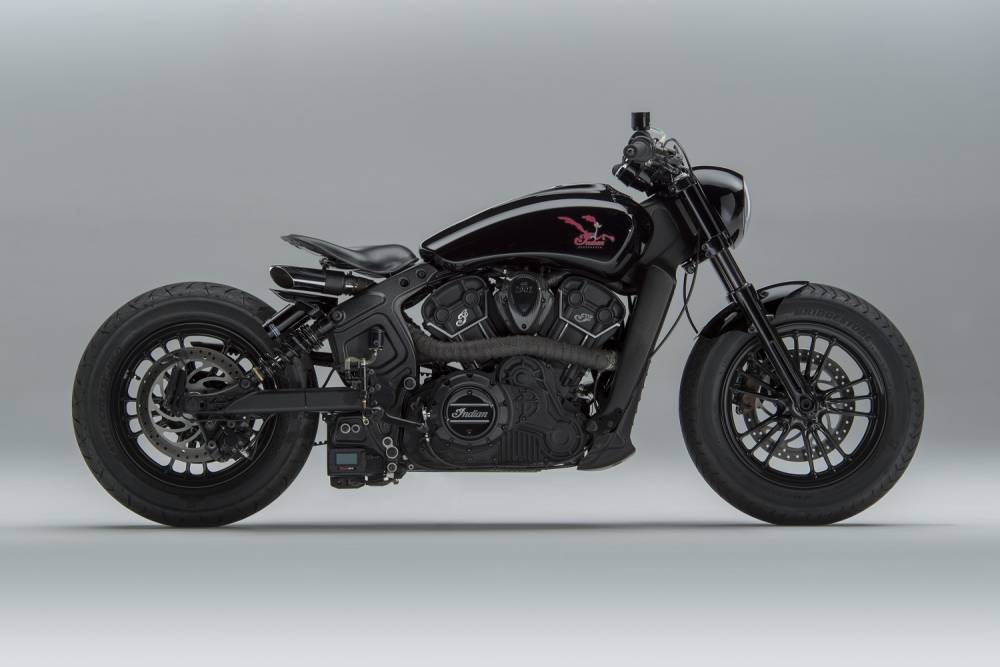
    MotoShed is a like-minded and free-spirited bunch of mates who have spent the last 20 years in various aspects of the motorcycle industry. Their experience is wide-ranging from bike building to race preparation, design, marketing and generally living and breathing motorcycles. They operate guerilla style, preferring to stay out of the spotlight. They don’t talk shit, they build cool bikes.

    Their list of badass builds is long and distinguished just like their client list, including some names you might recognise; Jonny Rea, Fogarty, Adam Ant and plenty more.

    Indian Motorcycles are America’s first motorcycle company, founded in 1901.

    In 2016 they launched the Scout Sixty. It was on that launch in Spain where a couple of the MotoShed team hatched their plan to build ‘Road Runner’.

    “The main thing I wanted to achieve was a more ‘sporty naked’ ride and I wanted to do under seat pipes, as nobody else had done it on a scout.”

    A few hours kicking ideas around about how you could modify one and the under seat exhaust idea was born. They ordered a Scout the next day.

    Standard Indian Scout Sixties ride very well. It’s a good looking, well-built bike out of the box, but Moto Shed could see there was potential for more, it just needed releasing.

    There’s a more aggressive riding position with heavily upgraded suspension in the form of fully adjustable HyperPro shocks at the back and rebuilt stiffer front forks with black nitride coating. The increased ground clearance, thanks to a stiffer suspension, allows more lean angle. All of this means dramatically increased cornering performance. To further enhance this, the standard foot controls have been switched out for a set of Rizoma rearsets mounted on custom plates and there’s a set of lower Renthal bars. The more aggressive riding position means you can ride the Moto Shed Road Runner harder and faster.

    What about the under seat exhaust?

    On modern bikes with their ever-increasing electronics, packaging is always an issue. There are a lot of important components hidden away under the seat, such as the battery, ECU and miles of wiring. It’s an impressive packaging job by Indian Motorcycles.

    In order to achieve a light-weight aesthetic, while retaining the factory look, the team had to get seriously creative, relocating the ABS pump, building a custom battery box for the smaller race-style battery, regulator, rectifier, ECU and extend the wiring loom to accommodate. Serious work, and all done to Incredibly high standard.

    Once the space under the seat had been created, the team set about fabricating the under seat exhaust.

    It really was the most complicated part of the build. Serious thought and skill was needed to route the pipes around the engine and through the new gap under the seat.

    Managing the heat was a big concern so the exhaust was wrapped to try to insulate the heat and protect the bike and rider. There’s also a rear hugger/heat shield to deflect the heat and keep the road dirt away from the exhausts.

    A Dynojet Power Vision CX system was incorporated to log data and help to perfectly re-map the ECU and fly-by-wire throttle. The guys say the fueling and throttle response is superb but man it’s loud.

    Road Runner is dripping in bespoke parts. For example, Chris Walton of CW Engineering hand made the headlight nacelle, front mudguard and rear hugger and Steve Adams, an ex-Aston Martin upholsterer, re-finished the 1920 Solo Saddle Seat and Illusion Race Paint did what they do best.

    A host of high-quality accessories and parts were chosen to compliment their work and enhance the performance and aesthetics of Road Runner. There are a black Galfer clutch lever, brake lever and master cylinder and a JB Speaker LED headlight. There’s even a unique carbon fibre water header tank, sourced from a renowned British Superbike team.

    The team invested over 100 hours of labour in the Road Runner build, not taking into account the many long nights of discussions, planning and head-scratching that lead to what you see here.

    If you fancy a Moto Shed bike in your life, they can be contacted on; build@motoshed.co.uk


  • What’s it like to drive the Jaguar F Type Rally Racer

    What’s it like to drive the Jaguar F Type Rally Racer

    Along with Jaguar’s new F-Type ‘Chequered Flag’ limited edition run, Jaguar has also been busy turning 2 of their F-Types into rally cars and THEGAYUK were fortunate enough to be invited to have a play with the road going cars and trying this special build rally car.

    (C) JAGUAR UK

    The F-Type isn’t really a suitable rally car, and why have Jaguar done this? 

    Firstly it’s all about putting some fun into the celebration of 70 years of sports cars at Jaguar that all started in 1948 with the XK120. The XK120 spawned a number of victorious wins and being an open-top racer, it answers the second question. And that is, why the hell not! It’s a nice homage to the open top winners. 

    (C) JAGUAR UK

    So what has been done to the road going sportster to make it a rally car? A number of things had been changed or altered and all in accordance with FIA approval. Instead of the usual 19” alloys, 16” rims with a more rugged 205/55 16 gravel tyre are fitted. 2” suspension lift with 60N/mm Eibach springs and three-way adjustable competition dampers.

    Usual things have been added like a 5mm aluminium belly pan, hydraulic handbrake and the removal of luxury items. No side windows, no roof, no fancy door trims. Instead, the inside it plain, basic and filled with an FIA approved roll cage and full 6 point harness. Weight wise, the removal of such items has been matched by the race-spec items added so it’s pretty much the same as a road going car.  

    (C) JAGUAR UK

    So what is it like to drive?

    As you can imagine, it’s an open car so you are very much at one with your surroundings in as much as mud gets kicked around and that mud gets you and the interior. There is most certainly no need to wear your Sunday best for this Jaguar. Just climbing in leaves you covered in mud.

    Engine and transmission are the same 300PS at 5500rpm delivering 295Ib.ft of torque from 1500rpm 2 litre Ingenium power unit mated to the standard automatic gearbox. The only difference is the final drive has been adjusted for a better 0-60 time and putting down the power to the limited slip differential at the back. You never get to top speed, but top speed isn’t what this F-Type is about. 

    No, indeed it is not. It is about swinging it around the dirt and going sideways. Thankfully we were not driving solo. Instead, we had 2 rally experts with us. Finland’s 9 times winning rally driver, Minna Sillankorva as co-pilot, offering advice (she taught me the perfect handbrake turn) and the UK’s own Jade Paveley in the pits.

    This was the first rallying I have ever tried and to be honest, it isn’t as easy at it looks. I also wasn’t going hell for leather but instead, as Jaguar had said, I had fun in celebrating this 70th year with Jaguar. 

  • CAR REVIEW | Audi’s A1 Sportback S line

    CAR REVIEW | Audi’s A1 Sportback S line

    ★★★ | Audi’s A1 Sportback S line

    What Have We Got?

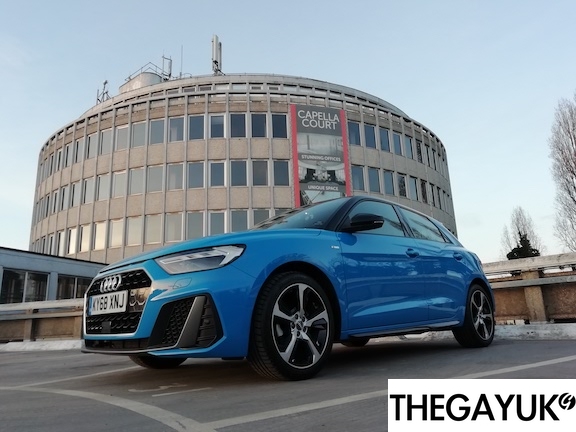
    Here we have Audi’s A1 Sportback S line. This model sits around the middle of the 6 car line up. It’s suitably dressed to impress but did it impress us at THEGAYUK?

    Driving

    With looks to kill, you’d expect the A1 S line to be fun and entertaining to drive. Thankfully it doesn’t fail to deliver in this department despite its diminutive turbocharged petrol power unit of 999cc. Power figures suggest mediocre outputs of performance. The good news is that the 116PS at over 5000rpm and torque of 147.5 lb-ft is far better than adequate. Developed low down, it will hustle along quite briskly. Yet, despite its revvy nature, it won’t allow redlining in any gear. Changes are done by 6200rpm.

    Those changes are carried out by a much improved DSG gearbox. Now it is able to deliver crawling take up without snatching as smoothly as it does changing up at speed.

    Steering is communicative to a degree, there’s also some muted feedback, though a little more would be better and the brakes, standard silver, no bright shouting red Brembo callipers, pull the A1 up briskly.

    Inside

    It’s a mixture of good and bad. The dashboard is logical and the facia panel is adaptable for maps, big dials or info. It works well and it’s surrounded by blue neons that carry on into the doors. It’s just a shame then that this isn’t carried on around the vents on the passengers’ side and the rear doors are totally void of any fancy architecture, except for a light by the door handle.

    Seats are also a mixture of good and bad. While they hug you in place during spirited driving, the seat base is very firm and despite several manual controls for the adjustments, lumber adjuster is both awkward to implement and even worse to gauge the amount such is the position of the handle.  

    Living With It

    It’s a practical car. It has 4 doors and a wide opening hatch at the rear. It’s not the most spacious in its class but it will do all that is asked of it.

    You won’t lose face when it comes to the carpark beauty pageant. The A1 has good looks on its side and if the badge is important, you have Audi prestige. And it does what it does well. The ride is more than acceptable and thankfully it is entertaining and the handling is fun. 

    There is just one snag.

    The Verdict

    There is a lot to like about the A1. Showroom and kerbside appeal will impress you and those who admire it from the outside. The nice touches that you expect from Audi are there in some places too but not everywhere. The silver trim across the facia is cheap to look at and cheaper to feel.

    And I get that Audi is a premium brand. With the A1 starting at £17,700, it’s just that I find this S line model with all the options this car has, hard to swallow at £70 shy of £30k. That’s a lot of money for a small car. 

    Love

    Facia neon illuminations

    Peppy 1 litre engine

    Gearbox

    Loathe

    Price

    Boring rear door trim

    Firm seat base and awkward lumber lever

    The Lowdown

    Car –  Audi A1 Sportback 30 TFSI 115PS S Line S Tronic

    Price – £ 29,930 (as tested)

    MPG – 47 mpg (combined)

    Power – 116PS

    0-62mph –  9.4 seconds

    Top Speed –  126 mph

    Co2 – 108 (g/km)

  • Taking A Toy Boy To Silverstone With Toyota GB

    Taking A Toy Boy To Silverstone With Toyota GB

    Toy Boy Toyota

    ‘He’s my toy boy, toy boy. I’m out with my toy boy, toy boy. And when I get to take him home, I know he’s gonna love me right’

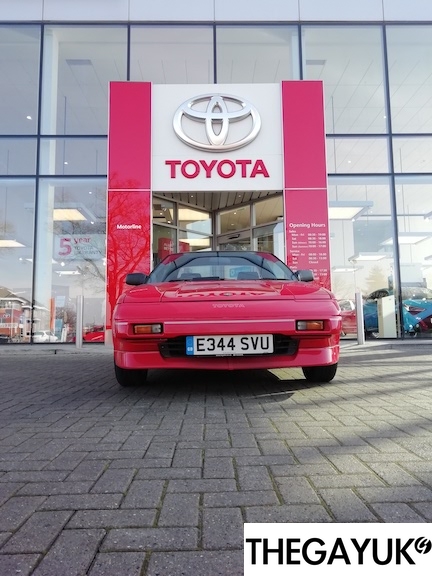
    Now don’t worry, I’ve not lost the plot. I was fortunate one week in February to be given the keys to Toyota GB’s Mk1 MR2. It came with Toyota’s state of the art cassette player and I found a mixtape with Sinitta’s hit ‘Toy Boy’ and if ever there was a song that suited a car, it was this.

    It all started after I contacted Graham from Toyota press about a future article I was planning to write about the MR2 Vs Fiat X1/9. He suggested I come over, collect the car and take it to an event Toyota GB had organised at Silverstone with the Vintage Sports-Car Club (VSCC) called the Parallel Pomeroy Trophy. It dates back 70 years and was devised to find the best GT car. For Toyota, it consisted of 4 tests. I couldn’t really say no now could I.

    All that was needed was to collect the car and pay the £30 entry fee that was going towards Toyota’s chosen charity for the past couple of years, Guide Dogs for the Blind. Toyota has been sponsoring the training of 4 dogs and lifetime costs of one. That’s around £55,000. https://www.guidedogs.org.uk

    The MR2 was collected and a look around some of the heritage fleet Toyota keep was shown. The MR2 was a lovely little car and had undergone an extensive restoration that also came with some words of advise about being sympathetic to the newly built engine. So no pressure there then considering the weekend Toyota had planned!

    Tests centred around a slalom handling course, flat out short distance and a series of forward-backward-forward etc strip where you had to stop within the boundaries of some pre-set cones. Penalties were issued if you messed it up. Suffice to say, I did. Twice! Annoyingly. 

    In total, there were 38 Toyota’s ranging from a 1971 Corolla coupe to the 2018 Yaris GRNM with everything in-between included 4 generations of Prius and a Hilux. All this was made even more serious when we were issued with number decals to apply to our cars. All road going cars (the rules stated that ALL entrants must be road legal) were instantly turned into race cars. Applying numbers to a car just makes them racy. The MR2 had sharp looks, an engine making borborygmi noises behind you and sporting potential to start with. The immaculate 1973 Crown estate however didn’t. 

    That said, it didn’t stop Eddie Bellringer beating me and the MR2. His times showed commitment at EVERY level. If I’m honest, I got beaten by practically everything out there including Steve Cropley from Autocar magazine in an Mk1 Prius. That said, Alan Bradley from the Motoring Podcast, in his Yaris GRMN, also got beaten by the Crown Estate.

    This was the first Parallel Pomeroy event PR and social media manager, Scott Brownlee and his team had organised and it went very well, even down to the weather. There was however only two Toyota PR team members taking it for the team. Product and technical, Mr Richard Seymour in an iQ and PR student, Mary Nicholls in a Prius. She also beat me in a Prius.  

    Well, let’s not leave you in suspense. Richard in the iQ won. The smallest car with the smallest engine with the impossibility of positioning a car with a cone within the wheelbase won the event. Which went to show that Richard of product and technical either knew his stuff and the iQ or it was a fix? Either way, it’s a long way to fall when you are at the top, I’m wondering what Toyota could put him in next time.

    An MR2 perhaps?

    As for me, it was a blast and a really good day was had by all those who attended. So it is with great thanks to the Toyota GB team for letting me have the MR2 for a few days prior to the event. 

  • CAR REVIEW | Range Rover Velar R Dynamic HSE D300

    CAR REVIEW | Range Rover Velar R Dynamic HSE D300

    ★★★★☆ | Range Rover Velar R Dynamic HSE D300

    What Have We Got?

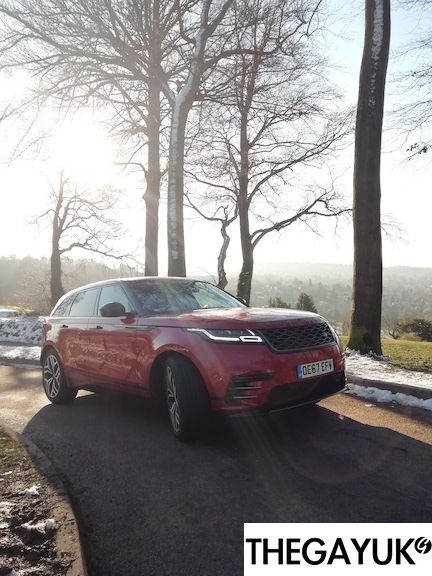
    We have a puzzler this week. This is Range Rover’s mid-sized concept-cum-cross over that fits between the Evoque and Range Rover Sport. The puzzler is that the Velar is quite large in the visuals and dimensions. 


    Driving

    It’s a silky blend of driving styles. The 3-litre V6 diesel pushes out 300hp at 4000rpm. 700nm of torque is from 1500rpm. From a standing start, it will thunder the slippery shaped Velar to 60 in 6.1 seconds. To be honest, it feels quicker and there is grunt available from whatever speed. 

    Sport mode, comfort or economy, throttle response is quick. There is no hunting for a gear or waiting for the ECU to decide what to do with the EGR valve etc. Quick rapid progress is one of the key features of the Velar. 

    The Velar shares a platform with the Jaguar F-Pace and yet feels better planted, better poised on the road and all the more fun. The AWD system puts the power down more evenly around the vehicle. 


    Inside

    The layout is all familiar with the Range Rover Sport we reviewed in 2017. Touch screens for the controls split on to 2 screens. There are 2 buttons. The stop-start, hidden by the facia panel and another on the centre console that hides a cup holder. This button does not work with the fluidity of the rest of the Velar’s interior.

    Other than that, it is well thought out. The seats have so many bits that move, that it is impossible to get uncomfortable and there is space for everyone, even the tallest of both drivers or passengers or both.  

    Living With It

    Sheer size doesn’t translate to bulk on the move. The Velar is reasonably agile on its air ride and easy to navigate around country lanes. Thankfully this model came with the 360-degree angle camera pack and I can’t recommend it enough, especially when parking in tight spots like supermarkets or your own driveway where someone has decided to park their car like it’s the largest car in the world.

    The Verdict

    I was unsure of the Velar at first. I couldn’t make up my mind if I liked them or not. Its sleek looks lack the blunt Range Rover bulk but this doesn’t distract from it. You could call it a ‘designed’ Range Rover Sport. It certainly doesn’t feel any cheaper than the top model. But that isn’t necessarily a good thing. 

    Its road manners are rather exemplary and it lacks the wobble of the Range Rover Sport. This alone makes the Velar more big estate car than SUV or cross over but this is what it is, a cross over and it does it all very well. Dare I say it, I liked the Sport and all that it stood for, I like the Velar more. It’s just, the Velar, this Velar, is expensive. Range Rover Sport price expensive.  

    Love

    Smoothness of engine

    Fit and finish

    Ride

    Loathe

    Price

    Cup holder cover

    Plastics around dashboard 

    The Lowdown

    Car –  Range Rover Velar R Dynamic HSE D300

    Price – £73,330 (as tested)

    MPG – 44.1mpg (combined)

    Power – 300hp

    0-62mph –  6.1 seconds

    Top Speed –  150 mph

    Co2 – 167 (g/km)
  • CAR REVIEW | Getting Dirty with the new Jeep Wrangler

    CAR REVIEW | Getting Dirty with the new Jeep Wrangler

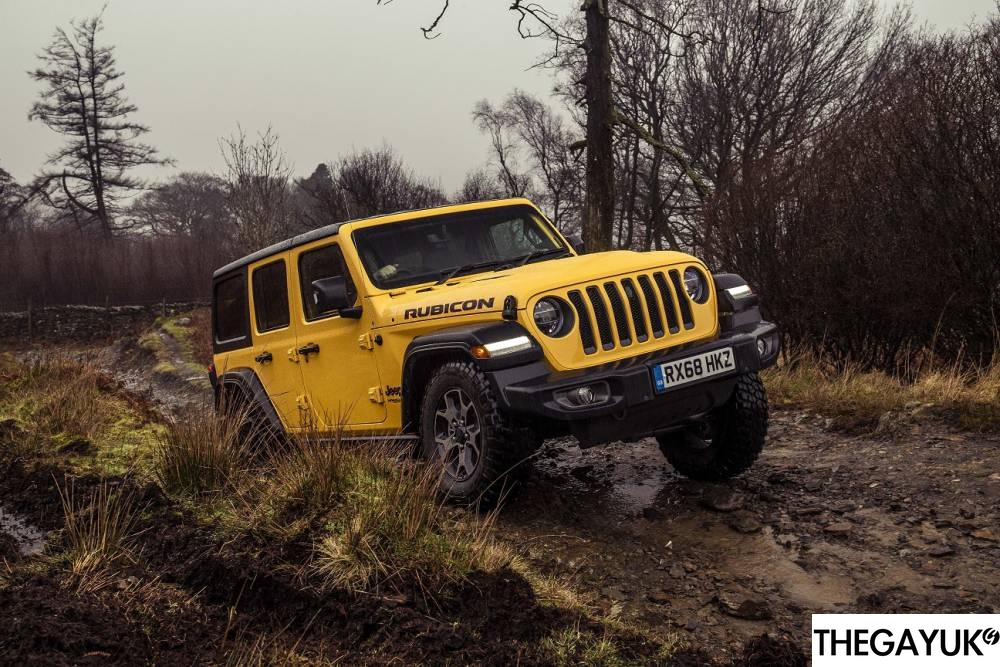
    We managed to get ourselves an invite to drive the new Jeep Wrangler recently.


    The email invitation read;
    We would like you to be among the first to drive this exciting new car, and invite you to join us for a special drive event in the Lake District. There will be opportunities to drive the cars on- and off-road.

    Off-road you say? We love getting down and dirty so didn’t need asking twice.

    Jeep are very proud of their heritage. They started making vehicles in 1940 for the Army and have been making civilian vehicle since 1945. That’s some pedigree.

    They describe their all-new Jeep® Wrangler as the ‘Go Anywhere, Do Anything’ 4×4 that blends together excellent on-road performance with legendary off-road capability.” We’ll be the judge of that.

    We won’t go mad about the details. We’ll tell you more about that after we’ve had one on test for a while. What we will say is that, depending on spec, it includes two advanced four-wheel drive, active, on-demand full time systems – Command-Trac and Rock-Trac – plus Tru-Lock electric front- and rear-axle lockers, Trac-Lok limited slip differential and electronic front anti-roll bar disconnect. We can tell you first hand that this stuff is unbelievable. It makes you feel invincible, like you could drive anywhere, over anything.


    The format for the event was simple. Pick a car, get in and follow the leader.

    Ardent Off Road looked after us and guided us along the course, helping us through the most challenging parts and keeping us safe.
    These guys are amazing. They run off-road tours and training sessions for the public and emergency services etc, they run holidays and events in the UK and abroad and lots more. They are really good guys and absolute experts when it comes to anything off road.

    Our day consisted of 3 different off road sessions with some road driving in between.
    The first off road session was a very challenging, uphill rock crawling section, the second was woodland, heavily rutted with big rocks all over the place and the third was even more rocks with steep steps and big drops.

    The Ardent guys kept things moving, guiding us through the perils but kept it safe and fun…..lots of fun.

    Our car was a Jeep Wrangler Sahara 2.2 diesel 2 door and was really really nice. The Sahara is the entry level and crucially, comes with road biased tyres. No big chunky, nobblies here, they’re standard fit on the Rubicon.

    Despite this, it was truly awesome off road. I mean, really impressive. Ardent took us up some really technical and challenging routes; rock crawling in the rain, fording in the woods and much worse. Even on road biased tyres our Wrangler didn’t struggle. It’s was jaw dropping, breathtaking and more fun than you can imagine.

    It’s easy to use too. The auto gearbox was simple, just put it in drive and select 4×4 low ratio, then go and get dirty. Some modern 4×4’s seem to have a million settings. The Wrangler has some buttons like hill decent but we didn’t use them. It is very simple to use and unbelievably effective.

    We’ll get one on test and do you a road test review. If it sunny, we’ll even show you it’s other party trick and take the roof and doors off too for a bit of fresh air fun.

  • The Good, the Bad and The Ugly. Corsa C 2000 – 2006

    The Good, the Bad and The Ugly. Corsa C 2000 – 2006

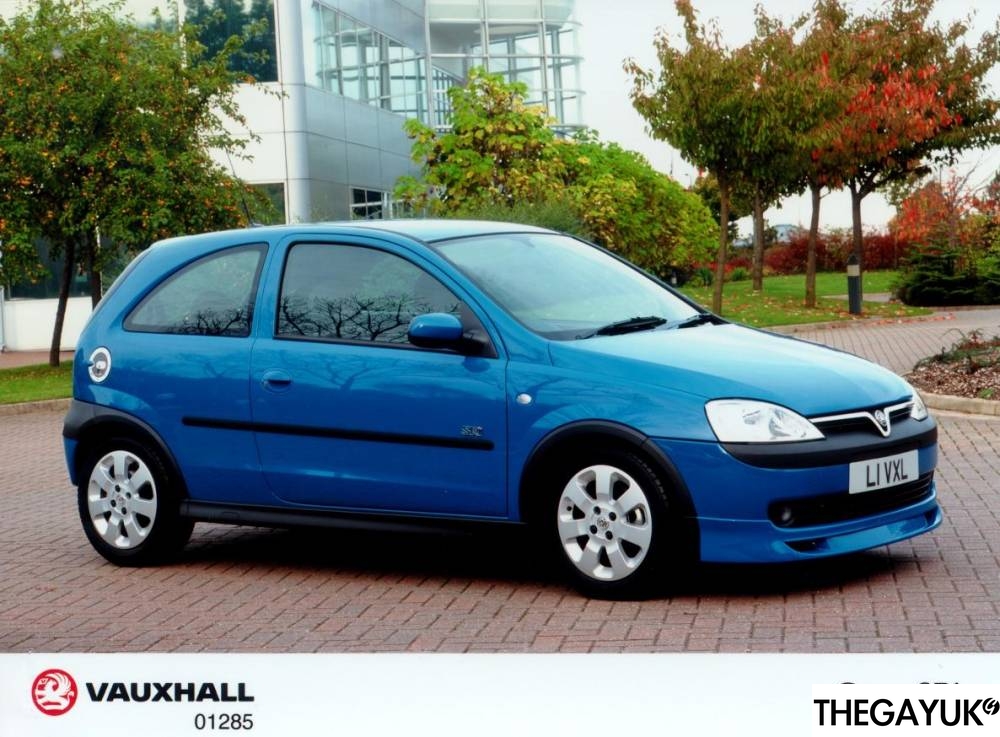
    The Vauxhall Corsa C 2000 – 2006

    An irrelevant look at a certain car.


    You’ll be glad to have read that this Corsa was only available for six years. In the big scheme of motoring giants, six years is a pretty short notice and they only change the car that quickly if it just so happened to be crap.

    Well, dear reader, your luck is in. They were. There wasn’t much to recommend about the Corsa C and yet, in the UK at least, it was a big seller. From 2002 to 2005 it was always in the top 3 on the sales charts but that doesn’t mean anything. Celine Dion’s Titanic song spent way too long in the charts and that was shit. Thankfully our Cher kept it from being the top-selling single of 98. 

    Speaking of the great white hope of the ocean, one thing Corsa C did well was taking in water. These little Titanic’s of GM were exceptionally good at this, they let water in both at the front by the fuse box (water and electrics are such a good mix) and around the rear lights. Take that Titanic and your single gash!

    This did dampen Corsa C drivers’ spirits. Sorry, I couldn’t resist. Left unchecked, the water would pile in and the mould pile up and out. I’ve seen many Corsa C’s with all the penicillin you can eat on the seats! It’s like infection control on wheels. MRSA, dead in a Corsa C. C-Diff? Don’t make me laugh. Doesn’t stand a chance. You might get Legionnaires disease from all that stagnant water, but only one to six out of 20 die from that, so the odds are pretty good on survival. And remember, Corsa C is packed with antibiotics.

    To understand if your Corsa C has a water problem, you need to drive it with vigour. Here was the problem. It wasn’t very nice to drive. The interiors were pretty much all grey in colour and that sort of summed up Corsa C. 

    Engines were standard units of GM-type (I’m sort of losing the will to type now) but the three-cylinder did have a nice trick up its sleeve. It vibrated through the bloated body causing motion sickness to the point where you either stopped or chundered into the pool of sogginess in the footwell, adding something new to the cesspit that is also called the passengers’ footwell.  

    I suppose if I have to give Corsa C one selling point, it would be the boot opening. It was large and practical for a hatchback-cum-driveway skip. What followed with Corsa D was worse.

    But I’m talking Corsa C and it’s a bad car. Catch the bus.

    Liked this check out:

    Toyota Yaris 1999 – 2005: Good, Bad or Ugly?

    VW Polo 2002-2009: Good, Bad or Ugly?

  • CAR REVIEW |  Honda CR-V, 2019

    CAR REVIEW | Honda CR-V, 2019

    ★★★★☆ | Honda CR-V

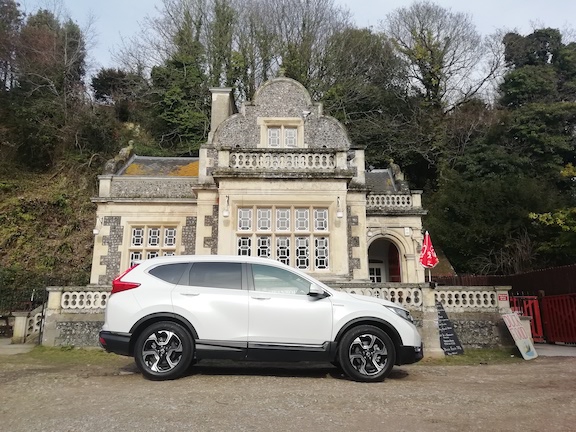
    Hot on the heels of every manufacturer it would seem these days, Honda has released a new SUV. Not so totally new because the CR-V has been a staple part of Honda’s UK line-up for many decades.

    Here, however, Honda is showcasing their new petrol and more importantly, a hybrid drive system. Again, nothing new from Honda except this time it is fitted into their large SUV.

    The CR-V demonstrates two things, Class-leading space and an increase in size. All common factors with a new launch. 2 things, however, do stand out and that is space inside is very much on the generous side and the overall feel of the car is not so large that it feels like a nuisance to drive on narrow country lanes.

    THEGAYUK tried two models back-to-back. Both front wheel drive but with two different powertrains. Firstly the hybrid with a CVT gearbox and a petrol manual.

    Between the two models, one thing is very evident between the two models and that’s the ride. The all petrol drove better. It was softer, compliant and more engaging to drive. No doubt this is due to the lack of excess weight in the rear from the hybrid system. Another is silent running. While the petrol could be raucous when pressed, the hybrid with its near silent electric motors became all too familiar in whine from the CVT gearbox. 

    The CVT is not to my liking and I was a bit disappointed. Honda’s press release mentioned a unique intelligent Multi-Mode Drive (i-MMD) with clutch lockup between petrol and drivetrain when in engine mode. It still behaved like a conventional CVT system and the paddle shifts on the steering wheel didn’t make much of a difference except when it ‘sport’ mode. On the plus side, its transition between battery, petrol or both was seamless.

    Combined economy varied between power units. 53.3mpg for the Hybrid and 44.8mpg for the all petrol. That seemed a lot for the petrol to achieve, despite its lighter agile feel and the hybrid also struggled to achieve those figures. But there are 2 things standing in the way. Review cars are hardly driven softly and combined figures are not those in the real world. However, we did see a constant 45+ mpg in the Hybrid. So the penalty for that heavy feel looks like it could be offset by less time at the pumps.  

    There were other good points to be seen in these SR mid-range models and that is in its fit and finish. There was a lot to like. General tactility was top class with soft feel where you expected it to be hard plastic. The wooden effect inserts, however, were not universally liked but I liked them. The effect is pretty good. It’s not luxury wood but then at £31,565 for the Hybrid and £31,435 for the petrol, neither is the price. 

    And this is the key to the CR-V. It’s price. In this segment, the CR-V SR offers a lot of car for the money, it’s just at the moment I am struggling to justify to myself that the hybrid is better. If it was my money I’d go for the all petrol. 

    Love

    Looks

    Quality inside

    Value

    Loathe

    CVT gearbox

    Rear doors lack sound deadening

    Less agile feel in the hybrid model

    The Lowdown

    Car –  Honda CR-V SR petrol/hybrid models

    Price – £ £31,435 / £31,565 (as tested)

    MPG – 44.8/53.3 mpg (combined)

    0-62mph –  9.3/8.8 seconds

    Top Speed –  130/112 mph

    Co2 – 143/126 (g/km)

  • The Good, The bad and the Ugly. Toyota Yaris 1999 – 2005

    The Good, The bad and the Ugly. Toyota Yaris 1999 – 2005

    The Good, The Bad and the Ugly.

    Embed from Getty Images

    An irrelevant look at a certain car.

    The Toyota Yaris 1999 – 2005

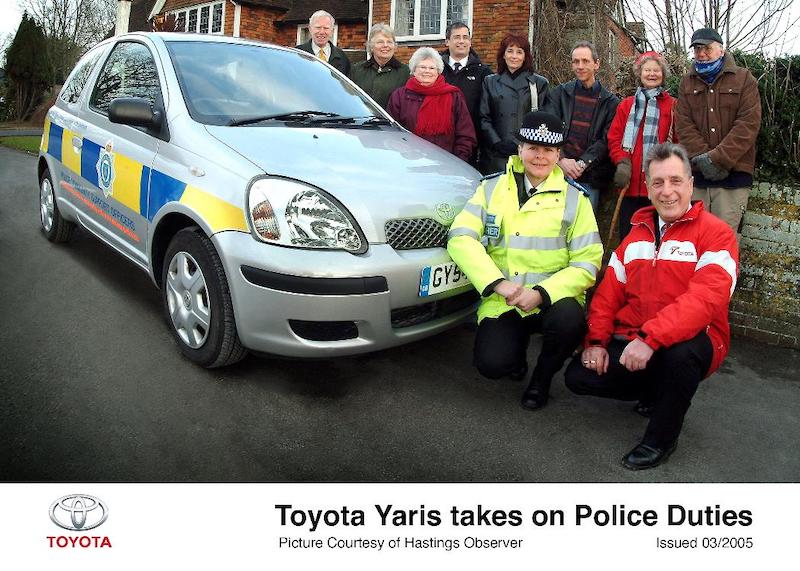
    The Toyota Yaris, the Greek goddesses of charm and beauty. Well not quite. According to Wikipedia, “Yaris” is derived from “Charis”, the singular for Charites. And this thankfully is as complicated as Toyota’s little toaster on wheels gets.

    Her beauty didn’t last long because you might have noticed that almost ALL Yaris’s have a dented panel below the rear bumper. You do wonder if they actually came from the factory like that.

    OK, I’m being unfair and what I am about to write pretty much gives the game away. The Yaris isn’t a bad car. And despite its oddball looks, it’s not ugly either. Here is a car that was miles away from the dull forgettable Starlet that it replaced. You might want to Google “Starlet” because you would have forgotten what it looked like by now.

    Walk around the Yaris and you’ll greet its cutesy looks with affection. Its rounded face and slabby sides were in keeping with the populous of the time in that we were all getting a bit portly. What we needed was to walk more. What you needed was a car that broke down.

    Embed from Getty Images

    The Yaris didn’t break down. You just couldn’t stop the bloody things. So reliable were they, that they won customer satisfaction awards all over the place. Here was a city car that didn’t cost much to buy, cost even less to run and could be abused like no other car. If ever there was a car that made the manufacture absolutely no money in after sales, here it is.

    Getting inside was a doodle too. Big wide doors on the 3 door, or slightly smaller doors on the 5 door, opened up the grey cabin. The driving position was high too. It gave good visuals and speaking of visuals, it also came with a far-out digital pod, slap-bang in the middle of the dashboard. This was a revelation. Digital displays were still alienating customers, others had tried and failed. Toyota gave a 2 finger salute and shoved it in there. It worked. It was crystal clear. You couldn’t wish for anything better.

    Embed from Getty Images

    And the ride wasn’t that bad either for a shopping cart. It all worked well. So you would expect this to be a massive sales flop. A little Toyota with a high driving position that’s easy to get into, surely only the granny brigade bought these. Absolutely not. It was universally approved by all.  

    There is no escaping it, the Yaris is a good car.