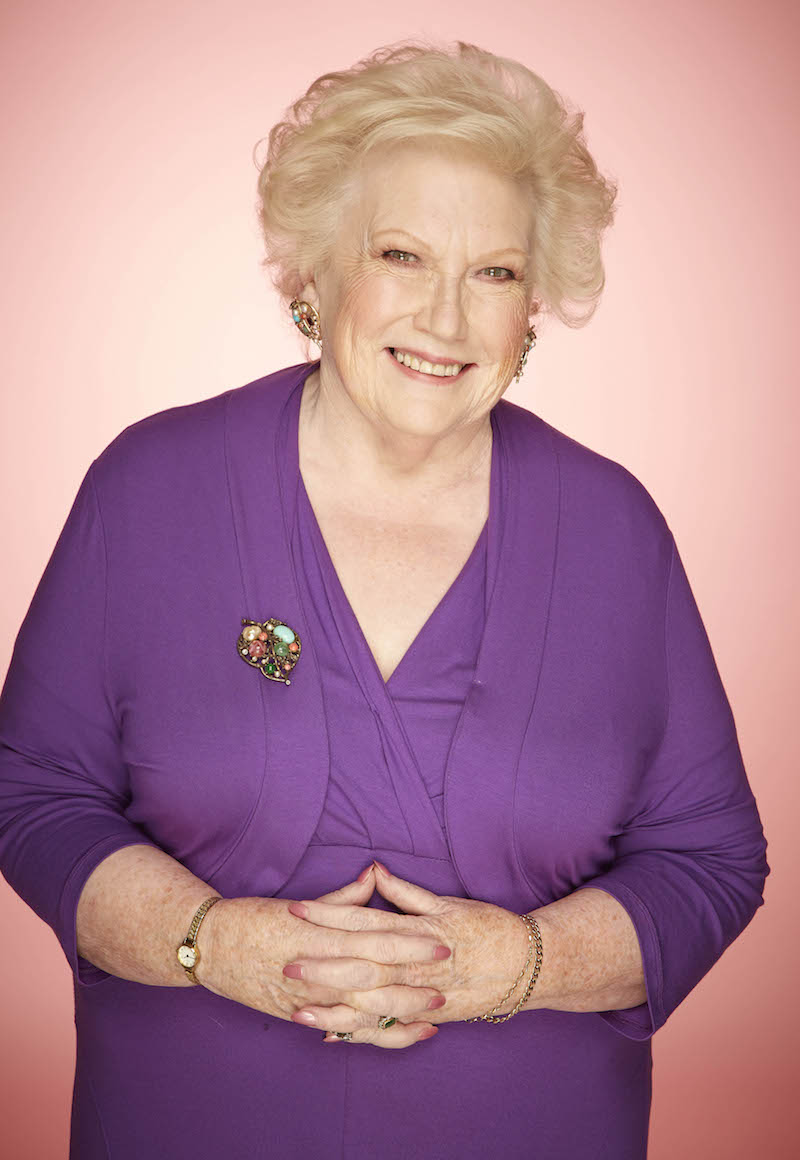
Much loved Agony Aunt Denise Robertson has died at the age of 83.


A study of 2,000 graduates found 64 per cent felt their degree was not relevant to their current role.
While results showed the average graduate polled to have left university with £13,292 in debt overall.
With approximately 12 million graduates in the UK* – the astronomical sum can be estimated at 65 billion squandered on degrees not used.
Results also showed a quarter are in job roles that are completely different to the degree they completed.
But while many of those who chose to continue their studies didn’t end up using their final degree to get a job, 85 per cent claim the experience itself has set them up for life.
Barinder Hothi, Co-founder of The Knowledge Academy – one of the biggest training companies in the world – which commissioned the study, said:
“It’s shocking to see such statistics – the high cost of university is often considered necessary in order to progress in a particular career.
“But with most valuing the experience of university (such as making friends, managing a budget, etc) over the knowledge gained from their degree, one has to ask, is it really worth it?”
Results showed just 36 per cent found their degree relevant to their current career choice.
And 67 per cent feel they could have got their current job without having their degree.
In fact six in ten never had to provide any proof they even had a degree in order to get their job and over a fifth feels their employer has no clue what qualifications they actually have.
A third said the content of their degree and the subjects studied are entirely irrelevant to the work they do now.
While a quarter feel there aren’t even small elements of their degree that are helpful to them now.
Reactions were split when deciding the value of a degree overall – 49 per cent felt having their degree made it easier to get a job, but 51 per cent were unsure or felt it made no difference.
ADVERT
[adinserter block=”1″]
49 per cent feel they would have been better off getting in a job earlier and working their way up.
Which is perhaps why 62 per cent feel they chose the wrong career when they left school.
41 per cent of Brits who didn’t feel they used their degree went on to do further training for their current job.
In fact, tellingly, four in ten graduates polled (38%) wished they had done an apprenticeship instead.
While a similar number are seemingly discontent- over a third are currently considering re-training to do something more worthwhile than their current role allows.
However the life lessons of university still seem prominent – 85 per cent of those polled still felt university had made their life better, even if they aren’t using their degree.
The biggest reason for feeling university was beneficial was for the confidence it gave people, followed by lessons on generally setting up for life, how to budget and how to make friends.
Mrs Hothi added:
“University has become the expected path for many 17-18 year olds in the UK in recent years with alternatives such as apprenticeships or trainee roles being rarely discussed as an option. Without providing students with a good understanding of all the options available to them, some may find themselves graduating in a subject which is of no use to the career they want. With some finding that perhaps a trainee role would have provided them with the relevant work experience needed to give them an edge many expect a degree to have.”
The Knowledge Academy offers more than 50,000 job and skills training courses in 200 countries to customers including: the self-employed and SMEs, to blue-chips and multi-nationals like Rolls Royce, HSBC, British Airways, and Disney.
It offers a mixture of classroom-based education and digital learning, mostly IT, legal, finance, HR and business-related courses, but as diverse as Wildlife Training and Animation, to Psychology and Aviation.
£6,682 – AVERAGE STUDENT LOAN DEBT
£6,610 – AVERAGE TUITION DEBT
£13,292

Stonewall has spoken out against the NUS LGBT+’s decision to rid gay male representation from its societies across the UK University system. A statement from the charity said that the best way to achieve diversity was to proactively engage with all parts of the LGBT community rather than “excluding specific parts of the community.”
NUS LGBT+ has come under considerable criticism after it said it would seek to eradicate gay male representation from its societies, after it claimed that “misogyny, transphobia, racism and biphobia were more likely to happen if societies were “dominated” by white cis gay men.”
A claim it made without providing proof.
Stonewall joined the growing concern about the NUS LGBT+ societies remit saying,
“We believe that LGBT societies should represent the full diversity of the LGBT community, including the multiple minority identities that exist within it. Gay men experience homophobia and oppression daily, both inside and outside the LGBT community. This could be because they are of faith, or have a disability, or are part of an ethnic minority. They also continue to face discrimination in the workplace, at school, in church, in institutions, or on the sports field. The fight against homophobia isn’t over yet.
“We think the best way to reflect diversity is to proactively engage with and encourage others to apply for positions on the board rather than excluding specific parts of the community.”
ADVERT
[adinserter block=”1″]
TheGayUK reached out to NHS LGBT+ specifically for comment on its decisions but were directed to the NUS press office, who said,
“All delegate who attend NUS LGBT+ conference are free to submit motions for discussion but they do not necessarily represent the views of NUS if at all.

Gay male students in the UK’s University system are facing the prospect of not having a representative at their LGBT+ society after the NUS LGBT+ voted to abolish a reserved space for gay male reps after claiming that “misogyny, transphobia, racism and biphobia were more likely to happen if societies were “dominated” by white cis gay men.”
It also called for current gay male representatives to relinquish their role if it already exists within a LGBT+ society.
A statement from Push Projects in Warwickshire shared its concerns and called upon the NUS and the NUS LGBT+ to “take a hard look at itself and reassess the direction it is heading in”.
In the statement the charity said the dropping of gay male representation was “concerning” and “shocking”,
This type of message of great concern to us as a charity, as we actively support a number of LGBT+ students. We see the discrimination, prejudice, violence and abuse that many of those LGBT+ people endure. This of course includes gay men, and indeed white cis gay men.
Acting to remove gay men’s reps from LGBT+ student societies is a shocking turn of events. Gay men, along with lesbian, bisexual and trans people, continue to experience discrimination, violence and abuse in society, at work, school, college, university, and also within the LGBT+ community. Homophobia still exists, even within the LGBT+ community. That is why it is imperative that gay men’s reps remain within LGBT+ student societies.
ADVERT
[adinserter block=”1″]
Speaking to THEGAYUK a spokesperson for the NUS said,
“All delegate who attend NUS LGBT+ conference are free to submit motions for discussion but they do not necessarily represent the views of NUS if at all.
“NUS itself does not have any committee places solely reserved for men, this is because we recognise that the LGBT+ community is far wider than just men, at a national level we have an open place where anyone can put themselves forward for nomination.
“The conference resolved that local LGBT+ societies to do the same, although ultimate we have no jurisdiction over them. This has nothing to do with the views of an individual about the validity of issues anyone faces but is simply because we believe its fairer practice.”
© belchonock | Depositphotos
A group of MPs and Peers from across the political spectrum came together today to promote the importance of donating blood and to inform on the upcoming review into who is able to safely donate blood.
The APPG has been set up to help inform the Government review on blood donation rules which will determine whether gay and bisexual men will be able to donate blood unrestricted.
The review will also take in to consideration those who have ever injected drugs or had money for sex and their viability on blood donation.
At the present time gay and bisexual men are able to donate in England, Wales and Scotland but only if they are HIV negative and have not had sex with another man in the year.
In Northern Ireland men who sleep with men are one of the groups who are still not permitted to donate blood.
ADVERT
[adinserter block=”1″]
The review was announced in Parliament in November in response to the campaign from FreedomToDonate and the Government is currently in discussions with stakeholders as to the terms of the review and its timeline.
Speaking on the launch of the APPG, the Co-Chair, Stewart McDonald MP said,
“Donating blood is a lifesaving action. It’s something that all those who can safely donate blood should be able to do so that’s why I’m proud to be Co-Chairing this APPG with Paula Sherriff MP.”
Founder of the FreedomToDonate campaign, Ethan Spibey said,
“Securing the review into who is able to safely donate blood was a huge milestone for our campaign and the setting up today of this APPG is yet another way we can ensure the best possible outcome for the review for all those affected. I set up this campaign when my Grandad went through a major operation, it’s my hope that I and many others can safely donate in the near future.”
FILE PHOTO
Gay male students in the UK’s University system are facing the prospect of not having a representative at their LGBT+ society after the NUS LGBT+ voted to abolish a reserved space for gay male reps.
It also called for current gay male representatives to relinquish their role if it already exists within a LGBT+ society.
A reserved space for a representatives will remain for lesbian, bisexual, trans and asexual reps, however gay male representatives will no-longer be mandatory after claiming that misogyny, transphobia, racism and biphobia were more likely to happen if societies were “dominated” by white cis gay men.”
No evidence was submitted to prove its claim.
The resolution to remove gay men’s reps was made in motion 408, Defending Safe(r) spaces and No Platforming.
ALSO READ: COMMENT | Militant Left Wing LGBT Student Extremists Are Destroying Free Speech
It made the moves after it stated:
Gay men do not face oppression as gay men within the LGBT+ community and do not need a reserved place on society committees.
The conference resolved that they would “encourage” LGBT+ societies that have a gay man’s rep to “drop the position”.

During the conference students did however vote on Motion 407, “LGBT+ Officers For All” in which it called upon NUS LGBT+ to encourage and empower students to demand LGBT+ representation.
TheGayUK reached out to NUS LGBT+ for comment.


Leading HIV Charity Terrence Higgins Trust have said that plans to hold off on making PrEP more widely available across the NHS was failing groups of people who are at risk of being infected with HIV.
In a statement released by NHS England, it affirmed that rolling out the drug to groups most at risk of new infection, was not their responsibility- despite initial results of drug trials showing a dramatic decrease in new infections.
NHS England said it was “committed to working with local authorities, Public Health England, the Department of Health and other stakeholders,” in order to bring the drug to a wider audience.
The pre-exposure prophylaxis (PrEP) drug if taken as directed is successful at reducing new HIV infections by 86%.
Terrence Higgins Trust’s CEO said,
“Over 2,500 men who have sex with men are diagnosed with HIV each year in the UK. This figure has not changed in a decade. It is quite clear that although we have had some huge advances in HIV treatment, HIV prevention is something that we are still struggling with.
“By denying full availability of PrEP we are failing those who are at risk of HIV. Today’s decision by NHS England to depart with due process, and, instead, offer a tokenistic nod to what has the potential to revolutionise HIV prevention in the UK, is shameful.
ADVERT
[adinserter block=”1″]
NHS England announced that a £2 million fund would be created to ‘run a number of early implementer test sites’ and would include a further 500 500 men at high risk of HIV infection.
According to NHS England these will be undertaken in conjunction with Public Health England and will seek to answer the remaining questions around how PrEP could be commissioned in the most cost effective and integrated way to reduce HIV and sexually transmitted infections in those at highest risk.
THT have called the £2 million figure ‘arbitrary’.
Ian Green continued,
“£2 million over two years for 500 gay men ‘most at risk’ is an arbitrary figure which seems ill thought out and will still deny the protection that PrEP offers to the people who most need it. We know that PrEP works and already have substantial data from a real world setting from the PROUD trial. PrEP has already been approved in the US, Kenya, Israel, Canada, France.
“And yet, our own government refuses to take responsibility for PrEP. Today’s statement makes it no clearer who is responsible – is it the Department of Health, local authorities, the NHS or Public Health England? We need answers , we need access., and we demand both.”
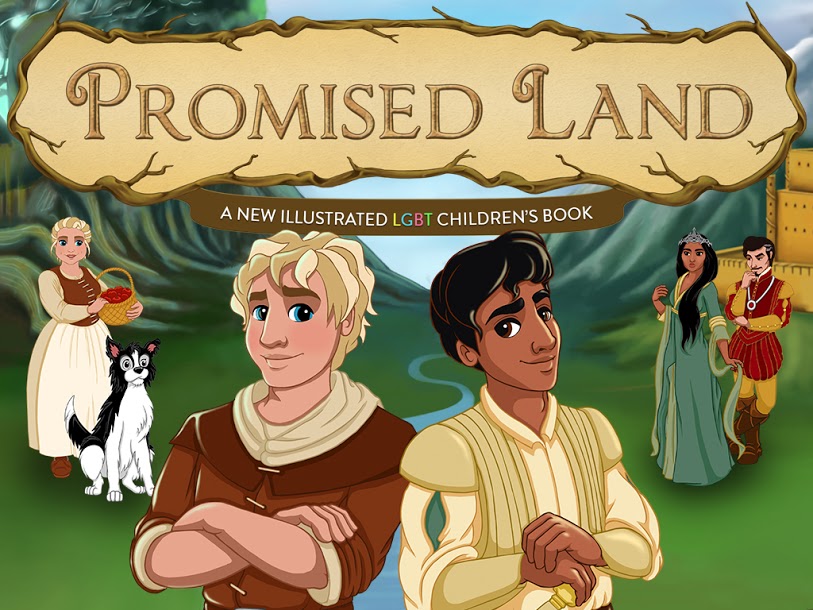

A new LGBT children’s story is due to be launched after raising over $6500 in a kickstarter campaign.
The book entitled Promised Land features a young prince and a farm boy who meet by chance and fall in love.
The New Zealand based duo behind the book, Adam Reynolds & Chaz Harris, are hoping that they meet their target of $25,000 NZD in order to reach their publish date in October.
ADVERT
[adinserter block=”1″]
Co-author Reynolds said he wanted to tell the type of story he never had growing up, “As a child, everything I saw and heard supported a ‘traditional’ relationship between a man and a woman. Our hope is to provide a safe environment for children and parents to discuss the different relationships, and help foster acceptance from a young age.”
“So much of what we see through the media and our parents when we are children forms our opinions and attitudes towards others and, more importantly, our attitudes towards ourselves. The conflict in our story does not arise from the sexuality of the main characters, it is merely about two young men who meet, fall in love and find their relationship caught up in the middle of a turf war,” explained cowriter Chaz Harris.