Category: News

  • There’s a new gay bar opening in Weston-Super-Mare

    There’s a new gay bar opening in Weston-Super-Mare

    A brand new LGBT+ venue is opening in September in Weston-Super-Mare.

    In contrast to the scene across the UK, Weston-Super-Mare is about to get a brand new queer space, Proud Bar after a nearly a decade of no gay scene.

    The bar recently shared a post saying it was “bar stool shopping”

    There are no gay bars in Weston at the moment, the longest standing bar, Alexandra Bar served its last pint in August 2009, before being rebranded as The Edge.

    Weston-Super-Mare does have a very popular annual pride, which is attended by thousands of people.

    The new bar is located 20 Boulevard BS23 1NA in Weston-Super-Mare and is due to open on the 19th September 2018 at 5PM.


  • Instagram removes body positive pictures of gay men

    Instagram removes body positive pictures of gay men

    Meat magazine has found itself falling foul of Instagram‘s “puritanical censorship” rules on nudity, despite not showing any genitals or exposed buttocks. The magazine, which also prints a calendar has not one but two of its accounts removed by the picture sharing site.

    Meat‘s first Instagram account had amassed over 15,000 fans when it was erased by the Facebook-owned company and the second account had 4000 fans.

    Speaking to THEGAYUK.com the magazine’s owner, Adrian said, “Meat‘s mission is to champion body positivity amongst gay men, in a community where many often feel sidelined by ‘stereotypical’ male beauty standards. The zine allows our followers and fans to celebrate and own their unique beauty, no matter their age, race, body shape or type.”

    Instagram has proved an essential part of promoting Meat‘s body-positive message to gay, bi and curious men across the globe. Adrian added, “Instagram doesn’t just help to promote the magazine, it allows our fans a space to see themselves as others see them, and to share and spread Meat‘s message of body positivity for all”.

    The pictures shared by Meat on its last account showed men, who though undressed, were not naked – due to the huge modesty circle on top of the genital area.

    The pictures that apparently failed Instagram’s nudity test.
    The pictures that apparently failed Instagram’s nudity test.

    However, in stark contrast Kim Kardashian has posted several fully nude pictures of herself – obtaining millions of likes and the platform has taken no action against the account.

    The pictures that apparently failed Instagram’s nudity test.

    The magazine has now created a new account and added even more heavily edited pictures so as to not fall foul of Instagram’s nudity rules.

    THEGAYUK.com reached out Instagram for comment.

  • Man sentenced for biting off the ear of a man he accused of looking at his genitals

    Man sentenced for biting off the ear of a man he accused of looking at his genitals

    A man has been handed a suspended sentence, and avoiding jail time, after pleading guilty to a brutal attack on a man he accused of looking at his penis.

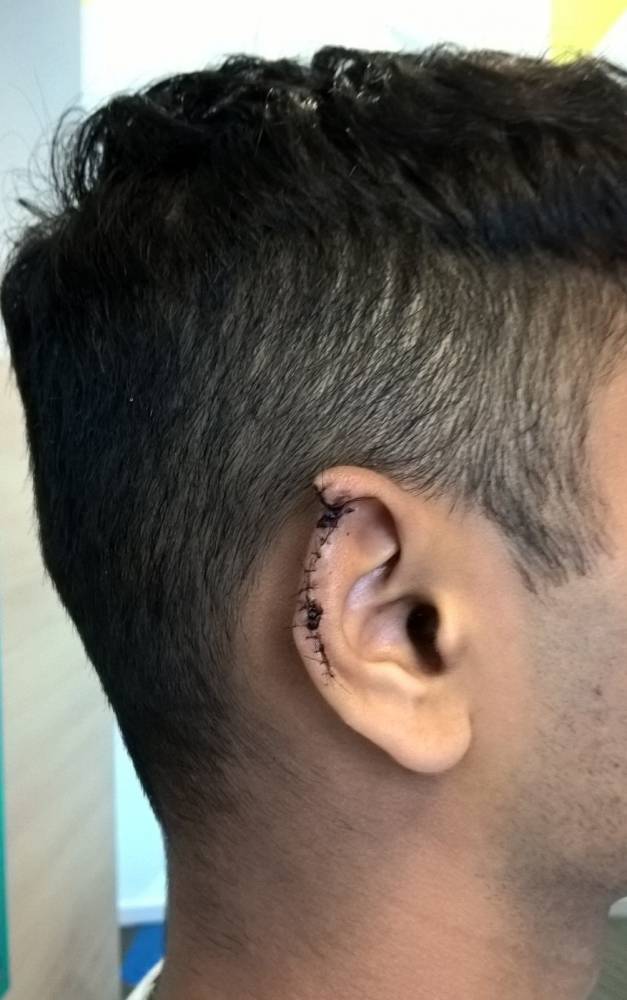
    Martin Gallagher, 28, pleaded guilty to a vicious assault on a man – punching him and biting off part of his ear. Gallagher accused the 20-year-old victim, who has left with a disfiguring scar on his ear, of looking at his genitals in the toilets of a nightclub in Newcastle.

    He had been drinking in the bar with friends in May last year when he became involved in an argument with a 20-year-old man in the toilets.

    Gallagher had accused his victim of looking at his genitals as he was urinating before following him back into the club and challenging to a fight.

    He then proceeded to attack the victim who desperately tried to explain to him that he hadn’t been looking at him.

    The victim fought back to protect himself but in the scuffle that followed Gallagher sunk his teeth into his victim’s ear, ripping part of it clean off.

    Security staff at Digital nightclub threw out both men.

    The victim was taken to hospital for treatment to his injured ear while Gallagher was arrested for his part in the brawl. He was later charged by police and pleaded guilty to assault occasioning grievous bodily harm at Newcastle Crown Court earlier this year.

    Detective Constable Lisa Common, of Northumbria Police’s Central CID, said the victim in the case was left permanently disfigured by the attack. Following the case, she said, “This was an unprovoked attack on a complete stranger who had gone out that night to socialise with friends.

    “Instead, he was confronted by a drunken male who was so out of control he bit the victim’s ear off.

    “The victim has been left suffering not just permanent physical injury, but emotional trauma as a result of the incident.

    “I hope he can take some comfort in the sentence that has been given today.”

    The victim in the case says he is now trying to rebuild his life and made a point of thanking DC Common for her support. He said, “The last year and a half have been some of the most testing and strenuous times in my life. At times I have been left demobilised by the sheer stress of it all.

    “I never could comprehend how one vicious incident could lead to so much pain for so many people until now.

    “I’m still coming to terms with my new reflection and hope for a future to bring better days.

    “That is largely thanks to the tireless work of Northumbria Police, especially from DC Lisa Common who has been nothing but an exemplary figure throughout the proceedings.

    “She has my gratitude for being a strength when I was at my weakest.

    “Her hours of work are thoroughly appreciated and I hope she continues to be a pivotal keystone in the community.”

    Gallagher was sentenced at Newcastle Crown Court on Thursday, September 6.

    He was handed a three-month curfew, ordered to carry out 200 hours of unpaid work. He was also made to pay a £140 victim surcharge and £5,000 in compensation to the victim.

  • Here are the Commonwealth countries where being gay is still a crime

    Here are the Commonwealth countries where being gay is still a crime

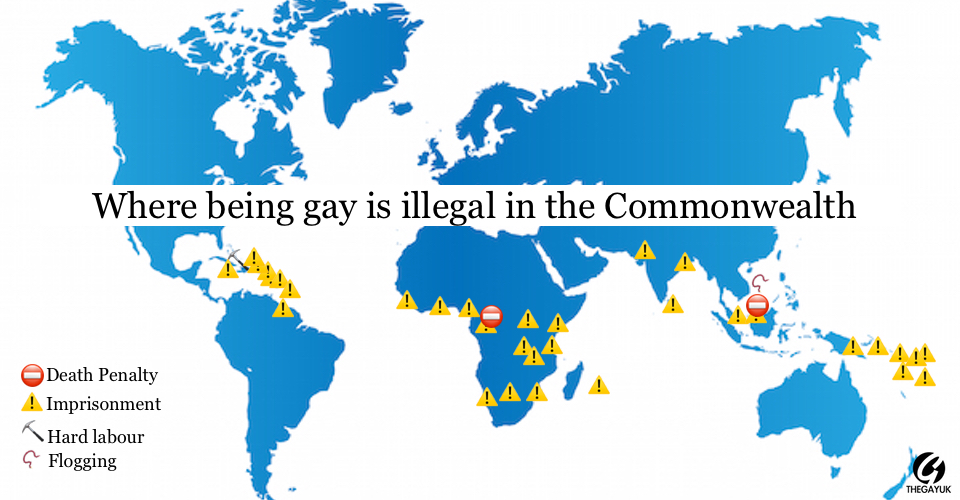
    There are over 70 countries where homosexuality is illegal. 35 of them are in the Commonwealth.

    As our Government looks to form closer relationships with the 53 countries that make the Commonwealth post-Brexit, we discover which of those nations have active legislation against being gay. There are 35 nations in the Commonwealth where it is illegal to be LGBT+, more specifically the laws usually only target gay and bisexual men. Some of these countries have harsh punishments for those caught in same-sex relationships, such as the death penalty, flogging or life imprisonment.

    1. Antiqua and Barbuda
    2. Bangladesh
    3. Barbados
    4. Botswana
    5. Brunei
    6. Cameroon
    7. Cook Islands
    8. The Gambia
    9. Ghana
    10. Grenada
    11. Guyana
    12. Jamaica
    13. Kenya
    14. Kiribati
    15. Malawi
    16. Malaysia
    17. Mauritius
    18. Namibia
    19. Northern Nigeria*
    20. Pakistan
    21. Papua New Guinea
    22. Saint Kitts and Nevis
    23. Saint Lucia
    24. Saint Vincent and the Grenadines
    25. Samoa
    26. Sierra Leone
    27. Singapore
    28. Solomon Islands
    29. Southern Nigeria*
    30. Sri Lanka
    31. Swaziland
    32. Tanzania
    33. Tonga
    34. Tuvalu
    35. Uganda
    36. Zambia

    Northern and Southern Nigeria are one nation but have different laws pertaining to homosexuality.

    Where did the anti-gay laws come from?

    Many of the countries that make up the Commonwealth were part of the former British Empire, which established forms of British law in colonies created by administrators. One of these is the infamous Section 377, which India recently struck down. The section prohibits homosexual acts, more specifically anal sex between men.

    Which countries in the Commonwealth have the death penalty for gay people?

    There are two nations which currently have the death penalty for same-sex relationships between men. Northern Nigeria and Brunei. There are some countries which have a maximum of life in prison, these include, Bangladesh, Barbados, Guyana, Pakistan, Sierra Leone, Tanzania and Uganda.

    In Jamaica, the penalty for same-sex relations is 10 years imprisonment and hard labour in Jamaica. In Kenya, the punishment is 14 years.

    Flogging?

    In Malaysia, you could be subject to flogging and 20 years in prison.

    What has the UK said it will do?

    In 2018 the UK’s government launched an LGBT+ action plan, in which it said it wanted to deal with issues faced by the LGBT community across the Commonwealth. Part of the plan specifically mentioned the Commonwealth. The government has offered support to Commonwealth countries wishing to reform discriminatory legislation. There is a £5.6 million programme, to be delivered through civil society organisations and will advance the legal equality and rights of all Commonwealth citizens, regardless of gender, sex, sexual orientation or gender identity. However, critics say that £5.6 million is a minuscule amount of money to split between the nations that could consider decriminalising homosexuality.

    The government also stated it would, “work through UK embassies, high commissions and through international organisations, including the United Nations, European institution and the Commonwealth, to protect and promote LGBT rights and to address laws discriminating against LGBT people”.

    What has Theresa May said about anti-gay laws in the Commonwealth?

    In April, the UK’s Prime Minister, Theresa May said that anti-gay laws in the Commonwealth “were wrong then, and they are wrong now”.

    In a speech to the biennial Commonwealth Heads of Government Meeting (CHOGM), Ms May said, “I am all too aware that these laws were often put in place by my own country. They were wrong then, and they are wrong now

    “As the UK’s prime minister, I deeply regret both the fact that such laws were introduced, and the legacy of discrimination, violence and even death that persists today,” she added.

  • Calls to stop saying “commit suicide” as it’s outdated

    Calls to stop saying “commit suicide” as it’s outdated

    A letter signed by Stephen Fry, Will Young and Sadiq Khan and 127 others is urging journalists to stop using the phrase “commit suicide”.

    The letter which was signed by 130 celebs, authors, politicians and community leaders is calling on journalists to stop using the terms “commit suicide” when writing about suicide.

    Along with Stephen Fry, Will Young and Sadiq Khan, Fearne Cotton, Ed Balls and DJ Lauren Laverne have signed the letter urging media outlets to “portray suicide in ways which reflect our modern understanding of this phenomenon.”

    The letter was released on 10th September, which is the World Suicide Prevention Day.

    (C) BIGSTOCK

    The letter calls for alternatives to be used, such as “died by suicide” as “committing suicide” suggests that suicide is “either a sin or a crime, or both.” Suicide has not been a crime in the UK since 1961. The letter also suggests that “committing suicide” also implies, “that to take one’s own life is a selfish, cowardly, criminal or irreligious act, rather than the manifestation of extreme mental distress and unbearable pain.

    Each year over 6000 people in the UK die when they take their own lives – and worldwide this number is a shocking 800,000 people per year.

    Reaching out to editors the letter states, “The language and images we see and hear in the media naturally shape our understanding and view of the world. This is why journalism will always be so important – we are influenced by the kinds of stories you choose to cover, the language you use in those stories, and the images that are chosen to illustrate them. This places an enormous burden of responsibility on editors, reporters, photographers, sub-editors, producers, presenters and all of the other people engaged in bringing us news, editorial and comment”.

    THEGAYUK.com has updated its style guide and adopting the suggestion by TalkingSuicide.co.uk to change the language it uses and will no longer use the term “commit suicide”.

    The Samaritans is available 24 a day on telephone number 116 123 if you are having suicidal thoughts, suffering from depression or anxiety or just need to talk.

  • HIV Infections in gay and bi men plummet by 31 percent since 2015

    HIV Infections in gay and bi men plummet by 31 percent since 2015

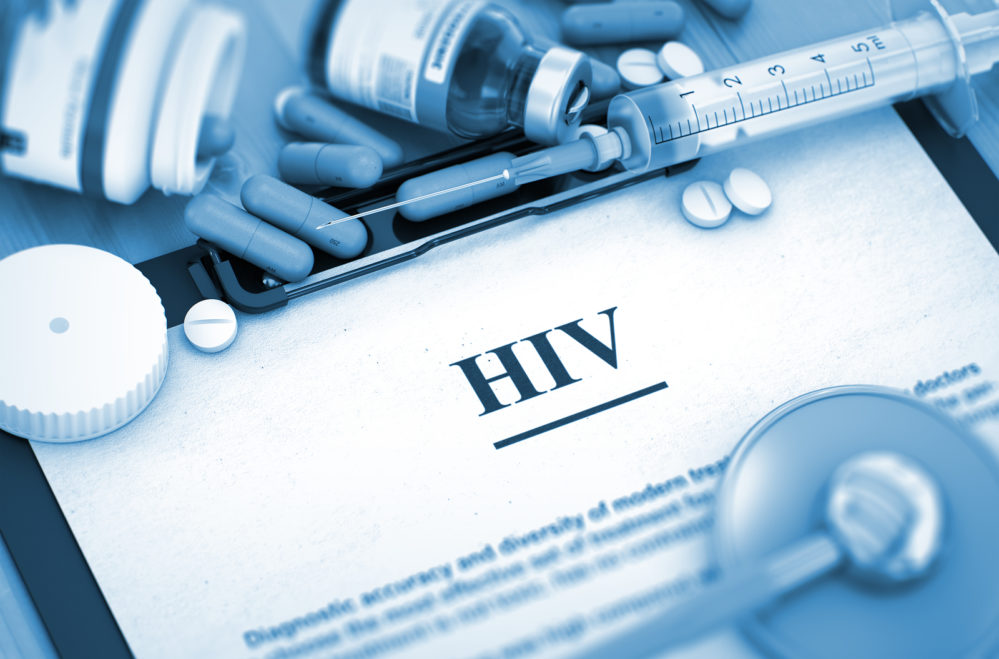
    New figures, published by Public Health England (PHE), show a 17% decrease in HIV diagnoses in the UK in 2017 and a drop of more than a quarter in the last two years (28%).

    CREDIT: tashatuvango-bigstock

    However, the new statistics also show that 42% of people with HIV were still being diagnosed late; with heterosexual men and individuals aged 65 and over the most likely to experience late diagnosis.

    HIV diagnoses in gay and bisexual men have dropped by 31% since 2015 and this decline is particularly focused in parts of London. This represents one of the most significant advances in HIV prevention since the beginning of the epidemic, but now we need to ensure we see the same declines in other groups.

    Ian Green, Chief Executive at Terrence Higgins Trust, said, “Today’s drop in new HIV diagnoses among some communities in the UK clearly shows we have the tools to end the HIV epidemic in this country. But, rather than patting ourselves on the back, we need to redouble our efforts, work harder and get to zero HIV transmissions.

    “There is continued progress among some gay and bisexual men, particularly in London, with a 31% fall since 2015. This follows on from last year’s numbers where we saw the first ever decline in new diagnoses among gay and bisexual men.

    “This turnaround in one of the groups most affected by HIV shows what can be achieved by utilising everything we’ve got in the fight against HIV. That includes the widespread availability of condoms, a range of ways and places to test for HIV, early diagnosis and access to treatment, and increasing the availability of HIV prevention pill PrEP. It also shows that initiatives like National HIV Testing Week are working.

    “But we need to work harder and look more broadly to make sure the decline in new diagnoses reaches other groups affected by HIV in all corners of the UK – not just in London and the South East.

    “For example, rates of late diagnosis remain worryingly high with 42% of all those diagnosed being diagnosed late, which is after the immune system has already been damaged. Among black African heterosexual men rates of late diagnosis are now 72% while in those 65 and over it’s 60%, which is unacceptably high.

    “For the first time, there has been a drop in the number of diagnoses reported among heterosexuals not from black African or black Caribbean communities with a fall of 20%. This is welcome news but more needs to be done to understand what’s behind this decline and lessons learned to ensure the number of new diagnoses continues to fall.

    “We welcome the inclusion of women only data tables for the very first time. But while around a quarter of new diagnoses continue to be among women, more needs to be done to ensure women are invisible no longer when it comes to HIV and properly included in HIV prevention campaigns. Similarly, this year we also have trans-specific data for the first time, which is so important in ensuring we have an accurate picture of how this group is impacted by HIV.

    “We must also ensure Relationships and Sex Education has a strong emphasis on sexual health and HIV when it becomes compulsory in schools in England from 2020. Currently, more than one young person a day is diagnosed with HIV in the UK and that’s one too many. We have the tools to prevent HIV but we need to ensure our young people know what they are and how to access them.”

    On the reason for this continued decline, Ian Green added, “HIV treatment has undoubtedly played a significant role in this decline. Now, when someone is diagnosed, they are encouraged to start treatment as soon as possible. This enables them to more quickly achieve an undetectable viral load, which means HIV can’t be passed on.

    “Testing options have also improved in recent years and now HIV self test kits, where you test at home and get a result within 15 minutes, are sold on the high street. We’re also offering these tests for free to people from the communities most affected by HIV. But testing at home isn’t for everyone and it is vital we have fully funded and easily accessible sexual health services for those who want or need a face to face service.

    “PrEP is a game changer for HIV prevention and almost 100 per cent effective when taken as prescribed. PrEP’s portrayal in the media means it is all too often seen as something only for gay men – but that certainly isn’t the case and we need to ensure it is fully utilised by all groups affected by HIV, including both black African people and trans communities.

    “Although PrEP is available on the NHS in Scotland and via an uncapped pilot in Wales, it is only available in England as part of a 10,000 place trial and we know that many sites have filled all their places for gay men and are having to turn people at risk of HIV away. In light of today’s data, we’re continuing to strongly call on NHS England to play its part in getting to zero HIV transmissions by making PrEP available to all who need it on the NHS in England.”
  • A monthly group for LGBT+ people living with dementia celebrates 1 year anniversary

    A monthly group for LGBT+ people living with dementia celebrates 1 year anniversary

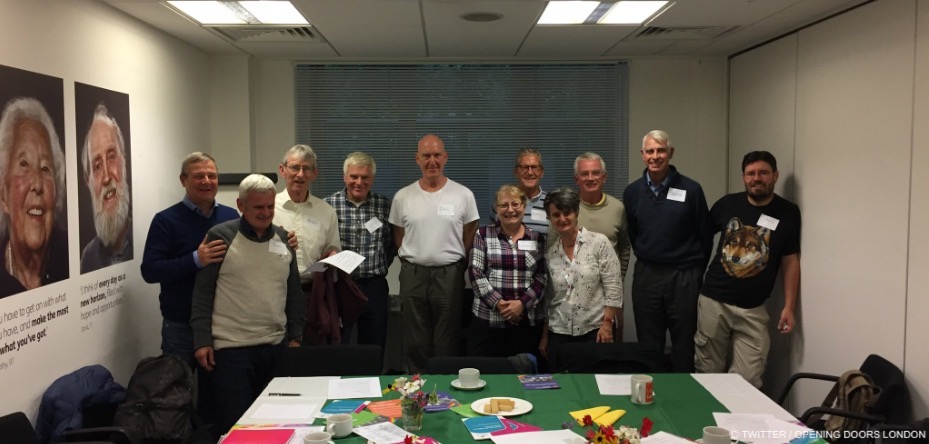
    The group, called Rainbow Memory Cafe has just celebrated its first birthday.

    Opening Door London’s group for LGBT+ people living with dementia, concerned about cognitive decline or caring for someone with dementia is still going strong since its first meeting in October 2017.

    The group meets on the second Monday of every month from 2-4pm at Tavis House in Euston. Members have reported a real sense of ‘coming home’ in the group meetings, feeling safe to share free of judgement from others.

    It’s been a busy year for the group, which has had high profile media coverage from Channel 4 and BBC London News.

    Whilst numbers are steady, Rainbow Memory Cafe is still keen to welcome new members. Find out more click here.

  • Man arrested after teenage boy sexually assaulted in Rochdale

    Man arrested after teenage boy sexually assaulted in Rochdale

    A 60-year-old man has been arrested after a teenager was sexually assaulted while he was fishing in Rochdale.

    Earlier today, Thursday 6 September 2018, officers from GMP’s Rochdale Borough arrested a 60-year-old man on suspicion of sexual assault

    He remains in custody for questioning.

    This is in relation to a report received by police on Tuesday 4 September that a 14-year-old boy had been sexually assaulted by the canal near to Hollingworth Road, Littleborough at around 5:20pm.

    The teenager had been magnet fishing when he was approached by a man who told him to head to another body of water a short distance away as he’d have better chance of success.

    When he moved to that location, he was sexually assaulted by the man before managing to run away to safety.

    Detective Sergeant Paul Davies of GMP’s Rochdale Borough, said, “This has been a fast-moving investigation and we have arrested a man in the Rochdale area on suspicion of sexual assault.

    “He remains in custody for questioning, however, our investigation continues and we are still keen to speak to anyone who may have information that can assist us to please get in touch.”

    Anyone with information should contact police on 0161 856 8441 quoting reference number 1851 of 04/09/18 or the independent charity Crimestoppers, anonymously, on 0800 555 111.

  • Gay sex now legal in India

    Gay sex now legal in India

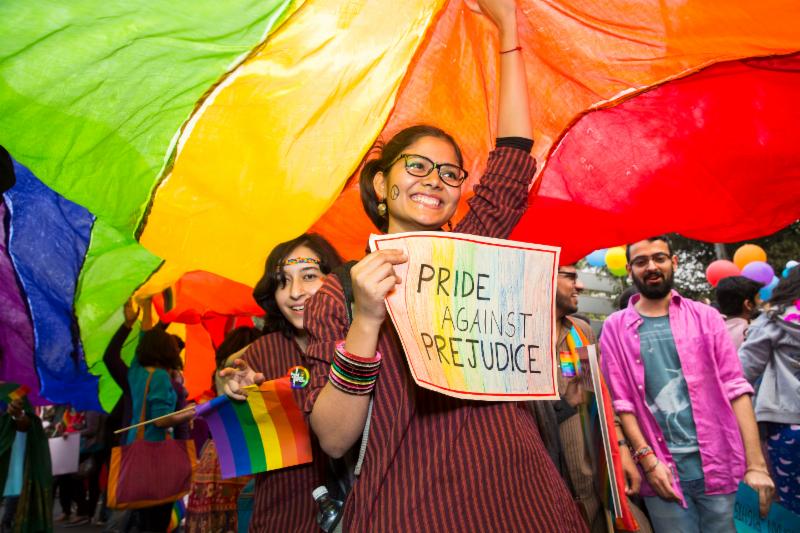
    A law known as Section 377 has been overturned by the Indian Supreme Court.

    The court’s ruling reverses a 2013 decision that a colonial-era law, known as section 377, under which sex between two men is categorised as an “unnatural offence” would stay on the books.

    According to the BBC, “It is one of the world’s oldest laws criminalising gay sex, and India has been reluctant to overturn it”

    That is until now.

    Speaking about the ruling, leading LGBT+ rights activist, Peter Tatchell said,

    “This historic legal ruling sets free from criminalisation almost one fifth of the world’s LGBT+ people. It is the biggest, most impactful gay law reform in human history. I hope it will inspire and empower similar legal challenges in many of the 70 countries that still outlaw same-sex relations, 35 of which are member states of the Commonwealth.

    “Ending the ban on homosexuality is just a start. There are still huge challenges to end the stigma, discrimination and hate crime that LGBTs suffer in India.

    “Indian LGBTs now revert to the legal status of non-criminalisation that existed prior to the British colonisers imposing the homophobic section 377 of the criminal code in the nineteenth century.”

    Read the full story on BBC.com

  • Gay and bi guys who are lonely are most likely to have bareback sex

    Gay and bi guys who are lonely are most likely to have bareback sex

    Gay, bi and queer men are 67 percent more likely to have unprotected anal sex.

    Madeinitaly / Pixabay

    A recent study from China has found that lonely gay men are most likely to have condomless sex. Of the 507 men that took part in the study, those “who reported feeling lonely were more likely to have had condomless receptive anal intercourse in the past 6 months.”

    The same men also said that they felt “hopeless for the future” and reports of higher levels of internalised homophobia.

    The study showed that gay and bi men in China are suffering from high rates of depression and loneliness, of the 507 who took part, 26.8 and 35.5% reported moderate-to-severe symptoms of depression and feeling lonely, respectively. Despite homosexuality not being illegal in China LGBT people are subject to severe societal pressures.

    The aim of the study was to help demonstrate that gay/bi and queer men with negative mental health in high-income countries were at risk of HIV infection. “We sought to describe depression and loneliness and identify their correlates among Chinese MSM”.

    Without protection, like condoms or access to PrEP, men who have bareback sex are more at risk of contracting HIV than those who use condoms or who are on PrEP and who test regularly.

    (C) BIGSTOCK

    Chances of passing on HIV are Zero if you’re on effective treatment

    A recent study found that there is ZERO chance of passing on HIV if an infected partner was on effective treatment.

    The PARTNER 2 study results found no cases of HIV transmission between men when one partner had HIV but was on effective treatment. This finding offers further confirmation that an undetectable viral load prevents sexual transmission of HIV. This understanding is frequently expressed as Undetectable equals Untransmittable, or U=U.

    The 14-country study found no transmissions between gay couples where the HIV-positive partner had a viral load under 200 – even though there were nearly 77,000 acts of condomless sex between them.

    China’s LGBT rights

    China has a chequered history in LGBT rights – same-sex sexual activity has only been legal since 1997, whilst the country does not recognise gay relationships or marriages. Same-sex couples are not permitted to adopt and there is no legal statute to protect gays from discrimination. However, trans people are legally permitted to change their legal gender.

    Homosexuality was removed from the Ministry Of Health’s list of mental illnesses in 2001.