Category: On Campus

  • A study finds that Male/Female WC signage could be replaced by room descriptions

    A study finds that Male/Female WC signage could be replaced by room descriptions

    A research team were granted £50,000 to study whether terms to describe public toilets were accessible. They’ve released their findings.

    A research team from Sheffield Hallam University were awarded nearly £50,000 in June last year, from the Arts and Humanities Research Council to research the way public toilets are designed, “in an effort to assess if they are fit for purpose for the UK’s diverse 21st Century society.”

    The paper , which was published last month, points out that school toilets are one of the first places where children learn that “disabled and queer bodies are out of place”.

    The research is now complete and they managed to find some interesting ways of ensuring that people don’t feel left out or marginalised when using public facilities. The 7000-word report outlines how some respondents thought that changing the male/female icon with a description of the room’s content could be more helpful.

    Education and Disability Studies researcher Dr Jenny Slater wrote,

    ” A suggestion from participants was to write on the toilet door the contents of the toilet cubicle, e.g. toilets with urinals, toilets without urinals, larger toilet with grab bars.

    “Participants thought it was important for others to not judge people’s choice of toilet, but to allow people to use whichever space was accessible for them (‘accessible’ being used in the broadest sense of the word).

    “This would mean critically considering the signage on toilet doors in order to understand how toilets do not just illustrate categorisation by gender, disability (and historically, race), but also actively produce such categories.”
  • Milo Yiannopoulos school lecture cancelled after Department for Education gets in touch with school

    Right-wing commentator Milo Yiannopoulos was supposed to host a lecture at his former school, The Langton Grammar School for Boys, however, it has been cancelled due to “safety concerns” after the school was contacted by the Department for Education’s (DfE) “counter-extremism unit”.

    CREDIT: LeWeb14 / Flickr

    Milo Yiannopoulos, the self-proclaimed, super villain of the internet has had a scheduled talk cancelled after the school was contacted by the Department for Education’s (DfE) “counter-extremism unit” after concerns about safety were called into question.

    Around 220 students had signed up to hear Milo speak. A spokesperson for the school noted that, “the staff and students of the school were overwhelmingly in favour”, of Milo’s visit.

    Concerns for the security of the school site and the school’s community were raised after activists planned to demonstrate during the event.

    The school’s spokesperson said,

    “This decision was taken following contact from the DfE counter-extremism unit, the threat of demonstrations at the school by organised groups and members of the public and our overall concerns for the security of the school site and the safety of our community.

    “We note that, within 24 hours of advertising the event, 220 Langton sixth formers had, with parental consent, signed up for the event and that objection to our hosting Yiannopoulos came almost entirely from people with no direct connection to The Langton. The staff and students of the school were overwhelmingly in favour.

    “Whilst disappointed that both the pastoral care and intellectual preparation we offer to our students has been called into question, we at The Langton remain committed to the principle of free speech and open debate and will resist, where possible, all forms of censorship.”

    Writing on his Facebook page on Monday, Milo said,

    “My old high school has been bullied into canceling my talk on Tuesday by the “counter-extremism” unit at the U.K. Department of Education.

    Who even knew the DoE had a counter-extremism unit? And that it wasn’t set up to combat terrorism but rather to punish gays with the wrong opinions? Perhaps if I’d called the speech “MUSLIMS ARE AWESOME!” they’d have left us alone. Disgusted.

  • DILEMMAS | My new flatmates are homophobic

    DILEMMAS | My new flatmates are homophobic

    This week, Dannii Cohen answers the fears of a Uni student who has moved into a new home only to find that one of his flatmates is homophobic.

    CREDIT: Janeb13 / Pixaby /CC
    CREDIT: Janeb13 / Pixaby /CC  / FILE PHOTO

    Dear Dannii,

    I’ve just moved to Manchester to start university and rather than stay at the halls of residence I’ve decided to share a house with some people from the course. I know one of the guys already, a good friend who’s straight, but the other two people are new to me.

    I’d not yet had chance to come out to the household when one of the guys said something really homophobic, which upset me. Even more upsetting was my friend who knows me also said nothing. I’m not sure what to do as the guy is a lot bigger than I am and I’m not sure how he would take me telling him I’m gay. I don’t want to cause problems in the house as I have signed up for 12 months. What should I do?
    Many thanks for helping,

    David.

    Dear David,

    Thank you for writing in.
    Oh, what a horrible situation and difficult to find yourself in. Feeling unsafe in the place where you are supposed to unwind and study is terrible.

    So let’s see what possibilities there are for you:
    In your letter, you say you don’t want to cause trouble. The thing is: you have every right to speak out. You matter as much as any other person living in that household and deserve to be who you are without fear.

    The first point of action should be your friend. Try to get him alone one evening, maybe for drinks, and discuss your feelings. Tell him you feel uncomfortable and what could be done.

    This might seem like a very difficult thing to do, but you have to find out if your friend has your back. He either went along with the joke because he didn’t realise how you felt or he might be a different person with his other friends. You have to know this before you talk to anyone else in the house.

    When you know this you can sort things out: If your friend has your back you can start talking to the others and get some other people on your side. If this works you might gradually feel better.

    If your friend does not have your back or if talking to the group does not resolve anything talk to the teachers and counsellors at school. Maybe there is a place open somewhere else and they can help get you out of the twelve months you signed up to. These are circumstances beyond your control so there has to be a way for you to get out of your contract. No-one should be forced into a situation where they feel uncomfortable or unhappy every day.

    If you are out to your family or other friends, maybe they can help you too. Talk to them about it.

    Have you made new friends on campus who you think might understand, talk to them too? Even if you are sure they don’t know anything it is always good to talk. And who knows they might surprise you. Create your own network of support.

    Remember, if you ever feel unsafe in the house for whatever reason: get out immediately. No point in waiting for something bad to happen.

    Always with love,
    DANNII

    Have you got a question for Dannii? Use the form below to get in touch

  • How can I find the balance between free time and work?

    Homework, cramming, learning, remembering, training your brain. All these are very important whether you are a student trying to pass your exams, trying to create a presentation or an actor learning a role.

    CREDIT: © peus Depositphotos

    But free time, downtime is equally important, because the brain needs time to rest, recharge and store all the information given.

    Unfortunately the brain – and the person carrying that brain- enjoy and crave that free time a lot more than all the learning stuff and the time to learn becomes smaller and smaller, until you find yourself a days before your exam, performance, presentation with a nice clear brain, but nothing learned. What do you do? You study non-stop and pull all-nighters and turn up at your big moment like a zombie, often failing because you’re too tired to focus and your brain has overloaded. Or sometimes you just give up.

    Or sometimes you just give up.

    This is something that can easily be avoided with a little planning. If you play your cards right you can both study and enjoy downtime. So, how do we do it?

    Study planning
    Studying and downtime can coexist
    Rest is essential.
    You need free time
    The best thing to do is think about what you want to accomplish in a day, see if it is feasible and then make a list.

    This list could read:
    6.00 Get up, do some last minute checks, breakfast, wash, go to college/work/rehearsals
    15.00 Go home, eat something start study immediately.
    18.00 Take a break, do what you want.
    21.00 Check in if you haven’t forgotten anything.
    22.00 Watch some TV, read or whatever.
    23.00 Go to bed to get at least a 7-hour rest.

    At the weekends? Use Saturdays for all the studying, and keep the Sundays for yourself for one day all free, all for you.

    It really is that easy!!

    This really is the most effective schedule to keep. There is you time and study time all together in the right place.

    But sadly we often don’t keep to these schedules. Life gets in the way, or you lose track of time.
    These days that last part can be fixed easily, we all have mobiles, and an organiser app can be downloaded easily and be tailored and programmed to fit your needs.

    So yes, make a schedule and learn to keep to it as much as humanly possible. Maybe through Mindfulness, there are great free courses online. Maybe through sheer will power. There is always a way to a better, more organised life.

    If all else fails and you really feel you need more help there is another option open to you: a life coach! A life coach is someone who’ll guide you on your journey and keeps you on track. If you think you need the help of someone trained in reorganising peoples lives for the better, you can find out all there is to know on life coaches and what they can do for you here: http://www.lifecoachspotter.com/how-to-find-life-coach-guide/

    Whatever you do, just remember: The answer is out there for you, and if you really want it, you can do it!!

  • Gay Guys: 17 things you need to know for FRESHERS WEEK

    So it’s Freshers Week and we asked our readers what they wished they had known before embarking on the emotional roller coaster FRESHERS WEEK can be.

    Gay students
    CREDIT: ©-pressmaster / Depositphotos.com

    1) Come out and get it over with right at the beginning – when I came out I expected thunder and lightening but no one acted surprised and were really supportive. – Grammie


    2) Take a large bag so you can put all those freebees in. – Graham


    3) Mature aged lesbians will change your life. Their wisdom knows no bounds – Andy


    4) Get a Sugar Daddy I presume you already have an adoring older dude for a BF who will love you through this thing called undergrad?


    5) The very first day I met the guy who would become my very first boyfriend. Literally within the first hour – I met the guy who would be my first kiss, take my virginity, show me what love felt like and eventually break my heart. It lasted 2 and half years – in a total whirlwind relationship that was all consuming. I was a complete clamp on. Although I don’t regret it, I wish perhaps that I had been a little more open with myself and with other around us – and perhaps let our relationship be a little more open. – Jake

    6) Well, I think I knew how to be more gentle and aware of anyone around me. It was not too serious to be conscious all the time but some of them would have had noticed me if I had behaved different from them. – Neo Vi


    7) Leave your door open when you’re unpacking. It’s a great way to check out the talent as they start bringing in their stuff. – Paul


    8) Don’t fall for the straight cute guy. It will never work out.


    9) Bring cakes… Cakes make friends – John


    10)  Let the others know what you’re into – I put loads of musical theatre posters on my wall – it became quite the talking point. – Chris


    11) Get to know the popular girl in the dorm. She’ll be a hoot and she’ll stick up for you if you run into problems. – Sarah


    12) Don’t forget about the gay scene. Don’t always go straight… Get your friends to go to the nearest gay bar! – Mike


    13) Try not to have sex with the guys in your halls. It could get very awkward, very quickly. – Ben


    14) Don’t forget the lube and condoms…


    15) Join the LGBT+ society and get involved with student politics.


    16) Look out for LGBT subjects. If you can do a module on Queer history or studies, it’s really worth it.


    17) You will get FRESHERS’ COUGH. Stock up with medicines… – Pat

  • Gay Men: tell us the things you wish you had known when you started university

    So it’s nearly freshers’ week and thousands and thousands of young gay and bisexual guys will be taking their first lectures, getting their first student loans and perhaps getting their first boyfriends!

    CREDIT: ©-pressmaster / Depositphotos.com
    CREDIT: ©-pressmaster / Depositphotos.com


    Perhaps it’ll be the first time they get truly drunk…


    Or they’ll find their first boyfriends…

    Maybe they’ll feel accepted for the first time…

    What did you find out that first fateful week at university?


  • Scottish Father to walk 96 miles to tackle homophobia in schools

    Scottish Father to walk 96 miles to tackle homophobia in schools

    A Scottish Father has kick-started a fundraiser in support of tackling homophobia in schools, as he tells of his fears for his son’s future within the education system.

    Neil


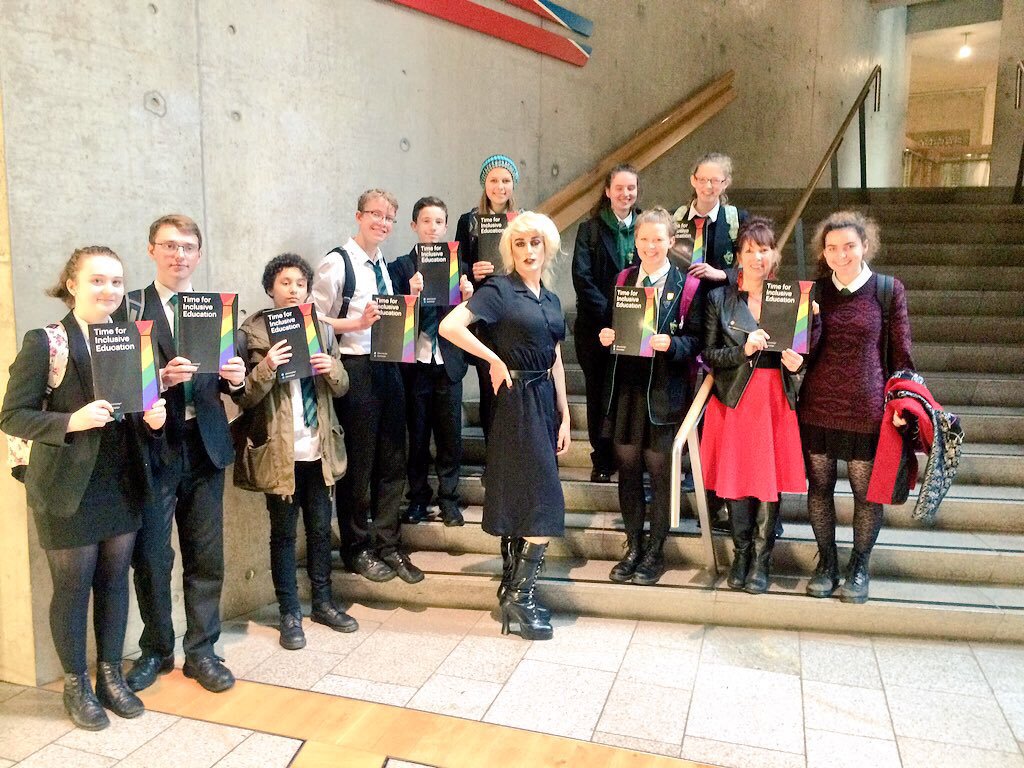
    Glasgow resident Neil Dallimore, 33, plans to walk 96 miles along the West Highland Way – from Milngavie north of Glasgow to Fort William in the Scottish highlands – and is seeking public donations for his efforts, in order to raise funds for campaign group Time for Inclusive Education (TIE).

    TIE are calling for LGBTI issues to be taught in all Scottish schools in an effort to tackle high rates of mental health, self harm and suicide amongst LGBTI young people.

    Dallimore has an 11 year old son who recently told him that he was gay but asked for it be kept a secret from his school teachers because he feared that he would be “treated differently”.

    He said,

    “To hear your child ask that a part of his identity not be known to elders that are there to educate, protect and support him is a gut punch. His reason was simple enough – another boy had been open about his sexuality last year and afterward the teachers treated him differently in a negative way.

    Too often I hear stories from my kids about how they’ve either been the target of or personally witnessed homophobic bullying and it’s a problem that few teachers have seemed to know how to handle. It’s worrying and upsetting to see your child treated like an outsider by other children based on sexuality and it must change.”

    Despite it being 16 years since Section 28 was repealed in Scotland, there has been little progress towards eradicating homophobia in the playground. Now, Dallimore intends to address this head-on by supporting TIE’s calls for LGBTI inclusion within schools.

    He said,

    “What TIE are doing that gives me hope, is making sure that – if nothing else – when children go to school, no matter who they are, no matter what they hear hateful people say, they will have an enlightened place, a safe place and they will know that they are equal, natural and loved.”

    During this year’s parliamentary election, every major political party had included manifesto commitments endorsing TIE’s calls for teachers from all schools to received specific training on how to challenge homophobia and discuss LGBTI issues in the classroom.

    First Minister Nicola Sturgeon – who has described herself as a “huge supporter” of the group – restated her pledge to work with the campaigners during a parliamentary debate on LGBTI equality last month.


    This article is by Time For Inclusive Education

  • 5 Things To Do Now You’ve Finished Your A-Levels.

    Now the hard work is over, here’s five things to remember to do once you’ve finished your A-Levels.


    1. Don’t be pressured into anything.

    When I was doing my A-Levels my tutors pressured me to go to university. I had no encouragement to find a job or an apprenticeship. I was not ready for university so I decided not to go, I was even called a fool by a teacher. If you don’t think university is right for you then don’t go. Remember, the same course will be available at a university for decades, however the right apprenticeship or dream job might be a one off.

    2. Find alternatives.

    It is unlikely to be rejected by a university and end up without an option. But if that eventuality does come around then be prepared. Apply for part-time and full-time jobs, apprenticeships, traineeships and anything else you can get your hands on that interests you. Perhaps even doing a year at a college will be good for you, make the most of free education. You can never have to many qualifications and experience.

    3. Never take something for the sake of it.

    Never go to university because you can. Go because you want to. It is the same with jobs, I made that mistake and it affected my mental and physical health. There is no feeling worse than going to work anxious and stressed and coming home exhausted and drained. The right people, places, and professions will all come around to you. Everyone has a purpose.

    4. Do what you enjoy.

    So what if you don’t want to go to university with your friends, you can stay in contact. I was one of a handful of people from my year who didn’t go to university and I am in a much better position than some. I have a strong friendship circle and have a good lifestyle. If your passion is photography then pursue it. Go to university and study it and get that degree. If that is not for you, get a job to fund your adventure (photography can be very expensive!) and make the most of your free time.

    5. Everything will fall into place.

    Take it from me. I left after my a-levels not wanting to go to university, I was called a fool by teachers and left a few people confused. I took a job I hated hoping I could make something of it. My biggest mistake was taking a job I didn’t love. Pair that with some stressful life experiences and you get some mental and physical health issues! It worked out in the end. I was offered an apprenticeship with a photographers studio in London. I had never been happier than the day I handed in my notice knowing in a weeks time I would be on the path to my personal happiness. And to this day, I have never loved doing something so much. I’ve always wanted to make my career something I loved. And now I can.

    Here’s to your future. Whatever path you choose, make it the right one for you. Do what you love and you will love what you do.

    Follow Matthew Porter on Twitter.


  • Catholic Church in Scotland speaks in support of tackling homophobia in schools

    The Scottish Catholic Church has indicated that they are keen to tackle homophobia in schools.

    The Catholic Church in Scotland have spoken in support of dealing with homophobia in the classroom according to campaign group Time For Inclusive Education (TIE).

    TIE have been campaigning to introduce teacher training in Scottish classrooms to deal with and tackle homophobia in schools. The campaign has received the support of a host of cross party politicians; including Scottish Liberal Democrats leader Willie Rennie, co-convener of the Scottish Green Party Patrick Harvie and Conservative MSP Oliver Mundell.


    ALSO READ: Interview with the co-founders of TIE


    Speaking with the Sunday Herald this weekend, a spokeswoman from the Catholic Church in Scotland responded to the campaign’s calls, stating,

    “The Church is working with the Catholic Head Teacher association to ensure that all teachers have adequate knowledge, understanding and training and feel confident in addressing all aspects of relationships education, including LGBTI matters, in an appropriate and sensitive way.”

    Last month, party leaders pledged swift action on the group’s calls for LGBTI inclusive education during a parliamentary debate on which steps should be taken to advance equality following the Orlando massacre in June which left 49 dead and 53 others injured.

    During the session, First Minister Nicola Sturgeon, who has publicly supported the TIE campaign, restated her pledge to work with the campaigners during her term in government.

    She said,

    “I don’t want to live in a country, yet alone be First Minister of a country, where any young person has to feel that, somehow, because of their sexual orientation or gender identity, they are subject to judgement or made to feel in any way less than any other individual in our society. I have given a commitment to working with the campaign for inclusive education.”

  • Gok Wan | Tackle homophobic bullying in the playground

    Gok Wan | Tackle homophobic bullying in the playground

    Designer, cook and TV presenter Gok Wan has spoken out in support of LGBT young people, ahead of his keynote speech this Friday 8 July in London at lesbian, gay, bi and trans equality Stonewall’s Education for All Conference.

    CREDIT: Rixie / BigStock
    CREDIT: Rixie / BigStock


    Gok Wan said,

    “It’s so important for all of us to do everything we can to help prevent and tackle prejudice and discrimination – and we know that this sort of behaviour starts in the playground. Bullying is never acceptable, but making people feel threatened and alienated because of who they are and what makes them different is heart breaking.

    “We need to teach young people that this is not the way to behave and encourage them and in fact all people to understand that what’s ‘banter’ to some can be deeply hurtful to others. For us to get this right in schools, it’s vital that we recognise the role that teachers have to play, and ensure that they have adequate training to deal with this as it arises.

    “Stonewall is doing just that – which is why I am a proud supporter of the work it does. Whether you’re LGBT or not, we all have a role to play in standing up against hate, which recent events have taught us now more than ever before”.

    Stonewall’s annual Education for All conference, kindly supported by Prudential, is Britain’s leading event on preventing and tackling homophobic, biphobic and transphobic bullying among young people.

    It brings together hundreds of education professionals through a series of panel discussions and interactive workshop as well as a dedicated youth stream for 150 young people.

    Yvette Cooper MP, mental health campaigner Johnny Benjamin, Muslim drag queen Asifa Lahore, trans activist Fox Fisher, Maria Munir, Juno Roche and Leo Waddell (from documentary I Am Leo) are amongst other speakers at the conference this year.

  • Could homophbia in Scottish schools be a thing of the past?

    Could homophbia in Scottish schools be a thing of the past?

    The campaigning group Time For Inclusive Education has announced a new training scheme today (22 June), as they step up their efforts to end homophobia in Scottish schools.

    Supplied by TIE
    In the week marking sixteen years since the repeal of Section 28 (Clause 2A in Scotland), which banned the discussion of homosexuality in schools, the Time for Inclusive Education (TIE) campaign have outlined their plans to train school staff on LGBTI issues.

    The scheme will pilot with two free to attend training days in Glasgow and Edinburgh in October, and will be centred around how teachers can tackle homophobic attitudes and discuss LGBTI issues with their pupils in primary, secondary and additional support needs education.

    The course has been created by TIE campaigners and teachers, including John Naples-Campbell, Scott Mowat and Danielle Campbell, who have each been recognised and awarded for their work on equalities education in schools.

    The move marks the first time that a training course which is specific to LGBTI issues has been available to educators free of charge and is inclusive of the additional support needs sector.

    TIE emphasised that the decision to organise training has been the result of working with schools, teachers and young people for the past year, and has been created as a response to the “systematic barriers” which prevent teachers from accessing training.

    A TIE spokesperson said,

    “For a year now, we have been campaigning for the Scottish Government to ensure that all schools are inclusive of LGBTI identities, and while we have considerable political support for our cause – we have encountered some worrying trends which must be addressed immediately. Despite being sixteen years since Clause 2a was repealed, we are still seeing it’s impact in schools across the country. Indeed, we have met teachers who still think that the clause is in place, and we cannot wait for political change before taking steps to rectify this.”

    “Also, as a result of cuts to Continuing Professional Development (CPD) budgets, many schools are struggling to cover the costs of training their staff on LGBTI issues. This is why we have ensured that our course will remain free of charge and will be held out of school hours on Saturdays. Our events are a response to the systematic barriers which prevent schools from becoming inclusive of LGBTI young people, and we would encourage all teaching staff – whether probationary, trainee or currently practicing – to attend in October.”

    Attendees at the training course in Glasgow will be welcomed with speeches from human rights lawyer Aamer Anwar, Scottish Greens MSP Patrick Harvie and the Very Reverend Kelvin Holdsworth of the Scottish Episcopal Church.

    The training courses will be held on the 1st October in Glasgow, and 8th October in Edinburgh.

    The announcement comes after party leaders pledged swift action on TIE’s calls for LGBTI inclusive education last week during a Holyrood debate on the Orlando shootings.

    The campaign has received support from figureheads including First Minister Nicola Sturgeon, Scottish Liberal Democrats leader Willie Rennie, Harry Potter actress Emma Thompson and gay rights campaigner Peter Tatchell.


    This aritcle was written by TIE Campaign follow them on Twitter