Category: On Campus

  • COMMENT | My worst day of school was always the “first day back”

    COMMENT | My worst day of school was always the “first day back”

    If you ever want to know why I can always manage to put my foot in it – at any given opportunity, it goes way back to the multitude of “first-days”

    The last week of August was always hell.

    Except the one between primary and secondary school. That’s because I had, at the age of 10, decided that I didn’t want to follow the rest of my primary school classmates down the normal route of going to the secondary school that ours was a feeder for. Why? Well, every day of my existence at my primary school was filled with homophobic bullying. You see, I was unlike all of the other boys.

    I played with the girls, I despised sports but was surprisingly good at skipping.

    In my first month of primary school, I decided, that the boys’ uniform was far too bland and that the girls’ socks were much more in keeping with my sensibilities. Obviously, as a five-year-old, I had no means of obtaining my own pair of the crochet patterned socks, but I did notice a pair in the lost property. I’ve always had an eye for detail and a bargain bin. I snuck in one lunchtime and, I didn’t steal, I borrowed them.

    I wore them proudly into the schoolyard, leaning up against the playground wall. I was working it. As far as I was concerned, I was the pretty minx in my mother’s magazines. That was the day my bully-free school days ended.

    Whoever said your childhood years are the happiest of your life, clearly wasn’t a queer kid. You grow up quickly when you face that much hate.

    Each “first day back” after the summer holidays became agony. That last week of the summer holiday, was the cruellest. I eeked out every last moment of freedom. Oh yes, I loved getting the new pencil case (from Woolworths) and matching it with my lunchbox (I was never allowed the My Little Pony one, due to fears of exacerbating the bullying problem). I’ve always been a strong believer in creating a brand, but despite my new classroom accessories – I, personally, was never allowed to rebrand. First day back would be groundhog day.

    Then there was the summer of change, between primary and secondary. It was a summer of hope. I was going to go to a new school. Nothing to do with my old one. No one from my primary was going to go. Whilst my former classmates adhered to the feeder system,  I went my own road, backed by my ever, increasingly worried parents.

    But I was one of those damned queer kids that just wouldn’t or actually couldn’t conform. Once again I found myself hanging around with the girls, but not the Mean Girls – these were the year’s before it was “trendy” to have a gay best friend (even though I wasn’t out – or accepting of my own sexuality.

    My football skills were woefully inadequate and the drama block was a magnet.

    I was Baking Off before Bake Off.

    By the end of the first day, I was literally dumped in a bin by a fifth former. That week I was “bin boy”, but soon that gave way to a slew of name-calling. One day my class decided to play “Did you hear?”. It was like an earlier version of Twitter. Someone would start a rumour and whisper into the ear of the next person. That day’s rumour – as I walked towards the form room, was that I had killed myself over the weekend. As I got closer, those rumours had flesh to bone added, the way I had dispensed with myself and how tragic it was for my family. People in class kept this pretence up most of the morning.

    I just didn’t have the skills to deal with bullying. The “tell the teacher” mantra was inadequate and in the days of Section 28 – teachers just didn’t know how to deal with homophobic bullying.

    I showed my taunters that it hurt. I now wish I hadn’t… I wish I had owned every name thrown at me and with a rye smile and a naughty side eye added, “and?”

    Inside I’m crippled.

    I’m always that ten-year-old in my mind – constantly worried about being binned again.

    Perhaps if RuPaul’s Drag Race had started a decade (or two) earlier I could have learned to read each and every person who called me a poof, a queer, a pervert or gay lord. I think that fear of new situations has remained with me, even into adulthood. The only way I seem to be able to get through the situation is to say something… anything… usually something totally inappropriate.

    You see, inside I’m crippled. I’m always that ten-year-old in my mind – constantly worried about being binned again. So I use humour and self-deprecation as a way of dealing with new situations. You see, life gives us constant New Days – or First Day Backs and now… I can always be counted upon to say the most inappropriate things at the right time.

  • Students singing ‘fagg*t’ from Fairytale Of New York is disturbing

    A  video of students at a Birmingham university singing along to ‘Fairytale of New York’, but only knowing the lines including the homophobic slur “faggot” has gone viral.

    The video which was captured by Georgia Walshe shows how, as she describes, a “upper-class, homophobic, racist” group of “Tory” students singing along to the Christmas classic, ‘Fairytale of New York’, however the only words they know is the line proceeding the homophobic insult “faggot” – to which they sing at the top of their voices.

    The video has been retweeted over 500 times and “liked” over 3700 times.

    The song was being played at a party at which Walshe did not attend but could hear throughout the student halls. She made the video to demonstrate the level of noise past midnight when the Christmas hit started to play.

    Writing on Twitter, Walshe wrote, “As soon as I heard what song was on I knew straight away when they were gna [sic] get louder – absolute tories”

    In the evergreen Christmas-hit, Kirsty MacColl sings the line “You scumbag, you maggot, you cheap lousy faggot.” The line causes a debate every year about whether the slur should be removed or censored from the song as some people in the LGBT+ community find it very problematic.

    The video which Walshe shared has now gone viral.

    Speaking to Gay Star News Walshe said, “I just don’t associate with these people, they’re not my type of people. I don’t know them by name.

    “I’ve met a lot of those lot in the first few weeks [from freshers parties]. I’ve heard them sing along and use the ‘N’ word in songs.

    “When I heard Fairytale of New York come on, I knew what I was going to hear. It’s part of their entitled homophobic bigotry.”

    Number 1 Christmas Song

    The Pogues’ “Fairytale of New York” has been crowned the best Christmas song of all time.

    However, the song crowned number one contains a homophobic slur and is found problematic by some. Every year a debate rages about whether the song should have the word “faggot” bleeped or silenced when it is broadcast publicly.

    Topping Mariah’s “All I Want For Christmas” and WHAM!’s “Last Christmas”, “Fairytale of New York” has been crowned the nation’s favourite Christmas song.

    It also managed to top Band Aid’s “Do They Know It’s Christmas“, which took the fourth spot.

    In 2007, BBC’s Radio 1 in the UK, censored the offending word, but soon reinstated it after a public backlash.


  • This university asked a comedian to sign a “behavioural agreement” contract

    He said nope.

    Pexels / Pixabay


    A University in London has a behavioural agreement contract which it is asking performers to sign before they are allowed to perform on stage.

    Comedian Konstantin Kisin was asked to sign the agreement and told about the universities “no tolerance policy” on a raft of issues including sexism, transphobia and homophobia.

    The unpaid gig was supposed to be hosted by the School of African and Oriental Studies (SOAS) at the University of London on behalf of university society Unicef on Campus, which has since apologised for the contract and said it “believes fully in freedom of speech”.

    Konstantin Kisin shared the contract with Radio 1’s Newsbeat and said that it nearly made him “puke”. He then posted the contract on social media saying,

    “I just think it reflects an attitude among a group of people, people at university particularly, where it seems that they have become places of indoctrination rather than learning,

    “Students are being taught to prevent offence rather than to seek truth and pursue experiences.

    “Universities used to be all about that, but now it seems they’re places where students are being taught to be woke.

    “I think it reflects a broader issue, where increasingly there are people who value safety, or what they perceive to be safety.”

    The full list of banned topics listed by the organisers were “racism, sexism, classism, ageism, ableism, homophobia, biphobia, transphobia, xenophobia, Islamophobia or anti-religion or anti-atheism”.

    The contract said: “It does not mean that these topics cannot be discussed. But it must be done in a respectful and non-abusive way.”

    Apologises

    Unicef on Campus told Newsbeat, “Given that Unicef is a children’s charity, we wanted to make sure it was an appropriate event for the cause. We would never wish to impose that guests would have to agree to anything they do not believe in.

    “We apologise for the misunderstanding.”


  • Southampton student union president resigns after 21,000 people sign petition for her to go

    A student union president who threatened to remove or destroy a world war one memorial which depicts only white men has resigned from her position.

    Over 21,000 people signed a petition calling for the resignation of Emily Dawes, after she wrote a Tweet in which she said she would remove a memorial mural painted by Sir William Rothenstein in 1916 to remember students who served in the war. It was presented to Southampton in 1959 by the artist’s son. The picture depicts a young soldier receiving his degree.

    On Twitter Ms Dawes, who uses the pronouns, she and her, wrote, “Mark my words – we’re taking down the mural of white men in the uni Senate room, even if I have to paint over it myself.”

    The student president had previously apologised for the remarks.

    The petition, which was launched by Daniel Lake explains, “Emily Dawes, the University of Southampton University Student Union president is expected to make comments and suggestions on the subject.

    “Dawes vowed to remove the wall in the university Senate room, threatening to vandalize it to the depicting ‘white men’.

    The mural in fact of the young men who left Southampton University to fight during the First World War.

    “Not only that, but it is a memorial to all those who died during the conflict. Dawes’ comments, fuelled by the simple fact that the men in the wall are white, are unacceptable and offensive to the vast majority of students who choose to support remembrance. Therefore, this is an unacceptable abuse of an elected position”

    “Best if I step down”

    Writing about her decision to step down, Ms Dawes said, “After careful consideration I’ve decided that it’s best if I step down from my role. I sincerely apologise for the offence and disrespect caused by my earlier comments, which were misinformed. I acted impulsively and as such fully accept how careless and hurtful my words were.

    “I’ve had a wonderful time as President and am sad to be leaving.  All my thanks go to everyone who has supported me throughout my Presidency, and I wish the team and the Union all the best.”

    The university Tweeted,  that it respected “Emily’s decision and will continue to provide her with support.”

    Adding, “The University will continue to work closely with the Students’ Union, the elected team and staff.”


  • A whopping number of students will get an STI in their first year

    Nearly a quarter of all students in the UK will contract an STI in their first year.

    ©-yanlev-Depositphotos

    It seems the safer-sex message isn’t getting through to the under 25s as over 63 percent have admitted to having unprotected sex – leading to a whopping number of new sexually transmitted infections.

    According to a recent survey, 15% of under 25s have also admitted to having unsafe sex with two or more partners since arriving at university.

    The Student Room recently performed a study on sexual activity among students and found that more than half of sexually active students have never been tested for sexually transmitted infections despite 63% admitting to engaging in unprotected sex.

    When asked about sex education received, 40% of students felt it was ‘just average’ while 27% said it was ‘poor’. When it comes to advice and information about sex, the majority of students revealed they found the internet the most helpful.

    CREDIT: Janeb13 / Pixaby /CC

    So what are the infections students are most likely to get?

    According to the latest figures by the NHS, cases of STIs, including HIV, are increasing, with the highest increase seen among young people aged 16-24. This age group accounted for: 63 percent contracted chlamydia, 52 percent got genital warts and 42 percent got herpes.

    Even scarier is that not all STIs come with symptoms, so you may not even know you have one. In fact, according to the NHS, around a quarter of people with HIV are oblivious to the fact that they are carrying the disease. If left undiagnosed, the risk of not receiving the proper treatment as well as potentially passing it on to another sexual partner is high.

    If you suspect that you or your partner might have an STI, you can get tested at your nearest sexual health centre, GUM centre or even some family planning clinics. That said, going to a clinic to get an STI test can be seen as embarrassing or awkward, especially among young people. A good idea would be to go with a friend for moral support or, even better, your partner, as they will also likely need to get tested.

    With 25% of university first years infected with an STI every year, Fresh Student Living provides an insight on how to protect yourself and your partner from the grim reality of STI’s while at university and beyond.

    Can You Get Tested For STIs Online?

    Due to the perceived stigma attached to being tested for an STI, online testing kits are becoming a popular alternative. According to research by YouGov, demand for STI testing kits over the internet almost doubled in 2016, with more than 417,000 diagnoses of STIs in England that year. But why? There are a few reasons:

    – It’s safer
    – There’s less drama, and most crucially,
    – It’s more private

    Known as e-STI testing kits, this new service has been developed to boost testing for gonorrhoea, syphilis, chlamydia and HIV. Kits are ordered over the internet, with sexual health information also made available, then posted out, allowing people to do the test at home and return it by post. The results will then be given either over the phone or via text message. These testing kits make getting tested all the more convenient and private, which is a major concern for all age groups.

    Where Can You Get Checked for an STI?

    Services and advice about STIs and sexual health are readily available throughout the country. If you need to get yourself tested, you can visit:

    · GPs
    · Family planning clinics
    · Sexual health clinics
    · GUM Clinics
    · Pharmacies
    · University organisations

    Free Helplines
    · National Sexual Health Helpline – 0300 123 7123
    · Childline – 0800 1111
    · NHS – 111


  • Here’s Why Wales’ LGBT Sexual Education is Important

    Here’s Why Wales’ LGBT Sexual Education is Important

    Having lived and grown up in Wales my whole life, sexual education during secondary school was a massive let down, not only for me and my LGBT peers past and present, but also the straight community…

    CREDIT: © tomwang Depositphotos

    When teaching pubescent teenagers about sexual intercourse in secondary school PSHE classes, the teacher was always greeted with snickering laughs, comments from the lads and jokes cracked by some lame guy.

    As Wales prepares to give sex education in Wales school an LGBT inclusive over-haul, I was reminded of my own experience of sexual education.

    Wales have announced plans to have a major overhaul of their sexual education in schools, planning to change their current curriculum. By doing this, Wales will be ‘leading the way’ in sexual education, something that is extremely important.

    The changes would mean the subject would be renamed to ‘relationships and sexual education’, and were announced by Wales’ education secretary, Kirsty Williams. Williams has said that the days of traditional sex education were ‘long gone’.

    30 years ago, section 28 was introduced, which banned the ‘promotion of homosexuality in schools’. Now, 30 years later, Wales is moving forward to include an LGBT inclusive subject in sexual education. The teaching will focus on issues such as consent, domestic abuse and diversity.

    The new education curriculum will come into force in 2022, and will be taught to children from five to sixteen years of age. The subject will now be embedded in the curriculum, instead of being taught as a separate subject.

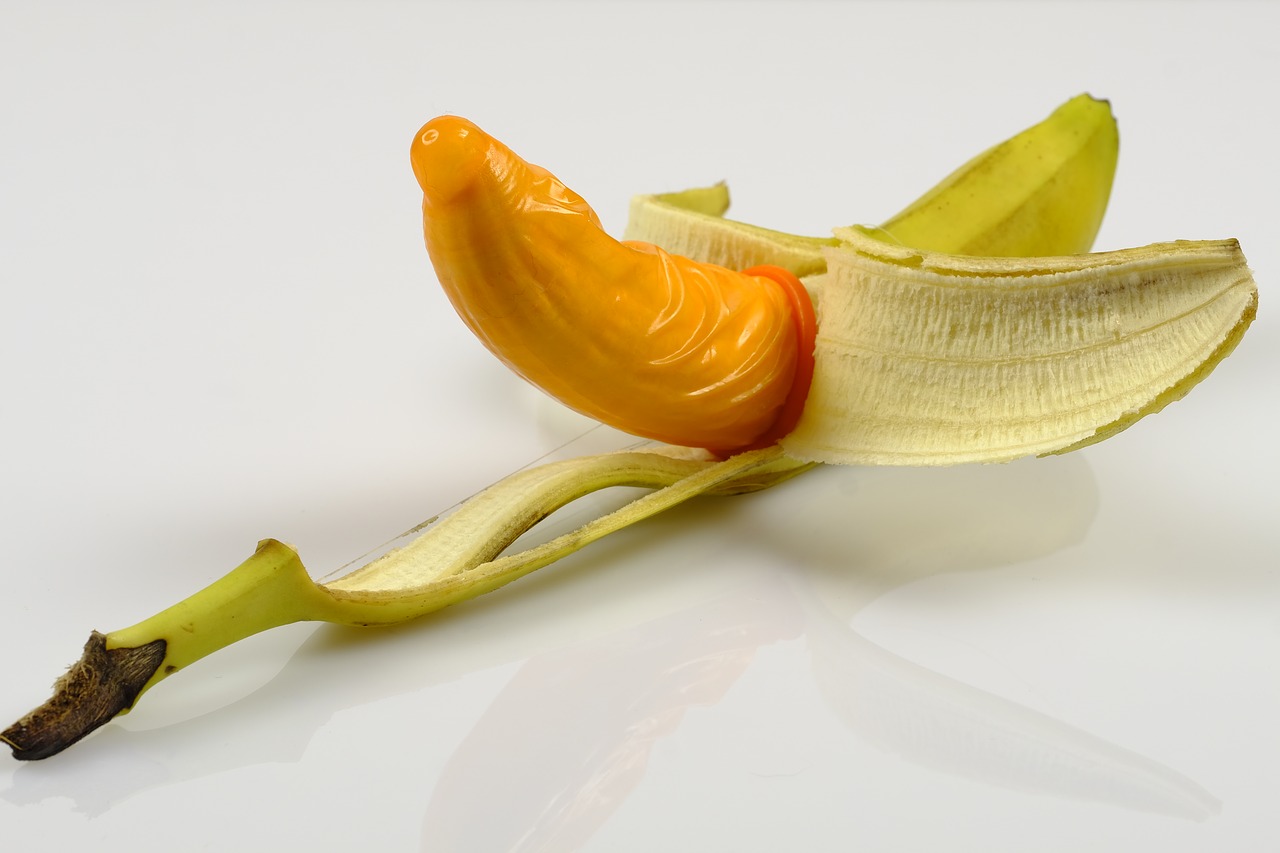
    Bru-nO / Pixabay Is learning how to put a condom on a banana all that helpful?

    Kirsty Williams said, ‘The world has moved on and our curriculum must move with it. Sex should never be taught in isolation for the simple reason that it is about so much more than just sex; it’s also about relationships, rights and respect and that must go hand in hand with a much broader understanding of sexuality. Anything less does a disservice to our learners and teachers.’

    Stonewall Cymru, and LGBT charity were pleased with the announcement. Their director, Andrew White, has been campaigning for this change for a while. White said: ‘It’s great news, particularly as this week is the anniversary of the introduction of section 28 and our research shows that a majority of LGBT young people here in Wales have heard nothing about LGBT issues in the classroom.

    ‘The legacy of section 28 unfortunately still lives on and this change will go some way to readdressing the balance.’

    He then went on to say that these discussions should be in the classroom, as talking about it online could spread false information. ‘If we don’t, those conversations will happen on the web with sometimes unreliable sources.’

    As a Welsh gay male, it’s important to see this change happen. It’s even better to see that my country, who have sometimes been a bit behind on LGBT rights, particularly in places such as the valleys, are the leading country to be putting this forward.

    When I was in education, my sexual education consisted mainly of STD’s and how to avoid them, and I was always taught about wearing a condom before having intercourse with a woman. We were taught how to put a condom on a banana, and we also saw how condoms are packaged. We learned briefly about the female reproductive system, and how the egg is fertilised, but one thing we never touched on was LGBT sexual relationships.

    As I discovered my sexuality, online porn websites were my education. Whilst I didn’t take scenes literally, understanding that whomever you have sex with must consent, it has been noted that people who watch porn may get lines blurred between what is acceptable in a real-life sexual relationship. Having consent taught in education systems is extremely important, for both heterosexual and homosexual people. Personally, I think what also needs to be taught is that sexuality is now being seen as fluid, as well as being young and confused. I didn’t truly accept who I was until I was 18/19.

    Sexual education must also discuss alcohol and sex. Many encounters are under the influence of alcohol, and some are above board and others are sadly not. This must be covered, as ignoring the problem doesn’t achieve anything.

    When I was young and watching pornography, I discovered how men have sex. I was able to tell how a condom went on by watching a porn star put one on. Whilst my body image confidence went down, I still took something away from porn other than a fun time. I learned how sex happens, and how it can work, albeit if it was edited together and the stars had no chemistry.

    But learning from porn, whilst useful to me personally, is not how we should be learning as LGBT people. Even now, the transmission and treatment of HIV is rather hazy to me, and as a teenager finding sexual partners, I worried myself sick about contracting what I thought at the time to be a deadly disease. Being taught in school that HIV, whilst being deadly without treatment, is now easily treatable with correct medication, and also being taught easily preventable with the right methods, would have saved me a lot of time growing up. It would also be nice to see HIV being discussed openly as a disease that affects everyone, regardless of their sexuality. I still feel like many people see it as ‘a gay man’s disease’.

    So whilst my sexual education taught me that pizza men would result in a sexual experience, I’m happy to see that Wales will now teach a new generation that sex doesn’t work like that.


    Opinions expressed in this article may not reflect those of THEGAYUK, its management or editorial teams. If you’d like to comment or write a comment, opinion or blog piece, please click here.

  • Tory MPs blasts questionnaire asking pupils if they’re happy with their gender

    Tory MPs blasts questionnaire asking pupils if they’re happy with their gender

    Asking a child what they feel about their gender described as “deeply destabilising” by straight, cis Conservative MPs.

    Wokandapix / Pixabay

    Two Conservative MPs have blasted a move by the NHS in Lancashire, in which a non-mandatory questionnaire was sent to year six pupils asking what they felt about their gender.

    MP Tim Loughton, who was the Children’s Minister until 2012, blasted the questionnaire saying that questioning children’s thoughts on their own gender identity was “unsettling” and “deeply destabilising”.

    In the survey, pupils were asked if “feel the same inside” as the gender they were assigned a birth – and then asked whether they considered themselves a boy, girl or other options.

    Loughton, according to TheyWorkForYou.com has a long history in voting against LGBT+ equality ranging back to 1998.

    Speaking to the Daily Telegraph about the survey, Loughton said,

    “At a time when children are growing up and having to deal with all sorts of challenges of the modern world, now they are being asked to confront their gender, which for many will be unsettling.

    “Forcing children to question whether they are the right gender so early on can be deeply destabilising.”

    Children not forced to answer optional questionnaire

    THEGAYUK.com reached out to Lancashire Care NHS Foundation Trust to asked whether the questionnaire in question was forced onto children. A spokesperson responded, “The questionnaire was given out to as part of the Universal School Health Needs programme to assess the health and wellbeing needs of children and young people. Questionnaires are provided at Reception / Year 1, Year 6 and Year 9, and are developed according to reflect the needs of children within these age ranges. Completion of this questionnaire is optional”.

    Fellow Conservative MP, Jacob Rees Mogg also criticised the survey saying,

    “It is quite intrusive – these are private matters in a family. The problem with this approach is not just with the question but with the intrusive survey that invades people’s privacy and assumes the state has a role in a matter that actually belongs within the family.

    “These questions are not likely to be helpful. The child is too young – if they have these sorts of issues, the parents are the right ones to discuss it with, not a state survey.”

    Gender question removed?

    Lancashire Care NHS Foundation Trust has confirmed to THEGAYUK.com that the gender question is under review for future surveys. In a statement they said,

    “We are constantly reviewing how to capture sensitive information in relation to the needs of children and young people both through universal screening and more targeted approaches. All questions are in the process of being reviewed as we are moving towards a digital platform instead of the current paper based system.

    “We are working with our commissioners, Lancashire County Council, to develop this and there is agreement that more consultation is needed on questions about gender and other sensitive health issues in the assessment.”

  • Got into University? Here’s 17 things you need to know for FRESHERS WEEK

    With the new Uni year just a little over a month away, we asked our readers what they wished they had known before embarking on the emotional roller coaster FRESHERS WEEK can be.

    Got into University? Here's 17 things you need to know for FRESHERS WEEK

    1) Come out and get it over with right at the beginning – when I came out I expected thunder and lightening but no one acted surprised and were really supportive.

    – Grammie

    2) Take a large bag so you can put all those freebees in.

    – Graham

    3) Mature aged lesbians will change your life. Their wisdom knows no bounds

    – Andy

    4) Get a Sugar Daddy I presume you already have an adoring older dude for a BF who will love you through this thing called undergrad?

    -Anon

    5) The very first day I met the guy who would become my very first boyfriend. Literally within the first hour – I met the guy who would be my first kiss, take my virginity, show me what love felt like and eventually break my heart. It lasted 2 and half years – in a total whirlwind relationship that was all consuming. I was a complete clamp on. Although I don’t regret it, I wish perhaps that I had been a little more open with myself and with other around us – and perhaps let our relationship be a little more open.

    – Jake

    6) Well, I think I knew how to be more gentle and aware of anyone around me. It was not too serious to be conscious all the time but some of them would have had noticed me if I had behaved different from them.

    – Neo Vi

    7) Leave your door open when you’re unpacking. It’s a great way to check out the talent as they start bringing in their stuff.

    – Paul

    8) Don’t fall for the straight cute guy. It will never work out.

    -AJ

    9) Bring cakes… Cakes make friends

    – John

    10)  Let the others know what you’re into – I put loads of musical theatre posters on my wall – it became quite the talking point.

    – Chris

    11) Get to know the popular girl in the dorm. She’ll be a hoot and she’ll stick up for you if you run into problems.

    – Sarah

    12) Don’t forget about the gay scene. Don’t always go straight… Get your friends to go to the nearest gay bar!

    – Mike

    13) Try not to have sex with the guys in your halls. It could get very awkward, very quickly.

    – Ben

    14) Don’t forget the lube and condoms…

    -Anon

    15) Join the LGBT+ society and get involved with student politics.

    -Mary

    16) Look out for LGBT subjects. If you can do a module on Queer history or studies, it’s really worth it.

    – Victor

    17) You will get FRESHERS’ COUGH. Stock up with medicines…

    – Pat

  • Five things you should keep in mind after you get your A Level results

    Now the hard work is over, here are five things to remember to do once you’ve finished your A-Levels.

    what to do if you don't get the A Level results you want,


    1. Don’t be pressured into anything.

    When I was doing my A-Levels my tutors pressured me to go to university. I had no encouragement to find a job or an apprenticeship. I was not ready for university so I decided not to go, I was even called a fool by a teacher. If you don’t think university is right for you then don’t go. Remember, the same course will be available at a university for decades, however, the right apprenticeship or dream job might be a one off.

    2. Find alternatives.

    It is unlikely you’ll be rejected by a university and end up without an option. But if that eventuality does come around then be prepared. Apply for part-time and full-time jobs, apprenticeships, traineeships and anything else you can get your hands on that interests you. Perhaps even doing a year at a college will be good for you, make the most of free education. You can never have to many qualifications and experience.

    3. Never take something for the sake of it.

    Never go to university because you can. Go to it because you want to. It is the same with jobs, I made that mistake and it affected my mental and physical health. There is no feeling worse than going to work anxious and stressed and coming home exhausted and drained. The right people, places, and professions will all come around to you. Everyone has a purpose.

    4. Do what you enjoy.

    So what if you don’t want to go to university with your friends, you can stay in contact. I was one of a handful of people from my year who didn’t go to university and I am in a much better position than some. I have a strong friendship circle and have a good lifestyle. If your passion is photography then pursue it. Go to university and study it and get that degree. If that is not for you, get a job to fund your adventure (photography can be very expensive!) and make the most of your free time.

    5. Everything will fall into place.

    Take it from me. I left after my a-levels not wanting to go to university, I was called a fool by teachers and left a few people confused. I took a job I hated hoping I could make something of it. My biggest mistake was taking a job I didn’t love. Pair that with some stressful life experiences and you get some mental and physical health issues! It worked out in the end. I was offered an apprenticeship with a photographers studio in London. I had never been happier than the day I handed in my notice knowing in a weeks time I would be on the path to my personal happiness. And to this day, I have never loved doing something so much. I’ve always wanted to make my career something I loved. And now I can.

    Here’s to your future. Whatever path you choose, make it the right one for you. Do what you love and you will love what you do.

    Follow Matthew Porter on Twitter.


  • University bans the word Homosexual

    University bans the word Homosexual

    Cardiff Metropolitan university has issued its staff and students with guidance banning the word “homosexual”.

    Gay Couple © wtamas Depositphotos

    The Cardiff Metropolitan University has told its 1,200 staff and over 11,000 students that the word homosexual should no longer be used and that lesbian and gay relationships should be referred to as “same-sex” or “other-sex” relationships.

    It has said that it wishes to “raise awareness amongst staff and students of the importance of using appropriate language”.

    In the code of practice, it says that homosexual seems, “laden with with the values of a previous time” and calls on faculty and students to dump other terms like “husband” and “wife”, and use “partner” instead.

    ALSO READ:

    The university, which turns over £98,000,000 a year said that, “Complaints about the excesses of so-called ‘political correctness’ and their impact on organisational cultures are not new,”

    “For Cardiff Met, though, academic freedom and the celebration of diversity are cornerstones of University life – and are entirely compatible with each other.

    “The University has a joined-up approach to providing a positive working environment, free from discrimination, harassment and victimisation.

    “As part of this approach, the University has a Code of Practice on Using Inclusive Language, which sets out to promote fairness and equality by raising awareness about the effects of potentially discriminatory vocabulary.

    “It makes suggestions for the avoidance of inappropriate generalisations and provides some illustrative examples of gender-laden vocabulary with some neutral alternatives.”

    Editor of THEGAYUK Jake Hook said,

    “Although I commend Cardiff Metropolitan University for being thoughtful on the power of words and their meanings, I do wonder what consultation process this code was subjected to. There have been many times where the word homosexual has been used as an empowering term and has a rich history of a statement of intent or empowerment.

    “I would rather a conversation about language rather than an outright ban or policing of words, especially when some may wish to use those words for themselves”.

  • Absence of gay sex ed by Government continues to cement “stigma, self-doubt, confusion and bullying”

    The government has announced plans to make sex education compulsory in all schools in England, however, they’ve failed to mention LGBT+ issues which critics say is letting LGBT+ children down across the country.

    CREDIT: © tomwang Depositphotos

    The UK’s Government has announced plans to ensure that sex and relationship education is made compulsory in all schools across England, however it neglected to say whether LGBT+ relationships would be covered by any classes.

    Education Secretary Justine Greening said that children from the age of four would be taught about safe and healthy relationships.

    David Geary, Head of Political Engagement Pride in London said that the absence of LGBT+ specifics was cementing stigma and bullying into school culture by not tackling those issues.

    He said,

    “Today’s announcement that age-appropriate sex and relationships education (SRE) will become compulsory in every school, is a welcome step in the right direction. The first major shakeup in more than 15 years will empower teachers to promote positive discussions on such a critical area and ensure teenagers don’t learn poor habits or behaviours from online sources.

    “Healthy sex and relationship education cannot be wholly effective until it helps every pupil in the classroom. In continuing to separate, single out and ignore the needs of LGBT+ pupils, the government is helping to cement stigma, self-doubt, confusion and bullying.

    “Such an omission lets down pupils right across the country, who need effective and positive support to develop into the healthy, confident and safe LGBT+ adults they deserve to be. Parents too benefit from having such a support as they learn to be the best guardian they can be for their LGBT+ child”.

    ALSO READ:


    The Government has not mandated how these lessons will be delivered and parents will still have the right to remove their children from the classes.

    The number of sexually transmitted infections amongst the UK’s gay and bisexual teenagers and young adults has soared in recent years and Public Health England warned in 2016 that 36% of new infections in 2015 were found in those aged just 15 to 24, the highest increase in a single age group.

    Politicians across the political spectrum have signed up to a pledge which calls for the inclusion of same-sex relationship education in all London schools to ensure the representation of different families and communities within SRE.