Tag: Channel 4

All the latest breaking news on the UK broadcaster, Channel 4. Browse The THEGAYUK’s complete collection of features and commentary on Channel 4 and the LGBT+ community.

  • Channel 4 paid HOW MUCH for Bake Off

    Channel 4 paid HOW MUCH for Bake Off

    As the dust settles and the news sinks in that GBBO will have a new home next year we’ve just found out how much Channel 4 apparently paid for the show.

    Top gay sounding innuendos on Bake Off
    BBCBake


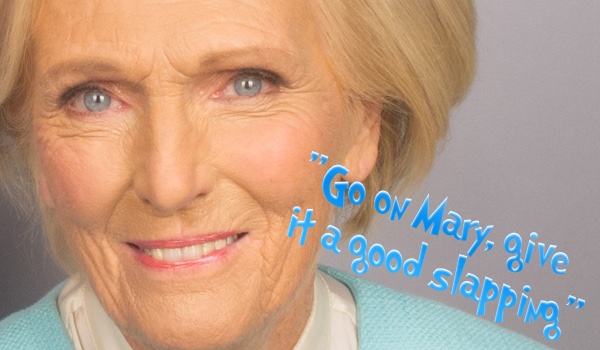
    So Channel 4 is going to be the new home for the Great British Bake Off – and well Twitter has had a meltdown about it. Mel and Sue apparently aren’t coming along for the Channel 4 ride and word is out on Mary Berry.

    Well we’ve just read how much Channel 4 has apparently paid for the rights to the GBBO and it’s staggering… wait for it.


    ALSO READ: The gayest BAKE OFF innuendos


    So the BBC apparently pays £6m per series of the show to Love Productions the makers of Bake Off – Channel 4 have topped that and are allegedly stumping up £75m for three series – that’s £25,000,000 big ones – a cool £19 mil more per series. That’s a lot of dough… sorry couldn’t help it.

    HUH? – and wait there’s more – ITV and Netflix reportedly offered more than C4 – but the programme makers thought there was more creative synergy with the Born Risky channel.

    Do you think it’s worth it?


  • Sex Box Is Back On Channel 4

    Channel 4 has commissioned another mini series of Sex Box, a show that explores the intimate world of sex being couples in front of an audience.

    (more…)

  • The Coalition Of Organisations Which Support Anti-Gay Laws Exposed

    Channel four is about to expose a global coalition of organisations that support anti-gay laws around the world.

    The groundbreaking team behind last year’s documentary Hunted, Liz MacKean and the Dispatches team return with an investigation into the global networks that are supporting a wave of anti-gay laws around the world.

    In a special one-hour documentary on the 23rd July, Dispatches will unveil the well funded and organised back-lash against the LGBT community across four continents, led by bodies which promote and believe in family values.

    One group, the World Congress of Families – an umbrella organisation of religious conservative groups which has established links in over 80 countries – is based in America, where same-sex marriages have just been made legal in all 50 states. The WCF and their associates (who boast combined budgets of almost $200 million a year) claim they are merely supporting pro-family laws in other countries. But Dispatches reveals how, in doing so, they have supported anti-gay laws in Russia and lobbied the Slovakian government to help pass laws curtailing the rights of the gay community.

    Dispatches has discovered that, days after the anti-gay propaganda law came into effect, Brian Brown, President of the National Organization for Marriage (part of the WCF), was present at a Russian parliamentary meeting preceding Russian legislature banning the adoption of children to countries which support gay marriage and also to some same sex couples.

    Also interviewed is Pastor Scott Lively, who has previously linked homosexuality with paedophilia. In this programme, Dispatches reveals the extent of his links with the WCF. Lively advised Uganda’s government on how they might take forward their anti-homosexuality legislation. The Ugandan Anti-Homosexual Act was passed into law in December 2013 (though it has recently been annulled on a technicality, but is soon to be reintroduced to parliament). The passing of this legislation resulted in a sharp increase in homophobic attacks in the country (from sources including SMUG and the United Nations). However, like Jacobs, Lively rejects this claim and any responsibility for the increase in violence against gays.

    Hunted: Gay and Afraid, Channel 4 Dispatches, Thursday 23rd July at 11.05pm.

  • INTERVIEW | Russell T Davies

    When the writer Frank Cottrell Boyce was asked to name Russell T Davies’ greatest contribution to British television drama, he replied simply “Saving it from extinction.” Certainly, Davies has been behind some of the most influential and transformative dramas of the last two decades, from Queer as Folk to the rebirth of Doctor Who. Now, 16 years after Queer as Folk shook the foundations of televised drama, he’s back again with two new Channel 4 dramas about 21st century sex and relationships – from gay to straight and everything in between. Here, he gives us a tantalising glimpse into what is destined to be his next classic contribution to the genre.

    Explain, in a handy, bite-sized vignette, what Cucumber and Banana are all about…
    Cucumber is sort of the TV equivalent of a novel, and Banana is a series of short stories relating to some of the more peripheral characters in Cucumber. Cucumber is the story of Henry who’s got a marvellous, wilful, wild streak in him. He wants to live life and get out there and not settle down. And then Banana tells some one-off stories about the people around Henry’s life. People he meets, people he bumps into, even people his sister bumps into in one episode. They’re one-off stories exploring all sorts of different sexualities. Cucumber is very much about the gay middle-aged male experience, in Banana we’ve got younger men, we’ve got women, we’ve got lesbians, we’ve got transsexual stories, we cover the whole gamut, really.

    It seems to be partly a rumination on the staidness of middle age. Is that something that you worry about as you approach that stage?
    You’re very kind – as I approach it – I’m 51, I’m well into it! To be honest, no. I think it’s much more interesting than that, actually. There’s been a lot of fuss, over the generations, about gay equality, and you can argue, to some extent, that we’re there now. That’s not true for everyone, but nonetheless you could say that, in terms of the law and in terms of certain sections of society, we’re in a rather good state of equality. But my point is that’s just the beginning. Being gay is not just about being equal. Once you begin to achieve equality, then you can start to ask “Who are we?” Every other drama about straight people has been doing this for 2000 years. Who are we? Why do we do what we do? How do we react? What does it mean to be who we are? To be man? To be a woman? So gay drama can just start catching up with that now. We’ve got 2000 years to go. It’s not about being midde aged, as such, it’s about who we are, about what we think, how we react, how we blunder through life, how we succeed, the aspirations we have, stuff that actually hasn’t been explored in drama at all.

    Henry, the central character, is brilliant. But do you see him as a heroic figure?
    Absolutely! I love him! Henry can be contentious, certainly, and puts his foot in it, but I love him for saying and doing the things that we all wish we said and did and are all slightly too boring to actually do. We all spend a lot of the time behaving. Henry’s got partly a wilful streak and partly a marvellous self-destruct button. I love that about him. In any given situation he won’t shut up. Even in a happy situation, he has to provoke people until the situation becomes more interesting. He’s a firestarter. He can’t stop himself from starting little fires and challenging things, and challenging himself, in fairness.

    How hands-on are you, once the writing is finished? I get the impression you stay pretty heavily involved throughout.
    Yes, I’ve always done that. When I did Doctor Who, I was the show-runner on that, which means kind of running everything. But even before that, going back to Queer as Folk in 1999, working with Nicola Shindler, she’s always encouraged her writers to become part of the production. I do stay, I get involved in choosing the directors and talking to the directors, and the whole team. And I get involved in casting. I don’t have a dictatorial say in it at all, it’s all between me and the director, and Nicola Shindler, and the producer, there’s four of us pitching in on every decision. But that works, there’s room for four opinions. And then every day I watch the rushes, and there are read-throughs and stuff like that. You are across all the casting, even the people with three lines, working in a coffee shop. Because that’s where dramas go wrong, when those little parts are out of sync with the rest of it. But at the same time I like to think I give them an enormous amount of freedom because really, I’ve done my work on the script. You hand over the script and you say “That’s it! That’s the text! That’s what you work from. Good luck.” But you do need to be there to co-ordinate things. If a script says that a room is red, what sort of red is it? Is it like a brothel red, or a sunset red, or a primary red? What does red mean? And everyone reads the script and has a different opinion on it, so you have to be there to explain that you meant sunset red. Otherwise you can get a very different message. When you see a bad drama on telly, it kind of feels like everything hasn’t been co-ordinated. I think I’m there to help, in the end. You appoint brilliant directors –I’m very lucky to be at the high end of drama, where it’s nicely budgeted, it’s being supported by Channel 4 infinitely, you’ve got great directors, great costume people, great designers, so actually a lot of the time you’re just sitting back and enjoying their work.

    The first episode involves arguably the worst date in history. Have you ever had any really bad dates?
    Do you know what, I’ve been on very few dates, to be honest. Three dates in my whole life. And they were all quite nice!

    No-one wants to hear about your happy dates, Russell!
    I know, I know! I’m not saying they worked, we probably just went clubbing instead. A lot of this stuff comes from a lifetime of listening to friends, and people in general. Particularly gay men. The truth of it is, ever since Queer as Folk came out, gay men literally make a beeline for me and automatically start telling me about their entire lives. They can’t stop doing it. It can be 9 o’clock in the morning, over a cup of coffee, and suddenly they’re telling me something filthy. To be honest, I’ve always been that sort of person. That’s why I ended up writing Queer as Folk. I don’t know why people do it, but they end up telling me things. I’ve got that sort of face or something.

    Do you like the fact that people do that?
    I LOVE it. I’ve made a career out of it. If I have a skill, it’s not stopping them. My skill isn’t attracting them in the first place, because I don’t know how that happens, but I’m very, very careful not to say anything that stops them talking. Both Queer as Folk and Cucumber were very much the result of a decade of listening to stories and experiences, and then exaggerating them a little. These shows aren’t a transcript at all. But I’ve met some remarkable people. I do think Henry’s an extraordinary character, but I’ve met a great number of Henrys. It kind of reaches critical mass. Once you’ve met a character about 15 times you think “This is an archetype. This type of person keeps cropping up in my life, and therefore that’s saying something.” And that’s when I get really interested in exploring why they’re like that.

    Is this a follow-up to Queer as Folk?
    It’s kind of inevitable, and I’m really happy about that. It’s me, writing about gay men in Manchester, so it’s unashamedly connected. It’s a really different show, but then I’m a completely different person now, and a completely different writer. But of course there are similarities, and I’m happy about that. If you’re going to have a legacy, Queer as Folk is a lovely one. I still love that show, I’m still immensely proud of it and still pleased if anyone’s ever seen it and comments on it. I’m happy to embrace that, I just don’t want people to think that they need to remember what happened in a show 16 years ago in order to watch this. In that respect, the two are totally different shows. This is completely freestanding and starts from scratch in episode one. That’s the only thing I want to make clear. But if you remember it, hooray, I hope you remember it with a big smile on your face.

    You alluded to the fact that attitudes have changed a lot in the last 16 years. With the change in attitudes, and also the advent of apps/dating sites etc, do you think it’s a lot easier to be gay nowadays? If so, is there a part of you that resents having missed out on that?
    Well, that’s partly what Cucumber is about, actually – middle aged men looking at the life other people are having that you never could have had, and weighing yourself against that. Also, it’s important not to be too simple about that, in that yes, life has changed, and in many, many ways it’s easier to be gay now. But that doesn’t mean people don’t have problems. There’s this terrific assumption now that if you’re 16 and gay, then you have no problems. Every 16-year-old has problems. 16-year-olds invent problems. 16-year-olds exist in order to carry problems around and moan about them. So it’s ridiculous to assume that young, gay people are fine. No young people are fine, in any setting. Nor is anybody fine – we’re all worrying about stuff. I think the differences are very much superficial. Yes, there are apps now, but apps are just a shorthand for clubbing. You can do in two minutes now what used to take a whole night to do in a club. Nonetheless, it’s the same thing, it’s hooking up with a stranger. Human emotions haven’t changed, love hasn’t changed, men haven’t changed, lust hasn’t changed, sex hasn’t changed.

    But some things have definitely changed. When I wrote Queer as Folk, there was the 15-year-old Nathan Maloney, and back then, to write about a 15-year-old gay boy, he was remarkable. There weren’t any openly gay 15-year-olds in Britain. Now there are hundreds, if not thousands. That is beautiful and wonderful and remarkable. It doesn’t make life easy for them, they’ve still got to go through an awful lot. And it’s also true that there are a million closeted 15-year-old boys still out there. And people who are in their 30s and 40s still in the closet. But life is undoubtedly better in that respect.

    Queer as Folk was utterly ground-breaking. Did you intend it to be a show that tore down barriers and changed the face of TV drama, or were you just trying to write an entertaining show?
    I kind of didn’t assume it would bring down any barriers, because it was a slightly more timid Channel 4 – they showed it at 10:30pm. That was late. Because of that slot, we all assumed it would be invisible. But we made it with a very good heart, and with every intention to be honest and true and to say what I thought were interesting things about gay life. But at 10:30 at night? In the week? We all took a deep breath and thought three people would be watching it. So when it was a success, that was an extraordinary thing. The appetite for that programme, and the joy with which it was welcomed in, which therefore signalled how much we’d been lacking that sort of a programme, that’s what made it a success. We simply worked very hard, and made something I was very proud of, and I’d be very proud of it if no-one had watched it. But it became this big cultural artefact. I’ve got a gold disc. A gold disc! The soundtrack to the show was number one. Of all the awards and things I’ve ever won, that’s the maddest thing of all.

    Is that the piece of work you’re most proud of?
    Well, I’m proud of everything, to be honest. Well, I’m sure there’s one or two things I’m not proud of, but I couldn’t pick out one I’m most proud of. It’s like choosing your favourite child.

    Is it really true that you once presented an episode of Play School?
    I did, I once got a job as a Play School presenter. It was supposed to be a full-time job. I did one, which is on the internet somewhere, I think, and walked out of the studio saying “I’m in the wrong job.” I was on the dole at the time. I actually turned down a full-time job. I knew I was on the wrong side of the camera. I did one, loved it, very nice people, very friendly, great fun, and then I walked out and wrote them a letter saying “Thank you for that, I won’t be coming back.”

    You’ve written a lot of children’s dramas…
    I have! One of my children’s dramas won a BAFTA last night for best pre-school drama. Here I am, talking about a gay sex drama for Channel 4 – I won the pre-school BAFTA last night, for Old Jack’s Boat: The Christmas Quest, which I wrote as a favour for Bernard Cribbins.

    Is there a different approach writing a drama for children to one for adults?
    No. You work as hard, there’s no different approach. It’s as simple as using a different voice. If a three-year-old walked into this room, I’d talk to them in a different voice from the one I’m using to talk to you. And I’d use a different one again if my grandmother walked in. I’d be surprised, I suppose, because she’s dead. I’d also wonder what a three-year-old was doing here, come to that. But you modulate your voice, depending on whoever you’re talking to, and writing is exactly the same as that.

    Which TV writers do you particularly admire?
    I love Sally Wainwright, I loved Happy Valley! I love my old friend Chris Chibnall, and I’m absolutely loving this second series of Broadchurch. My lovely friend Paul Abbott I love. Steven Moffat, my old mate from Doctor Who. And Kay Mellor, of course! That’s enough!

    Lots of people take a very snobbish attitude to TV. Why do you think TV is seen as bad whereas radio/theatre etc is good?
    Why is that? I think it’s because it’s omnipresent, it’s just there, in the corner of the room, on all the time. So it’s kind of taken for granted, really. It annoys me – I get annoyed when people just dismiss television – but it’s probably a better position to be in than being revered, because then you’re just a false god. It is an extra voice in the room. I love TV, I can sit there watching the next Michael Palin drama, or be equally happy watching Bradley Walsh doing The Chase. If you’re going to start a crusade about TV being taken seriously, there are better crusades to be on. We’re still doing alright. It’s always inventive, and it’s always different, and it’s always changing. I love that about television. You can never quite tell where it’s going to go next.

    Cucumber airs on Channel 4 at 9pm on Thursday 22nd January with Banana following at 10pm on E4
  • Cucumbers + Bananas + Tofu = A Recipe For Success

    15 years ago Russell T Davies set our television screens alight with his groundbreaking series Queer As Folk that was so successful that the Americans copied it.

    Now this award-winning openly gay writer is back an about to explode on our screens with not one but three series for three different channels.

    CUCUMBER an original drama series follows 46-year-old Henry and his long-term boyfriend Lance in the aftermath of “the worst date night in history” and will air on Channel 4. BANANAS which will be on E4, will tell standalone stories by up-and-coming talent that cover – wait for it – “fifty shades of gay”.

    TOFU meanwhile, is an online documentary series about sex and sexuality and will be screened on 4oD.

    Here’s the first clip that has just been released and suddenly staying in during January looks a whole lot brighter

  • Julia Davis To Return With New C4 Comedy

    Channel 4’s Upfront 2015 event for the advertising industry today broke the news that Morning has Broken, a 6 x 30-minute comedy written by and starring Julia Davis, has been commissioned.

    Ordered by Head of Comedy Phil Clarke and Commissioning Editor Rachel Springett, the series will see Davis as Gail Sinclair, the ‘Queen of Daytime’ and star of Good Morning… with Gail Sinclair.

    After eight glorious years of high ratings and winning awards, things begin to go wrong for Sinclair when the programme begins to lose viewers and tensions break out within the production team.

    Made by Brown Eyed Boy, the series will be directed by How Not To Live Your Life star Dan Clark and produced by Gary Reich.

    Julia’s past shows like Nighty Night have become cult classics, and have earned her a reputation as a camp icon – a favourite with many in the gay community.

  • Channel 4 Unreported World: Jamaica’s Underground Gays

    Tonight on Channel 4 at 7:30pm is another episode in the Unreported World series. This time it focuses on the Underground gays of Jamaica.

    The documentary follows a group of young gay and transgender men and women who are forced underground and are currently living in a gully due to being ostracised by their friends and family.

    We see the heartbreaking ordeals that they have to deal with on a daily basis including unprovoked abuse from a local councillor and stones being thrown at them by passersby. However the documentary also shows how this group lives; through prostitution to donations made by a lovely lady called Yvonne from Dwayne’s House.

    To find out more information about Dwayne’s House, please click here: http://www.dwayneshouse.info/

    As many people know Jamaica is a country that is very proud and holds traditional Christian values and unfortunately this is an area where the repugnant homophobia comes from.

    Furthermore Jamaica has a very rich musical history with dancehall originating in the country, yet it is even through this music that you hear blatant homophobia as in this track by Buju Banton entitled Boom Bye Bye: http://www.youtube.com/watch?v=aIUZlzd37sI

    If you’d like to see a preview of the documentary, please click here: http://www.channel4.com/programmes/unreported-world/videos/all/jamaicas-underground-gays

    Channel 4’s Unreported World: Jamaica’s Underground Gays is on at 7.30PM

  • Ian McKellen And Patrick Stewart Talk Gay Rights On Channel 4 News

    Tonight on Channel 4 News Sir Patrick Stewart and Sir Ian McKellen Talk Gay Rights, Bromance and UKIP.

    Sir Patrick Stewart and Sir Ian McKellen talk gay rights, bromance and UKIP with Cathy Newman on Channel 4 News from 7PM.

    On her blog Newman revealed:

    ‘If the film deals with the wisdom of age, it’s as much about mankind’s persecution of minorities – the mutants, as Sir Ian freely recognises.

    “When Bryan Singer [the X-Men director] asked me to be in these films he sold it to me on just this point: as a gay man you can identify with mutants – people who have talents [but] are despised by society as they’re different…

    “In many areas of the world being gay is still a mutancy which is clearly not tolerated in some societies. You can be put to death for your sexuality. Not in this country. We have advanced – it’s been one of the great joys of my life – since these films have been made.”

    So what does he make of the Ukip leader Nigel Farage’s declaration over the weekend that most British people over 70 are “uncomfortable” with homosexuality?

    “He hasn’t talked to this over-70-year-old or this one,” he says, gesturing at Sir Patrick. “Farage needs to get out more…Gay people come and get married. The story is over.’

  • Cast announced for new Russell T Davies drama series

    VINCENT FRANKLIN, CYRIL NRI, JULIE HESMONDHALGH, FREDDIE FOX, FISAYO AKINADE, CON O`NEILL, JAMES MURRAY and CEALLACH SPELLMAN confirmed to star in CUCUMBER and BANANA on CHANNEL 4 and E4

    Star of The Thick of It and Twenty Twelve, VINCENT FRANKLIN will join Coronation Street’s JULIE HESMONDHALGH in the cast of new Channel 4 drama series Cucumber, from the multi BAFTA award-winning writer of Queer As Folk and Doctor Who, Russell T Davies.

    Filming in Manchester has begun on Cucumber (8 x 60’) for broadcast on Channel 4 in 2015, with E4 series Banana (8 x 30’) to start production next month. The cast also includes; CYRIL NRI (The Bill), FREDDIE FOX (Parade’s End), FISAYO AKINADE (Fresh Meat), CON O`NEILL (Uncle), JAMES MURRAY (Primeval) and CEALLACH SPELLMAN (Waterloo Road).

    Life for 46 year old Henry (Vincent Franklin) and his boyfriend Lance (Cyril Nri) is comfortable and settled. But after the most disastrous date night in history – involving a threesome, two police cars, and Boney M – Henry’s old life shatters, and his new life begins.

    While Lance gets to know the mysterious Daniel (James Murray), Henry soon finds himself with unexpected companions. 24 year old Freddie (Freddie Fox) and 19 year old Dean (Fisayo Akinade) have only been passing strangers, until now. But when they all find themselves under the same roof, they need to work out; are they friends or enemies? Can men from such different generations ever get on?

    Henry’s sister Cleo (Julie Hesmondhalgh) is busy, professional, and a little chaotic. But coping with her three kids is easy compared to helping her brother. And as Henry’s life heads in extraordinary new directions, helped by his nephew Adam (Ceallach Spellman), it becomes clear that Cleo’s hiding one or two secrets of her own…

    With the same ferocious wit, startling honesty and heartfelt warmth that made Queer As Folk a landmark Channel 4 series, Cucumber will explore the passions and pitfalls of 21st century gay life for Henry, Lance and co, while on E4, Banana will follow the individual lives of characters orbiting around Henry’s world. On 4oD, Tofu will be an anarchic and entertaining factual series about sex – from gay to straight, and anything in between – inspired by the dramas each week.

    Cucumber, Banana and Tofu were commissioned by Channel 4 Head of Drama Piers Wenger and will be made by RED Production Company with Executive Producers Nicola Shindler, Julie Gardner and Russell T Davies. Tofu will be made by Benjamin Cook (Becoming YouTube).

    Cucumber is written by Russell T Davies and produced by Matt Strevens, with directors; David Evans, Alice Troughton and Euros Lyn.

  • Gogglebox gays up for a BAFTA

    Channel 4’s Gogglebox is up for a Bafta Television Award

    Gogglebox, one of the UK’s most talked about programmes is up for a BAFTA, (and one of TheGayUK’s personal favourites) The show which watches people watching TV has a variety of characters – including the duo dubbed the Gogglebox Gays, Christopher and Steven.

    The show has been nominated in the Reality & Constructed Factual , as well as the Radio Times Audience Award.

    The BAFTA’s will be filmed on 18th May at Theatre Royal Drury Lane in London’s Westend

  • Rupert Everett to investigate sex industry

    Actor and writer Rupert Everett is to present a new programme which investigates the sex industry.

    Prostitutes are often seen as either immoral individuals or exploited victims, but in this authored two-parter, Rupert gets behind the stereotypes and hears the unvarnished truth from both sex workers and their clients. “Prostitutes,” he says, “are the world’s unacknowledged experts on our most intimate desires.”

    Rupert is a passionate defender of the dignity and rights of a group of people who he feels have been unjustly stigmatised for thousands of years. In Love for Sale, Rupert offers an unusually truthful and honest insight into the business, and a funny and sometimes angry attack on the hypocrisy that surrounds the subject. Rupert has a natural connection to the men and women who trade their bodies for a living and gets to the core of what trading means, or does not mean to them.

    In the first programme, Why People Sell Sex, filmed across the UK, France, the Netherlands and Israel, Rupert meets a range of sex workers, from the young rent boy working the backstreets of Tel Aviv, to the single mother in Exeter who loves her work and high class Brazilian escort who charges her clients £700 per hour. Rupert also visits his former home of Paris to meet some of the women who work the Bois de Boulogne, a notorious rendezvous for prostitutes. He tells the moving story of his old friend, whose brutal murder brought home to him the dangers sex workers face.

    Rupert has an insightful perspective on the subject, which has allowed him, with producers Swan Films, to create two very unique films illuminating the honest truth of sex work.

    In the second programme, Why People Buy Sex, Rupert explores the motivations of the men who use prostitutes, talking to self-confessed sex addicts, a married man who enjoys sexual role play with a dominatrix. He also meets a divorced transgender father whose experiences with his ‘straight’ male clients casts a fascinating light on the sexuality of British men and a successful businessman who claims to have spent £150,000 on massage parlour prostitutes in two years. He also meets comedian/actor Russell Brand who talks about his own experiences.

    Commissioned by Sara Ramsden, Commissioning Editor for Specialist Factual for Channel 4, Love for Sale will be produced by Swan Films, executive produced by Neil Crombie and Joe Evans and directed by Michael Waldman.

    Sara Ramsden says: “Rupert has a unique authorial voice and his opinions range from the theological to the ideological. It’s great to see someone stand up so strongly for the dignity of women living with very difficult choices.