Tag: Cisgender

All the latest breaking news on Cisgender. Browse THEGAYUK’s complete collection of news, articles and commentary on Cisgender.

  • BIG GAY GLOSSARY: Cisgender

    BIG GAY GLOSSARY: Cisgender

    Understanding the Meaning of Cisgender

    Cisgender is a term that has gained recognition and importance in recent years when discussing gender identity and diversity. In this article, we will delve into the meaning and significance of cisgender, shedding light on its definition, usage, and common misconceptions.

    What does Cisgender mean?

    Cisgender refers to individuals whose gender identity aligns with the sex they were assigned at birth. Put simply, if a person was assigned female at birth and identifies as a woman, or was assigned male at birth and identifies as a man, they are considered cisgender. The term “cis” comes from the Latin word meaning “on the same side as,” emphasizing that cisgender individuals’ gender identity aligns with societal expectations based on their assigned sex.

    The Importance of Understanding Cisgender

    Recognizing and understanding cisgender individuals is crucial for fostering inclusivity and promoting a better understanding of gender diversity. By acknowledging the experiences of cisgender individuals, we create an environment where all identities are respected and valued.

    Debunking Misconceptions

    There are misconceptions surrounding the term cisgender which contribute to a lack of understanding. One common misunderstanding is that being cisgender is the “default” or “normal” identity. It’s essential to remember that cisgender is just one of many valid gender identities, and no one identity is superior to another.

    Cisgender vs. Transgender

    What does cisgender mean and is it different to transgender?
    Photo by Rosemary Ketchum on Pexels.com

    To fully comprehend the concept of cisgender, it’s important to compare and contrast it with transgender. Unlike cisgender individuals, transgender individuals have a gender identity that does not align with the sex they were assigned at birth. This distinction highlights the diversity and complexity of gender identity.

    Respecting All Gender Identities

    In a world that is becoming more inclusive and diverse, it is crucial to respect and appreciate the identities of all individuals, regardless of whether they are cisgender or transgender. Understanding cisgender is one step towards fostering an inclusive society where everyone’s gender identity is recognized and respected.

    In the rest of this article, we will explore the origins and evolution of the term cisgender, delve into its significance within the LGBTQ+ community, and examine its role in promoting equality and inclusivity. Stay with us as we unravel the layers of this important topic and deepen our understanding of gender identity.

    What does cisgender mean?

    Cisgender refers to individuals whose gender identity matches the sex they were assigned at birth. In other words, if you were assigned female at birth and identify as a woman, or if you were assigned male at birth and identify as a man, you are cisgender. The term “cis” is derived from the Latin word meaning “on the same side as.” It is used to differentiate from transgender individuals, who have a gender identity that differs from the sex they were assigned at birth. Cisgender is a descriptive term that helps to recognize and validate the experiences of those whose gender identity aligns with societal expectations based on their assigned sex.

    Is cisgender a slur?

    No, the term “cisgender” is not a slur. It is a neutral and descriptive term used to refer to individuals whose gender identity aligns with the sex they were assigned at birth.

    Who can be cisgender?

    Anyone whose gender identity aligns with the sex they were assigned at birth can be cisgender. This includes individuals who were assigned female at birth and identify as women, as well as individuals who were assigned male at birth and identify as men. Gender identity is a deeply personal experience, and it is important to respect and recognize the identities of all individuals, regardless of whether they are cisgender or transgender.

    What does “Assigned at birth” mean?

    The phrase “assigned at birth” refers to the practice of labeling or designating an individual’s sex based on certain physical characteristics observed at the time of their birth. This assignment is typically made by a medical professional based on external genitalia, and it is commonly recorded on official documents such as birth certificates.
  • Piers Morgan called “cis” and it went as well as you’d imagine

    Piers Morgan called “cis” and it went as well as you’d imagine

    Once again, the team at GMB decided to tackle Trangender issues following on from JK Rowling’s new book, Troubled Blood about a crossing dressing killer.

    Over the weekend, the author’s new book stoked a huge backlash on social media, with #RIPJKRowling become a worldwide trend, after transgender activists took issue with the book’s concept.

    Piers and Suzanna were hosting a debate on Good Morning Britain on Wednesday morning, about the public’s reaction to JK’s new book and who should have the right to write about books where the main character was transgender.

    GMB booked Benjamin Butterworth (again) to speak about issues surrounding identity politics (because clearly there’s no one else to talk to about transgender issues…) and was answering a question on whether Piers would be able to write a book about a transgender killer, which Benjamin thought might be a problematic concept.

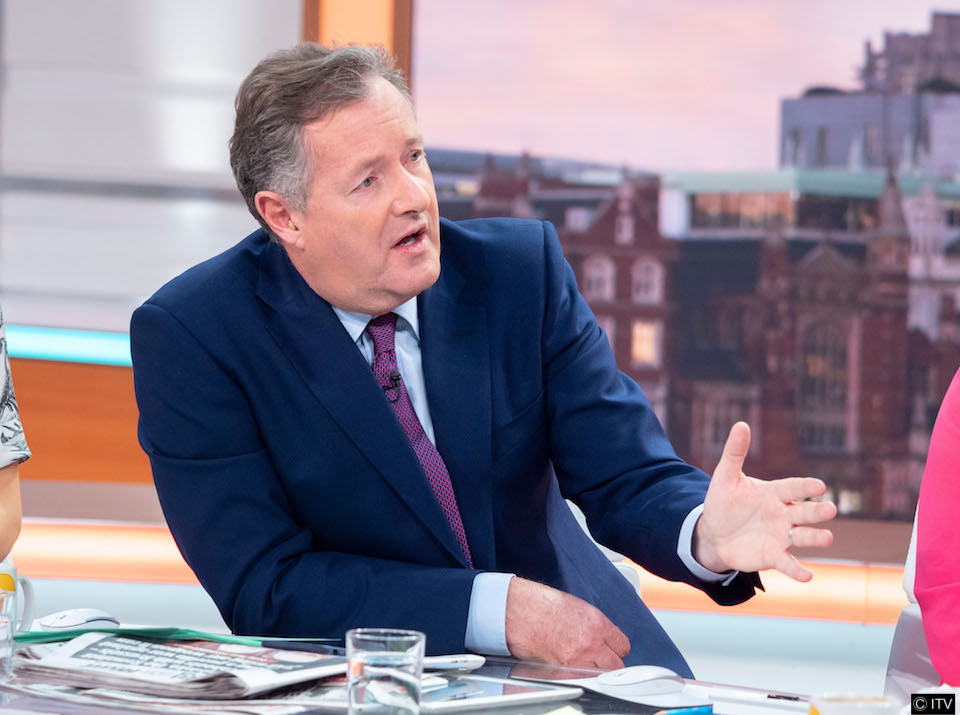
    When pushed by Piers to see if it would be okay for him to write about a “person like me” doing all the killing, Benjamin answered, that there were a lot of “cis, rich white men…”

    This is when Piers pushed back on the language used by Benjamin saying, “I’m not cis. Don’t call me cis. I’m a white guy. Just call me a white guy.

    “Cis is language you use that I don’t even understand.”

    We’re not entirely sure why Piers Morgan gets so upset up about gender politics, especially as he does (or has, we can never keep up) identify as a penguin.

  • OPINION | Is having 100+ genders too many?

    OPINION | Is having 100+ genders too many?

    Recently the BBC was attacked for teaching children that there are over 100 different types of gender. This move from the BBC received widespread criticism from the right-wing media (as expected) and unfortunately when a gender spokesperson on Good Morning Britain was interviewed on the matter they struggled to explain the differences when challenged by presenters on what the 100 genders stood for and why some of them were ‘genders’ and not simply aspects of their personality.

    It was, put bluntly, a car crash and did nothing to explain to your the majority of UK viewers what the move was about.

    Don’t get me wrong, I have my issues with Piers Morgan, but that interview was a car crash and made the gender argument look ridiculous. Love him or hate him, Piers won that round and inflicted serious damage on the public perception of gender freedom.

    It left even those of us in the LGBT community that weren’t aware of 100+ genders before now baffled and unsure of what was expected of us as allies?

    As someone that has worked with the wider LGBT+ community, I found the statement that there are 100+ gender staggering. It might easier for a child to get their head around, I can’t say as I’ve not been a child for quite some time now, but if we even struggle then how on earth is wider Society meant to cope? So I went looking to see what on earth the 100+ genders are and what they could mean.

    I found this list from Tumblr which has listed around 116 different types of genders. Some I recognise and some have just baffled me. Many of them, especially those where they say they aren’t ‘Male’ or ‘Female’, but they aren’t anything else either until you ask them, then they say they are X or Y based on that moment. That is not a ‘gender’ type, that’s an attitude or personality trait. At most that is gender fluid, so what’s wrong with being gender fluid?

    For a community that claims to despise labels and being put in boxes are we really telling the wider world that we now have 100+ labels for ourselves, a fair majority of which are based on our mood and situation at any given time?

    Me: “I don’t want you [Society] to label me, we should be beyond labels”

    Also Me: “Here are 100+ more labels, many of which depend on my mood on any given day. You wanna label me, ha I’ve just made it 100 times more difficult.”

    People have to remember that we are a community, built and based on social interaction. This 100+ list of genders and associated pronouns has just put a massive barrier up to other human beings communicating with us/them.

    If you have no idea how to address someone (as even ‘they’ wouldn’t work for some of these) then surely that person is simply not going to address you, and just avoid you completely as it’s the path of least resistance (easier). They don’t mean anything by it, they aren’t out to ‘get you’ or ‘oppress you’ they just have no idea how to interact with you because of this mind-boggling wall you’ve put up and have 1001 things to deal with other than how on earth to say hello to you and ask how you are.

    The rise in gender fluidity and the challenge of the traditional masculine and feminine associations is something to be celebrated, especially if it means we get closer to achieving true gender equality, eradicate sexism and truly accept into Society transsexuality and gender re-assignment. However, with saying to the world that there are now 115 different genders, many of which are based on circumstances and mood, are we at risk to invalidating and demeaning that freedom we have enjoyed as it is coming across as ridiculous and unrealistic?

    A friend of mine recently ‘came out’ as pansexual. For those unaware, pansexuality, or omnisexuality, is the sexual, romantic or emotional attraction towards people regardless of their sex or gender identity.

    Pansexual people may refer to themselves as gender-blind, asserting that gender and sex are not determining factors in their romantic or sexual attraction to others. Unlike Bisexuality, pansexuals tend not to see gender and just see the person/personality.

    Recently Sam Smith (not the friend mentioned above) also came out as non-binary and raising awareness of gender descriptives within our language. Smith has a valid point and if we are truly to be 21st-century race then more accurate command of the language is a good thing. The abuse Smith received from the LGBT community was completely uncalled for.

    However, the 100+ genders issue raises the question, are we using gender identity as a smokescreen for our own personality traits and rising trend to be identified as something and to use that as a banner against oppression? It’s almost as if the community has achieved a level of acceptance (which we have on the whole) but now we want evermore? Or to put it another way, have we just gotten so used to being oppressed and that feeling of ‘fighting the machine’ that we now seek new battles and new demands for acceptance?

    If some of our allies and the community itself are struggling to keep up with the notion of 100+ genders and pronouns, and find they have to ask what someone’s gender is in order not to offend, are we just simply creating a society where no one can get it right because I’ve used the pronouns for gender 67 but actually you are gender 68 which causes you offence and now I’m the oppressor? Surely we want a world where gender isn’t even factored into someone’s decision making. But this seems to want to enshrine even further it into everyday life and make it yet another thing people can use to beat you over the head with.

    Personally, I don’t see the argument for creating any more genders beyond the 6 the NHS currently uses and recognises. Or at least, certainly not for creating 100+ pronouns. I shouldn’t need to know your gender, simply what pronoun to use. For those unaware, the 6 genders the NHS uses are currently male, female, gender-neutral, non-binary, gender-fluid and gender-queer. Being referred to as ‘they’ should be perfectly acceptable for the majority if not all genders. I’ve not seen any of the 100+ that aren’t simply a very subtle variation of 1 of the six (with maybe 1 or 2 exceptions).

    If you do identify as one of the 100+ genders then you don’t need my validation to exist. You certainly don’t need my confirmation of your gender so seeking it from others is a fool’s errand.

    If you can look me in the eye and can honestly say that you are peace with the fact that you identify as whatever-sexual, I’ll believe you and quite happily accept for you that. But if you honestly think this does anything for reaching a stage where gender means nothing to Society then you are deluding yourself. This turns the gender discrimination and bias argument into a completely different beast, a beast you are very unlikely to master.

    There are a number of resources out there on Gender Freedom and Identity. I would encourage everyone to read more on the issue, starting with Mermaids charity so you can understand more around Transsexuality and wider issues. There are also some good resources from the BBC on gender identity and pronouns.

    Here I have simply asked the question and posed some issues that we need to find answers to. Do your own research and come to your own conclusion, but remember this is a debate the nation should have. Not prejudice, or an attack, or an invalidation.

    Educate yourself then see where you end up.

  • What does cisnormative mean?

    What does cisnormative mean?

    There are many terms that come up when discussing gender and you may hear words that begin with “cis”.

    geralt / Pixabay

    Cisnormative is one such word and its meaning is simply the typical or expected behaviour from a particular gender role: at its simplest the binary of Man and Woman.

    So as an example, if you’re born male, grow up and are treated as a male, it might be considered cisnormative for him to play with toy soldiers, like football or have his bedroom colour blue.

    In the same way, it would be considered cisnormative for a girl to grow up liking and dressing in pink and playing with dolls.

    A person living a cisnormative life is a cisgender person who dresses and acts in a way which might be described as typical for their gender and biological sex.

    Many of these choices are actually impacts from parental decisions rather than a child’s actual wishes. This was proven in a recent BBC two documentary called Gender Free.


    You can add your comments below if you’d like us to update the meaning we’ve used here.


    YOUR SUPPORT MEANS EVERYTHING

    Help us deliver unique, usable and reliable journalism that supports the gay, bisexual and curious community of the United Kingdom. Can you help protect LGBT+ media? Publishers like us have come under severe threat by the likes of Google and Facebook. The problem is that advertisers are choosing to put their money with them, rather than with niche publishers like us. Our goal is to eliminate banner ads altogether on site and we can do that if you could pledge us a tiny amount each month.

    We’re asking our readers to pledge just £1 per month, more if you’re feeling swanky. You can stop payment at any time.

    It’s quick and easy to sign up and you’ll only have to do it once.

    Click to start the journey and support THEGAYUK!