Tag: Diesel Car Review

The latest reviews for diesel cars. Find out which are the smoothest, quietest, most economical and cheapest diesel cars on the market.

  • CAR REVIEW | Mitsubishi L200 Barbarian

    I don’t know quite what I was expecting when l took delivery of the new and improved series 5 Mitsubishi L200 Barbarian pick-up.
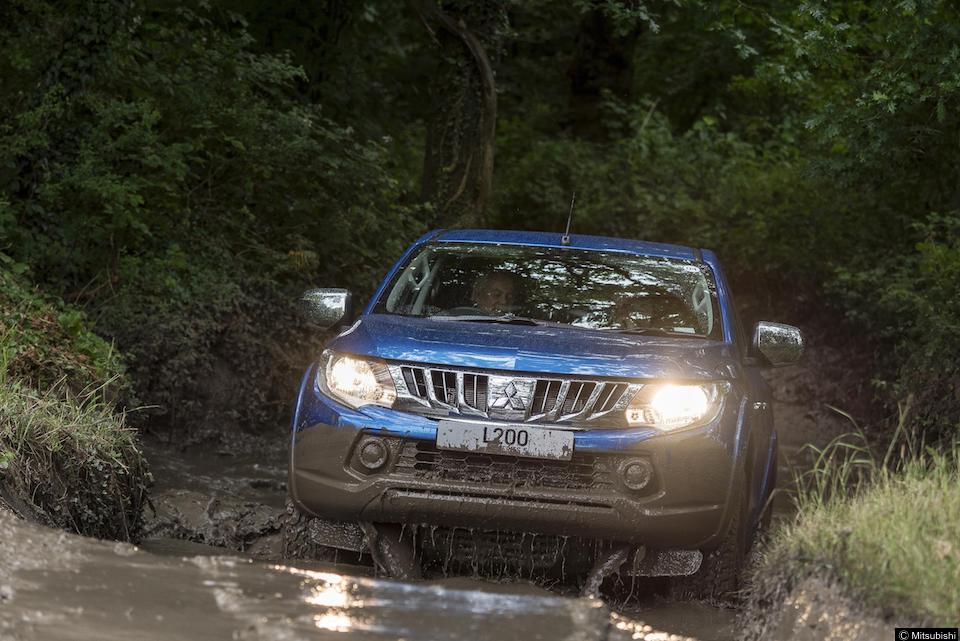
    Visually you are made aware of its almost 5300mm in length. Its load bed length of 1470mm looked bigger than it actually was. The L200 range has come a long way since its launch in 1982 and the new model sees a subtle design change with some of the feminine curves replaced by straight lines making it look a little sturdier than the old model, while still being civilian friendly looking over the opposition from the likes of Nissan and Toyota. More importantly, there is now a city friendly tighter turning circle too. With 7 different guises of L200 pick-up available it is possible that every member of the family could find a pick-up to suit.

    The interior finish is rugged looking and the leather-covered seats are comfortable. All plastic surfaces practical and functional plastic of the hard variety that literally makes cleaning a wipe over. The fascia is laid out well and all the controls minus the heated front seat switches were within easy reach. The steering wheel housed controls for the stereo, phone and cruise control. It was all quite too civilised for what a pick-up should be. Thankfully l found some hard edge plastic under the switches on the steering wheel. An ideal edge for filing off that hard skin from a day’s graft on-site. This masculine touch was then ruined by the floor lighting. Nothing wrong with floor lighting l hear you say but the blue was just a touch 2000’s Lexus and even they don’t do it in blue anymore. Even more, Lexus was the pick-ups “Barbarian” signature illuminated in the kick plates.


    I developed a love/hate relationship with the inbuilt sat-nav and infotainment system. Its touch screen was easy to use for my thin fingers but having asked a real man we’ll call Dave to have a play, he moaned that its on-screen buttons were too compacted for his manly fingers. And the brightness of the screen at night was reminiscent to that of a Hollywood dashboard. So intense was the light l couldn’t use the sat-nav at night. The night option changed the colours making it harder to view quickly while on the move.

    On the road, this fully loaded pick-up will set you back £30,238.80 with no options available because it literally has everything thrown at it or for £2000 cheaper when bought with the manual gearbox. Traction control is quite essential in 2WD mode. The 2442cc in-line 4 16 valve DOHC turbo diesel MIVEC engine packs quite a thud in the back when needed.

    The price you pay for having a pickup that goes from 0-60mph in 11.8 seconds is that the 317 Ib.ft of torque at 2500rpm would spin the rear wheels without much provoking on moist surfaces. Select the 4WD and all the power was planted where you wanted it. Again on the road and over most surfaces it performed with car-like comfort and ability. The steering was nicely weighted more towards town driving ease with feedback of road ahead being well communicated through the thick-rimmed steering wheel. In 4WD mode, you could feel the front differential working via a slight rumble through the wheel.

    The engine could be heard if really pushed but in the normal day to day it was bearably audible from a cold start until fully warmed. All this power doesn’t come with an added fuel premium either and official figures suggest a respectable 43.5mpg giving a range of over 700 miles. With today’s fuel prices that’s quite commendable for a tank that’ll cost you about £80 to fill. 4WD’s have become greener and cleaner over the years and the Barbarian is one of the greenest.

    Remember that 5300mm in length l mentioned, in practice, it doesn’t feel that big on the road. Admittedly you will struggle to park it within a single bay at your local DIY store but the reverse camera and big mirrors make it an easy task. l am not the best at reversing anything bigger than a hatchback so the reverse camera was a nice addition and one of the best l have ever used. The lines that appear on the screen are just perfect for achieving your 10/10 parking space award. You shouldn’t find the Barbarian on that website where people park inconsiderately.

    I have to conclude that overall l was impressed by almost every aspect of the Barbarian. Its ease of driving, the quietness of the cabin, the way it was screwed together and even the engine bay was laid out in a simple logical layout. It was better than l thought it could and should be and if you were to have just one vehicle for work and play then this has to be high on the list. It’s car like applications such as one touch door handles, push start, full electric windows, climate control and cruise modes all add up to make this a civilised machine for not a lot of money when you consider what it can do and where you could go with it. l wasn’t able to trial its off-road ability so l have to take Mitsubishi’s word for it, though with its long established history and range packed full of 4WD models I’m pretty sure this could take you as far away from civilian life as you’d want to go on a weekend. Sadly the Barbarian being so civilised it’ll remind you all too soon that you have work on Monday.

    Pros

    Comfort
    Go anywhere ability
    More useful than you’d think

    Cons

    Blue LED lighting
    Dazzling sat-nav screen
    No hill descent control

    The Lowdown
    Car – Mitsubishi L200 Double cab Barbarian
    Price – £23,799.00 (£30,238.80 as tested)
    MPG – 43.5 mpg
    Power – bhp
    0-62mph – 10.5 seconds
    Top Speed – 109mph
    Co2 – 189g/km
  • CAR REVIEW | Mitsubishi ASX

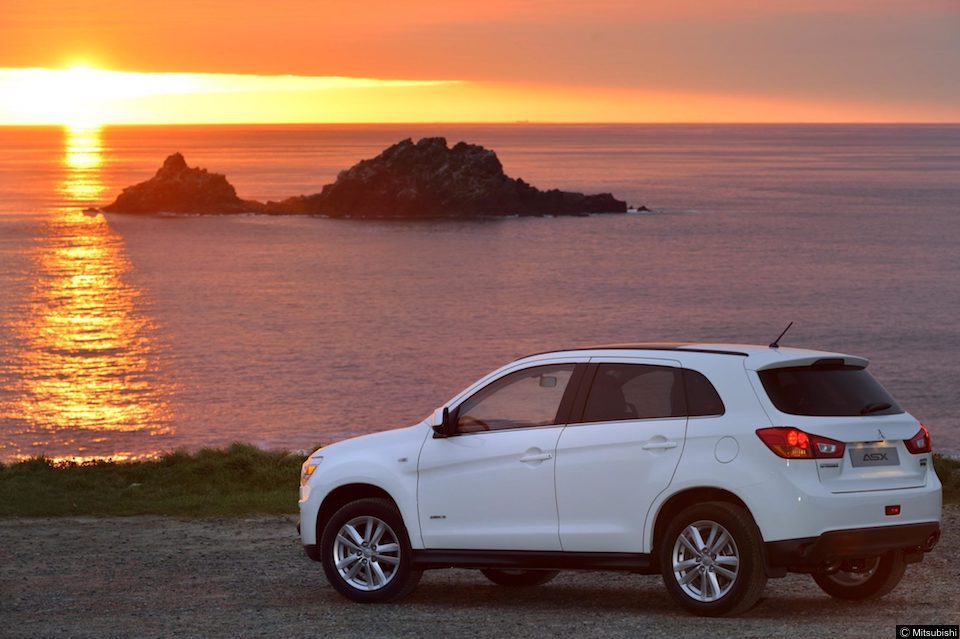
    Launched in 2009 to high expectations, the Mitsubishi ASX failed to make an impact on the competitive Sports Utility Vehicle sector which at present is dominated by the Nissan Qashqai and Toyota Rav4.

    However according to the Society of Motor Manufacturers & Traders, in 2014-2015 sales grew by as much as 20% for the ASX. This is already on top of Mitsubishi sales, in general, rising over the last 3 years. This might account as to why we are seeing more and more ASX’s on the road. Now 7-years-older and finally finding love on the forecourt, can it now start worrying the competition? I had one for a week to find out.

    Visually she’s aged well. It is still striking to look at and in a carpark full of small SUVs from the likes of VW and BMW it demonstrates a victory against the bland.

    Sadly the interior cannot be said to have impressed as much. While the seats were supportive and comfortable with an impossible to locate switch to heat them, the plastics were of the hard wearing type similar to what’s used in the man machines from Mitsubishi like in their L200 pick up. There lacked a soft touch feel about the cabin. This soft touch was further lacking in stupid imprinted signs on the door pockets and centre console saying “no cups!” Most annoying after all it’s my car and I’ll put cups where I want them. Bottles were allowed in the door pockets.

    Further annoyances were found with the lack of illuminated switches on the doors for windows and mirrors except for one flimsy light for the drivers switch. You forget how much you take for granted an illuminated switch in the dark. So instead of giving these lights, Mitsubishi added some sunshine lights into the glass roof panel and it screamed cheap electrical light tape found on a famous auction website. That said when the roof panel was open it did make the spacious cabin even more tardis like. It wasn’t an unpleasant place to be if I am honest.

    And then there was the satnav and its illumination horrors. In the day the system was like Dr Jekyll. However, come dusk and nightfall it became Mr Hyde. At night in day mode it was just too bright. Thankfully there is a switch that turns it to night mode. It then becomes too dark using blacks and blues in colour.

    So far there isn’t a lot to recommend this 7-year-old car and then you drive it. Two things stand out as negatives. Firstly there is an almighty amount of road roar in the back. At first, I thought I had the window open. Secondly, from a standing start, there is an awful delay that catches you out when pulling into traffic. This can be over come by trying to get a slight roll going before you push down hard on the accelerator. It is then that the 2.2-litre diesel engine mated to one of the smoothest 6-speed automatic boxes l have tried makes you feel like you’ve spent a million dollars. Mitsubishi gives you paddle shifts on the steering wheel too but unless you are really into spirited driving there is very little need to use them. The gearbox was always in the right gear.

    This impressive gearbox and power unit managed to further impress in its economy in 4WD where l found it at its best as a driver’s car and in road behaviour.

    In 2WD the economy according to the onboard computer was exactly the same over the same route of 31MPG. As you would expect in 4WD, traction was increased and it was also felt that the traction control system was less needed in keeping it where it was pointed. And then there are the headlights. Nothing fancy about these units, they didn’t even swivel. What they did give you though was a beautiful beam pattern and crystal clear view on even the grimmest of road conditions. Commuting through the wildness of Surrey I found there was little need to use the main beam.

    So the ASX was starting to make me appreciate it and its appeal so quickly lost on taking delivery was starting to make sense. There is bags of room inside and the cabin does have a tardis feel about it. The boot is very generous for this size of vehicle and rear seat leg room with my 6-foot frame behind the wheel was more than adequate. With this opulent amount of space must come a good heating system and it was good. And then it was bad. and then it was perfect. Call it what you like but there were times l felt like Goldilocks. Set to 19 degrees it would heat the cabin until it was as hot as the sun and then cool it down with blasts of cold. Only then would it settle to a perfect temperature. This lasted around 10 miles per journey and opening a window would only confuse it.

    Where this ASX really excels is in its price. The top end £24,899  model is £1400 more expensive that its 1.6-litre sister and that only comes in manual. You do pay more at the pumps if you go by official figures of over 10 MPG worse for the 2.2 but only 4 MPG over the extra urban. I, however, was not able to match even its lowest figure of 39.8 for the urban dash. Compare the top of the range ASX to its lowest family member and it £9,000 saving doesn’t make the 1.6 ASX 2WD look good at all unless you are after an estate looking vehicle with no functions. The ASX is already 10 years out of date, don’t do yourself a disservice and make it worse by opting for the lesser model.

    Overall all is not lost for the quite likeable ASX. According to the 14 owners on the Autotrader website, it scored 4.6 stars out of 5 and prices are set to become even more competitive with talk of a new model ASX coming in 2017. Need yourself an SUV with a 5-year warranty? Now is the time to talk to Mitsubishi.

    Pros

    Automatic gearbox

    Headlights

    Standout looks

    Cons

    Poor switch gear

    Road noise

    Throttle response from standing start

    The Lowdown

    Car – Mitsubishi ASX

    Price – £24,899 (as tested)

    MPG – 39.8 urban

    Power – 147 bhp (at 3500 rpm)

    0-62mph – 10.8 seconds

    Top Speed – 118 MPH

    Co2 – 152 g/km

    by Stuart M Bird

  • CAR REVIEW | Volvo V60

    ★★★★ | Volvo V60

    Estates have taken a bit of a battering in the last few years.

    It seems that these days the default choice for those needing more room for cargo, dogs or dead bodies is a chunky crossover rather than a long-roofed car. All is not lost though, Volvo (who else?) is now offering a dash of off-road appeal to its V60 estate with this Cross Country model.

    So what does it take to make the Cross Country variant? First, the suspension is jacked up by 65mm, not a vast amount but enough to give a noticeably loftier viewpoint on the world. Next, Volvo add silver skidplate effect bumpers front and rear with matching side skirts. Finally, you get chunky mud and snow tyres beneath plastic wheel arch extensions. All-wheel drive is an option but only on the most powerful engine.

    While those changes may not sound like much, they do toughen up the V60 by a significant amount giving it a little more presence on the road. That the normal V60 is a pretty handsome thing doesn’t hurt at all. Inside feels very well put together and is attractive in a sober, Swedish kind of way. It may not immediately appeal but it proved to be a wonderfully calming, well-made environment in which to clock up the miles. This was helped by excellent seats with plenty of adjustment, clear instrumentation (especially with the optional TFT dials) and easy to follow sat-nav.

    Our test car came with keyless entry and start. As long as the key was on you, you could unlock the car with a tug of the door handle and fire up the engine with the push of a button. You could even lock it again without the key fob in your hand. Nice. Once I was inside and ready to set off, I did notice the gearstick seemed a little bit too far back in the cabin with the cupholders unhelpfully beneath your arm as you changed gear.

    On the road, the gearchange action itself was long but not unpleasant. Not that you had to stir the stick much, even with the lowest power engine the V60 CC proved surprisingly rapid. The 150hp unit may have been a little loud (although easily masked by a quality sound system) but had plenty of grunt; it always seemed faster than the 9.1 second sprint to 62mph suggested. Unfortunately thanks to those chunky tyres, there was a bit of torque steer and a fair amount of wheelspin even in second gear.

    Pushing the V60 CC around bends highlighted the issues with putting a car on stilts. Turning the car into a bend over a crest could unsettle the rear while it did float a little over bumps too. The steering was well weighted but lacking any real feedback. To be fair though, it’s unlikely you’d buy one of these for its handling prowess. In a relaxed cruise it proved effortlessly comfortable, refined and pretty economical too. Over my usual mixed route, I was averaging around 44mpg. It’s just a shame that rough road surfaces did make things get a little jiggly. Yes, you can call it that.

    I was also a little disappointed with the load space, or rather the lack of it. Don’t get me wrong, there’s still plenty more than something like a Ford Focus hatchback but not anywhere near as much as you’d think for a car of this size. Unfortunately in giving the V60 its svelte shape at the rear, boot space has been sacrificed. At least the cargo bay is a decent shape with no lip. On the subject of negative points, while the V60 CC range starts at £30,000, you’re looking at around £35,000 for an AWD model.

    In summary, there’s a lot to like about the V60 Cross Country. The driving experience and high-quality interior combine to offer a relaxing experience while real world economy is more than acceptable. While you could argue that not offering AWD with all engines is a bit of an oversight, most people will buy these for the looks rather than for any off-road ability. Rivals may be cheaper but I doubt they’d feel quite this plush. Is it worth the premium? I think for many the answer will be yes.


    Loves

    Relaxing to drive

    Performance

    Looks

    Loathes

    Boot smaller than expected

    Lack of traction

    The Lowdown

    Car – Volvo V60 Cross Country D3 SE Nav

    Price – £30,995 (£35,545)

    Power – 150hp

    0-62mph – 9.1 seconds

    Top Speed – 127mph

    Co2 – 111g/km

  • CAR REVIEW | Renault Captur Dynamique Media Nav

    The Renault Captur is proving a popular choice amongst those after an alternative to a common-or-garden hatchback.

    Based on the same platform as the Clio supermini, it’s a similar length but both wider and taller. Engines mirror the Clio range with 900cc and 1.2 litre turbocharged petrol engines along with a 1.5 litre diesel on offer. It may be competitively priced but is it any good?

    First impressions are positive; the exterior is smartly styled with an attractive take on the Renault corporate ‘face’, nicely sculpted sides and pert rear. There’s even the option of a contrasting roof and coloured highlights on the wheels for those that want to stand out. The Captur may ride higher than the Clio it’s based on but don’t think it has any off-road ability. There isn’t even the option of four-wheel drive.

    Move inside and everything is laid out pretty sensibly apart from the switch to toggle between the cruise control and speed limiter; this was unhelpfully between the front seats. Still, the heater controls are easy to use and the infotainment isn’t mounted too far down the dashboard like some rivals. It’s not overly exciting but it is attractive enough, especially with the piano black trim and body coloured highlights of higher trim levels.

    The Captur is practical too, the boot is a decent size and the seats naturally fold down. Cleverly, they also slide back to give rear passengers more legroom albeit at the expense of carrying capacity. It is however in the cabin where the Captur’s cheap price really shows. Closer inspection reveals acres of hard plastic while the infotainment system looks exceedingly dated compared to rivals. It works well enough though.

    On the road, the Captur proves a comfortable companion that only got caught out by particularly rough surfaces. Not only could it deal with bumps well, it resisted wallowing too. You’d never call it engaging though; the steering provided little to no feedback as to what the front wheels were doing and I couldn’t turn off the traction or stability control. Although that may not be of too much concern to many of you, I found the traction control cut in far too quickly leaving you accelerating out of junctions far slower than you’d expected.

    While it may sound like there’s too much power for the chassis, that isn’t the case at all. Initially, the 1.5-litre diesel seemed quite punchy around town but this feeling soon disappeared on the open road. Despite a quick and enjoyable gearchange, a 0-62 time of 13.1 seconds means getting up to motorway speeds can be a bit of a chore and a noisy one at that. Economy hovered at just under 50mpg on a mixture of roads. Not bad at all for a real world test if somewhat below the official figure of more than 70mpg.

    Still, the Renault does have price on its side. Even before discounts, you can pick one up new for a little over £14,000 which is very competitive indeed. Opt for a decently specced mid-range model and you’ll still be looking at under £18,000 for a vehicle with air-con, sat-nav and cheap running costs. With that in mind, you can forgive a lot of the negative points of the Captur. It’s easy to see why it’s so popular, that’s for sure.

    PROS

    Inexpensive

    High driving position

    Looks

    CONS

    Slow

    Cheap feeling interior

    Dated looking infotainment system

    The Lowdown

    Car – Renault Captur 1.5 dCi Dynamique Nav

    Price – £17,695 (£18,964 as tested)

    Power – 110hp 0-62mph – 11.0 seconds

    Top Speed – 109mph

    Co2 – 98g/km

  • CAR REVIEW | Mazda CX 3

    Mazda are one of the latest manufacturers to produce a competitor for Nissan’s popular Juke crossover.  ★★★★

    Called the CX-3, it promises a more upmarket feel inside and out when compared to the little Nissan or the Renault Captur. Beneath the distinctive styling is the platform of the Mazda2 supermini albeit without that car’s smaller engines.

    While the CX-3 may be roughly the same length as the Mazda2, a more upright seating position gives noticeably more room front and rear along with a bigger boot. Even so, you wouldn’t want to cram three adults in the back for too long especially if they’re tall. Think of it as good for its size but bear in mind a similarly priced Skoda Yeti would give even more space inside.

    The Skoda wouldn’t have quite the same level of style as the Mazda though. While the Yeti doesn’t look bad, the CX-3 is a handsome little thing (even in refrigerator white) that avoids looking like its trying too hard to be different like some competitors. Those looks are carried through to the cabin which proved to be a very pleasant environment to be in. There’s a good selection of high quality plastics and leather effect materials but a few too many hard and scratchy surfaces considering the £17,000 plus price tag.

    The infotainment system is worth a mention though. The screen is touch sensitive but there’s also a rotary controller between the front seats similar to BMW’s iDrive system. It takes a little getting used to at first but proves much more accurate than prodding at a screen over bumpy roads. Menus are attractive and the sat-nav worked very well too; it all seemed a cut above systems from many rival manufacturers including premium brands.

    While an unusually large 2.0 litre petrol engine is available with two power outputs, I selected a 1.5 litre diesel to test. This 105hp unit will likely be the volume seller of the range thanks to its combination of punchy performance and the promise of over 70mpg in front wheel drive guise. Four wheel drive is available but you really need to ask whether the economy and emissions penalty is worth it. Unless you live out in the country or down the end of a farm track, I’d argue it isn’t.

    You might think 105hp isn’t a great deal of grunt but then the CX-3 doesn’t weigh a vast amount; this means 0-62mph takes just 10.1 seconds. It never feels fast but then it never wants for more power either. There’s plenty of grunt from low in the rev-range which makes for easy-going progress on motorways too. As with all cars these days, you won’t be matching the official fuel consumption figures but I still managed 50mpg over around 300 miles on a mixture of roads. I don’t hang about either.

    Unfortunately, handling proved to be a bit of a mixed bag. There’s a fair amount of body roll but it always feels keen and willing to entertain around corners. Over long undulations at speed it feels quite soft and wallowy which lulls you into thinking this will be a comfortable car. Unfortunately over more pronounced bumps and rough surfaces, it tends to fidget and bounce more than you’d expect. A Renault Captur would be more comfortable for sure although I still preferred the Mazda’s sense of fun. It could be better though.

    The Mazda CX-3 is a very likeable little car. I was impressed by the combination of real-world economy and performance on offer; it really was a surprise when compared to rivals. I also felt it looked great inside and out even though the colour did it no favours at all. Unfortunately it is expensive compared to rivals and doesn’t quite have the fit and finish inside to justify the price. I also felt the suspension setup seemed a little unfinished. The MX-5 shows Mazda can clearly make a car that handles, a little of that magic wouldn’t go amiss here. Even so, it’s still my favourite baby crossover.

    Pros

    Handling

    Styling

    Economy

    Cons

    Expensive compared to rivals

    Interior feels cheap in places

    Pricey

    The Lowdown

    Car – Mazda CX-3 1.5 2WD SE-L Nav Diesel

    Price – £20,995 (£21,535 as tested)

    Power – 105hp

    0-62mph – 10.1 seconds

    Top Speed – 110mph

    Co2 – 105g/km

  • Putting The 2015 Ford Focus Through Its Paces

    The common or garden hatchback has had a bit of a rough time of late. With everyone and their dog all after a high-riding SUV like the Nissan Juke or a ‘premium’ hatch like the BMW 1-Series, mass market offerings such as the Focus can be overlooked. The question is, should you ignore the current trends and give one of the old favourites a chance?

    First impressions are very good, the new corporate Ford grille has been criticised for looking a little bit too Aston Martinish (is that really a problem?) but here it’s handsome with just the right amount of aggression.

    Our test car was also painted a striking metallic blue and shod with some tasty 18” alloys wrapped in low profile rubber. Climbing inside this top spec Titanium X model, you are welcomed by a chunky leather steering wheel, half leather seats and Ford’s Sync 2 combined navigation and infotainment system, something you can read more about in June’s tech special issue of The Gay UK Magazine. There’s plenty of nice squishy plastic although premium car fans won’t be impressed by some of the cheaper plastics on the centre console and lower reaches of the dashboard. You can tell the range starts at less than £14k that’s for sure. Nevertheless, there’s plenty of space, everything is clearly laid out and not unattractive either.

    Keyless go means you don’t have to insert a key, just have the fob on you and thumb the starter button.

    The 2.0 diesel fires quickly and settles into a subdued idle, you still know it’s an oil burner but refinement has come a long way even in the last 5 years. Our test car came with Ford’s Powershift dual clutch automatic gearbox, similar to VWs DSG system and promising similar benefits. In almost all situations it smoothly shuffles between ratios with a noticeable shortening of shift speed in sport mode. There’s a built in ‘creep’ mode like an old school auto which makes manoeuvring easy with the car even holding you on the brakes for a hill start. Economy should be as good if not better than the manual too.

    The only fly in the ointment is if you go from pottering about to suddenly needing a burst of acceleration, something that can make the gearbox hesitate for a moment before delivering the performance you need. It never actually caused me an issue but does knock your confidence in pulling out onto a busy roundabout or carrying out an overtake. Sport mode helps but does tend to leave the car in too low a gear while the manual control buttons on the shifter don’t feel particularly intuitive. I get the feeling the optional wheel mounted paddles would be the ideal solution and make you feel like Lewis Hamilton to boot.

    The Focus has always been renowned for its handling so I had high hopes for this latest model even as a diesel estate. As with most new cars these days, the steering is electrically assisted. It’s nicely weighted and gives some feedback of what the road is doing but does feel a little gloopy just off the straight ahead like the wheels are turning in treacle. It’s a minor gripe however and one that most people wouldn’t even notice. In terms of fun and balance, I found the car hampered by having too much grip. This may seem like an odd thing to say but you have to be going seriously quickly to feel the inherent balance of the chassis.

    Once I had found my testicles and chucked it into a bend at speed you could feel the chassis working hard at both ends, resisting the urge to plough straight on and putting a very big grin on my face. I think smaller wheels would not only mean you can have more fun more of the time but you’ll also save a few quid replacing tyres and get a comfier ride. Although the Focus coped well with larger bumps and undulations, sharper ridges could thump through the cabin thanks to those skinny sidewalls. For the majority of people on the majority of journeys though, the Focus would prove to be a safe companion that you’d have to do something very stupid in to get out of shape round a bend.

    Overall the Focus made a compelling case for itself. It looks good, handles well and was very well equipped. It was also incredibly practical with plenty of room for 4 passengers and luggage with even more space if you folded the seats down.

    It did disappoint slightly with regards to economy though, being sensible I averaged around 43 mpg with a mixture of A-road, dual carriageway and town driving. Although this would no doubt improve as the engine loosened up (it was delivered to me with less than 1000 miles), I was still hoping to see better fuel consumption. My biggest complaint however was price. Admittedly I did ask for a fully loaded test car for the tech issue but even still, £29,615 for a Ford Focus diesel did surprise me.

    Personally, I’d be tempted by a lower spec model with a few choice options to bring the price down. At around £20-£22k and optioned with the adaptive headlights, Sync 2 and with less bling the Focus would be very tempting.

    Pros

    Handles well

    Punchy yet refined diesel

    Styling

    Cons

    Low rent interior plastics

    Worse than expected economy

    Price