Tag: England News

Get the latest LGBT+ England news from THEGAYUK. Breaking news, features and interviews from the gay community in England, UK.

  • One man comedy by Jonathan Harvey to tour England in Feb

    One man comedy by Jonathan Harvey to tour England in Feb

    The show, which stars Andrew Lancel, will open at Liverpool’s Unity Theatre for six performances over three nights, this will be the first live performances at the theatre since closing in March due to the on-going coronavirus pandemic.

    The show then moves on to The Atkinson Southport, Lighthouse Poole, Swan Theatre Worcester, Belgrade Coventry, Dukes Lancaster, City Varieties Leeds, and Capitol Horsham. All venue will present to socially distanced audiences and more dates are to be confirmed soon.

    Swan Song was first staged at the Edinburgh Fringe Festival in 1997, before transferring to Hampstead Theatre with award-winning comedy actress Rebecca Front in the lead role. Jonathan Harvey adapted the 70-minute play especially for Liverpool Theatre Festival for Andrew Lancel to play the solo role of Dave Titswell. Due to critical acclaim, the play will now perform at venues across the UK next year, these new dates replaced the November 2020 dates which were cancelled due to lockdown, now a longer tour is planned for Spring 2021.

    The news also comes as Andrew Lancel is set to have an appearance in the Royal Variety Performance, which is televised on Tuesday 8 December. Andrew appears as Brian Epstein in Cilla The Musical, he also played Brian in Epstein The Man Who Made The Beatles in 2012, where Andrew Lancel first met Bill Elms who produced the play in Liverpool and London’s West End.

    “Funny, clever and inspiring production”

    Producer and the artistic director of Liverpool Theatre Festival, Bill Elms said: “Swan Song is a funny, clever and inspiring production which opened the inaugural Liverpool Theatre Festival. Andrew Lancel, Jonathan Harvey, and Noreen Kershaw are an incredible blend of creative talent, and the play went down a storm in Liverpool. It is such a lovely piece that I approached Andrew and the team with the idea to tour. People are excited for the return of live theatre – and we’re excited to give them that experience back after such a long time with a really special production.”

    Swan Song is a bittersweet comedy written by Jonathan Harvey. Set in Liverpool, it is Christmas 1997, the world is changing and in the staff room, Gay, forty-something, English teacher Dave Titswell finds that not all change is welcome. He has a crush, but life, love, and work are never straight forward for Dave. Will a school trip to The Lakes change things for the better, or make things decidedly worse? Swan Song will make audiences laugh, but equally pull at the heartstrings. Everyone knows someone like Dave – or could even be a Dave themselves.

    Andrew Lancel in Swan Song by Jonathan Harvey
    Ⓒ DAVID MUNN PR SUPPLIED

    Andrew Lancel is no stranger to audiences. Well established on the national theatre scene, Andrew is also widely known for his television roles as DI Neil Manson in The Bill and super-villain Frank Foster in Coronation Street. He has twice played Beatles’ manager Brian Epstein on stage to great critical acclaim, first in Epstein – The Man Who Made The Beatles (also produced by Bill Elms) which premiered in Liverpool and went on to play London’s West End, as well as playing Epstein in the national tour of Cilla The Musical, Bill Kenwright’s stage adaptation of the TV series written by Jeff Pope.

    Andrew Lancel commented: “The last play I saw before lockdown was Jonathan Harvey’s Our Lady of Blundellsands at The Everyman Liverpool, which I loved – so it’s very cool, and a little ironic, that my first play back is with Jonathan. We have known each other for years and worked together a lot but never on stage, so it’s humbling that he has adapted this play for me. It’s very funny, moving, and I think people will really relate to it today. His characters are literally gifts to play and to watch.

    “This play is about reuniting too. Reuniting theatre and audiences with live performance is extra special. To be back with Epstein producer Bill Elms is a buzz, and I’ve worked on some very serious storylines on Corrie with Noreen Kershaw. It feels like coming home for us all in so many ways.”

    Award-winning Jonathan Harvey’s credits include Gimme Gimme Gimme; Murder Most Horrid; Coronation Street; Call The Midwife; and Tracey Ullman’s Show. His plays include Beautiful Thing, Corrie, Canary, Hushabye Mountain, Babies, Boom Bang A Bang’ and Rupert Street Lonely Hearts Club. He also wrote the 2001 stage musical Closer to Heaven with the Pet Shop Boys and its sequel Muzik. He has won the John Whiting Award, the George Devine Award, two Manchester Evening News Awards, an Evening Standard Award, two British Soap Awards and a Writers Guild of Great Britain Award.

    Jonathan added: “Swan Song is a comedy about a teacher who’s trying to hold onto his dignity while the education system crumbles around him – and I’m thrilled Andrew is playing Dave. I’m delighted to also be working with Noreen again, she directed many of my Corrie scripts and my last episode of Call The Midwife. As the original Shirley Valentine, Noreen definitely knows a thing or two about one person shows.”

    Noreen Kershaw’s directing credits include Our Girl, Moving On, Scott & Bailey, Emmerdale, Shameless, Heartbeat and Coronation Street. She is also known for acting in Life On Mars, Brookside, and Watching. Noreen also originated the title role of Willy Russell’s Shirley Valentine at Liverpool’s Everyman Theatre.


    Andrew Lancel in

    SWAN SONG

    by Jonathan Harvey

    UNITY THEATRE

    Hope Place, Liverpool, L1 9BG

    Thursday 4 – Saturday 6 February 2021

    Performance times: 5pm / 7.45pm

    Show duration: 70 minutes (no interval)

    How to book: www.unitytheatreliverpool.co.uk ON SALE NOW

    ATKINSON THEATRE

    Lord Street, Southport, PR8 1DB

    Friday 12 – Saturday 13 February 2021

    Performance times: 7.30pm

    Show duration: 70 minutes (no interval)

    How to book: www.theatkinson.co.uk ON SALE SOON

    THE LIGHTHOUSE

    Kingland Road, Poole, BH15 1UG

    Saturday 20 February 2021

    Performance times: 3pm / 7pm

    Show duration: 70 minutes (no interval)

    How to book: www.lighthousepoole.co.uk ON SALE 11 DEC

    THE SWAN THEATRE

    The Moors, Worcester, WR1 3ED

    Sunday 21 February 2021

    Performance times: 3pm / 7pm

    Show duration: 70 minutes (no interval)

    How to book: www.worcesterlive.co.uk ON SALE NOW

    BELGRADE THEATRE

    Belgrade Square, Coventry, CV1 1GS

    Wednesday 24 February 2021

    Performance times: 2.30pm / 7pm

    Show duration: 70 minutes (no interval)

    How to book: www.belgrade.co.uk ON SALE NOW

    DUKES LANCASTER

    Moor Lane, Lancaster, LA1 1QE

    Thursday 25 February 2021

    Performance times: 2.30pm / 7.30pm

    Show duration: 70 minutes (no interval)

    How to book: www.dukeslancaster.org ON SALE NOW

    CITY VARIETIES MUSIC HALL

    Swan Street, Leeds, LS1 6LW

    Saturday 27 February 2021

    Performance times: 2pm / 7.30pm

    Show duration: 70 minutes (no interval)

    How to book: www.cityvarieties.co.uk ON SALE NOW

    THE CAPITOL THEATRE

    North Street, Horsham, RH12 1RG

    Sunday 28 February 2021

    Performance times: 3pm / 6pm

    Show duration: 70 minutes (no interval)

    How to book: www.thecapitolhorsham.co.uk ON SALE NOW

  • Hate crimes against LGBT+ people in England and Wales have soared

    In a year where the UK had no physical prides, due to the ongoing Coronavirus pandemic, hate crime against LGBT+ has soared new statistics from the Home Office have shown. Homophobic crime was singled out as have the biggest growth in reported incidents.

    Crime against people motivated by their sexuality or percieved sexual orientation, has increased by 19 per cent according to the Home Office, more than any other demographic recorded by the hate crime statistics. This means that there were nearly 16,000 reported incidents, up from 13,314 in the previous year. Homophobic crimes recorded have more than doubled since 2015, however some of this down to better recording of crimes by the police.

    Hate crimes against transgender people rose by 16 per cent, to 2,500 reported incidents from 2,183 the previous year.

    Overall police in England and Wales recorded a rise of eight per cent for all hate crimes, the majority of which still remains on the basis of race (76,070 offences). Hate crime on the basis of religion was the only hate crime to have fallen to 7,203 incidents.

    Nearly a quarter (23%) of reported hate crime against gay people included stalking and harassment, whilst this rose to 32% for transgender people.

    The rise in homophobic crime reflects statistics released from Scotland earlier in the year which showed that homophobic crime had also skyrocketed in the nation. In July we reported that, in the period between 2019 and 2020, there were 1486 total homophobic hate crime charges brought. In 2018 to 2019 there were 1194 – an increase of 292 charges for the current year, which is equal to a 24 per cent rise. Last year the rise was five per cent. Meaning that crimes against gay, lesbian and bi people has ballooned in Scotland.

    What is a hate crime?

    According to the Government website, “Hate crime is defined as ‘any criminal offence which is perceived, by the victim or any other person, to be motivated by hostility or prejudice towards someone based on a personal characteristic.’ There are five centrally monitored strands of hate crime: race or ethnicity, sexual orientation, religion or beliefs, transgender identity and disability.

    Has the UK become toxic towards LGBT+ people?

    Equal rights campaigner John Leech, who is no stranger to the LGBT+ community, warned that the country is in desperate need of change and laid the blame firmly at the Prime Minister’s door for creating a toxic political and social atmosphere.

    John Leech, who led the decade-long campaign to pardon Alan Turing who was criminally convicted for homosexuality, said:

    “These figures show a horrifying backwards trend and point to a systemic targeting of the LGBTQ+ community.

    “It is embarrassing that in 2020 in this country, the gay community has increasingly become the intentional victims of hate crime.

    “But is it really that surprising when Boris Johnson’s Government doesn’t just tolerate, but actively promotes a toxic political and social atmosphere?

    “The extreme and divisive language from our own Prime Minister is destroying the soul of this country.

    “Politics needs to change; education needs to change—this country needs to change. We must be an open-minded and inclusive society that doesn’t just tolerate the differences in people, but actively celebrates them.

    “We must teach our children to grow up to embrace everyone around them regardless of their background, and that must start with politicians taking a lead.

    “Liberal Democrats have a long and proud history of standing up for the LGBTQ+ community, and the fight for equality can never end. We will always fight for a far kinder, more understanding and welcoming United Kingdom.”

  • Is gay marriage legal in the UK now?

    Is gay marriage legal in the UK now?

    The laws changed in the early twenty-teens to make gay marriage legal. However, the timetable was different for all parts of the UK.

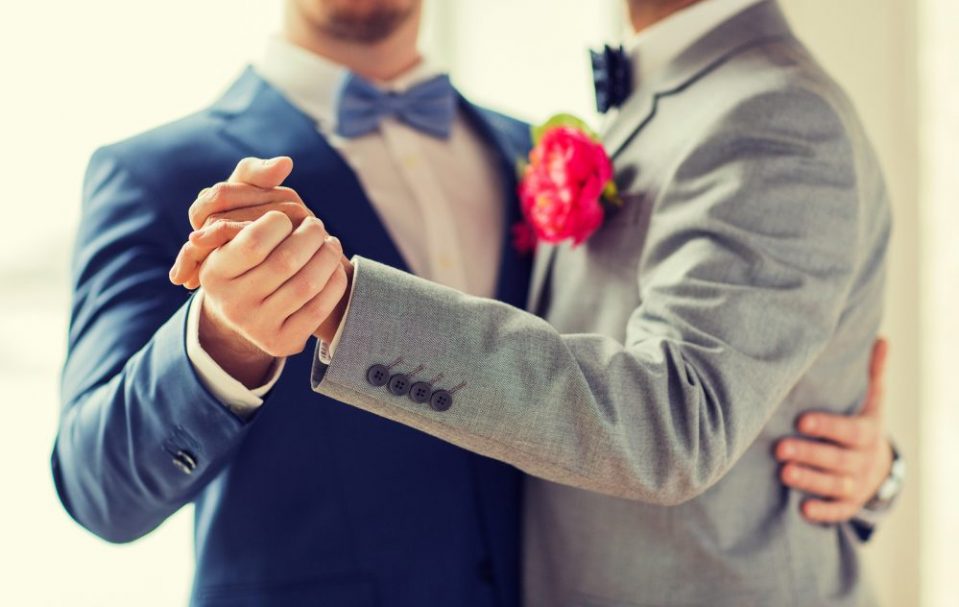
    gay marriage became law in 2013
    CREDIT: © ivonnewierink Depositphotos

    Gay marriage or same-sex marriage has been legal in part of the UK since 2013 when the law was changed to allow partners of the same sex to marry. England and Wales were the first nations of the UK to permit same-sex marriage when the law changed in July 2013.  Royal Assent was given by the Queen on the 17th July 2013 for English and Welsh same-sex marriages. The first same-sex marriage in England took place on the 13 March 2014.

    In Scotland, the legislation took a little longer and gay marriage was given Royal Assent on 12th March with the first weddings taking place on 16th December 2014.

    Is gay marriage legal in all parts of the UK now?

    In Northern Ireland, same-sex marriage didn’t become law until only recently after a long contentious battle.

    Northern Ireland held out in make gay marriage legal
    The DUP held back LGBT+ rights in Northern Ireland vote against gay marriage every time it became before the courts to become law. In total, they voted against it five times. Eventually, it was made law in 2020.

    Northern Ireland made gay marriage legal in January 2020 after a long and drawn-out legal clash between activists, human rights lawyers and the DUP. There were numerous attempts, in fact, there were five attempts to make gay marriage legal in NI since 2012.

    The subject of same-sex marriage was voted on five times by the Northern Ireland Assembly. Each time it was blocked by the DUP.

    There are a lot of differences between civil partnerships and marriages. You can read about them here.

    Are you planning a wedding? Check out our gay wedding guide for the best services and planners.

  • There are fears that gay and bi men will be “turned away” from PrEP unless Gov takes action

    MPs warn of ‘cliff-edge’ in access to HIV prevention pill PrEP in open letter to Public Health Minister calling for ‘urgent action’

    PrEP pills
    (C) marcbruxel Depositphotos

    Today (19 December), MPs and peers from across Parliament have published an open letter calling on public health minister Steve Brine MP to urgently expand access to HIV prevention pill pre-exposure prophylaxis (PrEP) in England.

    PrEP is currently available in England via a capped 13,000 place trial – but it looks highly likely that all places for gay and bisexual men will be full by early 2019. Despite this group making up more than half (53%) of the 4,363 new HIV diagnoses in 2017.

    PrEP is almost 100% effective when taken as prescribed, but some gay and bi men have already been turned away in parts of the country where trial places are full with individuals going on to be diagnosed with HIV.

    The 14 MPs and peers include lead signatory Lloyd Russell-Moyle MP, who last month revealed he’s living with HIV in a speech to the Commons, and Brighton Pavilion MP Caroline Lucas, whose constituency has one of the highest prevalences of HIV in the country.

    Lord Michael Cashman, a Terrence Higgins Trust patron and Stonewall founder, is a signatory. Lord Guy Black, the first openly gay Conservative peer and patron of Terrence Higgins Trust, has also given his support.

    In the letter, the MPs and peers state “We are writing to you to seek urgent action regarding the national PrEP Impact Trial” where “demand for the trial has far outstripped availability of places”. It continues, “This cliff-edge scenario is simply not an option.”

    Infection with HIV after PrEP refusal already reported

    CREDIT: tashatuvango-bigstock

    On the need for urgent and decisive action, the letter says, “There has already been one report in the media concerning an adult becoming infected with HIV after being refused access to PrEP via the Impact Trial due to there being no places available at their local clinic. This is unacceptable and we risk failing other gay and bisexual men if the current situation continues.”

    The MPs and peers also criticise the number of trial sites yet to open, despite being 14 months into the trial. It says, “This is perpetuating regional health inequalities, in particular among those living in the north of England.”

    The move by MPs and peers has been welcomed by leading HIV and sexual health charity Terrence Higgins Trust, which is urgently calling for an expansion to the trial and then for PrEP to be made routinely available on the NHS in England.

    Uncapped in Wales, freely available in Scotland

    PrEP is already available on the NHS in Scotland and via an uncapped study in Wales. In the letter, MPs and peers said “England must not lag behind” and “PrEP must be given a long-term home as part of existing HIV prevention services”.

    The letter is signed by Lloyd Russell-Moyle MP, William Wragg MP, Dame Caroline Spelman MP, Caroline Lucas MP, Peter Kyle MP, Ben Bradshaw MP, Helen Hayes MP, Paul Williams MP, Catherine West MP, Norman Lamb MP, Sarah Champion MP, Lord Michael Cashman, Baroness Liz Barker and Lord Guy Black.

    Ian Green, Chief Executive at Terrence Higgins Trust, said, “We welcome cross-party support from MPs and peers on this hugely important issue. It’s unacceptable that people who have been denied access to PrEP in England have gone on to be diagnosed with HIV. PrEP is highly effective at preventing HIV and we must fully utilise it in England in order to achieve our ambitious aim of ending new HIV transmissions.”

    Lloyd Russell-Moyle, Labour MP for Brighton Kemptown, said, “During my speech in Parliament last month, I called on the Government to take immediate action to avoid this cliff-edge scenario. We know of people who have become infected with HIV because they cannot access this HIV game-changer. I want to see PrEP have a long-term home as part of sexual health services, but in the meantime,  NHS England and local authorities must act now and agree to increased places on the trial.”

    Caroline Lucas, Green Party MP for Brighton Pavilion, said, “It is dangerous and short-sighted of the Government to withhold PrEP from those most at risk of HIV. When taken as prescribed, PrEP is almost 100 per cent effective at stopping HIV – so Steve Brine should urgently ensure NHS England and local authorities add new places to the trial.”

    William Wragg, Conservative MP for Hazel Grove, said, “Increasing places on the PrEP Impact Trial immediately is an important and urgent step the Government can take to prevent HIV transmissions. It will bring immediate benefits to those in need of PrEP and who are at risk today, as well as longer-term benefits to both public health and the public purse, by preventing HIV transmissions and the consequential costs of life-time treatment.”


    The letter in full:


    Dear Minister

    We are writing to you to seek urgent action regarding the national Pre-Exposure Prophylaxis (PrEP) Impact Trial. As you will be aware, demand for the trial has far outstripped availability of places. Since the start of the trial in October 2017, nearly 10,000 places have been filled, and despite an increase of 3,000 places for gay and bisexual men, it’s forecast that all those places will be full by early 2019. This cliff-edge scenario is simply not an option.

    Last month the UK met the UNAIDS 90-90-90 targets which positions us as a leading nation in the response to HIV. Access to PrEP has ultimately played a crucial role in reducing new infections but artificially restricting this access undermines efforts to reach zero new HIV infections.

    There has already been one report in the media concerning an adult becoming infected with HIV after being refused access to PrEP via the Impact Trial due to there being no places available at their local clinic. This is unacceptable and we risk failing other gay and bisexual men if the current situation continues.

    There are also a number of trial sites that have yet to open, despite being 14 months since the trial commenced. This is perpetuating regional health inequalities, in particular among those living in the north of England.

    When taken correctly, PrEP is 100% effective at stopping HIV. Other UK home nations have taken steps to give PrEP a home on their respective NHS; England must not lag behind.

    We are therefore calling for an immediate increase in places on the Trial so no one is turned away from accessing PrEP, and a timetable for getting to routine commissioning of PrEP to be agreed between NHS England and local authorities. PrEP must be given a long-term home as part of existing HIV prevention services.

    Over the past few weeks, both you and the Secretary of State for Health & Social Care have made references about the need to reach zero new HIV infections here in the UK, which is welcome. However, PrEP remains a key missing piece of our response to HIV and continues to fundamentally undermine our ability to reach zero new HIV infections.

    You said in a recent Adjournment Debate on HIV that you were in listening mode regarding PrEP. We therefore urge you to listen to our concerns with urgency and prevent this impending cliff-edge scenario and ensure there is access to PrEP for all those groups who could benefit from it, including women and BAME communities.

    Yours sincerely,

    Lloyd Russell-Moyle MP (lead signatory)

  • How many gay people are there in England?

    How many gay people are there in England?

    The number of people who identify as lesbian, gay and bisexual in England is a hotly debated subject, with no clear answer, but here will look at all the available stats.

    how many gay people are in England
    (C) BIGSTOCK

    There has long been a widely-held belief that around 10 per cent of the population is gay, lesbian or bisexual or who identify as non-heterosexual. This is probably the most accurate of all the figures – as more and more people feel comfortable to come out about their sexuality.

    ALSO: How many gay people are there in Scotland?

    ALSO: How many gay people are there in Wales?

    ALSO: How many gay people are there in Northern Ireland?

    The most up-to-date statistics from healthcare company Euroclinix show that six per cent of people identify as homosexual while seven per cent of people identify as bisexual. This equates to 13 per cent of the population identifying as either gay, lesbian or bisexual. EuroClinix surveyed 2,000 people around the UK to find out more about the sex lives of Brits.

    The current population in England is estimated to be 54.79 million people, which means that there are over 7,122,700 gay, lesbian or bisexual people in England if you take that 13 per cent statistic.

    Other sources:

    The ONS (Office of National Statistics) says that in a survey of people in the United Kingdom it found that 1.5 per cent of people identified as LGB. This result was arrived at by extrapolation of data collected. However, these statistics were disputed for not being accurate or showing the full picture. By their estimations, this would mean that there are only 821,850 LGB people in England.

    However, in 2005 the HM Treasury and the Department of Trade and Industry of the UK estimated that nearly 6 per cent of people were LGB after studying the economic impact of civil partnerships and same-sex marriages. By their estimations, this would mean that there are 3,28,400 LGB people in England.

    In 2008 the Guardian newspaper reported that 8 per cent of the population were LGB in 2014 the same newspaper group conducted another survey and found that the figures were still consistent. By their estimations, this would mean that there are 4,383,200 LGB people in England.


  • When did it become legal to be gay in the UK?

    When did it become legal to be gay in the UK?

    Laws around homosexuality differ from region to region in the UK meaning that gay people in Scotland and Northern Ireland had to wait a lot longer for equality.

    (C) BIGSTOCK

    Homosexuality was legalised in England and Wales on the 27th July 1967, a decade after the Wolfenden Report recommended that homosexuality should be decriminalised. The Sexual Offences Act was changed to decriminalise homosexuality, up to a point and only if three conditions were met:

    1. that the act was consensual
    2. that both parties were 21 or over
    3. and the act was done in private.

    Up until that point, men who were found to be having sex with other men were often charged with Gross Indecency or Buggery charges.

    Thousands of men were criminalised because of this law. They were often sent to prison.

    In 2017 a pardon was issued, as an apology to those men who served time for their “crime”.

    When the law changed being gay still wasn’t equal to being straight. The age of consent was 21 and all sexual acts had to be done in private. it wasn’t until the new millennium, that laws pertaining to gay and straight sexual acts were equalised.

    Not all gay people in the UK were equal

    But not all of the UK’s men were able to be openly gay. The law wasn’t changed until 1981 for homosexuals in Scotland and 1982 for guys in Northern Ireland.

    As it stands today, it is currently legal to be gay, lesbian, bisexual and transgender across the UK, whether you’re in England, Northern Ireland, Scotland or Wales. Laws surrounding discriminating because of sexuality or gender expression are very strict in the UK and include employment and business services.

    Gay people are permitted to have civil partnerships (since 2004) and get married (2013/14) except in Northern Ireland – the only region in the UK which does not have full equality for LGBT+ people.


  • Absence of gay sex ed by Government continues to cement “stigma, self-doubt, confusion and bullying”

    The government has announced plans to make sex education compulsory in all schools in England, however, they’ve failed to mention LGBT+ issues which critics say is letting LGBT+ children down across the country.

    CREDIT: © tomwang Depositphotos

    The UK’s Government has announced plans to ensure that sex and relationship education is made compulsory in all schools across England, however it neglected to say whether LGBT+ relationships would be covered by any classes.

    Education Secretary Justine Greening said that children from the age of four would be taught about safe and healthy relationships.

    David Geary, Head of Political Engagement Pride in London said that the absence of LGBT+ specifics was cementing stigma and bullying into school culture by not tackling those issues.

    He said,

    “Today’s announcement that age-appropriate sex and relationships education (SRE) will become compulsory in every school, is a welcome step in the right direction. The first major shakeup in more than 15 years will empower teachers to promote positive discussions on such a critical area and ensure teenagers don’t learn poor habits or behaviours from online sources.

    “Healthy sex and relationship education cannot be wholly effective until it helps every pupil in the classroom. In continuing to separate, single out and ignore the needs of LGBT+ pupils, the government is helping to cement stigma, self-doubt, confusion and bullying.

    “Such an omission lets down pupils right across the country, who need effective and positive support to develop into the healthy, confident and safe LGBT+ adults they deserve to be. Parents too benefit from having such a support as they learn to be the best guardian they can be for their LGBT+ child”.

    ALSO READ:


    The Government has not mandated how these lessons will be delivered and parents will still have the right to remove their children from the classes.

    The number of sexually transmitted infections amongst the UK’s gay and bisexual teenagers and young adults has soared in recent years and Public Health England warned in 2016 that 36% of new infections in 2015 were found in those aged just 15 to 24, the highest increase in a single age group.

    Politicians across the political spectrum have signed up to a pledge which calls for the inclusion of same-sex relationship education in all London schools to ensure the representation of different families and communities within SRE.

  • 40 Gay And Bisexual Men Will Be Offered HPV Vaccine In England And Wales

    Up to 40,000 gay and bisexual men attending genitourinary medicine (GUM) clinics will be offered the HPV vaccine as part of a new pilot programme, the Public Health Minister Jane Ellison has announced yesterday.

    The new pilot scheme – to start in June 2016 – will enable the vaccine to be offered to up to 40,000 men via GUM and HIV clinics and the results will inform decisions about a potential national roll out of the programme in the future.

    The Government’s independent vaccine experts – the Joint Committee on Vaccination and Immunisation – advised that the three dose vaccine should be offered through GUM and HIV clinics to gay and bisexual men who are at high risk of contracting the virus provided that the service can be delivered at a cost effective price.

    What Is HPV?

    HPV is the name for a group of viruses that affect the skin and moist membranes lining the body such as the cervix, anus, mouth and throat.  HPV infections are highly contagious when transmitted sexually.

    Some strains of the HPV virus can cause genital warts, and cancers of the anus, penis, mouth and throat. In some cases, it can also cause head and neck cancer.

    The HPV vaccine, which has been given to more than three million teenage girls since 2008 to prevent cervical cancer, will be offered to eligible men already attending participating sexual health clinics in England. The pilot is the first step in offering protection to gay and bisexual men.

    Gay and Bisexual to Benefit from the Trial

    Public Health England is finalising which areas will take part in the pilot scheme. GUM and HIV clinics in locations known to have large gay and bisexual male populations will be among the first to take part in the scheme.

    Public Health Minister, Jane Ellison, said,

    “We want to make sure that those most at risk are protected from potentially deadly cancers and genital warts and piloting this new programme is a step in the right direction.”

    “This pilot builds on the success of the current vaccination programme”

    Details about which sexual health clinics will offer the vaccine are being finalised, with some participating clinics aiming to start offering the vaccine to men from June this year.


    Minister for Women and Equalities, Nicky Morgan, said:

    “This Government is determined to ensure we address the specific health needs of LGBT people. Giving more people deemed at highest risk access to the vaccine will have a real impact on preventing the spread of HPV. The results of the vaccine roll out among girls has been extremely positive and so I’m delighted that we will now see a pilot roll out of the vaccine to gay and bisexual men.”

  • One Million Pounds Set Aside For Male Rape Support Services

    More than £1 million is being provided to specialist rape support organisations across England and Wales as part of the first ever fund to help male victims of rape and sexual violence.

    Approximately 75,000 men are victims of sexual assault or attempted assault a year according to data from 2012/13 while 9,000 men are victims of rape or attempted rape each year according to figures released in 2013, yet police figures show fewer than 3,000 offences of male rape or sexual assault were recorded in 2013/14.

    The Male Rape Support Fund was created by the Ministry of Justice (MOJ) to help tackle the taboo that surrounds male victims of sexual violence and encourage them to seek help. We also hope this will encourage more male victims to report the crime and bring their offender to justice. It will help increase male victims’ access to crucial information, myth busting and emotional support – either in person, or online if they find that more accessible.

    Twelve organisations have been successful in securing funding totalling more than £600,000 over 2 years to provide face-to-face support at centres across England and Wales, increasing the availability of advice and counselling for men who may not previously have been able to find help.

    A further £400,000 over 2 years will be given to Survivors UK to help them create the first national website and online support service specifically tailored to help men who have suffered rape or sexual abuse and ensure that no matter where they live they will be able to access help anonymously and at a time that suits them.

    Victims Minister Mike Penning said. “Latest estimates show that more than 1 in 10 victims of rape or attempted rape every year are men. Yet few come to forward to report it or seek help. I want to change that – it’s vital these victims are helped to cope and hopefully recover from what is a hugely traumatic crime.

    “Creating a fund specifically for male victims will encourage them to break the silence on a topic still seen as taboo, as well as help those organisations already doing excellent work to increase the availability of that support so any man can get help wherever he is in England or Wales.”

    The website will provide clear information specific to male victims, carers and professionals, and include statistics, a “myth-busting” section, short films discussing some of the issues and a series of animated client stories.

    A safe online community will also be created for men to talk about their experiences and recovery, as well as space for survivors to blog about their experiences and how they have coped. There will be a web-chat service to provide online emotional support, a text-chat service, access to phone counselling and signposting to national counselling services.

    The Male Rape Support Fund is part of MOJ’s campaign to Break the Silence around male rape and sexual violence, launched earlier this year. This was supported by Channel 4’s Hollyoaks which was the first British soap to feature the issue of male rape in a storyline.

    This fund sits alongside our funding for Female Rape Support services which were the subject of a coalition pledge. This commitment to creating 15 new female rape support centres was met this year – and more than £4 million has been provided each year to Female Rape Support Centres since 2010.

  • INTERVIEW | English Gay Youth Twice As Likely To Smoke and Drink

    With the news today published by BMJ that gay youth in England are twice as likely to smoke and drink more hazardously than their heterosexual peers we speak with one of the authors of the study by UCL, Dr. Joanna Semlyen.

    TGUK: Why in your opinion LGBs are more likely to smoke firstly – and secondly, perhaps more worryingly more likely to drink and to hazardous levels?

    DJS: There are several reasons why LGB young people may be more likely to smoke tobacco and drink alcohol hazardously and we do not, as yet, due to lack of research, have definitive evidence as to what the reasons are, however, we suspect that the impact of homophobia and heterosexism within society, in addition to the possible experience of homophobic bullying whilst at school, may lead to what we call ‘minority stress’ or in increased low self esteem which young people then perhaps seek to alleviate with smoking and/or alcohol. We also know that LGB people tend to socialise in the places where they can be with each other, which is almost always places where alcohol and cigarettes are freely available, like bars and clubs.

    This situation may be being exacerbated by a growing concern that LGB people are targeted, for example, by the tobacco industry. There may also be other reasons we do not know and a large longitudinal study (with a heterosexual control group and repeated follow-ups) might allow us to study the antecedents of smoking and drinking in young LGB people.

    TGUK: Do you think this might be linked with the fact that LGBTs are more likely to suffer from mental health issues?

    DS: Because no data on transgender identity was collected in this study, I can only comment on LGB participants in this study. I think that the experience of homophobia and heterosexism should not be underestimated and, along with the stress of coming out (often repeatedly throughout one’s life), may well account for why we see greater incidence of mental health issues in LGB people. The problem is, we don’t have any data yet on the causes of smoking and hazardous alcohol drinking in LGB young people, followed repeatedly over time.

    TGUK: Do you think the government or the health service is doing enough to interface with young LGBTs?

    DS: As a researcher and LGBT Health Psychologist, I would like to see the routine collection of sexual orientation data within population based health and well-being studies and as part of the NHS’ own routine identity data collection.

    This would allow us to accurately determine the health inequalities being experienced by this group and, by virtue of being included, would go a long way to indicate to LGBT people that their health is being considered. LGB people want to be counted in surveys. Indeed we noted the question in this study had a very low refusal rate.