Tag: Five Star Car Review

The latest Five Star Car Review from THEGAYUK.

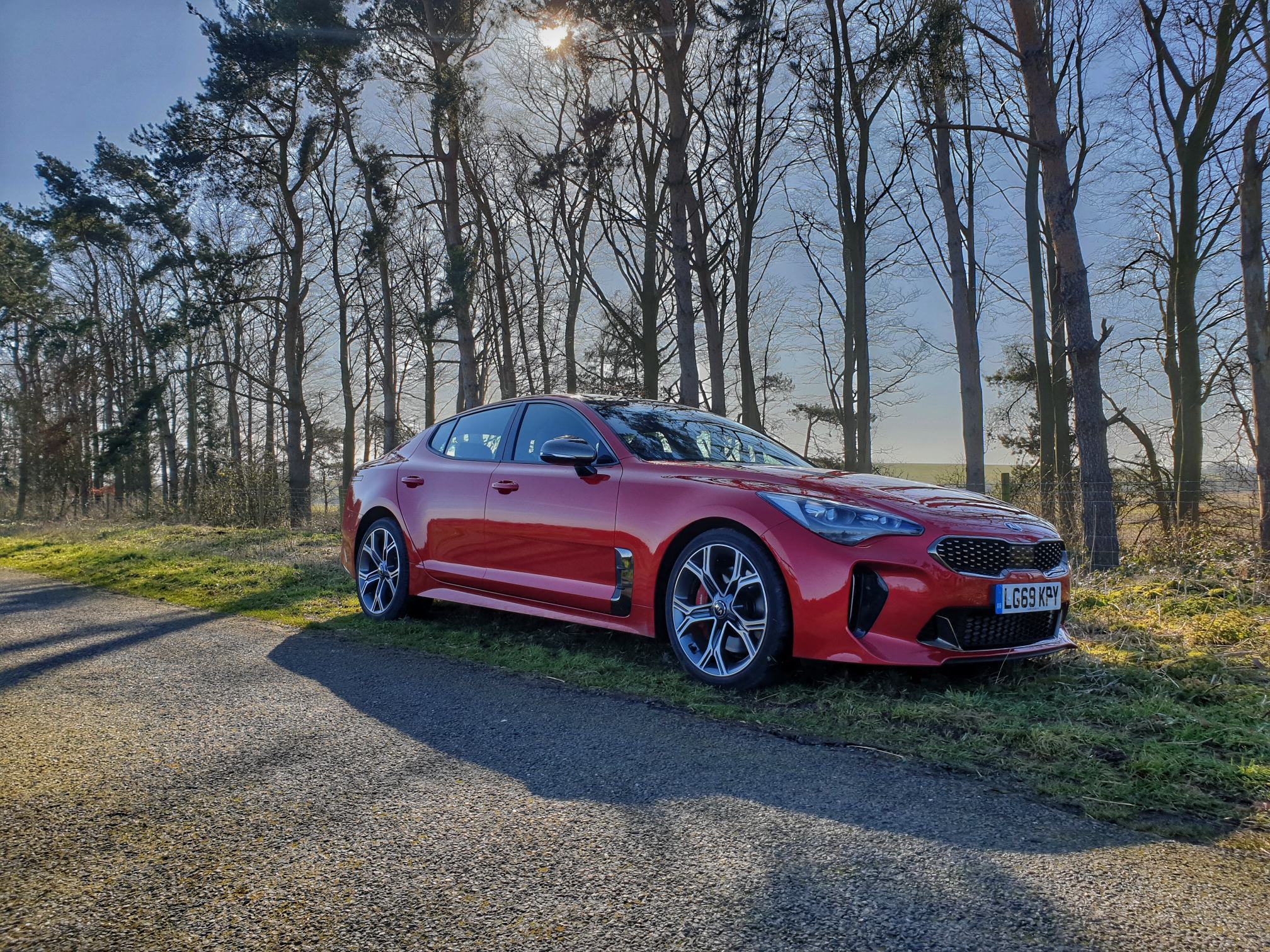
  • CAR REVIEW | Kia Stinger 3.3 GTS

    CAR REVIEW | Kia Stinger 3.3 GTS

    Rating: 5 out of 5.

    This week I have been enjoying the Kia Stinger GT-S.

    Kia describes the Stinger as a halo performance model. They say it is a GT car and not a hard-edged sports car.

    I read a very cool quote from chief designer Gregory Guillaume (Gee-ome) which said: “the Stinger has nothing to do with being first to arrive. This car is all about the journey. it’s about passion.”

    Stinger is a new direction for Kia, taking them into a new market sector. A 5 door, 5 seater fastback style grand Tourer. It is also their first Rear Wheel Drive car in the UK.

    Our Stinger is the GT-S which means it has the all aluminium, 3.3 litre twin-turbo V6 engine, producing 361bhp and 510Nm or torque.

    Interestingly, it makes peak power at 6,000rpm but…..makes its torque between 1500rpm and 4,500pm. 1500rpm! What this means is the engine is very tractable and you don’t need to rev it to get the most out of it, which is how a GT car should be. 0-62mph comes up in just 4.7 seconds and the top speed is 168mph

    The Interior is beautiful. It’s not brash or ostentatious, it’s elegant and dignified. I would describe it as somewhere between a dull Audi interior and an unnecessarily conspicuous Mercedes Interior.

    Seats, armrests, steering wheel, dashboard and gear shifter are all upholstered in plush Nappa leather. The centre console, Interior door handles & pedals have a brushed aluminium finish and there is a beautiful suede headlining.

    Both front seats are electrically adjustable and heated and cooled and the driver’s seat has a huge amount of electric adjustment for lumbar and bolsters.

    I actually found the seats firm but fantastically comfortable over a long distance. There’s plenty of room and they are very supportive.

    Suspension on the Kia is excellent. McPherson struts at the front with multi-link rear suspension. It’s also Blessed with DSDC: Electronically controlled, Dynamic, Stability, Damping, Control

    The car adjusts the suspension on the move, controlled by acceleration, braking and steering sensors. The driver can change the characteristics of the whole car by using the Mode Selector on the centre console.

    There are 5 modes: Smart – Eco – Normal – Sport – Sport+.

    Each position of the drive mode selector noticeably changes the characteristic of the car.

    I’m sure you’ve seen this kind of thing before. Steering, gearbox and throttle become more responsive, suspension firms up and the whole car takes on a more sporty attitude.

    In the Kia Stinger, the modes feel like well spaced gear ratios. They offer a very progressive, increased level of driver involvement by reducing the electronic intervention and increasing the fun factor, culminating in the full fat Sport+ mode.

    However, even Sport+ has some electronic involvement. It will go sideways but the car still has your back.

    If you really want to be a no holes barred hooligan, you can completely turn off traction control and stability control with another button on the centre console.

    Brakes are fantastic. Kia have blessed the Stinger with 350mm discs on the front and 340mm on the rear, both with massive calipers. The braking force is epic and the feel is excellent. When you first press the brake pedal, Initial bite is quite gentle. There is no snatching or jerky braking, it’s nice and gentle. When you apply more pressure, the braking force increases significantly. In short, the brakes are excellent, they are the best of both worlds: easy to use around town, and provide immense stopping power when needed.

    As a GT car, the Stinger really works. You can easily cover hundreds of miles in comfort, cocooned in a beautifully built cockpit, accompanied by the sweet but subtle song of the all aluminium V6. Slip the drive mode selector to ‘comfort’ and enjoy the relaxed, brisk journey.

    Turn the drive mode selector to Sport+ and you can drive it like you stole it. If you turn traction control off, you can pretend you’re a bad guy in a movie being chased by the superhero. It’s fast, poised, you can slide the rear end at will and be a total hooligan if you want.

    The chassis is fantastic. Whether you are cruising in comfort or being a lunatic in sport+, the car is never nervous and always feels predictable and controllable.

    One of the most striking features of the Stinger is the price. This 3.3 GT-S is the top of the range car with all the toys. It is only £41,646.24. There are very few options available, the standard car has all the toys as standard.
    To get something like an Audi S5 with a similar specification, you would be somewhere in the region of £62,000. I would have the Kia in a heartbeat over the Audi.

    If I had a concern, it would be over residual value. I would expect a BMW or Audi to have a stronger residual but, I don’t know.

    This Stinger is very, very good and in my opinion, better than any financially equivalent GT car.

  • CAR REVIEW | Mitsubishi L200 Barbarian X

    CAR REVIEW | Mitsubishi L200 Barbarian X

    Rating: 5 out of 5.

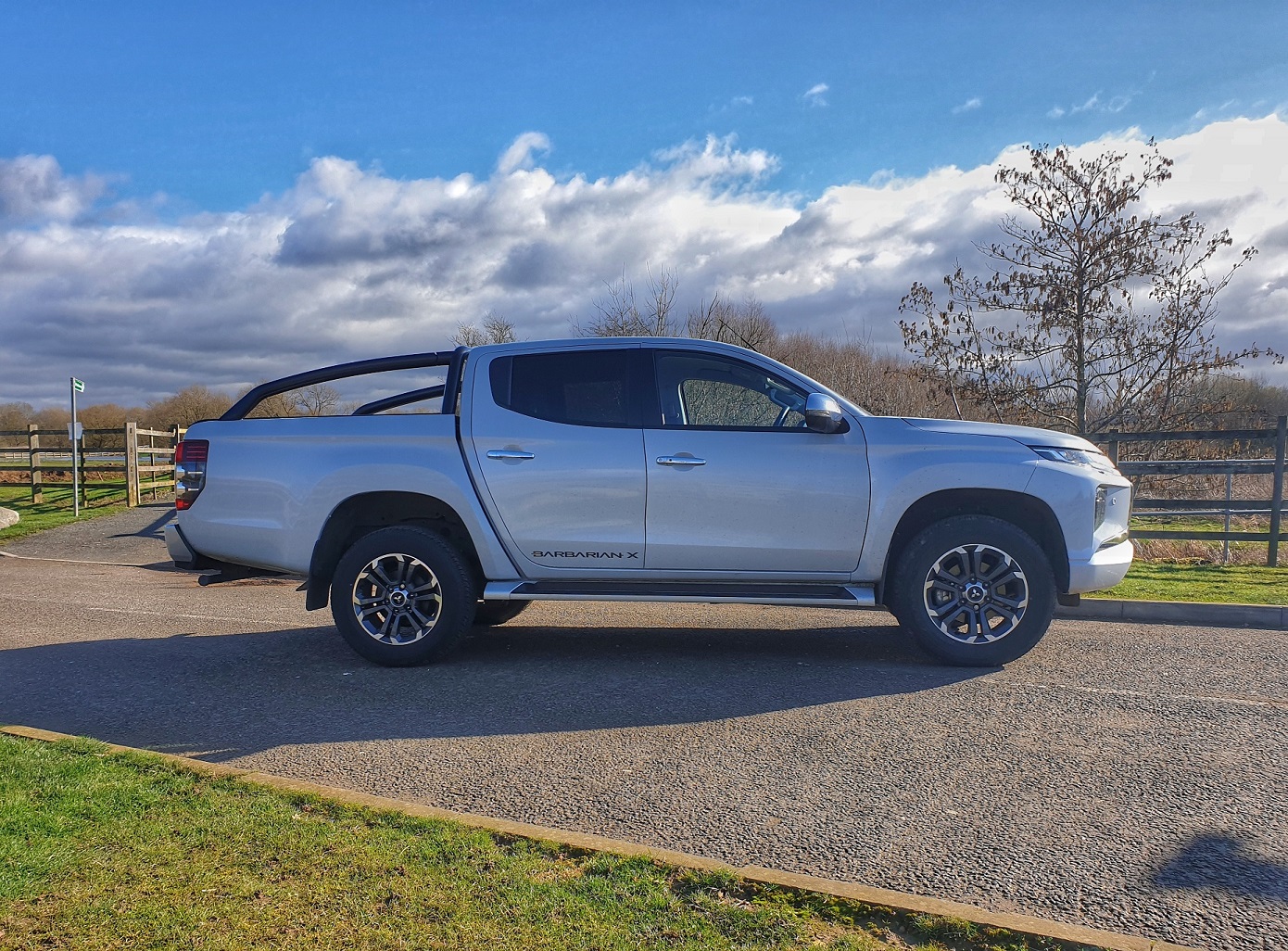
    The Mitsubishi L200 Barbarian X is the latest in our series of lifestyle pickup reviews.

    Mitsubishi’s L200 is now in its 6th generation with production beginning way back in 1978, and worldwide production topping five million vehicles so far.

    If you’re looking for a pickup, you will be interested in some or all of the statistics, so here we go;
    There is an all-new 2268cc all-aluminium turbo diesel 4 cylinder engine producing 150bhp and 400Nm torque. Gearbox options are the new 6 speed automatic or a 6-speed manual.

    The payload is up to 1080kg and gross train weight (GTW) is 6100 kg.
    Curb weight for the L200 is 1935kg and the towing capacity is 3100kg with a twin axle trailer.

    At just under 5.3m long, this is a long vehicle and certainly doesn’t fit into a small, modern parking space. Width is 1.8m and feels no wider than most of the traffic around you. Lastly, the bed length is 1850 on this model.
    List price on the L200 starts at around £21,000, rising to £32,000 for what you see here, the Barbarian X.

    Solid axle and leaf spring at the rear and double wishbones and struts at the front.

    It wasn’t all that long ago that a pickup was simply a work tool. I remember early L200’s, Ford Rangers and many others, being pretty agricultural and basic. Over time, manufacturers have added more and more creature comforts. These days, manufacturers generally include at least one well-appointed, lifestyle type pickup in their range.

    Mitsubishi is no exception with their L200. This Barbarian X model is like a luxury SUV inside.

    Barbarian X comes with leather and Alcantara upholstery. The seats have sixpack quilted stitching, and leather features on door cards, centre console, armrest, and rear seats. The interior plastics are high quality and soft touch and after several thousand press fleet miles (aka hard miles) the interior is fresh, unmarked and doesn’t squeak or rattle.

    Exterior styling is a bit contentious. In a time when manufacturers seem to be trying to soften the styling on pickups to make them less aggressive, Mitsubishi decided on a more bold approach to the styling. The front is particularly striking with angle and straight lines dominating. They call is dynamic mesh. One thing is for sure, it’s an imposing sight in your rearview mirror.

    Side steps have been raised, in fact, the whole vehicle rides higher.

    Pickups have generally lacked in creature comforts over here. In the last few years, things have certainly changed, and this L200 boasts an impressive list of active safety aids. Partly lead by legislation and partly by customer expectation, o modern pickup is very well specified. This Mitsubishi has every active safety aid you would find on a modern car. Mitsubishi proudly state this barbarian X has class-leading active safety.

    As you would expect, there is a touch screen infotainment system. It’s not the last word in refinement but works well and has a good stereo.

    What’s it like to live with and drive? It has a poor turning circle and is a little bit bouncy over potholes, to be honest. Mitsubishi have stiffened the suspension over the previous generation. There are stiffer springs but in my humble opinion, the damping could be better. It works much better with a bit of weight on the back and is very smooth then. Let’s put this into perspective. This L200 is a pickup, designed to work for a living. It’s also a serious off-road tool with increased ground clearance over the previous model and a host of off-road features such as a low range gearbox and locking diffs. It’s also a luxury SUV and all for £32,000. Bearing that in mind, there is bound to be a compromise. Saying it’s compromised seem unfair though, it’s very nice to drive. I did 5hrs on the road in it one day with absolutely no issues or complaints. It was a lovely place to be.

  • CAR REVIEW | Isuzu D-Max Blade; The Rugged Gentleman

    CAR REVIEW | Isuzu D-Max Blade; The Rugged Gentleman

    Rating: 5 out of 5.

    There are lots of good pickups on the market today, In fact, the line between pickup and SUV is becoming increasingly blurred with every new pickup released.

    You could argue that Isuzu is one of the founding fathers of the modern pickup. Farmers and workers across the globe who need a serious workhorse have preached the word of Isuzu for years.

    Isuzu introduced us to the D-Max in 2012, and it became the standard for rugged reliability and a serious workhorse. That is still the case, however, these days there is a rich vein of luxury running through the D-Max family. We have been fortunate enough to test several of the D-Max family; the mad Arctic trucks variant, the very cool XTR and now the Blade.

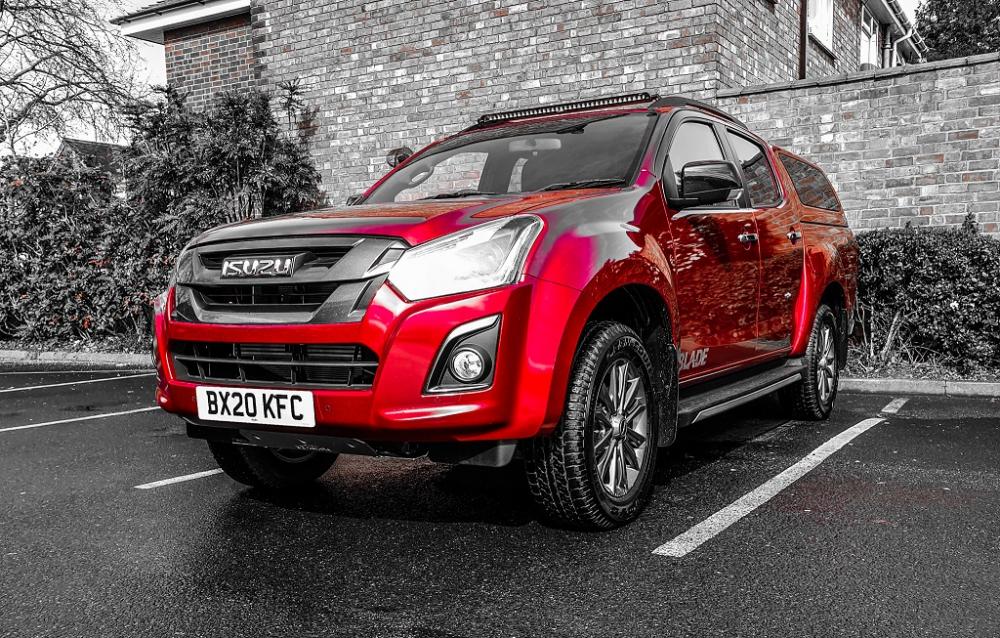
    Our test vehicle is the D-Max Blade which is a double cab with all the toys.

    Talking about toys, the range-topping D-Max Blade has plenty. In terms of practicality; LED projector headlights, rear load liner, roof bars, side steps, tailgate damper, privacy glass rear windows and ours had the excellent colour coded Aeroklas canopy.

    Another cheeky little option ours had was the roof-mounted lazer light bar. You really need to see this to believe it, it literally turns night into day.

    Inside, the D-Max Blade is a very nice place to be. Standard specification is very generous and includes such luxuries as; front and rear parking cameras, climate control, leather upholstery with heated front seats, 18″ alloy wheels, and a great infotainment system.

    Isuzu has fitted the Blade with a 9″ multifunction touchscreen with DAB Radio and Bluetooth® connectivity (Apple CarPlay™ & Android Auto™) including Satellite Navigation. This features nine speakers (2 x front door, 2 x rear door, 2 x tweeters, 2 x roof mounted & 1 subwoofer) and a selection of USB ports and a HDMI port. It has a great sound and is easy to use.

    As we have come to expect in modern cars, there are a host of electronic aids, and you know how these manufacturers love their acronyms, so brace yourself. Some are active safety, some have a more practical use, for example; ESC (Electronic Stability Control), TSC (Trailer Sway Control), ABS (Anti-Lock Braking System), EBD (Electronic Brakeforce Distribution), BAS (Brake Assist System), HSA (Hill Start Assist), HDC (Hill Descent Control), and Front, Side & Curtain SRS Airbags. I warned you there were a few. What this tells us is that the D-Max Blade is a very safe and capable pickup.

    The 1.9-litre four-cylinder diesel engine puts out a little over 160bhp and a hefty 360Nm of torque, delivered between 2000 and 2500rpm, ensuring the D-Max has plenty of get it done power. Talking of working for a living, the D-Max will haul 1098kg which is more than most of its rivals and it’s is rated to tow a braked trailer up to 3500kg, so it will easily tow the race car trailer or boat.

    On the road, the Blade is imposing as you would expect. It has huge ground clearance, tall tyres and isn’t light. Steering is slow and progress is generally sedate, but I love it. It’s essentially a big 4×4 and drives as you would expect. It rides well, better than some others I’ve driven only beaten by the Mercedes X Class (soon to be discontinued) and the Nissan Navara. The Blade has a solid rear axle and leaf springs at the rear with struts at the front and rides well. The suspension seems well balanced and does a good job of isolating the occupants from the horrors of our appalling roads, and you feel like you could go anywhere in it.

    We felt obliged to test the Blade’s off-road ability and oh my, this is serious. Isuzu builds the D-Max to perform, and it is fantastic off-road. You would have to do something pretty crazy to get stuck in this.

    To summarise, Isuzu’s D-Max Blade is a very well-engineered, well-proven, luxurious pickup that drives well and looks good. It has great standard levels of equipment.

    The only thing to consider is that the D-Max has been around for a while and there is a new model waiting in the wings.
    A new Blade starts at £28,814 CVOTR* + VAT.

  • CAR REVIEW | DS7 Crossback

    CAR REVIEW | DS7 Crossback

    Rating: 5 out of 5.

    In 2009 PSA the parent company of Peugeot Citroen and now Vauxhall resurrected the DS name. They used it to denote certain models in the range as premium: for example the Citroen DS3 Citroen DS4 Crossback. It was always part of the Citroen range, then in 2015 PSA decided that they would make the DS a stand-alone luxury brand, a halo brand if you will. 

     DS7 Crossback reviewed

    On face value, the DS7 Crossback is just a large SUV. There are a lot of them about, 5 seats, nice interior, nothing particularly unusual or special. 

    However, what PSA has allowed to happen under the DS brand, is something a bit fresh and unique, something a bit more fun. 

    They have injected some fun and style back into motoring. It’s a really lovely place to be.

    The DS7 Crossback is typically French in its ride and handling. By that, I mean French cars are renowned for having excellent ride quality and the DS7 is no exception.

    It rides very well, very supple, soaking up the bumps with ease, but at the same time it’s poised, it handles well and it turns in sharply. I don’t know how they do it, to be honest.

    This model is the Premium and sits exactly the middle of the range. It has a 1.5 litre turbo diesel engine that produces 130 bhp and 300 Nm torque, so it isn’t desperately fast but it’s perfectly adequate.

    The DS7 interior is a beautiful thing. Nappa leather upholstery adorns front and rear seats which are electrically adjustable and have a built-in massage function. 

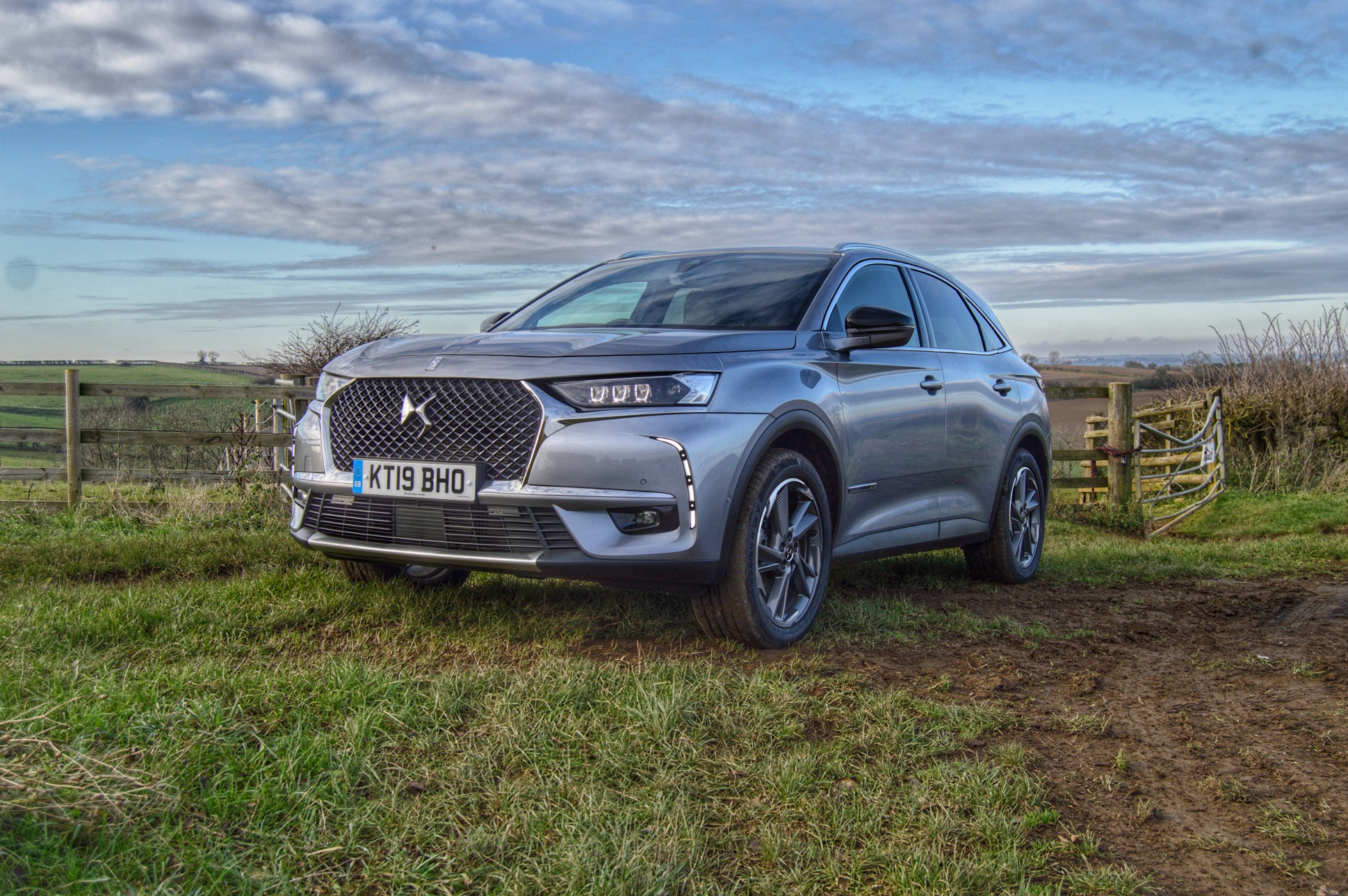
    You will find Nappa leather on the dashboard, on the door cards and on the centre console, all with a diamond quilted pattern stitched into the leather. That diamond is a DS styling trait and you will see it repeated on the switchgear, the headlights, exterior styling, in fact all around the car.
    Headlights are fascinating. That sounds odd I know, but on the DS7 you have LED projector headlights and when you look through the headlight lens, there are three individual projectors. When you turn the car on the three individual projectors do a little dance for you. They rotate 180 degrees, one at a time, then rotate back again, ready to do their job. 

    This is not just for show, the projector headlights turn with you as you steer, shining light onto parts of the road that would otherwise have been left in darkness until you arrive. An attribute carried over from the original Citroen DS 21 way back in the ‘60s

    Why should we settle for something that is nothing more than transport? Something that is perfectly good at its job just isn’t good enough anymore, as no end of faceless, soulless, boring SUVs out there. They pretty much all do the same job and they do it very well. They’ll take you where you are going, it will be comfortable and generally reliable.

    Is this enough? I just think it’s time for us to enjoy our cars again. 

    Can’t we have something that funky, fun, chic and adventurous? Life’s too short to drive boring cars, that’s what they say, and I think DS has taken that on board.

  • CAR REVIEW |Lexus RX-L Takumi 

    CAR REVIEW |Lexus RX-L Takumi 

    Rating: 5 out of 5.

    Lexus is a brand synonymous with luxury automobiles. They are the luxury vehicle division of the Japanese automaker Toyota.  

    The Lexus brand originated in 1983 and has been making luxurious and outstanding cars ever since. 

    ‘We design to provoke, with bravery, courage, and confidence. We ignore the thinking of the crowd, always exploring new concepts, new outcomes, and new ways to express ourselves.’ 

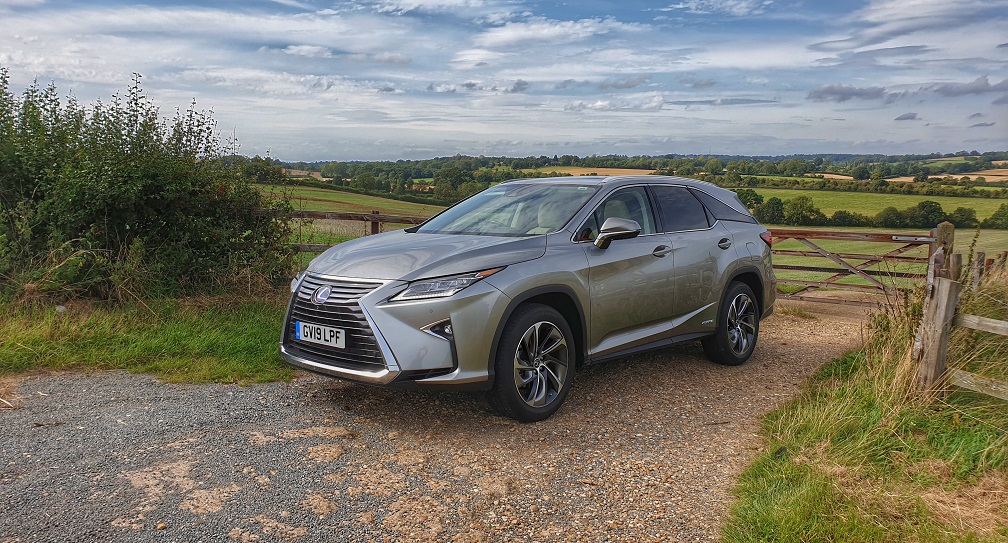
    I recently had the opportunity to try the new Lexus RX-L for a week. RX-L is their first seven-seat model in Europe. It’s an SUV with a focus on luxury. The Lexus RX-L is an elegant and spacious seven-seat SUV, engineered to make sure every passenger is pampered and protected. The build quality is excellent with top quality materials used throughout and fit and finish that most manufacturers can only dream of. 

    RX-L is a luxury SUV with the added benefit of being a Hybrid.  

    If you don’t currently drive a hybrid and haven’t owned one before, they’re very simple. The RX-L doesn’t need to be plugged in, it is self-charging. You just drive it like you would any other automatic. There are 4 driving modes that you can select; 

    • EV – encourages the car to be powered solely by the battery when city driving 
    • Eco – evens out harsh accelerator inputs and reduces the output of the climate control system 
    • Normal – the default drive setting for everyday motoring 
    • Sport – draws additional power from the battery to help boost acceleration. 

    At low speeds, in town for example, the car will run on silent electric power alone, only using its petrol engine when you call for more power or if the stored battery power is used. The CVT automatic gearbox (continuously variable transmission) is smooth and seamless. Altogether, this makes the RX-L very pleasant to drive.  

    The Lexus RX 450hL has a 3.5-litre direct-injection V6 petrol engine producing 259bhp at 6,000 rpm and 335Nm of torque at 4,600rpm. There is also a small additional boost from the electric motors which pushes the total output of the hybrid powertrain (engine and electric motors combined) to 308bhp.  

    The RX 450hL features the sophisticated Lexus proactive E-Four all-wheel-drive system. This means that in normal use, the RX-L is rear wheel drive to save energy. When required, the all-wheel-drive system transfers power to all wheels as needed. There is also a regenerative element to the system, so under braking or deceleration, the car generates electricity. 

    Takumi specification RX-L’s are fitted with adaptive variable suspension (AVS). 

    This system controls the damping force of each shock absorber in response to road surface conditions and driver inputs. For example, on a rough road, AVS instantly switches to a more compliant setting to maintain ride comfort. When cornering, the damping force firms up to help reduce body roll. It rides very well as a result but you wouldn’t call it sporty. 

    RX-L is based on the RX. Lexus have cleverly extended the rear section of the body by 110mm to create room for 2 additional seats. This has been achieved with no compromise in comfort for the other occupants. There’s tri-zone climate control and a console with two cup holders and air conditioning controls for the 2 rear seats.  

    Accessing the rear seats is simple. A one-touch lever tilts the seatback forward and slides the seat smoothly forward.  

    Semi-aniline leather upholstery is standard throughout and the front seats are heated and ventilated, 10-way electrically adjustable with memory function including 4-way lumbar support.  

    The steering wheel is heated and there are front and rear USB chargers and a wireless phone charger. 

    Infotainment is taken care of through a 12.3” touchscreen multimedia display with Lexus navigation. Music comes through the 15 speaker Mark Levinson® surround sound system. For me, one of the coolest features about the system is that the audio system has neat, machined aluminium knobs.  

    I really liked the colour head-up display (HUD) which projects information onto the base of the windscreen in your eye line, about adaptive cruise control status, speed limits and pre-collision system warnings.  

    As we know, Lexus makes incredibly safe cars and the RX-L is no exception. To support this, there is a suite of safety and driver aids.  

    Lexus Safety System+ is a multi-feature, integrated safety package that delivers exceptional levels of active safety and driver assistance to help prevent accidents. There are several elements to the Safety System+; 

    • Pre-Collision System. Uses a front-mounted camera and radar to detect vehicles and pedestrians. It warns of danger, adds braking force if needed and ultimately can brake autonomously if it needs to. 
    • Dynamic Radar Cruise Control helps the driver maintain a safe distance from the vehicle in front. 
    • Lane Keep Assist (LKA). 
    • 3-Eye LED Headlamps with Automatic High Beam, Adaptive High-beam System for headlights and LED Cornering Lamps. 
    • Road Sign Assist system reads the road signs. 
    • 360-degree Panoramic View Monitor through cameras helps with parking. 

    And more…… 

    High quality, soft, semi-aniline leather upholstery covers seats, doors and centre consoles, excellent quality soft-touch plastics top the dash making the interior a luxurious and extremely pleasant place to be.  

    Styling is divisive. It’s bold and unique but it has its critics. I liked it. I wasn’t convinced at first, but I really like how Lexus has been brave enough to style something distinctive and immediately recognisable as a Lexus.  

    To summarise, this is a great car. It’s luxurious, practical, relatively economical and easy to live with.  

    It’s not sporty but that suited me.  

    Fuel Combined WLTP (mpg)34.4 – 34.4 

    CO2 Combined (g/km) 138 

    5 years/60,000 mile cover for both hybrid battery and other hybrid components. 

    3 years/60,000 miles manufacturer’s warranty. 

    RX-L from – £54,145.00 otr 

    RX-L Takumi £62,000 otr 

  • CAR REVIEW | Jaguar F-Pace SVR

    CAR REVIEW | Jaguar F-Pace SVR

    Catapult for the Road.

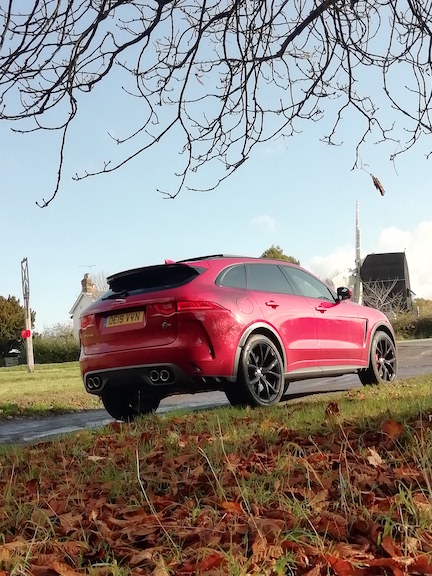
    Jaguar’s Special Vehicle Operations (SVO) has taken their spanners to the all-important and top-selling Jaguar F-Pace. Looking through the model options on the F-Pace, it would seem that the V6 S we tested back in May 2018 has now gone, replaced by this all-new SVR model. 

    On paper alone, it doesn’t sound like much progress has been made from replacing the 375PS supercharged V6 with a 550PS supercharged V8. You might be thinking “hold on Stuart…” because these figures alone are impressive. I’ll grant you that they are. What it lays down on the road doesn’t exactly look like much in terms of the 0-60 second sprint. Just 1 second is knocked off the S models 5.1 second time.

    Where the fun lies is in the top speed that you’ll never achieve on the public road of 176mph and the massive increase in torque delivery you will get when you put your foot down. Now you have 680Nm from 2,500 – 5,500rpm. We don’t need to consider the old model anymore.

    Development

    It feels like SVO has done some work on the iQ-Al (D7a) modular platform that is shared with the enjoyable XE saloon. And that work feels a little more than a mild tweak and a tap with a hammer. Finally, the F-Pace has the handling that enables it to keep up with its greater power outputs. It can still plough on but this time you can encourage the rear end to catch up far quicker than before. There is no doubting that the extra grunt in useable lowdown torque helps to attribute to this vastly and enjoyable improvement.

    What this also means is it can all get a bit messy and a lot of fun. It makes for a big car that feels less nervous. Even on moist roads, the traction is all there and exploitable. Now we have a car that gets a bit twitchy on the rear when confronted with coming out of fast roundabouts if you so wish for it to do so.

    And all of this happens before, and by accidentally, that you select S on the gear stick. I’ll be a little unprofessional here and say I did scream and cry at the same time as it shot down the road like a stone from a catapult. What felt like a fast vehicle suddenly became even faster with more response from throttle inputs and manual inputs with gear changes.   

    Legally you can’t use this outrageous amount of power all the time. There comes a time where you need to be civil to other road users. Sometimes that means shutting off the snarling exhaust sound system controlled by a system of flaps and baffles.

    On a normal kind of drive or commute, the F-Pace SVR is a gentle giant. Its interior on this press model, were rather cosseting and the though the seats didn’t visually lend themselves to look comfortable, did a good job.

    Attention To Details

    Inside the F-Pace, there is an absence of race materials. Instead, Jaguar has opted for leather and soft-touch materials where it is needed. It’s fit and finish are OK though they would struggle to match those from BMW and Mercedes and its looks are a little dated now.

    And this is a shame because this is Jaguar and it’s a premium brand of car. But it fails in a few areas of neglect that niggle a bit if you go looking for them. The glovebox, for instance, has some unrefined sharp edges around it and then we get to my visual dislike in a Jaguar interior. Namely in the ambient illuminations set in the doors. Personally I’ve never liked blue lighting. It’s a harsh light so add this to the black and red leather interior and you do wonder who at Jaguar is in charge of making this decision. Other interior colours are available in black with cream or tobacco or all black.   

    And this is the main problem for the F-Pace. It’s 4 years old in 2020 and dated inside because of this. Thankfully for £210, you can tick a box that gives you a choice of 10 colours. Keep it white as standard and you wouldn’t need this.

    All this extra doesn’t come cheap and that’s before you’ve added your own essentials. You’ll regret not adding such items like the ‘driver assistance pack’ at £3100 so you can kiss the reasonable list price of £75,335 goodbye. Add the options that we have here and it tips the scales at over £83k.

    Can I justify this to you? If motoring is on a budget then no, this F-Pace is not for you but you might find what you want lower down the range. That said, if a fast SUV vehicle with a kick is what you want, you’d find a lot of the competition out there quite lacklustre. There aren’t that many as accomplished and as outrageous as this and that’s why I’m rather taken by it. 

    Love

    Sound

    Civilised driving

    Can be an unruly brute 

    Loathe

    Blue ambient lighting

    Expensive options that you need 

    Interior design showing its age 

    The Lowdown

    Car –  Jaguar F-Pace SVR 

    Price – £83,625 (as tested)

    MPG – 22.1mpg (WLTP combined)

    Power – 550PS @ 6,000 – 6,500rpm

    0-62mph –  4.1 seconds

    Top Speed –  176 mph

    Co2 – 272 (g/km)

    All pictures: Stuart M Bird (C)

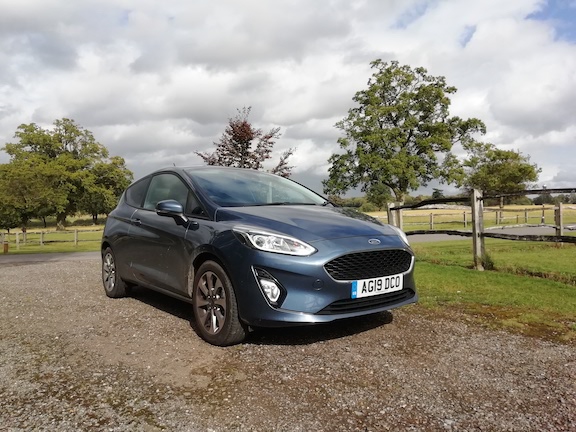
  • CAR REVIEW | Ford Fiesta Trend 1.1 Ford’s City Fiesta

    CAR REVIEW | Ford Fiesta Trend 1.1 Ford’s City Fiesta

    What Have We Got?

    Cars are complicated pieces of machinery so Ford have selected a Fiesta model with simplicity its main focus point. 

    And this model, the 3 door Fiesta Trend was a hit with the reviewers at the recent SMMT drive it day and I’ll tell you why.

    Driving

    I hadn’t read the spec sheet for this new Fiesta. At times I like to just jump in and go to see if it wows me. And I can say that it did. 

    The simplistic appeal to this Fiesta comes from its 1.1 litre 3 pot engine. Just when every little engine in a biggish car is fitted with a turbo, this little engine leaves that at home on the table. 

    Performance figures are amiable and with just 85PS of power from a free revving engine, it manages to trundle along quite nicely. With no turbo, throttle inputs are met with immediate action except when nearing its peak of performance or when there is a hill to climb.  This will also be why there are only 5 gears. 

    With the chassis being very communicative, making it a fun car to drive, hustle it through the gears to keep the engine at its peak and it’ll reward you with a dash that is both driver licence safe and exciting.

    Inside

    From the drivers point of view, the Fiesta Trend has all that you could want in a nippy city car. The 8” touch screen was easy to use, reasonably quick to function at the touch of the finger and the graphics are easy on the eye.

    Plastics feel good quality and the choice of seat fabrics is both sophisticated and business like. For such a base model, it would in this case, seem out of place. Trend is its name but Trend it does not set. I don’t think a little funk would go a miss in here with a smattering of colours to lift the well fitted cabin. 

    Living With It

    Fords NCAP pack comes as standard. This gives you extras like lane keep assist, speed limiter and tyre pressure monitoring. The electronic stability programme also comes with hill assist. So it all stacks well in its favour as a reasonable specced car for the money. 

    Is being a 3 door a hindrance? Not really. The front seats fold forward enough to allow easy entrance and a 3 door hatch always looks sporty over the 5 door. 

    The Verdict

    The Fiesta Trend was a bit of a runaway hit at the SMMT drive day. There were not many bad words to be said about it. It was universally liked. And you can see why. It’s well put together and for a small car of £15,995, you weren’t left feeling short changed. 

    The drive is both engaging and without sounding detrimental to Ford, so simple and uncomplicated, that it makes it a drivers car without it costing the earth.

    The Lowdown

    Car –  Ford Fiesta Trend 1.1 TI-VCT 5 speed manual

    Price – £16,495 (as tested)

    MPG – 44.8 – 48.7mpg (WLTP lowest-highest)

    Power – 85PS

    0-62mph –  13.8 seconds

    Top Speed –  105 mph

    Co2 – 114(g/km)

    All pictures Stuart M Bird

  • CAR REVIEW | Alfa Stelvio Quadrifoglio 2.9 V6 Bi-Turbo Q4 

    CAR REVIEW | Alfa Stelvio Quadrifoglio 2.9 V6 Bi-Turbo Q4 

    Release The Beast

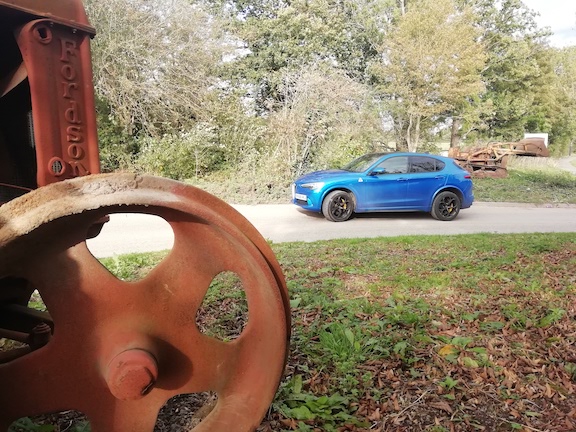
    This review is going to be a little bit different. If you want to know what the Alfa Romeo Stelvio is like, then I can direct you to the Alfa Romeo Stelvio 2.0 Turbo 280hp Q4 we had in late last year.

    So what have I got this time? From the outside, you don’t much to go on. It’s as big and as bold as before and you get an alloy wheel on each corner.

    What you notice about these alloys is that they cage the “Monster brake system” with their £595 optional bright yellow brake calipers all round. And you’ll learn to appreciate these bright appliances very quickly on your test drive.

    You also get a 4 leaf clover symbol on the front wings as is the historic tradition of Alfa Romeo and these in their big triangular shape let others know that this isn’t any Stelvio. This is the Quadrifoglio. This IS the beast.

    From the moment you start up, the 2.9 V6 Bi-Turbo exhaust ‘snarles’ at you and the neighbourhood. It lets you know it has been woken. It’s not fully awake because it has things to do first. And that is get warm. And there is a reason why it needs to get warm which is why it won’t let you select ‘RACE’ mode from cold.

    So while we wait for the magic to happen, let’s look around the cockpit. For a starting price of £69,510, it’s a bit of a disappointment. One thing Alfa Romeo just can’t get right at the moment is the interiors. Quality and build are good. The tactility of the touchy bits was nice and the controls fall to hand in a logical fashion. Why others don’t fit start-stop buttons on the steering wheel is a puzzler. It feels right.

    Sadly the infotainment screen is just too small to be of any use. The speed in which it responds to the central dial in the centre console works well, maps however are just too small to be taken quickly at a visual glance.

    Being the Quadrifoglio, there is an abundance of carbon fibre trim. Not to my liking but this is a sports model so I’lll accept it and the £3,250 Sparco carbonshell bucket seats. They are contoured and easily adjustable to suit most shapes.

    So here we are and the engine is still cold. So we set off and for a large car on wide 20” diameter alloys, the ride is surprisingly supple. The car is set in NORMAL mode. The SDC (Synaptic Dynamic Control) suspension set to its softest. Thankfully when DYNAMIC is selected, you can opt for the soft ride though you’ll be hard pressed to notice any difference over the ridges in the road.

    It behaves a bit more monstrous when in dynamic. Throttle responses are sharper,  gears changing further up the rev range. But still the Stelvio is pleasant to drive. Put your foot down, and I’ll grant you, the 600Nm of torque will shove you back a bit in your seat but it’s still nicely balanced and surefooted. 

    This is where is runs its Jekyll and Hyde. It’ll reward you with rapid progress and communicating steering. It will make you feel great while making you feel a little reserved and at the same time sing to you with a vocal exhaust note. Pushed too hard and the front will let go. When it does, you have to take responsibility for your actions because you will be pushing it hard. The level of adhesion is immense with a 50-50 weight distribution front and back and the Ackerman steering geometry set up isn’t for show.

    The wait is over and the engine is hot. Never has “Boiling” been so apt for an engine temperature because now you can select the DNA switch to RACE and then you are screaming like Umberto of Angera was when he slain the human eating serpent that roamed the streets of Milan.

    Suddenly you appreciate those yellow brakes on all 4 corners slowing down the fun as the visuals your brain took in catches up with the sound of the engine. And as you come to a stop, you can hear your screams catch up too. 3.8 seconds to 60 is quick and with the grip from all 4 wheels planting the power down, it does take some getting used to. Or not as is the case with myself. You can still hear my screams in various pockets of road as you drive around my village.

    The Stelvio Quadrifoglio isn’t just about 0-60 times and going fast in a straight line. When set in race mode, it also needs to be able to go around corners. This is where you really learn what the car is all about.

    All driver aids are switched off. There is no traction control, you are suddenly going head-to-head in a RuPaul lip-sync so don’t fuck it up! And here is the thing, you find that you can’t. You discover that all of those driver aids have actually held the Stelvio back. 

    Attack your favourite B road and roundabouts and you can have a lot of fun. The back end, quiet and sedated before, becomes angry and shouty like Mr Hyde. Blip the throttle and drop a cog or 2 in the 8 speed auto gear box and you are rewarded by a rear end that is easy to control as it steps out sideways. Doesn’t always step out enough but you find it rewarding all the same. And all this is set to an even more fruity musical tune from the exhausts. 

    Admittedly, in a wet, it will light up the rear axle with ferociousness and you start to respect the sheer power this Stelvio has to offer because it’s there, all the time, it never goes away. Never goes away that is until you run out of fuel. 

    The quoted 24.6 MPG might as well be 2.46. In race mode, it’s a thirsty beast. You can suddenly find yourself in the red side of the fuel gauge. You know what you’ve done, you failed the lip-sync.

    The Alfa Romeo’s Strelvio is a good car so the big question is, is it worth the £30,000 more for this engine, for this sheer amount of power and for lining the pockets of Opec? There are nine people in my family, I’ve put a kidney from each member up for sale. They don’t need two but what I need is a Stelvio Quadrifolglio. 

    Love

    Vocal exhaust note

    Comfort in all drive modes

    Exhilarating 

    Loathe

    Cheap cabin

    Infotainment screen size

    Fuel economy

    The Lowdown

    Car –  Alfa Stelvio Quadrifoglio 2.9 V6 Bi-Turbo Q4 

    Price – £77,955 (as tested)

    MPG – 24.6 mpg (WLTP combined)

    Power – 510 bhp

    0-62mph –  3.8 seconds

    Top Speed –  176 mph

    Co2 – 222 (g/km)

  • CAR REVIEW | Volvo XC40 Momentum Pro T4

    CAR REVIEW | Volvo XC40 Momentum Pro T4

    ★★★★★ |  Volvo’s Momentum PROgress

    What Have We Got?

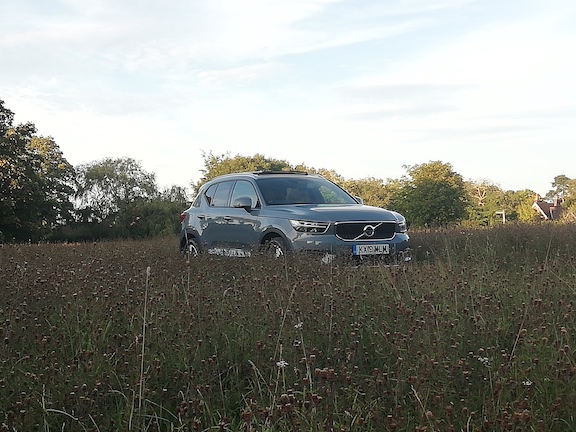
    Volvo continue to go full steam ahead with their SUV range and the smallest of their cars, the 40 series received the SUV treatment giving us the XC40 in 2017. It went on to win the coveted European Car of The Year award in 2018.

    A compact in visual presence SUV packed with well-fitting appointments and a premium feel. But with its £38k price tag, does the XC40 T4 petrol in Momentum Pro spec justify the premium price tag?  

    Driving

    Here is where the XC40 Momentum T4 excels. With this 190hp petrol engine, it has the ability to travel forward very quickly. Fitted to a softer sprung suspension set up, it can carry you and 4 passengers in floating comfort.

    The 2-litre turbo engine is fitted to full 8-speed automatic gearbox driving the front wheels travels with smooth elastic fluidity. There are no paddle shifts for this spec and it’s no hardship. There are very few occasions when you could choose a better gear ratio to be in.

    What can ruin the ambience of the Momentum Pro is the drive modes. Quite hit and miss in this model. Dynamic mode didn’t add anything to the already accomplished manners of the car. In some cases, it hindered a splendid driving experience.

    Handling veers onto the enthusiastic side quite readily with plenty of grip available. The ride tends to roll a bit but this is only to be expected from a high sided vehicle with a compliant ride. Adhesion to the tarmac immense and the steering alerts you to trouble ahead before it lose all grip. 

    Inside

    One thing that is worthy of note is the use of recycled bottles, turned into fluffy material and used on the door cards and transmission tunnel. In shorts, it has a warm feeling to it like a faithful dog pressing against your left leg. It’s actually rather pleasant. 

    The dashboard is laid out in typical Volvo logic and the 12.3” is easy to use, if somewhat clunky at times. However, all was not good with the driving experience. And that would be the plastic used on the centre console. It was somewhat rather cheap in feel. And considering the premium quality Volvo have gone, this felt so very wrong in an otherwise well thought out interior.    

    The rear doors have a kick up in them and while being a design feature, they do hinder some visibility over the shoulders and for those travelling in the rear.  

    Living With It

    The XC40 Momentum Pro is very easy to live with. Rear seat room, in particular, is generous and more so in shoulder width. The list of standard equipment is generous though there was no adaptive cruise fitted even though the radar button was fitted to the steering wheel.

    The Verdict

    The XC40 Momentum is a looker. It’s not as popular on the road and that might be because people aren’t looking to Volvo for this size of car. And that is a shame. It really does do a lot very well and very little to annoy. 

    If there is one thing that I can complain about, it is the T4’s fuel economy. It isn’t great. That said, it does power this little slice of Swedish luxury quite rapidly. I’ll complain about that even though I know you can get it with other petrol or diesel engines and there is also a hybrid of sorts model coming early next year. 

    So is this premium and worth that asking price? Forget flat-packed furniture with a cheap veneer added, this is a slice of rapid Swedish luxury, and I say it is worth it.

    Love

    Fit and finish

    8 speed automatic 

    Throttle response

    Loathe

    Disappointing fuel economy (according to the computer)

    Centre console plastic

    Dynamic drive mode 

    The Lowdown

    Car –  Volvo XC40 Momentum Pro T4

    Price – £ 38,210 (as tested)

    MPG – 33.6 -36.7 mpg (WLTP combined)

    Power – 190hp

    0-62mph –  8.1 seconds

    Top Speed –  130 mph

    Co2 – 154 (g/km)

  • CAR REVIEW | Mitsubishi Outlander PHEV – Too good to be true?

    CAR REVIEW | Mitsubishi Outlander PHEV – Too good to be true?

    ★★★★★ | Mitsubishi Outlander PHEV

    With increasingly stringent legislation, manufacturers are being squeezed and challenged to meet changing goals for reduced emissions and an ever more environmentally friendly footprint.

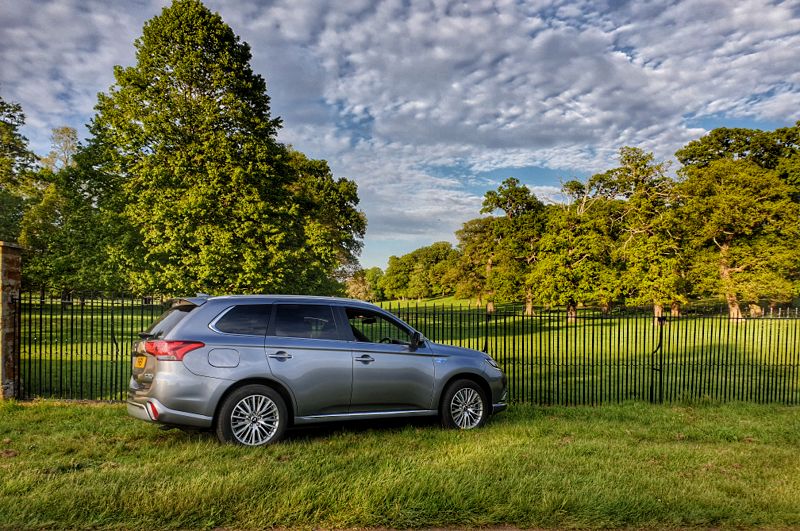
    By January 2018 there were more than 100,000 Mitsubishi Outlander PHEV sales across Europe, making it the most popular plug-in vehicle. In fact, despite a growing number of competitors, it remains the best-selling plug-in vehicle – hybrid or electric – in the UK.

    Which brings me to the next point.
    For the layman, the hybrid sector is a little confusing. There are several different types. Self-charging, plugin, parallel, range-extended and more.

    Mitsubishi have a very interesting way of delivering their Hybrid solution.

    The Outlander PHEV has an electric motor for each axle. That means one motor powers the rear wheels, one powers the front wheels, so 4X4.

    Electricity for these motors comes from either the battery, which ideally should be charged from the mains for maximum efficiency, or can be charged by the engine while you are driving (not very efficient though). When you are driving, if you use up all of the battery power, or you need more power than the battery can supply (say an overtake or spirited drive) the engine kicks in and generates more electricity. In extreme cases, if you accelerate hard or really labour the vehicle, the engine will also provide drive to the front wheels to assist the electric motors.

    The petrol engine is a 2.4-litre petrol engine, which uses MIVEC variable valve timing system. It’s very quiet and smooth and is surprisingly efficient.

    The battery capacity has been increased and is now 13.8kWh and in electric-only mode, the Outlander will now do 84mph on a private road.

    Another interesting feature is that it has only one forward gear as it is essentially an electric drivetrain. This means progress is seamless and driving it is absolute simplicity.

    In electric-only mode, in real-world driving conditions, the Outlander should do up to 28 miles on a charge. It doesn’t sound like much, but remember that this is a hybrid and this is more than enough for a lot of people’s daily commute.

    The theory is, you charge up on cheap electricity overnight, drive to work, charge up at work, usually for free (if you need to) and drive home, all on electric only. On longer journies, you can travel without range anxiety as you have the security of the petrol engine to generate power.

    It’s not uncommon for owners to go months without having to top up the petrol tank, as most of their journeys are fully electric, or mostly electric.

    What’s the Mitsubishi Outlander like?
    In brief, it’s a very well-engineered, well built, roomy and practical, luxury SUV.

    The current model has had a host of improvements and additions, making it a beautiful car, very well appointed.

    The updated Outlander benefits from new LED headlamps and all-new 18” alloy wheel design as well as super-All Wheel Control system with new SNOW and SPORT driving modes.

    Higher body rigidity through the use of structural adhesive welding plus a quicker steering rack with SPORT mode remapping means improved handling and safety. There are larger front brake discs (vented) for improved feel and stopping power too.


    As you would expect there are a full suite of advanced safety features and technologies, such as;

    Five-star NCAP safety rating, Automatic headlamps, Rain-sensing wipers, Reversing camera,
    Electronic handbrake with auto hold. There are also excellent LED headlights and daylight running lights with automatic high-beam, a very effective 360-degree camera with rear cross-traffic alert, lane departure warning, adaptive cruise control, blind-spot warning system with lane-change assist and even more.

    With this level of electronic assistance, it would seem like the Mitsubishi Outlander PHEV might be a bit cold and emotionless but actually, despite all of the electronics, it’s very easy to drive and feels very familiar. You don’t notice any intrusion and I found I felt instantly at home driving it.
    The luxurious Interior was a very nice place to be with quality leather and high-grade plastic throughout.
    Our test car had gunmetal grey leather seats with 8-way electric adjusted front driver’s seat and matching door upholstery and centre armrest, premium Alpine audio system with remote smartphone app compatibility (apple carplay and android auto), heated front and rear seats, power tailgate and heated steering wheel.

    In summary, it’s hard to review the Mitsubishi Outlander PHEV because there is so much to it.

    This is not a straightforward luxury car review. The PHEV side of the vehicle is so clever and well-engineered and has some significant benefits over a conventional car or SUV. It’s not a one size fits all car. If you are a high mileage driver, this probably isn’t the best choice for you. However, in most other respects, the Outlander PHEV offers some great benefits. During our time with the car, we genuinely saw well over 200mpg averages. That’s not fake journalist talk either. The batteries were charged and we were driving the car as we normally would. Over a couple of days of running kids around, commuting to work and usual duties like shopping and so on, we regularly saw 200+mpg journeys. It really showed how effective this Outlander PHEV is if used correctly. Obviously, many journeys are completely petrol free.

    I would strongly urge you to call into your local dealer and arrange a test drive. The staff will talk you through the technology and the Hybrid powertrain and I’m sure you will be very impressed.
    Prices start at £36,755

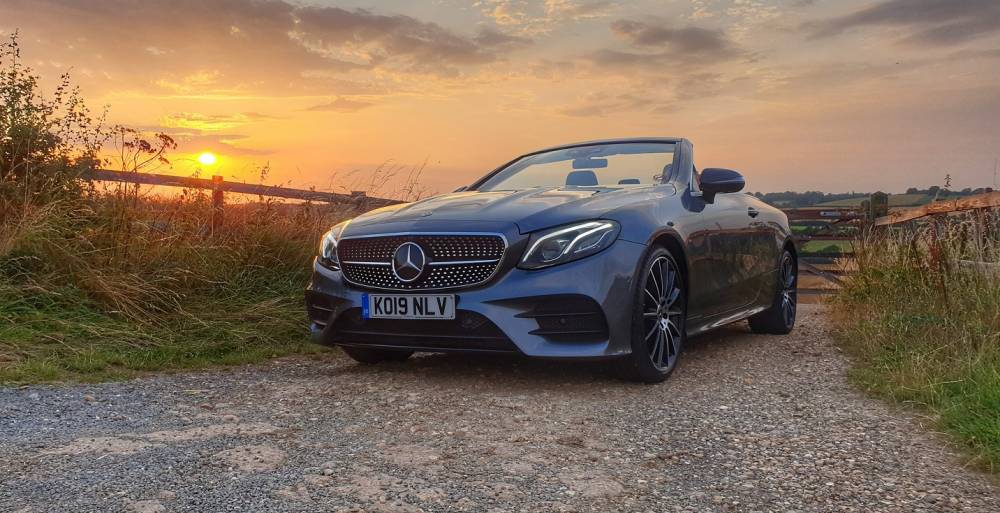
  • CAR REVIEW | Mercedes E220d convertible AMG line

    CAR REVIEW | Mercedes E220d convertible AMG line

    ★★★★★ | Mercedes E220d convertible AMG

    Mercedes are masters at creating luxurious and stylish convertibles. They have a long and distinguished history of making beautiful and timeless convertible cars.

    One of their latest is the E Class convertible. We were fortunate to have been given an E220d AMG line recently for a week of effortless and stylish cruising in the lap of luxury.

    Mercedes currently offer 3 convertible models. The C class, E Class and S class. The E Class sits right in the middle with a starting price of £45,960.

    Our test car was the E220 convertible diesel, which means it was powered by a 2.0-litre diesel engine producing 194 hp and 400 Nm. 0-62 mph takes 7.7 seconds and the combined mpg is quoted as 57.7 mpg. I wouldn’t dispute this, it was great on fuel, particularly at motorway speeds. For the company car users, the E220d emits 126 g/km of CO2.

    A modern Mercedes is a very nice place to be and with ours being the AMG line with a few of the optional packages ticked; Premium package, parking package, driving assistance package, night package.

    It was very well equipped and particularly well appointed car. 

    Premium package includes; memory package (Memory package allows the driver’s seat, front passenger seat, steering column and exterior mirrors to all be electrically adjusted & stored), parking package (searches for a suitable parking space for you and then helps you with accurate parking) including 360° camera, comand online (media interface, widescreen 12.3-inch cockpit display and touchpad), multibeam led intelligent Light System (To ensure the best possible vision, the LED Intelligent Light System adapts automatically to the prevailing weather, light and driving conditions) and wireless charging. 


    We also had the benefit of the driving assistance package, including: active brake assist, active distance assist distronic, active speed limit assist, active lane keeping assist, evasive steering assist and pre-safe plus (initiates occupant protection measures if a rear-end collision is imminent).

    Our car was the AMG line and in addition to the AMG bodystyling had the night package, which included: 20-inch multi-spoke alloy wheels painted high-gloss black with high sheen finish, diamond radiator grille with integral, Mercedes‑Benz star and a single louvre and some high-gloss black exterior highlights. 


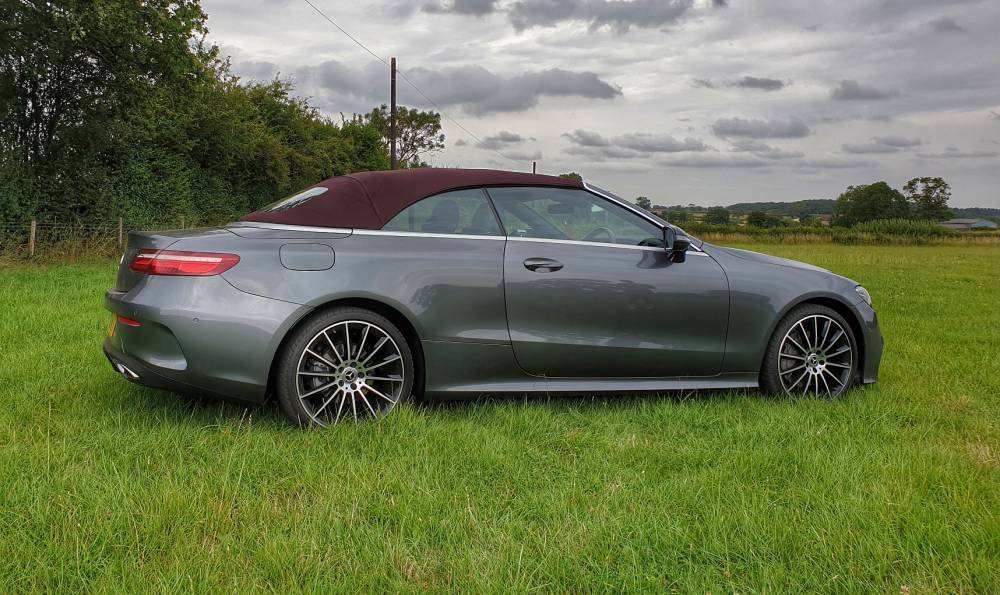
    A really neat feature of the E220d Cabriolet AMG line is the way the multi-layer acoustic fabric roof can be folded down on the move. It can be operated at speeds up to 31 mph and opened or 

    closed in just 20 seconds. It’s great if you’re in traffic and the weather takes a turn for the worst.

    Mercedes airscarf neck-level heating and aircap are standard on this car and another welcome feature for when the sun doesn’t have his hat on. 

    How does it drive? 

    There are a few engine options across the range; In the diesels the E220 that we had, had the 1,950cc, 4-cylinder diesel which produces 194hp/143kW. There’s also a 2,987cc, 6-cylinder diesel producing 340hp/250kW in the E400

    In petrol form there’s a 1,991cc, 4-cylinder petrol engine producing 245hp/180kW in the E300 or 299hp/220kW with EQ Boost of 14hp/10kW in the E350, and a 2,996cc, 6-cylinder petrol producing 367hp/270kW in the E450. If this doesn’t quench your thirst for power, there’s a 2,999cc, 6-cylinder petrol, 435hp/320kW with EQ Boost of 22hp/16kW in the AMG E53 4MATIC+.

    Our test car also had the the excellent 9G-TRONIC PLUS 9-speed automatic gearbox which was great, particularly when cruising and so smooth.

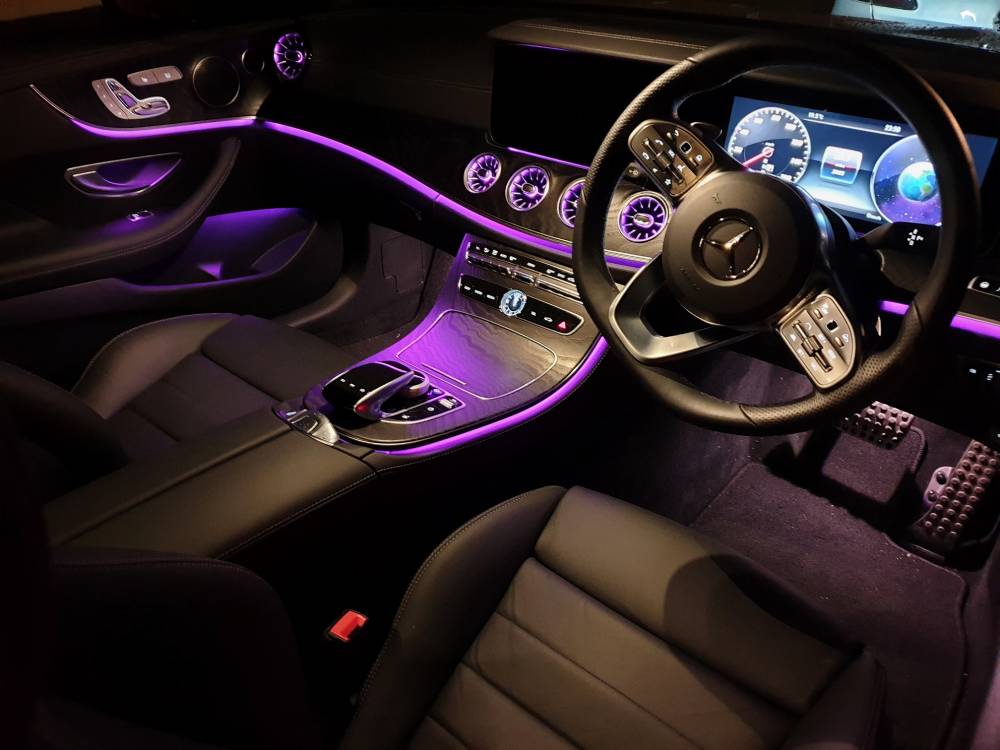
    Mercedes make beautiful cars with stunning interiors and this is no exception. Our AMG line car had a black artico leather/dinamica microfibre upholstery and black open-pore ash wood trim on dashboard and centre console. Brushed aluminium highlights and accents such as the air vent nozzles, door handles and seat controls.

    Ride and handling are superb as you would expect. The AMG line has AMG ride control sports suspension, based on air body control air suspension. The multi-chamber air suspension system with a sporty spring/damper set-up continuously adjusts damping to ensure excellent driving dynamics and a high level of ride comfort. 

    In combination with AMG dynamic select, three pre-set modes (Comfort, Sport and Sport+) are available to deliver a tailored driving experience. 

    In summary, the E220d convertible is a beautiful, stylish and very well engineered car. It’s great to drive, looks amazing and is a practical 4 seat car with the added bonus of being a stunning convertible when you want it to be.

    Prices for the E class convertible start at £45,960.00