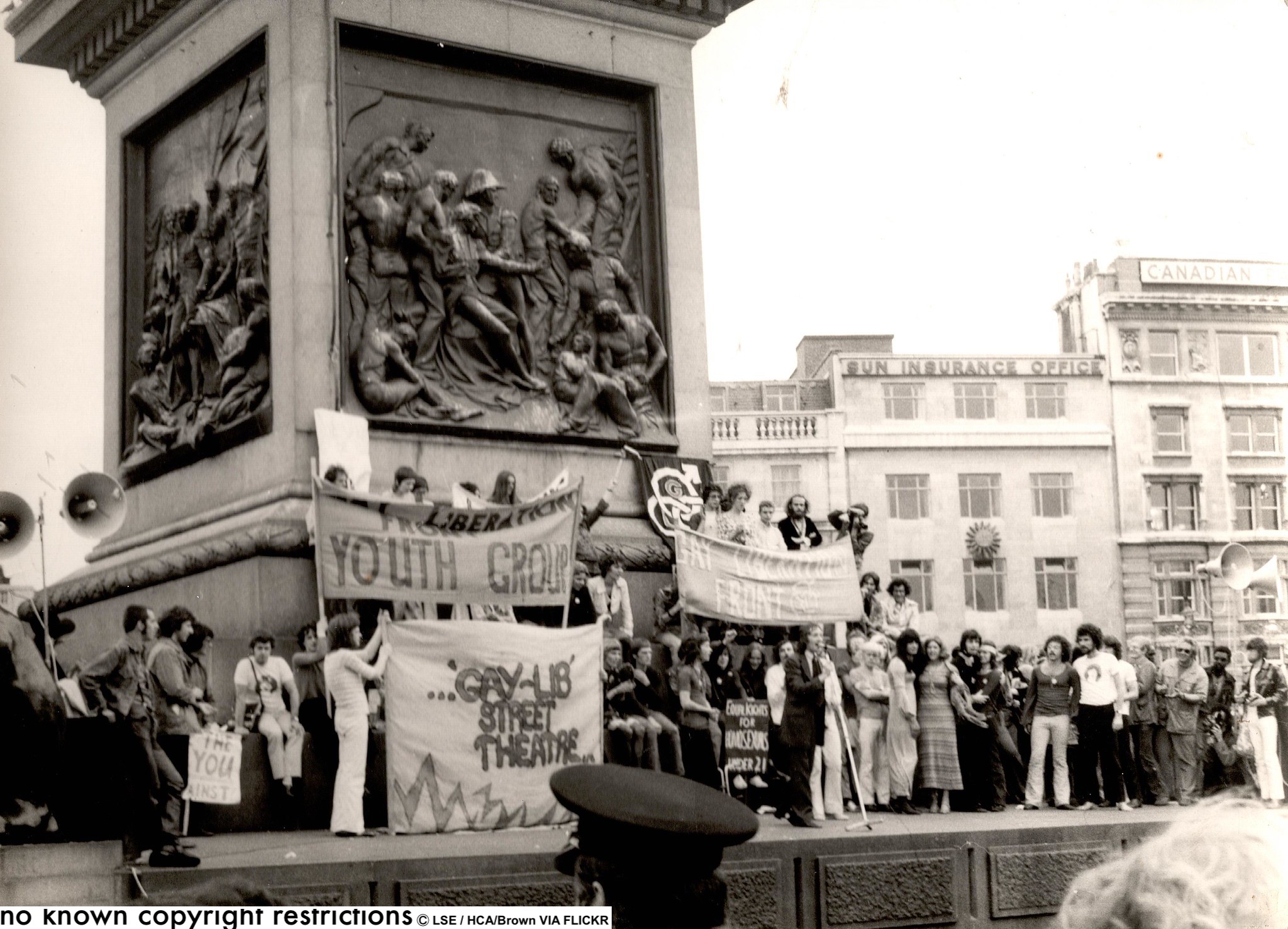
Veterans from the Gay Liberation Front (GLF) will be holding a torchlight rally this Friday to mark 50 years since the first LGBT protest in Britain.
The rally was held to highlight anti-gay laws and police harassment, specifically in response to the arrest of the then leader of the Young Liberals, Louis Eaks, in Highbury Fields, Islington.
To conform to lockdown regulations, participants will wear masks, remain in two-person groups and keep socially distanced from each other.
“27th November 1970 was a watershed moment that challenged police persecution for the first time in the UK. It began our fightback, igniting an LGBT+ protest movement that in the following five decades rolled back straight supremacism and won the repeal of anti-LGBT+ laws,” said Peter Tatchell, who was a member of GLF 1971-74.
This 50th commemoration, we will replicate the torchlight rally of 50 years ago and read the original Gay Liberation Front demands A plaque commemorating the protest on 27 November 1970 was affixed to the former public toilet by the LGBT+ group OutRage! and Islington Council.
It was unveiled on 27 November 2000, on the 30th anniversary of the first demonstration, in the presence of then Culture Secretary Chris Smith MP, local MP Jeremy Corbyn, the Mayor of Islington, and GLF veterans.
“In 1970 I suggested that the Gay Liberation Front’s first demo ought to be in Highbury Fields against the arrest of Louis Eaks. I’m now 86 and send my love. I remind everyone that the word for the Highbury Fields demo, in the slang of 1970, was a ‘zap’, meaning a bolt of electrical energy. Highbury Fields forever! In solidarity and disgrace.” Eric Thompson
“From the dark of Highbury Fields to the light of the pub afterwards, we saw each other anew. We had shared our beliefs and convictions in public and acted them out in the world. We had made the first-ever openly public demonstration in this country by homosexuals. Whatever barriers there were between us were let down that night. An emotional connection of solidarity and respect, for ourselves and each other, was forged. It remains palpable to this day.” Stuart Feather, author of the Gay Liberation Front memoir, Blowing the Lid.
A defining moment in LGBT history
“Highbury Fields was a UK defining moment in a global LGBT+ uprising and revolution against oppression and for liberation with sexual liberation at its heart.” John Lloyd
“In 1970 gay men, lesbians and trans people protested together on Highbury Fields, not just about police abuse of power and unjust laws, but also for liberation, including sexual liberation for everyone – a revolution. Love and liberation.” Nettie Pollard.
“Marking the 50th anniversary of the first LGBT protest in London is of paramount importance today in bringing together queer individuals spanning multiple generations in order that we can celebrate and learn from those who have continuously fought for our rights over the last 50 years.” Graham Martin
Veteran LGBT+ activists are planning to lead a Pride march through the heart of London, despite London’s official Pride, Pride In London being postponed until 2021.
Members from the London Gay Liberation Front (GLF) including Peter Tatchell will march in London on the 27th June 2020. They will be marching along the route that Pride In London was meant to take.
Former members of the iconic group are celebrating the 50th anniversary of the GLF which was formed in 1970, and are generally credited with being the beginning of the LGBT+ movement in the UK.
The GLF Pride march will take place on Saturday 27 June, starting at 1pm from outside the BBC in Portland Place W1.
The ex-GLF marchers, some in their 70s, will wear face masks and ensure social distancing. They will follow the planned official Pride route down Regent Street, Piccadilly Circus and Haymarket to Trafalgar Square.
According to the organisers, the march will comprise only of older GLF veterans and is not open to the wider LGBT+ community in order to ensure compliance with the Covid-19 regulations and to protect the health of vulnerable at-risk veterans from the early 1970s. There will be a small group of chosen supporters to give the GLF veterans back-up.
The GLF march organiser, Peter Tatchell, was one of about 40 people who helped organise the UK’s first Pride march in London in 1972. He has attended every Pride London parade since then.
This will be his 49th.
Speaking about the march, Tatchell said, “Homophobia did not defeat us, so we’re not going to let the Covid-19 pandemic stop Pride. We GLF veterans confronted anti-LGBT+ bigots 50 years ago. We faced down police harassment, far right extremists and homophobic political and religious leaders. We are marching as Pride was planned, with face masks and social distancing,”
“We support Black Lives Matter and the just demands of black communities, just as we did in the early 1970s.
“GLF did not seek equal rights within a flawed, unjust status quo. It campaigned for the transformation of society to end straight supremacism and stood in solidarity with all other oppressed communities. This same agenda of radical social transformation is needed now as the UK faces the quadruple whammy of Covid-19, economic meltdown, endemic racism and climate destruction,” added Mr Tatchell.
In Part two of Simon Sayers-Franklin’s Pride series, he explores the origins of Pride at the Stonewall riots and why we fly our Rainbow Flag!
How Did Pride Begin?
Pride originated on 28th June 1969. Back then police raids on gay bars, like the Stonewall Inn, were common. The authorities would come in, push people around, display violence, intimidate, bully and randomly arrest people. The arrests were frequently made for tiny, inconsequential things such as drag queens wearing more than one or two items of ladies clothing or being caught in compromising positions.
Often the bars, which were largely owned by the Mafia, would bribe the police to tip them off when raids were due to occur. The gay bars would often have two rooms – a bar in the front and a dance floor in the back. Dancefloor lights could be triggered from the bar to send a secret message to the people next door that a raid was about to happen. This allowed them to stop dancing or quickly find an opposite-sex partner if they wished to continue dancing.
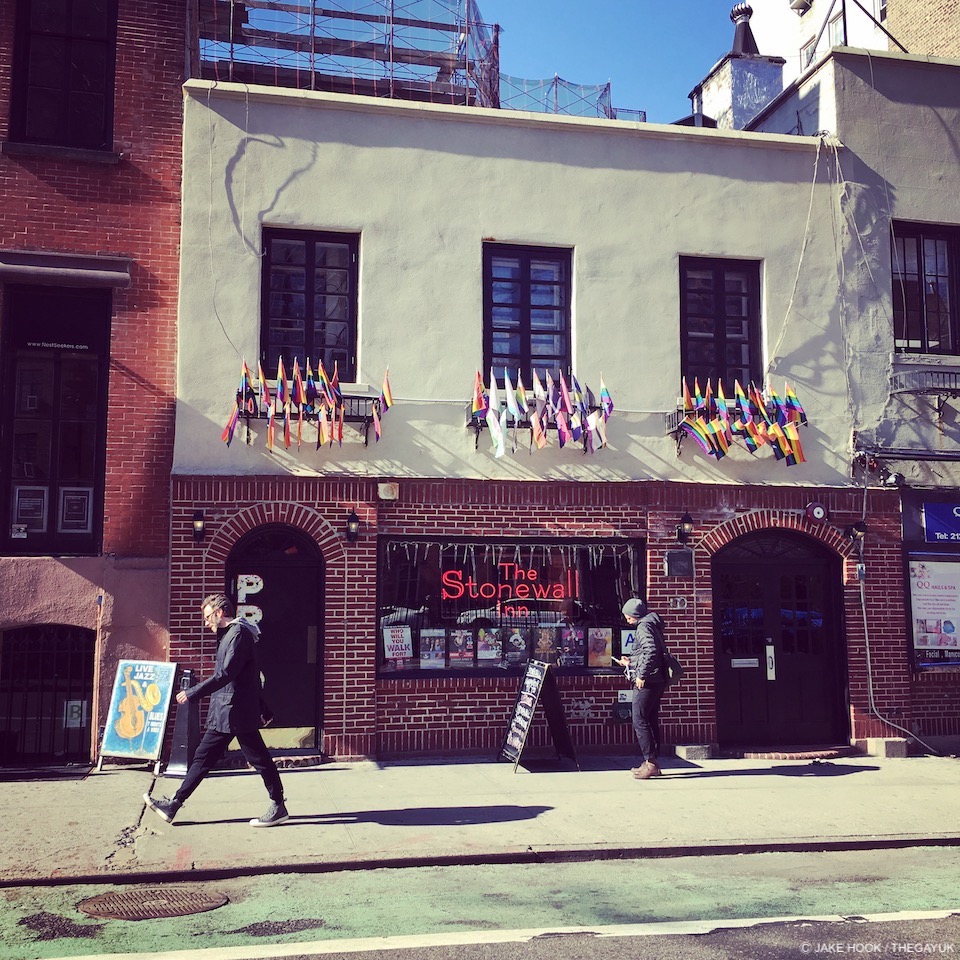
It was in the early hours of the morning on June 28th 1969, that an LGBT friendly bar in New York was subject to a raid – something that was all too common in gay bars. This bar, however, was one of those owned by the Mafia and catered to transgender people, drag queens, effeminate men, sex workers and homeless people of many backgrounds. The bar in question was the Stonewall Inn.
This raid, however, was different from the beginning. Firstly, the owners were not tipped off, secondly, it happened very late; around 1:20 am. There had been rumours about a raid that night but it was dismissed as inaccurate information.
The night it all began, two undercover policemen and two undercover policewomen came in and gathered evidence while the rest of the team waited outside. When those who had gained entry called for backup the music died, the house lights came up and those who realised what was happening ran for the doors and windows in the bathrooms but were blocked in by the police.
There were reportedly over 200 people in the Stonewall Inn that night. Little did the police know, that this as not going to go the way they expected.
Usually, the police would line up the people, check ID and then the female officers would escort those wearing female clothing to the toilets, where they would be subject to physical checks and if men were found wearing female clothes they would be arrested. Not this night. This night everybody refused to produce their ID and those in women’s clothing resisted being taken to the bathrooms. This resulted in high tensions, only made worse by the police who became inappropriate while frisking some of the lesbian patrons.
The police had been sent to seize all of the alcohol, which was apparently bootlegged. While this happened, the people inside were made to wait in the line. Those who hadn’t been arrested were allowed to leave but they congregated outside. It wasn’t long for the crowd to grow – a mix of those who had been released and those who had seen the disturbance and joined out of curiosity. Those who were released exited the bar to rounds of applause and they bowed and posed and it was all very theatrical.
By the time the first police wagon arrived, the crowd had multiplied as much as ten times and as the Mafia were escorted out and put in the van people started shouting “Gay Power.” and others started singing. An officer pushed a drag queen who hit him with her purse. People threw debris at the wagon and that was when a woman, thought to be, Stormé DeLarverie, was dragged out in handcuffs. She kept escaping and fought four police officers. When she complained the handcuffs were too tight she was hit over the head with a baton and screamed: “Why don’t you guys do something?”
It was this moment that triggered the riots that would go on to last six days!
Who threw the first brick at the Stonewall Riots
The patrons of the bar had taken enough and were sick of being pushed around. It was reported that the drag queens and trans women of colour were among the first to fight back. It was Marsha P. Johnson, a black, gender non-conforming, sex worker, a founding member of Gay Liberation Front and a popular member of the New York gay and art scenes, who was apparently one of the first to kick off her heels and fight the police. It is, however, unclear what role Johnson played in the events that night. She disputed that she was the one to start the riot by claiming she arrived at 2 am when the place was already on fire – a fire she claimed was started by the police.
These riots were a major moment for LGBT people and Stonewall became an iconic image of rebellion and resistance. It stood for our strength and our refusal to back down.
It was the next year, 1970, that the first Pride march was held in New York on the anniversary of the Stonewall riots. From that moment we have continued to celebrate Pride in the month of June to honour those who kickstarted a revolution. We march to represent our strength and unity. Our community is strong together and Pride shows just that! In modern days it still has political undertones but these days in the western world particularly, our events stand for inclusivity, visibility, having fun and celebrating love and equality rather than fighting for it.
Why Do We Have a Rainbow Flag?
The flag was devised by artist Gilbert Baker after he was challenged by Harvey Milk (another hero and martyr for the LGBT community), to create a “symbol of Pride” to represent the LGBT community. It debuted at the 1978 Gay Freedom Day Parade and has been an icon of our community from that day.
The original rainbow flag as created by Gilbert Baker
There were originally eight colours in the rainbow instead of six:
Hot Pink represented sex/sexuality. It was taken out due to manufacturing issues after Baker approached a company to mass produce the flag. Apparently, the hot pink fabric was too expensive to make.
Turquoise, representing magic and art, was lost when the Pride Parade Committee wanted to fly the flag in two halves along both sides of the street for the 1979 Gay Freedom Day parade. Turquoise was dropped to leave six stripes, therefore, leaving an equal number to split.
Red is life.
Orange is healing.
Yellow is sunlight.
Green is nature.
Indigo is serenity
Violet is spirit.
A modern variation, created in 2017, added black and brown stripes to highlight the People of Colour within the LGBT community. There were a mixed reaction and a lot of controversies because of how the flag never represented “race” and was always meant to represent aspects of life that apply to everybody, regardless of ethnicity. It also caused upset by changing the artist’s original vision.