Tag: Gender

All the latest breaking news on gender. Browse The THEGAYUK’s complete collection of features and commentary on gender and the LGBT+ community.

  • Rotterdam: A Gender-Comedy Interview

    Alice wants to come out as a lesbian. Her girlfriend Fiona wants to start living as a man. It’s New Year in Rotterdam, and Alice has finally plucked up the courage to email her parents and tell them she’s gay. But before she can hit send, Fiona reveals that he has always identified as a man and now wants to start living as one named Adrian. Now, as Adrian begins his transition, Alice must face a question she never thought she’d ask… does this mean she’s straight?


    But how a non-trans writer and actress approach portraying the trans experience for mainstream audiences? Transsexual writer and performer Sasha de Suinn interviews director Jon Brittain and actress Anna Martine in an informative, ground-breaking discussion.

    SASHA: Is Rotterdam primarily aimed at mainstream audiences unacquainted with gender fluidity? If so, is the show’s sub-text entry-level in terms of that subject, or is presuming some awareness of gender questions from an audience?

    Jon: I guess the answer to the first question is yes and no. It’s certainly accessible for audiences who are less informed and I made a conscious effort to make sure that was the case. However, at the same time I didn’t want to write something that had nothing in it for people who had first-hand experience of the subject matter. A lot of the writers and artists I admire find a way of unpacking complicated issues in a way that is satisfying for those in the know, but that brings the less knowledgeable along with them, and that was my aim too. I don’t want to be as trite as to say Rotterdam is for everyone, but I certainly hope that it doesn’t alienate anyone by presuming too much prior knowledge or, on the other hand, by presenting something that is too simplistic and familiar. I think we get into some interesting conversations throughout the play about gender, sexuality and the clash between our sense of personal identity and how others perceive us, but I think different people will get different things out of them.

    Anna: The response we had when we premiered at Theatre503 was incredible. I had people coming up to me after the show from across the board telling me how moved and connected they were to the play, this included people within the queer community, as well as people who were less acquainted with these worlds. Because although it deals with complex issues about gender and sexuality, its inclusive, there are different access points into the play through the four very different characters and with its humour it reaches out beyond these labels and specific identities and connects with the audience on a human level.

    SASHA:What is your artistic background and focus of interests as a writer / director? When did you first become interested in the notion of gender as a performative inquiry? What sparked the initial idea of Rotterdam?

    Jon: I actually only wrote Rotterdam, Donnacadh O’Briain directed it (and did a fantastic job, too). I’ve been working as a writer and director now in some capacity for the last seven years and have quite an eclectic body of work. I’ve written plays, sketches and cartoons, and I’ve worked as a director on my own shows and other people’s, as well as with comedians such as Tom Allen and John Kearns. As a result, I can’t really claim to have a focus, although I am always attracted to stories in which characters are their own worst enemies – I like to see people struggle against themselves as much as against other people. In terms of when I first became interested in gender and gender fluidity as a subject to write about, I’ve been interested in it for a while and I tried to write a few things about it when I was younger which were all well-intentioned but also quite bad! I had the idea for Rotterdam about six years ago after a couple of my friends had come out as transgender. I was struck by how few well-rounded (or indeed any) transgender characters there were in drama and comedy. At the same time, I had started to think about sexual identity and how it changes or stays the same over a lifetime. These two ideas sort of merged into one and Alice and Adrian popped into my head. The story of Rotterdam is about these two characters, their relationship and how they reconcile their sense of their own identities with their love for each other.

    SASHA:How are the actors involved approaching the notions of gender fluidity, and how does that shape and affect their performing process?

    Jon: Over to you Anna!

    Anna: I have a deep empathy and connection to my character – I identify as queer and so this play resonates with me on a personal level – the issues are aligned with what I care about personally and so I’m really excited to be exploring gender, identity and sexuality in this way. What’s brilliant is that throughout the development of the play the creative team had an open dialogue with people and organisations within the trans community, so when it came to approaching my character and his journey I felt confident and excited!

    There’s such a strong supportive online transgender community, so as well as talking to trans people within my community and researching online, I’ve also been exploring and observing gender expression out in the world: What it’s like to step inside the body and experience of a man compared with a woman and then these glorious, complex and interesting places in between and around these binary ideas of gender.

    SASHA:How do you feel about the debate, which is hotly contested in some quarters, that trans characters on stage, screen and television should only be played by genuine trans actors, as they’re hugely still hugely under-represented in terms of media visibility, and non-trans actors have a huge range of acting options available to them by comparison? For example, why, except for box-office reasons – was Eddie Redmayne cast in The Danish Girl? Trans actresses like Adele Anderson would, arguably, have brought a greater emotional weight to the role.

    Anna: It is definitely a debate that needs to be had. I feel we should also look towards an industry where gender doesn’t come into play at all, where roles are just as open to trans actors etc. I’m really passionate about gender neutral casting – i.e. removing gender as a divide or indicator of how best to play a character or tell a story – and look to more diverse casting choices across gender, race and class, like Phyllida Lloyds powerful all female production of Julius Caesar or Regent’s Park Open Air Theatres recent production of Henry V with Michelle Terry as the title role and her bride to be played by the male actor Ben Wiggins.

    Jon: It’s a difficult one for me personally because I was very passionate about trying to cast a trans actor in Rotterdam but although the people we saw were of a very high quality none of them quite fit the character. When Anna walked into the room, she did. I feel confident saying that we made the right decision because I know how fantastic and truthful the performance she gives is, but I can also appreciate how frustrating it must be to be a trans actor who’s seeing yet another trans role going to a non-trans person. I do think there needs to be a proactive campaign throughout theatre and TV to be more inclusive – both in front of and behind the scenes. I’ve met quite a few trans actors through doing Rotterdam and through the Gendered Intelligence trans acting course and I know how talented many of them are, but more opportunities need to be made available to them. As Anna says, an ideal world would be one where gender doesn’t come into it at all, I don’t know how realistic a possibility that is, but there are definitely things we can do in the here and now to make things better.

    SASHA: Do you think Rotterdam is artistically advancing theatrical notions of gender-variance on stage or simply trivialising genuinely ground-breaking issues? There’s a world of difference between the transgressive works of Nina Arsenault and Amanda Lepore and the awful, cosy and one-dimensional treatment of trans characters in soap-operas, where they’re often served up as exotic tokenism, or presented as arbitrary life-style choices with little real weight or consequence.

    Jon: I certainly hope I’m not trivialising anything. I became very aware, very early on, of the danger of creating something that did a disservice to trans people. I felt a keen sense of duty not to screw it up and to try not to fall into the traps that people who went before me, often with noble intentions, sometimes fell. The notion of the ‘cosy’ character is something I was very keen to avoid. Sometimes trans characters can be portrayed as faultless angels with no personality flaws – but who is like that in real life? Being trans does not mean that someone cannot be flawed, or funny, or difficult, or sarcastic, or inappropriate, or silly. With Adrian, as with all the characters, I strove to create a well-rounded, three-dimensional person whose gender identity is only one aspect of him. He’s not perfect – he sometimes gets things wrong or makes mistakes or pushes people away, but for me, that’s more interesting than seeing someone who has no lessons to learn and whose sole function is to teach other people tolerance. I can’t claim Rotterdam is as subversive or provocative as the work of Nina Arsenault or Amanda Lepore, but I certainly think there’s more than one dimension to it.


    SASHA: It’s evident that Rotterdam will be a comic and thought-provoking delight for mainstream audiences for whom it might be an eye-opener, but what do you think the show’s bringing to gay and trans audiences deeply acquainted with gender-fluid theatre? It’s quite sad that arguably the biggest, so-called gender-fluid theatrical show ever is the deeply reactionary Rocky Horror Show, which actually advocates sexual irresponsibility, blanket promiscuity and sexual predation without any sense or consideration of the emotional consequences for those involved.

    Anna: As part of the queer community I’m genuinely proud of this play; it’s funny and moving where the queer characters don’t die, go straight or end up crazy. It’s so refreshing to move away from these awful clichés that the queer community are used to seeing on stage and screen. We get used to cringing, not identifying with the narrative or saying “it’s good for a lesbian film’ or “yeah it’s not bad for a gay play” and we keep seeing a similar narrative play out on screen and stage that is often tragic. This play joyfully connects to people because and despite it being a ‘queer play’! It is both enjoyable and welcoming to new-comers but also joyfully familiar and better connected to the LGBTQIA+ community than I’ve experienced on stage before.

    Jon: Well, one thing I can say about Rotterdam is that it is very concerned with the emotional consequences of the characters’ actions (and inactions) as that is what drives most of the play. As for what it brings, I hope I’m not giving too banal an answer by saying it brings these characters and this story. There is a huge amount of diversity in the LGBTQIA+ community and the number of plays, performance pieces, comedy shows and one-person shows that could be created is infinite. With this play, I wanted to honestly, humorously and sensitively tell the story of the relationship between Adrian and Alice. As with any piece of theatre, you have a limited amount of time, and there are loads of interesting discussions to be had about gender-fluidity, the sexuality spectrum, and identity that I wasn’t able to get into in this show because they didn’t apply to these characters. But I think it’s good that there is a plurality of work being created, and that each piece can occupy its own space and talk about its own things. Rotterdam is a big hearted comedy-drama about a relationship between two people who are their own worst enemies. It won’t be for everyone, but I do hope that it will be as funny and emotionally involving for people well acquainted with the themes as it is for those new to them!

    Rotterdam is a new, gender-fluid comedy directed by Donnacadh O’ Brian running at Trafalgar Studios, Whitehall, London from Tuesday, 26th July to Saturday, August 27th. Box Office Ticket number: 0844-871-7632.


    Follow Sasha DeSuinn on Twitter
  • OPINION | Why “They” Matters

    In this game we weathered old showgirls have to sell ourselves to sell seats, giving interviews, waffling away on the radio, and generally generating promotional content (such as this very article) when we have an upcoming performance. There are protocols in place, one mustn’t swear on the BBC, one shouldn’t leave a journalist waiting in Pret for 45 minutes, and one should send one’s press releases out in clear, concise, proper English. Here we get to the cut of the jib…


    I prefer the pronoun “they”, with the understanding that it refers to me as a person who recognises themselves to be neither a man or a woman, but both simultaneously. This is pretty straightforward in practice, EG “Did you see La JJ on TheGayUK? Their article was so enjoyably informative! How do they do it?” As such I am using singular “they” in my press releases, to the chagrin of certain writers who feel it is incorrect English and therefore either decline to write about my new hit show GEIST (which is at the Arcola July 2nd & 3rd btw) or else just use the pronoun they feel best suits me, which is actually quite rude when you think about it.

    Perfectly reasonable people, people who are allied to queer and trans causes, will say, “I’m not opposed to using ‘they’ in principle, it’s just that it’s not grammatically correct.”

    But aren’t we already using it on the daily? Don’t we say things like, “Everybody wants to think that they’re cute”? That’s singular “they” right there babes! Technically we should be saying, “Everybody wants to think that he or she is cute”, but obviously we don’t because it’s such a cumbersome mouthful. Yet even that unwieldy sentence is a recent modification, made by the Feminist impulse to rectify a sexist bias in the English language. Why should every writer, “Pick up his pen and set about his work”? Exactly – it’s bulls*it.

    Victorian grammarians set “he” as the universal English pronoun, though a quick Google will tell you from around 1300, and through the Middle Ages, singular “they” was common. Chaucer uses it as does Shakey themselves, as in The Comedy of Errors, when Antipholus says, “There’s not a man I meet but doth salute me as if I were their well-acquainted friend.” Shakespeare chooses to use “they” instead of “his”, just as Jane Austen does countless times, 200 or so years later. Whilst we’re at it why is nobody up in arms over the loss of formal/informal distinctions in English? Why aren’t we upset that we can no longer choose to speak intimately by employing, “Thou art” (in place of “You are”) without coming off as a Fantasy Fiction dork?

    That’s because language evolves babe, for better or worse, even The Washington Post managed to get their heads around “they” when it was pulled into their style guide last year. People start sentences with “And” and “But” all over the shop with little furore arising, though until recently the very suggestion of it sent editors apoplectic. Likewise, when a writer asks if they can interview me, I don’t reply tartly, “No, but you may conduct an interview with me,” do I? (Well not unless I’ve had a double shot in my skinny latte at least). An insistence on alleged grammatical righteousness is actually a determination to prop up the prejudices built into the English language and shrug it off as out of one’s control. By dismissing singular “they” what you’re actually saying is, “I’d really love to help you feel like you have a place in the world, but sadly this copy of Grammar for Dummies from 1909 just won’t let me, sad face emoji.”

    Third gendered, non-binary, trans, gender fluid and transdrogynous people have tried out several new pronouns over the past few decades. From the lumpy “Zir” which was all the rage a decade ago, to Justin Vivian Bond’s famous “V”, and Theo Addams’ playful “tree”. All of those choices are beautiful and valid, but “they” works best for me. It’s already in the language we use, it expresses the multiplicity which many of us gender outlaws experience, and remarkably it’s 100% gluten free. Try it, you might like it! And share it with your lover – they may get a kick out of it too.

    Catch La JohnJoseph in GEIST at the Arcola Theatre 2nd and 3rd July at 8 pm. For a chance to win a pair of tickets to the show, simply enter your name below. The winner will be announced on the 30th June. Good Luck.

    THIS COMPETITION HAS NOW CLOSED

    Terms of Competition

    1. You have until the 30th June 2016 9:00 AM
    2. Entries made after this time will not be counted.
    3. Winner must be over 18 and reside in the UK.
    4. Offer is not-transferrable and no cash equivalent will be given.
    5. Entry is free of charge.
    6. Winners will be notified by email from TheGayUK by the 30th June 2016 by 2:00 PM.
    7. Winners will have one day to claim their prize. Afterwards, a new winner shall be drawn and previous claims will be forfeit.
    8. All entries will be added to TheGayUK and TheGayShop mailing list which you can unsubscribe from at any time.
    9. The prize is tickets only. Winners must make their own travel arrangements.
  • COMMENT | Music Festivals… Where Are All The Women?

    Music makes the bourgeoisie and the rebel…do what?

    Politics. Equality. Sexism. The relentless back and forth of politically correct bitching.
    Petitions. Laws. Rights. Non stop nagging to get us all involved and care.

    Old Minorities. New minorities. Cultural appropriation. The jaded activist’s burnout, versus
    the relative innocence of maturing in a culture with previously hard won rights.

    Do you ever hear: ‘Women got the vote didn’t they? It’s female priests AND Bishops nowadays, right?. Gays can marry. If you shout ‘faggot’ it’s a hate crime. No one has to sit at the back of the bus. Give it all a rest!’

    Where do you stand? Do you care? Are you tired of being made to care? What is the the actual state of affairs regarding what has been achieved compared to what we feel about those achievements? How much do we all agree about where the new battle lines are to be drawn?

    Well, regardless of one’s apathy or militancy, we are actually doing well – in terms of the acquisition of rights, the enshrining of them in law and, perhaps more importantly, how we all think about these things.

    Few members of the public would tolerate the once familiar ‘No Blacks, Dogs or Irish’ signs in a news agent’s window, and, signally, they cannot be replaced with a modern ‘No Syrians, Muslims or Intersex’ sign either; notwithstanding the threat of terrorism, general ignorance, or the wide appeal of UKIP.

    We have the incredible luxury of campaigning for our quality of life rather than struggling for life itself. So, should we still be campaigning for those inequalities that yet exist or rather leave it all to an embittered vanguard of old warriors?

    Maybe. However, aside from the hand wringing of middle-class guilt, what can we, in these politically fatigued, media saturated times, actually do? When we turn to the funded mechanisms of social change all we seem to see is corruption and in-fighting.

    Well it seems to me that Stonewall gave us the gift of fun to go with our freedom fighting… and fun is a pivotal part of any Pride. We can now, sometimes, change the world with a light hearted touch and have a good time doing it.

    Right then: festivals and charity shops: The modern answer is to… Have fun, chill out and change the world through music. Enjoy consumerism, spend less and look good.

    Turn up the volume. No sarcasm here: the contributions that have been made by raising awareness and generating finance from these sources is undeniable.

    However, apparently there is an ‘elephant in the room’. An ugly fact, we’re told, regarding live music events…

    ‘In 2015 the major festivals displayed a massive gender imbalance. Of the 87 acts that were announced, 78 were all male, 3 were female and 6 were mixed groups. That was an 89.8% all male line up’.

    We were all too busy having fun to notice. This misrepresentation does need to change. Or do we think the great pop divas: Lady Gaga, Madonna, et al, are the only examples of prime female musicianship out there? Maybe women just can’t cut the musical mustard when it comes to ‘serious’ rock? Somehow I doubt that, but the numbers are telling us that something strange is going on.
    Well, someone has come up with a controversial response to this state of affairs:

    Pandorafest.

    In July 2016, Pandorafest will be ‘the UK’s first music festival to ‘focus on celebrating women artists and female musicianship across all genres’. Touted as LGBTQI friendly, it is a ‘one day, world class, live music event featuring female singer/songwriters, women musicians and female fronted bands playing across two stages’.

    Male artists are welcome as band members but the focus is definitely on the ladies. Announced as family friendly and LGBTI friendly. It is NOT a women only attendance event, but rather ‘a traditional festival that simply redresses the imbalance of represented performers, with men, women and every other shade of the spectator spectrum all welcome’.

    As all festivals should be.

    It will be located in Scotland. There will be music, stalls, food and drink; all the usual fun of a fest combined with the addictive joy of doing the right thing by supporting women musicians and celebrating female musicianship… Sounds great….

    Controversial, I’d said earlier. Well, if you don’t think it is, then fine, Pandorafest is for you.

    But it’s not so fluffy if you’re a struggling male artist or band. The festival scene is VERY competitive. There are guys out there that would sell their organs to get a shot at the mainstage of a decent event. For them it’s business, a chance to get some career changing publicity, to show the world what they can do.

    And there’s a brand new player in the ever growing British festival scene. But it doesn’t want them. However good they are. Whatever they have to say.

    Can we truly only combat discrimination by discriminating against the majority? If we’re drawing up new battle lines we should be careful,this time round.

    Perhaps Pandorafest will have a charity shop stall?

    Opinions expressed in this article may not reflect those of THEGAYUK, its management or editorial teams. If you’d like to comment or write a comment, opinion or blog piece, please click here.

  • OPINION: Why the boycott of Zoolander 2 is wrong

    OPINION: Why the boycott of Zoolander 2 is wrong

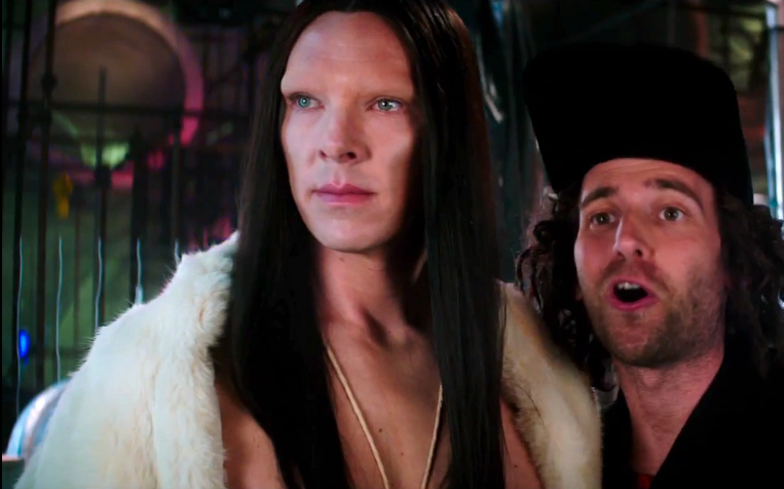
    All it took was a few short seconds and two lines of dialogue from Benedict Cumberbatch in a film trailer for several thousand people to scream “boycott”.

    I have written before about being offended, and I shall stick to my thoughts on that, that taking offence achieves absolutely nothing other than you being offended. But first I’ll look at what exactly has got people up in arms.
    Benedict Cumberbatch plays a character called All in the film, who appears to be a cartoonish over exaggerated example of the proliferation of androgynous models in the fashion industry. From the trailer, it is nearly impossible to tell exactly how the character is going to be played because we see so little of him. But from the small scene we do see, it actually takes the mickey out of male models and their perceived stupidity rather than someone who is androgynous.
    It basically involves Stiller’s stupid character asking if All is a male model, or a female model and All replying “All is All” while Owen Wilson’s character says Stiller’s character is asking if All has a “hotdog or a bun”. So, two characters who are meant to be parodies, and walking jokes themselves, say something crass that only two idiots would say, and that is all.
    They are not words of hate, they are words of ignorance, yes, but they are ignorant characters who say them. We do not know yet how big this storyline is or how it’s written. But even this complete lack of full storyline or character arc hasn’t stopped the activists from screaming out. But judging a film 2 months before its release off of a few seconds of footage of a character that may only appear in a short scene that has little or no relation to the rest of the film is ridiculous. For all we know the character may be completely sympathetic towards people of non-binary gender identity. None of the viewing public know yet, but if the scene is an obviously gross and deliberately offensive example that has no humour behind it then I would certainly change my stance on the issue. But it’s really far too early to tell yet.
    The first Zoolander and its sequel are comedies and comedy is meant to be a mockery of literally everything, nothing should be sacred in comedy. Comediennes like Lisa Lampanelli will mock the stereotypes of black people, Mexicans, Jews, gays, disabled people and literally any kind of person you can think of, which what makes comedy what it is, it’s that no one is or should be safe or above being lampooned with obviously inaccurate examples of how they are. But what makes the reaction to the Zoolander 2 trailer so telling is that trans or non-binary people are not seen as “punching up” when it comes to comedy. By punching up I mean people seem to be OK with relentlessly taking the piss out of Christians, politicians, Royalty, reality TV stars, sports stars, and the wealthy, people with perceived “lucky breaks” They can take it, they are more fortunate than the rest of us so they deserve to be taken down a peg or two so we can all laugh at them.
    How many of the people who signed the petition have seen an episode of Family Guy, American Dad, The Simpsons or South Park and laughed at the jokes that mock celebrities like Paris Hilton, Britney Spears or Tom Cruise to name but a few. I don’t believe for a second thanks to South Park that any of Paris Hilton’s dogs have committed suicide to get away from her, or that she’d steal child to turn into a pet, but I still laughed at the absurdity of it.
    I am not heartless though, and I appreciate the fact that the trans community is still very far from acceptance, and that every day trans men and women go though hell trying to find their place in the world and to not be scared for their lives, and they fear that misrepresentation of their community damages the image that they want to get across.
    Many trans people have vocally said Caitlyn Jenner doesn’t represent them because she has an easy life, and yes that is true, she really doesn’t have a clue how it feels to be an everyday normal trans person because she has it so relatively easy. That’s fine, she doesn’t represent the trans community, but why should a character in a film who so far hasn’t even been marketed as trans somehow be any different.
    That character doesn’t represent the trans community any more than Derek Zoolander represents male models, but it’s OK to take the piss out of male models because they are rich and pretty, they can take it right? This isn’t me going down the route of saying no one should be mocked because it’s unfair, I say everyone should be mocked humorously to make it fair. Either you pick on everyone or no one, never laugh at anything again, or feel free laugh at everything. Obviously, not everyone is going to appreciate every single joke ever told, so what? If you don’t laugh you don’t laugh. I didn’t find Friends funny, yet there’s several million people who will disagree with me and find it the funniest thing to have ever been on TV, and did Chandler Bing’s drag queen father, played by completely cis-woman Kathleen Turner cause the kind of outrage All has caused because an androgynous character is played by a cis-male actor, not that I can remember. No one seemed that bothered by the fact Chandler’s dad was played by a woman rather than an actual drag queen.
    But comedy in TV and Film land isn’t meant to be an accurate version of people, if that were true, all people who wear glasses would be spotty nerds, all ginger people would have no souls, all sci-fi fans would be lonely virgins and the list goes on of these kind of things. Zoolander is very obviously about mocking the fashion industry and presenting funny yet inaccurate versions of the people who inhabit that world.
    However, if you really are offended or bothered by the character of All, then don’t watch the film, but don’t try and foist your views on others and whip a group of people up into a frenzy. The Twitter/Facebook mentality these days means people can feel like they are part of something as it happens, by signing an online petition based off a knee-jerk reaction to something that has in all probability been taken out of context of the whole film. If the trailer was to be taken at face value, Justin Bieber is not only dead, but also some kind of fighting superhero, both of which are plainly untrue.
    I’m not using my views here to try and change the mind of anyone, or to even make them stop and think for a moment, these are just my views and I don’t expect everyone to agree with me, but nor do I want people lambasting me for allegedly being insensitive towards the trans and gender fluid groups out there. Life is meant to be laughed at and people should stop taking things so seriously. Plainly there is a difference between being outright mean and nasty with no humour behind it, but light-hearted mockery isn’t meant to be taken seriously. A vast majority of people will know that the character of All isn’t a true representation of gender fluid or transsexual individuals and will just see the film as a film lambasting all different types of people. Zoolander 2 will probably be a bit of dumb fun…How about you just enjoy it?

    Opinions expressed in this article may not reflect those of THEGAYUK, its management or editorial teams. If you’d like to comment or write a comment, opinion or blog piece, please click here.

  • Zoolander Facing Boycott For Its “Offensive Representation Of Non-Binary Individuals”

    Zoolander two has become the latest film to get a boycott notice after activists have slammed the film’s portrayal of an androgynous model as “offensive.”

    The forthcoming Zoolander movie due to open in theatres next year, has been blasted by activists as “offensive” with one petition calling for a boycott of the Paramount film starring Ben Stiller and Benedict Cumberbatch.

    The petition has so far garnered just over 7,700 signatures.

    The film has been slammed for the androgynous fashion model character played by Cumberbatch who is asked by Ben Stiller’s character Zoolander, if he is a ‘‘male or female model’ and whether he has a hot dog or a bun’.

    Sarah Rose, the petition’s creator also claims that,

    “Cumberbatch’s character is clearly portrayed as an over-the-top, cartoonish mockery of androgyne/trans/non-binary individuals.”

    She then went on to compare the character to “blackface”, saying,

    “This is the modern equivalent of using blackface to represent a minority.”

    Roland Emmerich’s film Stonewall faced harsh criticism earlier this year and had a terrible reception at the box office after activists claimed that the film was “whitewashing” history, because the film lacked credible trans or black characters.

  • Understanding Sexual Orientation and Gender Identities

    US based TEEN LINE published their latest excellent educational video called LGBTQ: Understanding Sexual Orientation and Gender Identities.

    (more…)

  • Welsh Lib Dems: “Embed Gender Awareness” In Teacher Training

    This evening, the Welsh Assembly has voted in favour of calls by the Welsh Liberal Democrats to explore the feasibility of establishing a gender identity clinic in Wales.

    Welsh Lib Dem AMs proposed an amendment in the Welsh Assembly to the Welsh Government’s Annual Equality Report which called for an independent feasibility study into establishing a clinic. Wales is the only nation of the UK without its own gender identity clinic, forcing trans patients to travel to England to receive treatment.

    The absence of a Welsh clinic was one of many issues raised by the Welsh Lib Dems in their landmark debate on transgender issues, the first of its kind in the Welsh Assembly, which took place in November 2014.

    An additional Welsh Lib Dem amendment calls on the Government to embed gender awareness training in teacher training courses to help create gender aware learning environments in Welsh schools. This amendment was also passed by the Assembly.

    Peter Black AM, the Welsh Liberal Democrat Shadow Equalities Minister, said:
    “From a lack of local clinics to inadequate housing provision, trans people in Wales are being somewhat left behind. I’m proud that the Welsh Lib Dems are leading the way on improving the experiences of trans people as they use public services.

    “This is an important first step in finally ensuring that Welsh trans people don’t have to travel to the other side of the UK to receive treatment. The Welsh Labour Government previously claimed there isn’t enough demand for a gender clinic in Wales, but did so without any solid basis for their claim.

    “We want Wales to lead the way in creating a fairer society where no-one, no matter who they are and what their gender, faces discrimination in their lives. It won’t happen overnight, but I’m proud we are walking along the right path to equality.”

  • COMMENT: Not Trans Enough – The cost of a “Gendered” name

    What’s the cost of a gendered name? Lola was discharged after the clinic that they* had attended for two years determined that not changing their name from Lola to a male gendered or gender neutral name did not warrant the surgery that would ultimately make them feel more like Lola.

    When I went to the gender identity clinic’s (GIC) welcoming session, they proudly told me that they treated non-binary transgender people. A non-binary person is someone who identifies as something other than male or female. I am agender, so I am neither of those options.

    It’s taken me a long time to get to where I am. I was born with a condition that caused me to not produce many hormones, including oestrogen and testosterone. I was put on hormone replacement therapy when I was 12 and now I take both oestrogen and testosterone.

    Being quite androgynous when I was younger, I got bullied frequently by others demanding to know my gender. That made me want to fit in. I didn’t resist hormone replacement therapy when I was 12. I embraced it. It was about growing older to me. But the more I developed, the worse I felt.

    When I discovered the concept of “agender”, it fit. It matched how I felt my entire life and it just made sense to me. I suspected for years and years that I wanted my chest to not be there any more. And when I finally put on a binder – everything fit.

    For the last five years, I’ve been pursuing chest surgery. Unfortunately, my chest isn’t large enough to merit what I want through the NHS. So, with the encouragement of my doctors and despite the warnings from other non-binary people, I went through the GIC.

    I waited two years in total from start to finish to be denied. I had two assessments with two different psychiatrists, lasting an hour and a half each. In three hours, I told the truth. I told them where I came from, what I’d been through, and what I needed from them.

    Two days ago, I received a discharge from the GIC. It stated:

    “We would not countenance endorsement of an irreversible surgical procedure unless the individual had been able to demonstrably consolidate a social transition including name change to the preferred gender role.”

    I don’t recall even begin asked during my assessment if I had plans to change my name. The name I go by is Lola. I love it. I don’t care if it’s not “gender neutral” because my experience of being androgynous early in life is that no matter what, if people can’t guess your gender, they’ll just ask.

    Changing my name to something gender neutral won’t actually make anyone see me for who I am. It’ll just make people ask me what I am. I don’t live in a society where people will ever see me as agender just from looks, so, as frustrated as it makes me, I cope with it by trying my best to accept it. What’s more important for me is having my body feel right.

    And it doesn’t. As the summer months approach, my anxiety increases thinking of the way the heat reminds me of the constant presence of my chest. Every day I feel like I’m lugging around two giant tumours. The psychological relief I feel by wearing a binder is good, but the physical discomfort and pain of it cutting into my skin makes it not a good enough long-term solution.

    While I owe my life to the NHS and I am glad for the treatment I receive for my disability, the lack of money allocated toward GICs only means that they are forced to pick and choose. Individuals who go to a GIC and wait 9-6 months for a first appointment and longer to be assessed, we’re not confused about what we want.

    The journey it takes to realising your gender is different and your need for medical assistance begins way before you reach a GIC, so most already know how they feel before they get assessed. Still, with a limited pot of funding, I suppose they must make decisions based on ridiculous, outdated criteria.

    Criteria that make it impossible for agender people to actually receive any care.

    Around this time of Transgender Visibility, I would like people to know and see the struggles transgender and non-binary people face to receive care. And maybe, in time, “GIC” won’t be such a tumultuous word among transgender people.

    Lola is currently fundraising for their chest surgery via YouCaring.

    *We asked Lola which pronoun they were most comfortable us using to describe them.

    This article was taken from Issue 11 of TheGayUK. To Subscribe click here

    by Lola


    Opinions expressed in this article may not reflect those of THEGAYUK, its management or editorial teams. If you’d like to comment or write a comment, opinion or blog piece, please click here.

  • Astonishing List Of Negative Traits Of Being Male, Through The Eyes Of A Nine-Year-Old

    An incredible insightful list of negative feelings towards being male has surfaced on Twitter written by a Nine-Year-Old boy.

    The list of nine concerns from the nine-year-old, unidentified boy, includes ‘Not Being Able To Be A Mother,’ ‘Suppose To Play Football’ and ‘Boys Smell Bad’.

    A teacher in the US, asked students to make a list about what they didn’t like about being their gender.

    The crushing list features his worries which include thoughts about his career path and the responsibilities of being a bread winner, and the restrictions are placed on men by society, such as not being allowed to be a cheer leader, to biological restrictions such as being a mother.

    His full list was:

    – Not being able to be a mother

    – Not suppost to cry (sic)

    – Not allowed to be a cheerleader

    – Suppost to do all the work

    – Suppost to like vilence

    – Suppost to play football

    – Boys smell bad

    – Having a automatic bad reputation

    – Grow hair everywhere

  • OP ED | Action (Wo)Man

    Tesco has become the second major retailer to be criticised in recent months for gendering the sale of its children’s toys.

    Boots previously displayed science toys for boys and ‘domestic games’ or Tea Sets for girls. Clearly boys or men do not drink tea and girls cannot be expected to understand the science behind every day things? It is not only sexist, it is socially damaging

    Segregating toys by gender, and denying children the chance to develop their interests, damages formative education and perpetuates gendered constructs into later learning. The World Bank’s 2012 report on Gender Equality and Development argues that it is “stereotypes within the education system, norms governing gender roles in the household that constrain a woman’s choice of occupation.” Indeed, early learning impacts educational and academic choices and leads to limited talent pools for ‘atypical’ occupations.

    Children’s author Megan Peel writing in the Guardian highlights that “Boots is a science-based company that employs many female pharmacists, opticians and chemists and should know better than to discriminate in this way.” Indeed Science, Technology, Engineering and Mathematics (STEM) suffers from low representation of women in their sector and therefore compete for the few candidates in order to attract a diverse workforce. A 2011 report by the U.S. Department of Commerce found only one in seven engineers is female and less than 20 percent of bachelor’s degrees in computer science go to women, even though female graduates hold 60 percent of all bachelor’s degrees. Industry news site The Engineer suggests that women constitute just 8.7% of professional engineers in the UK – much lower than China where more than a third of engineers are women. So Tesco’s defending of their chemistry sets as ‘for boys’ and toy cookers as being ‘for girls’ is aggravating existing gender imbalances; which are clearly socially constructed.

    What also perplexes me – why is it always down to the women to challenge unconscious bias? I watched the BBC Breakfast covering this story and Suzanna Reid proudly asserted that ‘there is nothing wrong with a boy playing with dolls’ but she was met by a stifled sneer from Bill Turnbull who quickly deflected to a spokesperson from @LetToysBeToys. Even the sample of ‘everydaypeople’ spoken to on the street reflected a very gendered approach – one man said that he didn’t expect a boy to play with Barbie while a young mother (her baby boy in tow) said ‘if he wants a doll, he’ll have a doll!’ Why do men feel they have to police gender?

    This also has further implications for the LGBT communities. Men feel they are expected to reinforce the differences between them and women, with gay and bisexual men seeming to blur these boundaries; whether through alternative choice of toys, clothing or employment.

    The Gay British Crime Survey 2008 conducted by Stonewall highlights that the majority of victims of homophobic hate crime are young gay men, administered by males under the age of 25. For me gendering toys is homophobic and misogynistic, the two often linked. Every gay friend of mine at university had a My Little Pony. In fact when I had my tonsils out as a child I was rewarded with a toy of my choice – and what did I choose? Yes, a My Little Pony. Despite some initial reservations, my parents did not deny their child his wish and I feel that their support for my ‘different’ behaviour has helped my creativity and ability to seek out what I really want in life, rather than what I feel is expected or demanded of me.

    Institutional gendering of toys perpetuates negative and limiting constructions of gender. They also reinforce the binary of male or female, thus excluding those along the gender spectrum leading to the disproportionately high levels of isolation, depression and suicide amongst the transgender community. The National Centre for Transgender Equality (NCTE) estimates that between 30-50% of the transgender community has attempted suicide at least once. Although this is not immediately correlated with gender construction alone, it does highlight one barrier to be overcome by those transitioning between one gender and the other, especially when considering the young.

    The EverydaySexism.com site lists reams and reams of cases where prejudice against the gender spectrum is enacted on a daily, and often unchallenged, basis. Much of the examples are ignored or disregarded as too widespread, low-level or unchangeable. But if we all do not challenge these consistent inequalities and unfairness then they will not change. It is not ‘petty’ to demand equal pay (as it was deemed until 1975), women and men are not simply ‘acting up’ if they do not want to be spoken about as sexual objects and it is not acceptable as a mother or father to deny your daughter a science kit or your son a tea set; if they prefer an Action Man or Barbie then at least you have a child who knows and speaks their mind – isn’t that what a self-fulfilled adult is all about?


    Opinions expressed in this article may not reflect those of THEGAYUK, its management or editorial teams. If you’d like to comment or write a comment, opinion or blog piece, please click here.

  • INTERVIEW | ANNA FRANCOLINI

    Southwark Playhouse’s newest offering, Victor/Victoria, directed by Thom Southerland and choreographed by Lee Proud is a touching and, at times, hilarious look at gender, love, sexuality and the prejudices surrounding it.

    As described on the Southwark Playhouse website, we follow Destitute British soprano Victoria Grant who is rescued by club singer Toddy. To save her flagging career, he reinvents her as Count Victor Grazinski, the world’s greatest female impersonator. But when she falls for King Marchan she has a dilemma. Lose her glittering career by revealing she is actually a woman or lose the man of her dreams by keeping up the charade.

    We were lucky enough to get the opportunity to interview Anna Francolini, who plays Victoria Grant:

    Q: When offered the part of Victor/Victoria, what made you want to do the role?
    The idea was far too delicious to turn down. Although I didn’t know much about the piece beyond its synopsis and association with Julie Andrews I was completely taken with Thom Southerland’s (our director’s) vision for the production. He clearly has a great knowledge and love for musical theatre and he believed he could take what was potentially quite a light musical comedy and transform it into something with more bite and resonance. Of course, the idea of playing not one but both title roles appealed to my ego but with that comes big responsibility and I felt the combination of Thom, the amazing Southwark Playhouse and our producer Danielle Tarento gave me enough confidence to know I would be in safe hands.

    Q: I saw that you previously performed as Josephine Monaghan in ‘The Ballad of Little Jo’ at the Bridewell Theatre, did you approach the character of Victor/Victoria in a similar way?
    A: They are vastly different characters. Jo ‘became’ a man through incredibly traumatic circumstances and with a desire to disappear into society, to remain unnoticed. Victoria dons a tuxedo which she whips off to reveal a pair of sparkly tights and revels in the freedom she is given as a highly successful and visible man. Although I suppose both are searching for something ‘other’ than who they think they are and are deeply unhappy as a result. So in terms of approaching each character in a physical way one was much more introverted than the other. Victoria stands like a dandy, Jo couldn’t hold her head up. But most importantly I did learn from Jo’s wig changes what we needed to do for Victoria – frankly, the wig does most of the work.

    Q: What is your favourite number in the show?
    I love them ALL! I am growing fonder and fonder of them each performance. I think I enjoy most of all performing Jazz Hot and Louis Says because I get to unleash my inner dancer and dance with the greatest six dancers ever. I feel like a Queen. Of dance.

    Q: Do you find that you prefer performing in musical theatre rather than straight plays?
    All straight plays should have songs in them. Enough said.

    Q: What have you found is the biggest challenge when performing in this role?
    Without doubt it is what goes on backstage. The quick changes are unbelievable and it’s not just me. We sashay offstage with style then burst into a frenzy of shedding clothes. Shirts, socks, pants go flying, bow ties are flung at you, waistcoats are ripped off. Modesty went out of the window a long time ago. I think that’s what makes us close as a company.

    Q: Julie Andrews was nominated for an Oscar for the film. Did you watch it before starting rehearsals?
    No. I chose not to. I am a huge fan of Julie Andrews. She was massively influential to me as I was growing up. Thoroughly Modern Millie is my all time favourite film. She is one of our finest film comic actresses. I was terrified that I would watch her in Victor/Victoria and try to do a very poor imitation of her. I did watch it after we opened, however, and really enjoyed it. I feel our version compliments the film and hopefully, we are paying decent homage to the characters as Blake Edwards originally intended.

    Q: How much of who we are, do you think is defined by gender? Do we still feel the restrictions of Gender with regards to what is expected of us by society?
    I think probably the answer to the latter is still an unfortunate yes. It is something continually surprising and disappointing. However, there definitely exists a huge awareness and opportunity and I should hope it’s nothing like the 1930s anymore.There are incredible role models out there. Just look at the Olympics for example. We had Clare Balding and Ellie Simmonds. If we can focus on that and ignore the likelihood that every female ‘achiever’ will eventually be papped in a bikini then I have great hopes for my own baby daughter

    Q: What is your opinion on Gender-blind casting? For example a Female ‘Hamlet’?

    I think it’s a fantastic idea. Why should the chaps get the most lines? I truly feel that it could enhance and develop a piece in a way previously unthought of. It may not always work well but I think it’s definitely worth a go and can only be a positive thing.

    Victor/Victoria runs at the Southwark Playhouse until December 15th.

    by Becky Harper