Tag: Mental Health

All the latest breaking news on mental health and the LGBT+ community. Browse The THEGAYUK’s complete collection of features and commentary on mental health issues.

  • Saying goodbye to Facebook could help your mental well being

    Saying goodbye to Facebook could help your mental well being

    Dr Mark Winwood has revealed that leaving social media could help your mental health – here’s how.


    Simon / Pixabay


    Social media is everywhere. If we’re not updating our connections about where we’ve been or what we’re seeing, we’re no doubt uploading a photo of the delicious meal we’re about to eat. The popularity of sharing our experiences via social channels can’t be denied, with an estimated 2.77 billion social media users globally, and it plays a significant role in our lives – both at work and at home.  But has our need to keep people updated on our every move or thought gone too far?

    An often debated benefit of social media is that it reduces isolation by connecting people all over the world, as you are able to track what your friend in New Zealand is up to, without needing to stay up late to Skype. However, in many ways, this connectivity can be a ‘false reality’ – simply a window through which you see just a snapshot of another person’s life – you don’t know what they’re really thinking or feeling, emotions which can only be delved into during a conversation.

    Additionally, this snapshot is often carefully choreographed, and portrays the subject at their best, without realities to impair the moment. As a result, when seeing these pictures of perfection, it’s natural to envisage their perfect life and compare their experiences to yours, which may not live up in comparison. It’s not surprising to learn that a recent study by researchers from the University of Houston in Texas has shown that social media is contributing to depression due to users comparing themselves to others.*

    So, bearing this in mind, is it time we put down Snapchat, deleted Facebook or disabled Instagram for a while, to give us not only a break from the perfect lives of others, but also to regain perspective?

    TheHilaryClark / Pixabay

    If you’re considering taking a social media holiday, bear the following in mind:

    1. Suspend your accounts – suspending them for a week means you can take a break without the temptation to check for any new notifications.
    2. Take the time for face-to-face – cutting down on virtual messaging may free up time to meet your friends in person. This not only allows you to have a proper catch up, it also fills the void in terms of knowing what’s going on
    3. Regain your focus – how many times have you missed a crucial moment on TV due to checking someone else’s holiday photos? Not having these distractions will help you tune into the moment more freely.
    4. Get an alarm clock – it’s easy to use your phone as an alarm clock, but this encourages you to look at it as soon as you wake. Try a conventional alarm clock and turn your phone off overnight. The blue light used by phones disrupts sleep**, so it may help your sleep quality too by switching it off completely.
    5. Rather than going cold turkey it’s best to start small and build up to something. Why not start by turning off notifications for an hour, then two, building up to a whole day, or even a week at a time? Check out apps designed to block sites at certain times of the day. This helps to avoid that mindless checking and re-checking we all fall victim to!

    Taking the plunge and giving up social media for a week or more can be an incredibly refreshing experience. It lets you live in the present, and remember memories in real-time, instead of via a camera lens. Technology has made it so easy for us to stay connected and to know our friends’ ins and outs, but it shouldn’t replace face-to-face contact as this is not always the healthy or desirable option.

    Experiencing stress and mental health challenges is a normal part of many people’s lives – for additional support, visit AXA PPP healthcare.

  • This is how employers can ensure well-being in the work place

    This is how employers can ensure well-being in the work place

    We spoke to Dr Mark Winwood, Director of Psychological Services for AXA PPP healthcare, to ask what he would recommend to employers to help them take active steps towards supporting the wellbeing of all of their staff:

    CREDIT: ©-halfpoint-Depositphotos

    “We see many people regretting the fact that they did not seek help with their mental ill health sooner. Most don’t want to admit to having a problem as they are concerned about how this would be received by colleagues and fearful it could affect their careers prospects. We want to help change this.

    Our research has shown that people who have experienced mental ill health want employers to offer free screening for depression in the workplace. If this were widely available, we might see more people seeking and receiving support for their mental health sooner – before reaching crisis point. Employers who adopt this approach would also show employees that their psychological wellbeing really matters – something that should, in turn, help to break down the stigma of mental ill health at work”.

    According to Dr Mark Winwood, if you’re experiencing stress in the workplace, there are steps you can take to help address it:

    Basic wellness checks – should you be doing more exercise, improving your diet, or getting more sleep? Fairly simple changes in these three areas can improve your outlook and ability to cope with stressful situations at work

    Challenge your thinking – if you find yourself taking a negative perspective on work issues could there be a more balanced or alternative way of looking at things? Write down what’s troubling you and challenge it. Take some time to focus on the positive – what are your strengths and what have you achieved?

    people at work
    CREDIT: ©-monkeybusiness-Depositphotos

    Make lists and plan workloads – by ticking off  jobs on your list you’ll start to recognise your accomplishments and feel more in control

    Find time to relax – reset your mind, listen to your favourite music or take a walk for air. Whether it’s at home or on your lunch break, make time for you. Switching off will also improve your sleep health, allowing you to tackle tasks with a fresh head

    Be fair on yourself – think about what you have the power to change in your current circumstances and prioritise these things, rather than worrying about areas you can’t control. Keep things in perspective. Ask yourself ‘What’s the worst that could happen?’ It’s probably not as bad as you imagine

    Try not to avoid – whether it’s faking a sick day or putting something off, ignoring the source of your stress won’t make it disappear and may only add to your to-do list

    Identify the real problem – are you afraid of failing? Sometimes we’re our own worst critics.  Think about what you’d say to a friend or a colleague in the same situation. Would you be as hard on them as you are on yourself?

    CREDIT: © BrianAJackson | Depositphotos

    Protect your work-life balance – don’t abandon social plans for the sake of working late. Overtime can lead to diminishing returns on productivity. Making time to catch up with friends and family will boost your mood and take your mind off work pressures

    Avoid unhealthy habits – excessive food or drink consumption may offer temporary relief but it won’t help in the long run. Explore good habits that can boost your mood and energy levels. Exercise releases a chemical in the brain called dopamine which gives you a healthy high

    Don’t bottle it up – it’s helpful to share your concerns, so speak to your manager or a supportive colleague.  A problem shared is a problem halved

  • 6 simple things you can do to help a friend is struggling with depression

    6 simple things you can do to help a friend is struggling with depression

    It can be hard to know what to do to if a friend or family member is struggling with their mental health. Here are six tips to help you, help them.

    Free-Photos / Pixabay

    Send a text

    Free-Photos / Pixabay

    It might be a small gesture but sending someone a text to let them know you’re thinking of them can really help. Don’t expect a text back, but just reaching out can let somebody know that you’re thinking about them and that you love them.

    Make a care package

    langll / Pixabay

    Depending on your friend’s circumstances, it might be a good idea to deliver a simple care package. Someone who is dealing with bereavement or who has lost their job might forget about the practical things in life, like toothpaste or washing up liquid or even milk. Getting a few things together and dropping them around might be a great way to start a conversation. Be sensitive to your friend, however. Pride can be hurt so don’t go over the top.

    Ask the right questions

    TeroVesalainen / Pixabay

    If you pop over, or just happen to have them on the phone it’s always useful to ask the right question. Chloe Ward is a Technician at Smart TMS, the UK’s leading mental health clinic specialising in Transcranial Magnetic Stimulation, tell us,  “Are you okay?” is a great opener, adding, “Simple but effective. It may be that no one has asked that simple question for a while and if you follow this up with ‘is there anything I can do to help?’, they may feel safe enough to begin the conversation”

    Don’t try and fix them

    This can be really tough because you might feel like you’ve got the answer, but it’s always best to let people work out their own answers that will work with their circumstances. Also, how often do people really take advice? Especially when it isn’t asked for… never. So ask your friend what they think could help them out and explore their ideas with them. It can be tough but try not to judge, just listen.

    Just listen

    Free-Photos / Pixabay

    If your friend starts to talk, let them speak. Don’t interrupt in the first few minutes. If you’re confused about the timeline or the people involved, circle back round to it in your repeat back.

    Speak to a stranger

    Mimzy / Pixabay

    Let your friend know that they can call the Samaritans or Switchboard LGBT+ Helpline. It might seem like an obvious idea, but sometimes we need to hear an idea to act on it.

    Speaking to a stranger or someone on the end of a phone, who isn’t connected to them in any way can be a way in which your friend might feel more comfortable sharing their problems with. Samaritan’s phone number is: 116 123 or Switchboard is: 0330 330 0630.

  • 10 ways to reduce your dependence on your phone

    10 ways to reduce your dependence on your phone

    If you’re looking for ideas to reduce your dependence on technology,Sloan Sheridan-Williams is a celebrity life coach, international speaker and author of “Slap Fear” shares her 10 life hacks…

    10 ways to reduce your dependence on your phone
    TheHilaryClark / Pixabay

    It’s likely that you’re reading this piece on your phone, but are you happy with how much time you spend on the device? When technology is starting to rule your life, why not take a step back and take note of Sloan’s top 10 hints at regaining control of your life.

    First step is to put your phone down, Sloan told us, “Spending time online with friends should be a last resort not your first port of call. If you want to shift your focus from unhelpful social media habits to meeting friends in the real world but don’t know where to start, here are my top ten suggestions to get out from behind your handheld device and re-connect with the people that matter.

    reducing time on your phone
    CREDIT: ©-Vadymvdrobot-Depositphotos

    10 tips to reduce technology in your life

    1. Share a lovingly home-cooked meal or go to your favourite restaurant

    2. Get a boost of energising Vitamin D

    3. Share emotional experiences like watching a movie or sporting event.

    4. Having fun on theme park rides will help you bond with the rush of endorphins

    5. Go on a bike ride or a long walk in the park

    6. Visit a comedy club and laugh out loud

    7. Go out and dance like no-one is watching

    8. Pedalo on the Serpentine or on a nearby lake that offers similar

    9. Fly a kite

    10. Go to a Roller Disco and let your hair down.

    Follow Sloan Sheridan-Williams on Twitter

  • On International Mens Day, suicide is the silent killer we should be focused on

    On International Mens Day, suicide is the silent killer we should be focused on

    We are all aware of reports in the media regarding suicide rates. So much so that sometimes we’d really rather not think about it. Understandably the repetitive nature of some of the stories means we may have become desensitised to what is, in all honesty, a truly tragic event.

    You are not alone. There are many organisations you can reach out to.

    The contagious nature of suicide is well documented. As seen in our universities, often multiple suicides will follow each other. In France the press refrain from reporting death from suicide on the underground as it’s been proven to trigger spates of similar acts. Recommended reading: Stay

    What is less understood, however, is the positive effects of rejecting suicide as an option – positive contagion. With increased understanding the hope is we can have a positive impact.

    As a therapist I’m often incensed when someone mentions how selfish the act of suicide is.

    Just to be clear… if you can’t imagine how anyone could get to that point, then please consider yourself very fortunate.

    Many of us may not have got to the planning stage but can certainty identify with the feeling or sentiment. Try to think of a time when you really felt life was too much and you weren’t sure how you were going to get through the next day. I f you can do that you might have a sniff of how it feels to be in the grip of despair. I say grip because that’s as close a description I can give as to how the people I sit with communicate this phenomenon to me. Have you ever been driven to achieve or wanted something so badly that all you can think about is how achieving or having this thing will make feel better, then you will also have an idea of how it feels to contemplate suicide.

    When this feeling drives us to succeed it is seen by society as a positive attribute, when not then it’s seen as a negative. When we have tipped into depression these thoughts can, in fact, almost take on a life of their own – over which some people may have little or no control. A driver is a driver – if we have the ability to push ourselves, this attribute can work for us as it can against us.

    At this point I feel it’s only fair to say that some believe suicide is not necessarily a bad thing. Assisted dying would be a case in point. In Ancient Greece the idea of a good death was highly valued.

    For the purposes of this article we are going to focus on what we perceive to be the tragic lives cut short when there might have been an intervention that could have helped.

    One of the most tragic of forms of death is when a person takes their own life. We could say that not only they have fallen victim to this tragedy, but the knock on effect to their family and friends, who are often victims as well, is extreme

    Correctly identifying the causes of suicide within the gay community is difficult as there are a myriad of reasons why one would end their life, and it is hard to pin point the degree to which our sexuality plays a role. But it is probably safe to say that the suicide rate within the UK gay community is increasing.

    “Research shows that more than 40 per cent of LGBTQ+ people will experience a significant mental health problem in their lives, compared to around 25 per cent of the whole population, and people from the LGBTQ+ community are more than twice as likely to have attempted suicide. More than four in five (84 per cent) of transgender people have considered suicide and 50 per cent have actually attempted suicide, compared to an average of less than 6 per cent in the wider population.” (https://www.mind.org.uk/news-campaigns/news/celebrities-stephen-fry-and-juno-dawson-support-mind-s-lgbtqplus-mental-health-event) In my opinion this speaks to the lack of understanding we have of the complex nature of this phenomenon. We do know that if are male you are 75% more likely to succeed than if you were a female.

    Unhelpful Beliefs Only Add to the Confusion and Pain

    In 400 BC Aquinas elevated suicide to a mortal sin. Some religions believe your soul will be damned if you take your own life. Others believe you will be rewarded. Our evolved society now understands the dogma various religions was used to influence its members. However now these methods have become outdated. According to Jung society has a collective unconscious. From literature to television the script we have been fed and possibly internalised would suggest the suicidal act is depraved, wrong or sinful. Feelings many in the gay community can identify with.

    Death divorce life and death can all trigger to feelings of depression. Add to that living in a society that still struggles to respect and accept homosexuality and it’s not hard to see how people within the gay community are more prone to feelings of worthlessness, shame and unacceptance thus may make it more likely to experience suicidal thoughts: understanding yourself and what you are feeling is key.

    What to Do to Help Yourself or Loved One

    MabelAmber / Pixabay

    Try to engage with your future self. Remember that the loudest voice in your head might not be the best one to listen to. Speak to a trusted friend or therapist to try and help you understand what those voices are saying.

    If your tendency is for extreme highs and lows anyway, add to that a traumatic event or a bereavement and those lows can seem very low indeed. A well-recognised symptom of depression is frightening thoughts. Try to remember that thoughts are just thoughts and feelings are just feelings – neither should be in the driving seat. We often miss assign our thoughts, especially when we are feeling down.

    Some past misdemeanour slip shame or guilt can push us to places we wouldn’t have believed possible when we are feeling low. Many within the gay community will be able to identify with this. But you may not be aware the destructive nature these thoughts can have. Don’t suffer in silence – talk to someone – friend, counsellor, Samaritans.

    We can often feel trapped in the world. Some people believe that suicide is the ultimate choice. Try to remember there are many ways out of our current situations that we often may not see. When we are low, suicide can seem like a luminous exit sight in the doorway of our lives. If you can recognise any of these symptoms try and seek help.

    Prevention is Better Than Cure.

    CREDIT: © curaphotography |Depositphotos

    Recent monies promised by the government are earmarked for emergency care rather than long term prevention policies. Compare the resources dedicated to fighting terrorism which kills a fraction of our society with the amount of time and money spent on suicide prevention and it is not hard to see why we aren’t making any serious impact in fighting the increasing suicide rate. Less than 40 people were killed in 2017 in the UK in terrorist related incidents (https://www.telegraph.co.uk/news/0/many-people-killed-terrorist-attacks-uk) compared with more than 6,213 self-inflicted deaths (https://www.samaritans.org/sites/default/files/suicide_statistics_report_2018.pdf ). According to the UK government website they spent/will spend over £730 million on fighting terrorism in 2017/18. (https://www.gov.uk/government/news/multi-million-pound-boost-for-counter-terrorism-policing)

    However, we are slowly starting to see a welcome change in our government’s psyche with the Prime Minister’s appointment of Jackie Doyle-Price, the UK’s first minister for suicide prevention. May has also pledged £1.8 million to help ensure the charity can continue providing its free helpline for the next four years. The Government “has also promised more support in schools, bringing in new mental health support teams and offering help in measuring students’ health, including their mental well-being.” It is imperative that we educate and increase our understanding of the complex social issues that affect those in the gay community. We need to highlight the isolation gay men can feel and offer them a safe caring environment to discuss their feelings.

    We all suffer – it’s the human condition. In knowing that, we know we are not alone. Help is out there. Whatever the wrongs and rights in the words of Shakespeare, remember we all have the choice to be or not to be. In the words of Rudyard Kipling’s poem If

    If you can force your heart and nerve and sinew
    To serve your turn long after they are gone,
    And so hold on when there is nothing in you
    Except the Will which says to them: ‘Hold on!’

    In this article, I am reaching out to tell you are not alone and to ask you to PLEASE find the courage to be.

    Psycotherapist Jane Barnfield Jukes is Founder of Online Therapy Service The Practice (www.thepractice.co.uk).  To book a free telephone consultation for online therapy please call 0333 0096 321

    Jane is also Founder of Eudeamon natural supplements. Their supplements are natural way to overcome emotional and psychological difficulties and are available from Amazon.co.uk
  • Have you ever felt lonely? The results from one of the biggest surveys on loneliness are out!

    Have you ever felt lonely? The results from one of the biggest surveys on loneliness are out!

    “The worst loneliness is not to be comfortable with yourself”. —Mark Twain

    CREDIT: bigstock-soupstock

    It’s often said that the modern world is very well connected but a lonely place. We have all these different tools for connecting us more than ever before, but it often feels like we are also further apart and alone than we ever have been before.

    Fair warned before I start, I’m going to talk about a programme on BBC Radio 4, so put your impressions of that to one side for a moment (as I get stick all the time for listening to Radio 4 as a 30 something) we have something that you will find really interesting.

    A survey of more than 55,000 people run by BBC Radio 4’s All in the Mind programme in collaboration with the Wellcome Trust has now given us some fascinating insights into loneliness.

    “16- to 24-year-olds experience loneliness more often and more intensely than other age groups”

    The “Loneliness Experiment” as it’s known, led by Developmental Psychologist Professor Pamela Qualter, was the largest survey of its kind and of the many things it revealed one of the most interesting was that 16- to 24-year-olds experience loneliness more often and more intensely than other age groups.

    The survey revealed that 40% of 16- to 24-year-olds reported feeling lonely often or very often while 29% of those aged 65 to 74 and 27% of people aged over 75 reported the same.

    In an interview given to the British Psychological Society Professor Qualter outlined why she thought young people suffered from loneliness more than others;

    “It doesn’t surprise me though that young people are lonely – they’re at a point in life where they’re trying to work out who they are and what their place is, and that’s hard. It’s a time when you’re very vulnerable to loneliness. One of the things I thought was interesting was our younger sample weren’t just higher on the frequency of loneliness, but also much higher on the intensity of loneliness. That, for me, hints at the fact that maybe this is part of a normal transition. Younger people are working out who they are in the world and are also only possibly experiencing this thing called loneliness for the first or second time. They don’t know that this doesn’t last forever and they’re also trying to develop the different skills to overcome it.”

    Hopefully, some more studies will come off the back of this, especially around the reasons why in the older generations they reported feeling less lonely. Most of us would perceive the elderly to be lonelier but it would appear not. Is that because they have learnt how to combat it or have simply learnt to live with it, therefore it’s not as intense as it is for the young and new to the sensation?

    One of the things that the survey also revealed was that LGBT people also often feel lonelier than others, but only where they feel discriminated against. If, as Professor Qualter suggests, the feeling of loneliness is linked to self-identity and belonging then this makes complete sense. If we feel that we should belong somewhere, but don’t for whatever reason, we can often feel isolated and alone.

    Free-Photos / Pixabay

    As discrimination is very much alive and well both outside and inside the LGBT community this doesn’t surprise me. One of the other results of the survey showed that people had different ways to combat loneliness, one way is to go out and meet new people (even if it’s just an interaction with the local shop assistant).

    This is also the reason why the charity initiative ‘All Together UK’, which won an Attitude Pride Award earlier this year, is vital in trying to combat that sense of loneliness in the LGBT community. It’s not been around that long as is a simple concept. Events, all around the UK, where people can come and meet people they wouldn’t normally have been exposed to, in a relaxed and supportive setting. Whether it’s this, OutdoorLads, your local LGBT charity events or even your local pub quiz night, if it’s a safe space then do consider going along either on your own and make friends or take a friend and see if you can get to know some more.

    While we will never be able to eradicate loneliness, and even the survey says that many people appreciated some ‘alone’ time, initiatives like this and many more are vital for ensuring that everyone feels included and that they are not alone.

    I do recommend listening to the podcast where they reveal the results and explore some of the themes. Loneliness affects us all at some stage and learning a bit more about what it means to be lonely and some of the different ways of coping with it might help you either now or later in life.

  • What’s it like to give up everything and start again?

    What’s it like to give up everything and start again?

    Former Barrister Neil Seligman seemingly had it all, a successful career, a beautiful home, a loving boyfriend… but he felt stuck. Here’s his story.

    In the last months of my career as a Barrister there were signs telling me that something was off in my life. My relationship with my boyfriend was no longer bringing me joy, inspiration, or fun. (If I am honest, there was a voice in my head for quite a while telling me to jump ship on that one, long before I had the courage to do so). In addition, my scalp felt like it was pushing the hair on my head out with boiling daggers (a very bizarre and unpleasant feeling) and I was feeling less and less inspired by the content of my work, even though I still found the skills I was using, challenging and fun.

    I probably could have gone on like that for a long time but as history now has it, in quick succession, I left my partner and my job and embarked on a new chapter of discovery and transformation. I learned one or two things along the way, and now 10 years on, feel inspired to share some of them here, in case they may be useful on your journey.

    Acknowledge Where You Are

    “When misaligned, the body gives direct sensations as feedback to direct you towards new thoughts, actions, and behaviours”

    Back in 2008 as a successful Barrister, it was hard for me to acknowledge that I was unhappy. I had so many ways of spinning it to my friends, colleagues, and even myself – to convince myself all was well. Yet when I was alone and quiet, I knew deeply that something was off in my life.

    If this is you right now, breathe deep, and allow yourself to feel the imbalance, as this is important data. Where do you feel it? In your body, heart, emotions, anxious thoughts, or is it a full-body / full-being experience? Really notice what your symptoms are and where they are showing up.

    When misaligned, the body gives direct sensations as feedback to direct you towards new thoughts, actions, and behaviours. Become familiar with your symptoms of imbalance so you can allow them to propel you forward, and so you will feel the contrast when you find greater balance.  

    LaughingRaven / Pixabay

    Gather your Allies

    choose your allies carefully and don’t expect everyone who you would hope to be there for you”

    Having a network around you that supports your shift is highly desirable, if not essential. Allies can be a team of friends, family members, and/or professional helpers. I was exceptionally lucky to find champions in my new partner, teacher, and a few key friends who knew what I was capable of, and could hold me in my new energy, rather than tethering me to my old identity. They could see who I was becoming and were not attached to an old idea of me.

    This was much more challenging for some other key players in my life who were more invested than me in my identity as Barrister – so choose your allies carefully and don’t expect everyone who you would hope to be there for you, to be able to. They perform a different function, stress-testing your resolve, and don’t worry, they will come around later.

    Assess the practicalities optimistically

    “Do not under-estimate your courage and your ability to make things work”

    When looking at the pre-leap practicalities with a harshly rational eye they often do not stack up well, but leap anyway. You are likely quite comfortable right now with finances and your future trajectory relatively predictable and safe, yet you are also probably paying a price in terms of waning wellbeing, creativity, and inspiration. Do not under-estimate your courage and your ability to make things work when you need to. You cannot foresee all the opportunities that will flow to you when you make this change. Scan the horizon optimistically, and expect to be tested but also delightfully surprised.

    Make Peace with Your Decision

    “Remember you are choosing the road less travelled”

    There are going to be many days ahead when you question what you did and why you did it, so now is the opportunity to get really clear on your intention and vision for your new life. This will be invaluable down the line to return to when the doubts creep in, or the going gets tough. Remember you are choosing the road less travelled, and whilst the rewards are great here, the price of passage in terms of uncomfortable personal growth and increased self-awareness can be high.

    Now is the time to complete the following sentences in your notes:

    I am leaving my current situation because:

    My intention is to create:

    In my vision of my future self I am:   

    In my vision of my future self I feel:   

    Leap and the Net will Appear

    “Don’t let anyone convince you for a second that you cannot fly”

    You will never feel that you have enough money in the bank, a good enough plan, a clear enough map, sufficient support, or courage, but at some point, you need to just leap anyway.

    Like the monkey travelling through the jungle on the vines, you have to let go of the last vine before grabbing hold of the next. In that moment between vines, the monkey is in freefall: suspended mid-air – the monkey is flying.

    Just like the monkey, you don’t have wings – but don’t let anyone convince you for a second that you cannot fly. You were born to soar joyfully through this life, and the helpers are all around.

    Leap and the net will appear.


    Neil offers Breakthrough Coaching and Soul Ignition Retreats to support clients through personal transformation. www.neilseligman.com

    Follow @mindfulneil on Instagram for inspiring daily posts and weekly videos on Instagram and YouTube.

  • Is addiction really a problem in the gay community?

    Is addiction really a problem in the gay community?

    Leading Psychotherapist and Founder of Natural supplement brand Eudaemon Jane Barnfield Jukes reveals what you can do to step towards an addiction-free life.

    (C) BIGSTOCK

    The comedienne, Hannah Gadby in one of her sketches asks “Why is it that from birth men and women are assigned to opposing teams? Pink and blue.”

    The societal norms created around sexuality are simply not fit for purpose. If you don’t belong to either team, the path of discovery you find yourself on can be full of cracks and potholes. Tripping over these obstacles can result in feelings of deep insecurity, anxiety and conflict. People struggle with “not knowing.” Until society addresses and accepts the diversity inherent in the population, people will experience the suffering associated with “Who am I?” and “Where do I fit?” When caught in this struggle it can be quite tempting to turn to drugs and alcohol to help ease the strain.

    Over the years research has led to the creation of certain beliefs around substance misuse and addiction. Some believe that it plays a role in our “life script.” Others feel that is used as a crutch to numb the pain and anxiety they feel. More recently others state that it can be viewed as an attachment issue – we become attached to the substance as it can never leave and will always be there for us.

    Whatever the reasons they are certainly complex and are personal to each us.

    What we, as therapists, have noticed when working with members of the LGBT community is that aspects of this environment can present our clients with even more of a challenge on their road to recovery.

    Some say the LGBT community has a more hedonistic culture with less clearly defined boundaries. Less restraints may lead to more risk-taking behaviour in turn leading to shame and regret, often turning to substances to help alleviate the discord this conflict brings. Once addicted the prevalence of drugs and alcohol in the LGBT community can make kicking the habit very difficult. In addition, it can be hard to find the willpower to refrain from substance misuse as often the strongest attachments and bonds are with people who have the same exposure to this vibrant environment.

    Famous sociologist, Helen Fischer, suggests that some drugs mimic the same reaction in the brain as being in love – a strong attachment in and of itself. Some substances certainly take away our inhibitions and help us feel like we are more “ourselves.”

    A widely used term these days is self-medicating. A more positive view of this might be that people are merely searching, trying to help themselves find relief.

    (C) BIGSTOCK

    Here are some helpful tips to help you help yourself

    You might want to find an experienced therapist familiar with addiction issues who, in a non-judgemental environment, will help you work out what is going on with you, help you to take responsibility and encourage you to be honest with yourself. You may find your conscious mind may very much want to change your addictive behaviours, but your unconscious mind might have very different ideas. Psychologists call this the paradoxical injunction. Therapeutic intervention may help you place your conscious mind in the driver’s seat and enable you to take control.

    Set realistic goals for yourself defined by you and not society.

    Delegate to the page – keep a diary that way you can recognise triggers and helpful, as well as hindering, behaviours. You might find it helpful to keep and a detailed and honest drink diary.

    Try engaging in groups that refrain from substance misuse.

    Developing a bank of poems, mantras and mindfulness techniques that you can turn to in stressful times can be helpful.

    Find a substance abuse group.

    Engage in meaningful activities – make a difference.

    Most importantly when trying to abstain or cut down on substances should a slip or relapse occur be kind to yourself. Don’t engage in catastrophic thinking – we would encourage you to reframe it as a slip or bump in the road on your path to a healthier way of being.

    By Jane Barnfield Jukes from www.eudeamon.com and Daniel Avital, 
www.thepractice.co.uk

  • A monthly group for LGBT+ people living with dementia celebrates 1 year anniversary

    A monthly group for LGBT+ people living with dementia celebrates 1 year anniversary

    The group, called Rainbow Memory Cafe has just celebrated its first birthday.

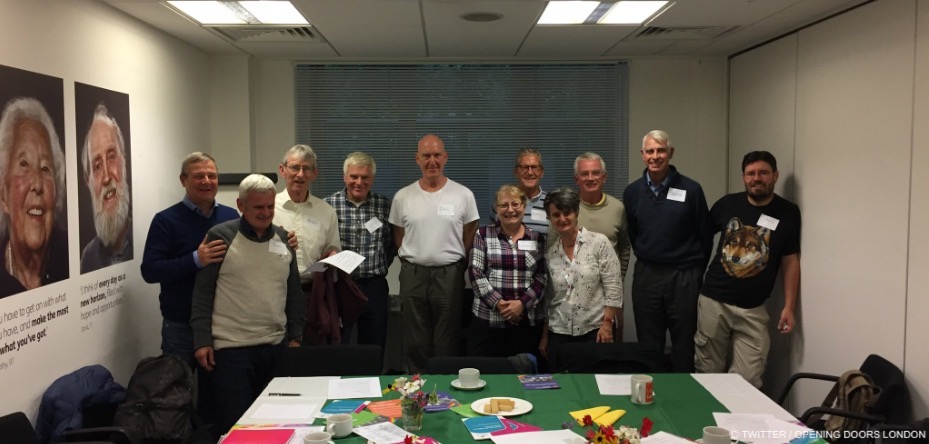
    Opening Door London’s group for LGBT+ people living with dementia, concerned about cognitive decline or caring for someone with dementia is still going strong since its first meeting in October 2017.

    The group meets on the second Monday of every month from 2-4pm at Tavis House in Euston. Members have reported a real sense of ‘coming home’ in the group meetings, feeling safe to share free of judgement from others.

    It’s been a busy year for the group, which has had high profile media coverage from Channel 4 and BBC London News.

    Whilst numbers are steady, Rainbow Memory Cafe is still keen to welcome new members. Find out more click here.

  • Gay and bi guys who are lonely are most likely to have bareback sex

    Gay and bi guys who are lonely are most likely to have bareback sex

    Gay, bi and queer men are 67 percent more likely to have unprotected anal sex.

    Madeinitaly / Pixabay

    A recent study from China has found that lonely gay men are most likely to have condomless sex. Of the 507 men that took part in the study, those “who reported feeling lonely were more likely to have had condomless receptive anal intercourse in the past 6 months.”

    The same men also said that they felt “hopeless for the future” and reports of higher levels of internalised homophobia.

    The study showed that gay and bi men in China are suffering from high rates of depression and loneliness, of the 507 who took part, 26.8 and 35.5% reported moderate-to-severe symptoms of depression and feeling lonely, respectively. Despite homosexuality not being illegal in China LGBT people are subject to severe societal pressures.

    The aim of the study was to help demonstrate that gay/bi and queer men with negative mental health in high-income countries were at risk of HIV infection. “We sought to describe depression and loneliness and identify their correlates among Chinese MSM”.

    Without protection, like condoms or access to PrEP, men who have bareback sex are more at risk of contracting HIV than those who use condoms or who are on PrEP and who test regularly.

    (C) BIGSTOCK

    Chances of passing on HIV are Zero if you’re on effective treatment

    A recent study found that there is ZERO chance of passing on HIV if an infected partner was on effective treatment.

    The PARTNER 2 study results found no cases of HIV transmission between men when one partner had HIV but was on effective treatment. This finding offers further confirmation that an undetectable viral load prevents sexual transmission of HIV. This understanding is frequently expressed as Undetectable equals Untransmittable, or U=U.

    The 14-country study found no transmissions between gay couples where the HIV-positive partner had a viral load under 200 – even though there were nearly 77,000 acts of condomless sex between them.

    China’s LGBT rights

    China has a chequered history in LGBT rights – same-sex sexual activity has only been legal since 1997, whilst the country does not recognise gay relationships or marriages. Same-sex couples are not permitted to adopt and there is no legal statute to protect gays from discrimination. However, trans people are legally permitted to change their legal gender.

    Homosexuality was removed from the Ministry Of Health’s list of mental illnesses in 2001.


  • DILEMMA | How do I rebuild my life after two violent homophobic attacks

    DILEMMA | How do I rebuild my life after two violent homophobic attacks

    A reader asks about how he can start to rebuild his life after two violent attacks and being diagnosed with PTSD. Doctor Dannii Cohen answers.

    Depressed, abuse, man,
    CREDIT: igor stevanovic / bigstock

    Dear Dilemmas,

    I have been violently attacked twice in less than a year with no provocation from me before the incidents. After the first time I was diagnosed with PTSD and put on medication which helps, however, the most recent attack last night when I was beaten, robbed and threatened with gang reprisals has left me feeling completely empty. It’s not like last year where I began to see my attacker everywhere (even though it wasn’t him) and felt gripped by fear, this time I just feel empty, defeated and believing it’s only a matter of time before it happens again if I stay in this area.

    I don’t want to go to my GP because in the 3 or 4 minutes they will allot for an appointment I will be unable to explain things as I am now, most likely ending up with the escotilapram dose being put up. What can I do outside of medication to move past this and control the PTSD?

    *name withheld

    Dear reader,

    I am so sorry to hear about what happened to you. I am also annoyed with your GP for just giving medication. Trauma does not go away with pills. You have to talk about it with other people, you have to move through the pain and work hard to move through it so you can leave it behind you.

    These feelings you describe, feeling empty, scared and defeated sound rather like PTSD caused by the traumatic event. You really need professional help to deal with those, because leaving this untreated could see you face a lot of avoidable psychological difficulties in the future. Please see a psychologist or counsellor.

    Also, have you been to the police? If these people keep attacking you maybe they can help too, this should not happen a third time!

    The best thing I can do is leave you with the contact e-mails to LGBT support and help groups. Maybe they can put you in contact with LGBT community help close to you.

    The LGBT Foundation Helpline might be best, as you can report a hate crime and ask for mental help anonymously.

    You can email the helpline anytime at helpline@lgbt.foundation and they will reply to you within 10 working days.

    For immediate support you can call the helpline on 0345 3 30 30 30

    There is also the Switchboard LGBT+ helpline a telephone service giving support advice and referrals to young LGBT people.
    Helpline: 0300 330 0630 (lines open 10am to 10pm)
    Email: chris@switchboard.lgbt

    I hope you will find the support you need.
    With love,
    Dannii

    Have you got a question for our expert team? Click here to send us your question.