Tag: Mental Health

All the latest breaking news on mental health and the LGBT+ community. Browse The THEGAYUK’s complete collection of features and commentary on mental health issues.

  • 10 Ways To Wake Up Happy

    10 Ways To Wake Up Happy

    How we wake up, sets us up for the rest of our day.

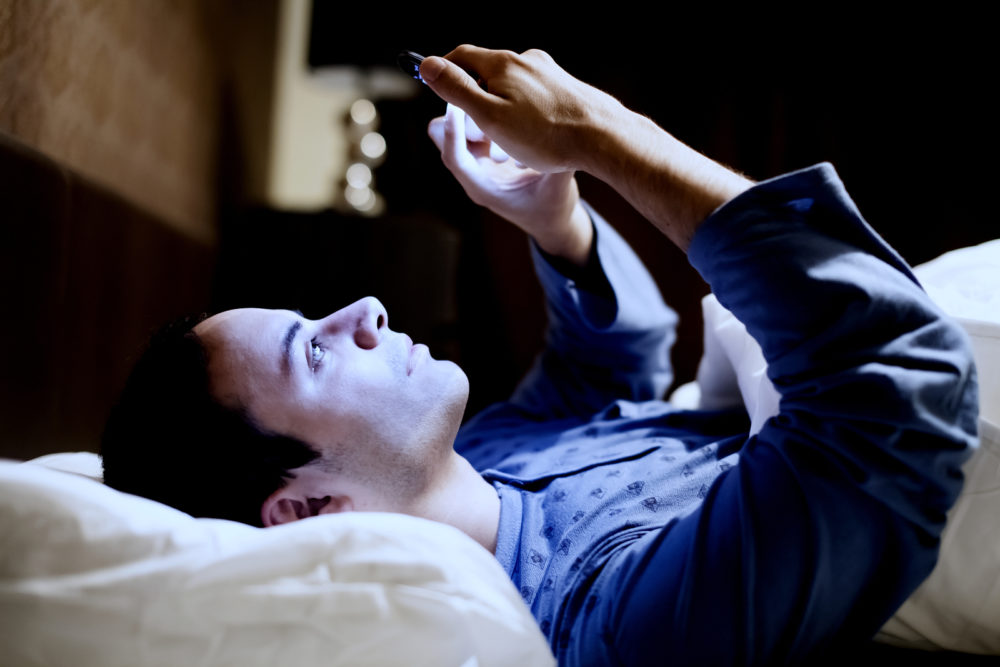
    Could blue light be keeping you up and creating a bad environment for you? CREDIT: Minerva-Studio-bigstock

    Sadly most people these days wake up as stressed as they went to bed. This means that we often wake up dreading the day instead of being ready to take it on. It is easy to change this by doing a few simple things in your early morning routine, but a lot of people think this might take too much time.

    This is a misconception as in fact: taking a few minutes in the morning to get ready for the day will boost your energy levels and will make you work faster: leaving you with more time by the end of the day to do things you really want to do: like hobbies.

    1. Avoid screens (1). Waking up clear headed begins with going to bed clear headed. Stop turning on your computer late at night thinking “I’ll just do that one last thing …” as we all know you’ll still be doing that one last thing at 3.00PM. Instead of pulling all-nighters you’ll be far more productive during the day if you avoid flashing screens altogether for at least half an hour before you go to sleep. Rest your mind with a book or listening to some soft music or a radio play.

    Your brain needs to recover from the glare of the computer, followed by the glare of the TV. An overload of images right before going to bed is detrimental to a good nights rest.

    2. Get things ready before going to bed. Choose what you’re going to wear the next day early the evening before. After this think about what else you might need and put it out. Getting details in order the evening before saves you precious time and stress in the morning.

    3. Wake up at-least half an hour before you have to. It’s a myth to think that it’s that extra half hour of sleep that would help you to wake up feeling refreshed. You’d be surprised to know that this is not the case. Waking up a little earlier means you can start your day slow and relaxed, as you have some time for yourself instead of; jumping out of bed, rushing into the shower, wolfing down your breakfast and dashing out.

    4. Do NOT set an alarm. This might sound odd, but there is a very good reason for this: when you use an alarm to stir you in the morning you do not wake up naturally. The sudden beeps of the alarm disrupt your sleep and you jolt awake abruptly, stressed out before you’ve even opened your eyes. Hitting the snooze button after this makes things even worse as dozing off means you will be waking up again ten minutes later at the beginning of the sleep cycle. The worst point to be woken up.

    Instead of using your alarm try and exercise mind and body into resetting your biological clock so you’ll wake naturally. I do not advise to start training this during a working week as you may run into trouble.

    5. Avoid screens (2). Do not reach out for your phone or laptop the second you wake up. Those e-mails, messages and Tweets can wait. Immediately going for the phone means you’re starting work the moment you wake up causing stress levels to rise abruptly. Reading Twitter does not equal time for yourself. The internet late at night you’ll be on that phone/tablet for the next 40+ minutes, losing precious time and will stressed for the rest of the day.

    6. Begin the day with positive affirmations: Find a motivational meditation that speaks to you and play it the moment you wake up. Early in the morning, your mind is very susceptible and the affirmations will remain with you throughout the day.

    Alternatively, if you do not like to play recordings early in the morning: reading positive affirmations instead will do just as well.

    7. Go over your daily goals: What was it you had planned for the day? What is essential? Remember it and think about how you want to do it.

    8. Do some exercise: Some people swear by exercising first thing in the morning: it is easy to see why: it gets done and sets you up for the rest of the day. It is also obvious why many more people feel quite queasy at the thought of doing strenuous exercise first thing in the morning.

    Still, even if you don’t like working out first thing in the morning, it is a good idea to at least do something to wake up your body, your metabolism and your mind. Try ten minutes of easy exercise that suit you. A bit of yoga, for example, a few sit-ups a little cardio or pilates, even going up and down the stairs a few times. (Always, always stretch before anything you do though!!) Doing some moves early in the morning is like physical coffee that gets you going.

    9. Practice Mindfulness: Take your breakfast and relax. Eat slowly and try to truly taste what you are eating. After you have finished don’t jump up immediately but slowly close your eyes and do a brief body scan. Take a few breaths and pay attention to what you feel and hear around you. This should take no more than two or three minutes: a mini meditation.

    10. Talk to your loved ones: Take some time out to talk to your partner/family or live in friend. Give a kiss and a cuddle. The best way to start the day is with love.
  • COMMENT | What Jeremy Corbyn Has Already Done For The Gay Community

    Many of my gay chums often tell me they are not “into politics”. Personally, I’ve always often thought this was a bit odd because I’ve always thought of being gay and being political as going hand in hand.

    We have long had things to fight for in the name of fairness and equality and pressure to put on those in power; the long struggle for equal marriage being just one example in recent history.

    But politics, especially that coming straight out of Westminster, leaves many cold. And after the recession and all that nasty MP’s expenses business then is it any wonder?

    Even if you despise all things political though, the rise of Jeremy Corbyn has been inescapable. And somewhere in the media storm and the thousands of words written about him, there is one announcement that is both very welcome and hugely long overdue.

    In unveiling his Shadow Cabinet team, Corbyn named Luciana Berger as the very first Shadow Minister For Mental Health.

    Here we need some context: a University of Cambridge study published in September 2014 found that 12 percent of lesbian women and almost 19 percent of bisexual women reported mental health problems, compared with six percent of heterosexual women. Also, 11 percent of gay men and 15 percent of bisexual men reported problems, compared to five percent of heterosexual men.

    It’s pretty clear that mental health is an area of huge importance to the continued wellbeing of us all in the LGB community. However long waiting times for an initial hospital consultation and the postcode lottery that results in standards of care being entirely dependent on where you live continue to be a big problem.

    And we all know that the Conservative policy of austerity has led to funding cuts to many organisations that were previously there to provide support and advice.

    Let’s not get too ahead of ourselves here; the appointment of a Shadow Minister is in no way the miracle cure to solve the problem with the current state of care. And to be brutally realistic, we still have a government in power who plan on cutting public services yet more in the next few years. Not a great sign that an already difficult situation will get easier anytime soon. But at least for once we can say with certainty that a political party is actually taking it seriously rather than paying lip service with a brief paragraph in the manifesto at election time.

    So yes, these are politicians we are talking about. And we’ve all learnt not to trust them right? So it could turn out to be a naïve hope but just maybe the appointment of Luciana Berger means that with the closer scrutiny a designated minister should bring, there just might be a grown up conversation about mental health care in this country.

    Yes. I did say it was possibly a naïve hope.

    But mental health matters. Given the statistics it is a topic that touches all of us in the gay community, if not personally then chances are through our closest friends and families.

    And that is true, whether you are “into politics” or not.

    Views expressed in this article may not reflect those of THEGAYUK, its editorial team and owners. As part of our mission statement, we have published this comment piece as part of our open platform. If you’d like to reply please use the comment section below and if you’d like to write an opinion piece please visit: www.thegayuk.com/Submit


  • INTERVIEW: Jonny Benjamin, Saved By A Man Called “Mike”

    In 2008, drama student Jonny Benjamin decided to take his life, by jumping from Waterloo Bridge in London. One man saved his life.

    What ensued was one of the most impressive manhunts in the history of Twitter. #FindMike (a man actually named Neil Laybourn) became a worldwide trend and attracted global mainstream media in the search for this one man who made the difference between life and death. We speak to Jonny about how his story is now the subject of a new documentary The Stranger On The Bridge, and how coming out as gay was equally as hard as coming out with a mental illness.

    JH: Now that the documentary is out and it’s not just morning TV or radio snippets, but the story told by you, can you describe how you feel?

    JB: It feels quite surreal to be honest for it to be out there. It feels good. I’ve had some really amazing feedback from people that either feel that they’ve been educated or people that have been going through similar things themselves. I’m really pleased with the reaction.

    JH: Does it feel like you’ve got closure?

    JB: Yeah it does. It feels like that chapter is closed, it was a really dark place that I was in and it feels like that door is closed to that chapter now. Which is a good feeling.

    JH: But Hollywood is knocking on the door?

    JB: Yeah, we have had approaches from Hollywood, again very surreal, but we’re in early days and early stages.

    JH: You’ve talked about getting closure and how it feels good, but how do you feel about this story being on the silver screen, going out to an even wider audience than you’ve had so far?

    JB: It’s great because the whole point of this is to raise awareness of both suicide and mental illness. If it goes even bigger, or even further then great, because it will increase awareness, help more people. So I’m happy for it to go far and wide as possible, if it’s going to help people.

    JH: How discriminatory do you think society is for those living with mental health problems?

    JB: I think it’s getting much better, I think the stigma around mental illness is decreasing, so it’s getting easier to live with a mental illness in public. It’s still got some way to go though, particularly for conditions like schizophrenia. There’s a lot of understanding out there on depression and bipolar, but there’s very little understanding about schizophrenia.

    I was reading one survey, it said that three quarters of people with schizophrenia don’t tell their friends and family, which is a huge number. So there’s a lot of stigma out there about schizophrenia and that’s the point of the film we’ve just done, to reduce that stigma really.

    JH: Was it difficult to go back to the bridge and to Neil (the man dubbed Mike) again and revisit the past?

    JB: At some points it was difficult. When I looked through all the photos of the different Mikes that came forward… that was really difficult. You definitely have to go back to that place that you were (at). I found that quite tough. Going back to the bridge? I got used to it in the end. We had so many interviews and so many photo-shoots on the bridge, you get used to it really.

    JH: Since the broadcast of the film, have you noticed people treating you differently?

    JB: No, I haven’t to be honest. Not at all. Everyone’s been the same with me. Almost like it hasn’t happened now. It feels quite strange, feels like it was a bit of a dream. No one’s treating me differently. What I have got is a really overwhelming response, which is lovely. Really overwhelming. In a good way.

    JH: Twitter can be used so positively but also it is a platform for trolling. Do you have a mechanism to deal with negativity? One particular celebrity who will go unmentioned had a pop… How are you dealing with people that might criticise you for bringing this issue to light?

    JB: I just try and ignore it really. Ninety-nine per cent of people had positive feedback to say. It was just one or two people who were critical of it. I just ignore it really. They’re looking to start a fight and I don’t want to detract attention away from what the programme is really about, which is to raise awareness. I don’t really care what they say to be honest. It just shows their ignorance really. I feel sorry for them if anything.

    CREDIT: Supplied by PR

    PICTURED: Mike, Whose real name is Neil.

    JH: What do you feel about the term mental health or mental illness? Could it be expressed better?

    JB: With mental health there is that stigma. But what other words do you use really? I know some people have got issues around mental health and mental illness but I really don’t know what other term we would use. We’ve all got mental health. It’s like a spectrum really.

    JH: Do you think more celebrities like Stephen Fry and Ruby Wax should be coming out with their mental health issues?

    JB: I think it’s really tough, because of the stigma for people to come out, but I think it’s happening, especially in the last few years I’ve noticed that people are becoming a lot more open. There should be no shame in it really. The more high profile people who come out and talk about it, is fantastic really. It inspires other people to do the same.

    JH: How much has your sexuality played a part in your depression and in your schizophrenia? Is there a connection?

    JB: I think there is. It was a massive weight on my shoulders hiding my sexuality and it definitely contributed towards what I went through I’d say. I was so scared about coming out. I come from a Jewish family and it’s something that’s frowned upon in the Jewish religion. I was really scared about coming out. It definitely added to my mental health issues for sure. When I came out eventually, I came out two months after I was diagnosed; it completely changed my life around for the better. Struggling with my sexuality definitely contributed to my suicidal thoughts and feelings. That’s how terrified I was about coming out.

    JH: Which was easier to come out about for you? Being gay or having mental health issues?

    JB: I think it’s equally hard to be honest. Equally as hard. Coming out about my mental illness was tough, really tough especially towards my friends. I found it really tough to come out to them. But with coming out about sexuality I found it harder to come out to my family.

    JH: People must feel like they know so much about you, but really they only know a certain section about you, because there’s more to you than a) being gay and b) having a mental illness. Do you think people think that’s it? Nothing more to Jonny? Does being open with your mental health make it difficult to find a partner?

    JB: Having mental health issues makes it difficult to find a partner more than anything. Things like paranoia and intrusive thoughts – some of the symptoms of schizophrenia are heightened when you’re in a relationship. I’ve never been in a proper relationship, I would say and I’ve always found it quite hard dealing with mental health issues when you’re with a person. A lack of understanding about my mental health makes it even harder. I might be very paranoid about where they’re going, whom they’re seeing. It’s a level of trust that I find hard to gain.

    JH: So are you more interested in looking after yourself at the moment then finding a partner?

    JB: Yeah. The last two months have been really difficult; I became ill again at the end of last year. That’s my priority now to get my mental health back on track and relationships will come second.

    JH: Is the NHS or the Government doing enough to engage in this issue?

    JB: There’s nowhere near enough, in the UK there’s 17 suicides every day. The reason why it’s so bad is because there’s not enough education and support. We should be going into schools at an early age, into universities and work places as well to educate people and let them know that they’re not alone and they can get support if they’re struggling. It feels like a taboo, the subject we don’t want to talk about. But it’s all about reaching out.

    When I was 16 or 17 at school and I was really starting to struggle with my mental health, if someone would have come in, a guest speaker, and just said “This is what mental health is, this is what you can do”, it would have changed my life around.

    But unless we start talking about it then more and more people are going to suffer and unfortunately take their lives.

    If you need to talk to somebody about issues raised in this interview there is a helpline for the LGBT community open from 10AM to 11PM everyday of year. Call: 0300 330 0630 or visit: www.llgs.org.uk

  • DEPRESSION CRISIS: One Quarter Of Gay Men Surveyed Tried Committing Suicide

    Shocking new statistics from GMFA’s FS magazine show that nearly one quarter of gay men who have suffered from depression have tried to kill themselves.

    A startling survey in the latest issue of FS magazine uncovers the true extent of the effects of depression on gay men. Around 600 men, who identified that they had or were suffering from depression, were asked if they had tried to commit suicide and around 24%, nearly one quarter, said they had, that number increased to over half when asked if they had had suicidal thoughts.

    Around 54% of gay men surveyed said that they had considered ending their lives, with self-esteem being the biggest contributor to their thoughts.

    For those men living with HIV, 66% identified their diagnosis as the leading cause of depression and suicidal thoughts.

    Simon, 36 from Oxford, is one of the many HIV-positive gay men who responded. He says: “I was diagnosed with HIV in January 2012. I was having lots of risky sex and I knew eventually it would happen but didn’t really care. It wasn’t until I was diagnosed that reality set in. I wasn’t ready for it and became depressed. It affected my job. It affected my social life and I became a recluse.”

    Anthony is 26 and from London. He told FS that after his diagnosis he couldn’t handle it. He said: “About three months after I was told I was HIV-positive I tried to overdose. I didn’t cope at all with being told I had the virus. I thought my life was over and suicide was the best option. Luckily my attempt failed.”

    When asked, what were the main reasons HIV-positive gay men felt suicidal or why they attempted suicide, 66% said ‘Living with HIV’ was the main issue with ‘Low self-esteem (60%) and relationship issues (39%).

    “HIV remains one of the most stigmatised of all health conditions,” says Matthew Hodson, Chief Executive of GMFA. “Rates of depression among gay men with HIV are twice as high as they are among other gay men, affecting about one in every four men. And depression in men with HIV can lead to poor adherence, which can have a major impact on their physical health as well.

    “Depression also has an impact on someone’s likelihood of becoming HIV-positive,” adds Matthew. “A recent study showed that men with depressive symptoms were more likely to have unprotected sex, and to have unprotected sex with several partners. Tackling the mental health challenges faced by gay men is crucial if we are going to reduce the high levels of sexual risk-taking and high incidence of HIV in our community.”

    Ian adds:

    “Gay men are just as likely to face the same everyday struggles straight people face on a day-to-day basis with the added pressure of their sexuality. For HIV-positive gay men the issues they faced were greater due to their diagnosis. The gay men in our new issue wanted to share their stories in a bid to help other gay men realise that they are not alone. The first thing to do when trying to fix a problem is admitting you have one. So, hello gay people… we have a problem.”

    Last year helpline charity Samaritans revealed that 1 in ten male callers were worried about their sexuality.

    The new issue of FS magazine can be read online for free by going to: www.fsmag.org.uk

    If you’d like support Please call 08457 90 90 90 (UK) 1850 60 90 90 (ROI), email jo@samaritans.org, or visit www.samaritans.org to find details of the nearest branch.

    Or phone Switchboard on 0330 330 0630

  • TECH TOCK, Is Technology A Time Bomb Creeping Up On Us?

    In today’s fast paced world, technology plays an increasingly important part of how we function on a day-to-day basis in practically every aspect of our lives from working effectively in our jobs to how we enjoy our leisure time and even to how we interact with our friends and family.

    Social media channels like Twitter, Facebook and Instagram allow people to share much more of their lives than ever before. The introduction of gay dating sites and mobile apps like Grindr and Scruff have opened up new and exciting opportunities to meet potential partners which would never have been possible even as little as ten years ago.

    However the pervasive nature of technology – and in particular digital technology – in our lives has increased the pressures we face. From the constant ping of emails and texts coming up on our mobiles demanding to be answered to the celebrity selfies on Twitter and Instagram which affect self-esteem, we are bombarded from all sides with images and messages that create expectations based on how we perceive such influences. Not to mention the rise in cyber bullying, revenge porn and pro-ana websites. It has even been suggested that some of us now suffer from “tech envy” with 30% of office workers saying they were very envious of the devices such as iPads that their colleagues brought into work.

    Technology & The Unreasonable Expectations We Set Ourselves
    The benefits of digital technology are obvious in providing value and possibility to millions of people. Our lives are more efficient because of such technology and important messages on issues such as equality, education and social change can now be transmitted to a global community. Yet for all the payoffs of technology, for some being online can cause a huge cost to fulfilment and emotional wellbeing because of the unreasonable expectations that can be created. Such expectations can be anything from the expectation that you should always be available on the other end of a text, instant message or Snapchat to the damaging expectation that if your latest Instagram photo doesn’t get enough likes or you don’t have lots of followers on Twitter then there must be something wrong with you.

    Although you may think you have to meet these expectations to be happy and keep up with the Joneses but actually you need to put such unreasonable expectations to one side and put your physical and emotional health first to truly ensure you live a happy and fulfilled life. The best way to do this is to shift your focus and concentrate on what you are grateful for and that which you do have. Avoid others opinions and expectations. Keep you standards high while lowering your expectations of yourself and others.

    Symptoms of Technology Overload
    The paradox of online technology is that whilst it connects people on social networks and increases our circle of friends across time zones, it also can have a negative impact on the quality of those friendships. A recent study suggested that the majority of respondents thought that social media had an adverse effect on friendships with many feeling that their relationships with others were more superficial because of social media. This could be because many of us use social media as a substitute to meeting friends in the real world which is not surprising as a quick like or comment online to a friend’s latest post is so easy to do and requires very little commitment or personal responsibility.

    It is also not unusual for people to feel addicted to checking their social media accounts throughout the day with the focus being on Facebook updates and Twitter notifications rather than speaking to friends on the phone or meeting in person. Even those who tried to delete their accounts struggle with being offline with one in three signing themselves up again less than a week later and one in ten lasting less than 24 hours before succumbing to the need to reactive their account and go back online.

    Technology Does Not Satisfy Our Need For Connection
    Connection is a fundamental human need which needs to be satisfied in a healthy way to create a truly meaningful and fulfilled life. The health benefits of social interaction from the release in oxytocin during a hug to the reduced incidences of depression are greatest amongst friends who meet in person opposed to those who purely interact online.

    Connecting with those you care about on social media only adds a small element to satisfy your need for connection because research shows that the quality of your relationships is correlated to the amount of time you spend together and those who spend more time engaging in face-to-face contact with friends feel that their bond is stronger. In my experience working as a life coach over the last decade, it is the clients that cultivating their relationships in person by meeting friends face-to-face to catch up over a coffee or meal who have the best quality interactions and greatest feelings of intimacy.

    Technology Antidote
    Spending time online with friends should be a last resort not your first port of call. If you want to shift your focus from unhelpful social media habits to meeting friends in the real world but don’t know where to start, here are my top ten suggestions to get out from behind your handheld device and re-connect with the people that matter.

  • 10 life hacks to help you take a break from technology

    Here are 10 Life hacks to help you take a break from technology devised by celebrity life and success coach Sloan Sheridan Williams.

    When technology is starting to rule your life, why not take a step back and take note of Sloan’s top 10 hints at regaining control of your life.

    1. Share a lovingly home-cooked meal or go to your favourite restaurant

    2. Get a boost of energising Vitamin D

    3. Share emotional experiences like watching a movie or sporting event.

    4. Having fun on theme park rides will help you bond with the rush of endorphins

    5. Go on a bike ride or a long walk in the park

    6. Visit a comedy club and laugh out loud

    7. Go out and dance like no-one is watching

    8. Pedalo on the Serpentine or on a nearby lake that offers similar

    9. Fly a kite

    10. Go to a Roller Disco and let your hair down.

    by Sloan Sheridan Wllliams

  • Mental Health Charity For LGBT+ Youth Boosted By £120K

    Greenwich-based METRO has received nearly £120,000 from the City of London Corporation’s charity, City Bridge Trust, to boost its London-wide mental health programme for Lesbian, Gay, Bisexual, Transgender and Questioning (LGBTQ) young people.

    Established in 1984, METRO runs community and youth services and is one of London’s few specialist providers of emotional and mental health support to the LGBTQ community. It promotes health, wellbeing, equality and participation through one-to-one counselling, group therapy and assessment, and referral services.

    The charity faces increased demand for mental health services and its Youth Chances research found that 44 per cent of LGBTQ young people have contemplated suicide, while 52 per cent have self-harmed and 42 per cent sought treatment for anxiety or depression.

    Dr Greg Ussher, METRO Chief Executive said:

    METRO is delighted to receive this funding from the City Bridge Trust. The findings from our Youth Chances research and the demand on our existing mental health programme show just how vital this funding is to enable us to support so many more Lesbian, Gay, Bisexual, Transgender and Questioning (LGBTQ) young people across London. This investment from the City Bridge Trust gives LGBTQ young people direct access to the essential services when they need them and will save lives.”

    Jeremy Mayhew, Chairman of City Bridge Trust, said:

    Negative attitudes towards these young people make them more likely to experience higher levels of mental health distress than their heterosexual peers. Understanding their needs and providing accessible services during a difficult time in their lives, is vitally important. At City Bridge Trust, we are committed to supporting Metro Centre in breaking down barriers, removing stigma and improving mental health.”

    City Bridge Trust is the grant-making arm of Bridge House Estates, whose sole trustee is the City of London Corporation. It addresses disadvantage by supporting London charities, providing grants totalling around £15 million annually.

  • Will Young to headline LGBT mental health charity benefit

    PACE, the LGBT mental health charity, is holding a very special event on Thursday 27 February at Café de Paris to mark their 30th anniversary, dubbed ‘Bright Night: a bit of a do about something that matters’.

    The night will feature PACE’s new Patron, Will Young alongside the brilliantly acerbic comedian Jen Brister, and is being held to raise much-needed funds to help this charity to continue providing vital services to the LGBT community. There will be an auction, lots of music, dancing and laughter.

    Some of the auction prizes are quite astonishing, including a specially-made Grayson Perry sculpture, a Versace suit worn by Elton John, a ski holiday in the French Alps from European Gay Ski Week, a private capsule on the London Eye and many others (see the full list below).

    PACE provide face-to-face and online support, counselling and advice services covering all aspects of life, including relationships, coming out, mental health and domestic abuse. Although London-based, they provide services nationwide so LGBT people anywhere can access the support they need.

    Unfortunately, recent funding cuts have meant that PACE is facing some tough times ahead and Bright Night is an opportunity to raise the essential funds that keep their services running.

    Tickets for this glitzy and fun night are £55 (or £120 for VIP, which includes a meet and greet, private lounge and VIP bar). We have negotiated a 30% discount for our readers by entering promo code LTDGAYUKPROMO at http://bright-night.eventbrite.co.uk/

    AUCTION PRIZES:
    A ski holiday in the French Alps
    A specially-made piece by 2003 Turner Prize winner Grayson Perry
    A fabulous Versace suit worn by Sir Elton John
    A private capsule on the London Eye for up to 12 guests including priority boarding, 3 bottles of champagne and entry to the 4 D cinema experience
    Two tickets to see Jane MacDonald with the opportunity to meet her after the show
    A 3 night stay in 5* Lanlas Farm, West Wales for up to 5 people with an energy healing session or yoga session with deep relaxation
    Vouchers and Wine from Tesco
    Lush gift set
    Will Young’s signed autobiography
    5 signed books from Sarah Waters
    A signed copy of Stephen Fry’s The Fry Chronicles
    Money boxes from the Paul O’Grady Show
    Signed memorabilia from Clare Balding
    A signed book from Gok Wan

  • COLUMN | Deep Down

    There are lots of things that I really like about myself. I have quite pretty blue eyes (if I do say so myself). I can eat a whole pack of bagels without putting on an ounce, can usually empathise with other people and have my entertaining moments.

    I kind of like my weird double jointed big toes and my ability to see at least a little good in most things. I’m also very good at Cluedo and have read the complete works of Agatha Christie.
    Naturally there’s a balance. I hate the little hairs that grow out of my ears, the way I can be prone to judge people harshly without getting to know them well enough first and my terrible eyesight. My clumsiness is a legendary cross which I bare and I tend to be a quitter with a feeble motto of “If at first you don’t succeed then it’s probably just not for you, love.” a motto that’s seen me unable to drive a car, ride a bike or master the yo-yo.

    I suppose we all possess traits and qualities that we have to learn to accept and I’ve written about mine here before: my dodgy mental health. I’m sorry to recur, to bring it up again and to go on about the same old thing but I’m also afraid that that’s just the nature of the beast. It rears its ugly head. It’s also pretty topical with this week’s amazing Time for Change campaigns’ ‘Time to Talk Day’.

    Statistically we were a mental illness once. Gay people were classified as officially possessing a mental disorder, just because they were gay. Loving or even just lusting after, someone of your own gender was considered to be a form of madness and was only removed from the official USA manual of classified psychiatric disorders in 1973. Unsurprisingly, discrimination, homophobia and prejudice have all been linked to alarmingly high rates of poor mental health with associated high substance abuse and suicide rates in LGBT people.

    I don’t know why I get depressed and anxious. I don’t actually care either. I’ve been down the route of therapy (self-help books, counselling, psychoanalysis, cognitive behavioural therapy, medications). I’ve soul searched, analysed and been analysed and it doesn’t matter to me any more whether it’s my stressful job, my childhood experiences, my abusive past relationships or my dodgy genes. It just matters that I can get by the best I can with whatever resources I can access. I try to spot the triggers and try to engage my relapse survival mechanisms when an episode hits (spoken like someone who’s been through way too much therapy).

    So, a week of feeling desperate, bowling balls nestling in my stomach and a sick sense of dread? It’s not much of a joy feeling so joyless. It’s been hard to keep perspective and think about my good career, my relationships, my friendships and the people who love me. So why am I sharing this with you? Is this entertaining or worth the read? I hope that the latter is true. I’m a normal functional human being who just struggles a bit at times. It’s true of one in three of us apparently.

    So, that’s my purpose. I’m talking about it. I’m human. I work, I eat, I sleep and have a good job that I love. This silly depression of mine should carry no stigma. I’ve been ill. It’s like the flu. I’m ill, not weak or defective. I’ve been having a low period and I’m getting a bit better thanks for asking. I just want you to know what I wish people had sometimes told me: lots of people feel like this. It’s really bloody hard, but we can get by. There are lots of us about and we sometimes just want to talk about it.

  • 1 In 10 Male Callers To Samaritans Are Worried About Their Sexuality

    Suicide is the number 1 killer of young men in the UK and gay, bisexual and questioning men are disproportionally effected, as the Samaritans releases worrying statistics that show 26% of calls from men, talk about issues surrounding their sexuality.

    More than one in ten calls for help to the Samaritans (10.9%) from men talked about issues surrounding their sexual orientation.This compares with only one in forty similar calls from women (2.4 percent) according to the latest snapshot survey of branches in the UK and ROI.

    Tragically there were 4639 male suicides in the UK last year, making it the single biggest killer of men under 35.

    A petition has been created on the HMGovernment.gov.uk website which calls on Jeremy Hunt MP the Secretary of State for Health, to further fund research on male suicide and to implement a ‘mechanism for those impacted by suicide’.

    You can read and sign the petition here.

    A survey by Stonewall in 2012 revealed that 3% of gay men and 5% of bisexual men had attempted to take their own life, compared to only 0.4% of men in general. In the 16- to 24-year-old age group, 6% of gay and bisexual men had attempted to take their own life compared to less than 1% of men in general.

    There are similar findings for self-harming. 7% of gay and bisexual men had deliberately harmed themselves compared to only 3% of men in general, and in the 16- to 24-year-old age group, 15% of gay and bisexual men had harmed themselves compared to 7% of men in general.

    Lucy Rolfe from the Lesbian and Gay Foundation based in Manchester said:

    “Around half of the people who’ve accessed The Lesbian & Gay Foundation’s counselling service have had at least one previous suicide attempt and many are experiencing current suicidal thoughts. It’s important we continue to provide these much needed services to the community”.

    If you’d like support Please call 08457 90 90 90 (UK) 1850 60 90 90 (ROI), email jo@samaritans.org, or visit www.samaritans.org to find details of the nearest branch.

    Or phone the London Lesbian and Gay Switchboard on 0330 330 0630

  • OPINION | Out In The Therapy Room

    OPINION | Out In The Therapy Room

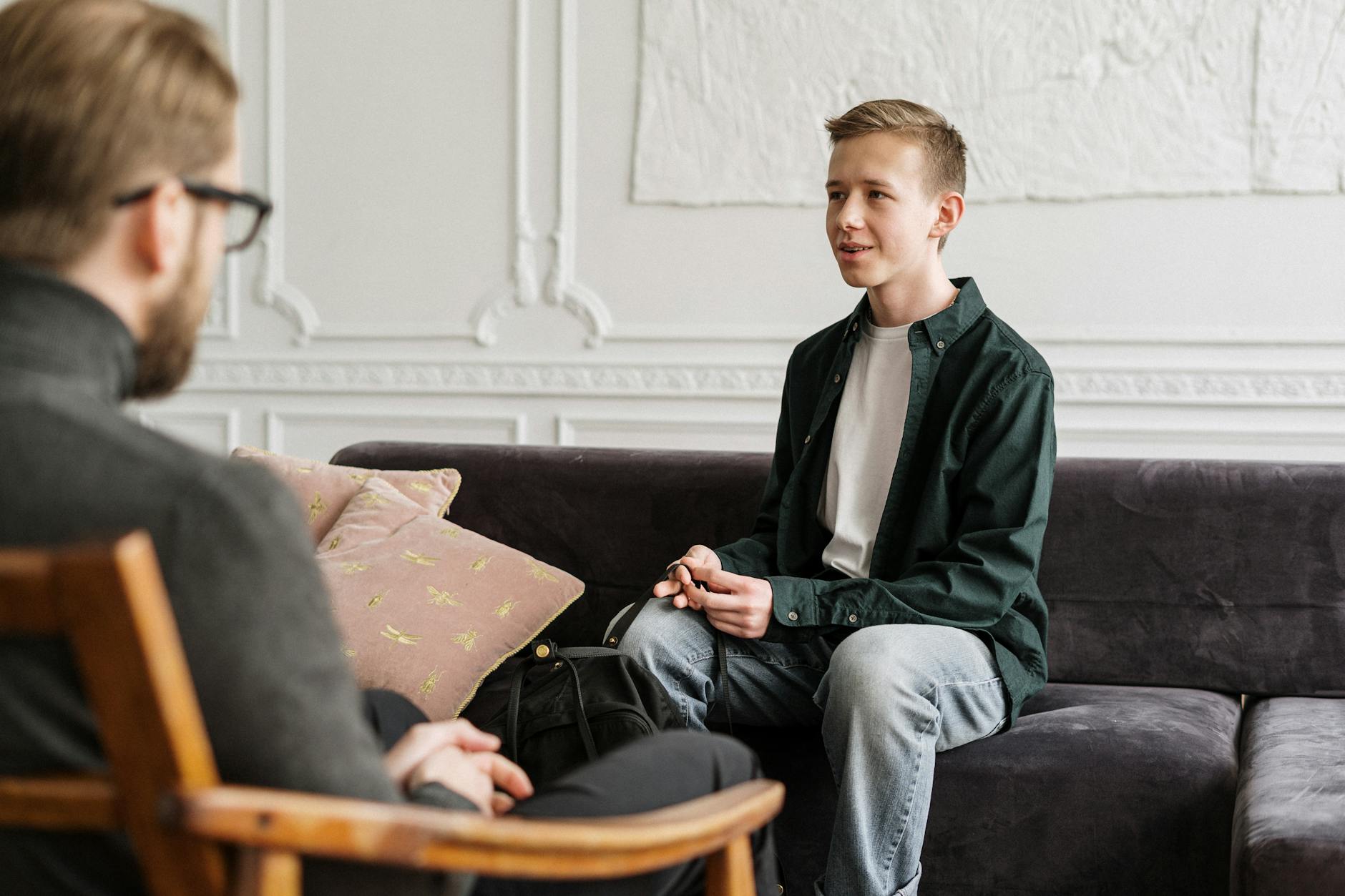
    I know what you may be thinking about; you have your own secrets and your own reasons for coming to counselling. Things that you’ve bottled up and repressed for years. Ashamed to talk or speak of who you secretly you’re attracted to.

    You feel that to express these fears they become real, no longer to be ignored. That I’ll judge you on some level. You’ll be less of a man. I won’t value you the same as human being.

    Of course I’m a man as well; maybe I remind you of your father, brother or the boy who used to pick on you at school. You’re nervous about being raw and vulnerable with me, afraid of my response. What you may not have considered is that I am gay too.

    I am the counsellor that you see sat before you. Confident. Calm and friendly. However before I became this person I was sat in the same chair that you are, worrying about the same things. I understand because like many gay therapists, I was a client first. I will also have been in the position of speaking to a therapist about my sexuality – positive or negative- and appreciate how much courage it can take to have this conversation.

    If I told you that I was gay would the worry about telling me about yourself disappear? If you knew about my coming out experiences, would you believe that I could empathise with the struggles you are facing?

    If you stopped caring about my reactions and judgement, Would you begin to care for yourself? You might not have come into counselling to talk about your sexuality but does it feel different to feel that it is not off the cards if you want to. I accept that counsellors do not need to be a man or gay to be able to work with you but knowing that I have walked the same roads as you may bring a different kind of assurance and the feeling that when I say “I understand” that my response is more heartfelt. Unlike talking to your father, brother or friend, there will be no judgment on the things that have happened to you that you still carry today.

    If I told you that I was a member of an ethical body that has concluded that gay “conversion” therapies are unethical and anyone practising them would face disciplinary action. Does that help to assure you of the men and women that have chosen to stand together with regardless of sexuality?

    Of course the questions that are asked here are only for you; I don’t need or expect an answer. But there are Gay Counsellors out there who are proud of their sexuality and confident enough to recognise the power it holds in the counselling relationship. We use the term “Gay affirmative” to show that we embrace the positive aspect of being true to yourself and value the power it holds in the counselling relationship.

    The power comes from letting you know that I can relate to some of the experiences you may choose to bring to the time we share together. I can understand the power in being able to express freely, who I love, how I live and who I am.

    Opinions expressed in this article may not reflect those of THEGAYUK, it’s management or editorial teams. If you’d like to comment or write a comment, opinion or blog piece, please click here.