Leading sex brand LELO is urging the department of health to open up to the idea of prescribing masturbation to patients as part of a wellness programme over a range of stress-related health problems.
LELO’s UK sex therapist Kate Moyle commented: “Sexual wellness is a part of all-round wellness, and as a Psychosexual Therapist it is clear to see that when there are challenges in our sex lives and sexuality, that can impact other aspects of our health and wellbeing.
There’s a lot of research to show that having a handy shandy can relieve a variety of ailments because it boosts endorphins, reduces stress, improves sleep, improves immune system functioning, and can help with menopausal symptoms.
Could help patients
Moyle continues, “The function of pleasure is to make us feel good; and self-pleasure and masturbation can have positive benefits for our health in a variety of ways, including the release of the hormone oxytocin which can lower cortisol levels, getting to know our bodies better, and building sexual self-confidence.
“Potentially recommended as a part of an integrated wellness programme, masturbation could be of benefit to some patients, when put forward with confidence and educative information.”
It’s NORMAL
In addition to the wealth of positive side-effects, masturbation has also been linked to an improved self-esteem and body image – championed by a wave of feminists who helped women discover sex-positivity. And in 1972, the taboo of self-masturbation was finally lifted when the American Medical Association declared it “normal”.
An Marcella Zanchi LELO UK Marketing Specialist commented: “We call on the Department of Health to act now and review and refresh the current practices when treating wellness issues, and to include the prescription of “masturbation” and self-pleasure to patients as and where needed as part of a wider wellness programme.”
So do you feel better after a wank? Let us know in the comments below
New data shows that nearly a quarter of gay and bisexual men who tried to access PrEP via the NHS IMPACT trial were unable to in the past year.
(C) marcbruxel Depositphotos
Data from AIDSMAP shows that 22 per cent of people who tried to access PrEP via the IMPACT trial were unable to secure the HIV prevention medication in the last year. Those who live outside London were more likely to fail in their attempt to access the drug.
The AIDSMAP statement stated that the importance of access to PrEP was underscored by the fact that 82 per cent of those who tried to access had condomless sex within a six month period.
The survey was answered by 2389 people during six weeks between 17 May and 1 July 2019. It was conducted by Public Health England in collaboration with PrEPster and iwantPrEPnow.
Of those who answered the survey, 92 per cent identified as gay, 6 per cent bisexual and 2 per cent who ID’d as non-binary or transgender. 86 per cent of those who answered ID’d as white 14 per cent ID’d as BAME.
Marc Thompson, Health Improvement Lead at Terrence Higgins Trust, said, “PrEP is a key tool in the fight against ending HIV transmissions. These new findings demonstrate that PrEP isn’t just stopping HIV it is having an overwhelming positive impact on people’s lives. That’s so important to remember as there remains far too many people unable to access this HIV game-changer.
“The impact of not increasing places on the trial has been laid bare in this survey, with nearly one in five people who want to access PrEP unable to do so. While nearly a quarter of people who had been purchasing PrEP privately having to stop due to being unable to pay for the anti-HIV drug. People should not be forced to make a decision that ultimately increases their risk of HIV. That’s why there must be increased places on the trial and immediate action towards providing routine access to PrEP.
“It is concerning that only half of people who have purchased PrEP privately have undergone the necessary kidney function tests before or while taking PrEP. Despite the side affects of taking PrEP being minimal for many users, it’s vital anyone wanting to or currently taking PrEP has the relevant screenings. This puts even greater urgency on our calls for PrEP to be embedded in routine HIV prevention services.”
Pre-exposure prophylaxis, or PrEP, it is a drug treatment protocol using a prescription medicine called Truvada and has been shown in a recent trial to be highly effective in preventing HIV in gay and bisexual men, when taken daily and used in combination with other infection prevention measures.
Truvada contains two medicines (tenofovir and emtricitabine) and is already routinely used in combination with other medicines to treat existing HIV infection.
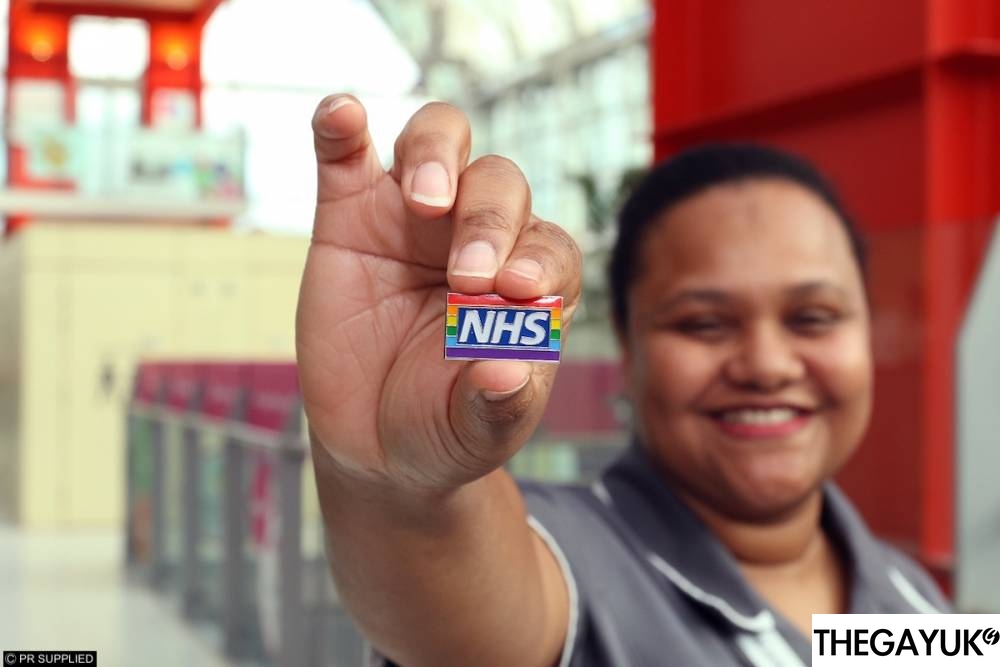
Evelina London Children’s Hospital and community services have introduced NHS rainbow badges for its staff to support lesbian, gay, bisexual and transgender (LGBT+) patients.
(C) NHS
The scheme at Evelina London, which is part of Guy’s and St Thomas’, is now being rolled out across the Trust, following a successful pilot at the children’s hospital, launched last October.
The move follows a recent Stonewall survey that found that one in seven (14%) of LGBT people have avoided medical treatment for fear of discrimination and almost one in four (23%) have witnessed discriminatory or negative remarks against LGBT people by healthcare staff. It also coincides with LGBT history month this February.
The badge is an NHS logo superimposed on the rainbow pride flag and can be worn on lanyards or uniforms. They promote a message of inclusion and are a sign that the wearer is someone you can talk to about issues of sexuality and gender identity.
When staff sign up to wear the badge they are provided with information about the challenges people who identify as LGBT+ can face accessing healthcare and what they can do to support them.
The hospital has also created a toolkit to support and encourage other NHS organisations to implement the scheme. More than 100 clinical commissioning groups, GP surgeries and hospitals from across the country have already expressed an interest in rolling it out.
The project has been backed by the Health Secretary Matt Hancock, who regularly wears the badge, and Strictly Come Dancing star, and former Evelina London paediatrician, Dr Ranj.
Health and Social Care Secretary Matt Hancock said, “Every patient and everyone who works in the NHS should feel welcomed by the NHS, regardless of their gender identity, race or sexual orientation.
“I love wearing my rainbow badge and I wear it with pride. I’m delighted to see Evelina London rolling out this fantastic initiative, to ensure no one feels alone or faces prejudice.”
Dr Ranj said, “Young LGBT+ people face greater and more complex challenges than their peers, including in healthcare. As health professionals we have a duty to ensure their wellbeing is paramount in all areas of their lives, so we need to create an environment where they can feel comfortable, valued and secure, especially when they need help.
“Small gestures like this mean so much to those that really need it the most, and I am beyond proud to be part of something that progresses the culture and values of the Trust. Now let’s do it across the whole NHS!”
The NHS rainbow badge initiative is supported by the Guy’s and St Thomas’ Charity, which provides funding for projects across Guy’s and St Thomas’.
Dr Michael Farquhar, NHS rainbow badge initiative lead and sleep consultant at Evelina London, said, “Despite improving social attitudes in the UK, LGBT+ people can still face significant barriers to accessing healthcare and this can have a detrimental impact on physical and mental health
“Wearing a NHS rainbow badge is a way for our staff to show that Evelina London is an open, non-judgemental and inclusive place for children, young people and their families who identify as LGBT+ and that we are here for them in every way.
“It was really important to us that the badge is meaningful, which is why when staff sign up to wear one they are provided with information about LGBT+ health inequalities and ways that they can help to tackle them.
“The initiative has already led to many extremely positive conversations between our staff and patients. We really hope that our toolkit will encourage other NHS organisations to introduce rainbow badges as they can play a valuable part in reducing stigma and inequality.”
Since the scheme launched almost a third (32%) of Evelina London staff have signed up to wear the badge. A target of 25% was set to combat the Stonewall statistic that almost a quarter of NHS staff have heard their colleagues make a negative remark about LGBT+ people.
Jayne King, head of security and co-chair of the LGBT+ forum at Guy’s and St Thomas’ NHS Foundation Trust, said, “Equality for both our staff and patients is extremely important to us and the NHS rainbow badge initiative demonstrates our support for the LGBT+ community and our ongoing commitment to promoting inclusion and celebrating diversity.
“NHS staff are in the perfect position to be advocates and supporters for LGBT+ people. Increased awareness of the issues LGBT+ people face when accessing healthcare can make a significant difference to their experiences, and, in turn their physical and mental health.”
Research from Public Health England has revealed that there were nearly half a million (422,000) new sexually transmitted infections recorded in 2017. Although this number has been described as “stable” from the previous year, cases of syphilis have rocketed by 20 percent, from 5955 in 2016 to 7137 in 2017.
Worryingly, the highest rates of STIs are occurring in 16 to 24 year-olds, showing that the current sex ed situation in our schooling system is woefully inadequate.
There has been a fall in genital warts reported, which the report says reflects the widespread uptake of the HPV vaccine which is given to girls aged 12-13.
The HPV vaccine is not offered to boys of the same age.
Drops in chlamydia rise in gonorrhoea
The humble condom remains the best way to protect yourself from sexually transmitted infections. FILE PHOTO / depositphotos.com
The report also shows that there’s been an eight percent decline in chlamydia testing and a two percent drop in chlamydia diagnoses in 15-24-year-olds. However, there was a 22% rise in cases of gonorrhoea in 2017 compared to 2016 (from 36,577 in 2016 to 44,676 in 2017).
Dr Gwenda Hughes, Consultant Scientist and Head of Sexually Transmitted Infection (STI) Section at PHE, said, “Sexually transmitted infections pose serious consequences to health – both your own and that of your current and future sexual partners.
“Consistent and correct condom use with new and casual partners is the best defence against STIs, and if you are at risk, regular check-ups are essential to enable early diagnosis and treatment.”
PHE has recommended, “Those at risk of STIs can access services through sexual health or genitourinary medicine clinics. PHE recommend regular HIV and STI testing for those with new or casual partners. Men who have sex with men who are having condomless sex with new or casual partners should seek testing every three months. Local STI services can be located online via NHS Choices.
*A previous version of this article stated that the research was from NHS England, when in fact it was Public Health England. It has been corrected to reflect this.
After it announced that there are plans to bring the rainbow flag to doctor surgeries, many in the LGBT+ community slammed the idea, calling for more focus on what really matters – saving people.
The British Journal of General Practice released guidelines on how to make surgery waiting rooms more visually inclusive by adding rainbow flags or LGBT+ posters. The news was met with a mixed reaction, however many suggested that the move was a waste of money when resources should be spent on actually helping patients.
The aimed of displaying the rainbow flag is to encourage many in the LGBT+ community feel more comfortable talking to their doctor about their health.
THEGAYUK.com asked readers their thoughts on the proposal and the reaction was overwhelmingly negative.
One user, Jane, spoke about how she had been stuck on a waiting list for a GIC (Gender Identity Clinic) for over a year, whilst others suggested that the long waiting lists for the specialised clinic could endanger the lives of transgender people. Adam on Twitter slammed the idea saying “Doctors can legally refuse me treatment because I’m trans but your big solution to ending discrimination is some fabric”.
Doctors can legally refuse me treatment because im trans but your big solution to ending discrimination is some fabric
I'd rather know that GPs would offer trans patients timely transition care rather than farming them off on a GIC with a 2 year waiting list and putting them at risk of suicide in consequence.
Daniel Browne, the chairman of Warwickshire Pride said that more literature was needed in the UK’s surgeries. Browne told us, “I do think that LGBT+ literature is required. All GP surgery staff should have LGBT+ awareness training too. Little changes can make a massive difference.”
Doctors have been ordered to ask patients if they are gay. This is one of the most ludicrous decisions I feel the NHS has ever decided to make.
What is the point of GP’s having to record every patient’s sexuality? I really fail to see the point of this new rule and to me, I fear it’s building up to the UK becoming a nanny state.
It’s being called intrusive and Orwellian by many people. I agree. I’m very lucky, I’m an open gay man who is widely accepted by family, colleagues and friends. But what about those in denial about their sexuality? Or those who simply don’t feel comfortable in coming out yet? I’m scared it may actually do more harm than good.
I have deep fears about the security of the data, as any leak could potentially ‘out’ thousands of patients.
Many visits to the GP are for everyday ailments, like tonsillitis, chest infections, aches and pains etc. So how is a doctor questioning their patient’s sexuality going to aid them in making a diagnosis and prescribing treatment? Quite frankly, none whatsoever. I’m no medical expert, but I’m sure antibiotics are the same for a straight person, a gay man or a bisexual woman.
Unless it’s related to your health, I believe that your sexuality is not the NHS’s business. The precious eight minutes you get with a GP is short enough, without taking up the time to ask unnecessary questions. You want medical advice from a doctor. Not your sexual preference being interrogated.
I think this ludicrous, intrusive and damn right ridiculous question should be scrapped before it even begins. Doctors and the NHS are stretched enough as it is, without adding sexuality checks to their workload. Let them stick to what they do best. Medically treating and diagnosing patients. And this is something they do exceptionally well, without knowing a patient’s sexual orientation.
Opinions expressed in this article may not reflect those of THEGAYUK, its management or editorial teams. If you’d like to comment or write a comment, opinion or blog piece, please click here.
NHS staff in England are set to ask about their patients’ sexuality to ensure “that no patient is discriminated against” new guidelines have promised.
The new policy, which will require healthcare professionals to ask patients who are over the age of 16 about their sexuality, are part of new guidelines to help ensure that patients aren’t discriminated against.
The new policy, which was constructed with NHS England and the LGBT Foundation applies to all healthcare professionals including local councils who are responsible for adult social
A spokeswoman said: “It will have no impact on the care [people] receive.”
She added: “All health bodies and local authorities with responsibility for adult social care are required under the Equality Act to ensure that no patient is discriminated against.”
Staff will ask people whether their sexuality falls into four main categories: Straight, Gay or Lesbian, Bisexual and “other – not listed”.
Which of the following options best describes how you think of yourself? 1. Heterosexual or Straight 2. Gay or Lesbian 3. Bisexual 4. Other sexual orientation not listed U. Person asked and does not know or is not sure Z. Not stated (person asked but declined to provide a response) 9. Not known (not recorded)
People who aren’t sure about their sexuality will be marked with a U, those who do not state their sexuality will be marked with an Z and those who’s sexuality was not recorded will be marked with a nine.
Patients will be asked at “every face to face contact with the patient, where no record of this data already exists”.
Gay and bisexual men are being warned to take extra precautions as official figures show that syphilis infections are on the increase.
Data released by NHS England has shown that new syphilis infections have increased dramatically over the last five years. Stats show that in the last year alone there has been a 12 percent rise, but there has been an overall increase of 97 percent from 2012.
NHS England noted that most cases were associated with gay and bisexual men. In 2015 there were 5281 new cases reported, this rose to 5920 in 2016.
What is syphilis?
Syphilis is a bacterial infection and is usually spread through having sex with someone who is infected (including sharing sex toys.) Treatment usually involves antibiotics but the infection can cause serious health problems if left untreated long-term.
Speaking about the new data, Dr Patrick French, CNWL Consultant in Sexual Health and HIV, said,
“There is some room for optimism in today’s release of the 2016 Sexually Transmitted Infection and HIV figures from Public Health England. The dramatic reduction in the number of new HIV infections among gay men shows that HIV testing, HIV treatment and Pre-Exposure Prophylaxis are paying dividends and the reduction in genital warts in heterosexual women and men indicate that HPV vaccination for girls in the UK is working well.
“On the other hand a further rise in syphilis rates is deeply disappointing. An infection which had been eradicated in the UK in the 1980s and 1990s has now returned and is at its highest levels since 1949. Syphilis increases the risk of transmitting HIV, can cause life-threatening heart and brain conditions and serious problems in pregnancy. This increase in syphilis shows that there is still a lot to be done and sexual health promotion and easy access to high quality testing and treatment services for people at risk of STIs remain a public health priority.
“People with STIs and HIV often have no symptoms so it’s important to have a check-up if you think you may be at risk. Having the tests is very straightforward and you can make find out about where our clinics are and how to make an appointment at www.sexualhewalth.cnwl.nhs.uk. “
A number of lesbian, gay and bisexual people with cancer have taken part in a groundbreaking project to expose their experiences and highlight the differences in their care.
The University of Manchester, funded by Macmillan Cancer Support, have just launched a video website, which shares the experiences of LGB people who have cancer. It was created with the intention of providing NHS staff with a valuable resource in learning and understanding some of the difficulties and differences experienced by their gay and bisexual patients.
Dr Nagington said,
“LGB people with cancer often experience services which are heteronormative (designed for straight people). For instance this can include advice on hair loss or makeup which is targeted at making women look particularly feminine when this may not be the way they usually present, whilst not offering any such services to men.
“Some of the people we spoke to told us how advice about the effects of cancer and treatment on sex was designed for heterosexual people and the professionals they spoke with weren’t able to address their concerns or were reluctant to go into much detail.”
The website includes video testimonies from men and women of a variety of ages.
One of these, Lesley who has ovarian cancer, said, “It’d be nice if people wouldn’t make assumptions about your husband coming in to visit.”
Another, Greg who had prostate cancer, said, “They said you might experience blood in your wee, but they don’t tell you about how that affects sex.”
There are several sections to the site covering, sex, homophobia and bereavement and also supporting information which health professionals and patients can use.
Despite the issues they’d encountered, most people interviewed didn’t think specific LGB support groups were the answer, although they may be helpful. Instead, people felt more recognition of their needs as LGB people would be helpful as they went through treatment.
Dr Nagington added,
“Our interviewees often approached misunderstandings about their sexuality with humour and were very brave and honest in telling their stories. I think their overall advice would be that professionals should remember that not all patients are straight and sometimes what fits one group isn’t appropriate for all.
“I hope to expand the site in the future to give more detail on the sexual challenges that lesbian and bisexual women can face, as well as interviewing trans* people about their experiences.”
The videos, which were filmed during 2016 by lecturer in nursing, Dr Maurice Nagington, are designed to help people understand the thoughts and feelings of LGB people with cancer and their own experiences of care.
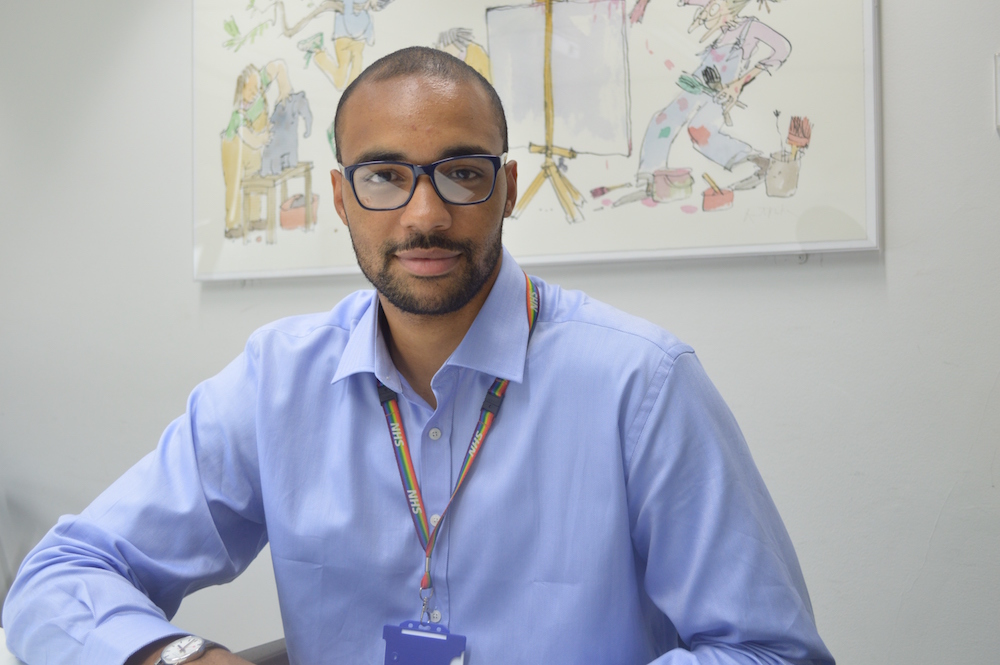
Meet the NHS nurse who wears his rainbow lanyard with pride so that LGBT patients have a visual sign on who they can confide in on LGBT issues.
CREDIT: CNWL Communications
“Why I wear the rainbow lanyard”
The following is an excerpt of an article that will appear in full in the next issue of the Trust Body and Mind magazine.
When he was younger, David Van De Velde had no one to turn to on matters LGBT- Lesbian, gay, bisexual, transgender. That’s why the clinical team leader, and qualified mental health nurse wears the rainbow lanyard with pride.
“For me, the reason I wear it now is to try and help others in the same situation, because I didn’t have anyone to help me with that. It’s about trying to change things from the ground,” he says.
And David, who was recently elected co-chair of the Trust’s LGBT network knows first-hand that the lanyards work.
“Because I’m wearing the lanyard they feel comfortable enough to confide in me and ask me things, for information or talk to me about things they wouldn’t be able to talk to anyone else about for fear of judgement,” says David.
LGBT patients who approach David tend to have common concerns and questions, including where to find support for abuse, identity crises, loneliness and suicide, and how to connect with other LGBT people.
LGBT patient experience
The lanyard initiative was rolled out after a 2012 survey found that a majority of patients at The Gordon and St Charles Hospitals didn’t feel supported or able to disclose their LGBT status to hospital staff.
The Trust wanted to change this. The LGBT Allies got to work. It introduced the rainbow lanyards across the Trust, and a number of measures aimed at tackling the issues, including a communications campaign and training sessions for staff, led by LGBT advocates.
Alison Devlin, Equalities and Diversity Manager requested another survey in 2015/2016 to see if anything had changed for patients. The results were far better, with an increase in patients saying there was no issue around their LGBT status. Patients said the rainbow lanyards were positive and reported feeling safe around staff wearing them.
LGBT and an ethnic minority
At the moment, David’s on a rotational programme where he gets placed in four different specialisms across the Trust every six months, so he gets around a lot. Despite the good that he’s doing, he admits that he’s been subject to abuse when wearing the lanyard because he’s not just a member of the LGBT community but also an ethnic minority.
“People hurl homophobic abuse. People from part of my racial background (in my case I’m mixed-race) saying that I have made the wrong choice and that sort of stuff. You get a lot of abuse from people but I’m not doing it for them. I’m doing it for the four or five people who come to me a week, and that could be the moment it changes their life,” he says.
“I did get some negative abuse by patients who didn’t understand it. I mean a lot of them would come and apologise later but I think it’s worth it though because if you can save someone from killing themselves because they don’t accept who they really are, and they can confide in you. I did actually have a case like that where somebody came forward, who I don’t think had worked out himself who he really was yet. I think if he had not had that contact… because before he came in he had tried to commit suicide as he wasn’t happy and his family weren’t happy with his direction. I think that by seeing the lanyard he was able to come and speak to me about things and I was able to give him more information.”
David is now the face of a new Trust campaign to promote the rainbow lanyard.
Read the full article in the next issue of our Body and Mind magazine, out soon.
The Court of Appeal has upheld a High Court judgement which ruled NHS England has the legal power to fund PrEP.
(C) marcbruxel Depositphotos
NHS England claimed earlier this year that it does not have the power to commission PrEP but a judicial review brought by the National Aids Trust determined that NHS England could commission PrEP. NHS England appealed this ruling on Thursday 15 September 2016.
PrEP is a ‘game-changing’ pill that, when used alongside condoms, testing and treatment, could help bring the beginning of the end for HIV.
The Court of Appeal issued its ruling on their appeal today, in a judgment that confirms that NHS England can legally fund the HIV prevention drug PrEP.
Ian Green, Chief Executive of Terrence Higgins Trust, said,
“PrEP is nothing short of a game-changer and, if used alongside condoms, regular testing and treatment, it could be the vital piece of the puzzle to help end the HIV epidemic for good.
“Two courts have now ruled that NHS England does in fact have the legal power to fund PrEP. It is time for NHS England to do the right thing and respect its legal duty to consider funding this highly effective treatment.
“The conduct of NHS England around the funding of this treatment has reminded us that, 30 years on, HIV is still stigmatised in a way that many other health conditions are not.
“Every day the NHS delays access to PrEP, 17 people are diagnosed with HIV – and the lifetime cost to the NHS for each diagnosis of HIV is £360,000. PrEP must be prioritised and made available now to those at risk.
“There is still a long way to go before people at risk have access to this groundbreaking pill that will protect them from HIV – but thanks to today’s decision, we are a step closer to a world without HIV transmissions.”
Cllr Kevin Davis, London Councils’ Executive member for health, said,
“We are pleased that the court has stood by the original judicial review decision that NHS England can be held responsible for funding the HIV prevention drug PrEP, which we have always said.
“Now the appeal has reached its conclusion, we urge NHS England to consider the results of its public consultation on PrEP and make a swift decision on how the drug will be made available.
“HIV is a big issue for London as nearly half of all people living with HIV in the UK live in the capital and 57 per cent of new HIV diagnoses are in London.
“Given these worrying statistics, it is crucial to use all available methods, including PrEP, to protect people at risk of contracting HIV and reduce rates of infection, particularly as the long term impact and cost of living with HIV are significantly greater than prevention.”