Tag: Nicola Sturgeon

All the latest breaking news on Nicola Sturgeon. Browse THEGAYUK’s complete collection of news, articles and commentary on Nicola Sturgeon.

  • Read First Minister Nicola Sturgeon’s full speech on pardoning men convicted for gay sexual activity

    Here’s the full speech that was given by First Minister, Nicola Sturgeon, setting out Scotland’s apology to gay men convicted of sexual activity which is now legal.

    Presiding officer,

    I am grateful for this opportunity to address the chamber. Today marks an important milestone in achieving true equality for Scotland’s LGBTI community.

    This morning, the Historical Sexual Offences (Pardons and Disregards) (Scotland) Bill was published.

    Scotland has travelled so far in recent years, in relation to LGBTI equality, that it still shocks us to recall that as recently as 1980 – well within my lifetime – consenting sexual activity between men was still classed as a criminal activity in this country. And the age of consent was only lowered to 16 in 2001, two years after this parliament came into being. Before then, hundreds of people in Scotland were liable to be convicted as criminals, simply for loving another adult.

    Presiding Officer, the words inscribed on this Parliament’s Mace set out the values which we seek to uphold and promote – integrity, wisdom, justice and compassion. Yet even within the lifetime of this parliament, this nation’s laws have created suffering and perpetrated injustice.

    The legislation we have published today addresses that injustice. It provides an automatic pardon to men convicted of same-sex sexual activity that would now be legal.

    In addition, the bill establishes a new procedure, so that people can apply to the police for their offence to be disregarded from criminal records. This means it will never appear on a disclosure certificate.

    The legislation therefore has both a symbolic and a practical value. The pardon sends an unequivocal message to anybody convicted of an offence for an activity which is now legal. The law should not have treated them as criminals and they should not now be considered as such. Instead, this parliament recognises that a wrong was done to them.

    And the disregard has an important practical consequence. It allows people to ensure that their past criminal record will no longer have an impact on their day to day life. And that will change people’s lives.

    At present, as the Equality Network and others have highlighted to us, there are some people convicted merely of showing love and affection to their partner, who still have to explain their criminal record every time they move job or apply for a promotion. That is unacceptable and we are determined that it will end.

    So the bill we are publishing today rights a historic wrong.

    However Presiding Officer, I want to go further today and do something that legislation on its own cannot do. A pardon is, of course, the correct legal remedy to apply for the convictions we are talking about today – but the term “pardon” might still, to some people, imply that Parliament sees them as having done something wrong. That is, after all, a common context in which a pardon might be granted.

    However, as all of us know, that is not the case here. For people convicted of same sex sexual activity which is now legal, the wrong has been committed by the state to them, not by the individuals. Those individuals deserve an unqualified apology, as well as a pardon.

    That apology can only come from the government and from Parliament – not from the justice system. After all, the courts, prosecutors and the police were enforcing the law of land at the time.

    The simple fact is that parliamentarians in Scotland over many decades supported or, at the very least, accepted laws which we now recognise to have been completely unjust.

    Those laws criminalised the act of loving another adult; they deterred people from being honest about their identity to family, friends, neighbours and colleagues; and by sending a message from parliament that homosexuality was wrong, they encouraged rather than deterred homophobia and hate.

    So today I, as First Minister, categorically, unequivocally and wholeheartedly, apologise for those laws, and for the hurt and the harm that they caused.

    Nothing this parliament does can erase those injustices. But I hope that this apology, alongside our new legislation, can provide some comfort to those who endured them. And I hope that it provides evidence of this parliament’s determination, in so far as we can, to address the harm that was done.

    The final point I would make is that while today’s legislation marks an important milestone in Scotland’s progress towards LGBTI equality, our journey is not yet complete.

    Considering how recently it is, that the laws I have just discussed were in force, it is remarkable, and indeed inspiring, that Scotland is now considered to be one of the most progressive countries in Europe when it comes to LGBTI equality.

    Indeed, one of the proudest moments of my 18 years as an MSP – and, I know, one of the proudest moments for many MSPs across this chamber – was in February 2014, when people from all parties came together to support equal marriage.

    But as all of us know, until we live in a country – in fact, until we live in a world – where no young person suffers hate or fear or discrimination or prejudice, simply because of their sexual orientation or their gender identity, then we have still got work to do.

    That’s why have promised to improve our gender recognition legislation. We know that we need to ensure that it reflects the experiences and the needs of transgender and intersex people.

    It’s why I attach such importance to the Scottish government’s work with the TIE campaign – ensuring that our young people do not have to fear bullying in school.

    It’s also why we are reviewing hate crime legislation – to ensure that our laws provide the right protections against bigotry and hatred.

    And it’s why I hope that today’s apology – in addition to its specific significance for gay men – sends out a wider signal to the LGBTI community. The Scottish Government and the Scottish Parliament are utterly committed to delivering true equality for LGBTI people in Scotland. Wherever there are societal, cultural, legislative or regulatory barriers to achieving that, we will seek to remove them. We will never again accept laws or behaviours which discriminate against you and hurt you.

    And so although today is a day for looking back and apologising for past wrongs, it is also a day which points to a better future.

    And it is a day when this chamber promotes, and lives up to, our shared values – integrity, wisdom, compassion and justice.

  • Gay Scottish Men Who Had ‘Illegal’ Sex Pardoned


    Due to licensing this article must be read on our website

    Scotland is on the verge of pardoning thousands of gay men once convicted for having sex. Under Scottish law, consensual homosexual acts between men were considered a crime until 1981. A new bill would pardon everyone who was prosecuted under those laws, living and dead. (more…)

  • SNP seeks assurances from Theresa May that the DUP won’t halt LGBT+ equality

    The SNP has sought assurances from the government that LGBT+ equality would be preserved and advanced after the Conservative Party struck a deal with Northern Ireland’s anti-gay Democratic Unionist Party.

    SNP Equalities spokesperson Angela Crawley said the Tories “have questions to answer” on equality after a confidence and supply deal was struck yesterday between the Government and the DUP which would keep Prime Minister Theresa May in power without formalising a coalition.

    The DUP “agrees to support the Government on all motions of confidence and on the Queen’s speech; the budget; finance bills’ money bills, supply and appropriation legislation and Estimates,” as well as any legislation pertaining to Brexit. In return, a “coordination committee” will be convened to “ensure the necessary support can be established by both parties,” which could give the DUP say on any bills the government seeks to introduce.

    “LGBTI people across the country have deep concerns that the Tory backroom deal with the DUP could halt progress on equality,” Ms Crawley said. “Before the election, Theresa May and Ruth Davidson both committed to changes in the law to improve LGBTI equality – but these commitments were entirely absent from the Queen’s Speech,” she said.

    Davidson, the leader of the Scottish Conservatives, earlier this month said that she had been assured that the deal would not hinder LGBT+ rights. “I asked for categoric assurance that if any deal or scoping deal was done with the DUP there would be absolutely no recession of LGBTI rights in the rest of the UK, in Great Britain, and that we would use any influence that we had to advance LGBTI rights in Northern Ireland,” she told the BBC. “It’s an issue very close to my heart and one that I wanted categoric assurances from the prime minister on, and I received [them].”

    The DUP themselves have promised that they have no desire to roll back equality measures elsewhere in the country. “We want to ensure that every one of the LGBT community have rights and their rights will be maintained, the DUP equality spokesman Jim Shannon told Premier Christian Radio. “There’s going to be no changes to that whatsoever.”

    Still, the DUP’s opposition to same-sex marriage in Northern Ireland – which it has used peace deal powers to oppose – and support for a “conscience clause” to allow businesses to discriminate against LGBT people on religious grounds has caused concern for many activists. Protests against the deal have occurred since the election resulted in a hung parliament, with the campaigner and Guardian columnist Owen Jones warning that “an alliance with the gay-hating DUP extremists threatens the Northern Ireland peace process”

    It could also threaten progress on LGBT rights, warns the SNP. “Will the Tories finally amend same-sex marriage legislation to allow couples from Northern Ireland, and elsewhere, to convert their civil partnerships to marriage? If not, why not?” asked Angela Crawley, who also wanted to know if the government will extend discrimination protections to all LGBTI people and eliminate inequality in pension rights, as well as extending gender recognition reforms passed by Holyrood to the rest of the UK.

    Indeed, the DUP has already sought to interfere with LGBT rights in Scotland. Arlene Foster, the DUP leader and erstwhile First Minister of Scotland, sought to prevent Northern Irish citizens from accessing same-sex marriages in Scotland. Scotland allows couples from Northern Ireland (and elsewhere) to convert their civil partnerships to marriage without having to first legally divorce.

    Foster expressed her opposition to this in a series of letters to former Scotland minister for community empowerment, Marco Biagi. She said that she sought to achieve “legal certainty” over the status of same-sex couples by “exclude[ing] civil partnership[s] which were entered into in Northern Ireland” from being converted to marriages. For his part, Biagi tweeted simply “I said no” to this request.

    Whether Foster and the DUP seek to interfere with LGBT equality through their new deal with the Conservatives and their place on the “co-ordination committee” between the parties remains to be seen. Regardless, Crawley plans to fight to ensure progress continues. “The SNP will continue to champion LGBTI equality in government at Holyrood, and SNP MPs will hold the Tory government to account at Westminster so that LGBTI equality does not fall of the agenda,” she said.

    It’s not just publicly that the SNP is defending LGBT+ rights. In a letter to Prime Minister Theresa May, Crawley expressed “concerns that LGBTI equality is being sidelined for reasons of political expediency.” She outlined a series of policies – from strengthening the Turing Law to ensure all those convicted of having gay sex are pardoned to devolving equality law to Holyrood – where the SNP feels the government must act. Whether Theresa May champions equality or the DUP exerts its influence to halt any advances, though, remains to be seen.

  • UK votes to leave EU

    UK votes to leave EU

    The United Kingdom has voted to leave the EU in a historic referendum which will end its 40-year tie to the European Union.

    The United Kingdom has voted to leave the EU after a historic referendum sees the Leave campaign win 51.9 per cent of the vote. The Remain managed to swing 48.1 per cent of the vote.

    The Leave campaign was headed up by Boris Johnson and the Remain was headed by Prime Minister David Cameron.

    David Cameron / Palinchak / Depositphotos


    Voters in England and Wales voted strongly to leave the EU whilst voters in Scotland, Northern Ireland and London (60 per cent stay) voted overwhelmingly to stay within the EU.

    The turnout for the referendum was 71.8% with over 30 million people turning out to vote.

    UKIP leader Nigel Farage said that the 23rd June would, “go down in history as our independence day”.

    Nicola Sturgeon
    CREDIT: Scottish Government images

    Nicola Sturgeon, leader of the Scottish National Party said that the way in which Scotland voted as a whole proved that it “makes clear that the people of Scotland see their future as part of the European Union,” leaving little doubt that Scotland could be staging their own, second independence referendum.

    Money Matters

    As the news broke at 6AM that the UK had voted to leave the EU, the pound dropped to its lowest level since 1985. Against the US dollar it hit $1.3305. Oil prices also slumped after the news with Brent crude falling 5.2 per cent.

    Against the Euro the pound dropped 7 per cent to €1.2085.

    Financial instability and drops were expected in the case of a Leave vote with many finance experts expecting the markets to rectify themselves in time. The Bank of England said it was monitoring the markets saying,

    “It has undertaken extensive contingency planning and is working closely with HM Treasury, other domestic authorities and overseas central banks. The Bank of England will take all necessary steps to meet its responsibilities for monetary and financial stability.”


    ALSO READ: Reaction to UK leaving the EU from the LGBT community

    ALSO READ: Prime Minister David Cameron to step down as UK’s Premier

  • Scottish Parliament holds one minute silence for Orlando victims

    Scottish Parliament holds one minute silence for Orlando victims

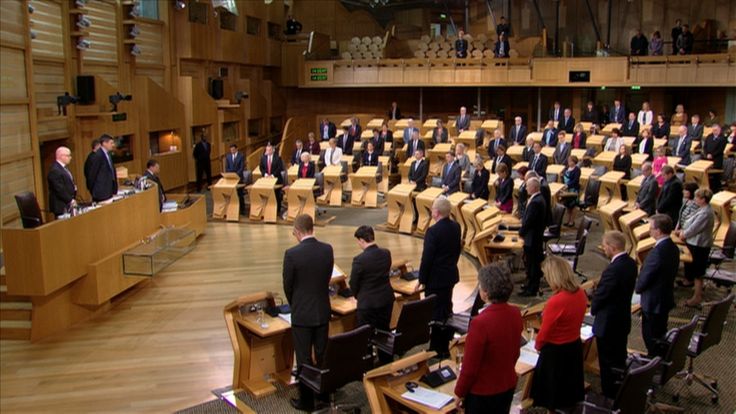
    Members of the Scottish Parliament fell silent to remember those who were massacred in the Orlando gay club shooting.

    Minute Silence in Chamber

    Scottish ministers held a minute silence yesterday in memory of the Orlando gay nightclub massacre victims before going on to discuss the importance of LGBT+ education in Scottish schools.

    Forty nine people were killed by a single shooter in the Pulse nightclub in Orlando over the weekend, in the worst single act of violence against LGBT people this century.

    Patrick Harvie, the co-convener of the Scottish Green Party, questioned First Minister Nicola Sturgeon on her plans to tackle homophobia in Scottish schools, after she lent her support to the Time for Inclusive Education (TIE) campaign, which is calling for school staff to be trained in how address LGBTI issues, during this year’s parliamentary election.

    He said,

    “There are, sadly, still people – including young people – subjected to the ideology that says certain sexual orientations or gender identities are inherent moral defects.”

    “The First Minister has described herself as a huge supporter of the TIE campaign – how long will it be before all schools in Scotland actively promote the equality and dignity of all of their young people, including LGBTI young people?”

    Nicola Sturgeon, Scotland’s First Minister, who has committed to the idea of better LGBT+ education, but failed to put in place a timetable to implement strategies said,

    “I don’t want to live in a country, yet alone be First Minister of a country, where any young person has to feel that, somehow, because of their sexual orientation or gender identity, they are subject to judgement or made to feel in any way less than any other individual in our society. I have given a commitment to working with the campaign for inclusive education.”

    “The Scottish Government will continue to work to ensure that, whether it’s in a school or any other part of our society, the environment for any young people growing up – regardless of their sexual orientation or gender identity – is one in which they feel comfortable.”

    Sturgeon also encouraged MSPs to attend Scottish prides in 2016 saying that politicians needed to stand “shoulder to shoulder” with the LGBT+ community.


  • LGBT Inclusion In Scottish Schools Is Important For Nicola Sturgeon

    LGBT Inclusion In Scottish Schools Is Important For Nicola Sturgeon

    Scottish First Minister Nicola Sturgeon has stated that she will work with campaigners from TIE (Time for Inclusive Education) as she accepts that there is still “more to be done” to tackle homophobia in schools.

    Nicola Sturgeon
    CREDIT: Scottish Government images

    Sturgeon’s vow came as she set out her proposals to ensure that a “leap forward” is made for LGBT+ rights over the next Scottish parliament. At an LGBT+ hustings on Thursday evening (31/03), attended by all party leaders, Sturgeon praised the “impressive” work of TIE and urged whichever party forms the next Scottish government to work with the campaigners.

    She stated:

     “At our conference, we had a moving debate and passed a motion in favour of inclusive education. I think what Time for Inclusive Education are doing is impressive and I hope that whoever forms the next Scottish Government will work with them, as we will.”

    The move follows the unanimous passing of a motion in support of TIE by SNP members at the party’s spring conference earlier this month, which committed the SNP to creating an education system that is fully inclusive of LGBT+ identities and relationships within the next parliament, in order to promote a “safe, equal and accepting environment for all of Scotland’s young people”.

    The topic of inclusive education has been propelled by TIE’s campaigners over the past year and Sturgeon’s support marks a significant turning point for the movement, coming just hours after the campaign argued that the SNP’s proposals for achieving LGBT+ inclusive education must go further.

    Earlier in the evening, Sturgeon announced the SNP’s strategy, which included a focus on providing equality training for new, guidance and promoted teachers “so they are confident in tackling prejudice-based bullying”, and ensuring that “all children and young people learn tolerance, respect, human rights” to prevent prejudice and discrimination.

    However, TIE’s campaigners argued that the strategy announcement did not go far enough, claiming that LGBT+ specific teacher training is required, stressing that “the next strategy to tackle homophobia has to be the right one”.

    Commenting on the news of the First Minister’s support, a spokesperson for TIE stated: 

    “We are pleased that Nicola has agreed to work with us and we welcome her support. Her party’s current proposals do not go far enough and it is vital that the next strategy to tackle LGBT-phobia in Scottish schools is the right one – for too long we have dealt with a Section 28 hangover, the next Scottish Government must tackle this properly. We are happy to work with the SNP, and all other parties within the next parliament to ensure that our education system is inclusive of LGBT+ identities.”

    All party leaders agreed with TIE’s calls for a commitment to improving accessibility to LGBT+ specific teacher training, with co-convener of the Scottish Green Party Patrick Harvie highlighting that faith schools must not be exempt from any strategy proposals.

    Support for TIE’s movement for LGBT+ inclusive education has continued to grow, with Harry Potter actress Emma Thompson being the latest celebrity to endorse the campaign and call for an end to homophobia in Scottish schools.

    Sturgeon later stated that: 

    “We must show leadership and courage in supporting LGBT+ equality. We have to have guts and lead by example.”

  • Six things we learnt this week Ed Says No, Erections, Newzoids, Gay Cures, Hopkins and Sue

    With the opposition leaders raging, sorry debating each other this week, we found that Ed Miliband is not prepared to go into partnership with Nicola Sturgeon’s SNP party.

    (Source Daily Mail)

    We finally found out why we men get a stiffy in the morning… Thank goodnness (Source TheGayUK)

    Newzoids, ITV’s long awaited satirical look at modern life didn’t quite fulfil our wishes and needs. ( Source: Telegraph)

    40,000 people said no to a Christian church bringing gay cure speakers to the UK. (Source TheGayUK)

    Petition overdrive demanding that The Sun fire Katie Hopkins over her “gunship” article . (Source: Huffington Post)

    Sue Perkins leaves Twitter after hateful homophobic trolling (Source Guardian)