Tag: Sex Education

All the latest breaking news on Sex Education. Browse The THEGAYUK’s complete collection of features and commentary on Sex Education.

  • COMMENT | What is ‘queer theory’ and why are people using it to become problematic?

    COMMENT | What is ‘queer theory’ and why are people using it to become problematic?

    Until a rather problematic article by Conservative Women writer, Caroline Ffiske appeared online recently, I must admit that I wasn’t very educated on the idea of “Queer Theory”. But apparently, it’s something that we all should familiarise ourselves with because we need to protect our children from it.

    Here we go again. Another homophobic article wrote by a privileged white person who really doesn’t have a fucking clue what they’re talking about.

    So, what exactly is “Queer Theory”. Well, according to Ffiske is it based on the 1960’s neo-Marxist idea that our sexual acts and sexual identities are ‘socially constructed’. Apparently, the focus of ‘queer theory’ is all about the personal and the private and what people deem as normal can be challenged as so form of social construct and that basically what goes on in the bedroom should stay in the bedroom and not be brought out into the light of day. The article then goes on to suggest that sex should remain as an “extraordinarily intimate act which touches our soul and goes to the heart of our human experience”. Clearly, she’s never had a one-night stand. Ffiske also goes on to imply that we are normalising and encouraging sex among teenagers.

    Let’s be very clear about this. Teenagers are going to have sex. They are going to have straight sex, gay-sex, threesomes, oral sex, anal sex because that’s what teenagers do. It’s not about normalising it; it’s a fact of life. I remember being a horny teenager and wanting to bone everything that was on two legs. Well, within reason. But isn’t your teenage years and your early adult years all about – experimenting? It’s about finding what you like and what you look for in a sexual partner. Your teenage years are about discovering who you are as a person. For some, that is quite straightforward, but for others, it’s a struggle. You grow into yourself as a person and sometimes that doesn’t fit with social stereotypes. Surely, we should be encouraging this exploration. We should encourage conversations for teenagers because that’s how we learn and break down social stigmas and prejudice.

    Laying the blame for sexual exploration at the door of the gays

    What Ffiske is actually doing, and probably doesn’t realise it, is laying the blame for encouraging sexual exploration at the door of the gays. Whilst it might be true that gay men can be very promiscuous and have multiple sexual partners during their life, it’s not fair to blame it on them. Historically, the queer theory was born out of a movement of living your life as the way you fit and how you want to. It’s about how you want to identify and isn’t having the choice to do that is the best thing for us to have in society. If you want to identify as a man or a woman or be trans, you’ve got that choice, because you have been struggling with the thoughts inside your head as a kid. It’s not been pushed on you, and the media don’t push it on anyone. It’s about education and allowing conversations to happen. Just because you don’t fit into a box, it doesn’t mean you are a freak and should be banished to an island. You should be allowed to live your own life as you want to. Bollocks to anyone else.

    Ffiske talks about sex, and specifically anal sex as being degrading. She says that “young women feel that they do want to take their virginity seriously and that their psychological well-being is at stake if they are encouraged not to do so”. Let’s look at this in the broader sense. The first time for anyone is going to be something that you remember because let’s be honest – it’s never the best. It’s often clumsy, clunky and extremely uncomfortable, but it’s a part of life. I’m not saying that people don’t take that decision lightly to become sexually active, but it’s not always as black and white as that. Teenagers are hormonal, they are going to have curiosities about sex. Isn’t it more dangerous not to educate them about it? Let’s look at teenage pregnancy in the states, for example, a study in 2019 by the American Journey of Public Health showed that in states where sex education is more abstinence-based, the education actually contributed to an increase in teenage pregnancies.

     Surely if we are not having more open conversations about safe, consensual sex then we’re doing the younger generation a disservice.

    The problem isn’t about over sexualising teenagers. The problem is really that people think they have a right to dictate and decide what’s best of other people when they have really not got a clue about what they might be going through. The ones that that feel threatened by queer theory are those that have absolutely no idea about what being different or being queer is all about. It’s not a walk in the park. It’s often a long dark road with bumps and kinks in it. Discovering where you fit into society. How you are accepted by society and what prejudices you’re gonna encounter.

    I want to side-step for just a second because I think this is important. It’s not just queer equality that is under threat from the right-wing. But equality as a whole is under threat when there are MPs in parliament like Ben Bradley who is calling on more rights for white straight men because he thinks that they are underrepresented. In a speech in the House of Commons this week; Bradley stood up, and with a very straight face, went on to moan that there is a minister for women but not men, complained about more women than men in higher education, and mourned the death of “banter”. He said that; “men are often talked about, all too often, as a problem that must be rectified”. Oh, Ben. Going on to then condemn the Equality Act as being “willfully and regularly misapplied across gender, race, and every other characteristic”. Asserting the importance of “holding the door open for a lady”, expecting a man to “provide for his family”, and “wanting to be a man’s man” who goes “down to the football at the weekend” and has “some banter with the lads”. Bradley then complained; “that banter is now bullying”.

    There is nothing that riles me more than a straight white man complaining that they aren’t represented.

    He’s clearly never experienced prejudice for being a straight white man. Bradley also went to say that he wants “straight equally protected as gay”. Can someone enlighten me, in how many countries you can be executed or imprisoned for being straight? Or how many victims there are of anti-straight hate crimes in the UK? Not surprisingly, the government have also ended funding aimed at reducing homophobic bullying of LGBT+ students in schools in England, just as new research by the Diversity Role Models (DRM) shows that just 27% of students think that their school is a safe space for classmates to be themselves. Leading LGBT+ charity Stonewall has started a new hashtag initiative allowing members of the community to tell people about their experiences at school. Have a read through some of the stories using hashtag #LGBTatSchool.  

    Back to queer theory though, Fiske’s article finishes with a quote from Oscar Wilde saying, “we are all in the gutter, but some of us are looking at the stars”. She thinks that Queer Theory is pulling us all into the gutter and diminishing rather than dignifying. Well, if we’re in the gutter, then the gutter to me is pretty fabulous. Come join us here – because we are living our best lives. But more importantly, take some time to educate yourself. It’s all very well to sit and say that you should do this, or you shouldn’t do that, but that’s not for us to decide – it’s up to the young person

    I’ve said this so many times now, but I just keep coming back to it. Education is the power to change. Educate our young people that there are different types of families. Educate our kids on the importance of safe sex. Encourage conversations between youngsters. Let them make the decisions that they want to make, but make sure they are given the facts. Not what you think is right. And if you feel threatened by queer theory, don’t just blast it as not the normal thing. Take some time to research about that being queer in 2020 is like and what queer relationships genuinely look like. You never know; you might learn something. It’s not about being a snowflake or being ‘woke’ but it’s about teaching our young people that equality a right – not a privilege.

  • The Difficult Second Column

    The Difficult Second Column

    I know, when popstars come to writing their second album it’s often referred to as the “difficult second album”. Who would’ve thought I’d have that problem when it came to be writing this little column for you all?

    I suppose, I would like to start by saying – Thank you! I have received a lot of love on social media about it, and I think it’s done the job I wanted it to do by making people ask questions as to whether they are doing enough to help support their local communities. It’s important now, more than ever, that we continue to invest in our safe spaces and show them some appreciation. This lockdown and epidemic has been tough on everybody and we’re all bound to be anxious over what this new normal is going to be, and how we will have to adapt to a socially distant society. We all need to show a bit of love, support and understanding, and show we care.

    The best thing to come out of having this column, is having a voice within the community – which, is a little strange to me, because for a long time when I moved to London, I didn’t feel like I really belonged to the community.

    I really struggled to find my place.

    silhouette, girl, dance
    Photo by geralt on Pixabay

    Deep down, I knew I was gay when I was in my early teenage years, but I didn’t have a role model or any form of support to help support me. I’d never been to a gay bar before I moved to London. To this day, I can remember my first proper night out on the Gay Scene in London. I’d been in London for a couple of weeks at that point, and I was so eager to experience all the very thing I had spent my summer researching. It wasn’t even a conventional night out with my university course mates. I met a bloke on Grindr one Saturday afternoon and he’d invited me to meet him for a few drinks in Soho and he offered to show me around. He was a nice enough guy, I didn’t fancy him, and there was nothing sexual about it. He was just a few years older than me, and it was really nice to meet someone who was happy to show me around and introduce me to the scene.

    It was painfully obvious to me that night that I would have a problem really fitting in with the “scene”. I knew I was different to everybody else. I knew that my size was going to hold me back. Being a fat guy, it almost labels us automatically as being unattractive and unworthy of attention. I remember being on the dance floor in Heaven that Saturday night, both having an incredible night in a space that felt safe, and yet feeling completely alone.

    There were so many six-packs and chiselled bodies and then there’s me, in an oversized top from Primark and comfortable jeans, trying to hide just enough of my body that I felt comfortable. So, even from the start of my journey of self-discovery it really felt like I was fighting an uphill battle with myself. I look back now and wish at the time I made that conscious decision to make that change when I was younger. Instead, I continued to eat my feelings and I made no attempt to lose weight.

    It wasn’t until my mid-twenties when I started to feel that I was letting myself down and I had to make that change, because I felt I was missing out on important life milestones because I couldn’t find happiness in a relationship.

    It’s clear to me now, that the problems I had stemmed back to my childhood. I was born in 1992, into a middle-class working family, in a very conservative, stuck in the past community. I was at school towards the end of when Section 28 was still in effect and I was heavily bullied as a kid – teachers couldn’t really stop that. Sure, they could reprimand someone for calling me fat, or specky four eyes. But if someone called me a faggot or a queer, which happened quite often, they couldn’t do anything. That really hurt me, and it still does today. They knew that it was wrong, but there weren’t in a position to really combat it.

    The repercussions of Section 28 put young queer kids at risk for not having a sex education that was relevant to them. They didn’t have any understanding or advice as to what a healthy relationship was the for them.

    Some developed worrying behaviour that could put them in danger, such as excessive alcohol and substance abuse as well as sex with much older men, which could sometimes result in a sexually transmitted disease or a positive HIV test result. Teachers now have a duty of care over young people to educate them, and some people still feel a bit angry to this day that they weren’t supported and let down during a crucial and pivotal part in their development and education.

    I guess, I kind of fall into this remit. I was never taught about same-sex relationships in school. It was brushed under the carpet. We were never exposed to that as kids so – we really didn’t understand what these relationships looked like. Our only real understanding of it was from the limited access to queer representation on television.

    We were reduced to watching programmes such as Queer as Folk, which were truly ground-breaking at the time to show such explicit material, under the cover of darkness with the volumes on the lowest possible settings on the TV sets. Representation has improved over recent years, with more and more openly gay people visible on television, and more openly gay character in the mainstream media, paving the way for education for younger generations. It’s put pressures on TV Shows and the Media to show them in a positive and healthy way, to help fight the comeback following section 28.

    We have come a long way since then, but we’ve got a long way to go. LGBT+ characters in mainstream television are often thought as an afterthought by creators, with producers and directors ticking through diversity checklists to make sure there is representation. We exist and we are a part of normal society – represent us as who we are. We’re not all butch lesbians and raging bitchy queens.

    June is Pride Month, and for the first time since the Stonewall riots we are unable to march and celebrate Pride in the way we’ve done in the past. Even in 2020, we see people questioning Pride Month. Sadly, I’ve seen a number of comments on social media from people asking we don’t have a Straight Pride. To me it’s a ludicrous argument.

    When have white heterosexual people ever been discriminated against? When was it illegal to kiss their partner in public? When were they forced from their homes into refugee camps for being straight? When were they killed for being straight? Well, we all know how that turned out when they tried that in America. They don’t have Straight Pride – but they do, however, have International Clown Week – maybe they can attend that?

    The British based charity, Stonewall, posted some statistics online in early 2020 stating which I found to be staggering and pretty upsetting. Stonewall posted statistics stating that; 26% of lesbian, gay or bisexual people alter their behaviour to hide their sexual orientation in order to avoid becoming the victim of a hate crime. 48% of trans people under the age of 26 said that they had attempted suicide, and 30% of those had done so. A staggering 59% said that they had considered doing so, and finally – a quarter of the world’s population believes that being LGBT should be a crime – and although we’ve come a long way in sixty years – shows that there is a long way still to go in our fight.

    For me, the future starts with education.

    Wokandapix / Pixabay

    Relationships are something that should be taught in schools, and children have a right to understand that same-sex relationships are a perfectly normal thing. It should be taught that it’s normal to have two mummies or two daddies. Having an LGBT-inclusive education ensures that those with LGBT families see themselves reflected in what they learn. It also will encourage all young people to grow with inclusive and accepting attitudes. It will also teach them about what a safe and healthy relationships look like and how to have them. Better reflecting the world in which we live in, and subsequently covering important issues like consent and online safety.

    Having this understanding from a younger age, can only help to stamp out homophobia. It’s not going to be a cure, but I hope it goes a long way.

    There has been no evidence, that I have been able to find, to suggest that predators have used the provisions of the Equality Act 2010

    To further our movement, we have to continue to call out bigotry, homophobia and hypocrisy when we see it. A Tory MP posted a message on social media to celebrate Pride Month – immediately, its hypocrisy was called out. If there is one thing in this world, I cannot stand is a double standard. You cannot show messages of support for our community, when your government is actively looking to roll back Trans rights by scrapping a review of the Gender Recognition Act. It just doesn’t work that way! Trans people have been using toilets, or trying on clothes in changing rooms, accessing domestic violence support, and getting on with their lives as for as long as single-sex spaces have existed.

    There has been no evidence, that I have been able to find, to suggest that predators have used the provisions of the Equality Act 2010 to gain access to women’s spaces. If there was, then it would be shouted from the rooftops by anti-transgender lobbies.

    Trans men are men, Trans women are women. The same government promised to ban Gay Conversion therapy two years ago – and yet we’re still waiting.

    So, whilst I’ve got this voice, I am going to use it as a platform to help forward our movement in any way that I can. We’re also going to keep it light and entertaining. You’ll get to hear some of my crazy overseas stories, find out what makes me tick and what rubs me up the wrong way.

    I want to give you an honest reflection of my life – share some of my experiences and tell you more about my disastrous attempts at finding love. I hope you enjoy the journey!

  • What is Netflix’s Sex Education about?

    What is Netflix’s Sex Education about?

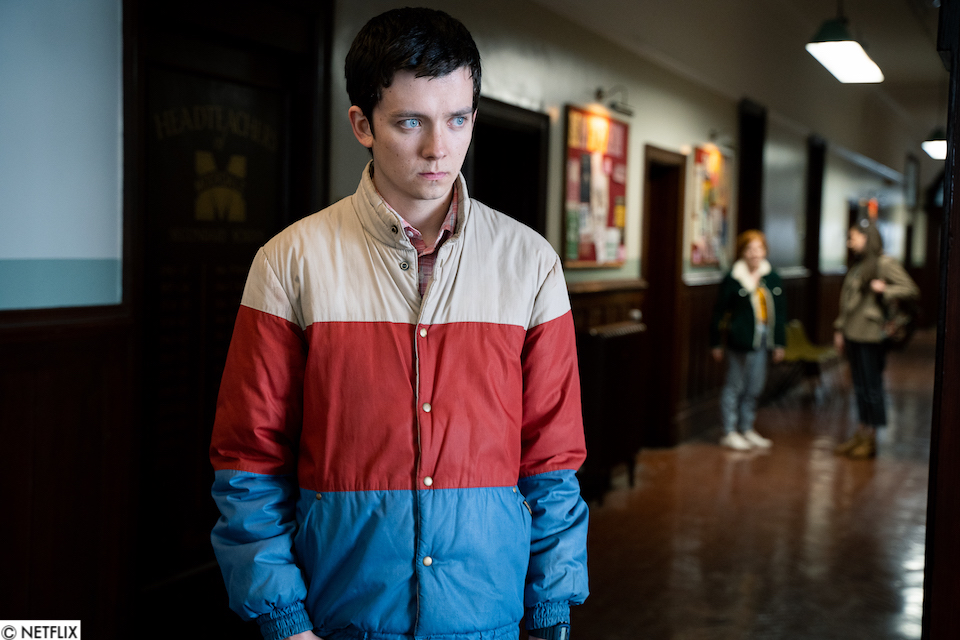
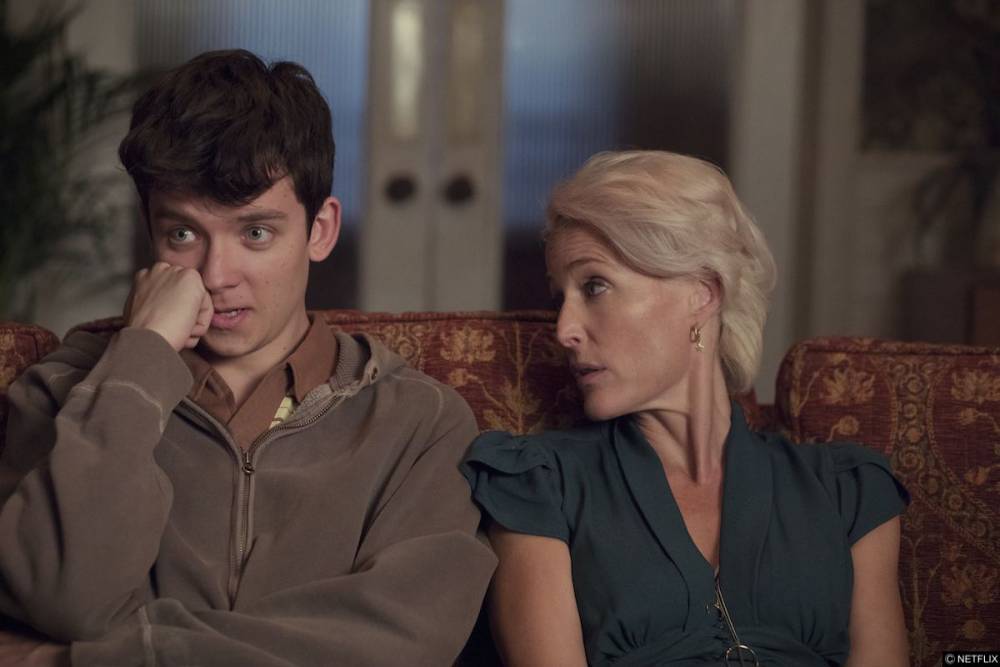
    Sex Education is about Otis Milburn, a socially awkward high school student who lives with his sex therapist mother, Jean.

    In season 1 Otis and his friend Maeve Wiley set-up a sex clinic at school to capitalise on his intuitive talent for sex advice.

    In season 2, as a late bloomer, Otis must master his newly discovered sexual urges in order to progress with his girlfriend Ola whilst also dealing with his now strained relationship with Maeve.

    Meanwhile, Moordale Secondary is in the throes of a Chlamydia outbreak, highlighting the need for better sex education at the school and new kids come to town who will challenge the status quo.

    Maeve and Aimee’s BFF relationship is stronger than ever since Aimee ditched ‘the Untouchables’. 

    Eric notices his new-found self-confidence attracting unfamiliar kinds of attention.

    Adam is at military school, still conflicted by his feelings for Eric.

    Lily has hit pause on her sexual endeavours to focus on her creative talents and finds a newfound friend in Ola. 

    Jackson is forced to flex his mental rather than physical muscle and is still buckling under the pressure from his parents to succeed. 

    Jean and Jakob’s relationship is discovered and they have to learn how to operate as a blended family. Jean forms an unlikely connection with Mrs Groff and a friendship between the two women begins to form.

    When does the new season of Sex Education start on Netflix?

    The good news is that it has already started!

    Sex Education will return to Netflix with 8 brand new episodes in 2020.

    The series is written and created by Laurie Nunn and produced by Eleven. Season 2 is directed by Ben Taylor, Alice Seabright and Sophie Goodhart. Jamie Campbell, Laurie Nunn and Ben Taylor are also Executive Producers on the series.

    Who stars in Sex Education on Netflix?


    The series stars Asa Butterfield (Ender’s Game, Hugo), Gillian Anderson (The Crown, The Fall), Emma Mackey (The Winter Lake, Eiffel, Death on the Nile), Ncuti Gatwa (Stonemouth, The Last Letter From My Lover), Connor Swindells (The Vanishing, VS), Aimee Lou Wood (Louis Wain), Kedar Williams-Stirling (Will, Roots, Wolfblood), Chaneil Kular (Informer), Simone Ashley (Broadchurch), Mimi Keene (Tolkien, Close), Tanya Reynolds (Emma, Delicious), Mikael Persbrandt (Invisible Heroes, The Girl in the Spider’s Web, The Hobbit, King Arthur), Patricia Allison (Les Miserables, Moving On), Jim Howick (Broadchurch), Rakhee Thakrar (Four Weddings and a Funeral), Samantha Spiro (Game of Thrones, Tracey Ullman’s Show, Babs, Doctor Who), James Purefoy (Rome, Altered Carbon) and Alistair Petrie (Deep State, Rogue One, Night Manager).

  • Is the actor who plays Eric in Netflix’s Sex Education actually gay?

    Is the actor who plays Eric in Netflix’s Sex Education actually gay?

    Have you been watching the amazing new Netflix series, Sex Education – and has Ncuti Gatwa caught your eye?

    Is the actor who plays Eric in Netflix's Sex Education actually gay?

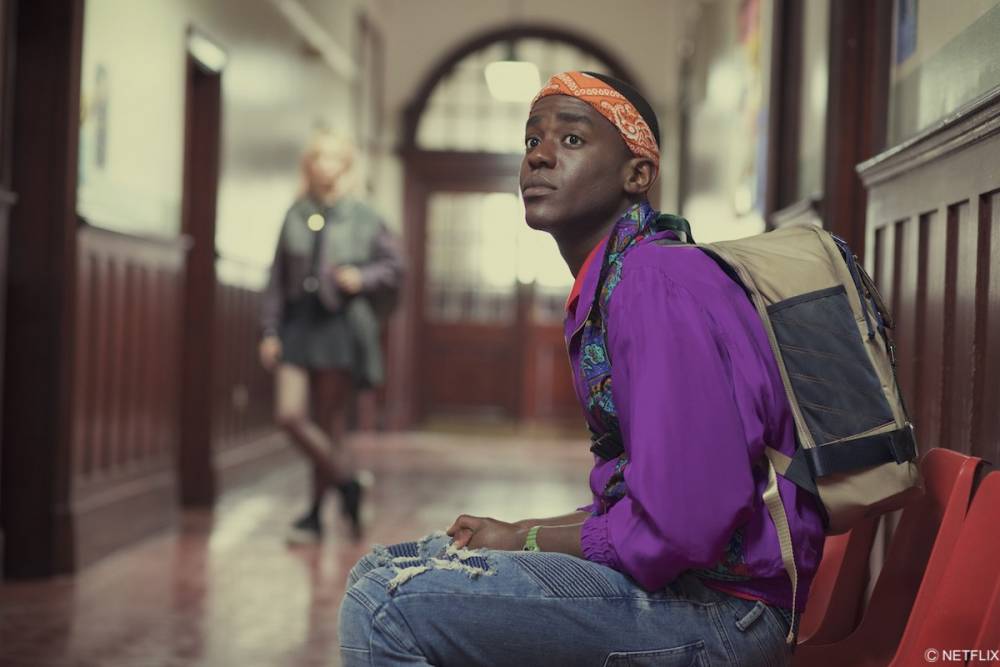
    Ncuti Gatwa is currently starring in the Netflix hit series, Sex Education as the openly gay character, Eric Effiong, who happens to be best friends with the main character Otis Milburn.

    For Ncuti, Sex Education is his first big break into television and he’s been universally acclaimed in his character as the POC gay-best-friend.

    The character that Ncuti plays is flamboyant, outgoing and not afraid to break from cisnormative behaviour, so is the actor anything like the character?

    Is Ncuti Gatwa gay?

    Speaking to Paper Magazine, he said that he wished that the show had been around when he was growing up because “it’s just important to see yourself represented”.

    Speaking about preparing for the role he said that he didn’t want the character of Eric to be a stereotype, he added, “We’ve seen the gay best friend caricature, and we’ve seen the black best friend caricature, and I really wanted to move away from that. Shout out to (creator) Laurie Nunn for writing such a well-rounded, fully-fleshed, gay black character, because you’re in danger of making him comedic relief. But he has such a beautiful and creative story arch in the show, so it was important to me that he wasn’t a stereotype.”

    Speaking about his own sexuality he revealed that he had a “thorough sex education from Scotland” because the Scottish government had introduced LGBT+ education into their curriculums, adding, “Everybody has to learn about LGBT history.”

    Is there a Season 2 of Sex Education?

    Netflix recently announced that it had ordered a second season of the popular series and it is expected that many of the original cast members will return for the second instalment. Netflix made the announcement on the 1st Feb, just weeks after the show’s debut on the streaming service.

    No date has been given for the start date of the second series, however, it is most likely to drop in 2020. Netflix tends to work in yearly cycles so it’s likely that the new series will be ready in January 2020.


    YOUR SUPPORT MEANS EVERYTHING

    Help us deliver unique, usable and reliable journalism that supports the gay, bisexual and curious community of the United Kingdom. Can you help protect LGBT+ media? Publishers like us have come under severe threat by the likes of Google and Facebook. The problem is that advertisers are choosing to put their money with them, rather than with niche publishers like us. Our goal is to eliminate banner ads altogether on site and we can do that if you could pledge us a tiny amount each month.

    We’re asking our readers to pledge just £1 per month, more if you’re feeling swanky. You can stop payment at any time.

    It’s quick and easy to sign up and you’ll only have to do it once.

    Click to start the journey and support THEGAYUK!

  • Sex Education on Netflix: When is series 2 of Sex Education coming to Netflix?

    Sex Education on Netflix: When is series 2 of Sex Education coming to Netflix?

    Sex Education dropped on Netflix in January and fans are already looking forward to season two, but when is it likely to stream?

    Sex Education is Netflix‘s popular comedy/drama about the son of a sex therapist who becomes incredibly popular at school when he starts dispensing sex advice to his classmate. The show was originally released on the platform in January and stars the likes of Gillian Anderson, Asa Butterfield and Ncuti Gatwa.

    Netflix recently announced that it had ordered a second season of the popular series and it is expected that many of the original cast members will return for the second instalment. Netflix made the announcement on the 1st Feb, just weeks after the show’s debut on the streaming service.

    No date has been given for the start date of the second series, however, it is most likely to drop in 2020.  Netflix tends to work in yearly cycles so it’s likely that the new series will be ready in January 2020.

    How many episodes will the second series of Sex Education have?

    The first series had eight episodes of the hit show, so the second series is likely to have the same amount of episodes, however, it’s not unexpected for Netflix to fluctuate the number of shows, with a usual minimum of eight episodes – so we could end up with a 10 or even 12 episode season of Sex Education.

    Laurie wrote six of the eight episodes of the first series of Sex Education.

    The episodes’ timing range from 46 minutes to 52 minutes long and all of them are available to binge on the streaming platform.


    YOUR SUPPORT MEANS EVERYTHING

    Help us deliver unique, usable and reliable journalism that supports the gay, bisexual and curious community of the United Kingdom. Can you help protect LGBT+ media? Publishers like us have come under severe threat by the likes of Google and Facebook. The problem is that advertisers are choosing to put their money with them, rather than with niche publishers like us. Our goal is to eliminate banner ads altogether on site and we can do that if you could pledge us a tiny amount each month.

    We’re asking our readers to pledge just £1 per month, more if you’re feeling swanky. You can stop payment at any time.

    It’s quick and easy to sign up and you’ll only have to do it once.

    Click to start the journey and support THEGAYUK!

  • Sex Education on Netflix: How many episodes are there of Sex Education on Netflix?

    Sex Education on Netflix: How many episodes are there of Sex Education on Netflix?

    Sex Education dropped on Netflix in January and has already won a flurry of support from viewers and critics alike.

    Sex Education is Netflix‘s popular comedy/drama about the son of a sex therapist who becomes incredibly popular at school when he starts dispensing sex advice to his classmate. The show was released on the platform in January and stars the likes of Gillian Anderson, Asa Butterfield and Ncuti Gatwa.

    There are eight episodes of the hit show, which was created by Laurie Nunn, who has also written a number of shorts, namely, Pregnant Pause, Radiance, and Gone To Earth.

    Laurie wrote six of the eight episodes of the TV Series Sex Education.

    The episodes’ timing range from 46 minutes to 52 minutes long and all of them are available to binge on the streaming platform. Netflix recently announced that it had commissioned a second series of the show.


    YOUR SUPPORT MEANS EVERYTHING

    Help us deliver unique, usable and reliable journalism that supports the gay, bisexual and curious community of the United Kingdom. Can you help protect LGBT+ media? Publishers like us have come under severe threat by the likes of Google and Facebook. The problem is that advertisers are choosing to put their money with them, rather than with niche publishers like us. Our goal is to eliminate banner ads altogether on site and we can do that if you could pledge us a tiny amount each month.

    We’re asking our readers to pledge just £1 per month, more if you’re feeling swanky. You can stop payment at any time.

    It’s quick and easy to sign up and you’ll only have to do it once.

    Click to start the journey and support THEGAYUK!