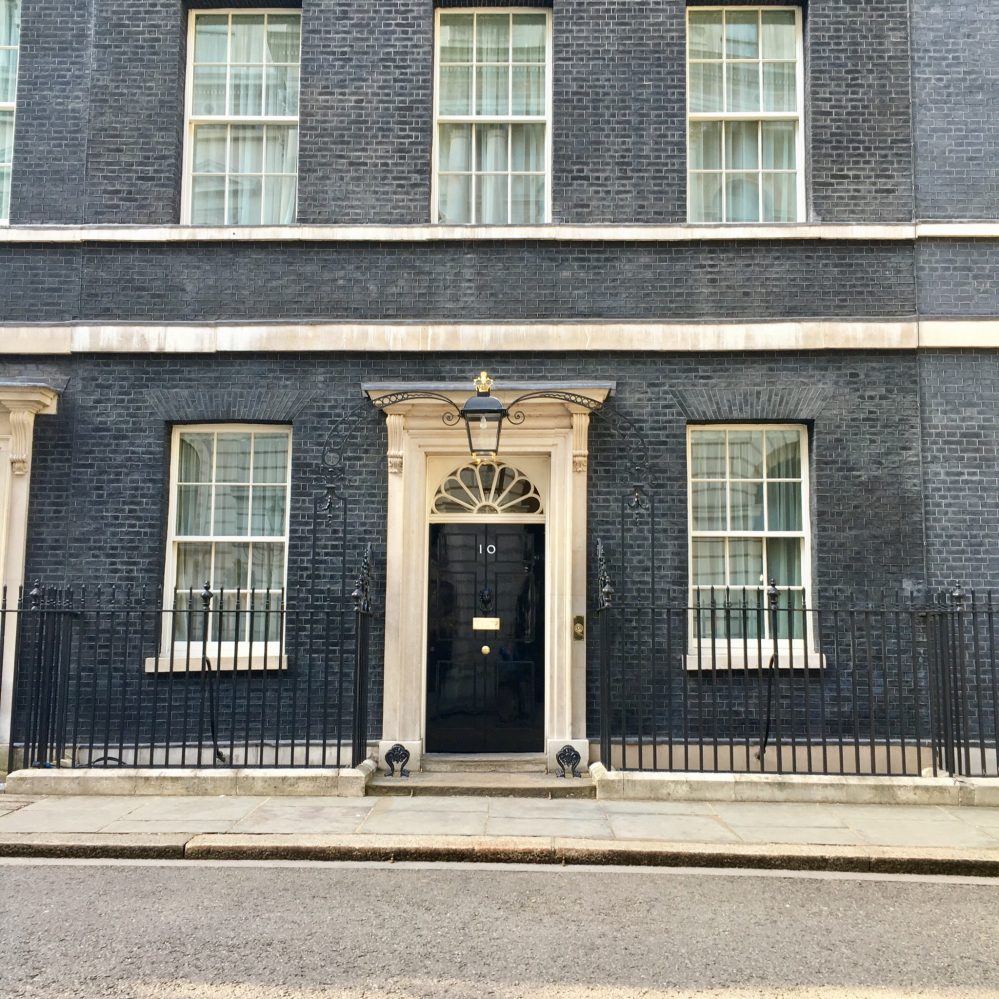
Who will win the race to 10 Downing Street – will Boris keep his premiership or can Corbyn or even Swinson knock him from the top spot? CREDIT: TheGayUK/Jake Hook
With just days before our 3rd General Election in 4 years just around the corner, THEGAYUK.com undertook a flash poll to find out whether its readers had made a decision on who they were going to vote on the 12th December.
THEGAYUK.com asked its readers a binary question of whether they were decided or undecided on who to vote for.
In total, nearly 400 people took part in the survey, at the time of publication.
One quarter are still undecided
In a previous poll, about which way they were planning to vote, THEGAYUK’s readership said that Labour, led by Jeremy Corbyn, was their first choice with 38 per cent of the vote but was closely followed by the Liberal Democrats, headed by Jo Swinson.
The Conservatives, with the incumbent Prime Minister, Boris Johnson, managed to grab hold of 15 per cent of the vote, while “other” which would you include parties such as the Greens, UKIP, The Independent Group For Change, Brexit Party, Plaid Cymru.
However, there is just under one-quarter of people who are still undecided on who to vote for.
At the time of publication, 23 per cent they were undecided, seventy-seven said they had made up their minds.
One commentator, Jay, summed up their feelings by saying, “You look at the conservatives how many lies they have told and with the leader they have got with Boris Johnson is embarrassing. And you have Labour with the likes of Diane Abbott and a leader like Jeremy Corbyn. You have the Lib Dems who look like competition winners. I don’t know who to vote for.”
Who will win the race to 10 Downing Street – will Boris keep his premiership or can Corbyn or even Swinson knock him from the top spot? CREDIT: TheGayUK/Jake Hook
With our 3rd General Election in 4 years just around the corner, THEGAYUK.com undertook a flash poll to understand where its readers were thinking about putting their “X” when they visit the voting booth in December.
THEGAYUK.com asked its readers which way they planned to vote with the choices being Conservative, Labour, Lib Dem or “Other” which could include Nationalist parties like the SNP or single-issue parties like the Brexit Party.
There were only four options permitted – this the maximum number of choices Twitter allows its users for polls.
In total, nearly 360 people took part in the survey, which lasted just over two days via a Twitter poll.
Labour comes out on top – but only just
Overall Labour, led by Jeremy Corbyn, came out on top with 38 per cent of the vote but was closely followed by the Liberal Democrats, headed by Jo Swinson. The Conservatives, with the incumbent Prime Minister, Boris Johnson, managed to grab hold of 15 per cent of the vote, while “other” which would you include parties such as the Greens, UKIP, The Independent Group For Change, Brexit Party, Plaid Cymru
How will you vote?
While the survey is in no way scientific or wholly representational of the LGBT+ community in the UK, it does give some insights into which way THEGAYUK’s Twitter followers are planning to vote come December 12th. Discuss politics and more in our politics forum.
The SNP has sought assurances from the government that LGBT+ equality would be preserved and advanced after the Conservative Party struck a deal with Northern Ireland’s anti-gay Democratic Unionist Party.
SNP Equalities spokesperson Angela Crawley said the Tories “have questions to answer” on equality after a confidence and supply deal was struck yesterday between the Government and the DUP which would keep Prime Minister Theresa May in power without formalising a coalition.
The DUP “agrees to support the Government on all motions of confidence and on the Queen’s speech; the budget; finance bills’ money bills, supply and appropriation legislation and Estimates,” as well as any legislation pertaining to Brexit. In return, a “coordination committee” will be convened to “ensure the necessary support can be established by both parties,” which could give the DUP say on any bills the government seeks to introduce.
“LGBTI people across the country have deep concerns that the Tory backroom deal with the DUP could halt progress on equality,” Ms Crawley said. “Before the election, Theresa May and Ruth Davidson both committed to changes in the law to improve LGBTI equality – but these commitments were entirely absent from the Queen’s Speech,” she said.
Davidson, the leader of the Scottish Conservatives, earlier this month said that she had been assured that the deal would not hinder LGBT+ rights. “I asked for categoric assurance that if any deal or scoping deal was done with the DUP there would be absolutely no recession of LGBTI rights in the rest of the UK, in Great Britain, and that we would use any influence that we had to advance LGBTI rights in Northern Ireland,” she told the BBC. “It’s an issue very close to my heart and one that I wanted categoric assurances from the prime minister on, and I received [them].”
The DUP themselves have promised that they have no desire to roll back equality measures elsewhere in the country. “We want to ensure that every one of the LGBT community have rights and their rights will be maintained, the DUP equality spokesman Jim Shannon told Premier Christian Radio. “There’s going to be no changes to that whatsoever.”
Still, the DUP’s opposition to same-sex marriage in Northern Ireland – which it has used peace deal powers to oppose – and support for a “conscience clause” to allow businesses to discriminate against LGBT people on religious grounds has caused concern for many activists. Protests against the deal have occurred since the election resulted in a hung parliament, with the campaigner and Guardian columnist Owen Joneswarning that “an alliance with the gay-hating DUP extremists threatens the Northern Ireland peace process”
It could also threaten progress on LGBT rights, warns the SNP. “Will the Tories finally amend same-sex marriage legislation to allow couples from Northern Ireland, and elsewhere, to convert their civil partnerships to marriage? If not, why not?” asked Angela Crawley, who also wanted to know if the government will extend discrimination protections to all LGBTI people and eliminate inequality in pension rights, as well as extending gender recognition reforms passed by Holyrood to the rest of the UK.
Indeed, the DUP has already sought to interfere with LGBT rights in Scotland. Arlene Foster, the DUP leader and erstwhile First Minister of Scotland, sought to prevent Northern Irish citizens from accessing same-sex marriages in Scotland. Scotland allows couples from Northern Ireland (and elsewhere) to convert their civil partnerships to marriage without having to first legally divorce.
Foster expressed her opposition to this in a series of letters to former Scotland minister for community empowerment, Marco Biagi. She said that she sought to achieve “legal certainty” over the status of same-sex couples by “exclude[ing] civil partnership[s] which were entered into in Northern Ireland” from being converted to marriages. For his part, Biagi tweeted simply “I said no” to this request.
Whether Foster and the DUP seek to interfere with LGBT equality through their new deal with the Conservatives and their place on the “co-ordination committee” between the parties remains to be seen. Regardless, Crawley plans to fight to ensure progress continues. “The SNP will continue to champion LGBTI equality in government at Holyrood, and SNP MPs will hold the Tory government to account at Westminster so that LGBTI equality does not fall of the agenda,” she said.
It’s not just publicly that the SNP is defending LGBT+ rights. In a letter to Prime Minister Theresa May, Crawley expressed “concerns that LGBTI equality is being sidelined for reasons of political expediency.” She outlined a series of policies – from strengthening the Turing Law to ensure all those convicted of having gay sex are pardoned to devolving equality law to Holyrood – where the SNP feels the government must act. Whether Theresa May champions equality or the DUP exerts its influence to halt any advances, though, remains to be seen.
After a few sombre days of mourning the victims of the Manchester attack, the Conservative and Labour are back on the campaign trail
With less than two weeks until the country votes on the 8th of June, you can bet they’re ready to make up for lost time and make their final pitches to the public.
The biggest political story of the past two weeks is undoubtedly the release of the party manifestos. Labour, the Liberal Democrats, and the Conservatives all released their manifestos last week. I blogged about what they pledged to the LGBT community for HuffPost UK, while THEGAYUK’s editor-in-chief, Jake Hook, put together a quick guide for your easy reference.
Labour and the Lib Dems specifically made pledges to the LGBT community, but the Tories didn’t mention us once. This is, to put it bluntly, unacceptable. Regardless of political position, that one of the major parties—never mind the Prime Minister’s party—would neglect to mention the LGBT community or make any specific pledges to us seems almost unfathomable. It is yet another gaffe in an already controversial Tory manifesto, which has seen the Prime Minister U-turn on her plans for a so-called “dementia tax” (which would use the homes of deceased dementia sufferers to subsidise the care they received whilst alive).
Why the Conservatives didn’t think to include us in their vision for the country is beyond me, but it’s nothing short of an astonishing. This is all the more galling when you consider that UKIP, of all parties, managed to remember us when they controversially released their manifesto yesterday, ahead of the resumption of campaigning by the other parties. Granted, they only mentioned the LGBT+ community in a pledge to “test the social attitudes of migration applicants” towards women and gay people.
Whilst this sounds nice on the surface – nobody wants a bunch of raging homophobes coming into the country – many on social media have pointed out that a lot of UKIP’s own members wouldn’t pass this test. In the last week alone it was revealed that Iain Kealey, the UKIP candidate for Bristol South, once compared gay people marching against Islamophobia as “Jews for Hitler,” whilst their candidate in Witney has a penchant for referring to our community as the “gaystapo” and allegedly has ties to those who practice gay conversion therapy. Oh, and he’d like to repeal gay marriage.
UKIP wasn’t the only party with a gay cure controversy though. The conservative candidate in Brighton and Hove, Kirsty Adams, is reported to have links to a church that believes LGBT people are possessed by demons, which they then try to cast out. Ms Adams, who is standing against openly gay incumbent Labour candidate Peter Kyle, refused to say she doesn’t believe in the practice of casting out demons, but did say she has “never been homophobic” and supported equal marriage. “I am committed to all forms of equality,” she said in a statement.
Never mind casting out demons, though. Some trans people won’t even be able to cast a vote. The deadline to register to vote was Monday night, but as Pink News reported, several trans people were having issues registering after they legally changed their names or had protected National Insurance numbers (which some trans people opt for so their gender identity is less likely to be revealed).
If they do manage to vote and live north of the border, Kezia Dugdale – the out leader of Scottish Labour – has a novel suggestion for how they should vote, and it isn’t for her party. Ms Dugdale came under fire from many on the left when she seemingly encouraged some constituencies to vote Conservative in an effort to defeat the Scottish National Party. “The reality is the vast majority of seats across Scotland, it’s only the Labour party that can beat the SNP,” she told Sky News, before adding “there are a few differences in the Borders and the Highlands where the Tories might be better placed…” Suggesting people vote for your opponents is a novel way to win seats, but takes all sorts, I suppose.
Meanwhile, another out lesbian north of the border – the leader of the Scottish Conservatives, Ruth Davidson – has made the exact same pitch. That is, she’s asking Labour voters to support the Tories to oust the SNP. Of course, the SNP holds all but one of the constituencies in Scotland, so they’re unlikely to be completely wiped out. But Davidson’s Scottish Tories are doing remarkably well, currently polling in second place – their best showing in decades. They look poised to pick up at least one or two Scottish constituencies.
Meanwhile, back in England, the Liberal Democrats faced a backlash from their own members for an allegedly transphobic poster. “Vote her, get him,” says an image depicting Nigel Farage’s face imposed upon Theresa May’s body. According to the Telegraph, the chair of LGBT Lib Dems, Jennie Rigg, tweeted that the sign is “bordering on transphobia” and that the press team was “making her life difficult.” This is on top of the brouhaha that erupted earlier in the campaign when Lib Dem leader Tim Farron took weeks to publicly say that no, gay sex is not a sin. Judge for yourselves whether the image is transphobic:
You don't have to accept May and Farage's extreme version of Brexit that will wreck the future for you and your family. pic.twitter.com/wBoNgCrx4F
In yet another bit of bad news for the Lib Dems, former Lib Dem MP Simon Hughes – who is openly bisexual – was reported to the police by his Labour opponent, the incumbent MP Neil Coyle who defeated Mr Hughes in their Bermondsey constituency in 2015. In leaflets which allegedly looked like newspapers, Mr Hughes claimed Mr Coyle was being investigated for abusing members of his party’s staff, which Mr Coyle categorically denies.
Despite his sexual orientation, Mr Hughes has a spotty history when it comes to LGBT+ rights. He led a notoriously homophobic campaign against gay rights activist Peter Tatchell to win his constituency in 1983. More recently, he refused to vote for same-sex marriage, instead abstaining from the vote whilst outlining his opposition to same-sex marriage in a 2013 blog for the Liberal Democrat Voice. With friends like these, who needs enemies?
On that note, I’m off to make some enemies of my own by knocking back a few pints and challenging my local bartender to an ABBA sing-off. Blame the demon homosexuals in me, I guess. Until then, stay strong and stay fabulous.
Opinions expressed in this article may not reflect those of THEGAYUK, its management or editorial teams. If you’d like to comment or write a comment, opinion or blog piece, please click here.
As a reminder to where Scottish MPs stood on one of the most recent and important pieces of legislation affecting the LGBT+ community in the UK, we’ve listed all the MSPs who voted for same-sex marriage in 2014.
Here is the full list of MSPs who voted for same-sex marriage in Scotland.
CONSERVATIVES
Jackson Carlaw (West Scotland)
Ruth Davidson (Glasgow)
Annabel Goldie (West Scotland)
John Lamont (Ettrick, Roxburgh and Berwickshire)
Mary Scanlon (Highlands and Islands)
John Scott (Ayr)
SCOTTISH NATIONAL PARTY
George Adam (Paisley)
Clare Adamson (Central Scotland)
Christian Allard (North East Scotland)
Colin Beattie (Midlothian North and Musselburgh)
Marco Biagi (Edinburgh Central)
Chic Brodie (South Scotland)
Keith Brown (Clackmannanshire and Dunblane)
Margaret Burgess (Cunninghame South)
Aileen Campbell (Clydesdale)
Roderick Campbell (North East Fife)
Willie Coffey (Kilmarnock and Irvine Valley)
Angela Constance (Almond Valley)
Bruce Crawford (Stirling)
Graeme Dey (Angus South)
Nigel Don (Angus North and Mearns)
Bob Doris (Glasgow)
James Dornan (Glasgow Cathcart)
Jim Eadie (Edinburgh Southern)
Annabelle Ewing (Mid Scotland and Fife)
Linda Fabiani (East Kilbride)
Joe FitzPatrick (Dundee City West)
Kenneth Gibson (Cunninghame North)
Rob Gibson (Caithness, Sutherland and Ross)
Jamie Hepburn (Cumbernauld and Kilsyth)
Fiona Hyslop (Linlithgow)
Adam Ingram (Carrick, Cumnock and Doon Valley)
Colin Keir (Edinburgh Western)
Bill Kidd (Glasgow Anniesland)
Richard Lochhead (Moray)
Kenny MacAskill (Edinburgh Eastern)
Gordon MacDonald (Edinburgh Pentlands)
Derek Mackay (Renfrewshire North and West)
Mike MacKenzie (Highlands and Islands)
Michael Matheson (Falkirk West)
Stewart Maxwell (West Scotland)
Joan McAlpine (South Scotland)
Mark McDonald (Aberdeen Donside)
Christina McKelvie (Hamilton, Larkhall and Stonehouse)
Aileen McLeod (South Scotland)
Fiona McLeod (Strathkelvin and Bearsden)
Stuart McMillan (West Scotland)
Alex Neil (Airdrie and Shotts)
Gil Paterson (Clydebank and Milngavie)
Dennis Robertson (Aberdeenshire West)
Shona Robison (Dundee City East)
Michael Russell (Argyll and Bute)
Alex Salmond (Aberdeenshire East)
Stewart Stevenson (Banffshire and Buchan Coast)
Kevin Stewart (Aberdeen Central)
Nicola Sturgeon (Glasgow Southside)
John Swinney (Perthshire North)
David Torrance (Kirkcaldy)
Maureen Watt (Aberdeen South and North Kincardine)
Paul Wheelhouse (South Scotland)
Sandra White (Glasgow Kelvin)
John Wilson (Central Scotland)
LABOUR
Jackie Baillie (Dumbarton)
Claire Baker (Mid Scotland and Fife)
Richard Baker (North East Scotland)
Jayne Baxter (Mid Scotland and Fife)
Claudia Beamish (South Scotland)
Neil Bibby (West Scotland)
Sarah Boyack (Lothian)
Malcolm Chisholm (Edinburgh Northern and Leith)
Kezia Dugdale (Lothian)
Mary Fee (West Scotland)
Patricia Ferguson (Glasgow Maryhill and Springburn)
As a reminder to where Scottish MPs stood on one of the most recent and important pieces of legislation affecting the LGBT+ community in the UK, we’ve listed all the MSPs who voted against same-sex marriage in 2014.
Here is the full list of MSPs who voted against same-sex marriage in Scotland.
CONSERVATIVES
Gavin Brown (Lothian)
Alex Fergusson (Galloway and West Dumfries)
Murdo Fraser (Mid Scotland and Fife)
Alex Johnstone (North East Scotland)
Jamie McGrigor (Highlands and Islands)
Nanette Milne (North East Scotland)
Margaret Mitchell (Central Scotland)
Liz Smith (Mid Scotland and Fife)
SCOTTISH NATIONAL PARTY
Dr Alasdair Allan (Na h-Eileanan an Iar)
Roseanna Cunningham (Perthshire South and Kinross-shire)
We have divided the main issues into six sections:
Education: specific classes and lessons in sex and relationship education and a commitment to tackle bullying.
Crime: a specific look into tackling hate crime on the basis of sexual/gender orientation. Better support for domestic violence victims and survivors.
Workplace: a specific look into tackling inequality in the workplace.
Healthcare: a specific look into policies affecting mental, sexual health, PrEP and transgender/intersex issues.
In politics: What laws will be amended and changed to fully equalise the LGBT community.
On the world stage: What will the next government do to show that the UK is a beacon of LGBT rights?
We have also only taken parties that have a national footprint.
CONSERVATIVES
Number of mentions of LGBT: 0
Education: No specific mentions of LGBT+ sex or relationship education
Crime: No specific mention of LGBT+ but pledged: “push forward with our plan for tackling hate crime committed on the basis of religion, disability, sexual orientation or transgender identity”
Workplace: Nothing specific to LGBT+
Healthcare: No specific mention of healthcare reforms for LGBT people – including PrEP.
In politics: Nothing specific to LGBT+
On the world stage: “We will expand our global efforts to combat extremism, terror, and the perpetration of violence against people because of their faith, gender or sexuality”.
LABOUR
Number of mentions of LGBT: 11
Education: Teachers will be given training on how to deal with bullying.
They’ll also ensure that new guidance is issued on relationships and LGBT-inclusive sex education.
Crime: Labour pledges to bring the law on LGBT hate crimes into line with hate crimes based on race and faith, by making them aggravated offences.
Workplace: Nothing specific to LGBT+
Healthcare: Labour has pledged that it will work to “reverse the damage done to mental health services under this Tory government, which is particularly hitting services for LGBT and BAME communities”.
Labour also pledges that frontline healthcare professionals receive ongoing training to understand and meet the needs of LGBT patients and service users.
And PrEP? Well, they pledge that “NHS England completes the trial programme to provide PrEP as quickly as possible, and fully roll out the treatment to high-risk groups to help reduce HIV infection”.
In politics: They pledge to reform the Gender Recognition Act, which will protect trans people by changing the protected characteristic of ‘gender assignment’ to ‘gender identity’. They also pledge to remove outdated language such as “transexual”.
On the world stage: Labour have announced that they will “appoint dedicated global ambassadors for women’s rights, LGBT rights and religious freedom to fight discrimination and promote equality globally”
LIBERAL DEMOCRATS
Number of mentions of LGBT: 5
Education: The Lib Dems have promised to review sex education in schools saying that they will include lessons on sexual consent, LGBT+ relationships and issues surrounding explicit images and content.
Crime: Nothing specific to LGBT+
Workplace: The Lib Dems want companies with more than 250 employees to publish data on their employment of BAMEs LGBTs and pay gaps.
Healthcare: The Liberal Democrats have promised to ensure that “LGBT+ inclusive mental health services receive funding and support”. They also want to make PrEP available on the NHS.
In politics: The Lib Dems pledge to introduce legislation that will allow for all-BAME and all LGBT+ parliamentary shortlists.
On the world stage: The Liberal Democrats pledge a commitment to promoting the “decriminalisation of homosexuality around the world and advancing the cause of LGBT+ rights”.
UKIP
Number of mentions of LGBT: 1
n education: UKIP will end sex education in primary schools. Will look into whether further legislation is required to tackle cyberbullying.
On health: Nothing specific to the LGBT+ community, but promised to increase funding for mental health. Will also hold a review into editorial codes of the media, to promote “healthy body images”.
On politics: UKIP pledge to test the social attitudes of those who are seeking to immigrate to the UK. They wrote,
“…we do not believe in treating women or gay people as second-class citizens, and we hold to a fundamental belief in democracy and free speech. UKIP’s points-based immigration system will, therefore, include one further major principle: we will test the social attitudes of migration applicants to foster community cohesion and protect core British values”.
UKIP also will repeal Labour’s Human Rights legislation and remove the UK from the jurisdiction of the European Court of Human Rights”. They will replace with a new UK Bill of rights.
On crime: Nothing specific to the LGBT+ community.
On the world stage: Nothing specific to the LGBT+ community
THE GREEN PARTY
Number of mentions of LGBT: Have released an entirely separate LGBT+ Manifesto.
They have released an entire LGBT+ manifesto. Which includes the following pledges:
Education: Sexual and relationship education for all students. Require every school to have an anti-bullying programme. Provide teachers with training to provide LGBT+ inclusive education.
Crime: Greens pledge to “Combat all forms of antiLGBTIQA+ prejudice and violence through improved hate crime protections”.
Workplace: Noting specific to LGBT+
Healthcare: Wide-ranging policies affecting the Trans and Intersex community. Including, giving people “personal autonomy in all medical decisions” and “Improve access to medical services and gender identity clinics, particularly for trans and non-binary young people.” They have said they would also, “Protect the welfare state in the face of Government cuts and preserve the vital security net many LGBTIQA+ people rely upon”.
In politics: Has pledged to make same-sex marriage “truly equal” to include pension rights. They will also open civil partnerships to opposite-sex couples. Will “Apologise to and pardon all 50,000–100,000 people convicted of consenting adult same-gender sexual relations under antisodomy laws that have now been repealed.”
On the world stage: The Greens have said, “The Green Party would speak out against those countries that discriminate against, marginalise and kill LGBTIQA+ citizens, and work with countries leading the way in recognising and protecting” the LGBT+ community.
SCOTTISH NATIONAL PARTY
Number of mentions of LGBT: 5
Education: Nothing specific to LGBT+
Crime: Nothing specific to LGBT+
Workplace: Nothing specific to LGBT+
Healthcare: The SNP will support efforts to ensure PrEP becomes available on NHS to any who needs it in the UK.
In politics: The SNP pledge to push the UK Government to extend the Turing Bill pardon to gay men convicted of same-sex activity who are still alive today.
They also pledge to ensure that same-sex couple have equal pension rights and “protected characteristics are expanded to ensure all LGBTI people are fully protected from discrimination and harassment”.
On the world stage: The SNP pledge to reform the detention and asylum system for LGBT+ people escaping countries where homosexuality is still illegal. They also pledge to remove “unfair and invasive demands for ‘proof’ of sexuality or gender identity”.
They also say,
“SNP MPs will support the establishment of a special envoy to promote the rights of LGBTI people throughout the world, as an integral part of UK foreign policy – helping to alleviate the discrimination and persecution faced by LGBTI people in Chechnya and across the world”.
Plaid Cymru
Number of mentions of LGBT: 0
Education: Nothing specific to LGBT+
Crime: Nothing specific to LGBT+
Workplace: Nothing specific to LGBT+
Healthcare: No specific mention of healthcare reforms for LGBT people – including PrEP.
In politics: Has pledged to publish a “human rights charter” to provide human rights regardless of race, gender, sexual orientation.
On the world stage: Nothing specific to LGBT+
Democratic Unionist Party
Number of mentions of LGBT: 0
Education: Nothing specific to LGBT+
Crime: Nothing specific to LGBT+
Workplace: Nothing specific to LGBT+
Healthcare: No specific mention of healthcare reforms for LGBT people – including PrEP.
The general election is a month away from today, but the big news last week was the already-scheduled local elections which took place throughout the country on Thursday.
The Tories, rather predictably, swept the local councils. Meanwhile, there hasn’t been this much Labour shock and pain since Sonia Fowler unexpectedly gave birth on EastEnders. The party suffered heavy losses throughout the country, while the Liberal Democrats similarly failed to accomplish the surge they were hoping. Likewise, UKIP was virtually wiped out by a Conservative Party which has annexed their pro-Brexit, anti-globalist agenda.
The full results in England show a Conservative Party in ascendency and virtually every other party losing ground to them, which bodes well for Theresa May as we look towards the next few weeks. That’s still to come, though, and four weeks is an eternity in politics. Meanwhile, let’s look back on the big gay week that was.
The biggest news undoubtedly comes from two hotly contested and highly anticipated inaugural mayoral races. In the former Labour heartland of the West Midlands, gay Conservative Party candidate Andy Street made history as the first openly gay metro mayor in the country’s history. In the final round, he narrowly defeated former Labour MP Sion Simon with a majority of just over 4,000 votes.
Still, the historic nature of Mr Street’s victory coupled with the fact that a Tory won in the West Midlands makes this accomplishment even more remarkable. It is also no doubt terrifying for Jeremy Corbyn. He is desperately trying to be the party of tolerance and openness while also holding on to the traditional working class heartlands which aren’t quite as keen on his metropolitan inclusiveness.
It wasn’t all bad news for Labour, though. Andy Burnham won the Manchester mayoral race. The former Secretary of State for Health and the politician with the most beautiful eyes (or is it just me?) won just over 63% of the vote, making him one of the most important Labour leaders in the country. He stood against Jeremy Corbyn for the party leadership in 2015, when his own questionable history on LGBT equality was made an issue by opponents. Mr Burnham has since said that his support for gay rights has led to rifts in his family, but that he does unequivocally support equality.
This is especially important as hate crimes have soared in Greater Manchester over the past few years, increasing by a third between November 2014 and October 2015. How Mr Burnham addresses the safety of the LGBT community, particularly in Manchester’s Gay Village, will be of vital interest to the local community and the LGBT activists across the nation.
The local elections were, as I said, the major story of the week – but they weren’t the only one. Of particular interest is the happenings in Ilford North, a key marginal constituency in North London. The seat is currently held by openly gay Labour MP Wes Streeting, a former NUS president and critic of Jeremy Corbyn. Before 2015 it was represented by Conservative Lee Scott, who is standing to take back the constituency this year. In an effort to help him do this, Ukip have decided not to stand a candidate of their own and instead back Mr Scott. Meanwhile, the Greens announced last week they are also standing down in order to back Mr Streeting.
Ilford North looks poised to become a – perhaps the – key Brexit battleground in London, if not the whole of England. Mr Streeting supported the Remain campaign but now accepts that Brexit is happening – though he’s hardly supporting the Hard Brexit of Theresa May. Ukip, on the other hand, see in Mr Lee and Mrs May two people who will support their vision of a Britain free from Europe and cracking down on immigration – that is, the Hard Brexit everyone keeps banging on about.
By standing down, Ukip all but guarantees Mr Lee’s victory. They took over 4,000 votes in 2015 – far more than Mr Streeting’s slim majority of 589. Looking at the results of the local elections, we see that the Conservatives have basically gobbled up Ukip like a late-night kebab.
It’s worth asking why the Conservative Party – long derided by Ukip as too pro-Europe – is suddenly so appealing to them under Theresa May. The Tories’ Brexit strategy is so similar to Ukip’s own platform that they’re willing to stand down, which should worry anyone who doesn’t want a Brexit harder than Tom Daley’s tushy.
While we’ll undoubtedly be talking about Ilford North more as the campaign carries on, there were some stories that flew under-the-radar this week but which are of particular interest to the LGBT community. The Tories selected former LGBT+ Conservatives vice chair Emma Warman to contest the relatively safe Green seat of Brighton Pavilion, currently represented by the Greens’ only MP (and co-leader), Caroline Lucas. Elsewhere in Brighton, the Tories are standing a woman who claims to be able to heal the deaf by prayer against openly gay Labour MP Peter Kyle. (No, seriously, they are.) Labour is standing openly trans Sophie Cook against anti-equality Tim Loughton in the Tory safe seat of East Worthing and Shoreham. And SNP MP John Nicholson claims an opponent accused him of hiring his wife to manage his constituency office. Only one problem: Mr Nicholson is openly gay and partnered. “My boyfriend will be so angry when he finds out,” he tweeted.
So that’s the second big gay week that was of this general election. If you’ve any tips you’d like me to consider for next week, please don’t hesitate to get in touch at skylar.baker-jordan@thegayuk.com. Until then, no matter which colour of the rainbow your rosette is, have a gay ole’ time out on those doorsteps.
With the opposition leaders raging, sorry debating each other this week, we found that Ed Miliband is not prepared to go into partnership with Nicola Sturgeon’s SNP party.
(Source Daily Mail)
We finally found out why we men get a stiffy in the morning… Thank goodnness (Source TheGayUK)
Newzoids, ITV’s long awaited satirical look at modern life didn’t quite fulfil our wishes and needs. ( Source: Telegraph)
40,000 people said no to a Christian church bringing gay cure speakers to the UK. (Source TheGayUK)
Petition overdrive demanding that The Sun fire Katie Hopkins over her “gunship” article . (Source: Huffington Post)
Sue Perkins leaves Twitter after hateful homophobic trolling (Source Guardian)