A survey has shown that a majority of men want to be able to cry more without the fear of being judged, because of, yep, toxic masculinity.
But crying isn’t the only activity men want to do more of. According to a recent YouGov poll currently, one in twenty men now wear makeup, but the number of those who would actually want to wear it is far higher.
A new survey of around 1,200 men conducted by Direct2Florist shows that if it wasn’t for the fear of being judged a whopping 65% would wear makeup.
[totalpoll id=”126354″]
And judgement from others wasn’t just stopping guys from applying some foundation. Shockingly 73% would be more physically affectionate with friends, 70% would like to admit they loved bubble baths and weirdly 55% said they’d read more novels by female authors if they didn’t feel so judged.
This week, Harry Styles sparks debate by appearing on the cover of Vogue in a dress.
Whilst trends are changing, it’s clear there’s a push-and-pull between toxic masculinity and changing gender roles.
Toxic masculinity and its prevalence in society is holding back men from doing so much, including, loving musicals, loving bubble baths and worryingly crying in front of other people.
Simon Stirling, MD of Direct2Florist, said, “Harry Styles wearing a dress on the cover of Vogue has sparked debate about masculinity and gender norms in 2020. Whilst most have seen the look as a positive, some have reacted uncomfortably towards the look. We’ve recently noticed consumer trends suggesting a rise in men buying flowers for themselves and this, along with conversation off the back of the Vogue cover, lead to the debate around what men are comfortable with these days. Our survey has revealed there’s still a long way to go for most.”
“Whilst some of these, like liking rom coms and having bubble baths are a little bit silly, some, like not being comfortable crying or being affectionate with friends, do suggest the challenges some are still dealing with when it comes to toxic masculinity. This year especially mental health is more important than ever, and with International Men’s Day this week it’s important any men struggling make a point of opening up to friends and family.”
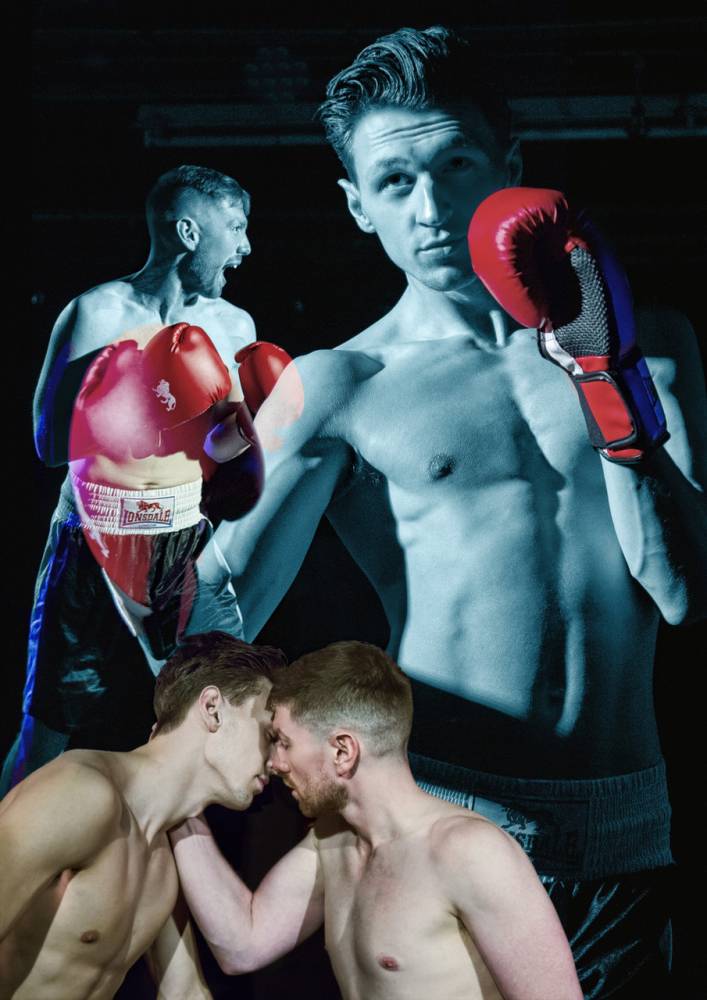
Gypsy Queen, a play by writer and actor Rob Ward is about just that, and looks at how social and cultural expectations within the boxing world and the Travelling community impact on two of the sports best fighters. With homophobia in sport still in the spotlight and with more sportsmen starting to come out, THEGAYUK chatted to Rob about his play, what he feels would benefit gay athletes, putting theatres in gyms, and how a headscarf can change everything.
TGUK – Thank you for chatting to us Rob. To start with, can you tell us what Gypsy Queen is about?
RW – It is fundamentally a gay love story about two men who meet in, and come from, worlds which as far as sexuality is concerned, are two of the most difficult. They are both boxers, and both are in the midst of a testosterone fuelled environment as they fall in love and have to keep their love secret from their family, trainers and the media. The play looks at modern day masculinity; but for one of them, “Gorgeous” George O’Connell, he also has to contend with his traveller background, which is a community where attitudes towards homosexuality, masculinity and religion all combine. All of these elements come together to create discussions points arising from the play, but ultimately, and at its heart, it is a good humoured love story.
TGUK – And where did the story come from?
RW – A few years ago, boxer Tyson Fury made a number of comments about the gay community, appearing to conflate abortion and homosexuality with paedophilia and saying homosexuality will contribute towards the end of the world. At the time, I had a short 10 minute play about two gay boxers and I was trying to find way of expanding the story when Tyson Fury made his comments. I wondered why he was so hung up on people being gay, and I thought “what if he is gay himself?”, and this led to opening up of the character I now have in the play. At the time, there were calls for the BBC to remove Fury from the Sports Personality of the Year shortlist that year, but they didn’t. I really wanted there to be a reflection of this in the play. The media have a certain responsibility in my view, and there was a real sense of public feeling that the BBC were holding him out as a role model, when actually he should have removed him from the shortlist for his comments.
TGUK – There is a real issue with homosexuality in mainstream sport, how does Gypsy Queen address that?
RW – It’s really important to tell this story; it is about having gay sporting role models. I am interested in writing about outsiders, and for me growing up as a sports fan, I saw no gay role models in that world. I was brought up in a very sporting family. I was in a very male dominated world during my upbringing, I went to an all-boys school, I was in a family which were very sporty, and for me it was incompatible to be into sport and be gay. Things are very slowly changing. There are people like Tom Daley and Gareth Thomas who have come out, but there are few openly gay professional sportsmen.
Looking at the boxing world, there are still many homophobic comments made. There are still no out footballers in the UK – you still get incidents of homophobia in football; recently a Chelsea fan was suspended for making homophobic chants at an away match in Brighton. Last year, we had an ex-professional German [football] player come to see the show. He told us that he had come out after he had retired, even though he was playing as late as 2012 or 2013. He talked about how he kept his sexuality secret because of a lot of locker room banter from players; and homophobic comments being freely and openly made; for example, he spoke about how one of the other players was having a massage session with a physiotherapist, who said “if you were gay, I wouldn’t be letting you touch me”.
TGUK – What do you think is needed in professional sport to address the issue of sexuality?
RW – We have initiatives like Stonewall Rainbow Laces, but campaigns like these don’t get the mass media coverage which is needed, and you have clubs turning schemes like this down. It is almost like some clubs are paying lip service to the issue. There is a real need for change and it has to come from the boardrooms. There is, in my view, a real lack of understanding of diversity in sport, and the powers that be in the sporting world need to get to grips with it to affect long term positive change.
TGUK – This is the third tour for the show; was coming back to it like slipping back into a well-worn pair of boxing gloves?
RW – Absolutely. We are just about finishing rehearsals, and in respect of the main show we were able to get up to speed with it quite quickly; but this time round we have a special performance in a boxing gym in Manchester, and for this, we have planned a family friendly version of the show so that some younger members of the gym can come to see the play. Doing a toned down version has been interesting, as we have had to cut out the swearing and the nudity for that one show; and it is often difficult to avoid going into auto-pilot and sticking to the original script which contains both.
John Askew and Ryan Clayton (c) PR supplied
TGUK – So in terms of the main play, has it changed much from previous tours, and is there anything new for people who have seen the show before?
RW – The show has developed over the years. Early in the initial tour, when we had been able to gauge the reaction of an audience, we did develop some aspects of the play further to reflect how people had reacted, and to look at what worked well and what needed revisiting. As with any new piece of writing, you often never quite get the sense of how a scene works until it is in front of an audience, and so throughout the 2017 tour, and into the summer of that year at the Edinburgh Fringe, we got the show to where we were happiest with it. On this tour, we have had a great actor by the name of John Askew join us for part of the tour and when he came into rehearsals, he had some fresh ideas and suggestions. As a writer and a performer, I like rehearsals to be collaborative; you want people to express their opinions on things. It’s really useful to get a second perspective. We had it nailed down with Ryan Clayton, who will be sharing the role with John; but when John first came into the rehearsal room, there were some tweaks and changes, so in many ways, there has been a constantly evolving process with the play.
TGUK – What type of reaction have you had from the travelling community and the boxing community?
RW – One of the things we hope to achieve is to reach out to new audiences. The travelling community is difficult to access, but we have reached out to a travelling community in Newport, and we are hoping that they are able to come to the play.
It was really interesting, as when we were performing in London, we had a gay traveller come along to the show and he spoke with us afterwards, saying how one of the things he liked most about the show was the realism of it. He was a writer for the Traveller Times, and he had previously written about the how the comments made by Tyson Fury historically did not represent what Traveller men are like; he said that there was an image portrayed by the media in terms of the travelling community, and that in the play, whilst there are displays of masculinity and homophobia in the community, there is the possibility for individuals to be different and for them to move away from what has been the dominant view of the community historically.
We do try to show balance within the portrayal of the Travelling community, there is toxic masculinity and an old school catholic view, but it is important to show that not everyone subscribes to that mind-set. In terms of the boxing community, it has been very difficult because when you play theatres, you appeal to certain audiences; which are why on this tour, we are trying to reach out to gyms and groups with a sporting interest. This tour is the first time we are taking the show into a gym, and I’m really looking forward to seeing how they react. We have had people in theatres leaving when the two lead characters started kissing, but during the first run we did in Edinburgh, a friend was in the audience and told us that there were two Irish lads behind him who came out of the theatre saying “I wasn’t expecting that, I thought it was just about boxing, but it was alright that”.
Rob Ward (c) PR supplied
TGUK – Gypsy Queen has just two actors playing multiple roles. Was that a creative choice or more to do with the financial constraints of putting on a new piece of theatre?
RW – Initially, one of the themes of the play was to question “what is masculinity” and I liked the idea of two actors playing cocky, Northern, hard lads who, with something as simple as putting on a different shirt or a headscarf, transform into the camp boyfriend or the foul mouthed mother. As a general style, I have always liked seeing people playing multiple roles, as it is quite theatrical and, for the performer, it’s quite fun and playful. I ultimately want my writing to be fun to watch and fun to perform; and I think that the audience also enjoy spotting the visual cues about which character is coming on stage next. I liked the juxtaposition and thought it would be really interesting to go from these hard boxers to these softer characters, but as the show develops, you see that the characters that appear to be the softer, more gentile ones, such as Dane, the camp, flamboyant boyfriend, are actually incredibly strong in their own right, and this is reflected in how the story develops.
TGUK – Gypsy Queen is heading out on tour now, but what plans are there for the show after that?
RW – We are really excited to be taking the show to Canada and have just had confirmation of the booking there. We would like to tie this in the USA as well; so from a theatre point of view, we would like to get the show touring the US and Australia. We are also looking at the possibility of a screenplay for the show, so that is incredibly exciting in itself. But for now, our focus is on the current tour and putting everything we have at it to make it a piece of must see theatre for not just the gay community but also the wider community.
Gypsy Queen is now on national tour, details of which can be found at www.gypsyqueentour.com
YOUR SUPPORT MEANS EVERYTHING
Help us deliver unique, usable and reliable journalism that supports the gay, bisexual and curious community of the United Kingdom. Can you help protect LGBT+ media? Publishers like us have come under severe threat by the likes of Google and Facebook. The problem is that advertisers are choosing to put their money with them, rather than with niche publishers like us. Our goal is to eliminate banner ads altogether on site and we can do that if you could pledge us a tiny amount each month.
We’re asking our readers to pledge just £1 per month, more if you’re feeling swanky. You can stop payment at any time.
It’s quick and easy to sign up and you’ll only have to do it once.
Wretched Things – a hedonistic, seductive and sexy gay film – had its film premiere in Leicester Square last week – an achievement for its cast and crew.
Written and Directed by Gage Oxley, and made by 16-25 year olds and inspired by the #MeToo and #TimesUp campaigns, Wretched Things deals with sexual exploitation, toxic masculinity and abuse of power. In it, a first-time model, a webcam sex worker, and a power-hungry homophobe journey through their insecurities and vulnerabilities. This hedonistic and seductive 80-minute film challenges toxic hyper-masculinity and the abuse of power through three vignettes.
“Wretched Things challenges our thoughts about some of the insecurities and vulnerabilities we face through sexual exploitation, as well as highlighting the aggressors in our every day lives.” says Oxley.
The film was shot entirely in Leeds, working with young professional filmmakers and artists based in Leeds. All cast and crew worked completely voluntarily, and made the feature-length film on a self-funded low budget. But it doesn’t look low budget at all. It has three throbbing storylines, and actors who will make you throb in other ways.
The film, told in three chapters, stars popular talent such as Bruce Herbelin-Earle who appears in Netflixs’ Free Rein. For a taste of the film, check out the clip below
Oxley, and his company Oxygen Films, hopes the film will make the gay film festival circuit and will open the doors for him, the actors and cast and crew, and Oxygen, for future projects. By the looks of this film, Oxley and his team are on the road to success.
YOUR SUPPORT MEANS EVERYTHING
Help us deliver unique, usable and reliable journalism that supports the gay, bisexual and curious community of the United Kingdom. Can you help protect LGBT+ media? Publishers like us have come under severe threat by the likes of Google and Facebook. The problem is that advertisers are choosing to put their money with them, rather than with niche publishers like us. Our goal is to eliminate banner ads altogether on site and we can do that if you could pledge us a tiny amount each month.
We’re asking our readers to pledge just £1 per month, more if you’re feeling swanky. You can stop payment at any time.
It’s quick and easy to sign up and you’ll only have to do it once.
It was reported recently that a club goer to the members club XXL in London was refused entry because they were in (what is being described as) high heels and looked ‘feminine’. They were told they had to remove their heels and dress appropriately as this was a venue that celebrates everything masculine (it was a bear club after all).
Free-Photos / Pixabay
It then transpires that this is actually one of many incidents of this kind and to add insult to injury the owner of XXL even decided to go on an anti-fem (amongst other things) rant on twitter (I’m not going to link to it as it doesn’t deserve the airtime).
These recent incidents have quite rightly sparked a fresh debate about toxic masculinity on the gay scene and how ‘fem’ guys are being pushed out in favour of a more ‘masc’ (masculine) culture. In a recent article by Otamere Guobadia, they talk about anti-femme door policies at various places including quoting examples where drag queens and trans women on nights out are excluded from venues for being too feminine (or not masculine depending on your point of view).
In response to the incidents by XXL, there is a protest against the door policy at XXL on the 23 September and even organisations like All Together UK (an LGBT social group) are boycotting the venue to ensure their members and potential don’t feel excluded from events. With the debate raging is there a danger that nobody wins in all of this?
On the ‘masc’ side you have years of the gay community trying to get away from the stereotypical portrayal of a gay man in the media. Deliberately engaging with, what they see, as normal everyday masculine blokey stuff. Discouraging ‘camp’ behaviour, veering away from more feminine activities and hobbies towards more physical activities, the celebration of the 6 pack and chisled body etc. Has this gone too far down the masculine path? Now that concepts of ‘gender’ are more fluid than they ever have been before, is such a masculine idealism toxic to the community?
On the ‘fem’ side you have pretty much the opposite reaction to the above. After years of being told what is masculine and to be gay, you have to be x body shape or behave in Y fashion this is the inevitable result of that. If you repress anyone for long enough they will eventually burst out and push back on the repressive ideas that held them back. This is exactly what we are seeing now and personally, I celebrate it.
“The moment we repress one over the other is the moment everyone loses”
My worry is that this whole argument shouldn’t be a case of masculinity is bad or femininity is bad. Both are good and bad in their own measures and are both valid ways of being in their own rights. The moment we repress one over the other is the moment everyone loses. Calling for masculine bars to be banned is wrong, just as calling for feminine bars to be banned is wrong. Both can exist so long as ones from the other can enter hassle free. That boys and girls is a diverse and inclusive environment not one over the other.
No one should be repressed for being who they are. Masculine, Feminine, Undecided, Fluid or whatever! If we truly want to call ourselves an ‘inclusive’ society then all options should be on the table. If a fem person wants to enter XXL then so be it, just as a butch person walks into a drag show then so be it. They know what XXL is and what its brand is about, just because someone in a corset walks around doesn’t mean the ‘buff’ ‘masculine’ brand and feel of the place has changed. Last time I checked masculinity was a lot more stable than that (but I could be wrong…?).
Personally, I have no idea what I would fit in. I wouldn’t call myself masculine as I was never really a typical ‘bloke’ in that sense. However, I wouldn’t call me particularly effeminate either but I do have my moments. Not that it matters in the grand scheme of things but I wanted to give you where I stand in all of this so maybe you can see why I see both sides of the debate here.
Now that I know a little more about what the XXL owner is about (personally) and while their door policy remains so bullish I’ll also be boycotting the venue – there are plenty of other decent nights out in London! I don’t often boycott as it affects staff more than it does the boss but in this instance, it may just do the trick.
However, if I now have to queue to get into the Eagle I will not be happy.
Don’t let toxic masc bros stop you from getting fit.
CREDIT: bigstock-sorali
The toxic masculinity mentality is so outdated it makes me want to puke. However, the gym is one of those places that both attracts bros and then further encourages bro-behaviour. So no matter where you train, from the plushest health club to the most bare-bones 24-hour gym, you’ll encounter these assholes at one point or another. Wearing their backwards caps and shouting at their bros to smash out another rep.
It’s enough to deter any gay man, woman, or newcomer from ever daring to set foot in the free weights section. To that, we say FUCK NO! The time has come to take a stand against this crap, so here are a few things you can do to combat toxic masculinity in your gym.
Well done, you’ve already accomplished this one. So if you’re gay then don’t be afraid to act it. You don’t have to hide your camp-ness at home, with friends, or at work, and you shouldn’t suddenly have to in the gym.
Listen to your Lady Gaga full volume, wear unicorn leggings, go to Jazzercise, and just be yourself. This isn’t high school gym class anymore.
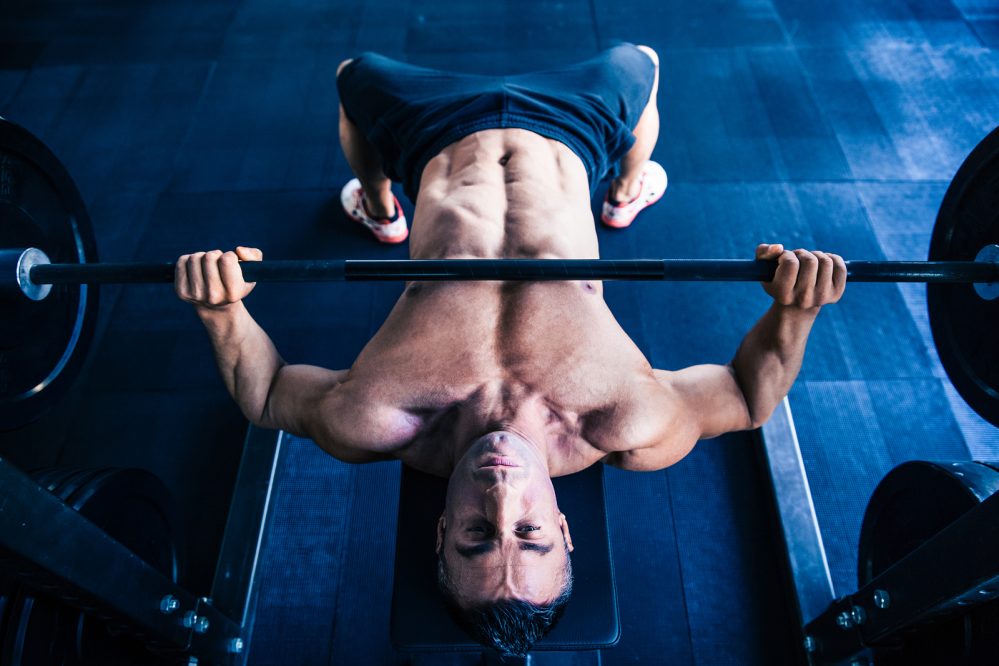
Work to dispel the bullshit male/female divide in gyms and get training with your girl friends. Get them into the weights section and help them feel confident doing pull ups and bench pressing with barbells. Then hop on the elliptical with them and do your cardio. There are no “male exercises” and no “female exercises”, just different training goals.
Women and men can both work to be stronger and fitter, side by side. #gayfitness [Tweet this if you agree!]
3. Get strong
CREDIT: Dean-Drobot-bigstock
If there is a homophobic piece of shit in the gym, then the best way to show this toxic creep that he’s outdated and obsolete is to get strong. Focus on good form and consistency and you’ll progress in your training far quicker than a loud-mouthed bro who’s just looking to slam some weights around. Just watch him try and call you a sissy when you’re benching what he squats.
When you do get stronger, don’t fall into the trap of becoming a bro yourself. Yes, you’re strong, you know what you’re doing, and you look great, but don’t start acting like the world owes something because you’re buff now.
Take your training seriously, but don’t take yourself seriously.
5. Don’t be afraid to ask for help
CREDIT: Flynt-bigstock
Whether you’re new to this whole gym thing or you’ve been training for years, don’t ever be afraid to ask for help. If you need a spot or you’re unsure, ask someone for help. If they’re not busy or mid-set, then they’ll probably be happy to help.
No one knows everything, and only toxic assholes act like they do.
What is it with toxic masculinity and shaming effeminate men from within our own community?
CREDIT: Dean-Drobot-bigstock
We are so tired of fat and body shaming.
This RealJock user has set one such tox guy in the most glorious way. When user, Neal, told Nicolas to “be a man and shut up” after raising the issue of how toxic gym spaces could be for LGBT+ users he was told,
“The only thing toxic to men is the increased feminity among them. I’ve seen your pics, maybe if you looked better you wouldn’t feel so insecure, but that’s your issue”.
U OK Hun?
But it was Nicolas’s response that set our hearts racing.
He responded,
“Wow! It’s statements like this that are damaging our community from within rather than building it up. But all you’ve done is prove my point and show how muscled-up gym bros like yourself can make the gym a really hateful place. You seem completely unaccepting of gay guys who you consider weak or effeminate, but how are they suppose to get stronger if they have to wade through your toxic bull$%^t just to get to the squat rack”
In case you ever doubted that toxic masculinity was a thing in the gay world, this was a response to our latest post on the subject from the gay jock community. pic.twitter.com/QSwoyItuKm