Tag: UK

  • THEATRE REVIEW | Children Of The Sun

    ★★★ | Children Of The Sun

    A Maxim Gorky classic play, adapted by Andrew Upton, is a deep and philosophically driven piece set during a cholera epidemic, which works on many significant levels.

    On the surface its comedic approach could be mistaken as a light hearted play, but below the surface lies a distinct feeling of danger – a narrative of fear which is explored through many conversations.

    Protasov is longing to find the answer to all of life’s mysteries through scientific experimentation and research. He believes that the quest of life will be answered through science so he becomes immersed in his own ignorance; failing to acknowledge the significance of what is happening around him.

    There is a superb collective of talent in this adaptation, with strong gestural performances and moments of intensity which breaks up the performance, constantly focussing it back to the deeper questions.

    The stage set is the perfect backbone to the story, with a commendable attention to detail and realistic nature which helps one to engage on an additional level. Indeed the National Theatre is one of my all time favourite destinations, with its strong Brutalist architecture just asking for performance and drama. This is exactly what is delivered with ‘Children of the Sun’. A though-provoking and engaging play, highly recommended.

    Treat yourself to some theatre this month at the National Theatre. Tickets range from £12-34 and Children of the Sun is on until Sunday 14th July 2013.

    www.nationaltheatre.org.uk

  • COMMENT | Thatcher’s Legacy: The 28ers: The Silent Generation

    As a child of the eighties, I thought Maggie cut a rather marvellous figure, sailing through the decade with her shoulder power-pads, furs and that bulletproof hair – lacquered to within an inch of its existence.

    I was far too young to understand the political ramifications of her tenure: the hardship that fell upon millions in towns where industry was decimated, the rights to buy, or the silencing of a generation’s gays – instead as I played, building my own Lego empire in front of the Beeb’s 6 o’clock news I saw this rather robust and resilient red-lipped woman disembark the steps of yet another 747, shake the hands of craggy leaders around the world and uttering the iconic words ‘Vanity, vanity vanity. ‘ I thought, looking up from my empire construction, ‘this is a woman I should take note of.’

    When Section 28 was introduced I was a pre-teen. What could it possible mean to an eight year old boy, who preferred theatre and designing clothes for Barbie?

    In fact if asked what Section 28 was, I’m sure I would have pointed at the largely ignored volumes of red ultra-bound Britannica Children’s Encyclopaedias my mother had purchased, ‘at great expense’ she constantly reminds us, for the education of her offspring.

    However Section 28 lived on much longer than Thatcher’s premiership. In fact it wouldn’t be repealed until I was 21 – out of school and out of the closet.

    I was unaware that in the mid nineties sitting in a classroom at my north London comprehensive for a PSR lesson (yes that’s Personal Social Responsibility) I would be made to feel dirty, embarrassed and illegal.

    It was 1995. Six years away from the repeal of Section 28. Section 28 of the Local Government Act, prohibited the promotion of homosexuality in schools. It was enacted in 1988.

    Somewhere in among ‘Energy Saving’ and ‘Litter Picking’, Homosexuality was brought up by the teacher, who promptly said: “We can’t talk about this – but one in ten people are gay, that means at least two people in this class room will be gay’ and with that sword-swipe of a statement turned his back on the room as hands started to raise and a united ‘eurgggh’ sound resounded. All eyes it felt, fell on me.

    Turning a shade of Maggie’s Lips, I felt strangled. The teacher refused to say anymore in fear of having a legal case brought against him.

    Where was the explanation of homosexuality?

    Where were the ‘It’s Ok To Be Gay’ badges?

    The Tote Bags of Equality?

    The “So You Think You’re Gay” pamphlets?

    In that moment I became the love that dare not speak it’s name, too risky and illicit to talk about. Now that I write that down, it feels sexy and very Jilly Cooper, but at the time my head was exploding with questions, with the need to be reassured, to be rescued from the looming, baying mob, who were suspiciously eyeing up their classmates to see which one was the homo. I had my mark. My path was set.

    So what are the long-term effects of Maggie’s rule to my illicit generation?

    It’s hard to say.

    Had the children of the 80s and 90s been able to talk more freely of their sexuality would we be more politically focussed rather than a numbed number? Aren’t we a little guilty for using Pride as an excuse to drink and meet with friends to commiserate times past? Rather than the political statement it was intended? Aren’t we guilty of being a little bit apathetic when it comes to rallies and demonstrations?

    Do we feel stymied by our formative years? We are proud, but not with a capital P.

    I recently attended an Anti-Gay Marriage rally in Trafalgar Square. The ‘Pro’s’ far outweighed by the ‘Anti’s’ – but as I glanced around my fellow queers and allies, I wondered where were my generation?

    It felt all these people were 5 to 10 years older or younger than me. They were far more politically charged.

    Why is it that the 80’s babies aren’t fighting as hard as those born in the 70s or 60s? Maybe it’s because our predecessors had their milk taken away by mother Maggie. Is their political protesting born out of some sort of fight for survival?

    Maybe they are the generation that could actually understand the implications of Section 28 and remember the times where homosexuality was still illegal.

    I sit and talk to my peers about the passing of the Iron Lady and we shrug. Muted. Nonplussed by it all, but feel nostalgic as we watch our childhood play out in the nightly news – reruns of Maggie – once again, dressed in cobalt blue power suits, surrounded by aids and bodyguards blazing through international conferences or sat atop a tank blasting cannons into a field.

    Meanwhile students, who weren’t even twinkles in their parents’ eyes at the time of her resignation rejoice at her passing, while the generation above sneer and remember songs by Billy Bragg and Morrisey.


    Opinions expressed in this article may not reflect those of THEGAYUK, it’s management or editorial teams. If you’d like to comment or write a comment, opinion or blog piece, please click here.
     

  • GMFA Faces Uncertain Future After Funding Cuts

    GMFA Faces Uncertain Future After Funding Cuts

    As Sexual Health becomes the focus of a new programme on Channel 4 tonight, one of UK’s leading gay health charities, GMFA looks set to be losing its funding, leaving it with an uncertain future.

    Pinknews is reporting that GMFA, which was founded in 1992, will no longer receive funding for its London HIV Information Services after being notified that funding had been cut from the Pan-London HIV Prevention Programme, which is funded by the NHS.

    Services affected will be GMFA’s websites and the sex and health magazine, FS – as well as Terrence Higgins Trust press advertising campaigns.

    GMFA’s Head of Programmes, Matthew Hodson, said:

    “I am genuinely shocked and appalled by these decisions. I fail to understand the thinking behind it. There are more gay men living with HIV in London than anywhere else in the UK, and the numbers continue to rise.

    “Considering the size of London’s gay population, there is an urgent need for broad based campaigns and information resources, which are able to reach 1,000s of men. All of the work that is continuing to be funded can at best only reach a fraction of London’s gay population, and these cuts comes at a time when the need to raise awareness is higher than ever.”

    Cary James, Head of Health Improvement Programmes at Terrence Higgins Trust, said:

    “This kind of large-scale cut to HIV prevention is always risky, but in areas of high prevalence it is positively short-sighted. The capital has by far the highest level of HIV in the UK. Cutting prevention services here will lead to an increase in new infections, each of which incurs a lifetime treatment cost to the NHS of anywhere up to £350,000. We are doing everything we can to fill the gaps, but without sustained investment in city-wide prevention work we and our partner organisations will be fighting with one arm tied behind our back.”

    The cuts come at a time where new HIV infections amongst gay men are at an all time high. Higher than the levels recorded in the 1980s.

    56 Dean Street, The Gay UK’s official sexual health partners are the focus of a brand new programme tonight on Channel 4. The documentary follows the team at London’s busiest sexual health clinic.

  • Stonewall CEO Calls For The Resignation Of Paris Brown Over Homophobic Tweets

    Stonewall CEO Criticises Kent’s First Youth Police Commissioner, over Homophobic and Racist Tweets and calls for her resignation.

    UPDATED: 8th April 2013

    The Chief Executive of Britain’s leading lesbian, gay and bisexual charity – Stonewall, has taken to Twitter to publicly demand for the resignation of Paris Brown, the UK’s first Youth Police Commissioner after the Mail On Sunday reported that she had used the microblogging and social network – Twitter, to write racist, homophobic and drug-related tweets.

    Writing to @Youthpcc (Paris Brown’s official work Twitter account) Ben Summerskill OBE, wrote a number of tweets which said:

    ‘Hi @youthpcc You say tweet me your issues. Our issues are that you are homophobic and young gay people in Kent are the victims of that.’

    He also tweeted to Ms. Brown’s boss Ann Barnes, ‘Hi @AnnBarnesKPCC Given revolting things said by your @youthpcc and way they undermine work of @Kent_police could you pls contact us BW Ben’

    Betty Gudrun replied to Mr. Summerskill’s tweet: she has apologised for her language. It isn’t acceptable but what else can she do at the moment?’

    To which he replied: ‘Resign. BW. Ben’

    Ms. Brown,17, from Sheerness in Kent, was appointed Youth Police Commissioner by the county’s assistant chief constable, who hoped the appointment would bring a ‘mutual respect’ between the young people of Kent and the Police.

    In a statement Ms. Barnes said,

    ‘I absolutely do not condone the content and language of Paris’ tweets. I suspect that many young people go through a phase during which they make silly, often offensive comments and show off on Facebook and Twitter. I think that if everyone’s future was determined by what they wrote on social networking sites between the ages of 14 and 16 we’d live in a very odd world.

    She went on to suggest that thousands of parents would be ‘surprised, shocked and ashamed’ by looking into their children’s social networks.

    Paris Brown, has released a public statement on her tweets saying,

    ‘I deeply apologise for any offence caused by my use of inappropriate language and for any inference of inappropriate views. I am not homophobic, racist or violent and am against the taking of drugs. If I’m guilty of anything it’s showing off and wildly exaggerating on Twitter and I am very ashamed of myself, but  I can’t imagine that I’m the only teenager to have done this.’

  • COMMENT | Pride

    It’s always uplifting to see news about Pride events across the country. Yes believe it or not, despite the weather, we are well into the Pride season. News about events, activities and line-ups are being announced on a daily basis via news feeds, magazines and social media.

    I’m extraordinarily lucky to be able to attend three Pride events this year. What I always love about them is the community feel they all have. Pride really helps to promote inclusivity across a broad spectrum of people and allows them to interact in a fun, safe way, which for some is their only chance to interact with the community.

    The first Gay Pride UK Rally was held in July 1972. It was thought that we were quite liberal at that time but you have to remember that homosexual acts between consenting adults had been illegal until 1967, which made this quite a milestone moment in history.

    The core of Pride is that people should be proud of who they are, that there is nothing wrong with being different and that our sexuality is something beyond our control. As opposed to the shame many LBGT people were made to feel years ago, everyone is now encouraged to be proud and rightfully so.

    Pride has grown and evolved over the years and has, of course, seen changes which have been necessary within that evolution. I’m pleased to say the one thing that has never and will never change is the sense of community and family that you will always experience, whatever Pride event you attend.

    If you have never attended a Pride event and are considering attending your first one, I cannot recommend these events highly enough. They are a wonderful way to be introduced to the LGBT community and a beacon of positivity and information, especially if you have just ‘come out’ and are new to the scene.

    by The Gay Prime Minister/Twitter


    Opinions expressed in this article may not reflect those of THEGAYUK, its management or editorial teams. If you’d like to comment or write a comment, opinion or blog piece, please click here.
  • Hope For Long-Term HIV Unemployed

    Terrence Higgins Trust calls for participants and mentors for return of Back to Work scheme.

    Team Working At Desks In Busy Office
    Team Working At Desks In Busy Office

    From today, people with HIV who are long-term unemployed will be able to apply for Terrence Higgins Trust’s Back to Work scheme. This year for the first time, the charity is also calling for professionals to volunteer as mentors to those enrolled on the programme.

    In the UK, around 25% of people with HIV are currently unemployed. Thanks to modern drug treatments, many can return to work, but – if they have had a long period of ill health – they may lack confidence, or feel they no longer have the skills or stamina required to find a job in an increasingly competitive market.

    The Back to Work scheme was set up in 2011, with the aim of easing unemployed people with HIV back into the workplace. Each year, Terrence Higgins Trust enrols a small group on a six month work placement within the charity, helping them to develop skills and experience that will get them back on their chosen career path. The scheme has been a great success; of the 10 individuals that completed the course in 2012, two are now in full-time employment, one is on a government work programme, and five are continuing their professional development.

    After finding out he had HIV in 2009, Richard spent a few years out of work. When he felt ready to restart his career, however, he found his career break made it difficult to get interviews. Richard joined the Back to Work scheme in 2012, as part of which he worked in a number of the charity’s departments and received CV and interview tuition, as well as regular mentoring and support from a life coach.

    Richard said: “Prior to starting on the Back to Work scheme, my confidence was taking a battering with every knock back. But Terrence Higgins Trust saw my potential rather than the gaps on my CV. Within a couple of months, I had a part-time role within the charity, which provided an excellent springboard back into the workplace. Just from getting the interview, my confidence has grown and grown.

    “I’m now lucky enough to have two jobs, working for a housing association and also part-time at THT. It’s fair to say I’m a different person today, and could never have achieved everything I have without the help of the scheme. I can honestly say it’s the best thing that’s happened in my life.”

    Ruth Burns from Terrence Higgins Trust said: “Our Back to Work scheme has gone from strength to strength. Each year, we see the initial nerves fall away as our participants transform into polished, confident professionals; a real asset to any workplace. We want this year’s scheme to be just as successful, and would encourage anyone with HIV who feels they need a boost up on to their career ladder to get in touch.”

    The Back to Work scheme 2013 is open to anyone living with HIV, who has been unemployed for two years or more or is receiving benefits. Placements have been confirmed in London and Bristol, and Terrence Higgins Trust hopes to offer places at further offices across the country. The deadline for applications is Tuesday 30th April. People with HIV can also access a wealth of careers advice, including online support from an advisor, by signing up to www.myhiv.org.uk.

    For further information, and to apply, please visit www.tht.org.uk/backtowork. To express interest in becoming a mentor on the scheme, please email backtowork@tht.org.uk.

  • THEATRE REVIEW | Untold Stories

    ★★★★★ Untold Stories | Master of his craft Alex Jennings exuberantly brings Alan Bennett’s autobiographical theatre production ‘Untold Stories’ to life in two warm and masterful accounts entitled ‘Hymn’ and ‘Cocktail Sticks’.

    (more…)

  • INTERVIEW | Olly Neville

    INTERVIEW | Olly Neville

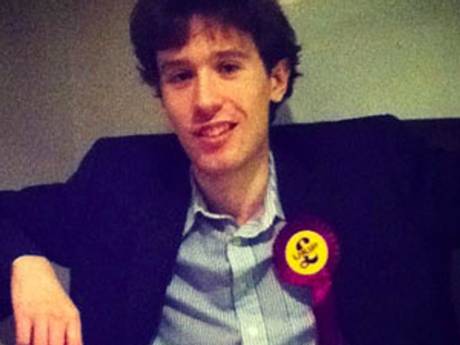
    Olly Neville, former chairman of the Youth Independent (YI), UKIP’s youth organisation was unceremoniously fired in January for expressing his support for gay marriage on the World at One programme on BBC Radio 4.

    Olly NevilleFollowing his sacking, Mr Neville claimed UKIP was “on the wrong side of history” on gay marriage and proceeded to publicise on Twitter emails that were sent him by party leaders.
    The Gay UK chats with Mr Neville about his sacking, UKIP and what it is like to be catapulted into the media spotlight.

    Why did you first join UKIP?
    I joined UKIP because I am a libertarian, and they are a self-described libertarian party. UKIP’s manifesto had a few decent policies – flat taxes, low regulation, tax cuts for the poorest, mainly economic things whereas most other party’s manifestos were dire at best. When I joined their policy on issues like Equal Marriage was a free vote. I thought UKIP were what they said they were, genuinely libertarian leaning, a party that genuinely wanted to shrink the state, and supported internal debate as Nigel Farage (leader of UKIP) said it did. I never realised I would be quite so wrong.

    What was your first formal position within the party?
    I first was elected Young Independence Elections officer in around August 2011, I went on to become Social Media Director in March 2012.

    When were you first elected to the role of Youth Chair?
    I was elected November/December time.

    How long did you hold the position?
    About a month.

    What are your reasons for supporting gay marriage?
    Ideally, I would like to see marriage de-nationalised or privatised – so no state involvement at all. However that option is not on the table, if the state is going to be involved at all it should do it equally. I see no legitimate reason why the rights of one group in society should be denied. Simply put I have found no good arguments against equal marriage, whereas there are many very good reasons – equality of opportunity, equality before the law, the state having no right to interfere in agreements between two consenting partners etc. Sexual orientation is no basis to deny people access to marriage. If two people want to get married and a religion or a venue is happy to let them do so then no one has any right to stand in their way.

    Why do you think UKIP have adopted an anti-gay marriage stance?
    In my eyes their opposition is pure political opportunism. They changed the policy to oppose equal marriage because they thought they could win votes. They wanted to woo angry socially conservative members off the Tories, and get some headlines. Being the only significant party to oppose Equal Marriage beside the BNP was also sure to get UKIP media attention. It’s not a principled stand it’s a short-term grab for votes and attention.

    How did you respond to that policy being decided and what stopped you from leaving the party?
    At the time I was on the Young Independence Council – the executive of the youth wing. Pretty much everyone on it opposed the policy and disagreed with it. YI is a lot more socially liberal than the main party. I opposed it but being in UKIP you put up with a lot of nonsense policies – the immigration one for example or the idea that we need to double the military budget. Young growing parties have teething stages and bad policies come in. I didn’t realise that UKIP were going to make the policy quite so central, indeed I didn’t realise that until the party chairman angrily emailed me telling me how central the policy was after my interview. That was shocking, I hadn’t expected UKIP to try and win so much political capital out of actively denying rights to minorities. I didn’t leave because the youth wing was still very sensible, the future of the party as I saw it were behind equal marriage, let the angry social cons have their day for now.

    Did you anticipate the reaction you had from party leaders after the comments you made on the BBC?
    No, the interview with the BBC was about 10-15 minutes long and mainly about the growth of YI. The comments on equal marriage were not a central part of the interview. But even so I didn’t think UKIP would go quite so crazy, after all Nigel Farage talks about legalising drugs, Paul Nuttall talks about bringing back the death penalty etc, Nigel had said that he believed in free speech in the party and indeed the UKIP party rule book states officers are allowed to voice their own opinions. I didn’t think they’d agree but I never expected so much vitriol.

    What made you tweet the emails you had from party leaders?
    When it got leaked that I had been fired for supporting equal marriage there was quite a reaction. Whenever people criticise or go against UKIP their equivalent of the SNP’s ‘cyber-nats’ come out in force on Twitter to attack those that disagree, usually quite passionately and aggressively. There were all sorts of defences used by UKIP’s online members. The emails from the party Chairman show quite clearly why I was fired. I tweeted them to provide clarity.

    Do you regret having done so?
    Not at all, I wanted everyone to see why I had been removed, for standing up for something I believe in.

    How did it feel when your fellow colleagues’ resigned in protest over your sacking?
    It was actually really unexpected. I’d felt pretty isolated when getting bombarded with angry emails from party higher ups so when suddenly a load of people said that they were leaving too it was nice to know that I was supported, that other people who could look at the situation objectively found the parties treatment of me beyond the pale as well. Many of the people who left I already really respected within UKIP and YI and so for so many of the parties young ‘big hitters’ to leave at the same time really made me realise that it was good to take a stand on your principles as people would respect you for it. The fact so many people left from high up in YI that the council has had to shut down until the next elections really spoke volumes about how wide the gap in opinion as between ‘old’ UKIP and the Youth Wing.

    Are you still a member of UKIP?
    Absolutely not

    Do you belong to another political party?
    No, I am done with compromising. Being in UKIP was a huge compromise that ultimately blew up. I would rather stick to my principles than toe party lines. The way UKIP changed its view on gay rights just to win over a few angry Tories and get a few more points in opinion polls really hammered home how principles have no place in politics and no party really has any. UKIP are like all the others, willing to sell out for a sniff of power. I don’t want to be in anything like that.

    What is your view on the Conservative party’s pledge to leave the European Court of Human Rights?
    I’m Eurosceptic but Europe and the EU has never been a high priority of mine, just like it isn’t a high priority of most of the electorate. As an anarchist I’m not a fan of any centralised bodies, be it EU, ECHR, UN etc but there are so many much bigger issues in my opinion. It’s a bit of a sideshow to the real issues but that’s what a lot of politics is.

    Has the UKIP sacking had an effect you personally or professionally?
    Not hugely, obviously it catapulted my name into the media for a few days, which was a bit weird. Finding my picture in the metro on my way to work was a bit of a double take moment. I had a lot of people – former employers and friends I hadn’t talked to for a while contacted me to congratulate me on taking a stand. I also got a lot of positive feedback on the Internet, apart from the UKIP tribalists obviously. Strangely no one at my work seems to have realised it happened, it was my second day at a new job when it came out and my phone didn’t stop ringing the whole time.

    Do you think UKIP’s strong showing in the Eastleigh by-election demonstrates public support for UKIP’s position on same-sex marriage?
    With pretty much every poll showing overwhelming public support for Same Sex Marriage I doubt it. People vote on big issues like the economy, welfare, education. UKIP wins votes because it positions itself as an anti politics party. It’s anti establishment, anti that notion of corrupt careerist MP’s. I think UKIP does very well setting itself up as a party for the disillusioned and the angry, not just those angry at politics in general but those from former parties who feel let down – whether its Labour for deserting the working man, the Tories from deserting ‘right wing principles’ or the Lib Dems for deserting civil liberties. UKIP promises all things to all people – its un-costed Manifesto promising £600bn in spending cuts but only outlining about £40bn in spending increases demonstrates that.

  • Top 6 Best Gay Apps

    There are over 775,000 Apps in Apple’s App store and around 872 of those are labelled as gay – so, it’s a bit of search to find the right one for you, luckily we’ve done some downloading to find you the good, the best and the brilliant.

    Well occupying the top spot is Joel Simkhai’s ubiquitous Grindr App, which has dominated the App scene for a few years now. What started off as a personal hookup App for Simkhai, has literally changed the way gay men date around the globe. Last year we had a chat with the genius behind Grindr – read the interview here.

    Bashing. We wrote about this App a short while ago and initially weren’t sure what to think, however on reflection, Bashing is a brilliant App to bring visibility to the hundreds of gay bashings that happen across the world. The developers say, “Sometimes it seems like homophobia is claiming the streets. And in order to address this problem, people need to know what happens and where.”

    Pinknews. It’s a must for every gay on the go, keeping you abreast of the homophobic happenings across the globe. Contributed to by a team of journalists Pinknews has won a number of awards for its content and it’s a free App too!

    Gaydio. If you like your radio gay, then you have to download Gaydio. Recently Gaydio took over from Gaydar Radio to become the UK’s number 1 gay radio station. Playing a steady stream of current chart hits Gaydio also keeps you informed with daily gay round ups and breaking news from the Sky News Centre.

    My Free Gay Agenda, is a powerful personal calendar app. What we love about the MGA App is its “Today In Gay” feature, which gives you ‘a daily historical synopsis of key “historical events” from the gay community. Insightful – and apparently today in 2005 Alan Cumming launched his fragrance ‘Cumming’ at Fred Segal in Los Angeles.

    And finally, well we have to plug our own TheGayUK App.Every gay business, bar, hotel, sauna and sexual health service in the UK listed in one place – and you can find which one is closest to your present location. Plus our full magazine is available for free as well as RSS news feeds from all your favourite news organisations around the world – what more could you want? (Yes there are also pictures of hot mens!)

  • Eddie Izzard To Run For Mayor Of London

    British cross dressing comedian to run for London mayor in plan to move from comedy to politics.

    Move over Boris Johnson, Eddie is in town.

    Known for his cross dressing, high profile comedy king, Eddy Izzard believes that an injection of comedy will improve life in the UK.

    Speaking to the Sun’s TV Biz (http://www.thesun.co.uk/sol/homepage/showbiz/tv/article4859858.ece) he said: “I’m going to chuck in comedy in six years to go into politics. I’ve proved I can be determined and do things in a different way. And you need comedy in politics. There are lots of decisions to be made and people get bored talking about things that are only slightly different. It’s very dry so you need comedy to make it palatable.”

    Mr Izzard recently made a BBC show called, Meet The Izzards, in which geneticists identified that 2.8% of his DNA was Neanderthal.

    He said: “The TV project struck a powerful blow against racism by illustrating that the ideal of racial purity was “bullshit” because all humans are related.”

    Taking another incredible political step, next March, Izzard plans to run 27 marathons in 27 days, in tribute to the number of years former South African president Nelson Mandela was in captivity.

    His first attempt this year was filmed by Sky, and will air later on in the year, however Izzard was forced to abandon the challenge when began to urinate blood.

    He isn’t nervous at failing a second time, saying: “I guarantee I will do it. I will drag myself round. I did think, ‘What if I fail a second time?’ But Mandela tried and failed, tried and failed. Then he had a bit of success and failed. I will do the same thing — I’ll go again until I do it. Mandela is a big hero of mine.”

  • Top List Of Gay-Friendly Healthcare Providers Published

    Sussex Partnership NHS Foundation Trust tops Stonewall’s 2013 list of gay-friendly healthcare providers.

    Stonewall today publishes the results of its inaugural Healthcare Equality Index, showcasing the most gay-friendly healthcare organisations in England. Sussex Partnership NHS Foundation Trust heads the list with Liverpool Community Health NHS Trust in second place followed by London Ambulance Service NHS Trust.

    The Healthcare Equality Index is a new tool for health providers to benchmark and track their progress on equality for their lesbian, gay and bisexual patients and communities. Sussex Partnership NHS Trust leads the Top 10, following their success at being the top performing NHS employer in Stonewall’s Top 100 Employers 2012.

    Thirty two healthcare organisations entered the Index, providing services to over 15 million patients across all regions of England. Organisations were assessed against criteria including policy and practice, engagement and communication, health promotion and staff training.

    James Taylor, Stonewall’s Senior Health Officer, said: ’Every healthcare organisation that secured a place in the Top 10 has performed well. Our ground-breaking research consistently demonstrates that many lesbian, gay and bisexual people still face poor health outcomes and experiences when they use the NHS. Every organisation that entered this Index is helping to tackle health inequalities and deliver a 21st century health service accessible to everyone, regardless of sexual orientation.’

    Lisa Rodrigues CBE, Chief Executive at Sussex Partnership NHS Foundation Trust, said: ‘We’re utterly delighted to be awarded the number one position in the first Stonewall Healthcare Equality Index. We see the award not as a sign that our work is done. But rather, we have made a strong start. It’s our honour and duty to provide the best possible treatment and care to the 100,000 people a year we serve.’

    The Healthcare Equality Index 2013 can be downloaded from www.stonewall.org.uk/HEI