All the latest breaking news on the British political party, The Green Party. Browse THEGAYUK’s complete collection of news, articles and commentary on The Green Party.
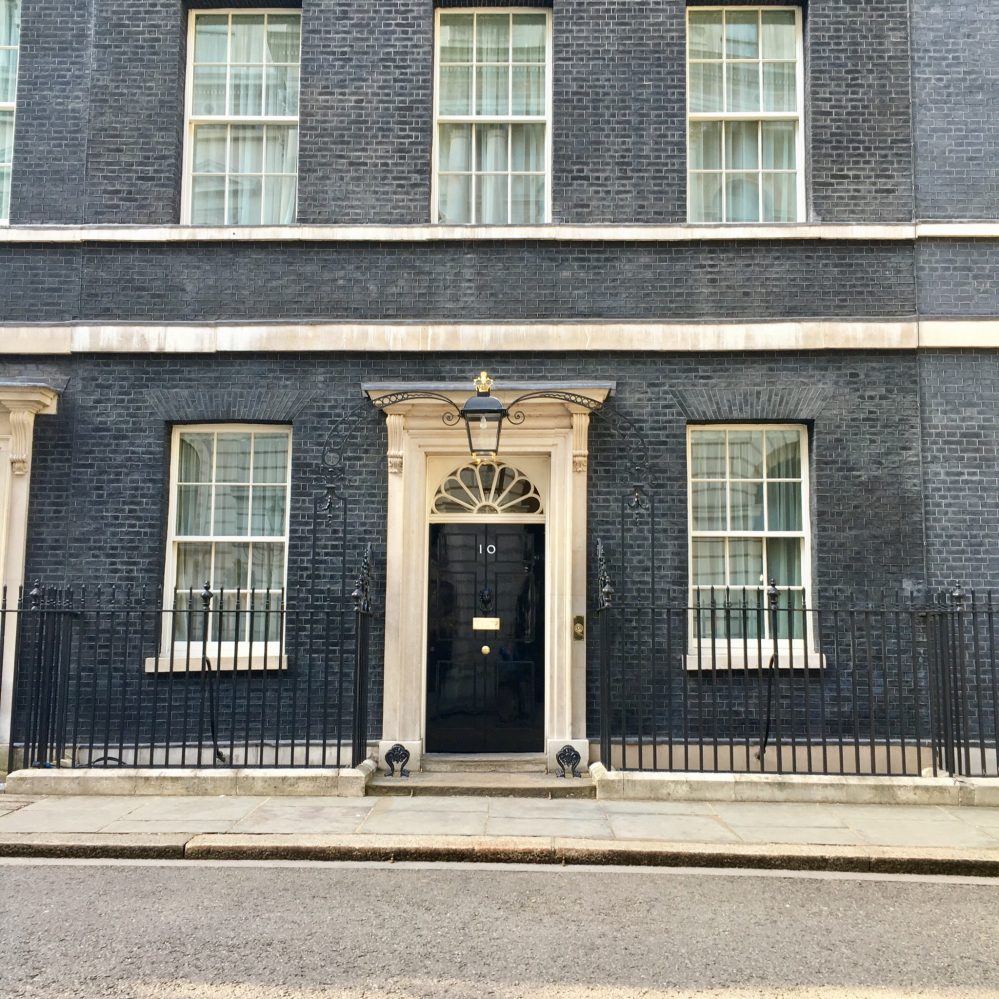
Who will win the race to 10 Downing Street – will Boris keep his premiership or can Corbyn or even Swinson knock him from the top spot? CREDIT: TheGayUK/Jake Hook
With just days before our 3rd General Election in 4 years just around the corner, THEGAYUK.com undertook a flash poll to find out whether its readers had made a decision on who they were going to vote on the 12th December.
THEGAYUK.com asked its readers a binary question of whether they were decided or undecided on who to vote for.
In total, nearly 400 people took part in the survey, at the time of publication.
One quarter are still undecided
In a previous poll, about which way they were planning to vote, THEGAYUK’s readership said that Labour, led by Jeremy Corbyn, was their first choice with 38 per cent of the vote but was closely followed by the Liberal Democrats, headed by Jo Swinson.
The Conservatives, with the incumbent Prime Minister, Boris Johnson, managed to grab hold of 15 per cent of the vote, while “other” which would you include parties such as the Greens, UKIP, The Independent Group For Change, Brexit Party, Plaid Cymru.
However, there is just under one-quarter of people who are still undecided on who to vote for.
At the time of publication, 23 per cent they were undecided, seventy-seven said they had made up their minds.
One commentator, Jay, summed up their feelings by saying, “You look at the conservatives how many lies they have told and with the leader they have got with Boris Johnson is embarrassing. And you have Labour with the likes of Diane Abbott and a leader like Jeremy Corbyn. You have the Lib Dems who look like competition winners. I don’t know who to vote for.”
Who will win the race to 10 Downing Street – will Boris keep his premiership or can Corbyn or even Swinson knock him from the top spot? CREDIT: TheGayUK/Jake Hook
With our 3rd General Election in 4 years just around the corner, THEGAYUK.com undertook a flash poll to understand where its readers were thinking about putting their “X” when they visit the voting booth in December.
THEGAYUK.com asked its readers which way they planned to vote with the choices being Conservative, Labour, Lib Dem or “Other” which could include Nationalist parties like the SNP or single-issue parties like the Brexit Party.
There were only four options permitted – this the maximum number of choices Twitter allows its users for polls.
In total, nearly 360 people took part in the survey, which lasted just over two days via a Twitter poll.
Labour comes out on top – but only just
Overall Labour, led by Jeremy Corbyn, came out on top with 38 per cent of the vote but was closely followed by the Liberal Democrats, headed by Jo Swinson. The Conservatives, with the incumbent Prime Minister, Boris Johnson, managed to grab hold of 15 per cent of the vote, while “other” which would you include parties such as the Greens, UKIP, The Independent Group For Change, Brexit Party, Plaid Cymru
How will you vote?
While the survey is in no way scientific or wholly representational of the LGBT+ community in the UK, it does give some insights into which way THEGAYUK’s Twitter followers are planning to vote come December 12th. Discuss politics and more in our politics forum.
Caroline Lucas, the co-leader of the Green Party and long-time MP for Brighton has announced that she will not be running for co-leadership of her party again.
One of the UK’s most prominent LGBT+ ally MPs, Caroline Lucas has announced that she won’t seek to be reelected as the Green Party‘s leader in this summer’s leadership vote.
She was the first and only MP for Brighton Pavilion, known as the “gay capital” of the UK.
She currently shares the leadership role with Jon Bartley. She and Bartley took over the leadership position from Natalie Bennett in 2016.
Lucas along with Theresa May, Nicola Sturgeon, Leanne Wood and Arlene Foster made history in the UK at the last General Election when the majority of the major political parties in the UK had a female leader.
Ms Lucas has said that she will be spending more time focusing on her work in Parliament and her constituents in Brighton.
I’m not re-standing for co-leadership of @TheGreenParty.
So proud to have done the co-leadership thing with @jon_bartley – and to leave the party representing people in more places than ever.
The Green Party’s leadership is voted on once every two years and there was a vote due for this summer.
Ms Lucas has consistently voted for equal LGBT+ rights since she came to office in 2010 and has spoken out against inequality facing the gay community numerous times.
The news of her decision not to run as the leader has been met with backing from well-wishers who support her mission to concentrate on her constituents.
@CarolineLucas is one of the few politicians I respect and admire. She has strength and integrity. She is principled and purposeful. Her departure from the Green Party leadership, while showing her fairness and modesty, is a huge blow to the country. https://t.co/TEZnKJZzMs
Thank goodness @CarolineLucas is only stepping down as party leader and not as an excellent MP.
We need more MPs like Caroline Lucas who stand up and fiercely and eloquently make their case.https://t.co/ruXC0JVxto
A politician willingly stepping down because it’s the ‘right thing to do’? I’m seriously impressed. Far too many leaders grasp and cling onto power for power’s sake…https://t.co/gKz6KCM7nj
— Helene (Len) McCarthy (@LenMcCarthy17) May 29, 2018
At 20 years old, Nate Higgins is one of the youngest parliamentary candidates in the country. Standing for the Greens in West Lancashire, he may be a first-time candidate, but he is well known as a leading Green Party voice on gay Twitter. Originally from Suffolk, Mr Higgins left home at an early age following the death of his mother and is now a student at Edge Hill University, where he’s studying musical theatre. He spoke last week with THEGAYUK about his life, his candidacy, and why the Green Party is the best party for young voters.
This interview has been edited for clarity and length.
THEGAYUK: If I’m not mistaken you’re a university studentand at least one of the youngest PPCs in the country. Why are you standing?
Nathaniel Higgins: The Green Party candidate for one of the London constituencies… is younger than me. So I don’t want to steal his thunder. But I’m standing for a number of reasons. I originally wasn’t going to. In my mind, I didn’t think it would be fair on constituents to have an MP who spends a lot of his time out of the constituency because of the nature of being a student. But after the local party and regional coordinator and a couple of other people spoke to me and thought I would be the best person to represent West Lancashire, and as I worked out my MP, Rosie Cooper’s voting record, I found a lot to disagree with. And I thought I could make a strong case that I would do the job better than her
I also think it’s really important for young people and LGBT people to have someone in this constituency that they can vote for. I don’t know if you know much about West Lancashire, but aside from the student population, there’s this image that it’s quite conservative, socially at least. Because of that, there isn’t a lot of people around here standing up for LGBT people or the European Union or students’ rights, for examples. As a student, as a gay person, and as a pro-EU person I’m the best person to stand up for those rights. I’m not willing to compromise on my principle positions to be elected, whereas I think the other candidates are.
TGUK: So many young gay men, in particular,seem apathetic about politics, especially as equality is achieved and mainstream acceptance is accomplished. Why should LGBT people of your generation care about this election and care about politics?
NH: A lot of LGB people thinks it stops at the B, and I don’t think it does. Also what I think needs to be remembered is that we don’t necessarily have equality. Although it’s quite a popular opinion to say that we do, there are a lot of issues where if you’re gay, if you’re lesbian, if you’re bisexual, you’re on the backburner. For example, if you want to adopt you’re probably going to be looked at with a little bit more suspicion if you’re a gay couple. If you want to give blood, until recently you were assumed to be dirty and taking part in dangerous sexual activity. Rather than simply asking if they do, they’ll assume that you do if you’re gay. And there’s a whole other host of issues that we haven’t necessarily achieved equality yet.
It’s not just gay people but young people across the board aren’t apathetic towards politics at all. If you ask them about individual issues on a nonpartisan basis, you’ll find quite a lot of enthusiasm for these issues among people my age. But they are apathetic about party politics, and that’s for a whole number of reasons. Primarily it’s because parties don’t feel the need to speak out to them. It’s sort of a catch-22 situation. Young people don’t vote because parties don’t speak out to them, and parties don’t speak out to them because young people don’t vote.
TGUK: That leads perfectly into my next question. Your party, the Green Party, has pledged to equalise job seekers’ allowance, universal credit, housing benefit between those over 25 and those between 16 and 25. Many would argue this is unnecessary because so many young people have help from their parents. Why are they wrong?
NH: If you indulge me and allow me to go into a little of my personal history, I was kicked out of my home when I was 18. I was going to college, and I had to pick up a second job in order to afford my rent, and even then I would not have been able to afford my rent without housing benefit. If that had happened now, now that housing benefit is not available for 18-21-year-olds, I would have had to leave college and move to another town where my dad lived and hope that he would be willing to let me live with him. I would not be where I am now if that had happened…
In a lot of cases just because someone has access to parental support, it doesn’t mean it’s fair to expect them to use it. For example, say that you have a family who is not accepting of LGBT people but is willing to, when asked by the government, is willing to house you if you deny that part of who you are. I don’t think that’s something someone should have to do, and I don’t think they should have to make that case to the government in order to receive the support that they need.
TGUK: Was that your situation? Were you kicked out for being gay?
NH: No, not quite. My mum passed away. My mum was married to an Iranian man, and in the Iranian culture, it’s desirable to remarry as soon as possible. My stepdad’s new wife didn’t like me very much.
TGUK: I’m sorry to hear that. But moving on to the next question, maybe a little less heavy. The Green Party is known to be on the left of British politics. Jeremy Corbyn is also extremely leftwing. Why should our readers vote for the Greens and not just vote for Labour?
NH: As much as politicos like to simplify it this way, politics is not a simple left/right scale. It’s far more complicated than that. What I think you need to see about Jeremy Corbyn is that there’s Jeremy Corbyn the personal politician and there’s Jeremy Corbyn the leader of the Labour Party, and the latter is far more disappointing than the former. Though there’s a lot to disagree with Jeremy Corbyn’s voting record over thirty or so years he’d been a Member of Parliament, he is one of the more progressive Members of Parliament. But as Labour leader, he has left a lot to be desired. For example, he claims to want to break open the establishment but then doesn’t support things like electoral reform that will bring that. And the reason why is there’s a lot of disagreement on the backbenches of the Labour Party on electoral reform. Jeremy Corbyn’s position is nearly untenable as it is, so he doesn’t want to implement something like that. But then you see John McDonell who does support electoral reform.
…the Labour Party just isn’t standing up for you at the moment. You saw it on their capitulation to the Tories on Article 50, and how they gave the Conservatives a blank cheque on the Article 50 vote. And they do that because the Labour Party is terrified, absolutely terrified, of losing a certain number of its voters. It’s because the Labour Party is, at the end of the day, a coalition of very different people and its voter base is a lot of very different people. So a lot of times if you’re supporting the Labour Party you’re supporting a party that is acting in the interests of other people, whereas I think the voter base of the Green Party is much more unified. By nature of being a smaller party that’s much easier. But the Green Party is almost always going to be voting in your interest
TGUK: Almost always?
NH: Well I mean, no politician is perfect. There will be some Greens who disagree with the way that Caroline acts in Parliament sometimes. I don’t personally have any issues that I can think of myself, but it’s just no politician is perfect, and I think we should acknowledge that. What I think needs to be understood is in this electoral system it’s not possible for smaller parties to win a position in government as a smaller party. So a lot of the time they let go of their principles for electoral success, and the Green Party is never going to do that.
What you also need to remember is if you’re voting for the Labour Party in hopes that Jeremy Corby becomes Prime Minister, what happens if he doesn’t? Does he then resign and you get another Blairite? The Labour Party isn’t Jeremy Corbyn. What I think you need to remember is you’re voting for a representative of your constituency, not the Prime Minister. And Party leaders change often and they change unpredictably. So I don’t think you should vote Labour just because you like Jeremy Corbyn. And depending on where you are, a Green MP might be more supportive of Jeremy Corbyn than the Labour representative is.
TGUK: Can strategic voting and a progressive alliance actually work?
NH: I just want to stop you right there. There is no such thing as a singular “progressive alliance.” A “progressive alliance” is a principle that has taken many different forms in many different constituencies. No party wants to implement a national alliance with any party. It wouldn’t work, it would be wrong to the activists on the ground, and it would be wrong to the candidates if they’re already selected. Instead what we’re saying is in constituencies where there is a sitting conservative MP or a progressive Labour MP is at risk of losing their seats, let’s have a conversation about what we can do to best make sure that our principles continued to be implemented by this MP. Because there’s no point in putting in all the effort of standing if you’re shooting yourself in the foot by doing so.
TGUK: Speaking of democracy, the Green Party is against Brexit and has promised a second referendum. But haven’t the British people already decided that?
NH: The Green Party has not promised a second referendum. No party is promising a second referendum. What we have promised is, if we were in the ability to implement this, we would bring the final deal that is implemented back to the people in a ratification referendum. And that is not a second referendum. I think that’s really important, because when people hear a second referendum, what they hear is a party trying to subvert the will of the people. But this would be a different referendum with a different question, and it would be something along the lines of “is this deal acceptable for this country?” What I think you need to remember is that though a majority of people voted for Brexit, it was such a small majority – around four per cent. …
Once we actually know what Brexit looks like, once we know what is achievable and what is possible, we should bring that to the people just to make sure before we embark on the biggest change to our constitution since we joined the European Union.
TGUK: So much of LGBT equality is underpinned by rulings from the European Court of Human Rights (which Brexit doesn’t take us out of) and the European Court of Justice (which it does). How can we enshrine LGBT equality achieved through European mechanisms into British law post-Brexit?
NH: Okay, so one interesting thing is – so Theresa May, and I think people forget this, and I think Theresa May wants people to forget this, but she backed Remain. But what she said was “let’s stay in the European Union but let’s leave the European Court of Human Rights.” So her being Prime Minister now gives me absolutely no faith that we will remain in the ECHR in the long-term. What we need to make sure is that during the transition period of leaving the EU is that all of these ECHR rulings are transcribed into British law wholesale. I think that’s what should be done. There should be a bill in parliament that says all current EU law will be put on the British statute book, and we can then, later on, decide which policies are desirable to remove.
But I don’t think that’s a negotiation that should happen during the transition process. What you’ll get is all these different – it will clog up Parliament’s time, and it will be impossible for MPs to properly hold the government to account on the thousands of different laws that they would have to decide on. Like, you can’t do this one by one. Every EU law has to become British law, and those rights for LGBT people need to come with them. Then later on if the government wants to repeal certain rights, they can make that case to Parliament. In the meantime, we need to elect progressive MPs who we know stand by LGBT rights when it comes to voting on them. We cannot allow this battle that we’ve won to be undone.
TGUK: So that’s the opposite of the Great Repeal Bill?
NH: I’ve not actually read up on the specifics of the Great Repeal Bill, but in my view, we need to make sure that all EU law becomes British law at the time of leaving so that when it comes to repealing specific laws it can be held to account by MPs.
TGUK: The Green Party is also, obviously, concerned with the environment and climate change. What environmental concerns does Brexit raise?
NH: Well, by nature the environment is… a cross-border problem. The EU is one of the best ways to coordinate on that on a European level. The United Kingdom could become a carbon neutral perfect country and the planet would still be in crisis. We cannot solve this problem on our own; that’s what the Paris climate talks were about. Removing that level of cooperation between the United Kingdom and the rest of Europe, which is required in order to have a measurable impact on the environment, was a mistake in my view.
For example, our fish don’t stop at country borders. They will swim between country borders. So we need to make sure our seas across the whole of Europe are not polluted in order to stop the negative impact that has on sea life, for example.
TGUK: What’s the most important issue facing the LGBT community in this election?
NH: I won’t speak for all LGBT people, but for me, my worry is that when we have a Conservative government, that LGBT rights are going to stand still whilst the rest of the world moves forward. There are things like adoption rights – the majority of Conservative MPs voted against that for LGBT people. Same-sex marriage, the majority of Conservative MPs voted against that. And something that was pointed out to me today is that the Conservative government actually banned the Church of England from carrying out same-sex marriages. If that had been any other government, that never would’ve happened. Even if the Church of England decided that it wanted to take out or provide same-sex marriages, they wouldn’t be allowed to because the Conservative Government actually banned it in the process of legalising same-sex marriage. And I think that identifies the Conservative approach to equality altogether…
As a reminder to where Scottish MPs stood on one of the most recent and important pieces of legislation affecting the LGBT+ community in the UK, we’ve listed all the MSPs who voted for same-sex marriage in 2014.
Here is the full list of MSPs who voted for same-sex marriage in Scotland.
CONSERVATIVES
Jackson Carlaw (West Scotland)
Ruth Davidson (Glasgow)
Annabel Goldie (West Scotland)
John Lamont (Ettrick, Roxburgh and Berwickshire)
Mary Scanlon (Highlands and Islands)
John Scott (Ayr)
SCOTTISH NATIONAL PARTY
George Adam (Paisley)
Clare Adamson (Central Scotland)
Christian Allard (North East Scotland)
Colin Beattie (Midlothian North and Musselburgh)
Marco Biagi (Edinburgh Central)
Chic Brodie (South Scotland)
Keith Brown (Clackmannanshire and Dunblane)
Margaret Burgess (Cunninghame South)
Aileen Campbell (Clydesdale)
Roderick Campbell (North East Fife)
Willie Coffey (Kilmarnock and Irvine Valley)
Angela Constance (Almond Valley)
Bruce Crawford (Stirling)
Graeme Dey (Angus South)
Nigel Don (Angus North and Mearns)
Bob Doris (Glasgow)
James Dornan (Glasgow Cathcart)
Jim Eadie (Edinburgh Southern)
Annabelle Ewing (Mid Scotland and Fife)
Linda Fabiani (East Kilbride)
Joe FitzPatrick (Dundee City West)
Kenneth Gibson (Cunninghame North)
Rob Gibson (Caithness, Sutherland and Ross)
Jamie Hepburn (Cumbernauld and Kilsyth)
Fiona Hyslop (Linlithgow)
Adam Ingram (Carrick, Cumnock and Doon Valley)
Colin Keir (Edinburgh Western)
Bill Kidd (Glasgow Anniesland)
Richard Lochhead (Moray)
Kenny MacAskill (Edinburgh Eastern)
Gordon MacDonald (Edinburgh Pentlands)
Derek Mackay (Renfrewshire North and West)
Mike MacKenzie (Highlands and Islands)
Michael Matheson (Falkirk West)
Stewart Maxwell (West Scotland)
Joan McAlpine (South Scotland)
Mark McDonald (Aberdeen Donside)
Christina McKelvie (Hamilton, Larkhall and Stonehouse)
Aileen McLeod (South Scotland)
Fiona McLeod (Strathkelvin and Bearsden)
Stuart McMillan (West Scotland)
Alex Neil (Airdrie and Shotts)
Gil Paterson (Clydebank and Milngavie)
Dennis Robertson (Aberdeenshire West)
Shona Robison (Dundee City East)
Michael Russell (Argyll and Bute)
Alex Salmond (Aberdeenshire East)
Stewart Stevenson (Banffshire and Buchan Coast)
Kevin Stewart (Aberdeen Central)
Nicola Sturgeon (Glasgow Southside)
John Swinney (Perthshire North)
David Torrance (Kirkcaldy)
Maureen Watt (Aberdeen South and North Kincardine)
Paul Wheelhouse (South Scotland)
Sandra White (Glasgow Kelvin)
John Wilson (Central Scotland)
LABOUR
Jackie Baillie (Dumbarton)
Claire Baker (Mid Scotland and Fife)
Richard Baker (North East Scotland)
Jayne Baxter (Mid Scotland and Fife)
Claudia Beamish (South Scotland)
Neil Bibby (West Scotland)
Sarah Boyack (Lothian)
Malcolm Chisholm (Edinburgh Northern and Leith)
Kezia Dugdale (Lothian)
Mary Fee (West Scotland)
Patricia Ferguson (Glasgow Maryhill and Springburn)
As a reminder to where MPs stood on one of the most recent and important pieces of legislation affecting the LGBT+ community in England and Wales, we’ve listed all the MPs who voted for same-sex marriage in 2013.
Here is the full list of MPs who voted for same-sex marriage in England and Wales.
CONSERVATIVES (127)
The Conservative MPs who voted for same-sex marriage:
Stuart Andrew (Pudsey)
Greg Barker (Bexhill & Battle)
John Baron (Basildon & Billericay)
Gavin Barwell (Croydon Central)
Richard Benyon (Newbury)
Crispin Blunt (Reigate)
Nick Boles (Grantham & Stamford)
Peter Bottomley (Worthing West)
Karen Bradley (Staffordshire Moorlands)
James Brokenshire (Old Bexley & Sidcup)
Aidan Burley (Cannock Chase)
Conor Burns (Bournemouth West)
Alistair Burt (Bedfordshire North East)
Dan Byles (Warwickshire North)
David Cameron (Witney)
Neil Carmichael (Stroud)
James Clappison (Hertsmere)
Greg Clark (Tunbridge Wells)
Kenneth Clarke (Rushcliffe)
Damian Collins (Folkestone & Hythe)
Oliver Colville (Plymouth Sutton & Devonport)
Tracey Crouch (Chatham & Aylesford)
Stephen Dorrell (Charnwood)
James Duddridge (Rochford & Southend East)
Alan Duncan (Rutland & Melton)
Iain Duncan Smith (Chingford & Woodford Green)
Michael Ellis (Northampton North)
Jane Ellison (Battersea)
Michael Fabricant (Lichfield)
Mark Field (Cities of London & Westminster)
Mike Freer (Finchley & Golders Green)
Lorraine Fullbrook (South Ribble)
David Gauke (Hertfordshire South West)
Nick Gibb (Bognor Regis & Littlehampton)
Zac Goldsmith (Richmond Park)
Michael Gove (Surrey Heath)
Richard Graham (Gloucester)
Helen Grant (Maidstone & The Weald)
Chris Grayling (Epsom & Ewell)
Damian Green (Ashford)
Justine Greening (Putney)
Ben Gummer (Ipswich)
Sam Gyimah (Surrey East)
William Hague (Richmond (Yorks))
Stephen Hammond (Wimbledon)
Matthew Hancock (Suffolk West)
Greg Hands (Chelsea & Fulham)
Mark Harper (Forest of Dean)
Richard Harrington (Watford)
Chris Heaton-Harris (Daventry)
Charles Hendry (Wealden)
Nick Herbert (Arundel & South Downs)
Damian Hinds (Hampshire East)
George Hollingbery (Meon Valley)
Kris Hopkins (Keighley)
John Howell (Henley)
Jeremy Hunt (Surrey South West)
Margot James (Stourbridge)
Sajid Javid (Bromsgrove)
Bernard Jenkin (Harwich & Essex North)
Jo Johnson (Orpington)
Andrew Jones (Harrogate & Knaresborough)
Daniel Kawczynski (Shrewsbury & Atcham)
Simon Kirby (Brighton Kemptown)
Andrew Lansley (Cambridgeshire South)
Jessica Lee (Erewash)
Oliver Letwin (Dorset West)
Brandon Lewis (Great Yarmouth)
Peter Luff (Worcestershire Mid)
Jason McCartney (Colne Valley)
Mary Macleod (Brentford & Isleworth)
Patrick McLoughlin (Derbyshire Dales)
Francis Maude (Horsham)
Theresa May (Maidenhead)
Mark Menzies (Fylde)
Maria Miller (Basingstoke)
Nigel Mills (Amber Valley)
Andrew Mitchell (Sutton Coldfield)
Penny Mordaunt (Portsmouth North)
Stephen Mosley (Chester, City of)
David Mowat (Warrington South)
David Mundell (Dumfriesshire, Clydesdale & Tweeddale)
Andrew Murrison (Wiltshire South West)
Brooks Newmark (Braintree)
Sarah Newton (Truro & Falmouth)
Eric Ollerenshaw (Lancaster & Fleetwood)
Guy Opperman (Hexham)
George Osborne (Tatton)
Richard Ottaway (Croydon South)
John Penrose (Weston-Super-Mare)
Andrew Percy (Brigg & Goole)
Eric Pickles (Brentwood & Ongar)
Chris Pincher (Tamworth)
Daniel Poulter (Suffolk Central & Ipswich North)
Dominic Raab (Esher & Walton)
Mark Reckless (Rochester & Strood)
Hugh Robertson (Faversham & Kent Mid)
Amber Rudd (Hastings & Rye)
Laura Sandys (Thanet South)
Grant Shapps (Welwyn Hatfield)
Alok Sharma (Reading West)
Mark Simmonds (Boston & Skegness)
Keith Simpson (Broadland)
Chris Skidmore (Kingswood)
Chloe Smith (Norwich North)
Julian Smith (Skipton & Ripon)
Nicholas Soames (Sussex Mid)
Anna Soubry (Broxtowe)
Caroline Spelman (Meriden)
Andrew Stephenson (Pendle)
Iain Stewart (Milton Keynes South)
Rory Stewart (Penrith & The Border)
Desmond Swayne (New Forest West)
Hugo Swire (Devon East)
Justin Tomlinson (Swindon North)
Elizabeth Truss (Norfolk South West)
Ed Vaizey (Wantage)
Theresa Villiers (Chipping Barnet)
Charles Walker (Broxbourne)
Robin Walker (Worcester)
Dame Angela Watkinson (Hornchurch & Upminster)
Mike Weatherley (Hove)
Chris White (Warwick & Leamington)
David Willetts (Havant)
Sarah Wollaston (Totnes)
Tim Yeo (Suffolk South)
Sir George Young (Hampshire North West)
LABOUR (217)
The Labour MPs who voted for same-sex marriage:
Diane Abbott (Hackney North & Stoke Newington)
Debbie Abrahams (Oldham East & Saddleworth)
Bob Ainsworth (Coventry North East)
Douglas Alexander (Paisley & Renfrewshire South)
Heidi Alexander (Lewisham East)
Rushanara Ali (Bethnal Green & Bow)
Graham Allen (Nottingham North)
Dave Anderson (Blaydon)
Mr Jon Ashworth (Leicester South)
Ian Austin (Dudley North)
Adrian Bailey (West Bromwich West)
Willie Bain (Glasgow North East)
Ed Balls (Morley & Outwood)
Gordon Banks (Ochil & Perthshire South)
Kevin Barron (Rother Valley)
Hugh Bayley (York Central)
Dame Margaret Beckett (Derby South)
Hilary Benn (Leeds Central)
Luciana Berger (Liverpool Wavertree)
Clive Betts (Sheffield South East)
Roberta Blackman-Woods (Durham, City of)
Hazel Blears (Salford & Eccles)
Tom Blenkinsop (Middlesbrough South & Cleveland East)
Paul Blomfield (Sheffield Central)
David Blunkett (Sheffield Brightside & Hillsborough)
Ben Bradshaw (Exeter)
Kevin Brennan (Cardiff West)
Lyn Brown (West Ham)
Nicholas Brown (Newcastle upon Tyne East)
Russell Brown (Dumfries & Galloway)
Chris Bryant (Rhondda)
Karen Buck (Westminster North)
Richard Burden (Birmingham Northfield)
Andy Burnham (Leigh)
Liam Byrne (Birmingham Hodge Hill)
Alan Campbell (Tynemouth)
Martin Caton (Gower)
Sarah Champion (Rotherham)
Jenny Chapman (Darlington)
Katy Clark (Ayrshire North & Arran)
Ann Clwyd (Cynon Valley)
Vernon Coaker (Gedling)
Ann Coffey (Stockport)
Michael Connarty (Linlithgow & Falkirk East)
Yvette Cooper (Normanton, Pontefract & Castleford)
We have divided the main issues into six sections:
Education: specific classes and lessons in sex and relationship education and a commitment to tackle bullying.
Crime: a specific look into tackling hate crime on the basis of sexual/gender orientation. Better support for domestic violence victims and survivors.
Workplace: a specific look into tackling inequality in the workplace.
Healthcare: a specific look into policies affecting mental, sexual health, PrEP and transgender/intersex issues.
In politics: What laws will be amended and changed to fully equalise the LGBT community.
On the world stage: What will the next government do to show that the UK is a beacon of LGBT rights?
We have also only taken parties that have a national footprint.
CONSERVATIVES
Number of mentions of LGBT: 0
Education: No specific mentions of LGBT+ sex or relationship education
Crime: No specific mention of LGBT+ but pledged: “push forward with our plan for tackling hate crime committed on the basis of religion, disability, sexual orientation or transgender identity”
Workplace: Nothing specific to LGBT+
Healthcare: No specific mention of healthcare reforms for LGBT people – including PrEP.
In politics: Nothing specific to LGBT+
On the world stage: “We will expand our global efforts to combat extremism, terror, and the perpetration of violence against people because of their faith, gender or sexuality”.
LABOUR
Number of mentions of LGBT: 11
Education: Teachers will be given training on how to deal with bullying.
They’ll also ensure that new guidance is issued on relationships and LGBT-inclusive sex education.
Crime: Labour pledges to bring the law on LGBT hate crimes into line with hate crimes based on race and faith, by making them aggravated offences.
Workplace: Nothing specific to LGBT+
Healthcare: Labour has pledged that it will work to “reverse the damage done to mental health services under this Tory government, which is particularly hitting services for LGBT and BAME communities”.
Labour also pledges that frontline healthcare professionals receive ongoing training to understand and meet the needs of LGBT patients and service users.
And PrEP? Well, they pledge that “NHS England completes the trial programme to provide PrEP as quickly as possible, and fully roll out the treatment to high-risk groups to help reduce HIV infection”.
In politics: They pledge to reform the Gender Recognition Act, which will protect trans people by changing the protected characteristic of ‘gender assignment’ to ‘gender identity’. They also pledge to remove outdated language such as “transexual”.
On the world stage: Labour have announced that they will “appoint dedicated global ambassadors for women’s rights, LGBT rights and religious freedom to fight discrimination and promote equality globally”
LIBERAL DEMOCRATS
Number of mentions of LGBT: 5
Education: The Lib Dems have promised to review sex education in schools saying that they will include lessons on sexual consent, LGBT+ relationships and issues surrounding explicit images and content.
Crime: Nothing specific to LGBT+
Workplace: The Lib Dems want companies with more than 250 employees to publish data on their employment of BAMEs LGBTs and pay gaps.
Healthcare: The Liberal Democrats have promised to ensure that “LGBT+ inclusive mental health services receive funding and support”. They also want to make PrEP available on the NHS.
In politics: The Lib Dems pledge to introduce legislation that will allow for all-BAME and all LGBT+ parliamentary shortlists.
On the world stage: The Liberal Democrats pledge a commitment to promoting the “decriminalisation of homosexuality around the world and advancing the cause of LGBT+ rights”.
UKIP
Number of mentions of LGBT: 1
n education: UKIP will end sex education in primary schools. Will look into whether further legislation is required to tackle cyberbullying.
On health: Nothing specific to the LGBT+ community, but promised to increase funding for mental health. Will also hold a review into editorial codes of the media, to promote “healthy body images”.
On politics: UKIP pledge to test the social attitudes of those who are seeking to immigrate to the UK. They wrote,
“…we do not believe in treating women or gay people as second-class citizens, and we hold to a fundamental belief in democracy and free speech. UKIP’s points-based immigration system will, therefore, include one further major principle: we will test the social attitudes of migration applicants to foster community cohesion and protect core British values”.
UKIP also will repeal Labour’s Human Rights legislation and remove the UK from the jurisdiction of the European Court of Human Rights”. They will replace with a new UK Bill of rights.
On crime: Nothing specific to the LGBT+ community.
On the world stage: Nothing specific to the LGBT+ community
THE GREEN PARTY
Number of mentions of LGBT: Have released an entirely separate LGBT+ Manifesto.
They have released an entire LGBT+ manifesto. Which includes the following pledges:
Education: Sexual and relationship education for all students. Require every school to have an anti-bullying programme. Provide teachers with training to provide LGBT+ inclusive education.
Crime: Greens pledge to “Combat all forms of antiLGBTIQA+ prejudice and violence through improved hate crime protections”.
Workplace: Noting specific to LGBT+
Healthcare: Wide-ranging policies affecting the Trans and Intersex community. Including, giving people “personal autonomy in all medical decisions” and “Improve access to medical services and gender identity clinics, particularly for trans and non-binary young people.” They have said they would also, “Protect the welfare state in the face of Government cuts and preserve the vital security net many LGBTIQA+ people rely upon”.
In politics: Has pledged to make same-sex marriage “truly equal” to include pension rights. They will also open civil partnerships to opposite-sex couples. Will “Apologise to and pardon all 50,000–100,000 people convicted of consenting adult same-gender sexual relations under antisodomy laws that have now been repealed.”
On the world stage: The Greens have said, “The Green Party would speak out against those countries that discriminate against, marginalise and kill LGBTIQA+ citizens, and work with countries leading the way in recognising and protecting” the LGBT+ community.
SCOTTISH NATIONAL PARTY
Number of mentions of LGBT: 5
Education: Nothing specific to LGBT+
Crime: Nothing specific to LGBT+
Workplace: Nothing specific to LGBT+
Healthcare: The SNP will support efforts to ensure PrEP becomes available on NHS to any who needs it in the UK.
In politics: The SNP pledge to push the UK Government to extend the Turing Bill pardon to gay men convicted of same-sex activity who are still alive today.
They also pledge to ensure that same-sex couple have equal pension rights and “protected characteristics are expanded to ensure all LGBTI people are fully protected from discrimination and harassment”.
On the world stage: The SNP pledge to reform the detention and asylum system for LGBT+ people escaping countries where homosexuality is still illegal. They also pledge to remove “unfair and invasive demands for ‘proof’ of sexuality or gender identity”.
They also say,
“SNP MPs will support the establishment of a special envoy to promote the rights of LGBTI people throughout the world, as an integral part of UK foreign policy – helping to alleviate the discrimination and persecution faced by LGBTI people in Chechnya and across the world”.
Plaid Cymru
Number of mentions of LGBT: 0
Education: Nothing specific to LGBT+
Crime: Nothing specific to LGBT+
Workplace: Nothing specific to LGBT+
Healthcare: No specific mention of healthcare reforms for LGBT people – including PrEP.
In politics: Has pledged to publish a “human rights charter” to provide human rights regardless of race, gender, sexual orientation.
On the world stage: Nothing specific to LGBT+
Democratic Unionist Party
Number of mentions of LGBT: 0
Education: Nothing specific to LGBT+
Crime: Nothing specific to LGBT+
Workplace: Nothing specific to LGBT+
Healthcare: No specific mention of healthcare reforms for LGBT people – including PrEP.
“I condemn this disgusting and unprovoked attack in the strongest terms; this is not the city most of us recognise. It is horrifying that such violent and shocking homophobia has visited our city. Bristol prides itself on being open, tolerant and inclusive and we must do everything we can to ensure it is a safe city where everyone is able to be themselves. There is no place for intolerance.”
“I hope the perpetrators are swiftly brought to justice and urge anyone with any information to contact the Police. There is no excuse for members of our communities living in fear because of their sexuality or gender orientation.”
Molly Scott Cato is the Green Party’s parliamentary candidate for Bristol West.
The general election is a month away from today, but the big news last week was the already-scheduled local elections which took place throughout the country on Thursday.
The Tories, rather predictably, swept the local councils. Meanwhile, there hasn’t been this much Labour shock and pain since Sonia Fowler unexpectedly gave birth on EastEnders. The party suffered heavy losses throughout the country, while the Liberal Democrats similarly failed to accomplish the surge they were hoping. Likewise, UKIP was virtually wiped out by a Conservative Party which has annexed their pro-Brexit, anti-globalist agenda.
The full results in England show a Conservative Party in ascendency and virtually every other party losing ground to them, which bodes well for Theresa May as we look towards the next few weeks. That’s still to come, though, and four weeks is an eternity in politics. Meanwhile, let’s look back on the big gay week that was.
The biggest news undoubtedly comes from two hotly contested and highly anticipated inaugural mayoral races. In the former Labour heartland of the West Midlands, gay Conservative Party candidate Andy Street made history as the first openly gay metro mayor in the country’s history. In the final round, he narrowly defeated former Labour MP Sion Simon with a majority of just over 4,000 votes.
Still, the historic nature of Mr Street’s victory coupled with the fact that a Tory won in the West Midlands makes this accomplishment even more remarkable. It is also no doubt terrifying for Jeremy Corbyn. He is desperately trying to be the party of tolerance and openness while also holding on to the traditional working class heartlands which aren’t quite as keen on his metropolitan inclusiveness.
It wasn’t all bad news for Labour, though. Andy Burnham won the Manchester mayoral race. The former Secretary of State for Health and the politician with the most beautiful eyes (or is it just me?) won just over 63% of the vote, making him one of the most important Labour leaders in the country. He stood against Jeremy Corbyn for the party leadership in 2015, when his own questionable history on LGBT equality was made an issue by opponents. Mr Burnham has since said that his support for gay rights has led to rifts in his family, but that he does unequivocally support equality.
This is especially important as hate crimes have soared in Greater Manchester over the past few years, increasing by a third between November 2014 and October 2015. How Mr Burnham addresses the safety of the LGBT community, particularly in Manchester’s Gay Village, will be of vital interest to the local community and the LGBT activists across the nation.
The local elections were, as I said, the major story of the week – but they weren’t the only one. Of particular interest is the happenings in Ilford North, a key marginal constituency in North London. The seat is currently held by openly gay Labour MP Wes Streeting, a former NUS president and critic of Jeremy Corbyn. Before 2015 it was represented by Conservative Lee Scott, who is standing to take back the constituency this year. In an effort to help him do this, Ukip have decided not to stand a candidate of their own and instead back Mr Scott. Meanwhile, the Greens announced last week they are also standing down in order to back Mr Streeting.
Ilford North looks poised to become a – perhaps the – key Brexit battleground in London, if not the whole of England. Mr Streeting supported the Remain campaign but now accepts that Brexit is happening – though he’s hardly supporting the Hard Brexit of Theresa May. Ukip, on the other hand, see in Mr Lee and Mrs May two people who will support their vision of a Britain free from Europe and cracking down on immigration – that is, the Hard Brexit everyone keeps banging on about.
By standing down, Ukip all but guarantees Mr Lee’s victory. They took over 4,000 votes in 2015 – far more than Mr Streeting’s slim majority of 589. Looking at the results of the local elections, we see that the Conservatives have basically gobbled up Ukip like a late-night kebab.
It’s worth asking why the Conservative Party – long derided by Ukip as too pro-Europe – is suddenly so appealing to them under Theresa May. The Tories’ Brexit strategy is so similar to Ukip’s own platform that they’re willing to stand down, which should worry anyone who doesn’t want a Brexit harder than Tom Daley’s tushy.
While we’ll undoubtedly be talking about Ilford North more as the campaign carries on, there were some stories that flew under-the-radar this week but which are of particular interest to the LGBT community. The Tories selected former LGBT+ Conservatives vice chair Emma Warman to contest the relatively safe Green seat of Brighton Pavilion, currently represented by the Greens’ only MP (and co-leader), Caroline Lucas. Elsewhere in Brighton, the Tories are standing a woman who claims to be able to heal the deaf by prayer against openly gay Labour MP Peter Kyle. (No, seriously, they are.) Labour is standing openly trans Sophie Cook against anti-equality Tim Loughton in the Tory safe seat of East Worthing and Shoreham. And SNP MP John Nicholson claims an opponent accused him of hiring his wife to manage his constituency office. Only one problem: Mr Nicholson is openly gay and partnered. “My boyfriend will be so angry when he finds out,” he tweeted.
So that’s the second big gay week that was of this general election. If you’ve any tips you’d like me to consider for next week, please don’t hesitate to get in touch at skylar.baker-jordan@thegayuk.com. Until then, no matter which colour of the rainbow your rosette is, have a gay ole’ time out on those doorsteps.
Speaking out against, MP Andrew Turn, who stepped down after alleged homophobic comments were made to a sixth form class, the Green Party has called the Conservative MP “unfit” and says only the Green party can offer protection to LGBTs.
The Green Party has called the minister “unfit” and said that his comments were abhorrent. Reaching out to the LGBT community,
Vix Lowthion, Green Party candidate for the Isle of Wight, said,
“Andrew Turner was unfit to represent the Isle of Wight and his recent, abhorrent comments left his place in Parliament completely untenable. People here deserves someone who will stand up for them. Today the Green Party announced radical plans to protect LGBTIQA+ refugees, provide decent HIV protection and promote rights for intersex and trans people – that is the kind of politics people in the Isle of Wight need and only the Green Party can offer.”
In their latest manifesto aimed at the LGBT community, the Greens are keen to bring in a raft of new policies which would secure rights for non-binary, trans, asexual and aromantic people. The word bisexual is mentioned once, lesbian and gay are mentioned four times, intersex 10 times, non-binary 12 times and the word trans is written 19 times.
However, they did use language such as “men who have sex with men” which has largely been disapproved of by the gay and bisexual male community. The manifesto also does not mention changing current divorce law to equalise it with opposite-sex marriage. They also failed to make policy on how to tackle LGBT+ homelessness.
It is, however, the first political party to present its LGBT+ manifesto.
In what’s being described as setting a “clear distance” between itself and the Liberal Democrats, the Green Party is launching its LGBT+ manifesto in a church.
The Green party has said it will commit to supporting LGBT+ asylum seekers.
Co-leader of the Greens Jonathan Bartley, said they were the party to ‘always stand up for LGBTIQA+ people’
The party has the only openly trans spokesperson in UK politics.
The Green party is vying for LGBT+ support today after it revealed that it would set out its LGBT+ manifesto in a London Church, a move it says which separates it from the Liberal Democrats. The launch is to take place at The Trinity United Reform Church in Camden, well-known for its progressive views and inclusivity.
Jonathan Bartley, co-leader of the Green Party, said,
“The Green Party has a proud history of leading the way when it comes to LGBTIQA+ rights. While other political parties struggle to say what they believe, Greens are clear – we will always stand up for LGBTIQA+ people.
“We believe in a fairer world, a more equal economy, human rights protected by law, recognition and representation for all gender identities and education and health services which care for and include everyone.”
Last week, the Liberal Democrat leader, Tim Farron was criticised after initially failing to answer questions on whether he thought, as a committed Christian, if “gay sex” was a sin. He was asked numerous times by Channel 4’s Cathy Newman, 11 times by an LBC reporter and once in the House of Commons. He finally revealed that he didn’t think it was a sin by saying in a BBC interview,
“I don’t believe that gay sex is a sin.
“I take the view though, that as a political leader, my job is not to pontificate on theological matters.
Aimee Challenor, Green Party LGBTIQA+ spokesperson, who is the only openly trans spokesperson of a UK Political Party, said,
“Let’s be clear, LGBTIQA+ rights are under threat. From Gay and Bi men being tortured and killed in Chechnya, to Donald Trump weakening protections in the US and the UK’s threat to repeal the Human Rights Act, 2017 has already been a concerning year for everyone who cares about LGBTIQA+ people.
“The Green Party is proud to stand against the erosion of LGBITQA+ rights and launch a manifesto which proudly fights for bodily autonomy for intersex people, legal recognition for trans and non-binary people, for PrEP for all that need it, and for greater protection for LGBTIQA+ asylum seekers – and more.”