Two men, who are believed to be a gay couple, were reportedly assaulted by four individuals in New York City’s Times Square, during which “anti-gay slurs” were used.
The New York Police Department has stated that the incident, which resulted in the hospitalization of the two victims, may be investigated as a hate crime pending further information. Fox News reported that the attack occurred on April 8th at approximately 10:30 pm while the couple was walking around Times Square.
The victims have asked to remain anonymous but shared that the group made derogatory comments towards them before assaulting them physically. The couple was taken to Mount Sinai Hospital, where one of the victims reportedly underwent surgery. No arrests have been made thus far, and the investigation remains ongoing.
New York is relatively safe for LGBTQ+ travellers. However, like many cities, New York City has experienced incidents of violence and discrimination against the LGBTQ+ community in the past. However, it’s difficult to say how frequently such incidents occur, as not all cases are reported to the police or media outlets. According to a report by the New York City Anti-Violence Project, in 2019, hate violence against LGBTQ+ people in New York City increased by 20% compared to the previous year.
The report also found that transgender and gender-nonconforming individuals were more likely to experience violence and harassment than cisgender individuals.
It’s worth noting that hate crimes and discrimination against LGBTQ+ individuals are not unique to New York City and occur in many places around the world.
According to a report from December 2020, 68% of LGBTQ+ individuals in England and Wales reported experiencing hate crimes based on their sexual orientation or gender identity within the past year, with 27% reporting physical injuries resulting from the attacks.
Most of these incidents went unreported due to a lack of trust in the police’s ability to take the reports seriously. Marta Lima, who helped create an app for those affected by hate crime, emphasized that every individual in the LGBTQ+ community has a story, but many are unaware of their rights and do not believe reporting incidents will make a difference.
Anyone who has witnessed or experienced a hate crime is encouraged to report it to the police or visit the True Vision website. In case of an emergency, dial 999.
A man has been “hacked to death”, apparently by his Grindr hook up, in the Bronx, New York.
An unnamed and unidentified male in New York has been killed in an apparent machete attack after his hookup date “violently cut him into pieces”, over what is thought to be a disagreement over sexual activities. It is believed the two met over the gay dating/ hook up, Grindr.
The alleged killer, Juan Alonso, was found, according to the New York Post to be wearing women’s underwear, bra and dress.
The victim, who has not be named, was found by Alonso’s roommate, who came home to find a bloodbath, with Alonso purportedly standing over his victim, holding the machete.
The building’s supervisor, John Gonzalez, told the New York Daily News that the victim had been “cut up and left “on the floor in pieces”.
“Dispute escalated”
Alonso was taken into custody where he was psychologically evaluated, and charged with murder, manslaughter and criminal possession of a weapon according to the police.
Officials are investigating whether there was a “dispute over not liking certain sex activities and it escalated,
“The perp is not in his right mind,” a police source said. “He might have taken drugs,” a spokesperson for the police said.
A lift – or in that delicious New York drawl, an ‘elevator’ – can say a lot about a hotel.
Being easily spooked, I usually detest them. Thus, any distraction is welcome, from music to low-lighting or a retro lift operator/baby-sitter.
So then, what to make of the 286-room Moxy East Village, and its very, very memorable lifts? At first glance, you’re greeted by glassy explosions of stars, so brightly-lit, they’re piercing. On closer inspection, you see they’re actually emojis – including the beloved poop emoji. Once you’ve processed this (‘What the actual…’), and made awkward eye contact with the other guests in what feels like a hall of mirrors, you’ve reached your floor.
Full marks on the distraction front.
Irreverent, fun and young, the clearly-defined Moxy brand follows the lead of sister hotels Moxy Times Square and Moxy Chelsea. Still brand spanking new since opening in September 2019 – the rooftop bar isn’t even finished yet – this is dependable and well-located stopover, minutes from Union Square, that won’t break the bank. Prices start at $179 (£138.12) per night, and that isn’t easy to find in Manhattan.
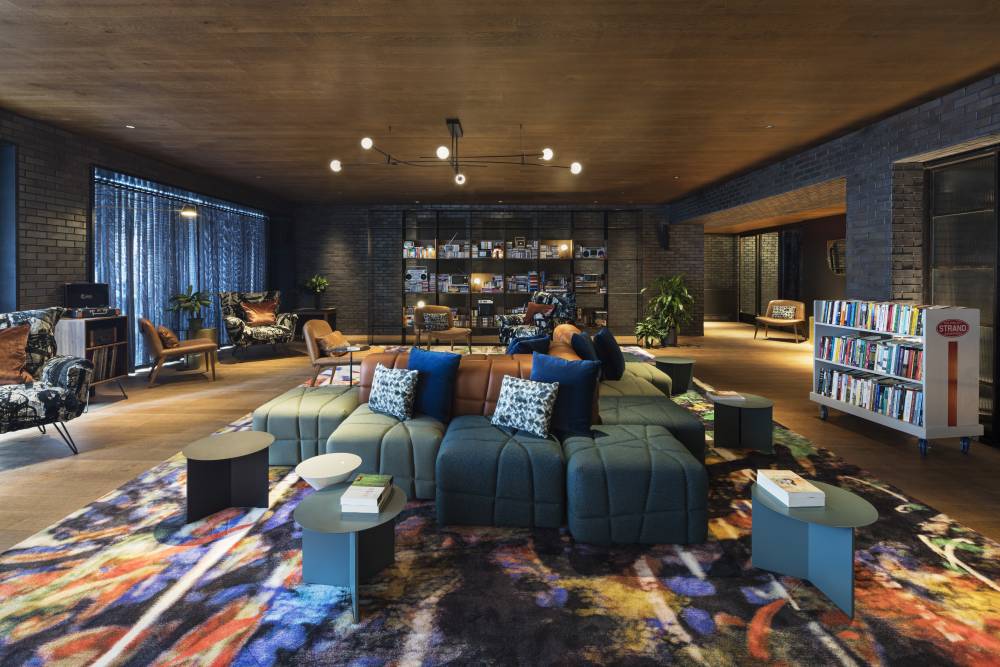
A timelessly smart, clean exterior, courtesy of Stonehill Taylor, is somewhat at odds with more daring design and decor from Rockwell Group inside. Not least in the lounge, where wacky features included a vast collection of 90s knickknacks. Among them VHS tapes, a Fisher Price cassette player and a skee-ball table that begs you to play with it.
The famously (or infamously) compact rooms, meanwhile, exploit space in inventive ways: fold-away furniture, bunk beds, flat screens HDTVs literally at the foot of your bed. My queen room covered 155 square feet and I didn’t feel cooped up, but people I know who’ve stayed with the Moxy in the past have felt differently. My advice: go with it, and don’t let your luggage explode all over the room, as that’ll make it feel even smaller. Space is lacking, but it’s worth it for the price point and the perks, such as fast Wi-Fi, rain showers and a Netflix connection: hallmarks of a truly modern hotel.
Meanwhile, the moody lighting and plush textures in the Alphabet Bar & Cafe is a Manhattan fantasy come true, and a show-stopping hanging wire sculpture by Edoardo Tresoldi in the absurdly glamorous Cathédrale restaurant is befitting of a five-star hotel. Elsewhere, the atmosphere and the service exudes easygoing cool.
The East Village is one of umpteen gay playgrounds in NYC so there’s plenty to see and do on your doorstep. You simply must visit the Cock, a time-tested gay dive bar, and Big Gay Ice Cream – ‘like Ben & Jerry f***ed each other’, as my friend puts it.
But what really sets the East Village apart is its historical flavour: it’s the former stomping ground of actual, proper queer icons like Keith Haring, Andy Warhol and Allen Ginsberg. The latter, for example, lived at 437 East 12th Street for 40 years until he passed away in 1997. It’s also where Blondie’s Debbie Harry lived while working as a Playboy Bunny in the 60s (oh, to have been her roommate), and other famous former residents include Jack Kerouac, Jeff Koons and Madonna.
Gentrification has scrambled the countercultural spirit somewhat, so to get under its skin, a tour with an in-the-know local is good bet.
For the first time in the tree’s history, 2018’s tree was donated by a lesbian couple.
(C) ROCKEFELLER CENTER BLOG
The first ever tree to be lit at the Rockefeller Center in New York was in 1931. The lighting of the tree tradition became in 1933. This year’s tree was donated by Shirley Figueroa and Lissette Gutierrez.
New Yorkers for Parks noted on its official Twitter account that “This year, Rockefeller Center’s tree is from a woman who grew up on a block in the Bronx that had no trees! It’s also the first tree in Rockefeller Center’s history to be donated by a same-sex or Latina couple!”
This year, Rockefeller Center’s tree is from a woman who grew up on a block in the Bronx that had no trees! It’s also the first tree in Rockefeller Center’s history to be donated by a same-sex or Latina couple! The tree will be lit tonight at 7PM! https://t.co/gg3FzE3cY0
According to the Rockefeller Centre, “Growing up, Figueroa loved seeing people from all “different cultures and backgrounds” visiting Rockefeller Center at Christmastime, so she’s grateful to help continue that tradition, especially for the kids who come from all over the city to enjoy it”.
Millions of people are expected to turn up to see the 75-year-old tree during the festive period and it will be lit with over 50,000 LED lights and topped by a 9 foot wide Swarovski crystal star.
Having just returned from New York, I can reveal the best airport to fly into from the UK.
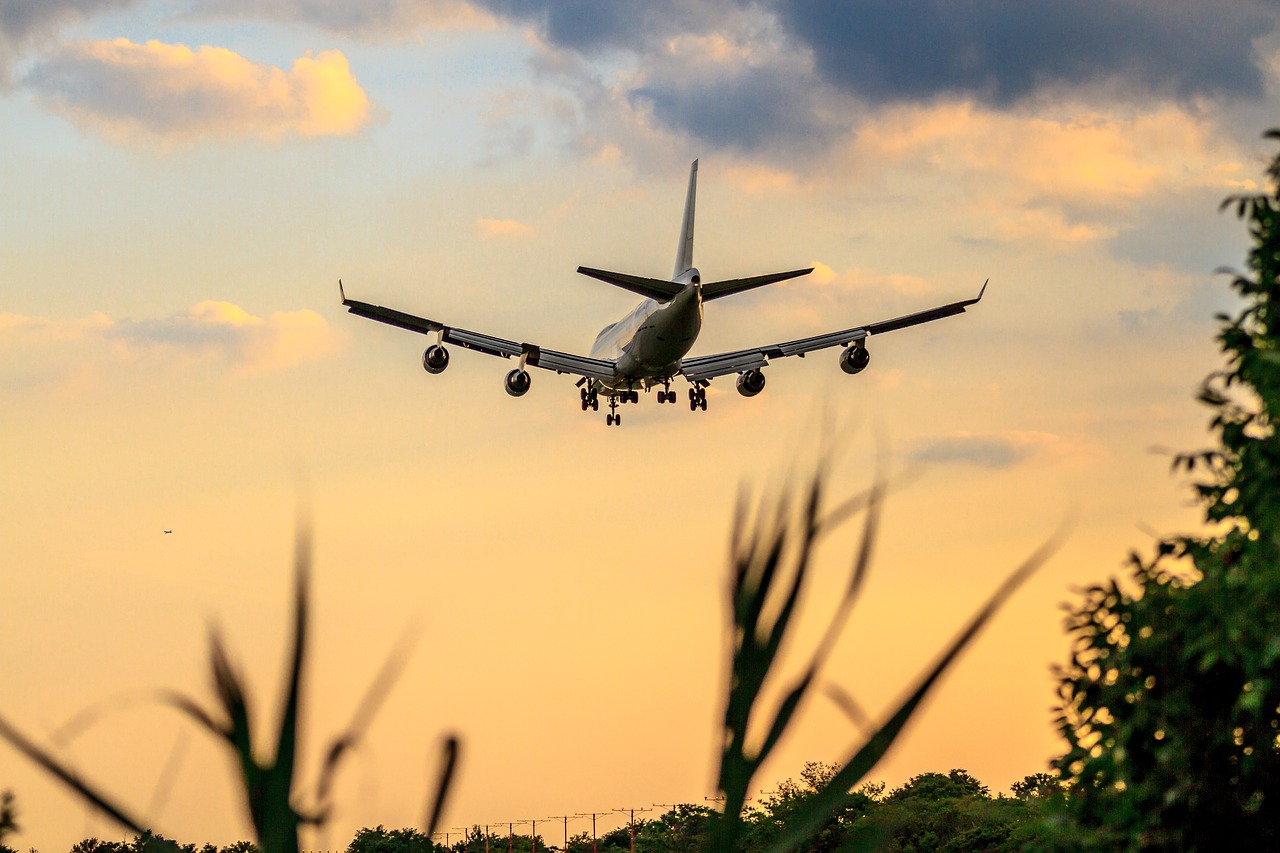
After an eight hour flight, the last thing you want to be doing is waiting 2 hours in an arrival queue. andychoinski / Pixabay
When you fly to New York there are two main choices of airport to fly into, the famous JFK which is actually in the State of New York or Newark Liberty International Airport which is actually in New Jersey, one State over. Despite this, getting into Manhattan from both airports is easy and takes around the same amount of time. So which are you best off flying into?
My last trip to New York, I opted to fly into John F. Kennedy International Airport – having previously only flown into Newark. It was a mistake. Despite the heritage of JFK and its incredible structures, like the old TWA terminal, the arrivals queues are long – very long.
As I already had an ESTA I opted for the re-entry queue, which on the face of it looked short, but in reality, there was just ONE officer, who was stressed, to say the least, checking everybody’s passports, including US citizens, reentry ESTA visitors, Armed Forces and diplomats. Except, the last two got priority over everyone already standing in line. It took me over two hours to get through to baggage claim from the door of the aircraft.
My partner who was travelling with me, who didn’t have a previously used ESTA had to use the main line. It took him 30 minutes longer. So in total, we had to wait two and half hours in queues before we even reached the arrivals’ hall.
You can check peak times and queue wait times at the AWT website. Skitterphoto / Pixabay
Perhaps this was a off day, however speaking to a representative from the airline at baggage claim, she confided that sometimes the lines were even longer – with an extra 45 minutes wait time.
Of course, it all depends on the time of your arrival. Many of the inbound flights from the UK arrive later in the day, which could account for the backlog. According to AWT, which calculates wait times at US airports, the busiest time in terms of passengers happens around 1 PM, 7 PM and 10.00 PM.
I have flown into Newark a few times and never experience this kind of queue. So in my opinion, I’d opt for Newark in New Jersey from now on.
Wondering where the safest and friendliest places to celebrate pride in 2018?
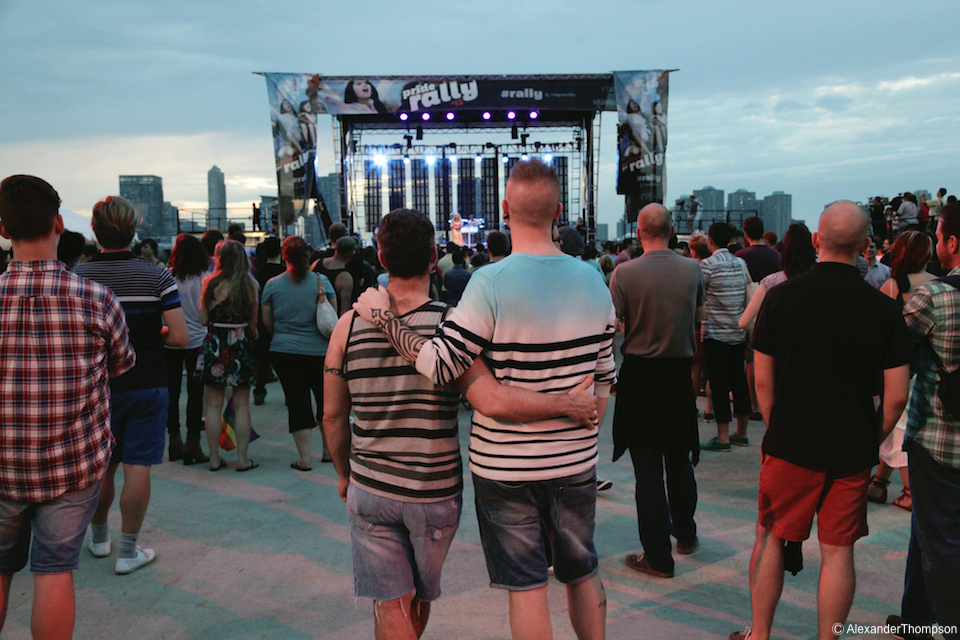
Pride Kickoff Rally 2013, Tribeca, Manhattan
Airbnbreveal the world’s top destinations for an unforgettable Pride this year.
Through a specially commissioned study conducted by ABCD in May 2018, the people-powered hospitality platform with a mission to create a world where anyone can belong anywhere has found out which destinations have the most to offer LGBTQ travellers.
The study looked at 100 cities with the highest Pride attendance worldwide and found out which of these fared best under five different LGBTQ categories, including nightlife and dating. Here are the winning cities and categories:
1. OVERALL WINNER – New York City
The Big Apple not only offers one of the biggest Pride celebrations, it also boasts a bustling nightlife, a busy dating scene, well-established marriage equality and impressive Airbnb stats: the city that sparked the gay Pride movement following the Stonewall riots will welcome over 27,000 guests on Airbnb during Pride Week.
Traditionally a mecca for LGBTQ travellers, it’s no surprise that London topped the ranking for dating. Using data shared with Airbnb by Tinder this May, they discovered that the British capital has the highest per capita usage of LGBTQ Tinder profiles worldwide (via Tinder’s More Genders feature).
Sydney places 9 in the Dating category so why not take your date to Priscilla Queen of the Desert, Australia’s most successful musical? On this Experience, bookable on Airbnb, you’ll get to go behind the scenes and take a sneak peek at the costumes, wigs and make-up from the production that usually only cast and crew get to see.
3. NIGHTLIFE WINNER – New York City
Looking at the number of LGBTQ clubs and bars, New York City is a top destination in this category too.
The city that never sleeps is closely followed in this ranking by 2. Los Angeles, 3. Tokyo, 4. Berlin, 5. Madrid, 6. London, 7. Mexico City, 8. Paris, 9. San Francisco, and 10. Barcelona.
4. PRIDE WINNER – São Paulo, Brazil
Image credit: Ben Tavener / Flickr – https://flic.kr/p/nupESZ
In terms of sheer numbers attending Pride celebrations, São Paulo tops the ranking in this category. Approximately 3 million visitors attended last year’s celebrations.
Liniker, a popular transgender musician from São Paulo, will take guests to some of her favourite local spots and end her experience with a private listening session of her upcoming album.
Airbnb also looked at their list of cities to find out which destinations pioneered LGBTQ marriage equality. In the Netherlands, same-sex marriage was made legal in 2001, making it the first country in the world to do so. This places the cities of Amsterdam, Rotterdam and Utrecht in joint first position.
The Dutch paved the way, but these countries and their respective cities followed closely behind:
6. TRAVEL WINNER – London
For this category, Airbnb looked at cities that had the highest year-on-year growth in Airbnb guest arrivals during Pride. They also identified which cities have the highest number of LGBTQ Experiences on Airbnb and where you can find Airbnb Guidebooks with the highest number of tips for LGBTQ travellers.
160K+guests are expected to check in to an Airbnb during London’s Pride Week
The top city in this ranking is London, followed by 2. Los Angeles, 3. New York, 4. San Francisco, 5. Tokyo, 6. Paris, 7. Montreal, 8. Amsterdam, 9.Berlin, and 10. Barcelona.
In Part two of Simon Sayers-Franklin’s Pride series, he explores the origins of Pride at the Stonewall riots and why we fly our Rainbow Flag!
How Did Pride Begin?
Pride originated on 28th June 1969. Back then police raids on gay bars, like the Stonewall Inn, were common. The authorities would come in, push people around, display violence, intimidate, bully and randomly arrest people. The arrests were frequently made for tiny, inconsequential things such as drag queens wearing more than one or two items of ladies clothing or being caught in compromising positions.
Often the bars, which were largely owned by the Mafia, would bribe the police to tip them off when raids were due to occur. The gay bars would often have two rooms – a bar in the front and a dance floor in the back. Dancefloor lights could be triggered from the bar to send a secret message to the people next door that a raid was about to happen. This allowed them to stop dancing or quickly find an opposite-sex partner if they wished to continue dancing.
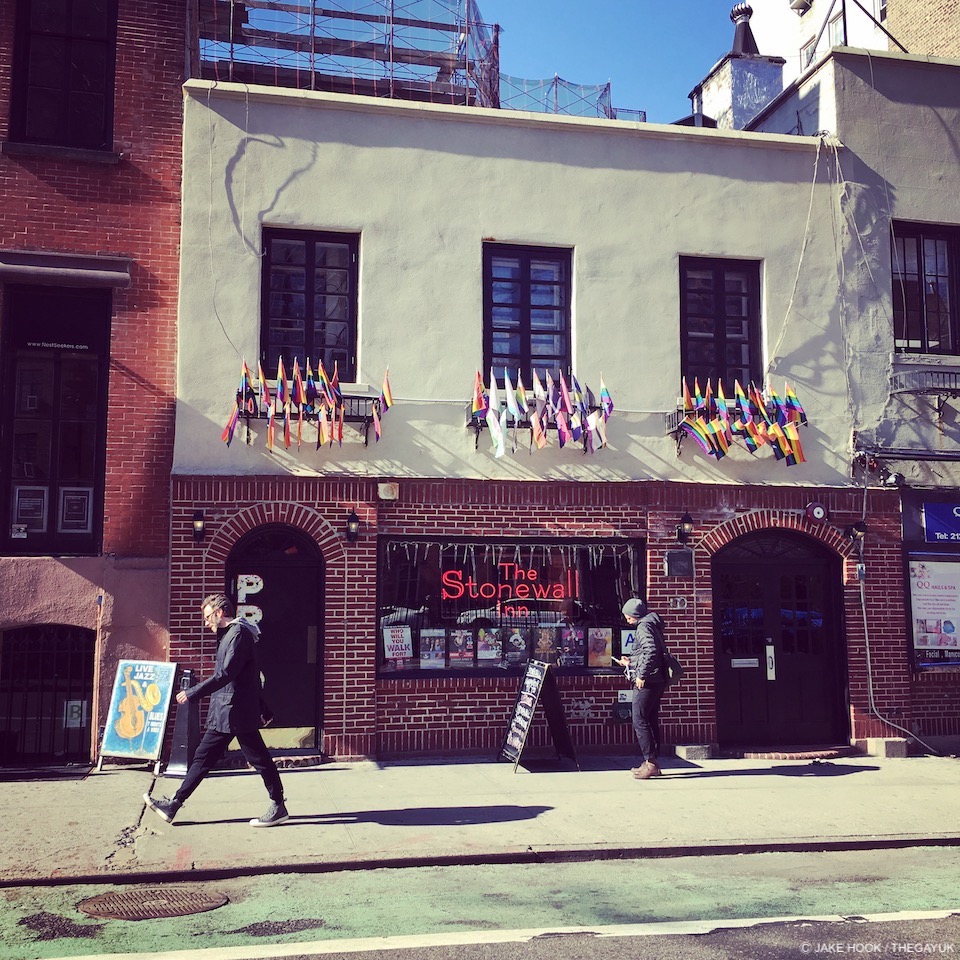
It was in the early hours of the morning on June 28th 1969, that an LGBT friendly bar in New York was subject to a raid – something that was all too common in gay bars. This bar, however, was one of those owned by the Mafia and catered to transgender people, drag queens, effeminate men, sex workers and homeless people of many backgrounds. The bar in question was the Stonewall Inn.
This raid, however, was different from the beginning. Firstly, the owners were not tipped off, secondly, it happened very late; around 1:20 am. There had been rumours about a raid that night but it was dismissed as inaccurate information.
The night it all began, two undercover policemen and two undercover policewomen came in and gathered evidence while the rest of the team waited outside. When those who had gained entry called for backup the music died, the house lights came up and those who realised what was happening ran for the doors and windows in the bathrooms but were blocked in by the police.
There were reportedly over 200 people in the Stonewall Inn that night. Little did the police know, that this as not going to go the way they expected.
Usually, the police would line up the people, check ID and then the female officers would escort those wearing female clothing to the toilets, where they would be subject to physical checks and if men were found wearing female clothes they would be arrested. Not this night. This night everybody refused to produce their ID and those in women’s clothing resisted being taken to the bathrooms. This resulted in high tensions, only made worse by the police who became inappropriate while frisking some of the lesbian patrons.
The police had been sent to seize all of the alcohol, which was apparently bootlegged. While this happened, the people inside were made to wait in the line. Those who hadn’t been arrested were allowed to leave but they congregated outside. It wasn’t long for the crowd to grow – a mix of those who had been released and those who had seen the disturbance and joined out of curiosity. Those who were released exited the bar to rounds of applause and they bowed and posed and it was all very theatrical.
By the time the first police wagon arrived, the crowd had multiplied as much as ten times and as the Mafia were escorted out and put in the van people started shouting “Gay Power.” and others started singing. An officer pushed a drag queen who hit him with her purse. People threw debris at the wagon and that was when a woman, thought to be, Stormé DeLarverie, was dragged out in handcuffs. She kept escaping and fought four police officers. When she complained the handcuffs were too tight she was hit over the head with a baton and screamed: “Why don’t you guys do something?”
It was this moment that triggered the riots that would go on to last six days!
Who threw the first brick at the Stonewall Riots
The patrons of the bar had taken enough and were sick of being pushed around. It was reported that the drag queens and trans women of colour were among the first to fight back. It was Marsha P. Johnson, a black, gender non-conforming, sex worker, a founding member of Gay Liberation Front and a popular member of the New York gay and art scenes, who was apparently one of the first to kick off her heels and fight the police. It is, however, unclear what role Johnson played in the events that night. She disputed that she was the one to start the riot by claiming she arrived at 2 am when the place was already on fire – a fire she claimed was started by the police.
These riots were a major moment for LGBT people and Stonewall became an iconic image of rebellion and resistance. It stood for our strength and our refusal to back down.
It was the next year, 1970, that the first Pride march was held in New York on the anniversary of the Stonewall riots. From that moment we have continued to celebrate Pride in the month of June to honour those who kickstarted a revolution. We march to represent our strength and unity. Our community is strong together and Pride shows just that! In modern days it still has political undertones but these days in the western world particularly, our events stand for inclusivity, visibility, having fun and celebrating love and equality rather than fighting for it.
Why Do We Have a Rainbow Flag?
The flag was devised by artist Gilbert Baker after he was challenged by Harvey Milk (another hero and martyr for the LGBT community), to create a “symbol of Pride” to represent the LGBT community. It debuted at the 1978 Gay Freedom Day Parade and has been an icon of our community from that day.
The original rainbow flag as created by Gilbert Baker
There were originally eight colours in the rainbow instead of six:
Hot Pink represented sex/sexuality. It was taken out due to manufacturing issues after Baker approached a company to mass produce the flag. Apparently, the hot pink fabric was too expensive to make.
Turquoise, representing magic and art, was lost when the Pride Parade Committee wanted to fly the flag in two halves along both sides of the street for the 1979 Gay Freedom Day parade. Turquoise was dropped to leave six stripes, therefore, leaving an equal number to split.
Red is life.
Orange is healing.
Yellow is sunlight.
Green is nature.
Indigo is serenity
Violet is spirit.
A modern variation, created in 2017, added black and brown stripes to highlight the People of Colour within the LGBT community. There were a mixed reaction and a lot of controversies because of how the flag never represented “race” and was always meant to represent aspects of life that apply to everybody, regardless of ethnicity. It also caused upset by changing the artist’s original vision.
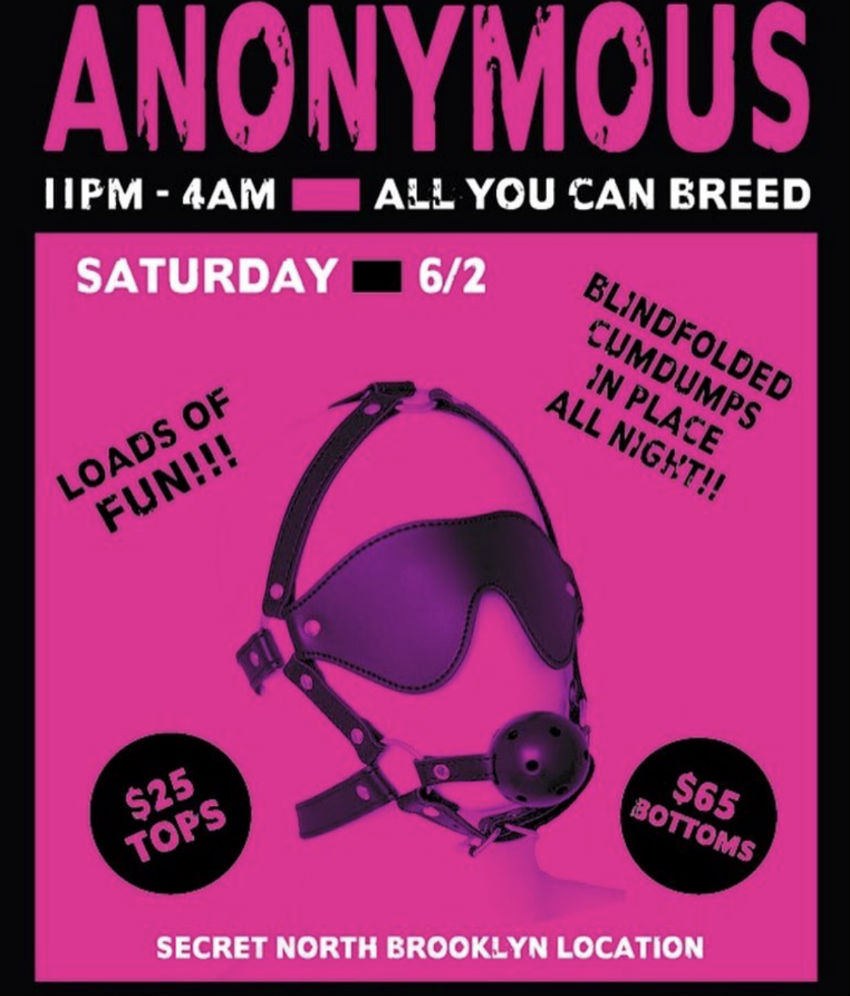
A sex party in New York is charging the bottoms $40 more to attend.
CREDIT: Depositphotos.com
So the deal is: Bottoms (known in this scenario as cumdumps) are blindfolded all night while the tops cum and go, until the bottoms have had their fill (this shiz writes itself).
I mean it sounds like people are getting what they want from the deal, except where the entry charge is concerned. Tops are charged $25 entry while the bottoms are charged $65. If you’re Vers but pay to enter as a top, don’t think you can cheat the system and get a sneaky sesh in.
Speaking to GSN, the promoter of the event which is called Anonymous said, “The way the party works is that bottoms volunteer as a cum-dump. They are placed into position for the entirety of the party and stay there as long as they want. I’m a big old bottom, and this has always been a fantasy of mine, but for it to work – and for the experience to be achieved for the cum-dump bottoms – we need a huge ratio of tops to bottoms, which means discounting admission for anyone who wants to top.
“That’s also part of what the bottoms are paying more for – guaranteed high numbers of tops. We are not proctoring anybody’s sexual identity, we’re just asking which role you’ll prefer to play in this particular fantasy experience.
“If someone is versatile they can play as a top. They just can’t switch over to bottom during the party because the bottoms have already volunteered for a limited number of spots in advance.”
So are they discriminating against someone for their sexual preference? Apparently not it’s all about fulfilling the fantasy.
“That’s also part of what the bottoms are paying more for – guaranteed high numbers of tops”.
Ah, so it’s all about supply and demand. The American Dream!
The city that doesn’t sleep isn’t cheap. In fact, you’ll find it hard to find free things to do, but here are 10 of our favourites.
Empire State Building, Midtown, Manhattan, NYC
Planning on going to New York? Well, as a gay traveller there are certain things you have to do, like visiting the Stonewall Inn or even planning a night out at the infamous Cock bar. But, if you’re on a budget here are some of our favourite things to do for free, or just the price of a drink, in one of the greatest cities in the world.
Staten Island Ferry
Staten Island Ferry, View of Boat
This is one of the go-to free things to do while in the city of New York. The 5.2-mile trip takes you right past the Statue of Liberty giving you an outstanding opportunity to take a full-on frontal picture of the great lady. The cruise takes about 25 minutes and runs every 15 to 30 minutes depending on the time of day. Many people disembark once arriving at Staten Island and get straight back on the boat for the return journey.
The Central Park Reservoir
On a sunny day, the 1.5-mile walk around Central Park’s reservoir will enliven the senses and make you feel like you’re a world away from the hustle and bustle of Midtown and Downtown Manhattan. It stretches from 86th to 96th Street (very close to the Guggenheim Museum).
The decommissioned reservoir holds over a billion US gallons of water and covers 106 acres. One of the best times of year to walk around the reservoir is when the cherry blossoms are blooming.
The High Line
Take a stroll along the disused and abandoned railway track set above the streets of Lower Manhattan. It’s a 1.45-mile walk which leads you through landscaped gardens over the roads. The High Line has been repurposed from a former railroad, which was created to ship goods from one part of the city to the other. It runs from 34th Street to Gansevoort Street, in the Meatpacking District. After “getting off” the high line, head for the Bus Stop Cafe on the corner of Bethune and Hudson for a spot of lunch.
Stonewall Inn
Where it all began. The birth of the modern gay rights movement in the USA. Located in the gay/gay-friendly neighbourhood on Christopher Street, a trip to the famous Stonewall Inn should be high on your list of gay things to do in New York. Entry is free, but please do buy a drink and support this historic, legendary venue.
Christoper Park
Situated outside the Stonewall Inn in the centre of Christopher Street is Christoper Park. Christopher Street is the oldest street in the West Village and in the 1970s became the “Main Street” of gay New York. Over the decades, numerous shops, bars and other businesses that cater for the LGBT community have populated the street. Make sure you get your photo at the Gay Street sign which coincidentally intersects with Christopher Street.
In Christopher Park, there’s a Gay Liberation Monument where numerous bonze statuses, covered in white lacquer sculptures commemorate the Stonewall Riots, which took place in 1969. It features four people. Two men and two women.
9/11 Memorial Park
A humbling experience awaits at the 9/11 memorial. Take time to reflect and remember.
A humbling experience awaits in the mass of skyscrapers at the lower end of Manhattan. This is where, in the footprints of the original World Trade Centre twin towers, you’ll find the names of nearly 3000 people, who died on September 11th, 2001, etched into bronze, on the outer rim of the two reflecting pools where the towers once stood. There is a museum as well. However, queue lines are long, and the entry ticket costs a whopping $44 each for admission and the tour. You can get significantly reduced entry by purchasing a New York CityPASS.
The Buildings
Empire State Building, Midtown, Manhattan, NYC
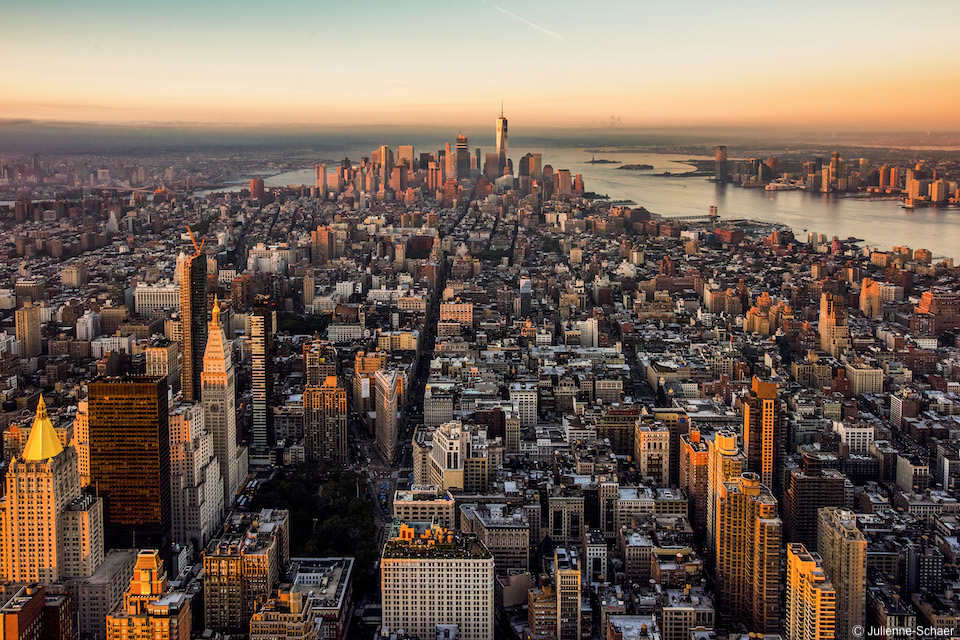
One of greatest attractions of New York is its buildings and where NYC is concerned, bigger is best. Across Manhattan, you’ll discover icon after icon. There’s the Empire State Building, The Rockefeller Center, Radio City, Carnegie Hall, New York Times, Times Square, The Chrysler Building, The United Nations building, One World Trade Center, the former PamAm building (now MetLife), The Guggenheim and Madison Square Gardens. The list goes on and on.
Pier Life
Pride Kickoff Rally 2013, Tribeca, Manhattan
If you’ve ever watched Paris Is Burning, you’ll know that the piers played a considerable part in LGBT+ life in New York especially during the 70s, 80s and 90s. The dilapidated piers reaching out into the Hudson River became a hang out for those on the fringes of society. Some of the piers have been redeveloped and given a new lease of life. Take a walk to the piers at the end of Christopher Street. It’s not uncommon to find all manner of activities taking place, like dance classes or music to listen to.
This year’s pride parade takes place on the 24th June. Check out the parade route here.
Walk the Brooklyn Bridge
Walk the walk. 10,000 people every day cross the Brooklyn Bridge
This famous bridge is well worth the walk – despite the crowds (apparently 10,000 people use the footbridge part every day). The views of Lower Manhattan from the centre are breathtaking. The Brooklyn Bridge is one of the oldest bridges in the USA. It was finished in 1883 and was designated a National Historic Landmark in 1964. Look out for the 3500 bikers who use the bridge every day too. They aren’t particularly friendly towards pedestrians who walk on the cycle lane!
Once in Brooklyn make the short walk to Brooklyn Bridge Park for some impressive views of the waterway between Brooklyn and Manhattan and the famous NYC skyline.
Big Apple Greeter
Believe it or not, you can get a free walking tour with the Big Apple Greeter organisation, whose team of volunteers will show you New York in a totally personal light. You should request your greeter at least three to four weeks before your trip to New York. The Big Apple Greeter has a no tipping policy, but they do ask you to consider donating to help continue the non-profit service.
Marie’s Crisis Bar
Ask anyone where to go for a good night out that’s camp and gay and they’ll probably suggest this legendary piano bar, where show tunes and awesome singers are the promised offering. It’s a gay bar just off 7th Avenue behind Christopher Street on Grove Street. Be prepared for how busy it gets and bring cash for drinks and tips. We loved this Yelp review from Niall and it pretty much sums up this venue:
“While this is a gay bar it is also a musical bar. There are two types here; gays who love musicals and everyone else who loves musicals. If you are a member of either tribe you are family, if not, please keep it moving!”
How to get to NYC?
Wondering on the cheapest way to get to Manhattan after arriving from JFK – check out our guide here.
Our top tip is if you’re going to be a total tourist – which you totally should be in this magnificent city, then purchase yourself a CityPASS. It will give you access to numerous tourist destinations, like the Empire State Building and the Statue of Liberty for 40 percent off. It costs around £96.27 and is well worth the price if you plan on visiting all of the destinations on offer.
If you’re flying into New York’s JFK airport, there are a few options on how you can get to Manhattan Island, both Downtown and Midtown. But there’s one way that’s super cheap and really doesn’t take any longer than a cab ride or airport shuttle.
JMZ Train, Williamsburg, Brooklyn
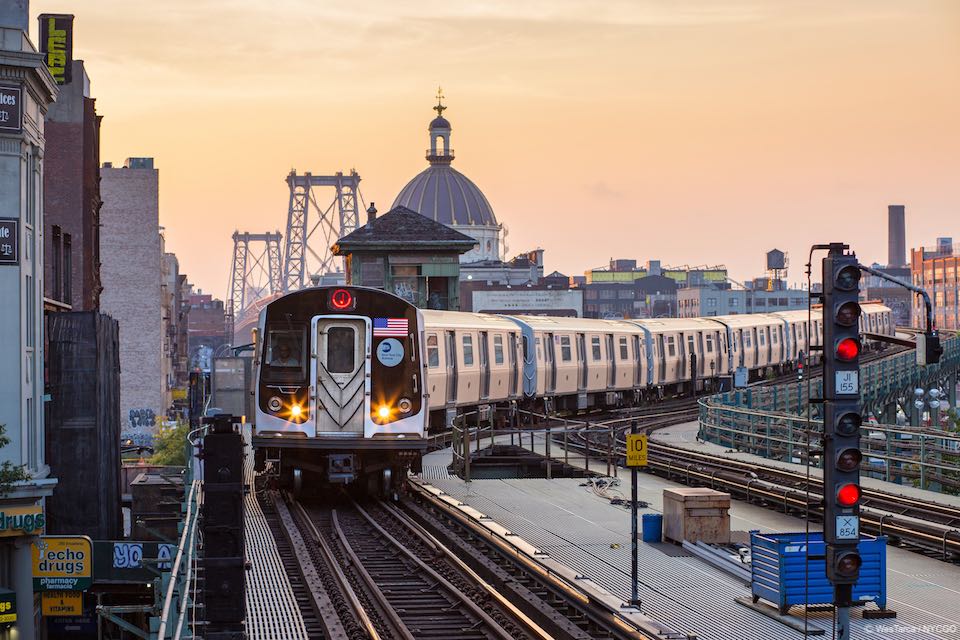
If your hotel offers a shuttle from JFK, then you should get on board that baby, but if you’re looking at getting into Manhattan on a budget the best way is by the AirTrain which runs directly out of JFK and then catch the subway to your destination. It takes just under an hour – which if you’re caught in traffic to or from the airport, which is more than likely, it could end up being a quicker option. Obviously, it won’t be as picturesque, but you’ll definitely get to people watch and save a lot of dollars.
A cab ride into midtown currently costs over $60 and once you ad tip you’re heading towards $70 – it’s not the cheap way to start off your trip. Or, you can hop on the airport shuttle bus, you’ll find them in the arrivals hall, which is $18 each – so if there’s two of you that’s $38 – plus tip if you’re feeling generous. Or you can spend under $8 and get the AirTrain, which takes around 50-60 minutes.
How to access the AirTrain at JFK.
Subway, New York City
Look for the signs for the AirTrain, you’ll need to get the one that’s heading towards Federal Circle (which is where you’ll find Airport Hotel shuttles and car rental companies and onto Howard Beach Station. This section of your travel is free, so you don’t need a ticket if you’re getting off at Federal Circle.
If you’re going downtown and Lower Manhattan you’ll need the train heading to Howard Beach. If you’re going to Midtown or Upper Manhattan you’ll the Jamaica Station.
Once you arrive at Howard Beach or Jamaica Station, you’ll need to buy your ticket to leave the station and to get your onward travel to Lower Manhatten. Go to the ticket machine and buy a travelcard.
How much does the AirTrain cost from JFK to Manhattan?
It will cost $5 for the AirTrain (which you’ve just travelled on) and $2.75 for the connecting subway. You’ll also be charged $1 for a Metrocard, which you can refill and reuse each time you use the subway, so don’t throw it away.
Once you’ve cleared the gates at Howard Beach or Jamaica, head to the platform which has trains heading towards Lower Manhattan or Midtown.
At Howard Beach, you need to get onboard the A Train – on the Subway map it’s a dark blue colour. At Jamaica, you need to get the E train, it’s also dark blue in colour.
If you’re heading to Upper Manhattan you’ll need to make a change when you’re in Manhattan. Use the MTA’s TripPlanner to find the best route. Trips up to the Upper island will take another 15 minutes or so.
If you’re a Manhattan novice, or even if you’re not, you’ll probably want to stay close to Times Square. The hip and the cool amongst us will tell you that you need to stay on the lower west side where you’ll find the meatpacking district, Chelsea Greenwich but the newly opened Moxy, brings that effortlessly cool vibe right to Times Square’s backyard.