Author: Stuart M Bird

  • MOTORING REVIEW | Volkswagen T-Roc Design 1.5

    MOTORING REVIEW | Volkswagen T-Roc Design 1.5

    ★★★★☆ | Volkswagen T-Roc Design

    My Second Coming With The T-Roc

    What Have We Got?

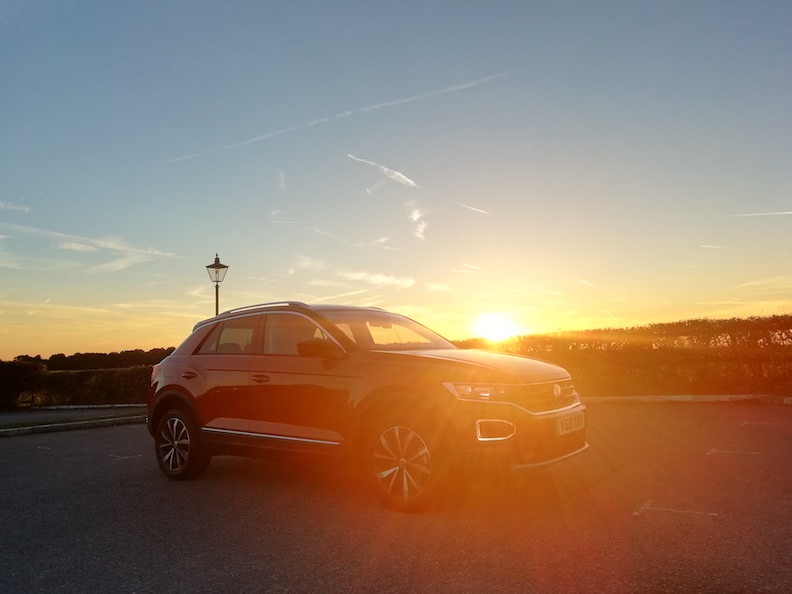
    Volkswagen’s T-Roc was launched last year and TGUK were there to test some of the first in the country. This time we are giving the Design 1.5 TSi DSG automatic for a week and I reflect if it was fair of me to give it 3 stars.

    Driving

    I complained about the front wheels ‘tramping’ when pulling away from a junction and even with the DSG gearbox, it still does. The 1.5 EVO engine is a joy to have and responds quickly to all inputs from the throttle with no noticeable lag. Even the DSG box responds quickly. 

    And this all helps to make the T-Roc a really nice place to be. The suspension comes with the usual set-ups of Eco to Sport while the ‘Individual’ setting allows you to select the best of the pre-sets to suit your requirements and this is always welcomed by me. 

    The trick up T-Roc’s sleeve is the ability to select sport or manual in the gearbox very quickly. You are not left high and dry when you need to get a move on!

    You do have to be careful though with the throttle pedal. From standstill in traffic, it can propel the T-Roc forward quickly and at neck breaking force. Once you get used to it, it’s not really a problem. It’s just not what you expect from a car that doesn’t wear a GTi badge.

    Inside

    It is as you would expect from Volkswagen and that is well screwed together and functional. The choices of trim on this ‘Design’ model are zesty with a nice touch of body colour on the dashboard and in the seat trims. 

    I have only one real criticism here and it seems to be my usual moan about VW. The rear door cards are dull. On this model, the front doors are treated to colour coded inserts with neon illuminations. The rear passengers are again subjected to nothing but darkness. 

    Living With It

    From almost all angles, it is a good looking vehicle. It’s also very easy to live with. The boot is generous with a split level load floor though heavy items will cause an issue thanks to the high load sill because it is an SUV.

    It’s also not really suitable as a 5 seater. The centre seat occupant has to contend with a big transmission tunnel and a raised seat cushion resulting in reduced headroom.

    The Verdict

    I was wrong. It’s more than a 3-star car. It’s not perfect and there are a few things VW could do to make it even better. If it was my money that was paying for it, I’d pay it. The T-Roc proved to be comfortable, relaxing and fast enough when I needed it to be. 

    I still find it difficult to accept that VW predicts the 1 litre to be the better seller. The 1.5 does it all so much better. It also comes with a host of goodies that you’d expect at this price and for that, I actually can’t complain. Much.


    Love

    Good looks

    Relaxed ride

    Driver conveniences 

    Loathe

    Front wheel tramping

    Lack of illuminations for the rear passengers

    Hard seat cushions

    The Lowdown

    Car –  Volkswagen T-Roc Design 1.5 TSI DSG 

    Price – £29,690 (as tested)

    MPG – 33.5 (combined)

    Power – 150hp

    0-62mph – 8.4 seconds

    Top Speed –  127 mph

    Co2 – 119 (g/km)

    All photos (C) Stuart Bird

  • COMMENT | Accessories

    Now for an article about adding things on, I am struggling for a title for this piece other than “Accessories” which is a bit ironic. Anyway, let’s crack on…

    Ever since man has had wheels, he has had this propensity to add, personalise or make his own, the car that he drives. Now I say he but I could very well say she too. And indeed where I am about to take you, the man was the chooser of the car, the woman did the dishes. 

    I was recently thumbing through Jaguar’s accessory and options list the other week. I was astounded to see £15 jump leads being sold for £126. Even Rimmer Brothers sell “genuine” Jaguar jump leads for £125.12p

    And then I started to look over the other goodies (or lack of) you could get for the Jag and it didn’t stop there. Other manufacturers are also slack in their personalisation of your vehicle. It’s all so ordinarily dull. So I decided to delve back into a time that us old enough to remember haven’t forgotten and look at who did the great extras. We go back, right back to the 1970s. You see a time when men chose the car which is why I said it to start with. Have you never seen Mike Leigh’s Abigail’s Party?

    I have my own list of goodies that I like to add including spotlights, over mats, wind deflectors, and mud flaps if available. I spent many hours pouring lustfully over the accessory brochures in my time. There were things you could get for the Citroën Visa that to this day I still dream off. They were awful! By the time I got my Visa, Citroën had stopped selling these extras so I was never able to dress my own with genuine naffness. And this is probably for the best.

    The French were always good at the accessory. Both Citroën and Renault played on their Frenchness by using French words on their accessory brochures. Citroën had “Accessoire” while Renault were the kings with “Boutique” and my word what a boutique it was.

    You could dress your 70’s Renault up to be the talk of the town either stylistically or in a way that your neighbours would wish for it to be hit by a bus. Renault Boutique had a stripe to suit (or not as the case sometimes was) for your car and the worst culprit would go to the R4. In fact, everything extra they sold for the R4 was vile. 

    Renault did redeem themselves with the Starsky and Hutch stripes on the R17. Citroën, on the other hand, could not and by the 1980s, they had lost the plot. Wheel arch finishers could be bought for the CX. Now those who know will know that the CX didn’t really have rear wheel arches. Well, think again. Those pesky spats that covered the rear wheels could be replaced with a lipped piece of plastic. 

    Not ones to waste money because they didn’t have any and because they didn’t want to be without some accessories, BL with Unipart, demonstrated their collection of aftermarket tat for the Metro with cartoons. Knorr used cartoons for serving suggestions for Aromat. While aromat was the finest MSG available for food, Unipart extras were not. You really could get everything you’d never want for your Metro like cruise control and air conditioning. 

    VW UK was mean to us when compared to VW USA. The humble T2 bus could be got with 2 pieces of chrome and a choice of roof racks. In the US, you could get EVERYTHING. And the Golf was left short-changed too. 1975 Golf had no reverse lights while the Beetle and Bus had them there and ready to go with a bit of wire. Never mind because VW could sell you a pair for the Golf that resembled porch lights that you have outside your front door. 

    The final word goes to the Italians and in particular, Lancia. They offered you the driver much more than a pair of spotlights and a body kit to cover up the rust and stripes to hold it all together. They offered a range of clothing before it was seen as enthusiastic wear. Forget rally jackets, they even sold shirts. Not just any old shirts that you could get in Marks and Sparks, oh no, they had genuine polyester cotton ones. So basically it was exactly the same as Marks and Sparks and the Grantham catalogue. What those two didn’t have was the suave man in Lancia sunglasses and to a 10-year-old Stuart, he was frigging HOT. 

  • CAR REVIEW | MG3 Exclusive

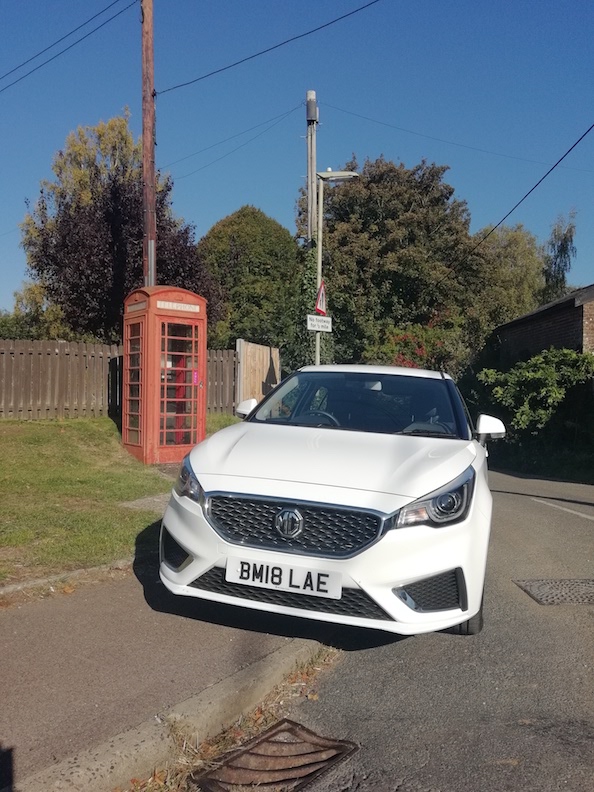
    CAR REVIEW | MG3 Exclusive

    ★★☆☆☆ | MG3 Exclusive

    What Have We Got?

    The MG3 comes in a 3 car model line up from £9495 for the base Explore to £12,795 for the Exclusive. MG has been slow and steady sellers and numbers on the road are beginning to increase. Recently the MG3 went through a facelift and it’s attractive changes that MG have made. 

    Is there any carryover from MG of old I hear you ask? The British have a thing for MG and there is no getting away from the fact that today’s MG has nothing to do with those of old except for the octagon badge. But is this a bad thing, or does it need that MG thing to make it a desirable car?

    Driving

    This is a bit of a letdown and shows that it isn’t like previous generations of MGs. For a twin cam 1.5 petrol with initials like VTI-TECH, you’d expect something a little lively. On the road, it turns out to be more leisurely than lively. You need to work the gearstick around a bit to get the best out of it.

    The ride is what you would expect it to be and it’s not that bad. Due to the lack of engine excitement you’d probably not get to exploit its handling.

    Inside

    It’s pretty simple and basic where it needs to be. You need to remember that MG is still winning fans and price is key. Door cards, for example, are plain and simple and the dashboard as normal as you can get. That hasn’t stopped MG having some fun and the silver trim with silver printed tartan is a nice touch to break up the expanses of black.

    The infotainment system is also simple to use, effective and nicely laid out. Some of the larger manufacturers could learn from this system. 

    Living With It

    One of the nicest touches the MG3 comes with is hill hold control where for a brief moment in time, it’ll hold the brakes. For this price, it’s a rare treat.

    It’s a small 5 door hatchback that does what you would expect a car to do and if that’s what you want, then you could live with this.

    The lack of engine excitement does disappoint me somewhat. I’m sure underneath there is a better car waiting to shine. A bit like MG’s of old. So perhaps there is some of that old MG magic in there, somewhere.


    The Verdict

    For the money, you get a car. I can’t really jazz it up in any other way. That car is attractive in Exclusive guise. Explore comes with 14” steel wheels and is a little on the basic side visually. 

    Excite and Exclusive are probably where you’d want to spend your money. 

    What will probably sell this car more than its dynamics will be the 7 years or 80,000-mile warranty.

    Love

    Price

    7-year warranty 

    Simple yet effective infotainment system

    Loathe

    Lacklustre engine

    Needs a better engine

    Base model is rather spartan on the outside

    The Lowdown

    Car –  MG3 Exclusive

    Price – £ 12,795 (as tested)

    MPG – 47.1 mpg (combined)

    Power – 106PS @ 6000rpm

    0-62mph –  10.4 seconds

    Top Speed –  108 mph

    Co2 –  140 (g/km)

  • CAR REVIEW | Abarth 695C Rivale

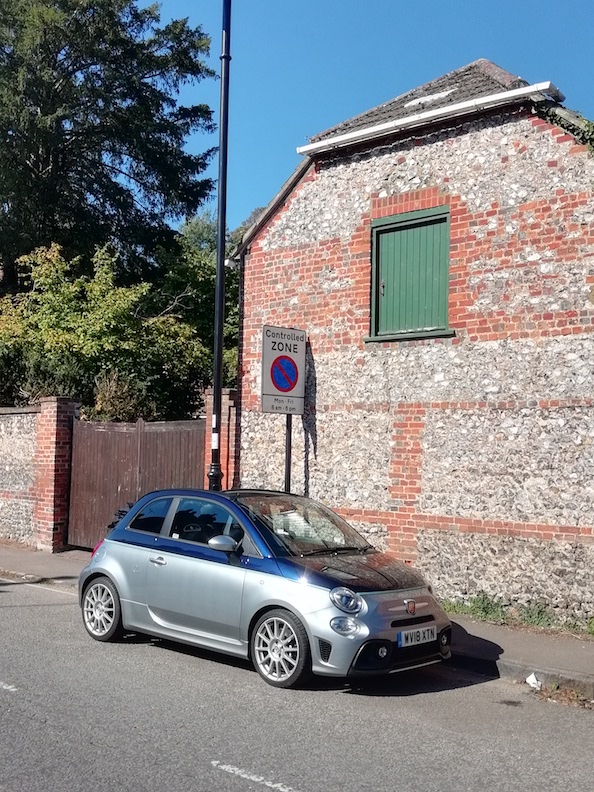
    CAR REVIEW | Abarth 695C Rivale

     ★★★★☆ | Abarth 695C Rivale

    Carlo and Carlo Called, They’ve Made A Car For You.

    What Have We Got?

    Abarth has been giving us magical Fiat 500’s for over 10 years now and you wonder how, a car that is over a decade old, can still be relevant in the ever-changing A-segment city car section.

    The answer is to make it good in the first place. Once you’ve done that, the development and evolutions can be kept to a minimum.  

    The Rivale has come about by joining Carlos Abarth, he who took small Fiats and made them fast, and Carlos Riva, he who made special boats, together to make one special city car with an eye-watering price to match. 

    Driving

    Oh my word, where do you start. For a car with older underpinnings, it manages to do two things. Puts the power down and still be entertaining to drive. And it is.

    There is an abundance of torque steer and when it gets charging, it is a fighter. If it was there all the time, it would tire you out. Thankfully, in commuter mode, it is easy to live with. Put your foot down and… (screams)

    And you are fighting with the steering wheel while trying to keep it in a straight line and all this with the roof open and the engine barking and snarling.   

    Inside

    Abarth UK opted for the standard carbon fibre trim. I don’t like it. The mahogany option is a better option and more in keeping with Riva’s ethos of something special. It’s a big piece of wood.

    The rest is pretty much standard 500 except for the blue leather trim and the numbered plaque screwed into the trim by the handbrake. What that lacks in finesse for a special car costing over £25k, it makes up for by being quite endearing. 

    Sadly what hasn’t been altered is the infotainment system. For a car that is a decade old, this really is showing signs of age.

    Living With It

    Millions of 500s have been sold. As a city car, these are just perfect. The boot is small and in the C model, even smaller. You learn to live with the small box in the rear. Likewise, you live with the torque steer fight you have when you stomp your foot on the loud pedal.

    You put up with a lot in the 695 C Rivale and yet you never think you wished you’d bought something else. Very few cars these days are as engaging to drive as they are to look at on the drive and this still has it.

    The Verdict

    It is ridiculously expensive. There are other Fiat and Abarth models with no roof for considerably less and if I’m blunt almost as much fun. 

    Sometimes fun just isn’t enough. Sometimes fun is just a drive to the shops with Graham Norton on the radio. What we have here then is a howling mixture of fun ramped up to the max that really is barking mad and there just isn’t much in this segment that can match it for thrills and spills. 

    And with the roof open, everyone around you will hear you laughing (or screaming) before they see the car and you can’t really put a price on that.

    Love

    Sounds

    Open top

    Torque steer

    Loathe

    Carbon fibre dashboard

    Price

    Infotainment system

    The Lowdown

    Car –  Abarth 695C Rivale

    Price – £25,390 (as tested)

    MPG – 47.1mpg (combined)

    Power – 180HP @ 5000rpm

    0-62mph –  6.9 seconds

    Top Speed – 140 mph

    Co2 – 139 (g/km)

  • CAR REVIEW | Volkswagen Up GTi

    CAR REVIEW | Volkswagen Up GTi

    ★★★★☆Volkswagen Up GTi 

    Up and GTi Away 

    What Have We Got?

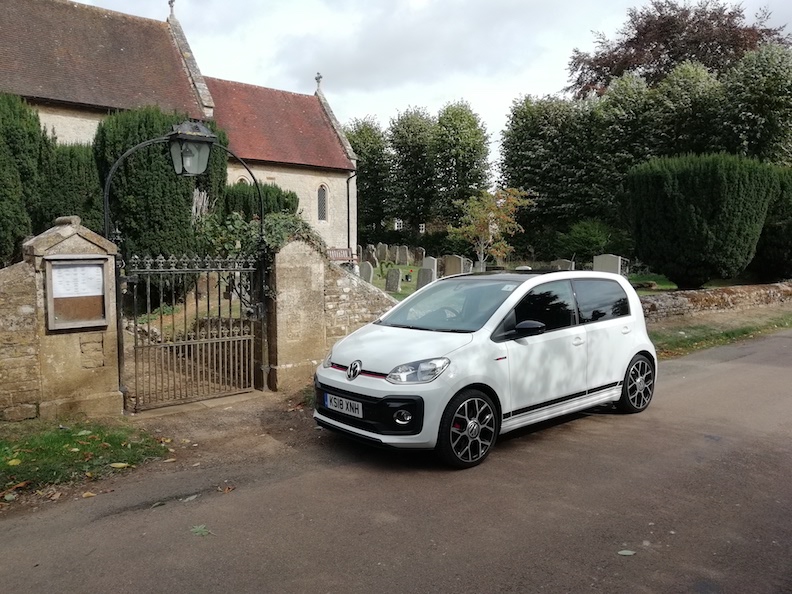
    Volkswagen would have you believe that the Up is the successor to the original Golf GTi. In some ways it is. Its dimensions, kerb weight and performance align with those of the original 76 Golf. Golf is now too big to be as delicate as it once was. And Polo is also too big. So the Up now fills the void for a small, buzzy, fun machine to wear the GTi badge. But does this answer the critics who bemoan about the lack of a raw feeling GTi from VW?

    Driving

    There is something about the Up GTi that gets your pulse racing before you turn the key. Delicate red markings on the body and the GTi badges are very evident, likewise so too is the tartan type fabric from the original GTi that is now fitted to all VW GTi models.

    Turn the key and the rorty little 1 litre 3-cylinder engine bursts into life. It contains 115PS. It might not sound a lot, but it sure does know how to use it. The controls are light and precise and the six gears are well spaced even if 6th really is longer legged than necessary for such a small car.  

    What it all makes for is a very engaging car and though it will max out at 122mph, it really is a great back road buzz box. It’ll do 70 in third and that’s rather useful. The only downside is the traction control system can’t be switched off. However, that doesn’t mean you can wheel spin the front wheels from a standstill.
    Inside

    The seat fabric aside, the Up to me is only ruined by the red and black facia panel. I didn’t like this and for a small car with cheap feel, it felt like it cheapened it.

    Now don’t let the cheapness put you off. This is a new VW GTi for £14,000. It’s the lightness that makes it feel the more special in capturing the GTi magic of old. Remember, the original was a trendsetter and well built. The Up betters it but retains some of the raw light elements. That doesn’t, however, mean the doors twang when you shut them. It still sounds like a Golf.

    Living With It

    This Up GTi came in 5 door guise. There is more than enough room for 4 and a reasonable sized boot with a height-adjustable boot floor. 

    The dashboard layout is clear and visible and the ergonomics are perfect. Rear door trims lack the visual joys of those on the front with the absence of body trim.  

    The inability to switch the traction control off does mean it’s always a little bit too safe. Its limits are high and the fun factor even higher, it’s just a shame you can’t fully exploit it to its fullest. 

    The Verdict

    (C) STUART M BIRD

    You can see why many before have raved about it, I love it. It’s quite raw in places and that’s a good thing. That rawness adds to the feel of it being lighter and quicker than it actually is and let us not think this is slow. With a 0-60 time of 8.8, it’ll keep up with an original Mk 1 Golf GTi. In actual fact, there are many areas that this is similar to the original. It’s like VW have resurrected the original from the ashes of yesteryear and I am happy.

    Love

    Rawness

    Lightness

    Entertaining to hurry

    Loathe

    Dashboard facia trim

    6th gear is too tall

    No traction control switch

    The Lowdown

    Car –  Volkswagen Up GTi 115PS

    Price – £16,655 (as tested)

    MPG – 58.9mpg (combined)

    Power – 115PS

    0-62mph –  8.8 seconds

    Top Speed –  122 mph

    Co2 – 110 (g/km)

  • CAR REVIEW | Jaguar E-Pace 250ps Petrol HSE R-Dynamic

    CAR REVIEW | Jaguar E-Pace 250ps Petrol HSE R-Dynamic

    ★★★☆☆Jaguar E-Pace 250ps Petrol HSE R-Dynamic

    Cat with Soft Bite

    What Have We Got?

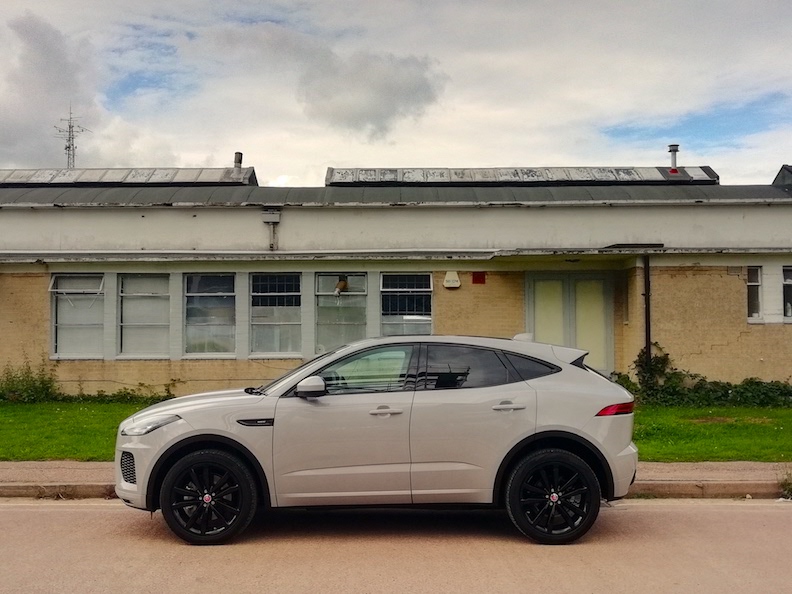
    Jaguar has taken the small luxury SUV market head-on with their new E-Pace. Launched last year to much spectacle in London, where on its debut it entered the Guinness World Records with a 15.3-meter, 270-degree barrel roll even before its launch. A year later and with cars available, The Gay UK finally gets to taste the 250 petrol HSE R-Dynamic model.

    Driving

    One thing you become aware of pretty quickly is that the F-Pace can cover ground quickly. That 250PS 2 litre engine spins happily through its rev range while taking with it its 365 max of torque from 1200 to 4500 rpm through its 4WD automatic drive train. Once on the move that is. For the sporty model in the range, there was a noticeable delay when you pushed the throttle into the carpet. It might be seconds but those are vital seconds.

    With power and speed, comes great responsibility and one thing you want is to rapidly decrease speed. My biggest gripe was the brakes. The ABS did a great job and there was no evidence of lockup, even for a moment. That said, they lacked the bite you’d expect for a sporty model.   

    Inside

    The interior options for the E-Pace R-Dynamic are few and far between with 3 choices of leather colour. The press cars grey exterior with red leather worked well. And the options fitted to the car covered most bases particularly the heated seats and steering wheel.

    Door architecture worked well and the illuminations around were welcomed in breaking up huge expanse with lights, leather and brushed aluminium. It all added to the premium feel that you expect from Jaguar

    What didn’t work for me was the main piece of plastic that forms the facia. Its saving grace was that it was of smooth plastic. It lacks a lot of tactility and felt cheap in an otherwise expensive cabin. 

    Living With It

    It’s an easy car to live with and I found ‘comfort’ mode was best suited to most of my driving needs. There is space for all inside despite its dinky size and it’s reasonably comfortable. Long drives result in a refreshed arrival. There is plenty to play with on-route. 

    Pushing it hard caused the engine to roar in an unnecessary kind of way and it’s not really something you want to try too often.  

    Hurried driving also caused the tyre to vocalise their abundance of grip to all around you. I shouldn’t encourage this but I rather liked it. 

    The Verdict

    There is a lot to recommend about the E-Pace. The finish is good and there are some nice options like the £310 ‘activity key’ wristband. It’s a great first effort into this segment for Jaguar, it just needs to be a little bit better.


    Loves

    Door architecture

    Ability to cruise quietly

    Convinces available in the options. (Though some are expensive)


    Loathe

    Brakes lack bite

    Throttle response

    facia trim


    The Lowdown

    Car – Jaguar E-Pace 250ps Petrol HSE R-Dynamic

    Price – £50,995 (as tested)

    MPG – 36.7mpg (combined)

    Power – 250ps @ 5500rpm

    0-62mph –  6.6 seconds

    Top Speed –  143 mph

    Co2 – 174 (g/km)

  • CAR REVIEW | Honda Civic Diesel Automatic

    CAR REVIEW | Honda Civic Diesel Automatic

    Hondamatic For A New Generation.

    What Have We Got?

    It seems Honda has listened to the motoring world and come up with a new automatic gearbox. Not just any 3 step box of old the Hondamatic days, or CVT (continuously variable transmission) that is the system much derided by all, but a bonafide 9-speed auto. Here we test it in the Civic 1.6 i-DTEC diesel hatchback.

    Driving

    It worked well in the 120ps diesel Civic hatchback it was fitted in. It wasn’t hunting for any of its 9 gears during the test run around Droitwich. 

    The first thing you notice is a lack of gear stick. Honda has opted for the more and more popular choice of push buttons. You’ll find yourself in a yes and no situation as to liking it. In practice, it works well and there are shift pedals on the steering wheel though chances are you won’t really rely on them because the car choices the gears quite rapidly.

    The Verdict

    It’s a nice gearbox and smooth all the way up and down the gears. The push button selector could put some people off. If I have any gripes, it will be that I’d like to see the P (park) button a bit bigger and in red. In a car full of black plastic, it just isn’t bold enough. And for those used to driving automatics, you’ll understand the importance of park.  

    So finally there is an automatic gearbox from Honda that we can recommend. It works well in most situations. Long may it roll out to the entire range of Honda cars.

    Civic diesel Automatics start at £21,915 for the SE model.

  • The reason why you should have a first aid kit in your car

    The reason why you should have a first aid kit in your car

    MEDIC!

    Pixel-mixer / Pixabay FILE PHOTO

    I was put in the unenviable position the other week of attending a road traffic accident. There I was driving to work at 7.15am when l noticed some cars badly parked on a particularly nasty corner. A chap waving his arms, drawing attention to motorists to slow down.

    When I had turned the corner l could see why. A silver coupe had literally driven headfirst into an oak tree. Oak trees if you don’t know, are very unforgiving to the motor vehicle. There wasn’t much left of the car and the shunt had pushed the dashboard quite some way into the passenger space.

    As a registered nurse and signed up with the Nursing and Midwifery Council (NMC), we are expected to stop and offer assistance. At the time of my arrival, there were bystanders and witnesses but no emergency services. And no one was attending the injured driver of the car who was sitting in the driver’s seat with their legs out.

    I approached the driver and on the assessment, I noticed they had the left tibia bone sticking through their jeans. There was some blood but it wasn’t a huge amount, though it was enough to soak the bottom 3” of their jeans. Their pulse was good at 90 beats per minute. It wasn’t fast and it wasn’t slow. Pupils were not dilated and they did have feeling in their lower limbs. They were also able to talk.

    Now, this was all I could do. Offer comfort to the driver, keep them talking, keep them as calm as you could and keep them as still as possible. I didn’t know if there were other injuries though l suspect there was something not right with their pelvis for they were complaining about some pain. Adrenaline had kicked in and thankfully despite them saying “I’m dying” which they were not, they were not in immediate danger yet.

    I did keep an eye on that left leg. Kneeling down by their side I was aware that my knees could be inches from a pool of blood. And if there was, what would I do?

    Now here lays the problem. I might be a nurse but I am not a first aider. I do know how to bandage though. I know that with a protruding bone and blood loss, that a dressing should be applied to slow down the bleed.

    However, if I had rummaged through the boot of my car, what would I find? A warning triangle and 2 Hi-Viz jackets. All 4 of mine have them. I don’t keep bandages in the cars. In actual fact I have a first aid kit at home, I don’t keep one in the cars. I drive so many. If this had happened 8 years ago when I was community-based, I’d have had something suitable in the car that I could use.

    It isn’t a legal requirement to keep a first aid kit in the car and I am now wondering why we don’t?  Some German cars like Mercedes came with them in a neat space in the rear parcel shelf. We recently looked over one and one thing I did notices was it was all out of date. And by some years for that. Now, this is just one of the problems with a first aid kit, expiry dates.

    And so it got me thinking about this vital piece of kit that I could have used on the driver of the crashed car. First aid kits are not expensive. A rather comprehensive one I found was £10.43. They are worth having, if not for use on others, but in the event if you or a cherished one require more than just a sticking plaster.

    Chances are you might not want to get someone else’s blood on you, or you might not even know what to do when faced with an injury, but chances are, someone around you might. That box of bandages could just help in that situation. And trying to stop blood loss is sometimes better than doing nothing at all.

    So guess what I am buying 4 of tonight?

  • CAR REVIEW | Honda Civic DTEC Saloon

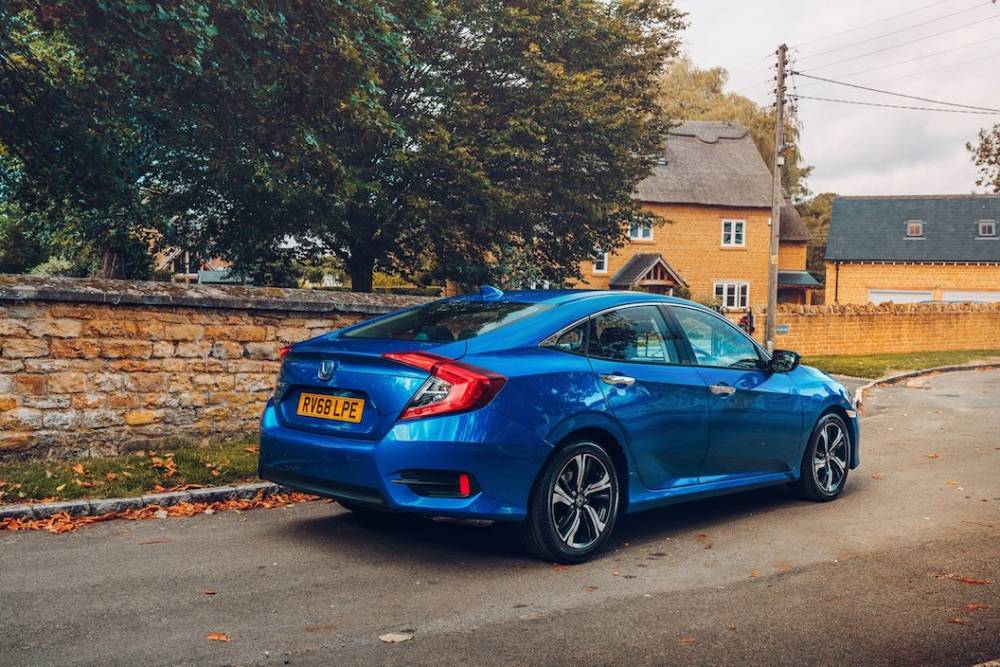
    CAR REVIEW | Honda Civic DTEC Saloon

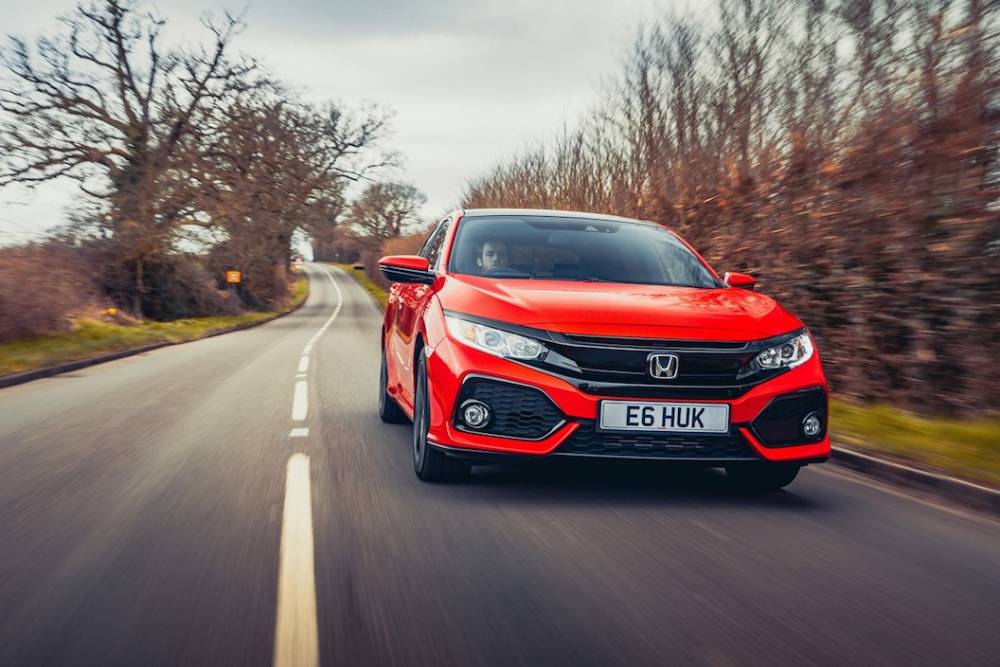
    ★★★★☆ | Honda Civic 1.6i-DTEC SR

    What Have We Got?

    Hot on the heels of our Honda Civic 1.6 i-DTEC hatchback review, we get the newly launched Civic 1.6 i-DTEC saloon. In showrooms burgeoning with SUV’s and dwindling choices of saloons, Honda comes right at you with a new offering in a market that is almost forgotten and a free for all for those who want a 3 box booted vehicle. 

     If you miss the Accord and wished for its return then your dreams have come true. In the real world, it fits nicely where the old Accord would have fitted if not in the Passat segment of car anymore where it once was. 

    Driving

    Here is where the main differences are. Despite all the performance figures looking the same for the diesel engines, the saloon puts its power down in a totally different way making for a more relaxed driving experience. Whereas I had moaned about the speed in which the engine revved to its redline in the hatchback, in the saloon, it seems more leisurely and I like it. It makes for a much more relaxed cruiser.

    Some would moan about this-this because it feels so markedly different. And then you factor in a softer ride. Very soft in comparison to the hatchback. Again something I wished the hatchback was before you press the sports button. 

    Inside

    There is very little to differentiate between the new saloon and hatchback. If I have to be really picky it is what is, or isn’t there under the rear parcel shelf. Again trim and paint appear to be missing leaving exposed speaker wires and unpainted metalwork. 

    As is standard with the hatchback, there is an abundance of black and all controls are identical.

    Living With It

    As I’ve said, the engine and soft ride bring a whole new experience to the Civic saloon that is very different in character to the hatchback.  

    It’s also an attractive looking car. It also cuts through the air better than the hatchback by giving you 3mpg more for no more than 130mm in length. Admittedly these are Honda’s unrealistic combined figures of 83+ miles to the gallon.

    And let’s not forget the boot capacity. From 478 litres, the saloon has an easy to access 519 and that’s before you fold down the 50/50 rear seats. It makes the saloon a very attractive alternative to the hatchback and other hatchbacks. Its size credentials making a case for its space in the showroom

    The Verdict

    Once again Honda presents you with a car that no one can dislike though many might choose to ignore because of that booted rear end. And that in itself is a shame because this really is a delightful car and one that needs to be looked at if you are in the market for a relaxing drive with no dramas and that drama includes wondering if that flat-packed chest of draws will fit the boot. It will. 

    Love

    Looks

    Boot space

    Build quality

    Loathe

    Lack of trim under the rear parcel shelf

    Unrealistic fuel figures

    Heating controls

    The Lowdown

    Car –  Honda Civic 1.6i-DTEC SR

    Price – £ 23,115 (as tested)

    MPG – 83.1 mpg (combined)

    Power – 120 ps

    0-62mph –  10.1 seconds

    Top Speed –  125 mph

    Co2 – 91 (g/km)

  • COMMENT | The Best Car I’ve Driven

    COMMENT | The Best Car I’ve Driven

    Motoring journalist, Neil Briscoe, on Twitter recently posted up that the best car he’d ever driven was a Mercedes pagoda. It got me thinking. I get to drive lots of new and old cars and those in the middle. But which is my favourite?

    This is difficult because my driving career spans 26 years and when I look back I could say the 1979 Mercedes 280SL but I was 18 when I drove one of those and compared to my second Citroën Visa, it was powerful and luxurious. Likewise I was also 18 when I first drove a VW Beetle and that’s enough to put you off motoring despite wanting one.

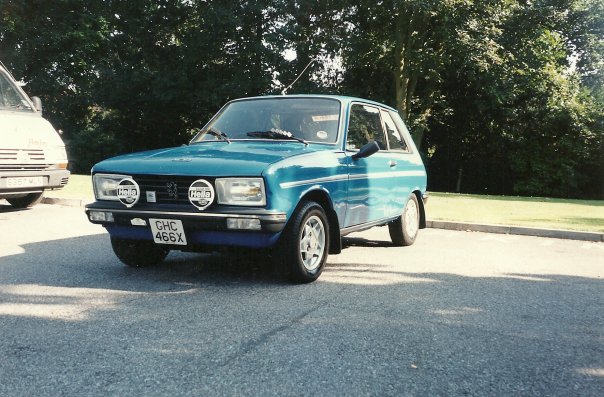
    No, it’s taken me some serious thinking, a little bit of drinking and a thumbing through photos and books to come up with my best car I have ever driven. It’s the Peugeot 104 ZS.

    I’ve had 2 of them. Both 1980 models, both blue and both ZS models. The first was quite the wreck but the second was much better. It wasn’t the best car in the world though. In refinement and luxury departments, it was overshadowed by the likes of the Ford Fiesta and Renault 5. It was rather crude and basic despite having electric windows and alloy wheels. It had rubber mats in the rear, piss poor ventilation and a tiny boot.

    What makes it the best car I’ve ever driven was one fundamental thing: I’d look at it and for unquestionable reasons, I’d dread the drive where I had to go. Yet it always entertained. It’s diminutive size and 1360cc engine with 72bhp was hardly left embarrassing itself in traffic of the day. I also had a comfy luxo barge, Peugeot 504 Ti automatic in the garage at the time too.

    On the motorway, it kept up and beyond despite only having a 4-speed gearbox, it was never tiresome or overly noisy. The 12 CD changer in the boot, 6×9 speakers in the rear side panels and 7” in the doors put pay to excess noise by drowning out the cacophony of mechanical screaming to Kylie Minogue and Duran Duran. 

    It was also one of the last cars I have owned where I’d just jump in it late at night and head for the roads in the dark. I’d be out for hours and hours, yellow Sev Marchal headlights cutting through the worst of the night. I did some stupid things in it and yet I lived to tell the tale. It never once got so out of hand that it ended up facing the other way. Something that could not be said for the Peugeot 205!

    The entertaining also stretched to its ability in the snow. Being a home carer at the time, I needed to get out and about in vile weather and that car was amazing in the snow. Small wheelbase with all the weight over the front wheels certainly helped. Its Achilles heel was its wipers. They were slow.

    So here we are, 2018 and the 1980 Peugeot 104 ZS has to be the best car I have ever driven though probably not owned. Oh crap, now I’m thinking about that one. Be right back…

  • CLASSIC CAR REVIEW | Saab 9-3

    CLASSIC CAR REVIEW | Saab 9-3

    Bravo, Sierra Alpha Alpha Bravo

    In 2012 architects the world over were weeping onto their 1:8 scale drawings and wiping the tears away from their eyes onto their black slim fit polo neck jumpers. It was announced that Saab were dead!

    Things were OK for Saab in the 70s. The Swedes craze for safety changed the way consumers looked at cars in terms of surviving a crash. The boffins at Saab threw their cars off cliffs, crushed them, hit them with hammers, shoved meatballs into the door locks and all other types of things that you and l wouldn’t subject our cars to.

    The Swedes are known for being safety conscious. The majority of the time it’s cold and dark there. They also spend a great length of time knees deep in snow so you wouldn’t expect them to become known as makers of a sought after and admired convertible car. Cut the roof off any car and there is always the risk of you falling out of it if the wheels end up pointing towards the sun. Not a very Saab safety thing at all.

    The Swedes gave way to some gay abandoning and in 1986 the 900 Convertible was born. The 900 is a serious classic now. In 1989 Saab sought the assistance of another manufacturer and unfortunately for them it was GM in America and Vauxhall Opel to those in Europe. GM took a brand known for innovation and quirky design features and presented the world with polished turds.

    Come the 90s and the 900 convertible had become iconic. You could say it single-handedly moved Saab up from the doldrums to Audi territory. All this changed in 1994 when the “new 900” convertible was launched. A well established and fine car was made to feel like you were driving something with a chassis made of only just dried paper-mâché. The rebranded 9-3 was no better.

    It wasn’t until 2003’s launch of the new second generation 9-3 that things started to get a bit better.

    Today the last of the icons represents great value for money. Because of the demise of Saab as a company, prices remain low, it will forever remain that way.

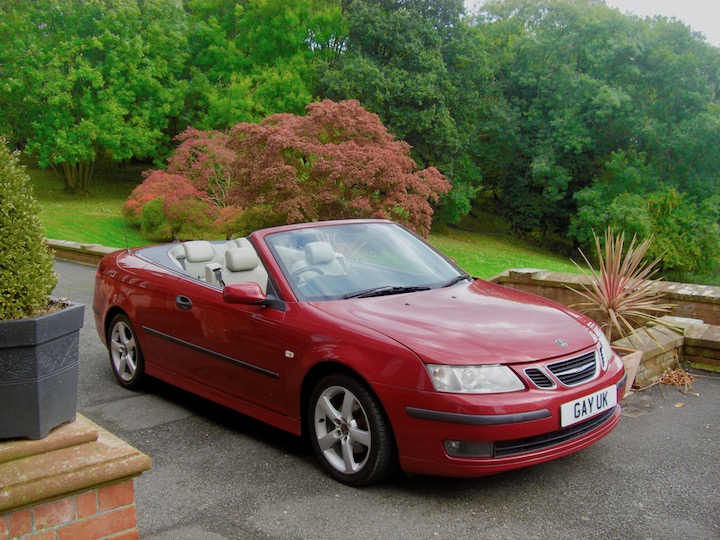
    I’m taking a 2005 9-3 1.8t Linear model for a test drive. This ‘new’ 9-3 was built for comfort and grace. Saab did a good job in disguising its Vauxhall Opel components. The 1.8 low-pressure turbo quietly produces 148bhp at 5500rpm. It has pace to keep up with the modern traffic but you’ll have to stir the gearstick around a bit. All but first gear are set to high in a bid to get maximum economy. In practice, this results in having to keep the revs up to no less than 1900rpm just so you can make good use of the torque the turbo engine produces. This coincides with 180Ib-ft of torque made within a short band from 2000 – 3500rpm. Less than 2000rpm and it feels lethargic. 0-60 time isn’t scintillating in the slightest, however the cruising speed is comfortably high. You could take to the flat-out Autobahns of Germany and make rapid progress.

    By today’s standards for an old car, it still remains silky smooth. Roof down motoring makes it a joyous car to pilot. Indeed if it’s night time, you can select ‘night panel’ on the dashboard. This turns off all the facia lights except the speedometer and even this will only then show a maximum speed of 90mph. l am told that if you go beyond that, the rest of the dial illuminates all the way round. Something l didn’t get to try. Despite the sales blurb and use of fighter jets in TV commercials in the 80s, this is the only lasting reminder that Saab had any connection with aircraft at all. It was a gimmick and not a very good one either.

    It no longer has that stab you in the back power of the original 900 turbo, After the launch of the “new 900” the turbo derivatives seemed to have been ‘blocked’ like strangers on Grindr with unfortunate profile pictures. In actual fact, Saab had no real sporty models at all after this.

    Thankfully the boffins at Trollhättan had managed to take the chassis and give it the stiffness required when you cut almost 2 meters of the roof off a car. The magic also results in a stiff scuttle area too. Drive any car with a removable roof and place your fingers within the door glass and windscreen frame and you’ll notice movement. This is called scuttle shake. The ‘new’ 900/9-3 suffered terribly from this. The ‘new’ 9-3 like we have here doesn’t suffer from it at all with only the merest hint of it over jiggly road surfaces. There is also a nice sense of draft free cabin. Opened up with the windows up or down you don’t suffer from the usual cold draft that engulfs your neck. In this Saab, there is no need to buy the mesh curtain that you see on many open-top cars.

    Owner Liz loves her roofless Saab. Partner Dave who never drives it with the roof down because it’s “so gay” has mentioned changing it. The reaction from her if he did would suggest he’d be able to sing soprano.

    Being that high, the lovey might want to remove the roof after all.