Author: Al Jennings

  • COMMENT | Taking back the word Queer as an identity

    COMMENT | Taking back the word Queer as an identity

    If you look up the word “Queer” in the dictionary you find two separate explanations for it. The first is the original meaning of the word which is; strange; odd. Then there is the other explanation for it. It’s the other explanation that terrifies many LGBT people. Reclamation is messy. The word Queer holds so much power, in both its pain and its empowerment.

    I remember the first time I was called a queer across the playground at school by somebody who I didn’t particularly like. I still feel the sting in the words. For many, it is a word with so many negative connotations that bring back so many feelings of pain, resentment and hurt, and until very recently it did the same for me. Until I made a conscious decision to embrace it as a positive and a term of endearment.

    To reclaim the word and use it positively and inclusively, you have to accept and recognise the complications of the word. We have to accept that those taunts in the playground or the office happened, and we have to within ourselves accept that this is a word that is going to be around us for a long time. The moment we accept that it gives us the power to reclaim it. Queer is a word we should use with both respect and love

    Gender identity has been a massive talking point over the last few years, with people becoming more confident about living their lives their way and not giving any fucks. I’ve never been a fan of labelling oneself and putting myself in a box regarding the way I look and the way I act. I have always been a flamboyant person, pretty camp and very unique in my fashion taste. I like to bend the rules a little bit. What’s wrong with that? Nothing – it’s an expression, and it’s an extension of who I am. Queer seems to me like a more fluid term that matches the way I view my identity and my persona – which isn’t always a rigid thing.

    “For some, the word queer is just too painful to reclaim. It’s been used to defame and hurt so many times, that it’s hard for people to embrace.”

    It’s important to understand, that it’s not for everybody. For some, the word queer is just too painful to reclaim. It’s been used to defame and hurt so many times, that it’s hard for people to embrace. For a long time, I was very much like that. The number of times that I’ve had that term hurled at me in the street, or seen it used to describe who I was as a lesser human being. It’s about the way we use the word. Embracing the word Queer into the LGBTQ community encompasses a more diverse range of identities and experiences. It allows those who don’t wish to label themselves to feel a part of this family.

    To me, the definition of Queer is now; “describes sexual orientations and gender identities that are not exclusively heterosexual or cisgender”. What is not appropriate, is to still use the word as a slur.

    The gay community has this thing about labels. It’s almost a necessity to put yourself in a box. Whether you’re a top or bottom, a twink, otter, daddy, masc or femme. Labels have become synonymous within the gay community, but what is the difference between identities and labels? Simple; identities are about unique qualities of an individual – which is used to set themselves apart from others whereas labels are often more rigid and defined by stereotypes and expectations.

    [totalpoll id=”120589″]

    Remember, Queer is a label that is adopted by some and rejected by others, and it will probably stay that way, but we need to be more receptive how people wish to identify themselves. I think the younger generation are more tuned to that. I guess I’m in that funny demographic where for some its fine, and for others, it’s a word to be avoided as it still poses problems to some members of our community. It’s icky. I asked a few friends about what they thought about it and a lot of them were very against it because for them it’s so ingrained in them as a slur and it invokes so many unwanted and upsetting feelings.

    It’s also important to remember that some people feel, and I can understand, that queer is going to be a get out of jail card for ignorance if you don’t know somebody’s identity. Ask questions, but never assume. I would rather somebody took the time to ask questions and try to gain some form of understanding, rather than just put me in a box and leave it there. I’ve had the experience of this first-hand over the last couple of years. Outside of the column, and to pay the bills, I work in a very heterosexual industry, and I’m pretty sure for some of them I was one of the first openly gay people that they have met. I’ve had conversations with them, and they’ve taken time to ask questions and understand what makes me tick, and it was appreciated, because not only did they want to understand me, they wanted to expand their understanding. It’s encouraging to see this happen.

    If we are to truly reclaim the word, then we have to start with education. I’ve talked a lot about this in recent columns, but I think it’s essential. Education is the starting and the basis for true equality. If the use of the word queer as a derogatory term is condemned at an early age, and education encourages the use of the word more positively and inclusively then we are halfway there. As the older, more conservative generation dies out and is replaced by a more liberal demographic then we can improve the lives of queer people. There’s always going to be small-minded bigots in the world, and we have to accept that – we cannot change everyone’s minds.

    [totalpoll id=”120591″]

    I think that what I’m trying to say is that we have the freedom and the right to choose how we want to live our lives at the end of the day. If we want to identify as queer or as gay that’s up to us, or whether we wanted to identify as a toaster oven – we have the right to choose, and you have the right to be accepted as that. If I’m completely honest, I guess I’m coming around to the idea of using queer as a way to describe me. I’m not one hundred per cent there yet. But the more I discover parts of myself, then the more of me I understand. The change comes from within, you might not ever feel comfortable reclaiming queer and it’s fine but think about it for a while and you might just change your mind.
  • COMMENT | We need to talk about Chechnya

    COMMENT | We need to talk about Chechnya

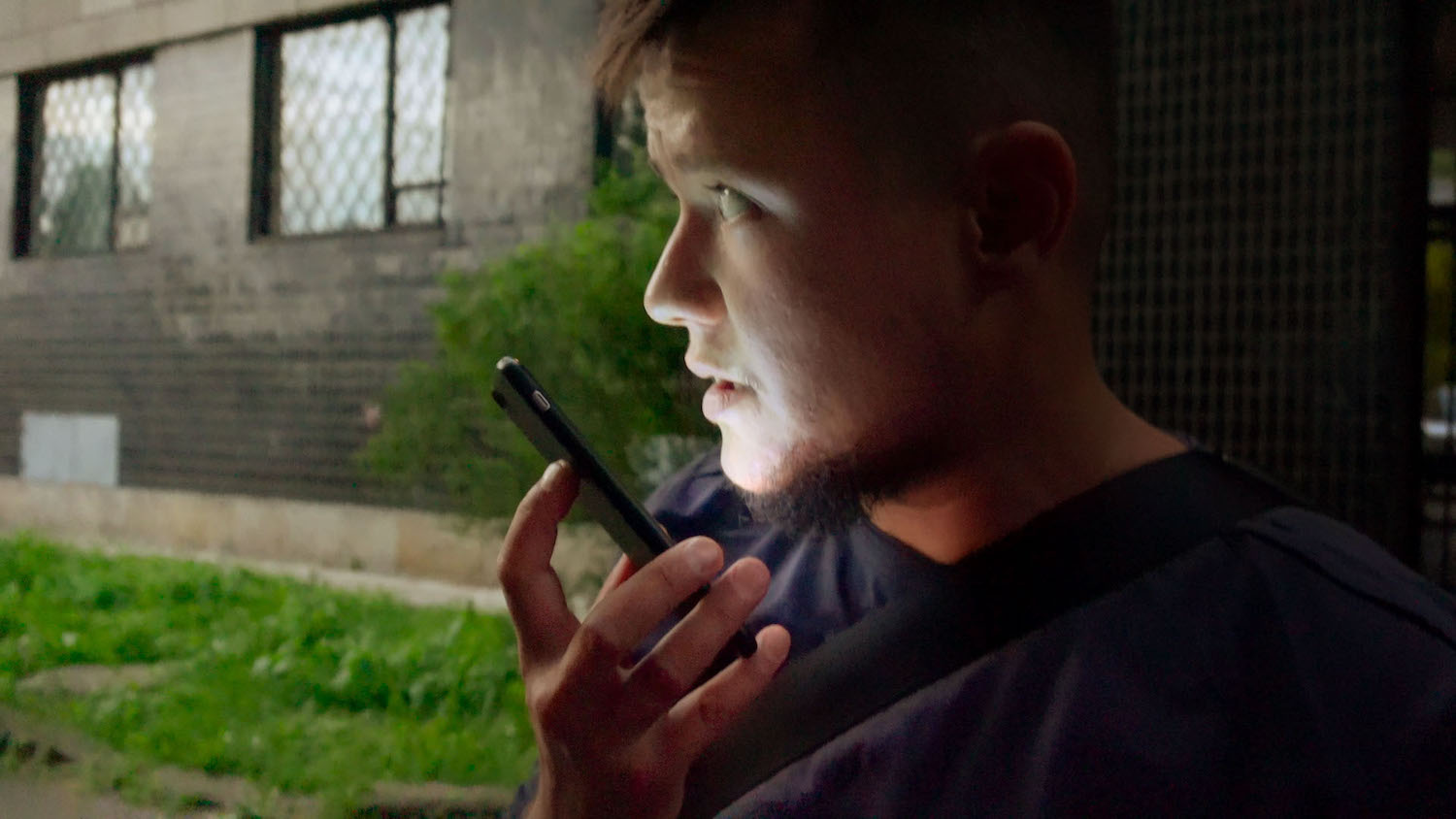
    Two terrified boys are forced out of a parked car by members of a gang who taunt them with the question: “Were you kissing?”. A young lesbian is dragged from a car on a road in the middle of the night, a paving stone is dropped on her head. A captured man is heard screaming for them to stop as he is raped. These are just some of the disgusting “trophy videos” which have come out of the Russian province of Chechnya over the last few years made by people who hunt down and terrorise members of the LGBT community.

    We need to talk about Chechnya.  

    These harrowing videos were broadcast recently on BBC Four as part of the documentary “Welcome to Chechnya: The Gay Purge”.

    The first reports of a supposed Gay-Purge in Chechnya surfaced in April 2017, when a Russian opposition newspaper ran a story which reported that since February of that year, over 100 men had been detained, tortured and at least three had died, having been arrested by the Chechnyan Police. The plight of the LGBT people of Chechnya has long been a cause for concern among human rights organisations. Chechnya is a traditionally conservative Islamic society where homophobia is rife, and homosexuality is a taboo subject. It has become more increasingly conservative under the leadership of President Akhmad Kadyrov and his son, the current leader, Ramzan Kadyrov. As the leader of the Chechnyan republic, Russian President Vladimir Putin has empowered local leaders to impose their identification of Muslim values, which Kadyrov has done – to the extreme. It was reported that Kadyrov wanted the LGBT community to be eliminated by May 26th, 2017.

    It’s been reported the police have used entrapment schemes to lure their victims into their traps. Luring them on a date using popular dating apps; beaten and humiliated. They then produce a recording and use this to blackmail money in return for silence. Those arrested have been put through a horrific ordeal. Witnesses have described them as being beaten, tortured by electricity, mocked, insulted and even raped – all to make them reveal the names and locations of other gay people that they know.

    In August 2017, Russian Pop-Singer Zelim Bakaev travelled to Grozny in Chechnya to attend his sister’s wedding. He was reportedly arrested by the Special Rapid Deployment. It’s been widely reported that Bakaev was gay, and this was the reason for his arrest. A video was released in September 2017 supposedly with Bakaev reporting that he was in Germany, but it was apparent that this had been staged. In October 2017, it was reported that Bakaev had died as the result of torture by the Chechnyan police.

    Zelim Bakaev has now been missing for two years and ten months.

    Rescue missions are undertaken by brave activists to get people out of Russia. The Rainbow Railroad is one of the main international organisations that have helped people escape. Working with the Russian LGBT Network to find safe houses and fund their evacuation.

    Homosexuality has always been an issue in Russia. It has been criminalised and decriminalised many times during the state’s history. In 2013, Russia introduced it’s very own Section 28, officially banning propaganda for non-traditional sexual relationships. This law has been openly discriminatory towards the LGBT community and has been seen as one of the reasons why the Kremlin has not been quick enough to respond about the persecution of people in Chechnya. Moscow has openly said they have no reliable information about any problems in the area. A flat-out denial, and a flat-out lie. They hadn’t seen the images that had surfaced on social media.  

    International condemnation was not instant. It took until March 2019 for several countries at the 40thsession of the Human Rights Council, issued a joint statement calling for a “swift, thorough and impartial investigation to the alleged persecution” and accountability for those people. This statement was signed by the United Kingdom, but unsurprisingly not by the United States, who refused to sign on to the statement. From Trump’s administration, would we expect anything less?

    Many celebrities and LGBT activists such as Troye Sivan and Ellen DeGeneres also voiced their condemnation. Germany, Lithuania, The Netherlands and Canada have already offered Asylum to over 150 people. I cannot find any record for the United Kingdom. 

    We need to talk more about Chechnya.

    I’ve said before that the fight for equality still goes on and unfortunately the persecution of our community still goes on. They are being persecuted for being themselves. It’s hard for people living in more liberal societies to get their head around some of the things that are going on in Chechnya. However, thanks to Nationalism and religious fundamentalism, members of our community are continuing to be made scapegoats. As one of the attackers in one of the videos which have surfaced tells the poor scared kid; “All our problems are because of people like you”.

    Not since Hitler, have we seen such top-down oppression and attempt to eradicate a community.

    In a more liberal society, like the UK, many of us haven’t faced persecution like this. For most of us, we live a more privileged life where we can love who we want and be who we want. In Chechnya, openly loving who you want to love can get you killed. Not since Hitler, have we seen such top-down oppression and attempt to eradicate a community.

    We cannot sit back and let this happen, we must stand together with our fellow brothers and sisters. In parts of Europe, politics and society is moving further towards the right, and that is dangerous for our community. We are seen as non-traditionalists – a problem that needs a solution. We are seeing open oppression not only in other parts of Russia, but we are also seeing it in Poland. Certain areas of Poland have declared themselves as LGBT Ideology-Free Zone which effectively signals exclusion for members of the community. It’s not enough for us to sit back and say that “this is what Russia has always been like, we can’t change that”. We may not be able to, but we have a voice as a community to help our leaders see that this is also not right and fight for the cause on the world stage. By doing this we are in effect becoming complicit with those that are targeting us. We need to talk about it more. If we rest on our laurels and fail to respond to the call for action, then we risk rolling back the rights that we have worked so hard to get, and in doing that, we are letting those down who want their freedom. If you do anything this weekend, spend five minutes researching what is going on – because once you do, you will not be able to forget it so easily. ?️‍?

  • Navigating the New Normal, and how the Lockdown has given us the opportunity to break the chain in HIV transmissions

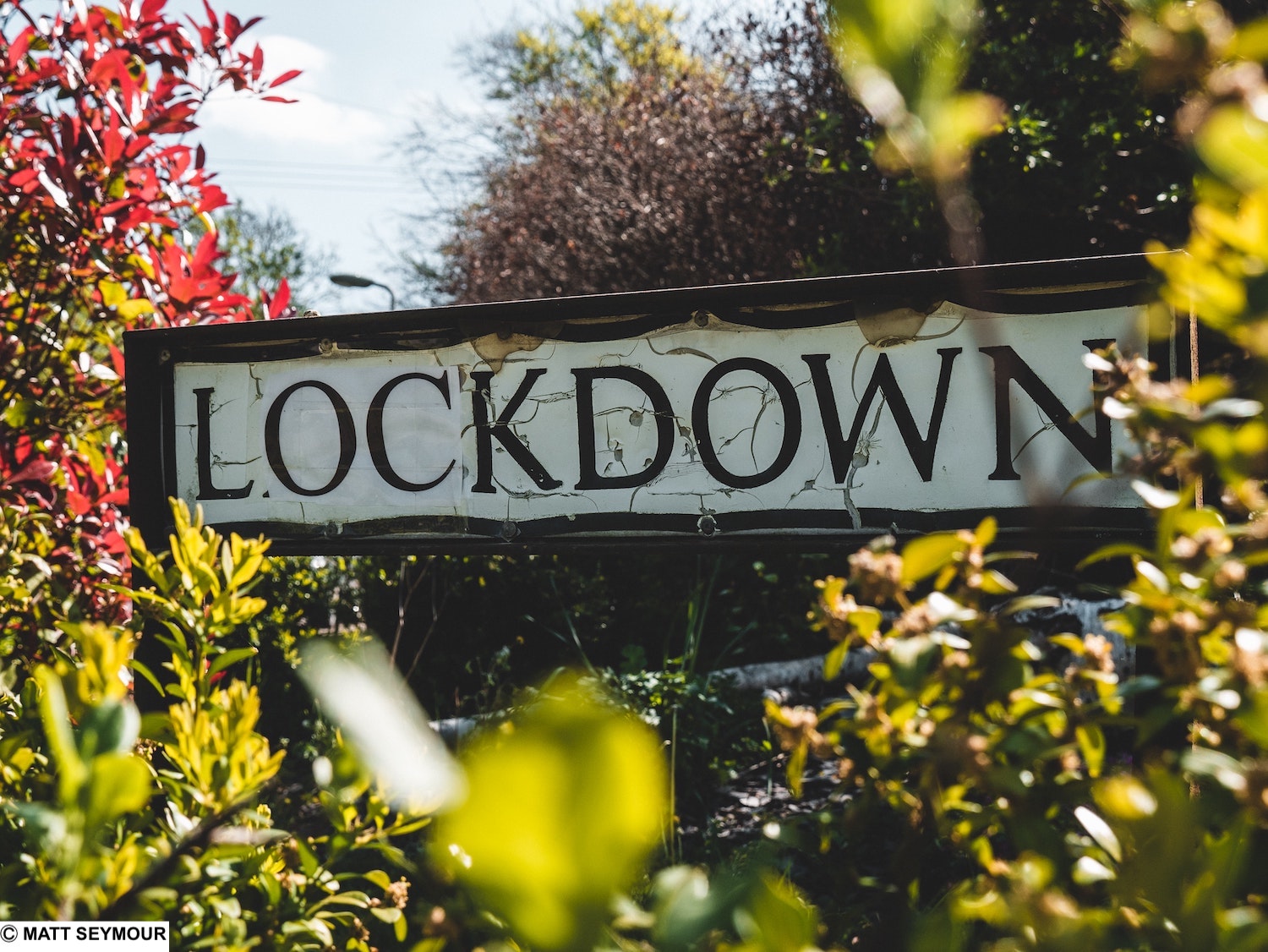
    Navigating the New Normal, and how the Lockdown has given us the opportunity to break the chain in HIV transmissions

    As the end in sight for the great lockdown of 2020, it’s an anxious and nervous time for everybody. We have to figure out safe ways of coming out of our cocoons and start to navigate this new normal that we face ourselves with.

    The so-called “new normal”. Urgh. This phrase has haunted me for the last 15 weeks; I don’t want a new normal – I want the old normal back with the life I had pre-COVID. I want to go back to a nightclub and get hot and sweaty with a crowd of people that I don’t know. Be that anonymous person that I once was.

    Whereas for most of us key workers, we have continued to work throughout the pandemic, we have had the luxury of the of being able to work from home. For me, this means that my bedroom has been turned into a make-shift office. Not an ideal situation for anybody is it?

    Rest bite has arrived this week, however, as I was lucky enough be allowed to move back into the office to continue working from there. I was quite anxious about it all. I hadn’t been anywhere in the last fifteen weeks, so the thought of social interaction was also quite daunting. Two days in, however, and it feels as if normality has been restored in certain ways. Back into the daily commute, albeit with a face covering, and the same old office banter that previously prevailed. Getting up at 6.30 am for the first time in 15 weeks was a real struggle and having to physically dress to something more than a pair of comfy joggers and actually doing my hair to a reasonably presentable state to leave the house. It certainly made me feel a lot better for doing all these things and getting myself back out in the world. The first couple of days has given me a bit of a confidence boost that I need to start getting my life back to some normality; or in-fact this new normal!

    The one thing that I have missed during this lockdown is intimacy. Being the lonely singleton that I am, a weekend isn’t complete without a drunken Grindr hook-up at some ungodly hour. I’ve been scared to do that during the lockdown, and I have made a conscious effort to avoid it. I’m now at a place where I am ready to maybe try something. Dip my toe back in, so to speak.

    During the lockdown, I have had a few conversations with friends about their forays into sexual interaction throughout the pandemic and nearly everybody that I had spoken to had abstained. This got my thinking into whether the lockdown is going to provide the best opportunity to break the chain of infection of HIV within the community.

    The Terrance Higgins Trust and Sexual Health Clinic 56 Dean Street uncovered research that 84% of people were abstaining from sex outside of their immediate household because of the COVID-19 lockdown. The same research also shows that whilst eight in ten people are going to forgo meeting for sex, nearly one in five (19%) said they wouldn’t continue or were not sure as lockdown enters its third month. This survey of over 800 UK adults also found that prior to lockdown; “almost half (42%) would have one sexual partner a month, while a third (35%) would have between two and five partners and 8% usually have more than five partners in that period”.

    Ian Green, Chief Executive of Terrence Higgins Trust, said: ‘This is an incredible opportunity to break the chain on HIV infection and help move us further forward in achieving our goal of ending HIV transmissions in the UK within the next decade. National HIV Testing Week is every November, but we need to act now because this chance won’t wait and won’t come around again.

    ‘It’s estimated that around 7,500 people in the UK are living with undiagnosed HIV, which is bad for their health and means they may unwittingly pass it on. If everyone is able to use their time in lockdown to get tested and know their HIV status, we can ensure something really good comes out of the devastation of the COVID-19 crisis.’

    I reached out to Greg Owen, PrEP Activist and co-founder of the iwantPREPnow website, and he explained; “I think it’s clear from this small data set and from what we know about human nature to establish that this hiatus in sexual activity across our community is just that, a temporary measure. It cannot be sustained, nor should it be. Sex, intimacy, connection and pleasure are basic human needs for most people and I’d like to think we will gradually return to enjoying those things and celebrating them again once restrictions are eased further.

    “Of course, not everyone has managed to adhere to the lockdown instructions, and we need to be mindful of those people too. It’s important we don’t feed into a culture of finger-wagging and shaming. That type of approach has never worked and will never work. We learned that only too well in the darker days of the HIV/AIDS crisis. Instead, we need to encourage people to be honest. Safe in the knowledge that they will not be judged and offer them the support, advice and services they require.

    “It will be some time before we have solid and robust data on what impact the COVID-19 lockdown has had on HIV rates. What we can say is lockdown has provided people with the time and opportunity to test. Not just for HIV but for all other STIs too. It has prompted Terrence Higgins Trust and community organisations and service providers to increase the capacity for home testing, which is a great thing.

    “We might see a spike in STI diagnoses in the coming weeks”

    On the subject of testing and diagnosis, Greg went on to explain; “We might see a spike in STI diagnoses in the coming weeks as clinics begin to re-open and more people step forward to test. We might also see that drop-off and fall as those who haven’t had sex in lockdown start to attend their regular check-ups and return negative results.

    “We’ve made a commitment to end new HIV transmission in this country by 2030. We are well on the way to doing that. We have everything we need to make this a reality. The four cornerstones of this will be regular testing. Treatment for anyone who is diagnosed with HIV, supporting them to become undetectable, which mean they can’t pass on HIV, condoms and finally, making PrEP free and easily accessible to all who need it. This all begins with education. There are exciting times ahead. COVID-19 will pass and we will begin the process of reconnecting.”

    As a community which has been ravaged by the stigma of HIV, this statement is a welcome sign that we are well on our way to ending new HIV transmissions across the country. The COVID-19 lockdown has proven a great time for us to do so. I’m looking forward to seeing the data that comes from it in due course. This lockdown has provided us with a golden and rare opportunity to break the chain in this disease which has had a profound effect on so many of us.

    One thing that the Greg told me, that stuck with me is that we must move away from the culture of blame, finger waging and shaming people for their choices. Gay men especially are often quick to pass judgement. I’ve said this before in previous columns, we need to make a conscious effort to be nicer to others within our community. We are not a pack of bullies. We are an inclusive and friendly community who takes everybody under our wing and looks out for one another. As we come back from the intermission, let’s make that change to be nicer to each other.

    This weekend sees further restrictions of the lockdown here in England. From July 4th, the hospitality industry will re-open and we can finally go for a well-deserved pint. I’m not here to lecture about what you should and shouldn’t do but be mindful that this is an anxious and nervous time for everybody. I am heading down to one of my favourite bars in Leeds on Saturday to see how the new normal presents itself and experience it. I enjoy a bottle of wine as much as everybody else, but I’m nervous too. I want to get my life back to as close to normal as possible.

    We’ve come so far within this pandemic, but still, there is a long way to go. Be safe. Be sensible. Look after yourself and most importantly, look after each other!

  • COMMENT | Why Gay Loneliness and Body Dysmorphia may be epidemics we may never find a cure for

    COMMENT | Why Gay Loneliness and Body Dysmorphia may be epidemics we may never find a cure for

    I’m not sure what I’m trying to achieve by writing this column tonight, but I opened up my MacBook to try to get some feelings that I’ve had for a while on paper whilst they’re swirling around my head. From the start of my writing this column to you guys, I said from the start I wanted to be honest with you. This may be seen by some as being too honest, and to be fair if your reading this – you are very lucky. I’ll probably toy with the decision to post this about a dozen times.

    I’m going to start by linking this to an article from the Huffington Post that I recently re-read about Gay Loneliness. When I read it back in 2017, it had a really profound effect on me. It was like looking into a mirror. The fear of rejection constantly rules my life; I’ve become a people pleaser, and everything that I do is to please other people. I crave acceptance from people, and I think it’s made me incredibly needy. Gay men are primed to expect rejection – it’s almost as if we are constantly analysing social situations for ways that we might not fit into them. Does the rejection we faced in our younger selves intensify and grow even more as we grow up and develop into adulthood?

    Let’s be completely honest, it’s difficult being a gay man, but we make it even harder for ourselves! Will that ever change?

    This was a Sunday night when I reread that article for the first time in 2017, and I started to think and analyse in my head why I had such a strong emotional response to it. I came to the conclusion that I actually hate myself.

    I know the word hate is a very strong word, but at this time, I lack the use of any other word to describe how I feel right now.


    I’ve never really felt happy with the way I’ve looked. I know that being the size I am is putting me at a disadvantage within the gay community. As gay men, we are obsessed with the way we look, and how we present ourselves to the wider community. Most young gay men’s introduction to sex and relationships is from gay porn. All the models and stars of gay porn are toned, with a great six-pack, we see them going at it like rabbits – for young impressionable people, that is what they see as the norm, so they then feel like they have to have that. They have to have the perfect body, and the perfect sex lives.

    I do work out as much as a can. The lockdown has been really hard for me. Within the first week of lockdown, my diet just went completely out the window and I was eating so much shitty food that I piled about half a stone straight back on. I enjoy going to the gym, it gives me a motivation to go and put some effort in. I got myself a personal trainer to help me, and he worked wonders for me for the first couple of months, losing 4 stone in 3 months, which I was really proud of, and it showed in my confidence levels and I could finally start to buy clothes that I knew I’d look good in. Now, it’s the case that I buy clothes that I would like to wear, for the sole purpose that I hope that something will click in my head and it will encourage me to go further to look a certain way so I don’t look like a complete twat whilst wearing them. That’s a pretty bad way to go.


    At the age of twenty-seven, I am yet to experience a long-term relationship. I began at this point to ask the question of what exactly it is. What does that mean? A short-term relationship can be about exploring yourself or trying something new, but a long-term relationship is really about growing closer and closer. That, for me, includes not just daily communication via text, email or in person, but also intimacy.

    I then started to think; well – there must be something wrong with me, right? It’s not normal not to have that in your life – halfway to middle age and you’ve yet to experience that – there’s definitely something wrong with me. I didn’t think there was anything wrong with me to be quite honest. I thought I was perfectly normal, if not incredible, an independent millennial and that I didn’t need another man to satisfy me – or let alone define who I was a person.

    I guess I would say I’m picky when it comes to me. I have a type, many people do, however it seems to me that I don’t fit into those people’s type. It feels that I am sometimes I am constantly chasing a dream I might never reach. I’ve always wanted the drop-dead gorgeous husband, the two kids, the house in Suburbia with a white-picket fence. I’ve always had a thing for older men, a bit of stubble, a cheeky smile, a bit of dad bod, but in good shape with a killer sense of humour and someone that I can spar and have banter with.

    I’ve always hated the term “beauty is in the eye of the beholder”. I guess on some levels I don’t feel beautiful. I don’t feel worthy compared to other people. I know you shouldn’t compare yourself to others but in this community, there really isn’t any choice. We’re always being force-fed information on how we can improve our lives and become better people. How to look better. How to dress better. I guess there is a wall in my head, and I can’t see over that wall. We put walls up to protect ourselves, to block out the pain of rejection, of confusion. It’s easy to build these walls – but even harder to pull down the bricks one by one. Sometimes we don’t want to take down the brick, because for god-knows how long it’s helped and protected us – taking down that brick is like holding a mirror to ourselves and sometimes it’s not nice to look at.


    I think it’s safe to say that the queer community is one of the highest risks group for depression, anxiety and substance abuse. Many members of the gay community have learnt that our little community can be very harsh with each other and with ourselves for trying to fit into one of those boxes. 100 per cent I have had to deal with it myself.

    My size has also had a serious impact on my sex life. I don’t feel comfortable naked, everything just hangs and that makes things difficult in the bedroom for me. I think I developed a fear of sex when I came out of the closet. I didn’t really have anybody teach me what to do. I literally learned how to have sex from watching Gay Porn, which is a really unhealthy thing to do. My first time was a really horrendous experience, and it’s something I don’t want to relive. It’s rare that you come across a guy who is comfortable or attracted to bigger guys – the years of constant rejection really did fuck me up.

    As the lockdown restrictions start to ease and life beings to get back to new normal. I need to get my head into the game. I need to make some positive choices in my life and work out a way of sticking to them. I’ve said every weekend for the last god knows how long that I’m going to quit smoking, and yet every Monday morning, after having my morning coffee is the next thing, I reach for is a packet of cigarettes and my lighter. Is it will power, or a lack of? Is it an addiction? I thought I had a bit of a drinking problem until lockdown happened, and I managed to go 88 days without having a drink, which for me is a huge amount of time. Lockdown should’ve been the time where I made those conscious decisions to change my life and do something about it, and yet all I did was sit around on my arse and eat through copious amounts of Dairy Milk.


    I know I’m not alone in all of this. I know there is a large per cent of the community who struggle from various disorders, such as anorexia, bulimia. Shit, there’s that word I didn’t want to use. Disorder. It’s such a dirty word. Maybe I have an eating disorder myself? I can’t stop eating sometimes. I try to hide it around other people. I’m really self-conscious at BBQ’s or at running buffets about what I put on my plate – because I want to portray something other than the truth to the outside world. I’m a secret eater. I don’t let people see what I shovel down my throat sometimes. We all eat our feelings sometimes, but it becomes so dark you can’t always see the woods from the trees.

    When I set out to write this column today, I didn’t know what I wanted to achieve. I wanted to open up about my struggles and hope that maybe something would click inside me to allow me to want that change; and actually, I think it might have done. I think it’s because I’ve admitted, for the first time, that I have a problem with addiction and food. I am addicted to food. I’ve now got to look to putting this into practice and make the conscious effort to change. Where I go from here, I don’t know; but they do say that acknowledging the issue is the first step to dealing with it.

    As a community how do we fix it? I’m not sure I’ve got an answer for that, but if you are struggling with any mental health issues, be it anxiety, depression, food issues, there is help out there for you. They are there for you to talk to – find a close friend and confide in them, it might seem like a massive step to make, but trust me, you will find things become easier when you do it.

    So here I am. The first step, to the first day of the rest of my life. I’m sure I’m going to fall off the wagon at some point in the future, but let’s just see what happens, shall we? I know that if I want to experience happiness, I need to make that change. It’s all about the journey, right?

  • The Difficult Second Column

    The Difficult Second Column

    I know, when popstars come to writing their second album it’s often referred to as the “difficult second album”. Who would’ve thought I’d have that problem when it came to be writing this little column for you all?

    I suppose, I would like to start by saying – Thank you! I have received a lot of love on social media about it, and I think it’s done the job I wanted it to do by making people ask questions as to whether they are doing enough to help support their local communities. It’s important now, more than ever, that we continue to invest in our safe spaces and show them some appreciation. This lockdown and epidemic has been tough on everybody and we’re all bound to be anxious over what this new normal is going to be, and how we will have to adapt to a socially distant society. We all need to show a bit of love, support and understanding, and show we care.

    The best thing to come out of having this column, is having a voice within the community – which, is a little strange to me, because for a long time when I moved to London, I didn’t feel like I really belonged to the community.

    I really struggled to find my place.

    silhouette, girl, dance
    Photo by geralt on Pixabay

    Deep down, I knew I was gay when I was in my early teenage years, but I didn’t have a role model or any form of support to help support me. I’d never been to a gay bar before I moved to London. To this day, I can remember my first proper night out on the Gay Scene in London. I’d been in London for a couple of weeks at that point, and I was so eager to experience all the very thing I had spent my summer researching. It wasn’t even a conventional night out with my university course mates. I met a bloke on Grindr one Saturday afternoon and he’d invited me to meet him for a few drinks in Soho and he offered to show me around. He was a nice enough guy, I didn’t fancy him, and there was nothing sexual about it. He was just a few years older than me, and it was really nice to meet someone who was happy to show me around and introduce me to the scene.

    It was painfully obvious to me that night that I would have a problem really fitting in with the “scene”. I knew I was different to everybody else. I knew that my size was going to hold me back. Being a fat guy, it almost labels us automatically as being unattractive and unworthy of attention. I remember being on the dance floor in Heaven that Saturday night, both having an incredible night in a space that felt safe, and yet feeling completely alone.

    There were so many six-packs and chiselled bodies and then there’s me, in an oversized top from Primark and comfortable jeans, trying to hide just enough of my body that I felt comfortable. So, even from the start of my journey of self-discovery it really felt like I was fighting an uphill battle with myself. I look back now and wish at the time I made that conscious decision to make that change when I was younger. Instead, I continued to eat my feelings and I made no attempt to lose weight.

    It wasn’t until my mid-twenties when I started to feel that I was letting myself down and I had to make that change, because I felt I was missing out on important life milestones because I couldn’t find happiness in a relationship.

    It’s clear to me now, that the problems I had stemmed back to my childhood. I was born in 1992, into a middle-class working family, in a very conservative, stuck in the past community. I was at school towards the end of when Section 28 was still in effect and I was heavily bullied as a kid – teachers couldn’t really stop that. Sure, they could reprimand someone for calling me fat, or specky four eyes. But if someone called me a faggot or a queer, which happened quite often, they couldn’t do anything. That really hurt me, and it still does today. They knew that it was wrong, but there weren’t in a position to really combat it.

    The repercussions of Section 28 put young queer kids at risk for not having a sex education that was relevant to them. They didn’t have any understanding or advice as to what a healthy relationship was the for them.

    Some developed worrying behaviour that could put them in danger, such as excessive alcohol and substance abuse as well as sex with much older men, which could sometimes result in a sexually transmitted disease or a positive HIV test result. Teachers now have a duty of care over young people to educate them, and some people still feel a bit angry to this day that they weren’t supported and let down during a crucial and pivotal part in their development and education.

    I guess, I kind of fall into this remit. I was never taught about same-sex relationships in school. It was brushed under the carpet. We were never exposed to that as kids so – we really didn’t understand what these relationships looked like. Our only real understanding of it was from the limited access to queer representation on television.

    We were reduced to watching programmes such as Queer as Folk, which were truly ground-breaking at the time to show such explicit material, under the cover of darkness with the volumes on the lowest possible settings on the TV sets. Representation has improved over recent years, with more and more openly gay people visible on television, and more openly gay character in the mainstream media, paving the way for education for younger generations. It’s put pressures on TV Shows and the Media to show them in a positive and healthy way, to help fight the comeback following section 28.

    We have come a long way since then, but we’ve got a long way to go. LGBT+ characters in mainstream television are often thought as an afterthought by creators, with producers and directors ticking through diversity checklists to make sure there is representation. We exist and we are a part of normal society – represent us as who we are. We’re not all butch lesbians and raging bitchy queens.

    June is Pride Month, and for the first time since the Stonewall riots we are unable to march and celebrate Pride in the way we’ve done in the past. Even in 2020, we see people questioning Pride Month. Sadly, I’ve seen a number of comments on social media from people asking we don’t have a Straight Pride. To me it’s a ludicrous argument.

    When have white heterosexual people ever been discriminated against? When was it illegal to kiss their partner in public? When were they forced from their homes into refugee camps for being straight? When were they killed for being straight? Well, we all know how that turned out when they tried that in America. They don’t have Straight Pride – but they do, however, have International Clown Week – maybe they can attend that?

    The British based charity, Stonewall, posted some statistics online in early 2020 stating which I found to be staggering and pretty upsetting. Stonewall posted statistics stating that; 26% of lesbian, gay or bisexual people alter their behaviour to hide their sexual orientation in order to avoid becoming the victim of a hate crime. 48% of trans people under the age of 26 said that they had attempted suicide, and 30% of those had done so. A staggering 59% said that they had considered doing so, and finally – a quarter of the world’s population believes that being LGBT should be a crime – and although we’ve come a long way in sixty years – shows that there is a long way still to go in our fight.

    For me, the future starts with education.

    Wokandapix / Pixabay

    Relationships are something that should be taught in schools, and children have a right to understand that same-sex relationships are a perfectly normal thing. It should be taught that it’s normal to have two mummies or two daddies. Having an LGBT-inclusive education ensures that those with LGBT families see themselves reflected in what they learn. It also will encourage all young people to grow with inclusive and accepting attitudes. It will also teach them about what a safe and healthy relationships look like and how to have them. Better reflecting the world in which we live in, and subsequently covering important issues like consent and online safety.

    Having this understanding from a younger age, can only help to stamp out homophobia. It’s not going to be a cure, but I hope it goes a long way.

    There has been no evidence, that I have been able to find, to suggest that predators have used the provisions of the Equality Act 2010

    To further our movement, we have to continue to call out bigotry, homophobia and hypocrisy when we see it. A Tory MP posted a message on social media to celebrate Pride Month – immediately, its hypocrisy was called out. If there is one thing in this world, I cannot stand is a double standard. You cannot show messages of support for our community, when your government is actively looking to roll back Trans rights by scrapping a review of the Gender Recognition Act. It just doesn’t work that way! Trans people have been using toilets, or trying on clothes in changing rooms, accessing domestic violence support, and getting on with their lives as for as long as single-sex spaces have existed.

    There has been no evidence, that I have been able to find, to suggest that predators have used the provisions of the Equality Act 2010 to gain access to women’s spaces. If there was, then it would be shouted from the rooftops by anti-transgender lobbies.

    Trans men are men, Trans women are women. The same government promised to ban Gay Conversion therapy two years ago – and yet we’re still waiting.

    So, whilst I’ve got this voice, I am going to use it as a platform to help forward our movement in any way that I can. We’re also going to keep it light and entertaining. You’ll get to hear some of my crazy overseas stories, find out what makes me tick and what rubs me up the wrong way.

    I want to give you an honest reflection of my life – share some of my experiences and tell you more about my disastrous attempts at finding love. I hope you enjoy the journey!

  • COMMENT | When lockdown is over, I’m headed straight to a gay bar

    COMMENT | When lockdown is over, I’m headed straight to a gay bar

    Columnist Al Jennings says that the LGBT+ community needs to invest some time and money in its scene or risk losing it forever.

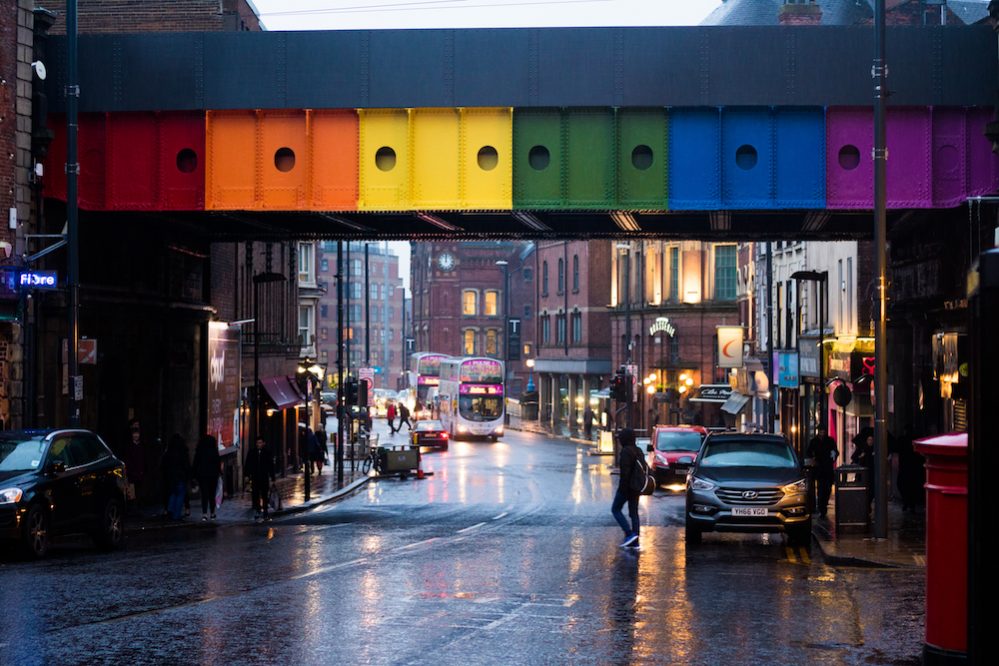
    When you think of a night out in Leeds; you think of the trendy wine bars of Call Lane, Millennium Square for the students, and the rock and punk scene that was evident in the early ’80s. However, Leeds has a fantastic, and diverse LGBT+ nightlife scene which has opened my eyes to some of the greatest nights of my lights.

    I grew up in a conservative East Yorkshire town where there was no reference to an LGBT+ community. It was a pint of snakebite down the local boozer with the lads. As a young, impressionable eighteen-year-old, I was ready for some excitement and to meet like-minded people where I could be myself and find some acceptance. I packed up and headed off to London for university and fully embraced myself in their gay scene, I didn’t know that I had a whole scene on my doorstep I could’ve explored. From London, I moved overseas for a few years, and then back to East Yorkshire and began exploring my opportunities.

    Leeds wasn’t really on my radar. Manchester’s gay village had been well popularised through Russell T. Davies shows such as Queer as Folk and Cucumber, and I began my professional career in Hull. I made a lot of good friends at the time in Hull, and it did have a great nightlife. It wasn’t until I moved to West Yorkshire that I discovered how much of a vibrant and exciting scene Leeds had and how much it could open my eyes, and I could find friendships and relationships that could truly enhance my life.

    Leeds Leeds Leeds

    Embed from Getty Images

    It’s clear that Leeds has got a great reputation for Queer nightlife. The Freedom quarter, that encompasses the Calls and Lower Briggate, is its main hub. A hive of activity with a great host of venues to choose from it, depending on what you are wanting from a Friday night. Whether it’s a few drinks on a Friday night after work in Queens Court or a night of gyrating on the dancefloor to the chart hits of today in The Viaduct then there is something that caters for everybody.

    Ninety-five per cent of my nights in Leeds start in Queens Court. It’s welcoming atmosphere, spacious outdoor courtyard, it provides the perfect place to get together a few friends to chew over the fat of the last week, and catch up on the latest gossip in town. It’s budget-friendly drink prices throughout the week means that a night with friends with a touch of glass, doesn’t have to break the bank. I’d always recommend a visit on a Bank Holiday Sunday to one of their infamous courtyard parties, which brings a little bit of Ibiza to Leeds through their top name DJ sets and incredibly beautiful laser shows.

    After a few drinks in Queens Court, I always find it’s time to pick up the pace and before inevitably ending up in a club, Blayds Bar is always on my list for a great time in Leeds. Hidden away in a back alley just off Lower Briggate, Blayds in a great intimate little venue with lots of charm and appeal. Blayds offers something different every night of the week and includes some great special events. Everybody’s is welcome in Blayds, making it one of the most inclusive in Leeds. Hosted by Drag Queens including Mamma Bear, Blayds caters for all with its collection of chart-hits and the Eurovision Deep Cuts that leave the gays wanting more. You’ll find me on the dancefloor recreating the hair-flips from Fuego most weekends.

    If you’ve not had enough by now, then there is only one place to finish off your night. The Viaduct Showbar is the place to finish off your evening, or even party your way through until the morning. The Viaduct Showbar is undoubtedly the most well-known Gay Bar in Leeds, boasting live entertainment every night of the week thanks to some of the most fabulous and glamourous performers and Drag Queens in the country. With live performances throughout the evening, the DJ’s play the hottest new chart hits and all the classics in-between the fabulous and enigmatic performances.

    Our scene needs us

    During recent years, there has been a lot of press about the closing of LGBT venues all over the country. In November 2016, University College London published a report looking at LGBT+ nightlife in London since 1986. According to THEGAYUK.com, 151 gay bars and clubs in London have shut their doors between 2000 and 2016. A staggering amount. There are many reasons for this, including a rise in business rates and rents – but also, a question that simply gay bars are going out of fashion? Have we reached a point where the pink pound no longer is spent within its community? Have we reached a position in society where our safe spaces are not needed for us to express ourselves and have, we become more confident in ourselves to join the more mainstream nightlife?

    Whilst in recent years Gay Scenes have seen a downturn in footfall, and the closing of bars and Safe Spaces, Leeds really does seem to be bucking the trend, but will it be able to survive the fallout of the Coronavirus lockdown?

    Maybe the community need to remember where they came from and invest in their local venues a little bit more.

    Bars and Clubs are going to have to be inventive and creative to get people back through the doors, and with seemingly a wider acceptance of the gay community, people have been moving away from the scene. Maybe the community need to remember where they came from and invest in their local venues a little bit more. Retaining our safe spaces is essential for many who rely on it as a haven especially for those of the trans community, who are facing a huge amount of prejudice on a daily basis in their normal lives – we must continue to support them and their journey of self-discovery.

    So, when the lockdown ends, and it’s safe to do so – we must take to the dancefloor once again. Show up and show our local business’s our support. Most importantly, hug our friends – we’ve all been in isolation, and I guarantee we’re all a little bit apprehensive but we’re all here for the same thing; to blow all our worries and party like it was 1999!

    I will see you back on the dancefloor, living my best life!