Tag: Gender Identity

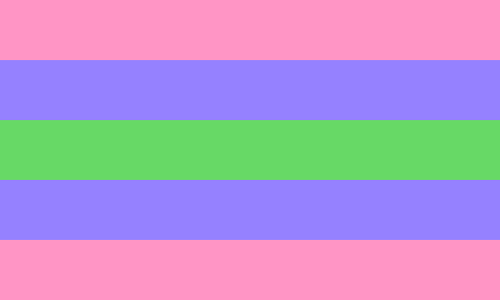
  • Everything You Need to Know About Trigender, a unique gender expression

    Everything You Need to Know About Trigender, a unique gender expression

    Trigender is a unique gender identity that has been gaining traction in recent years. It is a nonbinary gender identity that incorporates elements of three distinct genders – male, female, and a third nonbinary gender. For those unfamiliar with this concept, this article will explore what it means to identify in this way, who can be Trigender, and why it is an important part of the conversation surrounding gender identity.

    What is Trigender?

    Trigender is an increasingly recognized gender identity that falls on the gender spectrum. It is often defined as a combination of three gender identities, which may include male, female, agender, genderfluid, gender nonconforming, and/or any other non-binary gender identity. Unlike transgender people, who identify as a different gender than their assigned sex at birth, Trigender individuals identify as three genders or as part of a multi-gendered experience.

    Trigender is distinct from being genderfluid in that it is not limited to just two gender identities; rather, it involves three or more genders that come together to form an individual’s gender identity. By recognizing the complexity of gender,  individuals are able to express themselves authentically and find acceptance for who they are.

    How is Trigender Different from other Gender Identities?

    Trigender is on the gender spectrum
    Photo by Laker on Pexels.com

    This gender identity is a distinct gender identity which is seen as different from both binary transgender and non-binary identities. While it shares similarities with both, it has its own distinct set of characteristics. 

    Trigender people have a gender identity that is fluid, meaning that they don’t identify with any one gender over another. Instead, they experience a combination of genders, or in some cases, all genders. This may include male, female, and non-binary identities. Trigender people experience their gender as constantly changing and fluctuating, as opposed to identifying solely with one gender.

    The gender spectrum is an important concept for understanding trigender people. This spectrum allows people to identify along a range of genders and gender expressions, from male at one end to female at the other end, with non-binary in between. Trigender people can exist at any point along this spectrum, and may even move between multiple points on the spectrum throughout their lifetime.

    Overall, it is a unique gender identity which encompasses multiple gender identities and expressions. It is important to recognize the uniqueness of this identity and to support those who identify as trigender.

    Who Can Be Trigender?

    Trigender is a unique gender identity that refers to those who identify with three genders simultaneously. This can include identifying as transgender, non-binary, or somewhere else on the gender spectrum. It’s important to note that one’s identity can be fluid and may change over time, so it is possible to identify as trigender at some points in life and not others. 

    Individuals may experience a combination of feminine, masculine, and/or non-binary qualities. This could mean feeling like a mix of all genders, feeling neutral, feeling like none of the genders, or feeling like one gender more than the others. Everyone experiences their gender differently, so it is important to remember that there is no one definition of what it means to be trigender. 

    If you know someone who identifies as trigender, it is important to remember that there is no “right” or “wrong” way to be trigender. Respect and acceptance are key to supporting your friend or family member. Be open-minded and understanding, and allow them the space to express themselves in whatever way they feel comfortable.

    What Are the Common Experiences of Trigender Individuals?

    Trigender individuals are unique in their gender identity, and their experiences may be different from those who identify as transgender, non-binary, or any other gender. That said, there are some common themes among trigender individuals that can be helpful to understand. 

    First, it’s important to recognize that many people who identify as trigender often have a very fluid understanding of their gender identity. Many people who identify as trigender don’t feel the same way all the time, and this can lead to shifts in the way they express their gender identity at any given time. This is something that trigender individuals often experience and it’s important to recognize this when interacting with someone who identifies as trigender. 

    Another common experience among trigender individuals is feeling as though they do not fit into traditional gender roles or expectations. Trigender individuals may feel like they do not conform to either male or female stereotypes or roles, and instead feel that they occupy a space somewhere in between the two. This is an important aspect of their identity that should be respected. 

    Finally, it’s important to recognize that for many trigender individuals, the gender spectrum is not simply black and white. They may identify with multiple genders, or exist somewhere between genders, and it’s important to recognize and respect this. Trigender individuals often find themselves existing on multiple points of the gender spectrum at the same time, so it’s important to stay open-minded and to understand that everyone’s experience is unique.

    How Can I Support a Trigender Friend or Family Member?

    When a friend or family member identifies in this way, it is important to show support and understanding. Here are some tips on how to best support someone who identifies as Trigender:

    1. Listen and Respect: It is important to allow them to express their identity without judgment or criticism. Respect their choice of pronouns and be mindful of language.

    2. Education: Become educated on the gender spectrum, non-binary identities, and Trigender in particular. This will help you understand better what your friend or family member is going through and will help you to become a better support system for them.

    3. Offer Support: Individuals may face a lot of adversity and judgement from society. Offer support to your friend or family member by providing a safe space and being an ally.

    4. Celebrate: Celebrate your loved one’s identity with them! Celebrating their unique identity can make them feel more accepted and supported.

    By following these tips, you can provide a safe and understanding environment for your friend or family member who identifies as as this gender identity. With your support, they can feel accepted and empowered.
    This article was originally published by THEPRIDESHOP

  • What does AMAB mean? And is it offensive to use?

    What does AMAB mean? And is it offensive to use?

    AMAB stands for Assigned Male At Birth, where a person’s gender was given by medical professionals based on the baby’s genitalia found at birth giving a person a biological sex marker on their birth certificate. In this case, AMAB would mean that doctors or midwives found the baby to have a penis, therefore, would assign male to their birth certificate.

    Using the AMAB acronym could also be used to describe a person’s former gender or biological sex identity – used in the case where the person now lives as non-binary, a trans woman or feminine-presenting or a factual status on a man’s gender identity.

    Is using AMAB to describe someone offensive to say?

    Is using AMAB to describe someone offensive to say?
    Photo by Anna Shvets on Pexels.com

    No, but as with most language, it is how the words are applied or the context in which they are used where offensive can be taken. As being described as AMAB is a fact it shouldn’t be considered problematic unless the person you are referring to has said that they are uncomfortable with being called by a certain term. It could in the case of a transgender person out them as trans, or lead to a situation of deadnaming or deadgendering.


    Can you expand this definition? Use the comments below and your answer could be used to expand or define this glossary entry.

    Check out more definitions in our Big Gay Glossary

  • What is deadgendering? Who does it and is it offensive?

    What is deadgendering? Who does it and is it offensive?

    Dead gendering is when…

    Deadgendering is when someone refers to a person with the wrong gender pronoun or refers to a previous gender identity which that person has since denounced. It is similar to deadnaming except you are specifically referring to their previous gender identity rather than their previous name.

    Referring to a trans woman as “he” saying “him” or “his” or a trans man as a “she” or “her” is misgendering. Also saying someone is AFAB or AMAB is a form of deadgendering.

    Is deadgendering offensive?

    It can be considered deeply offensive to some trans people – especially if the deadgendering is done with malice or deliberately. It can also be done by mistake by someone who is unsure about how another feels about their previous gender being public knowledge. It’s always best to ask someone how they feel and let them discuss their own identity if they wish to do so.


    Can you expand this definition? Use the comments below and your answer could be used to expand or define this glossary entry.

    Check out more definitions in our Big Gay Glossary

  • Piers Morgan called “cis” and it went as well as you’d imagine

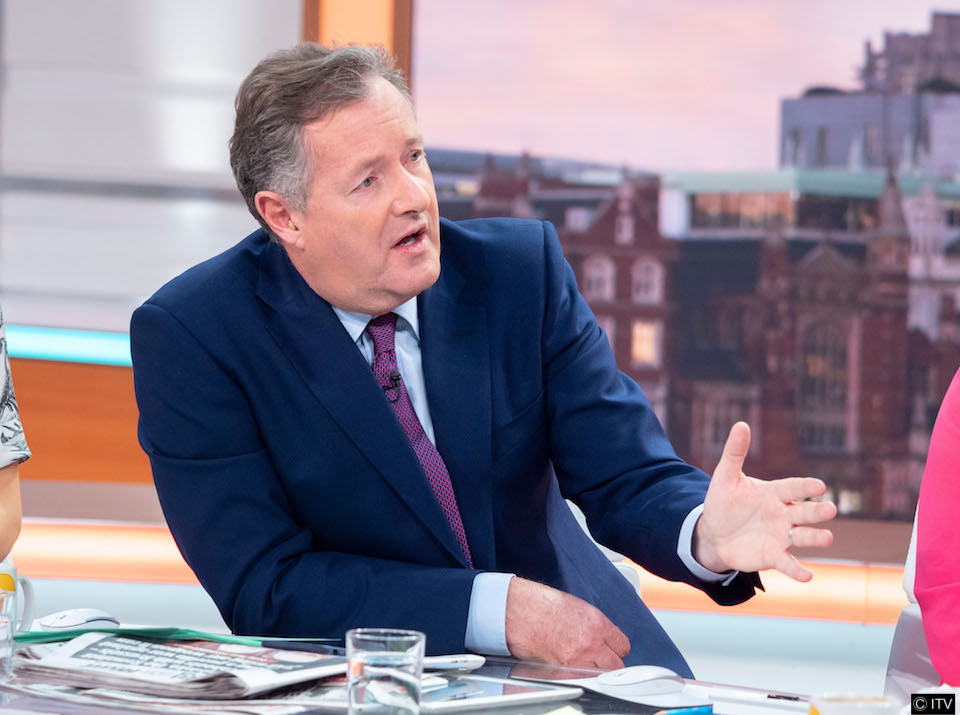
    Piers Morgan called “cis” and it went as well as you’d imagine

    Once again, the team at GMB decided to tackle Trangender issues following on from JK Rowling’s new book, Troubled Blood about a crossing dressing killer.

    Over the weekend, the author’s new book stoked a huge backlash on social media, with #RIPJKRowling become a worldwide trend, after transgender activists took issue with the book’s concept.

    Piers and Suzanna were hosting a debate on Good Morning Britain on Wednesday morning, about the public’s reaction to JK’s new book and who should have the right to write about books where the main character was transgender.

    GMB booked Benjamin Butterworth (again) to speak about issues surrounding identity politics (because clearly there’s no one else to talk to about transgender issues…) and was answering a question on whether Piers would be able to write a book about a transgender killer, which Benjamin thought might be a problematic concept.

    When pushed by Piers to see if it would be okay for him to write about a “person like me” doing all the killing, Benjamin answered, that there were a lot of “cis, rich white men…”

    This is when Piers pushed back on the language used by Benjamin saying, “I’m not cis. Don’t call me cis. I’m a white guy. Just call me a white guy.

    “Cis is language you use that I don’t even understand.”

    We’re not entirely sure why Piers Morgan gets so upset up about gender politics, especially as he does (or has, we can never keep up) identify as a penguin.

  • What does womxn mean and how do you pronounce it?

    What does womxn mean and how do you pronounce it?

    Have you noticed the term Womxn and ever wondered what it means or why people are starting to use it?

    Womxn is a relatively new term, thought to be a more inclusive way of saying or writing women/woman. It is thought that it was first used in 2015.

    The term Womxn is an alternative for the English language word women. It has been in occasional use since 2015 to explicitly include non-cisgender women.

    It has been used in a similar manner as womyn and wimmin, as a rejection of the English-only etymology of ‘woman’ from Old English wifmon (wife-man).

    More inclusive to non-cisgender people

    The term, like folx and Latinx, is thought to be more inclusive to non-cisgender people. Non-cisgender people are those whose gender identity does not necessarily match their biological sexual characteristics. This could be people from the non-binary or transgender community.

    “Represents the complexity of gender”

    Nita Harker, an assistant professor of sociology at Whatcom Community College in Bellingham, Washington USA and co-organizer of a “Womxn’s March” said, “I actually think the challenge — particularly that it is hard to pronounce in your mind as you read it, that it forces one to stop and think, that it is not just easy and nice and recognizable — is part of the point and the draw.

    “To me, it represents the complexity of gender.”

    How do you pronounce Womxn?

    How do you pronounce Womxn?

    Although the way people pronounce words is vastly different across the globe, Womxn can be pronounced Woah-Mex/Mix or Wim-Mex/Mix.


    YOUR SUPPORT MEANS EVERYTHING

    Help us deliver unique, usable and reliable journalism that supports the gay, bisexual and curious community of the United Kingdom. Can you help protect LGBT+ media? Publishers like us have come under severe threat by the likes of Google and Facebook. The problem is that advertisers are choosing to put their money with them, rather than with niche publishers like us. Our goal is to eliminate banner ads altogether on site and we can do that if you could pledge us a tiny amount each month.

    We’re asking our readers to pledge just £1 per month, more if you’re feeling swanky. You can stop payment at any time.

    It’s quick and easy to sign up and you’ll only have to do it once.

    Click to start the journey and support THEGAYUK!

  • Does Alison Moyet make a good point about the word “Womxn”?

    Does Alison Moyet make a good point about the word “Womxn”?

    The word “Womxn” has been trending on Twitter after a TedTalk’s account said that their use of the word “Womxn” was not a typo. That Tweet went on to be severely ratio’d with over 6,300 comments. Mainly of people complaining about the term.

    TEDxLondon wrote, “that’s not a typo: ‘womxn’ is a spelling of ‘women’ that’s more inclusive and progressive. The term sheds light on the prejudice, discrimination, and institutional barriers womxn have faced, and explicitly includes non-cisgender women.”

    Alison Moyet has made a very good point about the word, “Womxn”, which is supposed to be a much more inclusive way of including all types of women, including trans women. Her point, in a nutshell, is why is “Mxn” being used for men?

    Which is a good point. If women are being asked to accept womxn shouldn’t men be expected to use mxn?

    She wrote, “Womxn but not Mxn? Why would that not be problematic for anyone desirous of inclusive language? Inclusive language must include or it is otherwise”.

    https://twitter.com/AlisonMoyet/status/1303264303773028353

    What do you think? If Women becomes Womxn, should Men become Mxn?

    [totalpoll id=”122400″]

  • COMMENT | Taking back the word Queer as an identity

    COMMENT | Taking back the word Queer as an identity

    If you look up the word “Queer” in the dictionary you find two separate explanations for it. The first is the original meaning of the word which is; strange; odd. Then there is the other explanation for it. It’s the other explanation that terrifies many LGBT people. Reclamation is messy. The word Queer holds so much power, in both its pain and its empowerment.

    I remember the first time I was called a queer across the playground at school by somebody who I didn’t particularly like. I still feel the sting in the words. For many, it is a word with so many negative connotations that bring back so many feelings of pain, resentment and hurt, and until very recently it did the same for me. Until I made a conscious decision to embrace it as a positive and a term of endearment.

    To reclaim the word and use it positively and inclusively, you have to accept and recognise the complications of the word. We have to accept that those taunts in the playground or the office happened, and we have to within ourselves accept that this is a word that is going to be around us for a long time. The moment we accept that it gives us the power to reclaim it. Queer is a word we should use with both respect and love

    Gender identity has been a massive talking point over the last few years, with people becoming more confident about living their lives their way and not giving any fucks. I’ve never been a fan of labelling oneself and putting myself in a box regarding the way I look and the way I act. I have always been a flamboyant person, pretty camp and very unique in my fashion taste. I like to bend the rules a little bit. What’s wrong with that? Nothing – it’s an expression, and it’s an extension of who I am. Queer seems to me like a more fluid term that matches the way I view my identity and my persona – which isn’t always a rigid thing.

    “For some, the word queer is just too painful to reclaim. It’s been used to defame and hurt so many times, that it’s hard for people to embrace.”

    It’s important to understand, that it’s not for everybody. For some, the word queer is just too painful to reclaim. It’s been used to defame and hurt so many times, that it’s hard for people to embrace. For a long time, I was very much like that. The number of times that I’ve had that term hurled at me in the street, or seen it used to describe who I was as a lesser human being. It’s about the way we use the word. Embracing the word Queer into the LGBTQ community encompasses a more diverse range of identities and experiences. It allows those who don’t wish to label themselves to feel a part of this family.

    To me, the definition of Queer is now; “describes sexual orientations and gender identities that are not exclusively heterosexual or cisgender”. What is not appropriate, is to still use the word as a slur.

    The gay community has this thing about labels. It’s almost a necessity to put yourself in a box. Whether you’re a top or bottom, a twink, otter, daddy, masc or femme. Labels have become synonymous within the gay community, but what is the difference between identities and labels? Simple; identities are about unique qualities of an individual – which is used to set themselves apart from others whereas labels are often more rigid and defined by stereotypes and expectations.

    [totalpoll id=”120589″]

    Remember, Queer is a label that is adopted by some and rejected by others, and it will probably stay that way, but we need to be more receptive how people wish to identify themselves. I think the younger generation are more tuned to that. I guess I’m in that funny demographic where for some its fine, and for others, it’s a word to be avoided as it still poses problems to some members of our community. It’s icky. I asked a few friends about what they thought about it and a lot of them were very against it because for them it’s so ingrained in them as a slur and it invokes so many unwanted and upsetting feelings.

    It’s also important to remember that some people feel, and I can understand, that queer is going to be a get out of jail card for ignorance if you don’t know somebody’s identity. Ask questions, but never assume. I would rather somebody took the time to ask questions and try to gain some form of understanding, rather than just put me in a box and leave it there. I’ve had the experience of this first-hand over the last couple of years. Outside of the column, and to pay the bills, I work in a very heterosexual industry, and I’m pretty sure for some of them I was one of the first openly gay people that they have met. I’ve had conversations with them, and they’ve taken time to ask questions and understand what makes me tick, and it was appreciated, because not only did they want to understand me, they wanted to expand their understanding. It’s encouraging to see this happen.

    If we are to truly reclaim the word, then we have to start with education. I’ve talked a lot about this in recent columns, but I think it’s essential. Education is the starting and the basis for true equality. If the use of the word queer as a derogatory term is condemned at an early age, and education encourages the use of the word more positively and inclusively then we are halfway there. As the older, more conservative generation dies out and is replaced by a more liberal demographic then we can improve the lives of queer people. There’s always going to be small-minded bigots in the world, and we have to accept that – we cannot change everyone’s minds.

    [totalpoll id=”120591″]

    I think that what I’m trying to say is that we have the freedom and the right to choose how we want to live our lives at the end of the day. If we want to identify as queer or as gay that’s up to us, or whether we wanted to identify as a toaster oven – we have the right to choose, and you have the right to be accepted as that. If I’m completely honest, I guess I’m coming around to the idea of using queer as a way to describe me. I’m not one hundred per cent there yet. But the more I discover parts of myself, then the more of me I understand. The change comes from within, you might not ever feel comfortable reclaiming queer and it’s fine but think about it for a while and you might just change your mind.

  • What does AFAB mean? And is it offensive to us?

    What does AFAB mean? And is it offensive to us?

    AFAB stands for Assigned Female At Birth, where a person’s gender was given by medical professionals based on the baby’s genitalia found at birth giving a person a biological sex marker on their birth certificate. In this case, AFAB would mean that doctors or midwives found the baby to have a vagina, therefore, would assign female to their birth certificate.

    Using the AFAB acronym could also be used to describe a person’s former gender or biological sex identity – used in the case where the person now lives as non-binary, a trans man or masculine-presenting or a factual status on a woman’s gender identity.

    Is using AFAB to describe someone offensive to say?

    Is using AFAB to describe someone offensive to say?
    Photo by Anna Shvets on Pexels.com

    No, but as with most language, it is how the words are applied or the context in which they are used where offensive can be taken. As being described as AFAB is a fact it shouldn’t be considered problematic unless the person you are referring to has said that they are uncomfortable with being called by a certain term. It could in the case of a transgender person out them as trans, or lead to a situation of deadnaming or deadgendering.

    Can you expand this definition? Use the comments below and your answer could be used to expand or define this glossary entry.

    Check out more definitions in our Big Gay Glossary

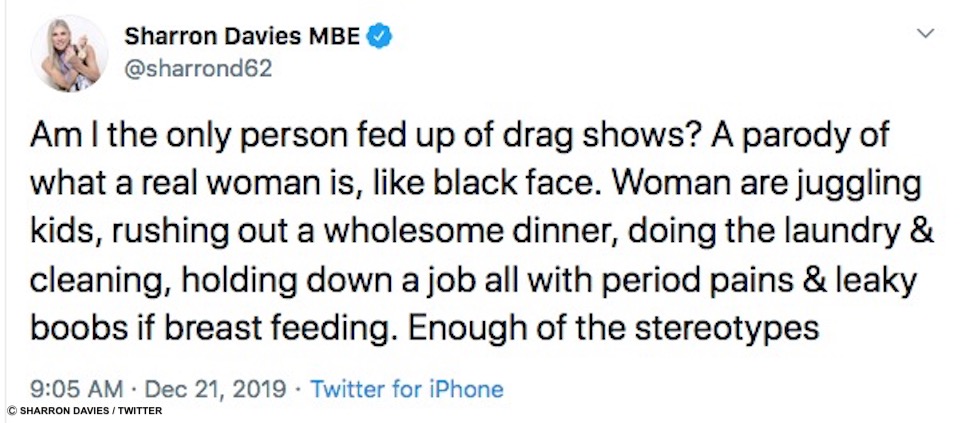
  • Sharron Davies just likened Drag to Blackface

    Sharron Davies just likened Drag to Blackface

    “A parody of what real woman is, like blackface”

    Embed from Getty Images

    Sharron Davies is taking heat on social media after likening drag to blackface. The former athlete, taking to Twitter, asked if anyone else was fed up of drag shows before stating that drag was a “parody of a real woman” before likening it to the wholly unacceptable practice of blackface.

    Her tweet quickly found Davies ratio’d as nearly 1600 people took to comment on the tweet, while the tweet received only 360 retweets.

    The majority of the tweets were negative towards Davies’ comments, with many criticising her “stereotyping of women” and ‘narrow mindedness”.

    The 57-year-old then reeled off a list of what “real women” do including, juggling kids, cooking wholesome food, doing the laundry and other house chores. She also included “holding down a job” dealing with period pains and “leaky boobs” from breastfeeding.

    She finished her tweet by telling drag queens to stop with the stereotypes.

    https://twitter.com/sharrond62/status/1208312498086187009

    “Strong women aren’t threatened by drag queens”

    Michelle Visage
    CREDIT: Michelle Visage/Instagram

    Michelle Visage, judge of RuPaul’s Drag Race, the only Drag show currently broadcasting on mainstream media in the UK (and even then it’s on the digital-only platform BBC 3) hit back at the MBE saying, “or you can see it for what drag actually is, a celebration and homage of all things feminine.

    https://twitter.com/michellevisage/status/1208346111615885313

    “Strong women aren’t threatened by drag queens but rather empowered by their chutzpah”.

    Michelle then added that she had “officially muted” Davies.

  • No, workers are not being “forced” into putting preferred pronouns on their  email signature

    No, workers are not being “forced” into putting preferred pronouns on their email signature

    We can categorically state that companies in the UK are not forcing their workers to put preferred pronouns onto their email signatures.

    This notion was brought up by India Willoughby who tweeted,

    “Something else that I’m surprised no news organisation has picked up on is forced declaration of pronouns in the public sector. Employees now have to declare on their email signature their preferred pronouns. Why? It’s not an issue for 99.9% of people”

    https://twitter.com/IndiaWilloughby/status/1204738420234444801

    However, there is no law that requires workers to share their gender or pronoun statuses, or any law that requires organisations to force their workers to select a pronoun.

    Unsurprisingly the tweet got a few replies from India’s followers, one from Dr Adrian Harrop, who replied,

    “Not sure it’s really being “forced” onto anyone. I find it to be quite an impactful & empowering thing. it is one of those cues / signals that show our organisation to be one that is inclusive & in which it is safe for trans & non-binary people to be open re: their identity”.

    THEGAYUK.com undertook a quick survey across two social media platforms to check the validity of the statement of enforced pronoun selection.

    The answer came back with the vast majority (94%) saying that they were not forced to share any gender details with their email correspondents.

    What’s the legal standpoint?

    We asked  Helen Hughes, legal director and employment law specialist at the law firm, Shakespeare Martineau about the legal ramifications on employers asking their employees to state their gender publicly. Hughes told us,

    “Although this may be introduced with the best intentions – to address individuals with respect and courtesy in the way that they wish to be referred to – employers must be wary about requesting information from employees that could impact the way they are treated. Although they can’t force you to disclose this kind of information, you should feel comfortable sharing preferred pronouns if you feel it important to do so.

    “Forcing employees to reveal their pronoun preferences could leave employers open to discrimination claims, and employees feeling alienated.”

    Helen hughes

    What are preferred pronouns?

    kerplode / Pixabay

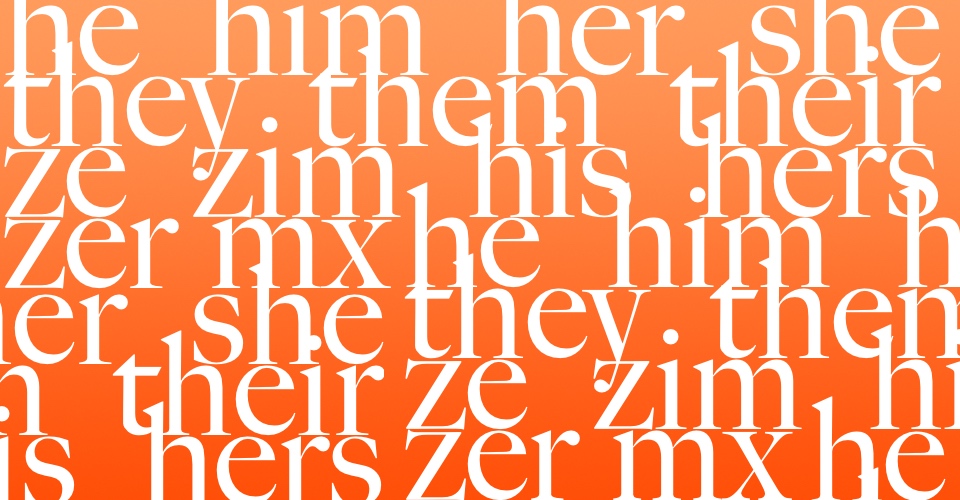
    A preferred pronoun indicates which gender a person would like to be referred to, usually with a choice of male, female or non-binary pronouns.

    Masculine pronouns are, he his and him

    Feminine pronouns are she and her and hers

    Non-binary pronouns are: They, Them Theirs / Zim Ze and Zis / Mx / Thon /

    So what should companies do?

    Helen continues,

    “Having an inclusive workplace culture is crucial however singling out one group of people is a dangerous game for employers. Being open, honest and above all else celebrating people’s differences will no doubt go a long way to improve culture, retention and breed a workforce that looks beyond age, gender, race or the like. There is simply no need to force employees to reveal any more information than they are comfortable with.”

  • Piers Morgan cleared by OfCom over gender identity views

    Piers Morgan cleared by OfCom over gender identity views

    (ITV)

    He “has a right to express his views”

    Piers Morgan has been cleared by Ofcom after nearly 1000 complaints were made against him over his views on gender identity.

    The two-spirit penguin, also known as Piers Morgan, who presents ITV’s morning show, Good Morning Britain was ruled to have behaved within guidelines, with the communication’s regulator saying that his remarks about identifying as a penguin “did not raise issues warranting investigation”.

    It added that he had the right to express his strongly held beliefs.

    The regulator did allow, in its initial investigation that some viewers of the early morning show, could be offended by his comments, but that the regular audience of the ITV show would have “clear expectations around his provocative position on the issue”.

    His co-host was singled out for complaint

    His co-host Susanna Reid was criticised by Ofcom for not challenging Piers enough on his views.

    A gleeful Piers said, “The only person singled out for complaint is actually not me… it’s Susanna.”

    Susanna replied, “He gets exonerated and I get criticised!”

    Watch Piers and Susanna discuss the ruling here.