Author: Daniel Browne

  • OPINION | Pride is Still Needed and this Journalist Just Proved Why

    On 9th December 2016, the Isle of Wight County Press (IWCP) published an article on their website about the island’s first Pride rally, which is due to take place in 2017. This is fantastic news and something that should be celebrated, but sadly the IWCP’s writer Charlotte Hofton took a different and damaging view.

    In a piece littered with sarcasm and passive aggressive tones, Hofton begins by mocking people who self-identify as queer and ends by saying she has a headache coming on, which presumably is due to the shocking news that we are now living in 2016.

    Talking of headaches, it’s opinion pieces life Hofton’s that give me ‘one of my heads’ and her sickening piece of writing shows a clear reason why Pride is still needed in 2016. The general tone of the article appears to be based around the writer not minding what people get up to in private; the poor thing just doesn’t want queerness thrust in her face.

    I don’t particularly want opinions like hers being thrust in my face, yet they persist.

    It’s in this opinion that Hofton completely misses the point of Pride and what the movement stands for. It is not about a gaggle of gays (that’s the collective term for us, right?) coming together for a “deafening bells and whistles show-off”, as Hofton puts it. Pride is about so much more than that. It is about the LGBT+ community being visible, protesting against atrocities that are still being committed against us around the world, and showing solidarity with LGBT+ people everywhere.

    Here are some hard facts that demonstrate why we still need Pride. LGBT+ people remain subject to horrific acts of violence and discrimination. The Pulse shooting earlier this year will tell you that, as will the stories of people who are suspected of being gay been murdered by ISIS. Closer to home, the Independent have reported that homophobic hate crimes have risen by 147% since the Brexit vote, compared to the same period last year.

    Hatred towards LGBT+ people is real, even if this modern world, and that is why Pride events continue to have their place. We need to be visible. We need to stand together as one united community against homophobia, biphobia and transphobia. We need Pride.

    As Hofton rightly points out, it’s coming up to fifty years since homosexuality was decriminalised in England and Wales. However, with attitudes such as hers still causing genuine damage to LGBT+ people, it’s clear that there needs to be much more progress before we are truly free. Asking us to “shut up” will only result in us becoming louder, my dear.

    I wish the Isle of Wight Pride rally the very best of luck with their first event. It’s a huge step forward and an event I may even attend. With bells and whistles, of course.


    Opinions expressed in this article may not reflect those of THEGAYUK, it’s management or editorial teams. If you’d like to comment or write a comment, opinion or blog piece, please click here.

  • LOOK AT ME: Sassi Afika

    LOOK AT ME: Sassi Afika

    Since arriving on the scene in 2013, Sassi Afrika has quickly made her mark as a unique talent and fresh addition to the UK’s drag scene. After taking some time out to record her second album, Pleasure, Sassi is now back on the scene and ready to conquer the world. But first I wanted to pull the great lady to one side, admire her weave, and put some burning questions to her.

    Drag Queen Sassi Afrika
    CREDIT: Jake Hook/TheGayUK

    DB: Sassi, you are back with some new music and a brand new album. Tell me about it.
    SA: Darling, it’s fabulous. It’s much better than my last album. I’m even in tune on parts of this one. It’s a lot more sexual and way more Sassi.

    DB: Well you are certainly sassy. You’ve been doing some live shows recently too. Your outfits appear to be getting more and more revealing. Is there a reason for that?
    SA: Have you seen me? I’m hot, that’s why. I’ve got it, so I flaunt it. You should wear something a bit more revealing yourself. Show a bit of cleavage, dear. This album is called Pleasure, so I’m doing all I can to give pleasure. My outfits are part of that.

    DB: And you’ve been spreading out into the world of presenting this year too. Is there no end to your talent?
    SA: Oh please, I don’t have talent; I am talent. I sing, dance, act, present, and can tie a knot in a cherry stalk with my tongue. I’m very talented.

    DB: Last year TheGayUK named you as one of the top ten UK Drag Queens who would be great on RuPaul’s Drag Race. That’s quite a compliment, right?
    SA: Yes, it’s an honour. I love RuPaul’s Drag Race. I can Sassi That Walk.

    DB: You’ve said in the past that you are a modern day Madonna. Do you still view yourself in that way?
    SA: I have nothing but admiration and respect for Madonna. She has been there, done it, done everyone, got the leotard, and is still going. I felt for her when she had the cloak incident at the Brits. But hey, she got up and kept going. Of course, people are going to compare us. We’re both global superstars, natural blondes and have a new face for each album.

    DB: Let’s talk about the changing faces of Sassi Afrika. You’re looking fresh at the moment. What’s your secret?
    SA: It’s no secret that I’m a fan of cosmetic procedures. I hook up with my surgeon on a regular basis. He nips, tucks, lifts and injects until I’m looking my best again. Also, a local clinic that does cosmetic procedures have recently offered me 50% off all treatments so I am able to have some top ups through the year. There isn’t much of me that’s not plastic, but I look good. I do know that, darling.

    DB: Well all the work you’ve had done has clearly been worth it. You look sensational. Moving on, in your last interview with TheGayUK you spoke about your love of the gays. What is it about gays that you love so much?
    SA: Oh gays are a hoot. I see myself as the mother of the gays. They come to me for advice, fashion tips and lip gloss. Also, gays lives are full of drama. I just love that because as you know, I don’t do drama; I am drama. I have to say that the gay community has always been there for me and I will always be there for them. We need to stick together, now more than ever. We are family.

    DB: Do you know what Amyl Nitrate is?
    SA: Poppers, darling. I use them all the time to loosen up Victoria.

    DB: Who’s Victoria?
    SA: Oh, it’s my pet name for my pussy.

    DB: So you have a cat as well as a dog now?
    SA: No babe.

    DB: I’ve heard that Baywatch is your favourite television show and with a film version being made, I wondered who you would snog, marry and avoid out of the following:
    a)    David Hasselhoff
    b)    Zac Efron
    c)    Pamela Anderson
    SA: Oh god, I’d snog them all. Do I have to pick? Erm… Well, if I must. Ok, I’d snog Pammy. She’s like me; she’s just got it. So I’d snog Pamela Anderson. Or would I marry her? Ok, I’d snog Pamela Anderson and then marry her. I’d do more than snog Zac Efron but put him down for a snog. I guess that means I’d have to avoid The Hoff. Will he be in the new film? I used to love watching him trying to hold his stomach in as he ran along the beach. Gotta love a bit of David Hasselhoff.

    Never miss another issue of THEGAYUK subscribe for free by clicking here

    Sassi Afrika is clearly a woman who speaks her mind. You can discover more on Twitter @SassiAfrikaand introduce yourself to her music on Bandcamp.

  • OPINION | Just because you’re gay doesn’t mean you aren’t a homophobe

    OPINION | Just because you’re gay doesn’t mean you aren’t a homophobe

    Homophobia is alive and well in 2016… And it’s not just straight people who are guilty of it.

    If you keep up to date with the news, you may have seen the article about homophobic attacks in the UK rising by 147% since the Brexit vote. While I’d love to say that it’s simply a dramatic headline that has no truth in it, I cannot do that. My own experiences tell me that homophobia is alive and well in 2016. I believe we should be concerned.

    Earlier this month I attended the UK Pride Organisers Network (UKPON) conference in Birmingham. As the chair of Warwickshire Pride, it was great to be part of such a positive, inspiring weekend. We learnt, shared and supported each other in order to achieve our common goals. It was during the conference that the aforementioned article appeared online, detailing the rise in hate crimes against LGBT+ people since the Brexit vote. It really brought home the fact that Pride is still needed and that it continues to have a purpose. Then something happened to me that confirmed this again.


    As I was walking back to my hotel, a group of people were heading towards me. They were clearly drunk and being quite rowdy. As I walked passed them, one of them looked at me and shouted: “are you a f***ing queer?”. Normally I’d be inclined to challenge such a person, but common sense told me to put my head down, ignore him and walk away quickly to avoid there being a more serious confrontation. Part of me was disappointed that I chose to react in that way, but sometimes it’s better to be safe than sorry.

    When I got back to my hotel room, I felt upset that within Birmingham’s gay village someone had shouted something homophobic at me. Surely that is somewhere LGBT+ people are relatively safe, but apparently, that’s not the case.

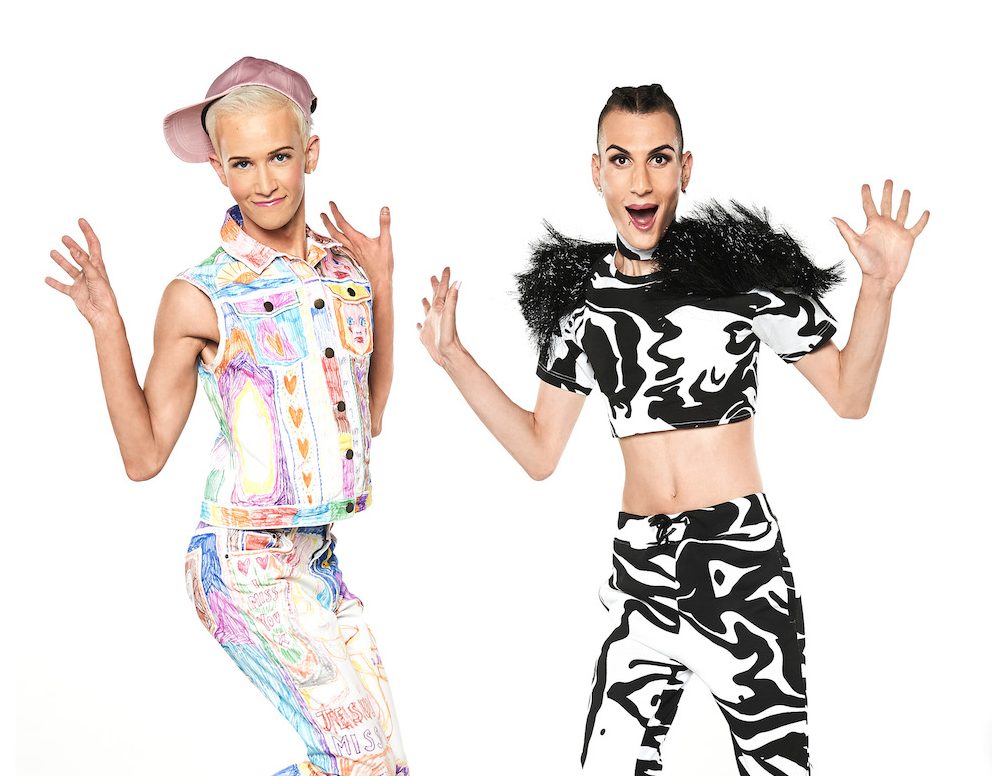
    Something else that happened on the same weekend was the appearance of Bratavio on the X Factor. As a friend of Bradley Hunt, I was excited for him. It was then that I began to see some of the comments that he and Ottavio Columbro were receiving online. Much of the trolling was homophobic in nature, with some people even wishing death on Bratavio. It was yet another example of homophobia being rife in the modern day. Despite great strides forward in terms of legal equality, I sometimes feel that socially we are going backwards.

    However, the thing that disappoints me the most about the hatred and homophobia aimed at Bratavio is the fact that so much of it has come from other gay people. One would hope that gay people would be supportive of each other and celebrate our differences, as we know what it’s like to be put down for being who you are. But no, that’s not the case. The mountain of homophobia coming from gay people is sickening, with many branding Bratavio embarrassing to the gay community. I have to disagree. In fact, my view is that it’s those trolls who are the real embarrassment to gay people.

    Of course, I may be slightly biased as I happen to know one-half of Bratavio, but ultimately celebrating people for who they are is a big part of who I am. Having an opinion is one thing, but abuse and homophobia are never ok.

    So what’s the answer? I’m not sure I have it. It’s clear that hate crime laws need to be tightened and that there needs to be a zero-tolerance approach to homophobia. This is something our government and police forces need to action as a matter of urgency. We cannot continue to live in fear and should not have to deal with this kind of abuse in 2016.

    As for the gay people being abusive towards other gay people, that’s a whole other kettle of fish. The cracks within our LGBT+ family appear to be widening and I worry about where we are going to end up. As I’ve said before, our community is eating itself from the inside out. With so much hatred being directed at our community, we should be sticking together, not turning on each other.

    Follow Daniel Browne on Twitter


    Opinions expressed in this article may not reflect those of THEGAYUK, it’s management or editorial teams. If you’d like to comment or write a comment, opinion or blog piece, please click here.

  • 10 ways to banish pre-wedding stress

    10 ways to banish pre-wedding stress

    Getting married should be the happiest, most wonderful time of your life. Sadly, it’s often the most stressful time of one’s life. It doesn’t need to be that way, though. If you’re due to get married, I’m here to help with my top 10 tips for banishing pre-wedding stress.

    Indulge in a technology detox.

    If you’ve been busy with planning your wedding, take some time out for yourself and your fiancé. Put your phones out of sight, turn off the television and all other technology distractions. Put on some music, pour yourself a large glass of wine and enjoy some quiet time with your partner. Allowing yourself that time to switch off and relax will bring huge benefits to your life.


    Take up breathing exercises.

    This isn’t as boring as it may sound. Try this… Sit quietly and take a deep breath in for a count of four. Then exhale for a count of four. Repeat this exercise for two minutes and take notice of how it begins to make you feel. I recommend making breathing exercises a part of your daily routine to keep stress at bay.


     Have sex.

    It’s something enjoyable and the release of endorphins when in the throes of passion will put a huge smile on your face. If you’re not really up for sex, try my first tip and see if that to set the scene for an explosive, stress busting bonk.


    Exercise.

    The previous tip may have covered that slightly, but sexercise isn’t the only stress busting activity you can indulge in. Getting regular exercise is key in reducing stress levels. Even just a twenty-minute walk each day can help, but if you’re feeling more energetic, get out there and pound the streets or join a gym class. You could even put on some music and dance like nobody is watching, which is surely one of the most fun things to do. If you’re not up for much exercise, make it a social occasion and exercise while catching up with friends. Which leads me to my next tip…


     Make sure you keep in touch with family and friends.

    When planning a wedding, it can be too easy to fall out of the loop with those closest to you. So set aside some time and make an effort to catch up with family and friends. You could involve them in your wedding planning, but I suggest putting the planning to one side and having a proper catch up with people. It’s sure to be a boost to your mood and a massive stress reducer.


    NEXT PAGE | 2/2

  • OP ED | Smaller Prides Matter Too

    On Saturday 20th August, the fourth Warwickshire Pride festival will take place at the Pump Room Gardens in Leamington Spa.

    For a small town in a rural county, it’s a massive achievement that the festival happens each year. With many LGBT people living in villages and not necessarily having access to other LGBT people or services, Warwickshire Pride is an important event in the calendar as it provides the types of opportunities that are non-existent for much of the year.

    Warwickshire Pride is a colourful celebration of LGBT life and culture, but also aims to channel the spirit of the Pride movement in its original form. There is a lot of campaigning and interesting talks on the day that cover a variety of important topics. There is also an opportunity for Warwickshire’s LGBT community to access services that they may not ordinarily feel able to, with organisations such as Terrence Higgins Trust, Mind, and a plethora of other voluntary sector groups in attendance. If LGBT people need help with housing, substance abuse, mental health issues, sexual health concerns or anything else, they can access support at Warwickshire Pride.

    Unfortunately, in Warwickshire hate crimes against LGBT people are relatively common. In fact, due to a perceived rise in hate crimes against LGBT people in Warwickshire over the past two years, I launched the Leamington Spa Equality Rally in 2015 and lobbied the Police in order to gain more support for the community. Sadly, smaller towns and villages can have quite narrow minded views of the world, and they’re not necessarily the most LGBT friendly places to be. This is another reason why Warwickshire Pride taking place is so important; because it provides a safe and welcoming environment where LGBT people can be themselves.

    Although it’s important that Pride events in smaller, regional, rural locations take place, it is also a huge struggle to continue to put them on. At Warwickshire Pride we have minimal sponsorship, not a great amount of funding, and it’s a seriously hard task every single year to get enough money together to make the event happen. I keep being told that gaining sponsorship is the way forward. Believe me, I’ve tried. Every year I contact a large amount of companies in an attempt to build a relationship with them and obtain some form of sponsorship. Sadly, I rarely receive a response. When I do, it’s to say that they don’t sponsor events.
    This has been the case with one of Britain’s largest supermarkets in each of the past four years. Despite them proudly sponsoring Pride In London this year, I am told by that supermarket that they do not sponsor events. I can only come to the conclusion that they want to tick a box and be seen to support the LGBT community, but when it comes down to showing some support at a grassroots level, they’re not interested.

    Luckily, I have an LGBT friend who works as a community champion at my local branch. He has kindly agreed to supply water for the volunteers at Warwickshire Pride, but that’s as far as it goes.

    It’s not just this one supermarket. Another well-known retailer have also said that they don’t sponsor events, yet I’ve seen them support larger Pride festivals in the past.

    A world-famous locally based underwear specialist also said they don’t sponsor events. One week after telling me that, it was announced that they were sponsoring another local event that’s probably seen as being more family friendly.

    The lies genuinely bother me. Sometimes I’d rather companies were honest and said that they don’t want to support a small event or they don’t want to support an LGBT event. I’d respect them slightly more for that.

    The media can be a nightmare too; even the LGBT press, with THEGAYUK being a fine exception to the rule. Locally, an event like Leamington’s carnival gains huge local press coverage and front page stories whenever they like. Yet, when I contact the press or send press releases, they’re not always covered. When they are, it’s always about mid-way through the paper where many people may not see the article. With the LGBT media, it seems to be about making money out of Prides rather than genuinely supporting them. For example, a very well-known gay magazine got in touch because they wanted to support Warwickshire Pride, but when it came down to the details, they actually wanted hundreds of pounds to send out one post on Facebook that promoted Warwickshire Pride. Similarly, a regional LGBT magazine said that they could sponsor Warwickshire Pride. However, it involved us paying them £500 for the privilege. In the end, I reluctantly agreed to it because I’m aware of the need to promote the festival and the magazine reaches Warwickshire Pride’s primary target audience.

    All of the above has at times made me feel disillusioned with it all.

    If I’m being truly honest, I sometimes wonder why I bother organising Warwickshire Pride when it’s always a struggle and there is such a lack of support compared to that which other Prides receive. But then I remind myself of the thousands of people who attend each year and how important it is to the local LGBT community that they have a Pride event. It’s the only thing that keeps me going.

    The point of this article isn’t about having a moan about how hard it is and saying “poor me” or “poor Warwickshire Pride”. It’s more about highlighting the challenges of putting on a Pride event in a smaller, regional, rural location, and having a bit of a call to arms. I’d like to encourage everyone to support smaller Pride events.

    They’re the ones that make a huge difference to the lives of their local LGBT communities. Without them, there would be nothing for LGBT people in those areas. It’s fantastic that Prides such as London, Brighton, Birmingham and Manchester take place, and it’s great to see them do so well. But please don’t forget about the small, grassroots Prides. They need your support now more than ever.

    Follow Daniel Browne on Twitter

    The opinions expressed in this opinion piece may not reflect those of THEGAYUK, its management, editorial or connected 3rd parties. If you wish to contribute to you can click here to find out more.
  • OP ED: Pride needs to keep hold of its roots

    It’s Saturday 28th May 2016 and I’m at Birmingham Pride. I attend each year and always have a great time. However, I cannot help but have mixed feelings about it too. Something sits very uncomfortably with me, despite the fact that I have a good time.

    Before I continue, I must first congratulate Birmingham Pride for successfully running a festival of such magnitude. It’s not an easy task, but year after year the organisers do an amazing job of it and for that they must be praised.

    As a fellow Pride organiser, the last thing I want to do is criticise another Pride event, as I know how difficult it is to put everything together. However, there is an aspect of Pride that worries me. That is the fact that the spirit of Pride seems to be getting lost along the way.

    When the Pride movement began, Pride was a protest. People marched for their rights and what they believed in. Now that LGBT people have almost full equality in law, I can’t help feeling that the true meaning of Pride is being lost, despite parades and marches still being a part of such events.

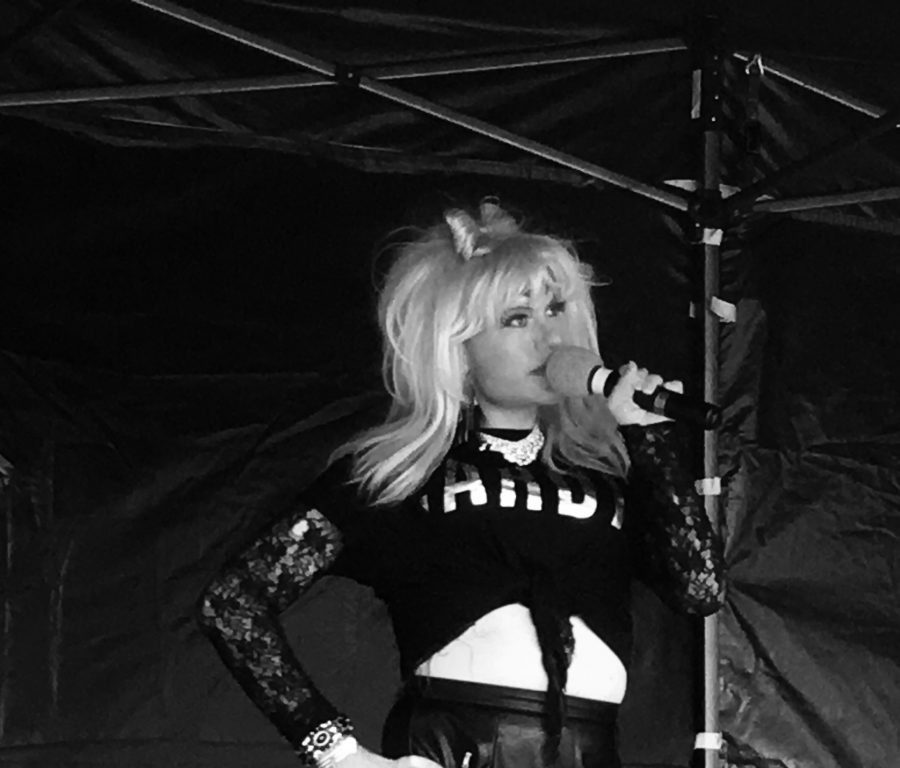
    I’m sure we are all aware that the larger Prides are now commercial machines that do not fully represent LGBT people or the spirit of the Pride movement. An example of this can be seen when looking at main stage performance line-ups. I only attended Birmingham Pride on the Saturday, but to my knowledge there was only one LGBT performer on the main stage that day. The rest were heterosexual and cisgender. It lacked the kind of representation that LGBT people deserve at a Pride festival.

    It appears to be increasingly common these days for Pride festivals to book lots of straight acts to appear on their main stages. Having looked at several Pride line-ups, I’ve wondered where the LGBT representation is. Recently, somebody was protesting on Twitter that a certain Pride didn’t have any LGBT acts booked. I don’t know if that’s actually the case or not, but the lack of LGBT performers at LGBT Pride events is a worrying trend.

    At Warwickshire Pride, 90% of this year’s main stage line-up is LGBT. It’s a percentage that we strive to increase or at least maintain each year in order for the festival to truly represent the people it primarily caters for.

    That’s not to say that Warwickshire Pride is leading where others should follow. Far from it, in fact. It’s entirely up to the organisers of each Pride event to book the acts they want, move in the direction that they view as being best, and to respond to the wishes or needs of the community that they represent. At Warwickshire Pride, we pride ourselves on being a little bit different to other Prides and a lot of that comes from the feedback that local LGBT people provide. Yes, we have some fabulous elements such as Angie Brown and Wagner from the X Factor performing last year, but ultimately we try to create something in the spirit of the original Pride movement.

    Perhaps it’s the activist in me. Every part of my being is about furthering the rights of LGBT people, both legally and socially. I believe that Pride is absolutely a protest, but do acknowledge that it’s a celebration too. There is nothing wrong with celebrating. However, I also feel that as a Pride movement we are in danger of losing touch with our roots.

    What I’d like to see is more Prides having actual LGBT performers on their main stages, not just confined to cabaret tents. I’d also like to see more protesting and highlighting of social issues that our communities face. Finally, I’d like to see Prides being more inclusive. There are four letters in the acronym LGBT and it’s important that the B & T are remembered and included. This is something that the smaller, grassroots Pride events do very well, but it’s time that the larger Prides stepped up and truly represented their communities once more.


    Follow Daniel Browne on Twitter


    Opinions expressed in this article may not reflect those of THEGAYUK, its management or editorial teams. If you’d like to comment or write a comment, opinion or blog piece, please click here.

  • COMMENT | Militant Left Wing LGBT Student Extremists Are Destroying Free Speech

    How Militant Left Wing LGBT Student Extremists Are Destroying Free Speech, Freedom of Expression and the LGBT Movement

    There’s a situation that has been brewing for some time. Something dark, nasty, and disturbing that is threatening free speech and the LGBT movement. It’s a movement that genuinely concerns me as someone who has dedicated my life to equality campaigning.

    This worrying militant left wing LGBT student extremist crusade ruining free speech, freedom of expression and the LGBT movement first caught my eye when the National Union of Students (NUS) banned gay men from behaving like black women and dragging up in case it offends people of colour and trans people. After that it was the news that Edinburgh University has banned cross dressing and camp costumes at Halloween in case such costumes offend people. Thirdly, we move on to the rising prevalence of universities no-platforming speakers who hold views that some could deem offensive.

    Two such examples of this are Germaine Greer and Milo Yiannopoulos. Personally, I do not agree with Greer or Yiannopoulos’ views on trans people. I feel their views are outdated and offensive. However, I do not believe that they should be silenced due to their views. As long as they are not inciting violence or hatred of trans people, their right to free speech should be maintained. Attempting to silence people because their views do not align with yours is not the way to go about things. Surely it is better to allow those people a platform and challenge them with reasoned debate than to behave in a way that infringes on the precious free speech that many of these militant left wing LGBT student extremists claim they want to have and preserve.

    ADVERT
    [adinserter block=”1″]


    I’ve been on the receiving end of it myself in recent times. As leader of an LGBT charity and director of Warwickshire Pride, I’m used to enduring a bit of trolling online from time to time. However, nothing had prepared me for the torrent of harassment and abuse I received from Warwick University students at the tail end of last year.

    In response to a rise in hate crimes against LGBT people in my local area, I organised the Leamington Spa Equality Rally. Its purpose was to highlight the issue of hate crime, the problem of hate crime under-reporting, and to bring the community together. Local politicians and the Police were invited along to support the rally, which they did. It was well attended by local people and achieved what it set out to do.

    Unfortunately, there were a number of local university students who objected to the police being allowed to attend the rally. They claimed that the police actively murder trans people and aggressively insisted that I ban the police from all local LGBT events.

    My belief is that it’s important for police to have an active, engaging presence at Pride festivals and LGBT events. Rather than it being about policing the events and harassing the LGBT community, it’s actually about positive community engagement and solidarity with LGBT people.

    Sadly, that’s not something the university students were willing to accept and they embarked on a hate campaign against me. The campaign included many untruths about me written online and a statement released on their university LGBT society website that claimed I am not fit to run an LGBT organisation because I am white and not trans. The statement came with a list of demands, but unfortunately for them I do not bow to demands and do not negotiate with extremists. Reasoned debate is more my thing.

    Another individual who has recently had difficulties with extremists is legendary human rights campaigner Peter Tatchell. He believes in free speech, even when people’s views oppose his own. Like me, he feels that it is better to challenge people with debate rather than act to silence them. Due to Peter Tatchell’s views, the NUS’ LGBT representative, Fran Cowling, refused to attend an event unless Peter Tatchell was banned.

    She claimed that Tatchell is racist and transphobic. Having met Peter and being well aware of his work, I don’t believe for a second that is true. Looking at his record of campaigning will tell you all you need to know about him. Sadly, Tatchell did not speak at the event and said that it was an example of “a witch hunting, accusatory atmosphere” that is indicative of a decrease in “open debate on some university campuses”.

    I entirely agree.

    So what’s the solution? I really don’t know. Seeking to silence the militant left wing LGBT student extremist movement is not the answer, but it is a cause for concern and I sincerely hope that the NUS begins to see sense at some point in the near future. Freedom of speech and expression must be protected and cherished.


    @MrDanielBrowne


    The opinions expressed in this comment piece may not reflect those of the management or editorial of THEGAYUK. If you’d like to write a comment or column for THEGAYUK click here.

  • Do We Declare People As Gay Icons Too Easily?

    For some time I have been of the opinion that any old celeb is declared a gay icon these days. It appears that all people have to do now is pander to the gay community, remove their clothes, camp it up and/or say they love the gays in order to be awarded gay icon status.

    Then there are those who declare their interest in being gay icons (yes, I’m talking about you Katie Hopkins). No. Just no.

    The world appears to be saturated with ‘gay icons’ in these modern times. I’ve heard people proclaiming the likes of Nick Jonas, Gemma Collins (who I had to Google because I had no idea who she was) and Dan Osborne as gay icons. While I have great, and purely shallow, admiration for Nick Jonas and Dan Osborne, they are not gay icons. They may frequently take their clothes off to the rabid cheers of gay men, but what have they actually done for the gay community other than cash in on us?

    Then we have our beloved Kylie Minogue. Let me put it out there that I’m a bit of a stereotype in that I’m a huge Kylie fan. However, in my opinion she isn’t a gay icon. As fabulous as Kylie is, what has she actually done to help further gay rights? I can get on board with her campness and her words of wisdom, such as “When in doubt, add more glitter”, but for all Kylie’s fabulousness, she is not a true gay icon. This is because my idea of a gay icon is someone who has contributed significantly to LGBT causes and issues. People who have broken down stereotypes and challenged perception are also gay icons to me. So here is my list of people who I believe are genuinely gay icons.


    1. Madonna

    This is a totally obvious one, but the truth is that Madonna really is a gay icon. She has long stood up for gay rights and was an active champion of our cause in the days when it wasn’t really cool. Even in recent years, Madonna has stood up for gay rights by turning up at a GLAAD event dressed as a boy scout in protest at the scouts in America not allowing gay people to join and protesting against Russia’s treatment of gay people whilst touring in the country. This led to a court summons for Madonna and she was branded an “ex-whore” by someone in the Russian government. What I like about Madonna is that she knows exactly what she is doing. She knows that her profile as one of the most famous people on the planet will draw attention to the issues that she chooses to highlight. Then there’s Madonna’s video for her song Justify My Love, which features man on man action and lesbian cross-dressing sexual games. Nobody else was doing things like that in the early 90s. We have a lot to thank Madonna for.


    1. Skin

    Skin is the lead singer of Skunk Anansie, who are one of my favourite bands. Skin is a bald headed black bisexual female who makes heavy rock music. At the time Skunk Anansie rose to fame, black women were put into boxes as RnB singers and the idea that a black female would make hard rock music was absurd to the music industry. But Skin stuck to who she is and carried on, eventually becoming massively successful with her band. Over twenty years since Skunk Anansie released their first album, Skin remains one of a kind. Never one to flaunt her sexuality or claim to be any kind of gay icon, she has simply remained true to herself throughout an amazing career. So for me Skin is not only a gay icon, but an icon for black people and more simply, an icon full stop.

    1. Stephen Fry

    While being delightfully entertaining, Stephen Fry has also actively campaigned for many years on things such as HIV/AIDS, mental health and gay rights. He also championed a number of LGBT causes, often using Twitter to tell his 11 million followers about the important work of certain LGBT charities.

    1. Lady Gaga

    Although another obvious choice, Gaga has done a lot in terms of raising awareness of LGBT issues and speaking out against discrimination. It’s well documented what Gaga has done for LGBT people, from speaking out about the suicides of gay teens in America to marching on the White House to get the controversial Don’t Ask, Don’t Tell rule abolished. If you forget about the circus act that surrounds Lady Gaga, it’s plain to see that she is an example of an amazing human being.

    1. Sir Ian McKellan

    Not only is Ian McKellan one of the most well-known actors in the world; he is also probably the most high profile out gay actor. With a large pull at the box office, on stage and on television, Ian McKellan has still got it. However, it’s not just being an out actor that’s got him onto this list. He has also been active in the campaign for gay rights since the 1980s and even helped to found Stonewall.

    Other people I view as gay icons include Ben Cohen, Jimmy Somerville, Ellen DeGeneres, Peter Tatchell and Tony Blair. Perhaps my list is predictable and there are not many people on it who differ from the typical roll call of gay icons. However, I see everyone listed as a true gay icon. They have actually done something significant to help further gay rights and break down stereotypes. That’s what a gay icon is, right?


    by Daniel Browe | @MrDanielBrowne


    Opinions expressed in this article may not reflect those of THEGAYUK, its management or editorial teams. If you’d like to comment or write a comment, opinion or blog piece, please click here.

  • 5 Ways To Achieve In 2016

    5 Ways To Achieve In 2016

    Can you believe another year has gone by and 2016 is upon us? The year seems to have flown by, but right now it’s the perfect time for reflection. How was your 2015?

    As one year ends and another begins, many people’s attentions turn to what they’d like to achieve over the coming months. The dawn of a New Year is the perfect time to introduce a new you to the world, or so we think. With so much focus on resolutions and what we should be achieving in 2016, here is my guide to surviving the pressures of New Year and making sure you achieve the things you want to.

    I remember reading somewhere ages ago that around 80% of people don’t actually achieve their New Year resolutions. It makes me wonder why people bother if there is such a high failure rate, but of course many of us are pre-programmed to put huge amounts of pressure on ourselves and conform to what society tells us we should be doing. It doesn’t need to be that way though. If you want to survive New Year and achieve your goals in 2016, here’s how to go about it.

    1. A New Year doesn’t have to mean a new you!

    What’s wrong with the old you? Nothing of course; you may just want to work on achieving a few goals. From my perspective that’s more of an improvement than a complete reinvention. Try telling yourself that the New Year will mean an improved you rather than a new you. Something as simple as considerately choosing the words you use can have a lasting impact on how you think and feel. Self-improvement is also a lot more achievable than a reinvention. We’re not all Madonna.

    2. Make sure that your goals for the year are SMART.

    To give yourself a better chance of achieving, think about your goals and be sure that they are:• Specific – What exactly do you want to achieve? If you want to lose weight, how much weight? Be as specific as possible.

    • Measurable – How will you know when you have achieved your goal?

    • Achievable – Make sure your goal is realistic. For example, if you want to be cast as the next Bond girl opposite Daniel Craig, you may end up disappointed.

    • Relevant – Be sure that your goal is something you actually want or need to do.

    • Timely – Set yourself a deadline, but give yourself some breathing space. If you want to lose six stone in weight, don’t give yourself just six weeks to do it. Take your time, don’t put pressure on yourself, and you’ll soon get there.

    3. Be your own champion.

    If you’ve noticed that there is something in your life that you would like to change or improve, acknowledge the fact that you’ve noticed it and thank yourself for it. By having that initial self-awareness you’re already taking a step in the right direction. By being your own champion you’re providing yourself with the best form of support you can receive; self-confidence and belief in your ability to achieve. You can now let your own positive thoughts and inner wisdom guide you to making the positive change or improving that certain something about you or your life. If you’re planning on a resolution for 2016, make sure you’re not too hard on yourself and don’t judge yourself if you don’t achieve instant results. Tell yourself that you can do it and let those words become your belief. That belief then becomes action, which leads to you achieving.

    4. If you’re happy with your life and don’t feel you need any self-improvement, don’t bother.

    That’s right, I did just say that. If you’re ok with where your life is at and how you are within that life, why change anything? If you’re happy to continue with the way things are then I say carry on. If a tendency towards alcoholic beverages and the eating of cake is something you enjoy, why give it up? Don’t feel you actually have to make New Year resolutions or do anything revolving around self-improvement in January just because it’s what we’re supposed to do. Which leads me to my final point…

    5. Do what makes you happy.

    As New Year arrives we’re fed images and articles about what we should be doing to improve ourselves and what our resolutions should be. My advice to you is not to pay attention to any of it. You will know in your mind and in your heart what it is you feel you need to achieve. You will realise for yourself what the positive changes you need in your life are. Once you know what you want and need to do, create an action plan and get going with it. You’ll end up happier and more likely to achieve your goals this way, as you’ll be subscribing to what you want to do rather than what we’re told we should do.
    I wish you a very happy and prosperous New Year.

    by Daniel Browne | @MrDanielBrowne

  • A Gay Man’s Christmas Survival Guide

    Christmas. It’s the most wonderful time of the year, right? For some it absolutely is and they embrace all of the tinselly joy, but for others it is a nightmare time of year that is full of stress and worry.

    (more…)

  • COMMENT: Charlie Sheen, HIV and The Press

    I recently wrote an article for THEGAYUK about reports in the Sun newspaper regarding a Hollywood actor that was alleged to have HIV.

    I was quite firm in my opinion of the Sun and their showbiz journalist Dan Wootton, as I believed that the sensationalism was taking us back to the 1980s.

    The reports by the Sun and other outlets left little to the imagination when trying to work out who it could be. Pretty soon Charlie Sheen’s name began appearing all over my Twitter feed as people gossiped about the speculation that he could have HIV. It’s something that genuinely angered me and I am still incredibly uncomfortable with how this whole story has played out.
    On Tuesday 17th October 2015, Charlie Sheen appeared on American television to confirm that he has HIV. It’s a move that I view as being incredibly brave. I can only applaud Sheen for his honesty and the way he is handling the furore. It is my hope that he can now find peace and indeed be free from the prison he’s been living in, as he says.
    Of course it is massively concerning that he has had to announce something so personal in such a public way. Every person on this planet should have a right to confidentiality, particularly when it concerns their medical records. That extends to famous people and celebrities too. Just because somebody is in the public eye, it does not mean that every part of them and their lives belong to the public
    I cannot admit to being much of a Charlie Sheen fan previously, but I now have a new found admiration for him. The way in which he has been treated, and continues to be treated, is simply atrocious. Nobody deserves to have their medical conditions made public and the way in which some of the press have been reporting on this is nothing short of appalling.
    Along with the Sun’s sensationalised headline of “Hollywood HIV Panic”, the Mirror also published an article by Fleet Street Fox, which had “The Hollywood actor with HIV deserves everything he gets – and worse” as a headline. It is the kind of judgemental gutter press reporting that belongs in the dark ages of the 1980s, not in 2015 when we’re apparently more educated and open minded.

    There are two things to come out of all of this. On one hand it is encouraging that there is now somebody so well-known who has HIV. It has got conversations going around what HIV is and what undetectable means. That can only be a good thing which leads to increased education and awareness of HIV.
    However on the other hand there is the sheer scale and sensationalism of the story. I genuinely thought we had progressed beyond the kind of reports that were seen twenty or thirty years ago. The fact that Charlie Sheen having HIV is such a huge worldwide news story shows that we have a very long way to go in terms of destigmatising HIV. It shouldn’t be a headline news story. It shouldn’t be the topic of tabloid gossip. It shouldn’t be the case that a human being has had to go on television to disclose medical information to the world.
    Whilst there are encouraging aspects to take from Charlie Sheen’s story, it also shows just how much more progress, education and awareness there needs to be.

    Opinions expressed in this article may not reflect those of THEGAYUK, its management or editorial teams. If you’d like to comment or write a comment, opinion or blog piece, please click here.