Author: News Desk

  • 6 reasons you need a gym buddy

    Your holiday is booked and with healthy living being promoted more than ever there has never been a better time to kick-start your fitness routine at the gym.

    Your holiday is booked and with healthy living being promoted more than ever there has never been a better time to kick-start your fitness routine at the gym.

    For some reason you’re finding it a bit of a slog, and no matter how good your intentions the weight isn’t shifting and the muscles aren’t building as you’d hoped. Your symptoms are incredibly common, you’re having a gym buddy deficiency and it’s ruining your chances of achieving your summer body goals. There are proved reasons as to why exercising with a friend can help you to achieve your goals more effectively, here’s just six to get you thinking.

    1. Working together
    A goal shared is a goal halved, or something like that – basically the idea here is that if you share your fitness goal with a gym buddy it’s going to be a hell of a lot easier to realise that dream. Whether it be flat abs or bulging muscles, finding a gym buddy who’s goals are similar to yours is key.

    2. Planning together
    Creating a schedule together will really help you to work towards your dream body, but being realistic is also necessary. Sit down and plan your week together, working out when you can both fit in a work out (always together, remember) will ensure you are much more likely to go to the gym, because you know your buddy is there waiting for you.

    3. Sticking at it together
    It’s easier to stick to a goal if you’re doing it with someone else so you’re far less likely to avoid a gym session because you’ve been invited to impromptu after-work cocktails on a Tuesday. Give your gym buddy a text to encourage him or her not to skip gym sessions and they can do the same for you – encouraging each other to work together to stick at your schedule.

    4. Bringing a competitive edge
    Sometimes a bit of healthy competition is what you need to get you motivated, so if you can see that your gym buddy is shedding the pounds faster than you it’s going to make you want to up your game. If you have someone to compete with you’re far more likely to succeed.

    5. Building your confidence
    As well as being your natural competitor, your gym buddy is there to bring you words of encouragement and ultimately help you to feel better about yourself in the process. Spurring each other on whilst lifting weights is one thing but little words or emails f encouragements when you’re not sharing the bench press is also a great way to ensure you both stay focussed on your goals.

    6. Sharing tips
    Sometimes the mind boggles when you’re researching gym techniques and fitness plans online. There are so many options, videos, inspirational blogs and online personal trainers out there that it can be really tough to work out what will actually work for you. Having a gym buddy is almost as good as having a personal trainer because they know you and can help you sort the bad from the good advice.
    Gym buddies aren’t just a good idea, they’re essential if you want to achieve your goals, providing you with encouragement, support, advice and a shared goal for you both to achieve together in the gym.

  • EASTENDERS SPOILER – Johnny Carter kisses new boyfriend

    Ooo it’s getting hot in here!

    As these new pictures prove, Johnny Carter (Sam Strike) his getting fresh with a new guy he met at Pride!.

    Having spent the Gay Pride celebrations with Gianluca (played by GABRIELE LOMBARDO)and fallen for him, Johnny introduces him to his family at Linda’s birthday party. Before Gianluca returns to Italy, they share a passionate kiss at the station, but with Johnny be able to let him go?

    n December 2013, Johnny Carter had his first on screen kiss with Gary Lucy. Many anti-gay tweets were leveled at the production team of EastEnders and the actor Sam Strike. However Danny Dyer, who plays Strike’s on screen father, Mick had the perfect solution for them.

    Johnny Carter is the first openly gay character on EastEnders since Christian Clarke and Syed Masood, the first gay character was Colin Russell, played by Michael Cashman.

  • Sinitta rocks Pride in London

    You’ve got to hand it to her… Sinitta knows how to bring it!

    Sinitta wowed crowds at yesterday’s Pride In London event…

    Performing her brand new comeback single Too Many Men, Too Little Time, Sinitta proved that she’s still got it and is every inch a star.

  • Will Young victim of homophobia after hugging boyfriend

    Singer Will Young has taken to Twitter to say that he has been a victim of homophobia after being asked to stop hugging his boyfriend in public.

    Yesterday Will Young took to his Twitter account to say that he had been a victim of homophobia saying, ‘Would you believe on the day of Gay Pride I have been the victim of homophobia. I am SO mad. #pride2014’

    The singer who won the first Pop Idol in the UK came out in 2002.

    He went on to say, ‘I shower love on the ignorant, hope for the bigots and light into the dark crevices if their unfortunate minds’

    He said that he was asked to stop embracing his boyfriend.

    ‘Essentially I was asked to stop hugging my boyfriend in a spa because it was offending another ‘conservative’ (read homophobic) spa visitor,

    ‘I am looking forward to what the hotel have to say about this cos I am still seething. I actually can’t believe it’

    The UK singer has released 5 studio albums and 19 singles since his win.

  • Facebook Announces Custom Gender Options To UK Users

    Today – following a successful launch in the US earlier this year – Facebook has announced a new custom gender option to help people better express their own identity on Facebook.

    (more…)

  • Shia La Beouf In Anti-Gay Slur Shame

    Disgraced actor Shia LaBeouf in trouble with the law after a series of outrageous alcohol related outbursts in NYC.

    Shia LaBeouf, is currently facing charges of harassment, disorderly conduct and criminal trespass today after a series of outbursts for which the Transformers star was arrested.

    According to the charges which were read in court, La Beouf called one officer ‘a faggot’ and told another to ‘suck his d*ck’.

    NYDailyNews reports that it took nearly half a dozen police to take the drunken actor into custody.

    Once taken into custody officials said that he threatened one officer saying, ‘I’ll end your life.’ Before threatening to ruin careers with his ‘millions of dollars’ and a crew of lawyers.

    The arrest took place after the star reportedly disrupted a performance of Caberet on Broadway.

    His next court appearance is schedule for 24th July.

  • TODAY IN GAY | Stonewall Riots

    TODAY IN GAY | Stonewall Riots

    The Stonewall riots were a series of spontaneous, violent demonstrations by members of the gay community against a police raid that took place in the early morning hours of June 28, 1969, at the Stonewall Inn in the Greenwich Village neighbourhood of New York City. They are widely considered to constitute the single most important event leading to the gay liberation movement and the modern fight for gay and lesbian rights in the United States.[2]3

    Gay Americans in the 1950s and 1960s faced a legal system more anti-homosexual than those of some Warsaw Pact countries.[4] Early homophile groups in the U.S. sought to prove that gay people could be assimilated into society, and they favored non-confrontational education for homosexuals and heterosexuals alike. The last years of the 1960s, however, were very contentious, as many social movements were active, including the African American Civil Rights Movement, the Counterculture of the 1960s, and antiwar demonstrations. These influences, along with the liberal environment of Greenwich Village, served as catalysts for the Stonewall riots.

    Gay Americans in the 1950s and 1960s faced a legal system more anti-homosexual than those of some Warsaw Pact countries.[4] Early homophile groups in the U.S. sought to prove that gay people could be assimilated into society, and they favored non-confrontational education for homosexuals and heterosexuals alike. The last years of the 1960s, however, were very contentious, as many social movements were active, including the African American Civil Rights Movement, the Counterculture of the 1960s, and antiwar demonstrations. These influences, along with the liberal environment of Greenwich Village, served as catalysts for the Stonewall riots.

    Very few establishments welcomed openly gay people in the 1950s and 1960s. Those that did were often bars, although bar owners and managers were rarely gay. At the time, the Stonewall Inn was owned by the Mafia.[5][6] It catered to an assortment of patrons and was known to be popular among the poorest and most marginalized people in the gay community: drag queens, representatives of a newly self-aware transgender community, effeminate young men, male prostitutes, and homeless youth. Police raids on gay bars were routine in the 1960s, but officers quickly lost control of the situation at the Stonewall Inn. They attracted a crowd that was incited to riot. Tensions between New York City police and gay residents of Greenwich Village erupted into more protests the next evening, and again several nights later. Within weeks, Village residents quickly organized into activist groups to concentrate efforts on establishing places for gays and lesbians to be open about their sexual orientation without fear of being arrested.

    After the Stonewall riots, gays and lesbians in New York City faced gender, race, class, and generational obstacles to becoming a cohesive community. Within six months, two gay activist organisations were formed in New York, concentrating on confrontational tactics, and three newspapers were established to promote rights for gays and lesbians. Within a few years, gay rights organizations were founded across the U.S. and the world. On June 28, 1970, the first Gay Pride marches took place in New York, Los Angeles, San Francisco7 and Chicago commemorating the anniversary of the riots. Similar marches were organized in other cities. Today, Gay Pride events are held annually throughout the world toward the end of June to mark the Stonewall riots.[8]

    The Raid

    At 1:20 AM on Saturday, June 28, 1969, four plainclothes policemen in dark suits, two patrol officers in uniform, and Detective Charles Smythe and Deputy Inspector Seymour Pine arrived at the Stonewall Inn’s double doors and announced “Police! We’re taking the place!”[56] Stonewall employees do not recall being tipped off that a raid was to occur that night, as was the custom. According to Duberman (p. 194), there was a rumor that one might happen, but since it was much later than raids generally took place, Stonewall management thought the tip was inaccurate. Days after the raid, one of the bar owners complained that the tipoff had never come, and that the raid was ordered by the Bureau of Alcohol, Tobacco, and Firearms, who objected that there were no stamps on the liquor bottles, indicating the alcohol was bootlegged. David Carter presents information[57] indicating that the Mafia owners of the Stonewall and the manager were blackmailing wealthier customers, particularly those who worked in the Financial District. They appeared to be making more money from extortion than they were from liquor sales in the bar. Carter deduces that when the police were unable to receive kickbacks from blackmail and the theft of negotiable bonds (facilitated by pressuring gay Wall Street customers), they decided to close the Stonewall Inn permanently. Two undercover policewomen and two undercover policemen had entered the bar earlier that evening to gather visual evidence, as the Public Morals Squad waited outside for the signal. Once inside, they called for backup from the Sixth Precinct using the bar’s pay telephone. The music was turned off and the main lights were turned on. Approximately 205 people were in the bar that night. Patrons who had never experienced a police raid were confused. A few who realized what was happening began to run for doors and windows in the bathrooms, but police barred the doors. Michael Fader remembered, “Things happened so fast you kind of got caught not knowing. All of a sudden there were police there and we were told to all get in lines and to have our identification ready to be led out of the bar.” The raid did not go as planned. Standard procedure was to line up the patrons, check their identification, and have female police officers take customers dressed as women to the bathroom to verify their sex, upon which any men dressed as women would be arrested. Those dressed as women that night refused to go with the officers. Men in line began to refuse to produce their identification. The police decided to take everyone present to the police station, after separating those cross-dressing in a room in the back of the bar. Maria Ritter, who was known as Steve to her family, recalled, “My biggest fear was that I would get arrested. My second biggest fear was that my picture would be in a newspaper or on a television report in my mother’s dress!”[58] Both patrons and police recalled that a sense of discomfort spread very quickly, spurred by police who began to assault some of the lesbians by “feeling some of them up inappropriately” while frisking them.[59]

    The police were to transport the bar’s alcohol in patrol wagons. Twenty-eight cases of beer and nineteen bottles of hard liquor were seized, but the patrol wagons had not yet arrived, so patrons were required to wait in line for about 15 minutes.[58] Those who were not arrested were released from the front door, but they did not leave quickly as usual. Instead, they stopped outside and a crowd began to grow and watch. Within minutes, between 100 and 150 people had congregated outside, some after they were released from inside the Stonewall, and some after noticing the police cars and the crowd. Although the police forcefully pushed or kicked some patrons out of the bar, some customers released by the police performed for the crowd by posing and saluting the police in an exaggerated fashion. The crowd’s applause encouraged them further: “Wrists were limp, hair was primped, and reactions to the applause were classic.”[60]

    When the first patrol wagon arrived, Inspector Pine recalled that the crowd—most of whom were homosexual—had grown to at least ten times the number of people who were arrested, and they all became very quiet.[61] Confusion over radio communication delayed the arrival of a second wagon. The police began escorting Mafia members into the first wagon, to the cheers of the bystanders. Next, regular employees were loaded into the wagon. A bystander shouted, “Gay power!”, someone began singing “We Shall Overcome”, and the crowd reacted with amusement and general good humor mixed with “growing and intensive hostility”.[62] An officer shoved a transvestite, who responded by hitting him on the head with her purse as the crowd began to boo. Author Edmund White, who had been passing by, recalled, “Everyone’s restless, angry, and high-spirited. No one has a slogan, no one even has an attitude, but something’s brewing.”[63] Pennies, then beer bottles, were thrown at the wagon as a rumor spread through the crowd that patrons still inside the bar were being beaten.

    A scuffle broke out when a woman in handcuffs was escorted from the door of the bar to the waiting police wagon several times. She escaped repeatedly and fought with four of the police, swearing and shouting, for about ten minutes. Described as “a typical New York butch” and “a dyke–stone butch”, she had been hit on the head by an officer with a baton for, as one witness claimed, complaining that her handcuffs were too tight.[64] Bystanders recalled that the woman, whose identity remains unknown,[note 3] sparked the crowd to fight when she looked at bystanders and shouted, “Why don’t you guys do something?” After an officer picked her up and heaved her into the back of the wagon,[65] the crowd became a mob and went “berserk”: “It was at that moment that the scene became explosive”
    Read more from Wikipedia

    [4] Carter, p. 15.

    [5] a b c Duberman, p. 183.

    [6] Carter, pp. 79–83.

    [8] “Pride Marches and Parades”, in Encyclopedia of Lesbian, Gay, Bisexual, and Transgender History in America, Marc Stein, ed. (2004), Charles Scribner’s Sons.

    [56] Carter, p. 137.

    [57] Carter, p. 96–103

    [58] Carter, p. 142

    [59] Carter, p. 141.

    [60] Teal p.2

    [61] Carter, p. 147.

    [62] Carter, p. 147–148.

    [63] Carter, p. 148.

    [64] Duberman, p. 196.

    [65] Carter, p. 152
  • Demi Lovato stands up gay rights in new music video

    US Pop star Demi Lovato has revealed her brand new video for new single Really Don’t Care, which carries a strong gay right’s message.

    Demi Lovato’s brand new video also contains cameos from Perez Hilton, Travis Barker and Shane Bitney Crone. The majority of the filming took place at Los Angeles Pride.

    The opening scene of Really Don’t Care features anti-gay demonstrators with a defiant Lovato saying, ‘You don’t have to hate, because my Jesus loves all!’

  • INTERVIEW | Cody Simpson Talks Life On The Road And His Man Crush

    INTERVIEW | Cody Simpson Talks Life On The Road And His Man Crush

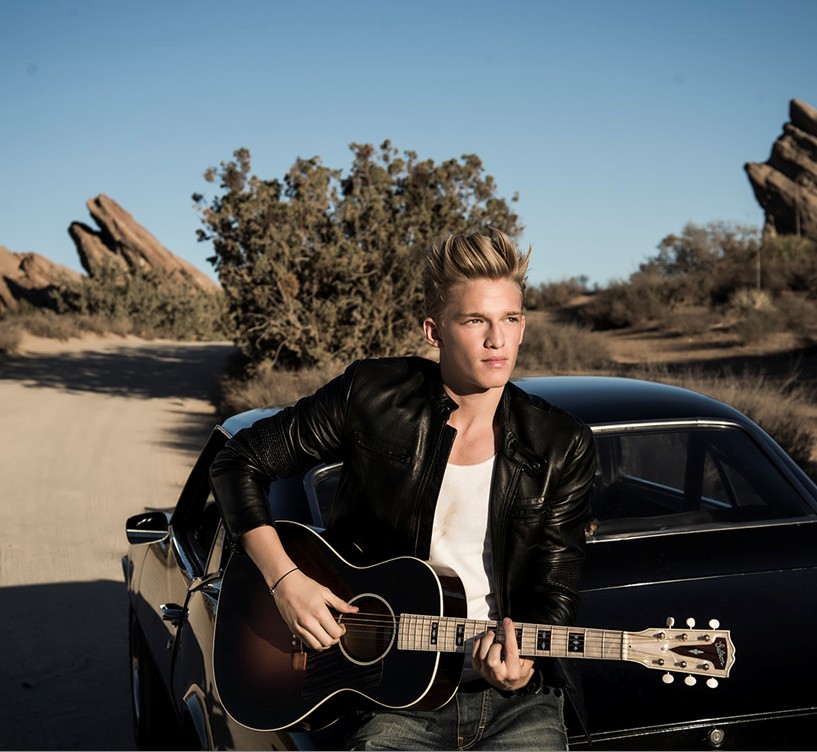
    We hang with the gorgeous Australian born 17-year-old Cody Simpson. We find out about his passion fruit fetish, his love of Elvis and his man-crush on Leonardo DiCaprio

    You do so much travelling and are away from home a lot, how does that feel?

    I miss home a lot actually, I don’t get to go back to Australia all the time. I miss family and friends when I’m gone for sure.
    How is this tour different from your usual shows?

    It’s different. I’ve called it the Acoustic Tour. It’s much more intimate, smaller venues and more of an intimate experience with the fans. Something they haven’t seen from me really before. Very musical. Kinda transcending the stereotypes of what people in my genre usually do…
    Which are?

    You know… It’s all live. No tracks. No backing tracks, just me and two musicians up there. Me and my guitar. We have cello and we have bongos. It’s just a very live musical experience. I just kinda want to make it a little story telling session. Get really close to the fans and do something different.
    Is that safe?

    Honestly, what I’m doing on this tour is something I’ve been doing since I was six years old. Just with my guitar. I can do it either way – and I want to show people that I am able to do a show this way, which is not something that a lot of people can get up and do. I’m really looking forward to getting up there and chilling and helping my fans get to know me.
    Is this your first trip to the UK?

    I came last year around February and that was the very first time I came and did a couple of shows there. It was really nice, I enjoyed myself so much. It’s so cool.

    What 3 things must you take on tour with you?

    Lots of guitars, lots of clothes and my iPhone.
    What’s the most outrageous thing you’ve done on tour?

    Oh man! I don’t know what’s appropriate to say in an interview. I have to filter through and see…
    So you’re well behaved?

    Not constantly… No! (laughs).
    We gay Brits love a bit of Aussie life… Kath and Kim, Matthew Mitcham, Kylie… Are you hoping to become the object of our desires?

    Yeah, I mean for sure! I love people from the UK in general. I definitely think that’s a goal of mine. Looking forward to coming out and doing the show… It’s gonna be cool.
    Duets with anyone dead or alive – who and what would you sing?

    I would love to sing Blue Suede Shoes with Elvis.
    If you were gonna take any male celebrity out on a date, who would it be and where would you go?

    Oh man (laughs).
    Who would you have a Bromance with?

    Probably Leonardo DiCaprio. I basically just have a crush on him anyway. He’s just the best. He’s the best actor. We’d probably go sing Karaoke

    Read the full interview in the latest issue of TheGayUK – out now from all good digital Newsstands
    iTunes | Android
    Cody Simpson will be on tour in the UK in June/July

    Mon 30 June London, Indigo at The O2

    Tue. 1 July Norwich,Waterfront

    Wed 2 July Edinburgh, Queen’s Hall

    Fri 4 July Dublin, Grand Canal

    Sat 5 July Manchester,Academy 2

    Sun 6 July Birmingham, Institute Library

  • The Commonwealth Condemned at Pride In London parade

    African LGBT activists will march alongside the Peter Tatchell Foundation near the head of the annual Pride London parade this Saturday, 28 June, to protest against the persecution of LGBT people in 80 per cent of the 53 Commonwealth member states – many of them African nations.

    We are calling on 42 Commonwealth countries to repeal their criminalisation of same-sex relationships and to protect their lesbian, gay, bisexual and transgender (LGBT) citizens against discrimination and hate crime – in accordance with the principles of the Commonwealth Charter,’ said Peter Tatchell, Director of the human rights organisation, the Peter Tatchell Foundation.

    ‘We are urging the organisers of the Commonwealth Games in Glasgow in July to require every competing nation to sign a pledge to not discriminate in the selection of athletes for their national team. Article 7 of the Commonwealth Games Federation constitution prohibits all discrimination. But it is widely believed that most Commonwealth nations would refuse to select a LGBT athlete,’ he said.

    Peter Tatchell has written to the Chief Executive of Glasgow 2014, David Grevemberg, asking him to ensure that all countries participating in the Commonwealth Games sign a non-discrimination pledge.

    Peter Tatchell helped organise Britain’s first Gay Pride march, which took place in London in 1972. He has attended every Pride London parade since then.

    ‘Forty-two of the 53 Commonwealth member states criminalise homosexuality, with seven of them stipulating life imprisonment and two of them – Pakistan and Nigeria – having the death penalty under Sharia law in some regions,’ noted Mr Tatchell.

    Marching in a joint contingent with the Peter Tatchell Foundation on Saturday will be African activists from Uganda, Nigeria and other African nations – including the African LGBTI Out and Proud Diamond Group and Nigerian LGBTIs in the Diaspora Against Anti-Same-Sex Laws.

    On Saturday, we are meeting at 12.30pm at the corner of Baker Street and Wigmore Street W1 (opposite Portman Square).
    The Pride London parade leaves at 1pm sharp.

    Edwin Sesange, Coordinator of the African LGBTI Out and Proud Diamond Group, said:
    ‘It is unfortunate that the Commonwealth has failed to implement its own charter on human rights, which the Secretary General has said includes rejection of discrimination against gay people and any other form of discrimination. The Commonwealth should show leadership by directly challenging homophobia and transphobia in its member states, in the same way that it eventually opposed apartheid in South Africa. The Commonwealth Secretariat says it opposes anti-gay persecution but it takes little action.’

    Yemisi Ilesanmi, Coordinator of Nigerian LGBTIs in the Diaspora Against Anti-Same-Sex Laws, added:
    ‘It is saddening that 80% of Commonwealth countries discriminate against lesbian, gay, bisexual, transgender and inter-sex (LGBTI) people. In this age of democracy, every progressive nation should endeavour to protect the human rights of every citizen. No one is less of a human being because of their sexual orientation or gender identity. Acknowledging and protecting LGBTI rights as human rights is a step forward for humanity. It is shameful that the Commonwealth of nations has not taken this important step. We continue to call on the Commonwealth to stand up for the rights of its LGBTI citizens. Every human deserves human rights. LGBTI rights are human rights.’

  • UK Charity centred Undertakes Projects To Unify Deaf LGBTs

    Today centred, London’s LGBTQ community development charity, launches two new projects: The four year project ‘Together – Equal – Different’, and a year long project with and for diverse Deaf LGBTQ people, called ‘Sign Up’.

    These projects will continue centred’s work to build diverse, creative, inclusive and connected LGBTQ communities in London, ultimately improving the well being of LGBTQ people and their family and friends.

    ‘Together – Equal – Different’ will provide an accessible events programme, including large scale events and more intimate ones, themed around arts and culture, heritage, social education and the environment; learning opportunities about equality, diversity, and inclusion; and a collaborative action research project exploring the impact of aspirational, celebratory community activities and spaces on LGBTQ experience.

    ‘Sign up’ will provide a series of workshops culminating in a major Deaf LGBTQ arts event in May 2015, bringing together creative talent from across the diverse Deaf LGBTQ community. The event will be Deaf led, with friends and family welcome to be a part of the day too.

    centred will recruit new volunteers, strengthen relationships with the diverse communities it works in and with, including Deaf communities and Black, Asian and ethnic minority LGBTQ communities, and exchange learning within other diverse communities of queer people, and their family and friends.

    ‘Together – Equal – Different’ is funded by The Big Lottery Fund’s Reaching Communities programme and ‘Sign up’ is funded by Awards for All.

    Participants in centred’s previous work have been integral to the development of ‘Together – Equal – Different’ and ‘Sign up’ and to the achievement of new funding. The generosity of feedback and the co-creation of new ideas are what enable centred to continue its work. A participant in centred’s Second Generation project shared ‘being a part of diverse spaces, where difference is placed at the centre of everything, has been challenging but in a good way. I have a much different view of the community now’. This is the community that centred will help to grow.