A contributor to our Lost LGBT+ Scene project left this recollection of his first encounter at The Catacombs as an 18-year-old in the heydays of the early 70s.
Saturday nights. There were bouncers on the door, and the club used to provide square gold coloured metal keyring fobs with raised lettering CATA top-line COMBS bottom line to help ID.
There was a steepish narrow flight of steps down to the dance floor and a bar on the right I think. I THINK they did sell beer, but I only ever drank Coke, so might be mistaken.
The dance floor was always dark, illuminated with numerous flashing disco spotlights. I vividly remember the packed floor and the heads bouncing to Motown, Stevie Wonder-Superstition, Temptations-The Law of the Land, Timmy Thomas-Why cant we live together.
I hear those on the radio sometimes, shut my eyes and I’m back there in 1971/2 such was the huge impression. Around the dance floor which was circular or multi-sided such as Octagonal was a series of arches which led on to a corridor around the dancefloor.
There was a series of arches into open rooms around the outside of this corridor, each room with tables and seating around. There was always a row of stationary figures around the wall just watching the dancefloor and a similar row around the corridor, all awaiting the next pickup. I don’t remember where the toilets were, very shy and maybe didn’t use them, nor the disco, nor if there were any emergency exits and looking back.
I always think the place could have been an inferno if the worst happened, but oh! such happy memories.
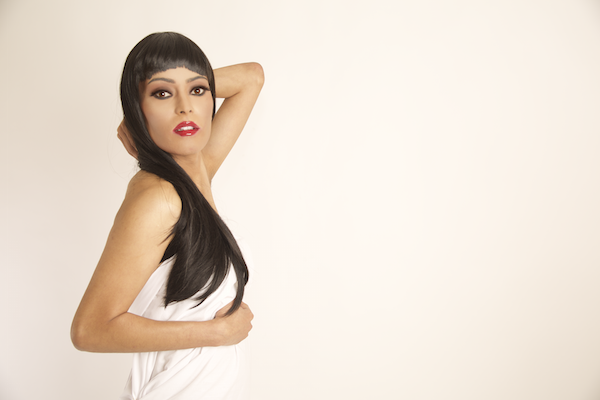
South Asian Drag has been kept behind the veil for far too long. Brown Drag Exists and it is time for it to be made visible in all spaces, virtual and physical.
On the 11th April Buzzfeed released a list compiled by The Drag Bible, an influential platform highlighting drag performers and drag culture. This list, titled ‘Forty Drag Queens You Need to Follow On Instagram’ was globally diverse in terms of race and geography, however, it failed to include any drag artist of South Asian heritage. After social media commentary on this omission which resulted in the deleting of the list by Buzzfeed, the Drag Bible publicly acknowledged this mishap and strived to be fully inclusive. Buzzfeed however, is yet to comment.
Unfortunately, this is a trend prevalent in mainstream drag and LGBT+ communities, be them virtual on social media platforms, or in physical spaces such as bars, clubs and Prides where few or no South Asian drag performers are featured talent. It is particular to note that the RuPaul’s Drag Race franchise has not featured a single queen of South Asian heritage in its many international variants. The South Asian subcontinent does not have its own Drag Race yet, however, the diaspora is far and wide, permeating all corners of the globe including the USA, Canada, UK, New Zealand, Australia, the West Indies and Africa. To suggest that queens from a South Asian background don’t exist internationally is to be a perpetrator of erasure.
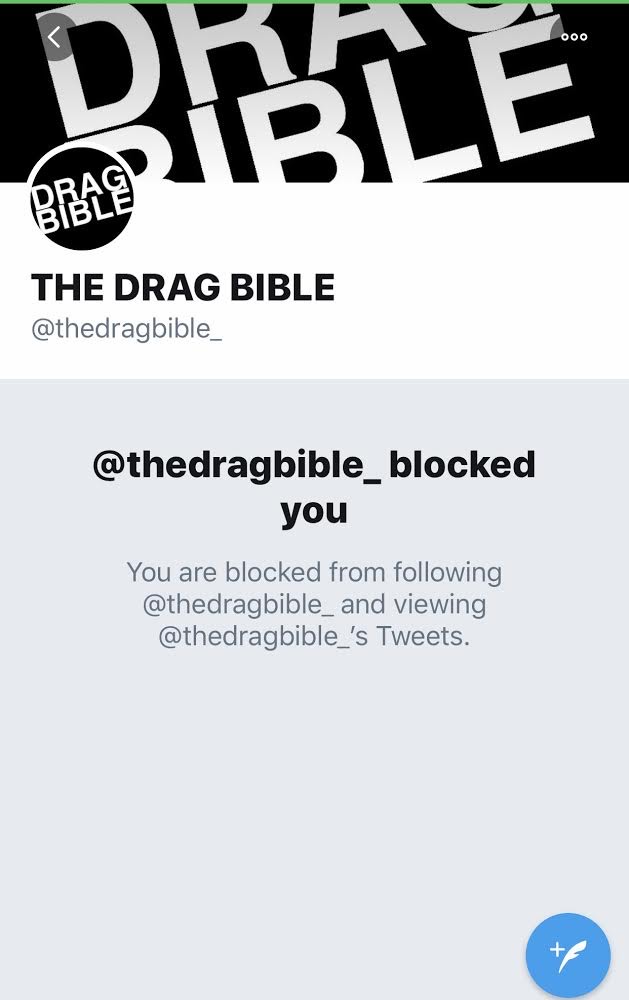
Blocked by The Drag Bible
This is a harsh reality facing those from a South Asian background wanting to follow a career in drag, cabaret, burlesque and the performing arts.
We have to fight the hardest and the loudest in order to be heard or our art to be seen. In many cases we are denied work and opportunities because our art is either not understood, too political or too risky. More often than not this is down to pure ignorance, a lack of research, the unwillingness to listen, understand and blatant racism.
Not ensuring to include a diverse panoply of performers encompassing all diverse backgrounds is risking contributing to the erasure of identities and experiences.
“Erasure is tantamount to racism”
Erasure is tantamount to racism and as performers, we wish for opportunities to be included at the table of mainstream drag.
In this spirit, South Asian Drag Artists from across the world and different spheres of drag [AFAB, Trans, Drag Kings, Drag Queens etc.] came together to compile this campaign video and spill the masala tea.
#BrownDragExists
#BrownDragExists
A response from The Drag Bible was made on their Twitter account on the 16th April:
Multiple factors can contribute to the development of the body image, but the biggest influence seems to come from the advertising industry, which unapologetically creates the need on the consumer to look like the ideal men or women portrayed in the media. Smoothing skin, erasing wrinkles, enlarging muscles, slimming waists… All this has become the norm in advertising. These images don’t reflect reality. This is just a convenient strategy designed to sell a product. Yet, from a younger and younger age, people are aspiring to these biologically impossible ideals. And I was no exception! Looking at these distortions of reality, I felt ugly and had the same desire as everybody else to look just as perfect as these models. But I eventually realized that this way of thinking can lead to serious body image problems. People who are unhappy about their bodies can develop eating disorders, turn to diet pills or steroids, or try cosmetic surgery and Botox injections. And I fear that, until the public responds more favourably to images of real people with real bodies, very little is going to change. This is why I decided to stand up and share my belief that everyone has the right, whatever their size or shape, to feel happy about their looks. I defend that a diversity of body shapes and sizes needs to be included in magazines, advertising and on the catwalk URGENTLY!
A while ago, I discovered Elska Magazine. Created by Liam Campbell, Elska is a bi-monthly male photography publication, whose first edition was released in September 2015.
Its name means “love” in Icelandic.
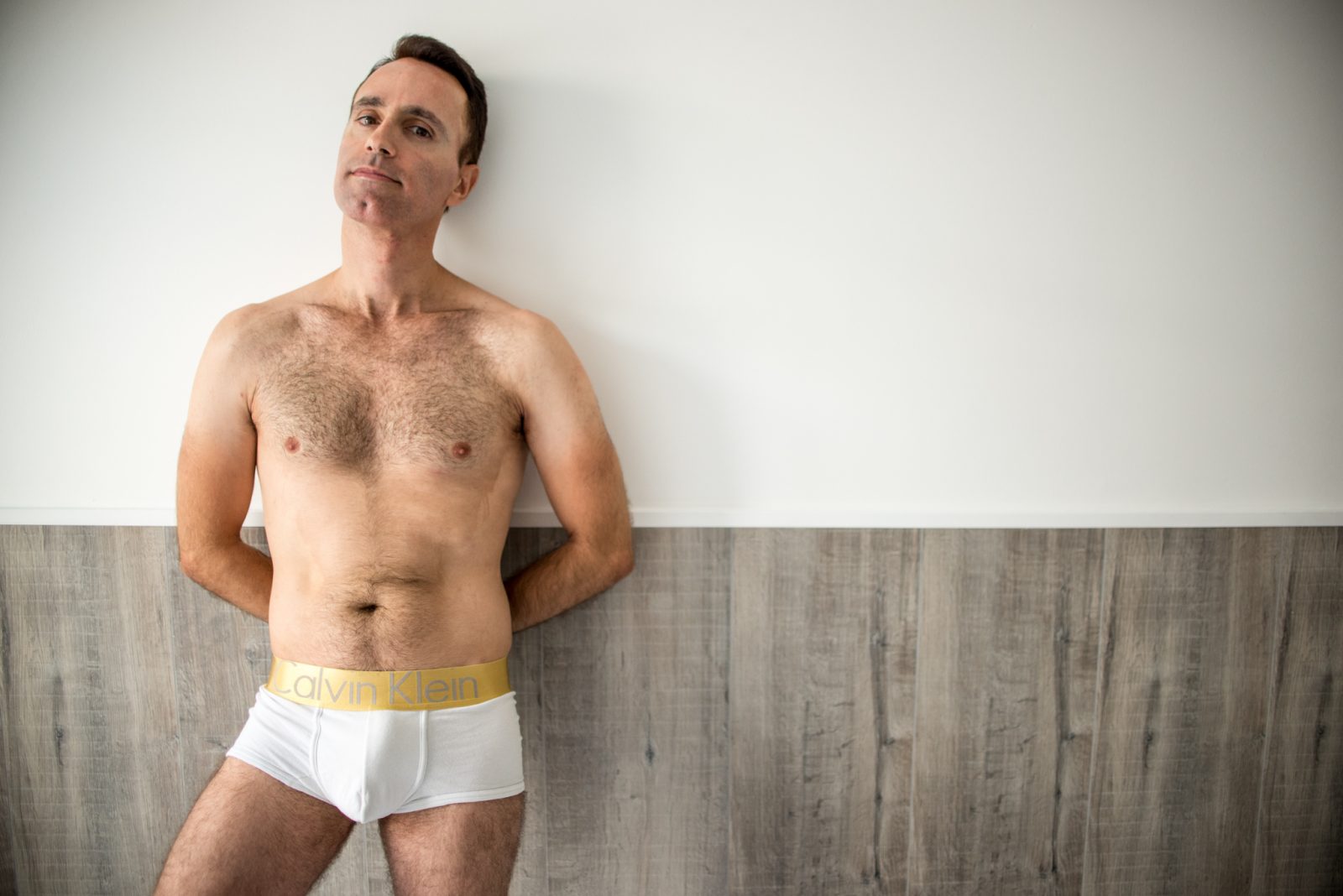
One of the main aspects which differentiate Elska from other (gay) photography-related publications is that it does not feature perfect models, but instead focuses on real people with their “imperfections,” presenting real-life people and their stories, and providing a glimpse at queer men and community around the globe. Each issue is shot in a different city. When I saw an ad looking for real people to model for the Amsterdam issue, I knew immediately that this was an initiative I needed to support. And this why, with no shame or fears, I undressed and posed for Elska. I might not have the perfect body (at least according to the advertising industry), but this is me, I am real, and I learned to love myself and to feel comfortable in my own body. And now I am sharing it with you!
Elska Amsterdam, the latest issue of Elska magazine, is out now and includes a nice selection of ordinary gay locals and their stories. Sadly, my photos didn’t make the cut for the main magazine, but they are featured in Elska Ekstra, Elska’s companion magazine with behind the scenes tales, outtakes, extra stories, and extra boys. Enjoy it!
As a famous drag queen would say: “If you can’t love yourself, how in the hell are you going to love somebody else?”
I’m a fan of holidays and I’m also a fan of prizes, so a prize that’s also a holiday it’s pretty much up there with buttery crumpets and that new car smell for me, but I have to plead with the marketing departments at large corporations not to offer trips to countries where being LGBT+ could wind you all banged up.
This afternoon a Caffe Nero marketing email landed in my inbox advertising a competition where the prize was a holibob to Cairo. How nice I thought until I wonder what are the legal ramifications of a visit to Egypt for a card-carrying gay like myself.
Not good. it turns out.
A little digging from the marketing department would have them discover homosexuality has been “defacto illegal” in Egypt since the year 2000. Yes, in Egypt under its “morality laws” people found guilty of breaking such a law could face “up to 17 years with or without hard labour and fines”
Not to pick on Nero’s but they really should know better, after all, they do use the rainbow flag, during pride season in some of their stores.
But they aren’t the only company to offer competitions where the prize could land LGBT+ people in trouble.
You wouldn’t think that in 2020 it’d be acceptable to offer a prize that actively discriminated against LGBT+ people, but when you see a prize that’s a holiday to any country which outlaws homosexuality, and there are a lot of them – that’s effectively what they are doing, especially to gay and bi men who don’t want to end up in court facing punishments ranging from fines, lashes or even death.
If we want change, we are going have to call on companies and allies to do their part.
If we want a world that is tolerant of LGBT+ people we have to start showing that being anti-LGBT isn’t good for business, travel or politically and that includes using them in your marketing campaigns.
While my boyfriend takes almost every possible moment to whip his clothes off, I’m happy to keep it AbFab Saffy. He says I’m the only person he knows who dresses up to go to bed.
So the idea of a nudist beach outing isn’t a natural fit for me, my Irish Roman Catholic never-naked family upbringing means that nudity to me is best kept in the dark. But as I’ve always said, “don’t say no, till you give it go”. So on a trip to Australia, I relented to my nagging boyfriend, who had heard there was a gay nude beach somewhere on the shores of Sydney.
We were 9,445 miles away. No one I know would be there, and at 26 years old I was in my prime.
Early one morning, we took a ferry to the Taronga Zoo and walked for what seemed like hours. With every step, my protestations got louder and more pronounced. “Did we really need to do this”, “There’s a perfectly nice, findable beach in Manly”, “What’s so special about getting naked anyway?”
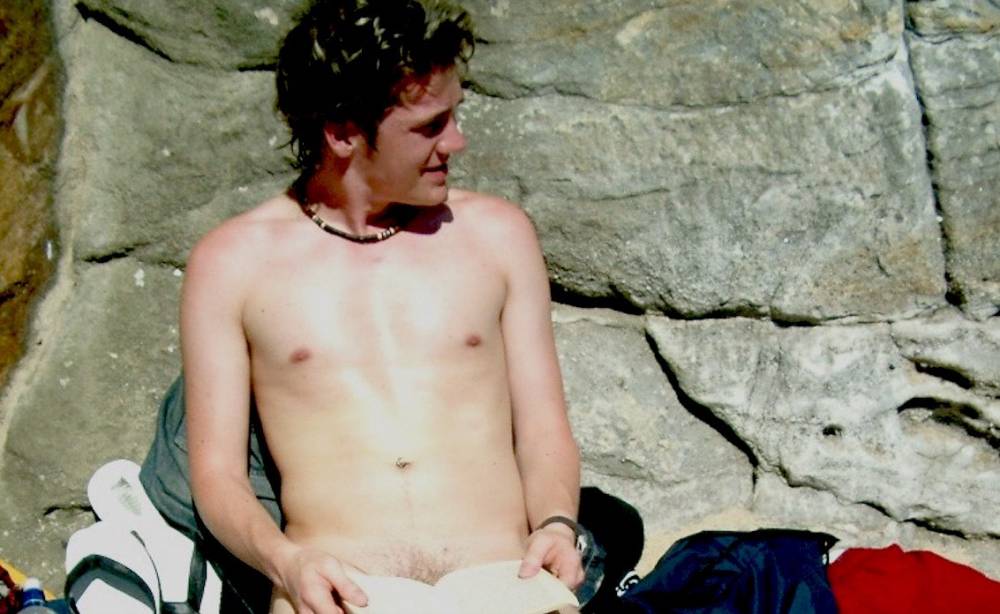
Finally, we found it. Opening up in front of us was a naked haven. It was less of a beach and more of a cove of smooth rocks, facing towards the sea. A bit like a penguin exhibit at a zoo. Numerous, well-placed, seemingly naturally occurring outcroppings of smoothish rocks, perfect for spreading out a towel and basking beneath the Aussie sun. It looked perfect. It looked secluded. At each end, there was a high wall of rocks and thick bush add to the seclusion. Perfect.
My boyfriend’s little eyes lit up like it was Christmas, Easter, Valentines, New Year’s and Wirral Appreciation Day (he’s from Wirral) all in one. He started removing items of clothes as we picked our way across the rocks to find somewhere to settle.
I started casually glancing around, more to make sure I had a good footing on the rocks, rather than goggling the naked men on show. There were penises everywhere.
Some were casually flopping over the owner’s knees, some were neatly nestled in a well-groomed nest of pubic hair. All attached to perfectly bronzed and toned bodies.
We had found a spot to make camp, my boyfriend literally ran off towards the ocean.
I was left to undress and sink lower into my own self-loathing.
I could feel expectant eyes around me. I was, still dressed, very much so. So I began to peel off an item of clothing one item at a time. It was like a very slow, very bizarre Victorian striptease. First flip-flop, second flip-flop and so on until it was just my underwear and nakedness. I was eking out every moment of clothed protection.
I rooted around in my rucksack for my book. It was chunky. In what can only be described as pure magic, I whipped off my undies and firmly placed the book in front of the crown jewels in one swift, deft move. I was naked save for the book.
Finally, with my undies still on, I rooted around in my rucksack for my book. It was chunky. In what can only be described as pure magic, I whipped off my undies and firmly placed the book in front of the crown jewels in one swift, deft move. I was naked save for the book. I looked around to see if there had been any signs of approval from the expectant eyes, but they had long bored of my antics and were distracting themselves in other ways.
I pretended to thumb through my book. My boyfriend called for me to come down to the ocean.
Could I?
Could I walk to the ocean… exposed? Between where I was sitting and the shore there must have been about ten meters of rocks.
Sod it. Do it. What’s the worst that could happen?
Beneath my book, I gave my little Mr a tug. It’s the tugging that all men give themselves when you need a little something more. You know, in the right circumstances, you add a couple of inches to a flaccid knob.
Finally, appeased by the length, I remove my book, stand up. I blind everyone. My pale never-nude body is so bright I’m sure it can be seen from space.
I feel eyes on me. “Turn it around Jake, turn it around”, I coo to myself. In my mind, Sade’s “Smooth Operator” is playing, as I slink towards the shoreline. Not wanting to rush, I make sure each step is sure and solid. My boyfriend is seven meters away from me. He’s waving at me, encouraging me to come to the water’s edge. He’s waist-deep in the water and he’s been playing catch with some others that are in the sea. It looks fun. I want to join them.
I continue to walk towards the sea. Why did we settle so far back from the shore? I’m five metres away now.
Four meters… and then, I hear voices. These aren’t the subdued mumbles of the cove’s current inhabitants. No, I can hear children’s laughter and a general hubbub. I can hear a tannoy announcement. I can hear the churning of water from a propeller. From the left side of the cove, a tourist boat’s bow begins to appear.
I’m three meters from the water now. More and more of the boat begins to show. It’s big. Actually, it’s massive. And there are lots of people on it. All of them with cameras pointed in the direction of the beach. The boat seems so close I’m sure I can hear the individual shutters of a hundred cameras firing.
Forgetting ‘Smooth Operator’ and my careful footing, I make a dash for the water. Gazelle like, I spring over the last few rocks and dive.
Into 3 inches of water.
My pasty ass isn’t even covered with water.
The tourist boat continues its slow-paced chugging, its slow speed is mocking me. The cameras are still clicking. Eventually, it disappears around the cove.
My boyfriend is almost drowning with laughter.
The expectant eyes, attached to waspy mouths are saying something… I think I can hear “oh look, a floating pomme”.
The past was deeply homophobic. It drove would be out gays, lesbians and bisexual people deep underground and now is their time to walk, heads held high into the light.
When I used to volunteer for an LGBT+ helpline, our extensive training outlined how to help young people navigate their coming out experiences at college or how to tell mum and dad that, actually, they weren’t a daughter but a son. We were told that we’d get a lot of these types of calls, but in reality, every shift I volunteered for, I would have at least one, if not two, men of a certain age, grappling with the fact that they had lived a life of lies.
The story these men would tell would have a regularity to it… They were out walking the dog and another man in the bushes piqued their interest, or while browsing porn online they stumbled upon the GAY button and it opened the floodgates.
“But why now?” would be the question…
“What about AIDS?” would often be another question.
Their concern would also be couched in terms like, “but I’m not gay, I have a wife” – although further conversation would reveal that they had been in a sexless marriage for the best part of twenty years and even when they were in the throes of passion, they felt it never “really clicked”.
Men in their 50s, 60, 70s and 80s grew up with intense social and legal pressures to be normative.
It was illegal to be gay in this country until 1967. The AIDS epidemic hit the gay/bisexual community hard from the early 80s. The World Health Organisation only declassified homosexuality as a mental illness in 1992 and the patriarchal nature of our world means only a certain type of man makes it to the top.
It must have seemed safer to stay in the closet.
The idea that Phillip Schofield would have had a hint of the success that he’s enjoyed during his career had he come out during his time in the Broom Cupboard is to be dismissed right away. You can imagine the Daily Mail and Sun headlines now.
It must have seemed safer to stay in the closest.
The societal changes to reflect the legal and health changes has taken decades and, worryingly still isn’t fully ingrained.
Every day, hundreds of mostly unreported homophobic hate crimes happen on the streets of the UK. We only hear of a few of them, which leads people to have an overriding sense that “everything is okay, nothing to see here”.
It’s not true.
Back to the phone room, at first when I was taking these calls from men in their 50s and above what I got was a sense of self-loathing, uncertainty but excitement. Something had been uncorked. The genie was out and it was never going to be stuffed in again.
At first, I was surprised that the number of calls I’d answer – in amongst the “wank calls” (that’s another story), but with each shift, I began to understand that these men all hailed from a truly toxic age. They felt they had to be strong, get married, father children and provide. The only time you could cry and not be called a poofter was when England lost the World Cup.
Our issues as a community haven’t just started. It’s been decades. Actually it’s been centuries in the making.
…Coming out after 30 years of marriage doesn’t just affect one person. Spouses are often forgotten in the blaze of support that can surround someone’s coming out.
I also understand that someone coming out after 30 years of marriage doesn’t just affect one person. Spouses are often forgotten in the blaze of support that can surround someone’s coming out. It must be incredibly lonely for them. Their emotional response must feel very limited, less they are seen as a homophobe.
We need to find tools to help both people. The person coming out and the person feeling that their entire adult life has also been a lie.
Phillip Schofield isn’t the first man to come out later in life. He won’t be the last and instead of the hype that surrounds that revelation, maybe we need to question why they felt they needed to wait so long.
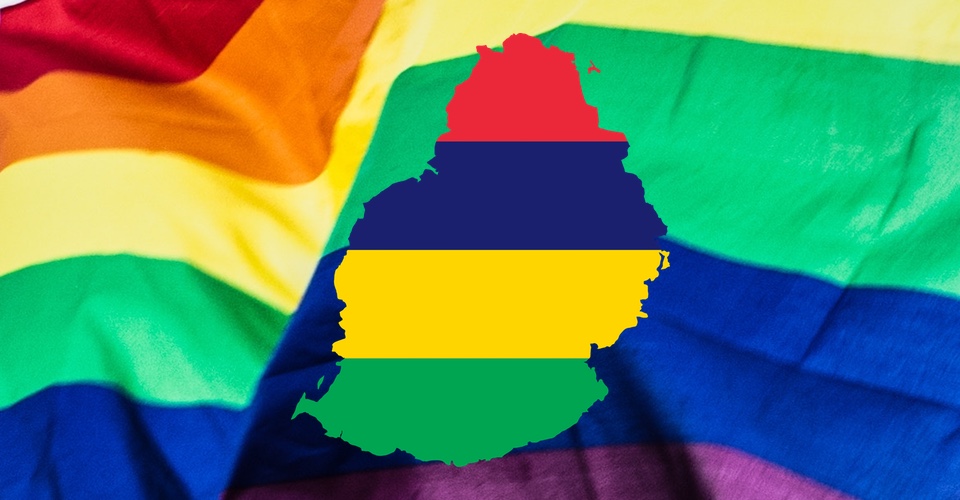
It was the writer Mark Twain, who said, “Mauritius was made first and then heaven was copied after Mauritius.” Boy, was he right! The tropical paradise is one of Africa’s wealthiest tourist destinations and is one of the world’s top luxury places to visit.
It’s clear why over 100,000 British visitors go every year. Yet for some LGBTQIA+ people, it holds an unknown law that threatens the freedom of the community. An island where gay men still live with the consequences of British colonisation. Various countries across Africa and southern Asia still have harmful anti-homosexuality laws in place that were first introduced under British rule. The republic of Mauritius gained independence from British rule in 1968.
Homosexuality is prohibited in Mauritius and LGBTQIA+ life in Mauritius still remains fairly discreet, it is important to know that ‘sodomy’ is still illegal and punishable with a maximum sentence of up to 5 years.
In 2018, The Republic of Mauritius was forced to cancel its gay pride event due to concerns of safety from anti-gay rights campaigners, to which some were quoting section 250 of the Mauritian Criminal Code Act of 1838, which outlaws sodomy.
The Law in Mauritius violates individual constitutional rights and freedoms which breaches the island’s equal opportunities act, which bans discrimination on the basis of sexual orientation.
Abdool Ridwan Firaas Ah Seek originally brought a legal case last year challenging the constitutionality of Section 250 – a colonial-era law from when Mauritius was ruled by Britain. According to an unofficial translation of this section “Any person who is guilty of the crime sodomy… shall be liable to penal servitude for a term not exceeding 5 years.”
The case had its first hearing by the Supreme Court in October 2019 and another hearing to appear this February 2020.
Mr Ah Seek’s legal case is being supported by the Collectif Arc-En-Ciel (CAEC), a human rights organisation in Mauritius working to improve the lives of LGBTQIA+ people.
Mauritian activist Najeeb Fokeerbux, Founder of the LGBTQIA+ group, Young Queer Alliance has addressed that he too will be campaigning to overturn the law and will work alongside Mr Ah Seek’s on this case. The Young Queer Alliance is s a non-governmental, youth-led and a political organisation dedicated to advance equal human rights of LGBTQIA+ people in the Republic of Mauritius. Supported by various local and regional partners and philanthropies.
Mauritian activists claim that the law is rarely enforced with sentencing, although it is still illegal and still active and has other impacts on the community.
Mauritians citizens are an eclectic mix of French, Indian, Creole and Chinese people, renowned for their hospitality and their acceptance of cultural differences. So why they live with such strict laws is frankly disappointing, outdated and violates human rights to the local people and their overall tolerance to people.
I myself am of Mauritian descent and an active member of the LGBTQIA+ community, born and living in Brighton, UK.
I have taken personal offence to the law and will be working alongside the activists to help decriminalise homosexuality in Mauritius by helping overturn this law. This outdated law threatens our very own freedom of being who we are and where we travel to and how we live our lives.
Over the next few weeks, I aim to meet fellow activist Fokeerbux and his colleagues at La MariPosa Hotel, Grand Rivière Noir situated south-west of the island.
This venue prides itself as one of the few hotels that promotes themselves confidently as LGBTQIA+ friendly on the island.
La MariPosa Hotel will be the meeting venue where myself and fellow activists will hold discussions and where people from the LGBTQIA+ community can talk openly about stigmas and prejudice to which they have experienced.
We will discuss what amendments have been made so far, the challenging of article 250, the human rights violations which LGBTQIA+ people are exposed to and more.
The Republic of Mauritius is such a beautiful island – but when we look at the beauty around this, it is shadowed by the old colonial laws, which has no place in our time now.
Policies have been changed and laws similar to this one have been overturned in other countries such as Angola, Seychelles, Botswana and India. This has been inspirational and motivational for the LGBTQIA+ community in Mauritius.
Let’s endeavour that 2020 brings Mauritius into a place that promotes equality, diversity, inclusion but more importantly equal rights for the LGBTQIA+ community.
Mathew Parr will be in Mauritius from mid -January 2020 for 1 month, and he will be writing and filming his full experience including discussions with fellow activists.
A gay male friend told me recently that he returns to Pride in his home town of Bristol for the drinking, as there is nothing to protest about anymore. Given the rise of hate crimes over recent years, I pointed out that this is not true even for him, let alone for me. It is not that he did not get it, but it had not occurred to him that for many transgender people Pride might be the only setting – if then – in which they actually feel safe going into a pub.
Or take another example. A lesbian friend earlier this year shared a transphobic joke on social media. This suggested that in parts of the LGBTQ+ community – those parts, perhaps, where the need for so many letters to define us is not entirely accepted – the phenomenon of being transgender and the particular forms of discrimination we face are not yet fully grasped. Yet if we, as we should, reject heteronormative assumptions about sexual orientation, why should my lesbian friend have nonetheless have been so ready to accept them when it comes to gender? The many similarities in transgender experiences to those of gays and lesbians – in terms of exclusion, discrimination and being hidden from history – are effectively denied by jokes which treat us as more or less delusional about our gender identity.
PHOTO: Supplied
Happily, this has proved a rare experience. The vast majority of my gay and lesbian friends have been very supportive both of my transition and of transgender people in general. The high profile of transphobia on the streets and in certain parts of the public sphere has, in my experience, helped to ensure growing sympathy with the issues transgender people can face. All the different nuances of those experiences are, however, not always easy to grasp, even for people who are themselves transgender. I cannot be the only person to have been transplained by an older trans woman for whom her transition experience was seemingly the only authentic one.
Then take the perennial issue of toilets. This, despite the continuing scarcity of gender-neutral ones, has not really been an issue for me as a trans woman. However, I am aware that it can be much more problematic for trans men and for those who identify as genderfluid or non-binary. Awareness of these latter groups, unfortunately, is generally much lower than for us MTF trans people. Nonetheless, they need every bit as much support and are if anything subjected to even more hostility from transphobes, who find their flouting of gendered norms more disturbing than that of the femme-acting trans woman.
Similarly, among the gay community, there is not always ready awareness that the binary, straight/gay, does not necessarily apply to trans people any more than the binary, male/female, does. Some trans people are straight, though they are sometimes misconstrued as gay men and women who are trying unusually hard to conform to heterosexual frameworks. Some, like me, are lesbians (or transbians if you prefer) or in gay male relationships. Some are polyamorous. In terms of sexual orientation, the multifaceted nature of transgendered experience does not always make it easy readily to translate it into a gay or lesbian framework.
In addition, there is not always full awareness of the distinctive challenges we face in terms of adjusting both ourselves and our acquaintances to identities which are social, official (changing your passport can be a nightmare) and bodily as well as sexual. Names and pronouns matter for us as signifiers of transition. Yet even in Stonewall-approved universities trans people are still regularly labelled and abused. This is not least because we challenge stereotypes imposed by heteronormativity. These stereotypes have, in the past, been used to confine and control all of us – gay, lesbian and trans – and our exclusion has been our common experience.
Challenging these stereotypes, both as they apply to sexual orientation and to gender is, in my view, a wholly good thing for all of us.
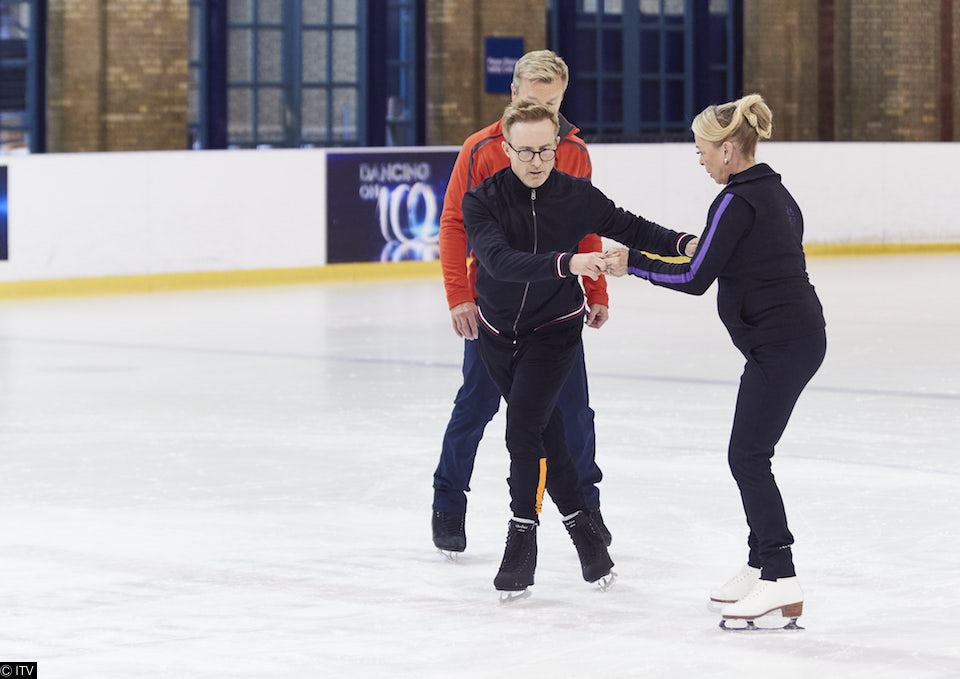
Dr Gemma Commane, lecturer in Media and Communication at Birmingham City University, says it’s important to question what this Dancing On Ice on a same-sex couple introduction change really means and the conversations it will create.
OPINION | Lesbians are often overlooked or are subject to ‘tragic’ storylines and they are given less space to occupy.
“Although it’s timely for Dancing On Ice to have a same-sex couple, it’s important to understand that decisions are political and have economic reasons,” said Dr Commane.
“In this case, examples could be sustainability for the television show, maintenance of the brand and audience expectations.
“We need to carefully think about what privilege means and what privilege looks like. Privilege is complex and it does not simply connect to one aspect of a person’s identity.
“Whilst it is fantastic that changes are happening, we need to ask: what do these ‘changes’ actually mean when certain voices and identities are still rendered invisible?
“Lesbians are often overlooked or are subject to ‘tragic’ storylines and they are given less space to occupy, especially in primetime television. Why aren’t lesbians the default when it comes to ‘ground breaking’ decisions when introducing same-sex coupling in shows like Dancing On Ice?
“What would it mean for ‘Dancing On Ice’ to have a lesbian celebrity skating with a same-sex partner?
“What types of conversations would arise from the media and audiences around this selection? If this had been the case, it would have been interesting to observe how news organisations would respond to an announcement like this and if they would write about the lesbian celebrity in predictable and fetishistic ways.”
It can happen over the most seemingly innocuous thoughts and actions and can be incredibly distressing and sickening if you happen to be at the centre of people’s fury on social media.
Twittersphere can be one mean place if you, in the eyes of some of its users, get things wrong. Being at the centre of a Twitterstorm or a pile on can be a horrible experience lasting over a 24 to 48 hour period.
So here’s what you should do if you ever find yourself in a twitter backlash.
Delete the tweet
Although this might seem like curtailing your speech or what you want to say, removing the “offending” tweet means that it can’t be retweeted or quoted – leading directly to your account.
It’s the quickest way to stop a pile on in its tracks. Yes, some people will have screenshotted the tweet and they will continue to tweet it or may even tweet it at you, but its reach will be far less felt than if you were to leave it on your timeline.
Just turn it off
Turn off Twitter, in fact, delete the app for a few days, so you don’t feel the need to keep on checking what’s going on or what’s been said about you. Ride it out and try not to let your imagination run wild.
A Twitter pile on can last from 24 hours to 48 hours and will then, most likely fade away as people move on. You may get a few tweets after this, but mostly people will have moved on.
Just remember, people’s memories can be short on social media and there’s always someone else to distract and attract a Twitterstorm away from you.
Make a decision on whether to apologise or not
If you come to the conclusion on whether what you’ve tweeted is offensive and Twittersphere has a point, then apologise.
Recently social media star Trisha Paytas found herself in the middle of an epic Twitterstorm after coming out as a “transgender gay man”. The tweet, which actually led people to a YouTube video was immediately met with scorn and derision.
The tweet became quickly ratio’d meaning that the comments outranked the number of Retweets and likes, meaning that in Twitter world you’ve usually done something very very wrong.
Trisha made an apology video within 48 hours and the pile on continued on with that Tweet, receiving over 700 comments and only 49 retweets, which meant that her apology wasn’t widely shared, so only a fraction of those aware of the story actually heard her apology.
Meanwhile, her original “I Am Transgender” tweet continued to grow and was even picked up by the editorial team at Twitters’ moments, boosting the Tweet even further.
If you do make an apology tweet, post or video- make it heartfelt and true and don’t use phrases like “I’m sorry you were offended”. These often PR managed tweets are met with even more backlash because people don’t and won’t believe it – and can even serve to elongate the storm.
If you don’t feel you need to apologise – don’t. There’s nothing worse than someone apologising for something they’re not sorry for.
The tweet saw thousands of people complaining about the article’s content. The magazine’s official Twitter account – which usually sees an interaction rate of 1 to 2 retweets or likes per post and rarely ever any comments, suddenly had over 7,000 retweets and thousands of comments.
Dozens of people took to Cosmopolitan‘s timeline to say they had reported the tweet for hate speech, yet the magazine stood resolute, did not delete, did not apologise – basically it didn’t acknowledge the storm that it had created.
Seek legal advice
If you’ve tweeted something you shouldn’t have, like a high court’s super injuction or something that’s libelous or slanderous you might need to seek legal advice.
You may also want to take legal advice or action if people are tweeting something about you that is factually incorrect, libellous or slanderous, as journalist Jack Monroe did against Katy Hopkins. The fallout from which saw the former TV star, journalist and radio presenter left with a huge legal bill after she lost.
Recently the BBC was attacked for teaching children that there are over 100 different types of gender. This move from the BBC received widespread criticism from the right-wing media (as expected) and unfortunately when a gender spokesperson on Good Morning Britain was interviewed on the matter they struggled to explain the differences when challenged by presenters on what the 100 genders stood for and why some of them were ‘genders’ and not simply aspects of their personality.
It was, put bluntly, a car crash and did nothing to explain to your the majority of UK viewers what the move was about.
Don’t get me wrong, I have my issues with Piers Morgan, but that interview was a car crash and made the gender argument look ridiculous. Love him or hate him, Piers won that round and inflicted serious damage on the public perception of gender freedom.
It left even those of us in the LGBT community that weren’t aware of 100+ genders before now baffled and unsure of what was expected of us as allies?
As someone that has worked with the wider LGBT+ community, I found the statement that there are 100+ gender staggering. It might easier for a child to get their head around, I can’t say as I’ve not been a child for quite some time now, but if we even struggle then how on earth is wider Society meant to cope? So I went looking to see what on earth the 100+ genders are and what they could mean.
I found this list from Tumblr which has listed around 116 different types of genders. Some I recognise and some have just baffled me. Many of them, especially those where they say they aren’t ‘Male’ or ‘Female’, but they aren’t anything else either until you ask them, then they say they are X or Y based on that moment. That is not a ‘gender’ type, that’s an attitude or personality trait. At most that is gender fluid, so what’s wrong with being gender fluid?
For a community that claims to despise labels and being put in boxes are we really telling the wider world that we now have 100+ labels for ourselves, a fair majority of which are based on our mood and situation at any given time?
Me: “I don’t want you [Society] to label me, we should be beyond labels”
Also Me: “Here are 100+ more labels, many of which depend on my mood on any given day. You wanna label me, ha I’ve just made it 100 times more difficult.”
People have to remember that we are a community, built and based on social interaction. This 100+ list of genders and associated pronouns has just put a massive barrier up to other human beings communicating with us/them.
If you have no idea how to address someone (as even ‘they’ wouldn’t work for some of these) then surely that person is simply not going to address you, and just avoid you completely as it’s the path of least resistance (easier). They don’t mean anything by it, they aren’t out to ‘get you’ or ‘oppress you’ they just have no idea how to interact with you because of this mind-boggling wall you’ve put up and have 1001 things to deal with other than how on earth to say hello to you and ask how you are.
The rise in gender fluidity and the challenge of the traditional masculine and feminine associations is something to be celebrated, especially if it means we get closer to achieving true gender equality, eradicate sexism and truly accept into Society transsexuality and gender re-assignment. However, with saying to the world that there are now 115 different genders, many of which are based on circumstances and mood, are we at risk to invalidating and demeaning that freedom we have enjoyed as it is coming across as ridiculous and unrealistic?
A friend of mine recently ‘came out’ as pansexual. For those unaware, pansexuality, or omnisexuality, is the sexual, romantic or emotional attraction towards people regardless of their sex or gender identity.
Pansexual people may refer to themselves as gender-blind, asserting that gender and sex are not determining factors in their romantic or sexual attraction to others. Unlike Bisexuality, pansexuals tend not to see gender and just see the person/personality.
Recently Sam Smith (not the friend mentioned above) also came out as non-binary and raising awareness of gender descriptives within our language. Smith has a valid point and if we are truly to be 21st-century race then more accurate command of the language is a good thing. The abuse Smith received from the LGBT community was completely uncalled for.
However, the 100+ genders issue raises the question, are we using gender identity as a smokescreen for our own personality traits and rising trend to be identified as something and to use that as a banner against oppression? It’s almost as if the community has achieved a level of acceptance (which we have on the whole) but now we want evermore? Or to put it another way, have we just gotten so used to being oppressed and that feeling of ‘fighting the machine’ that we now seek new battles and new demands for acceptance?
If some of our allies and the community itself are struggling to keep up with the notion of 100+ genders and pronouns, and find they have to ask what someone’s gender is in order not to offend, are we just simply creating a society where no one can get it right because I’ve used the pronouns for gender 67 but actually you are gender 68 which causes you offence and now I’m the oppressor? Surely we want a world where gender isn’t even factored into someone’s decision making. But this seems to want to enshrine even further it into everyday life and make it yet another thing people can use to beat you over the head with.
Personally, I don’t see the argument for creating any more genders beyond the 6 the NHS currently uses and recognises. Or at least, certainly not for creating 100+ pronouns. I shouldn’t need to know your gender, simply what pronoun to use. For those unaware, the 6 genders the NHS uses are currently male, female, gender-neutral, non-binary, gender-fluid and gender-queer. Being referred to as ‘they’ should be perfectly acceptable for the majority if not all genders. I’ve not seen any of the 100+ that aren’t simply a very subtle variation of 1 of the six (with maybe 1 or 2 exceptions).
If you do identify as one of the 100+ genders then you don’t need my validation to exist. You certainly don’t need my confirmation of your gender so seeking it from others is a fool’s errand.
If you can look me in the eye and can honestly say that you are peace with the fact that you identify as whatever-sexual, I’ll believe you and quite happily accept for you that. But if you honestly think this does anything for reaching a stage where gender means nothing to Society then you are deluding yourself. This turns the gender discrimination and bias argument into a completely different beast, a beast you are very unlikely to master.
There are a number of resources out there on Gender Freedom and Identity. I would encourage everyone to read more on the issue, starting with Mermaids charity so you can understand more around Transsexuality and wider issues. There are also some good resources from the BBC on gender identity and pronouns.
Here I have simply asked the question and posed some issues that we need to find answers to. Do your own research and come to your own conclusion, but remember this is a debate the nation should have. Not prejudice, or an attack, or an invalidation.