A man who admitted shouting homophobic abuse, whilst drunk, has been fined £150.
CREDIT: Google Maps 2015
Twenty-two-year-old Ellis Birnie, of Sandveien, Lerwick, was fined £150 after he pleaded guilty to behaving “in a threatening or abusive manner” in Lerwick, Shetland, in Scotland.
He made homophobic remarks according to a witness who said that the accused had made “derogatory remarks about the females’ perceived sexuality” last year at the Thule Bar and Captain Flints on 27 September.
Shetland News reports, Mr Birnie’s defence said that he suffered from epilepsy and diabetes and according did not manage his condition by not managing his diet.
Sheriff Philip Mann remarked that the behaviour was “really stupid” and said he hoped it would be a wake-up call for the man.
“Look after your health and be wise enough to understand you can’t go out and abuse alcohol in this way”.
Falling in love in the workplace can often bring with it a number of unforeseen problems, such as how the relationship works when one gets promoted and becomes a manager for their new love? If the relationship ends badly, how do you manage to focus on work or do you leave your job? What personal secrets may get spilled over the coffee machine that you didn’t want out there?
A recent survey by Perkbox found that out of 8.85 million relationships, only 17% go on to marry or have a civil partnership whilst 1 in 7 people had to leave their jobs because of a messy break-up.
With more of us spending longer hours at work and often socialising with work colleagues as well, it’s no surprise that love is bound to blossom at times. However, it may be worth a thought as to whether you announce your new love or not at work as 38% of bosses said they may have a problem with workers getting together and a quarter of workplaces actively said they had policy in place to discourage romantic relationships at work.
One thing that most agreed on is that any love life shouldn’t interfere with your work, which can often be difficult when that new love is sat opposite you giving you that cute little smile all day lo… sorry distracted there, what was I writing?
One of the best feelings in the world is to snuggle up with a loved one on the sofa, a bag of chocolate sweets and a good romance film to get you in the mood for love this Valentine’s Day. We’ve pulled together the top 10 films on Netflix to set the heart a flutter.
Max Schutler, whose real name was Jorge Schmeder, has had a long-spanning career as an adult star and has performed for many of of the world’s biggest gay porn studios including Raging Stallion, Lucas Entertainment and Jet Set Men. His career lasted a nearly a decade after starring in his first film in 2007.
The cause of his death has not yet been announced.
In 2008, the star won the Mr Argentina competition. He was asked to withdraw from the International Mr Gay competition after his porn past came to light.
The star worked in gay porn until 2011. He returned in 2015 to star a number of scenes for Lucas Entertainment.
Friends and family have paid tribute to the performer on Facebook.
Jordan Fox, another gay porn actor, said,
‘So sad to die so young and beautiful! RIP, your friends and fans will never forget you.
A new survey of nearly 3,000 Brits said the location to pop the question was more important than the ring itself and that your words of love spoken during the proposal would make or break the deal for a third of them.
The survey compiled by AttractionTix.co.uk revealed the following best and worst places to propose this Valentine’s, unless you’re part of the 40% who said Valentine’s was a bad day to propose, but overall February was a good month to say ‘Will you marry me?’
So there you have it. If the mood does take you to propose to a loved one (hopefully!) this Valentine’s, then try to avoid holding a surprise party in the local chippy with the family and friends, but instead get yourself some tickets for Alton Towers, then at least if he says no you can leave him on the Oblivion rollercoaster so he can also get that heart sinking feeling.
Last week I experienced something horrific: shopping on Oxford Street.
I avoid clothes shopping until my wardrobe is decimated. I wait until I’m down to a few pairs of socks and my underwear is looking like the type of thing your parents warned you not to wear in case of being run over before I venture out to rectify the situation. I try to ignore the dwindling collection of shirts and trousers that have been ravaged by over washing, deodorant marks and time until I can do it no more.
Last week was the turning point and I had to face the ugly truth: I needed to go clothes shopping. It was my bi-annual clothes procurement mission and I gritted my teeth, revved myself up on caffeine and went for it.
Maybe Oxford Street on a Sunday wasn’t the best choice for a pathological shopping hater but needs must. I needed new basic items and chain stores are the place to go. I just needed to suck up a whole world of pain.
I won’t go into all the messy details. I won’t describe the moment (fifteen minutes in) when my partner offered to go home and leave, as he couldn’t take my mood any more. I won’t describe the inner demon that emerged and the childish tantrums, rages and traumas (for everyone else, not me). I’ll just tell you why it was so bloody awful.
1) Un-priced garments:
It’s a shop. You sell things. If there’s no price on it then you can keep it. I’m not asking around or waiting for some glassy eyed teenager to go and check. I’ve got a life to live. I also hate that concealed price/size thing. A whole stack of shirts, neatly folded, with every one having a tag tucked discretely away so that you have to wade through each one and extricate the size label only to find after 10 minutes that they only have extra small and XXL. Strangely a lot of shops seem to cater solely for the very burly or the painfully thin.
2) Changing rooms:
Bright lights and mirrors at all angles are not something most of us need. I know I’ve got a bald spot. I know that years of smoking have ravaged my skin. I really don’t want this hammering home in an overheated cupboard as I puff and pant and try to ram myself into the sizes I wore 20 years ago.
3) Vacant automaton shop assistants:
Working in retail is tough, I’m sure, especially with people like me about. Being British, I kind of expect you to show that to me though. I don’t mind surly, truculent and disinterested. What displeases me is the false, robotic eagerness to please. It’s terrifying and disingenuous. I don’t trust the fakery, especially when it’s clearly being delivered through a world of pain and has been taught by a smiley man called Bob on an away day in Milton Keynes.
4) Other shoppers:
Faster, quicker and out of my way. They’re the only words I need to say. Unfortunately, shouting them out loud only gets you into trouble so I keep them in and just get angrier and my ulcer grows deeper by the moment. People also seem to be having a good time, lingering over the whole experience, which of course, makes me even angrier.
5) It’s illegal to carry a Taser:
I don’t need to explain that one
The ordeal is over. I have clothes. Project forward in time to six months down the line: that’ll be my next foray into the world of retail. I’d mark it in your diary and avoid the day.
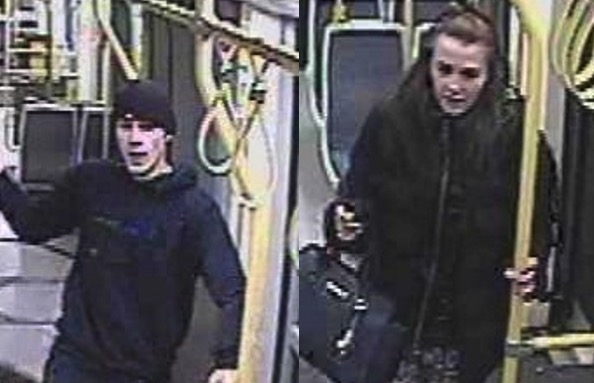
Police in Greater Manchester are asking the general public for help in identifing suspects in connection with what they are calling a homophobic attack on a tram in Trafford.
Two men in their 40s were travelling on the Metrolink from Media City into the city centre on the night of Sunday 22 January 2017 when they were allegedly attacked on the tram, just before it stopped at Cornbrook station. Police are looking for one man and two women became involved in a verbal altercation with the victims.
They then launched a violent attack on them, punching and kicking them while subjecting them to homophobic abuse.
Both victims needed hospital treatment.
One of the women is described as a white, with long brown hair in a ponytail and was wearing a dark cap. She was also wearing a black hoody with a white square and white lettering on the front of it.
Detective Constable Claire Phythian, from GMP’s Trafford borough, said,
“This was a disturbing attack on two innocent men as they made their way home.
“We are doing everything we can to find those responsible for it and with that, we need the public’s help with any information about the incident.
“If you recognise the people pictured, or have any information about them, then please contact police. If you were on the tram at the time of the offence and witnessed the attack, please also call us.
“We take all reports of hate crimes extremely seriously and the message is clear – they will not and never will be tolerated in Greater Manchester.”
Anyone with any information should call 0161 856 7677 quoting incident number 2269 of 22 January 2017. Alternatively, information can be passed on anonymously by calling Crimestoppers on 0800 555 111.
I was recently asked a question by one of my readers that I am hearing a lot recently. “How do I determine my skin type?” Many people will go through life having no clue about their skin but because we are all unique knowing your own skin type is crucial to knowing what your skin requires to look its best! Identify your skin type may seem difficult at first but is actually pretty easy. Just follow my guide.
Pay attention to your eye area, cheeks and T-zone. Look at the texture and tone of the skin around those areas. How does it look and feel?
Normal Skin
A balanced oil and water content will leave your skin feeling evenly textured, smooth and toned all over. If you have this then your skin will be referred to as ‘Normal.’ All the other skin types will hate you, as it is the easiest skin type to look after.
Combination Skin
This skin type is probably the most expensive type, as you will require different products to treat different areas of your face. Usually your cheeks are dry while your T-zone is oily and your temper is aggravated. Good luck.
Normal To Oily Skin
Say hello to my skin type. Most days I can see my own reflection in my forehead. That’s right is you have normal to oily skin then you may like shiny and greasy and pores and blemishes may be (will be) more visible.
Normal To Dry Skin
That feeling you get when you leave a face mask on for too long, if you feel like that without the aid of a lazy face mask you have normal to dry skin. You may also notice fine lines and rough, flaky patches.
A FINAL NOTE
No matter your skin type do not panic, there’s a lotion or potion to suit everybody! If you have any questions regarding your own personal skin type or what products you should be leaving leave a comment below or tweet me @StephenCroweFit and I will do my best to get you a hasty reply. You’re very welcome.
Meet the NHS nurse who wears his rainbow lanyard with pride so that LGBT patients have a visual sign on who they can confide in on LGBT issues.
CREDIT: CNWL Communications
“Why I wear the rainbow lanyard”
The following is an excerpt of an article that will appear in full in the next issue of the Trust Body and Mind magazine.
When he was younger, David Van De Velde had no one to turn to on matters LGBT- Lesbian, gay, bisexual, transgender. That’s why the clinical team leader, and qualified mental health nurse wears the rainbow lanyard with pride.
“For me, the reason I wear it now is to try and help others in the same situation, because I didn’t have anyone to help me with that. It’s about trying to change things from the ground,” he says.
And David, who was recently elected co-chair of the Trust’s LGBT network knows first-hand that the lanyards work.
“Because I’m wearing the lanyard they feel comfortable enough to confide in me and ask me things, for information or talk to me about things they wouldn’t be able to talk to anyone else about for fear of judgement,” says David.
LGBT patients who approach David tend to have common concerns and questions, including where to find support for abuse, identity crises, loneliness and suicide, and how to connect with other LGBT people.
LGBT patient experience
The lanyard initiative was rolled out after a 2012 survey found that a majority of patients at The Gordon and St Charles Hospitals didn’t feel supported or able to disclose their LGBT status to hospital staff.
The Trust wanted to change this. The LGBT Allies got to work. It introduced the rainbow lanyards across the Trust, and a number of measures aimed at tackling the issues, including a communications campaign and training sessions for staff, led by LGBT advocates.
Alison Devlin, Equalities and Diversity Manager requested another survey in 2015/2016 to see if anything had changed for patients. The results were far better, with an increase in patients saying there was no issue around their LGBT status. Patients said the rainbow lanyards were positive and reported feeling safe around staff wearing them.
LGBT and an ethnic minority
At the moment, David’s on a rotational programme where he gets placed in four different specialisms across the Trust every six months, so he gets around a lot. Despite the good that he’s doing, he admits that he’s been subject to abuse when wearing the lanyard because he’s not just a member of the LGBT community but also an ethnic minority.
“People hurl homophobic abuse. People from part of my racial background (in my case I’m mixed-race) saying that I have made the wrong choice and that sort of stuff. You get a lot of abuse from people but I’m not doing it for them. I’m doing it for the four or five people who come to me a week, and that could be the moment it changes their life,” he says.
“I did get some negative abuse by patients who didn’t understand it. I mean a lot of them would come and apologise later but I think it’s worth it though because if you can save someone from killing themselves because they don’t accept who they really are, and they can confide in you. I did actually have a case like that where somebody came forward, who I don’t think had worked out himself who he really was yet. I think if he had not had that contact… because before he came in he had tried to commit suicide as he wasn’t happy and his family weren’t happy with his direction. I think that by seeing the lanyard he was able to come and speak to me about things and I was able to give him more information.”
David is now the face of a new Trust campaign to promote the rainbow lanyard.
Read the full article in the next issue of our Body and Mind magazine, out soon.
In this article, we look at the history of marriage in the UK. Our history starts at 410AD, as before this time there were no written records of the history of marriage. Before written records, history was passed down orally from the older generation to the younger one, unfortunately, over time this oral history has been lost.
410AD – The Anglo-Saxons and Other Tribal Groups
For many people, marriage is strongly associated with religion, but this wasn’t always the case. Straight marriages at this time were about peace and prosperity rather than religion. Marriages encouraged good diplomatic relations and the development of trade between two (or more) tribal groups.
It was the fathers who decided who their daughters married and the wishes of the couple were seen as irrelevant.
12th Century – Consent
In 1140 Decretum Grantiani wrote a canon textbook where he introduced the concept of verbal consent to straight marriage and the requirement for a couple to consummate their union to validate their marriage.
In the 12th century, the Roman Catholic Church made verbal consent and consummation necessary for the church to view the straight marriage as legitimate. Some Roman Catholic writers at the time also describe marriage as a spiritual experience tied to God’s presence. While this is not surprising, prior to this very little mention of marriage as a spiritual experience.
1549 – The Vows
The tradition of vows came from Thomas Cranmer’s Book of Common Prayer. Although the book was updated, later on, many of Thomas Cranmer’s words are still used in religious ceremonies today.
These vows laid the foundation for how the Roman Catholic & Protestant churches viewed straight marriage at the time as a partnership.
Thomas Cranmer must have reflected the views of the mainstream population about marriage at the time; otherwise, it would have been unlikely that the church institutions would have accepted and taken on these views.
Roman Catholic Priests at this time were still delivering marriage ceremonies (as all other religious services) in Latin.
However, the Protestant’s began delivering their services in the English language. This is significant as English was the common language and this change made marriage ceremonies (as well as all other religious services) accessible to all.
Today, Protestantism is one the most popular religions practised in the UK. Many historians believe that changing the ceremonies to English played a huge part in making Protestantism a dominant religion.
1563 – Sacramental Marriage
The Roman Catholic Church officially declared that straight marriage was one of the seven sacraments in this year; meaning that it was something undertaken in the presence of god. The other sacraments are: Baptism, Confirmation, Holy Communion, Confession, Ordination and Last Rites.
The Protestant Church didn’t see straight marriage as a sacrament at this time.
1753 – State Involvement
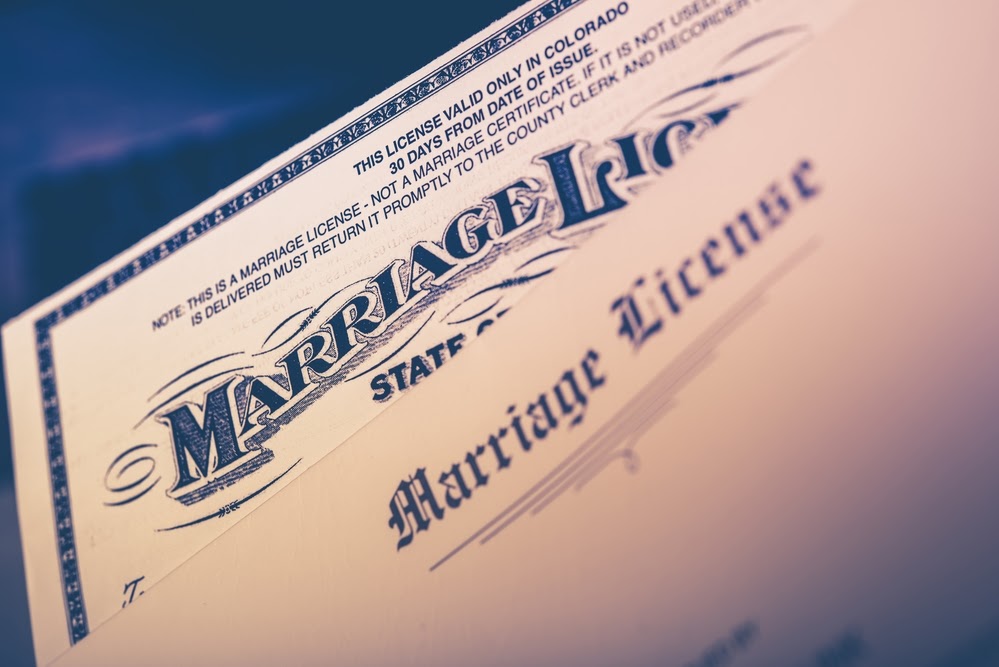
The Clandestine Marriage Act (1753) set out what the state expected in order for a straight marriage to be seen as legal. It required the couple to get married in a church by a minister and issue a formal marriage announcement or to obtain a marriage license.
1836 – Civil Marriages
In 1836 it became legal for straight couples to get civil marriages, which were generally held in Register Offices. This was to accommodate both the religious and nonreligious.
For the religious, it meant that they could get married in a neutral place if for some reason they couldn’t get married in their church. For the nonreligious, it gave them a place void of religion. Prior to this, nonreligious straight couples had to go through a ceremony in a church and undertake practices & traditions that they didn’t believe in.
In 1837 the civil registration of straight marriages started.
1837 – It’s All About Straight Love
Between 1837-1901 it was the Victorian Era. It is said by contemporary historians that the Victorian Era is when marriage became about love, but still only the love between a man and a woman. Gay people weren’t treated well in the Victorian Era in the UK, with laws against sexual acts.
Oscar Wilde – widely regarded as one of the most talented writers of all time; was accused of sodomy by the father of his male lover. He lost the trial and was sent to prison. It was rumoured that he could have escaped to France, but he didn’t. Once he’d served his sentence, he moved to France.
1858 – Divorce
Between the 17th – 19th Centuries there were 300 cases of people wanting to end their marriages. The only way to do this was for an Act of Parliament for each marriage, as there was no accommodation for divorce in marriage law. So in 1858 the government of the time finally made divorce a legal process.
The legal process that meant those who wanted or needed a divorce could have one. But it also signified a shift in the focus of marriage from being a lifetime commitment – for better or worse, to a commitment that could be changed if life’s circumstances changed.
19th Century – Birth Control
By the 19th Century, both the Roman Catholic and Protestant Church’s had promoted procreation as the main reason for straight marriage. But as more children survived childhood, families got bigger and there was a need to use some form of contraception.
In the 1930s the Protestant Church accepted contraception, viewing it as necessary and not a sin or something God would be unhappy with. But the Roman Catholic Church has remained against any form of contraception, as they continue to see the procreation of children as a fundamental aspect of straight marriage.
2005 – Civil Partnerships
In 2005 the first gay civil partnerships took place, a year after The Civil Partnership Act came into law.
It allowed gay people to have legally recognised relationships, which granted them the same rights, protections and benefits of a married straight couple. This included legal rights, such as being one another’s Next of Kin; rights related to their partner’s children and the benefits including those of taxation reductions.
In terms of the actual act, the gay couple could have a civil partnership ceremony that could consist of anything they wanted (within the law). This could be vows, the exchange of rings, their choice in music, etc.
The Civil Partnership Act included a legal process for those gay people who may want to end their civil partnership. It is called ‘dissolution’ and works on similar legal principles to divorce.
This was the first time that the state in the UK legally recognised gay relationships. In the first five, there were 42,778 gay civil partnerships.
Peter Tatchell (Gay Rights Activist), as well as others, criticised The Civil Partnership Act, saying that it wasn’t complete equality as it excluded straight people from being able to be civil partners.
2013 – Gay Marriage
Last year The Marriage (Same Sex Couples) Act has been passed in England and Wales. The first gay marriages are expected in March 2014.
Stonewall said of The Marriage (Same Sex Couples) Act:
‘This is an historic moment for lesbian, gay and bisexual people, their families and their friends. This Act will mean that, for the first time, children growing up to be gay in England and Wales will have full equality in law. We can now proudly claim to be a beacon to the world for gay equality.’
In ancient history, marriage had nothing to do with religion but helped tribes to live and thrive together. Then Christian institutions (both Roman Catholic & Protestant Churches) influenced the definition and meaning of marriage. In the last century, the state has got involved for marriage, allowing marriage to be more flexible and much more inclusive.
Marriage as a concept has evolved to meet the needs and desires of society. Currently, there is some debate as to what role the churches and state play within marriage. It is likely that over the next century the Churches will continue to reside over the spiritual aspect of marriage, whereas the state will continue to be involved with the legal and administrative side of marriage.
Antony Simpson, Writer of this article would like to acknowledge the following sources that supported putting together this article based on fact:
BBC – Ten key moments in the history of marriage
http://www.bbc.co.uk/news/magazine-17351133
Office for National Statistics – Civil Partnerships Five Years On
http://www.ons.gov.uk/ons/rel/…rd/…/ard-pt145-civil-partnerships.pdf
Office for National Statistics – Video Summary: What does the Census tell us about religion in 2011?
http://www.ons.gov.uk/ons/rel/census/2011-census/detailed-characteristics-for-local-authorities-in-england-and-wales/video-summary-religion.html
Peter Tatchell – A setback for equality
http://www.petertatchell.net/lgbt_rights/partnerships/Straight-civil-partnerships-defeated.htm
Stonewall – Equal Marriage to become law – Thank You!
https://www.stonewall.org.uk/what_we_do/parliamentary/5714.asp
Stonewall – Get Hitched! A Guide to Civil Partnership
Twitter, you either love it or hate it, but one thing you can’t deny is it’s pop-culture power ranging from creating new meme trends, breaking news and the parody account. Most of them are rubbish, but amongst them are some genuinely lol’some accounts so get your following finger at the ready!
Rejected from the X Factor a few years ago and now the subject of a very witty and very bitchy parody account of the latest X Factor and Showbiz goings on.