Category: Lifestyle

  • COMMENT | The Best Car I’ve Driven

    COMMENT | The Best Car I’ve Driven

    Motoring journalist, Neil Briscoe, on Twitter recently posted up that the best car he’d ever driven was a Mercedes pagoda. It got me thinking. I get to drive lots of new and old cars and those in the middle. But which is my favourite?

    This is difficult because my driving career spans 26 years and when I look back I could say the 1979 Mercedes 280SL but I was 18 when I drove one of those and compared to my second Citroën Visa, it was powerful and luxurious. Likewise I was also 18 when I first drove a VW Beetle and that’s enough to put you off motoring despite wanting one.

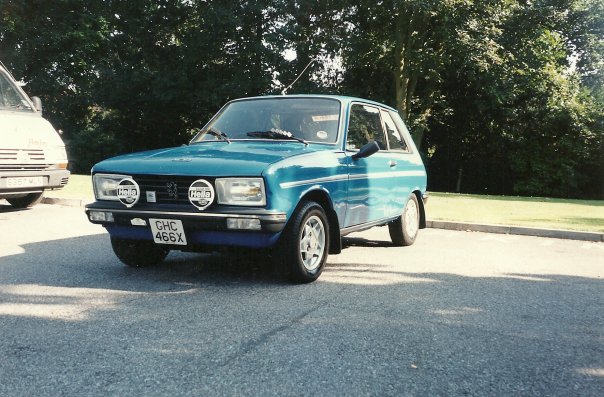
    No, it’s taken me some serious thinking, a little bit of drinking and a thumbing through photos and books to come up with my best car I have ever driven. It’s the Peugeot 104 ZS.

    I’ve had 2 of them. Both 1980 models, both blue and both ZS models. The first was quite the wreck but the second was much better. It wasn’t the best car in the world though. In refinement and luxury departments, it was overshadowed by the likes of the Ford Fiesta and Renault 5. It was rather crude and basic despite having electric windows and alloy wheels. It had rubber mats in the rear, piss poor ventilation and a tiny boot.

    What makes it the best car I’ve ever driven was one fundamental thing: I’d look at it and for unquestionable reasons, I’d dread the drive where I had to go. Yet it always entertained. It’s diminutive size and 1360cc engine with 72bhp was hardly left embarrassing itself in traffic of the day. I also had a comfy luxo barge, Peugeot 504 Ti automatic in the garage at the time too.

    On the motorway, it kept up and beyond despite only having a 4-speed gearbox, it was never tiresome or overly noisy. The 12 CD changer in the boot, 6×9 speakers in the rear side panels and 7” in the doors put pay to excess noise by drowning out the cacophony of mechanical screaming to Kylie Minogue and Duran Duran. 

    It was also one of the last cars I have owned where I’d just jump in it late at night and head for the roads in the dark. I’d be out for hours and hours, yellow Sev Marchal headlights cutting through the worst of the night. I did some stupid things in it and yet I lived to tell the tale. It never once got so out of hand that it ended up facing the other way. Something that could not be said for the Peugeot 205!

    The entertaining also stretched to its ability in the snow. Being a home carer at the time, I needed to get out and about in vile weather and that car was amazing in the snow. Small wheelbase with all the weight over the front wheels certainly helped. Its Achilles heel was its wipers. They were slow.

    So here we are, 2018 and the 1980 Peugeot 104 ZS has to be the best car I have ever driven though probably not owned. Oh crap, now I’m thinking about that one. Be right back…
  • CLASSIC CAR REVIEW | Saab 9-3

    CLASSIC CAR REVIEW | Saab 9-3

    Bravo, Sierra Alpha Alpha Bravo

    In 2012 architects the world over were weeping onto their 1:8 scale drawings and wiping the tears away from their eyes onto their black slim fit polo neck jumpers. It was announced that Saab were dead!

    Things were OK for Saab in the 70s. The Swedes craze for safety changed the way consumers looked at cars in terms of surviving a crash. The boffins at Saab threw their cars off cliffs, crushed them, hit them with hammers, shoved meatballs into the door locks and all other types of things that you and l wouldn’t subject our cars to.

    The Swedes are known for being safety conscious. The majority of the time it’s cold and dark there. They also spend a great length of time knees deep in snow so you wouldn’t expect them to become known as makers of a sought after and admired convertible car. Cut the roof off any car and there is always the risk of you falling out of it if the wheels end up pointing towards the sun. Not a very Saab safety thing at all.

    The Swedes gave way to some gay abandoning and in 1986 the 900 Convertible was born. The 900 is a serious classic now. In 1989 Saab sought the assistance of another manufacturer and unfortunately for them it was GM in America and Vauxhall Opel to those in Europe. GM took a brand known for innovation and quirky design features and presented the world with polished turds.

    Come the 90s and the 900 convertible had become iconic. You could say it single-handedly moved Saab up from the doldrums to Audi territory. All this changed in 1994 when the “new 900” convertible was launched. A well established and fine car was made to feel like you were driving something with a chassis made of only just dried paper-mâché. The rebranded 9-3 was no better.

    It wasn’t until 2003’s launch of the new second generation 9-3 that things started to get a bit better.

    Today the last of the icons represents great value for money. Because of the demise of Saab as a company, prices remain low, it will forever remain that way.

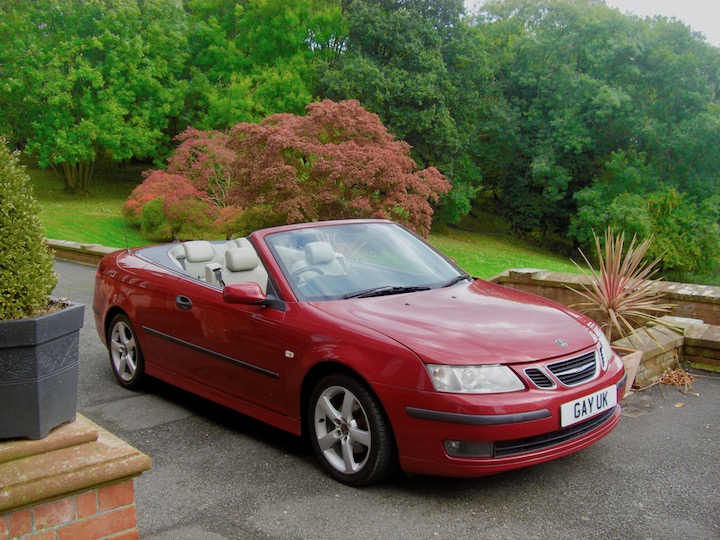
    I’m taking a 2005 9-3 1.8t Linear model for a test drive. This ‘new’ 9-3 was built for comfort and grace. Saab did a good job in disguising its Vauxhall Opel components. The 1.8 low-pressure turbo quietly produces 148bhp at 5500rpm. It has pace to keep up with the modern traffic but you’ll have to stir the gearstick around a bit. All but first gear are set to high in a bid to get maximum economy. In practice, this results in having to keep the revs up to no less than 1900rpm just so you can make good use of the torque the turbo engine produces. This coincides with 180Ib-ft of torque made within a short band from 2000 – 3500rpm. Less than 2000rpm and it feels lethargic. 0-60 time isn’t scintillating in the slightest, however the cruising speed is comfortably high. You could take to the flat-out Autobahns of Germany and make rapid progress.

    By today’s standards for an old car, it still remains silky smooth. Roof down motoring makes it a joyous car to pilot. Indeed if it’s night time, you can select ‘night panel’ on the dashboard. This turns off all the facia lights except the speedometer and even this will only then show a maximum speed of 90mph. l am told that if you go beyond that, the rest of the dial illuminates all the way round. Something l didn’t get to try. Despite the sales blurb and use of fighter jets in TV commercials in the 80s, this is the only lasting reminder that Saab had any connection with aircraft at all. It was a gimmick and not a very good one either.

    It no longer has that stab you in the back power of the original 900 turbo, After the launch of the “new 900” the turbo derivatives seemed to have been ‘blocked’ like strangers on Grindr with unfortunate profile pictures. In actual fact, Saab had no real sporty models at all after this.

    Thankfully the boffins at Trollhättan had managed to take the chassis and give it the stiffness required when you cut almost 2 meters of the roof off a car. The magic also results in a stiff scuttle area too. Drive any car with a removable roof and place your fingers within the door glass and windscreen frame and you’ll notice movement. This is called scuttle shake. The ‘new’ 900/9-3 suffered terribly from this. The ‘new’ 9-3 like we have here doesn’t suffer from it at all with only the merest hint of it over jiggly road surfaces. There is also a nice sense of draft free cabin. Opened up with the windows up or down you don’t suffer from the usual cold draft that engulfs your neck. In this Saab, there is no need to buy the mesh curtain that you see on many open-top cars.

    Owner Liz loves her roofless Saab. Partner Dave who never drives it with the roof down because it’s “so gay” has mentioned changing it. The reaction from her if he did would suggest he’d be able to sing soprano.

    Being that high, the lovey might want to remove the roof after all.

  • CAR REVIEW |  Range Rover Sport SVD6

    CAR REVIEW | Range Rover Sport SVD6

    ★★★★☆ | Range Rover Sport SVD6

    Weak At The Knees In More Ways Than One

    Range Rover Sport SVD6 review

    What Have We Got?

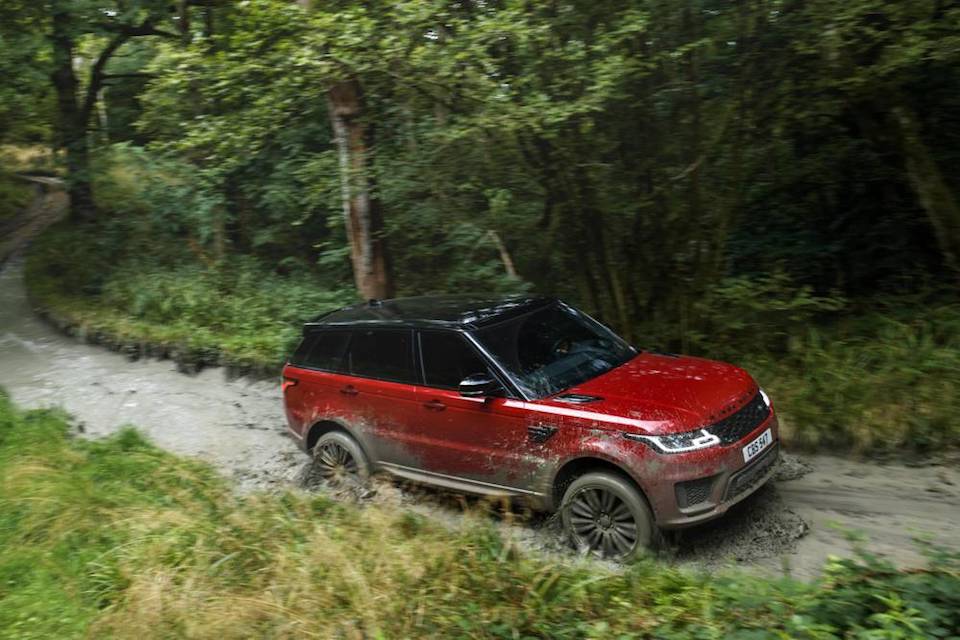
    Land Rovers vast luxury Range Rover Sport SDV6. Once again, Land Rover has moved the Range Rover further up the luxury bracket which means this isn’t some fancy farm yard vehicle. This is a proper bonafide people carrying 4×4 with proven 4×4 credentials.

    But is it any good as an everyday carrier of people and load?  

    Driving

    Despite its big looks, it is surprisingly easy to drive. On paper at least, the 3-litre turbo diesel has a modest 306 bhp and yet the high 700 Nm of torque from 1500rpm feels quite lethargic in getting it going. It’s not a slouch by any means with a 0-60 time of 6.8 seconds, it just feels like it because it isolates you from the drivetrain so well. 

    When the going gets bumpy, this model also benefits from some impressive damping. The ride remained composed. There was some lurch as expected but it’s much less than you would think there would be despite what height you set the ride at.

    Inside

    For all of its exterior presence, it has an interior that matches. Big and bold with some nice touches in ergonomics and some appalling trim. 

    The twin infotainment screen is nice and when on, disguises greasy fingerprints quite well. You just need to keep the roof blind closed to enjoy it in the sun. It’s more reflective than I would like. 

    The leather coverings on the doors could have been a little bit better, though this was minor compared to the silver trim that ran down the side of the centre console. An unsavoury mould line left a sharp edge protruding that would rub against my bare knee.  

    Living With It

    All I will say is, pick your supermarket parking space wisely! It doesn’t feel as big as it looks to drive so you’ll find it cumbersome in the carpark. 

    It will seat five, though anyone sitting in the middle of the rear won’t feel the love with the drop-down armrest digging in their back. 

    It has the ability to travel ground so effortlessly that motorway driving would be a doddle. It would be if it was fitted with adaptive cruise control. One thing I struggle to get my head around is with all the safety features fitted to this premium 4×4, adaptive cruise is an option. It’s an option that should be standard.

    The Verdict

    I tried not to be swayed by the glamour of the thing but l failed. It took about three miles into my first drive to be in love with it. I didn’t even compile a good and bad list after the first initial run. 

    It’s not perfect though. There are a few niggles I have like trim quality and a suspension system that at times decides to go in too low overnight. That said it does make you feel like the king of the castle and you can see why people go back to buy another.

    Love

    Relaxing cabin

    Ride

    Door architecture

    Loathe

    Hate myself for loving it too much

    Sharp-edged trim

    Lack of adaptive cruise

    The Lowdown

    Car –  Range Rover Sport SVD6

    Price – £78,095 (as tested)

    MPG – 40.4mpg (combined)

    Power – 306bhp

    0-62mph –  6.8 seconds

    Top Speed –  140 mph

    Co2 – 185 (g/km)

  • CAR REVIEW | Honda HR-V 1.6 1-DTEC

    ★★★☆☆ | Honda HR-V 1.6 1-DTEC – A Driver’s SUV

    What Have We Got?

    Honda’s second-generation HR-V. A small SUV type car wrapped in a coupe body based on the small Jazz.

    WHAT! I hear you cry, second generation you say? Yes, that’s right. Honda abandoned the HR-V in 2006 and then brought it back in 2016. So two years into its life, does it still sparkle in the showroom? 

    Driving

    I always try and save the best until last. This isn’t the case with the HR-V. The driving is the best part. For a small SUV that’s a little jacked up and riding high, it is quite engaging to drive when you want to push on a bit. The 120 PS of diesel power at 4000rpm was nicely complemented by the high torque of 300 Nm at a low 200rpm. Mated to a rather nice 6-speed manual gearbox with a very tall 5th and 6th gear. This meant that most hurried driving could be carried out with slipping into 3rd and 4th gear.


    Inside

    Despite the pseudo coupe looks, it has stacks of people space inside and headroom isn’t a problem. You certainly couldn’t use ‘adequate’ as a word to describe the rear legroom because it is overly generous. What it does lack is door bin storage and general odds and ends places which aren’t fitting for this kind of car. And it’s all a bit dark inside despite the 50/50 split closed/open panoramic roof option that comes standard on the EX model. 

    Living With It

    At £27,640, you might feel a little out of pocket. It’s not cheap. Then again no SUV is cheap at the moment. Still, for your money, you do get a host of driver aid gadgets and toys in this top of the range HR-V. There are many areas that it could be better in but there are areas that it is much better than expected and that’s driver enjoyment. The ride is soft and comfortable and never leaves you wincing as you take on the worst potholed roads or uneven surfaces. 

    The Verdict

    Despite what I have said, I’m not a fan. Yes, the driving dynamics are rather good for this type of car. Quite a lot better than many if I am honest. It’s just that it lacks showroom appeal. And for the size of the car and the market it is in, it lacks the youth appeal that really is the kind of drivers you would expect to see buy into these smaller SUV’s. This is something VW and Seat do a little bit better. It also lacks innovation and this is something I am rather upset about. Honda is very innovative and yet it seems they have missed many opportunities with the HR-V. Driving and looks aside, you really have to want one to want one. It just didn’t sparkle enough for me. 

    Love

    Driving dynamics

    Engine

    Looks

    Loathe

    Paint finish

    Lack of innovations

    Small door pockets 

    The Lowdown

    Car –  Honda HR-V 1.6 1-DTEC EX manual

    Price – £27,640 (as tested)

    MPG – 68.9 mpg (combined)

    Power – 120PS at 400rpm

    0-62mph –  10.5 seconds

    Top Speed –  119 mph

    Co2 – 104 (g/km)

  • COMMENT | When I Grow Up, I’m Going To Drive

    Something popped up on Twitter recently. An advert for a 1980’s Peugeot 305 GTX diesel estate.

    About 18 years ago I’d promised myself one of those. It won’t happen now though. I don’t need another diesel on the fleet and l certainly don’t need another old car with the ever-increasing difficulty in getting parts when l have three others.

    You see, I am a bit of a motoring pervert. I’m realistic and as a child, my dream-car choices of car reflected this. Despite them being new at the time, they were cheap. I’m a realist you see and it’s probably why I never ended up with a coke habit because, let’s face it, coke is expensive! A Lamborghini is expensive. A Morris Ital estate isn’t.  

    So I thought about those other cars I’d promised myself and picked the top five that I won’t buy.

    Morris Ital Estate

    In 1980 I didn’t know the Ital was in actual fact a Morris Marina. To me, the Ital looked great. It wasn’t. It was a Marina and those were dreadful. The Ital was an end of life crisis revamp for the Marina to buy British Leyland sometime before the replacement was available. Judging by the number of model designation changes that the Ital went through, it didn’t work. They were just desperate to sell it like Ital design studio were to distance itself from the project. 

    I won’t buy one now. I know what it is but a little part of me shall always have a little soft spot for an estate. A little bit, like a fingernail clippings worth.

    Austin Ambassador

    WHAT THE F**K AM I DOING! The Ambassador. Another rehash from BL to buy some time. This time, around two years. The Ambassador wasn’t a bad car. It was the Austin Princess that we should have got in the first place. In that, I mean a hatchback. Why the Princess was a saloon is a question flat earthers really should be spending their time wondering about. 

    I won’t buy one now. I like them though. I think they still look rather good but not in Vanden Plas guise. That chrome trim on the bonnet looked stupid. A bit like the name really. This Ambassador wasn’t really spoiling us at all.

    Austin Montego Saloon

    Now, this is the dirty secret I have held until recently. Andrew Ryan on Twitter ( @andrewryan100 ) recently posted a huge factoid on the Montego. Kept me enthralled and the fire for the Montego was re-lit. The styling of the car was always a joy to look at so don’t get me looking at that three-piece rear window. It was like a bay window for a car and no other car out there had one. I like bay windows. It’s a suburban thing I suppose. A place for nic-nacs like a nodding dog or box of tissues!

    I won’t buy one now. The trouble with the Montego was that it wasn’t that well built, every one I looked at as a child always had mis-match alignment between the headlights and bonnet and a dashboard was rather bland.   

    Renault 17

    These always looked like they were fun. The 17 was the elegant sex pest to the frumpy 15. The rear side windows, covered with louvres, popped inwards. The quad headlights were surrounded by an extension of the bumper. They looked amazing. To top it off, you could get them with an electric folding roof. This was 70’s Europe and such things were frivolous craziness that your grandmother, who’d still wave her ration-book at you, would not approve. Matchbox toys got involved and made a small model of one.  

    I won’t buy one now. This really is a sad moment that I admit that I won’t but I did get to drive one from a guy I started dating. The car wasn’t quite what I expected and as for the date, that wasn’t either. 

    Visa GTi

    I started my driving career with a Visa. And I progressed steadily through the many engine changes including the 2-cylinder and the diesel. I even had a convertible one too. Trouble was, insurance for a young man back then on a GTi was impossible or expensive. And then you had the fuel economy. I was used to the high 40s and beyond with the diesel. The GTi couldn’t do that.

    I won’t buy one now. Most have rusted away sadly or their thin bodywork has gone all crinkly and out of shape. And to be honest, I have had five of them and you can have too much of a good thing. 

    So there you go, 5 cars I’ve hankered after for all these years that are not going to happen. That said it does mean I am not ruling out a VW 411 or Lancia Beta coupe. Watch this space. 

  • CAR REVIEW | Volvo XC60 T8 R-Design Pro

    CAR REVIEW | Volvo XC60 T8 R-Design Pro

    ★★★★☆ | Volvo XC60 T8 R-Design Pro

    Volvo XC60 T8 R-Design Pro review

    What Have We Got

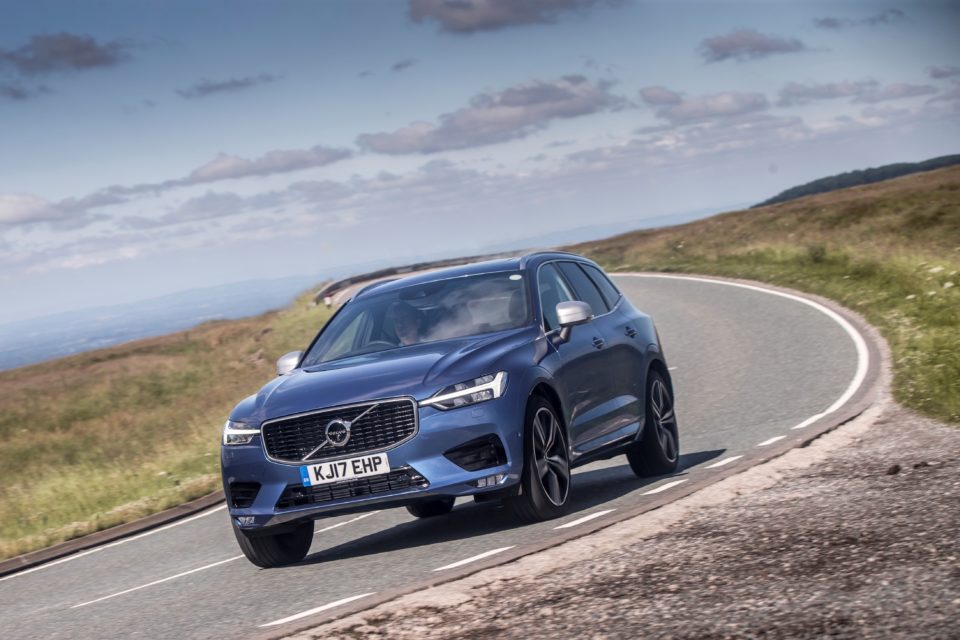
    This week we have a plug-in hybrid from Volvo. The Volvo XC60 T8 twin engine, which means it has a 2.0L petrol engine which is supercharged and turbocharged, producing 320bhp, powering the front wheels, with an 87 bhp electric motor powering the rear wheels. Together they provide a combined power figure of 407 bhp, enough to get you to 62mph in 5.3 seconds and on to 140mph.

    Our XC60 T8 is an R-Design Pro meaning it has all the toys and I mean all of them. It’s a beautiful car and extremely well built.

    Driving

    This is probably the most technically advanced car we’ve driven but is also one the most complete, accomplished packages we’ve seen.

    There are several driving modes to choose from:
    Eco (the most frugal settings) Dynamic (a balance between performance and economy, consider this ‘normal’ mode), Off Road (at low speed, makes the XC60 a serious off-road tool)Individual (allows you to personalise settings such as suspension, steering, gearbox etc) In Dynamic, the car is simply beautiful to drive. It’s very fast, very smooth and very easy to drive.

    Inside

    Inside the Volvo is an exquisite place, elegant and graceful. The materials are the best we’ve seen and the fit and finish are beyond compare. R Design features such luxuries as a perforated leather multifunction steering wheel with gearshift paddles, and nubuck leather upholstery. The sports seats are very supportive and infinitely adjustable and there is plenty of room inside for 5 adults in comfort.

    Our test car had the Bowers & Wilkins sound system which was incredible. 15 speakers and 1100 watts of power worked for us.

    Living with it

    Air suspension on the T8 R Design ensures a beautiful ride, soaking up the bumps and potholes of our roads with ease. The T8 is also fitted with adaptable, electronic dampers which means the suspension can be easily adjusted for ride and comfort, but more impressive than that, it constantly adjusts to the driving conditions.

    As a plug-in hybrid, you can drive it on just electric power for up to 20 miles, then it seamlessly switches to the engine’s power. If you have power in the battery at low speeds, on part throttle, you are essentially driving a big electric vehicle. It’s whisper quiet and silky smooth. When you need more power it ditches to the engine’s power, not so you notice though.
    The Verdict

    Our Volvo XC60 was genuinely breathtaking. It is the most advanced and the closest to an autonomous vehicle we have ever driven. The XC60 can steer, brake, and see better than us and uses these attributes to keep us safe.

    Volvo see this car as; ‘a clear step in our work towards fully autonomous cars’.

    It was a real pleasure driving the new Volvo XC60 T8 Twin Engine AWD R-Design Pro. Now we see what all the fuss was about.

    Loves

    Performance

    Interior

    Superb build quality


    Loathes

    Price

    Electric range only up to 20 miles

    I can’t afford one


    Lowdown

    Car – Volvo XC60 T8 Twin Engine AWD R-Design Pro.
    Price – £53,870 – £59,770
    MPG – 134.5mpg (manufacturer claimed. We only got around 40 mpg)
    0-62 – 5.3s
    Power – 407 bhp (87 bhp electric and 320 bhp petrol)
    Top Speed – 140 mph

  • Can Charlie become the first transgender racer at Le Mans?

    Can Charlie become the first transgender racer at Le Mans?

    Fans of vibrant ITV Saturday Night shows may recognise race driver Charlie Martin from the muscle-fest that is Ninja Warrior. Managing to get up The Wall first time, she showed the world what an athlete she is in front of millions of viewers.

    (C) ITV

    The Wall, however, was far from the first huge obstacle Charlie’s had to overcome. Being gendered male at birth, Charlie had previously taken on greater challenges than anything Ben what’s-his-face and the giggly moustachioed one from football (Klammy, or something, I think he’s called) could throw at her.

    After decades rising through the motorsport ranks, during which time she made the transition to female, Charlie found a race seat in the popular Protyre Motorsport Ginetta GT5 Challenge with a race-winning team, Richardson Racing.

    The aim? To fight her way up the Ginetta motorsport ladder, all the way to Le Mans and the famous 24-hour race. No transgender driver has ever taken part in this icon of world motorsport – and so a chance to add her name into the annals of history beckons.

    When I first spoke to Charlie, she was adjusting to life back in the UK after years of racing in France on the hill climb circuit. She raced everything from Peugeot 205s and Westfield sportscars, to single seater ‘Formula’ cars (principally a Formula Renault she engineered herself) and Le Mans style prototypes like her Norma M20. During her time she made a habit of winning (and breaking course records by huge chunks – over two seconds at one track), until she felt she could progress no further within French hillclimbing, and decided to move to more traditional circuit racing.

    Back in the UK she’s been racing wheel to wheel with highly-successful drivers in the GT5 category. And Charlie has continued to shine. Straight away Charlie found her way onto the podium over and over again, and now, towards the end of this first season back racing in the UK, she is causing quite a stir in the championship.

    Currently backed by Bloc Eyewear, NGK Spark Plugs and more, she’s attracting big-name sponsors, too.

    Her highlight? Well, during the year she was invited back over to France to test a V8-powered Ligier JSP3 LMP3 car, as close to a true Le Mans competitor as it’s possible to get, so maybe her circuit racing is not necessarily the highlight of 2018 after all. The Ligier packed over 480bhp into a tiny weight, and with oodles of downforce to force the car into the tarmac the cornering speeds were much more like what Charlie was used to from her single-seater days. Again, Charlie shone.

    Go Charlie Go!

    Could Charlie do it? Could she get her name into the history books for breaking new ground at Le Mans? Time will tell – and even if it does not happen for a couple of years, she is certainly in a fantastic position. Not only is she quick, but her prowess on Ninja Warrior leaves no doubt as to whether she is physically fit enough to cope with the unique demands of endurance racing, too.

    She is also a big advocate for equality, and speaks frequently at events such as Rainbow Laces Summit by Stonewall. She’s also encouraged her fellow competitors to wear rainbow stickers on the race cars; to show their support too.

    In motorsport, the stopwatch could not care less about your gender, sexuality, age, disability or anything – it can only record time – and if Charlie continues to smash lap records and win silverware, there’s no reason to think she could not go all the way.

    Will you lend her your support? I know I’ll be cheering her on.

    See more of Charlie’s progress and learn about her experiences at her own website http://www.gocharlie.co.uk/ and follow her on social media at https://twitter.com/GoCharlieM https://www.facebook.com/charliemartinofficial/ and https://www.instagram.com/gocharliem/?hl=en

  • CAR REVIEW | Kia Ceed GT

    CAR REVIEW | Kia Ceed GT

    ★★★☆☆ | Kia Ceed GT

    Kia Ceed GT

    What Have We Got
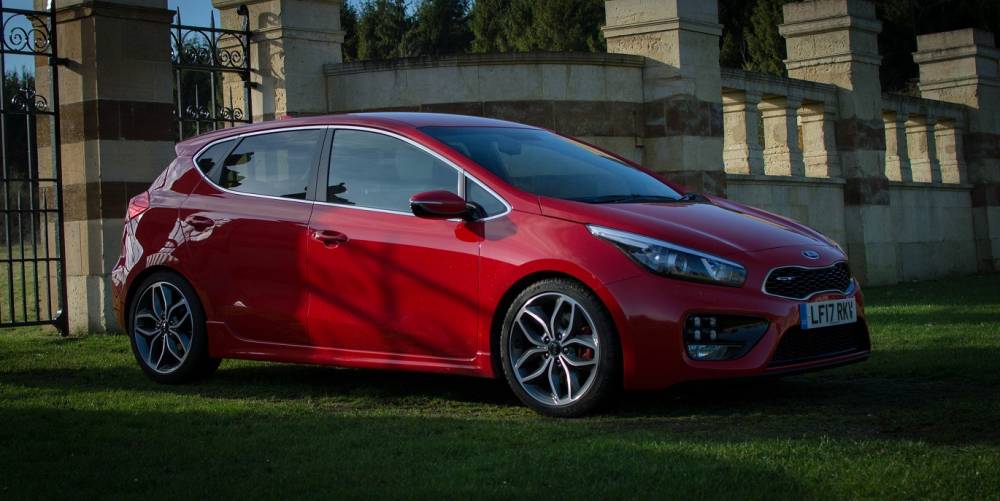
    What if you want your cake and eat it. What if you want to have fun but you don’t want to be holding back a monster or fearing every bone jarring journey will end with a trip to the chiropractor? That’s where Kia pulls out their ace card… the Ceed GT. It’s a 200bhp, mid-sized hatchback that isn’t as extreme as the current crop of 300bhp monsters. It’s an outgoing model, soon to be replaced with the all-new Ceed but grab one while you can. They’re priced around £25,000 but there will be some great deals around.


    Driving


    Kia’s Ceed GT is a hot hatch, make no mistake. It has a revvy 201bhp / 195lb ft of torque 1.6L turbocharged petrol engine, a brilliant fwd chassis, 6-speed gearbox, supportive leather Recaro sports seats, fully independent front and rear suspension and brilliant brakes behind 18” wheels.

    It’ll crack 0-60 in 7.4sec while the top speed is 143mph. The all-important CO2 emissions are 171g/km and the brochure says you can get 38.2mpg combined fuel consumption.

    Inside


    Modern car interiors seem to be dull, unimaginative places. Kia has done a cracking job inside the Ceed. The leather Recaro seats are comfortable, they look great and they do a fantastic job of supporting you.

    The materials are high quality and look and feel great. A 7in touchscreen with sat nav was easy to use, there’s a surprisingly high resolution reversing camera and the heated seats and steering wheel were very welcome on these winter mornings.
    Headlights are Xenon adaptive with automatic levelling. It’s like turning daylight back on.

    Living with it

    The engine is revvy and eager but not overpowering, with enough power to be fast and fun.

    The Cee’d GT can do the shopping run in the morning, jump on the motorway and eat up hundreds of miles in comfort and actually pretty efficiently, and if you want to let your hair down, pull off onto a B road for some serious fun. This car can take all that in its stride. That’s impressive. In sports mode, the dials show boost and torque which is fun. Changing down through the manual gearbox with a blip of the throttle, the 1.6L engine is lovely and responsive.

    The Verdict


    To sum up, the Cee’d is great fun. We had it for a week and had a blast. It’s great fun, fast, excellent handling car with a very high-quality interior for around £25k new. You can expect more hot versions from the Kia stable. Like we said earlier, this is an outgoing model so there will be some around for an absolute bargain. If you’re after a fun car that is easy to drive, comfortable, practical and looks great, maybe this is for you?


    Love
    Engine – Revvy, responsive, fast enough.
    Interior
    Handling

    Loathe
    Brand image. Is Kia cool yet?
    Price. (There are some big discounts at the moment though)
    Synthesized engine sound in sport mode

    Lowdown

    Car – Kia Ceed GT
    Price – Around £25,000 with discounts as it’s an outgoing model
    MPG – 38.2 mpg (combined)
    0-62 – 7.4 seconds
    Power – 201bhp and 264nm torque
    Top Speed – 143 mph
    Co2 – 171 (g/km)

  • CAR REVIEW | Audi S1 2.0 TFSI

    CAR REVIEW | Audi S1 2.0 TFSI

    ★★★★☆ | Audi S1 2.0 TFSI 231PS Quattro Competition Nav


    What Have We Got 

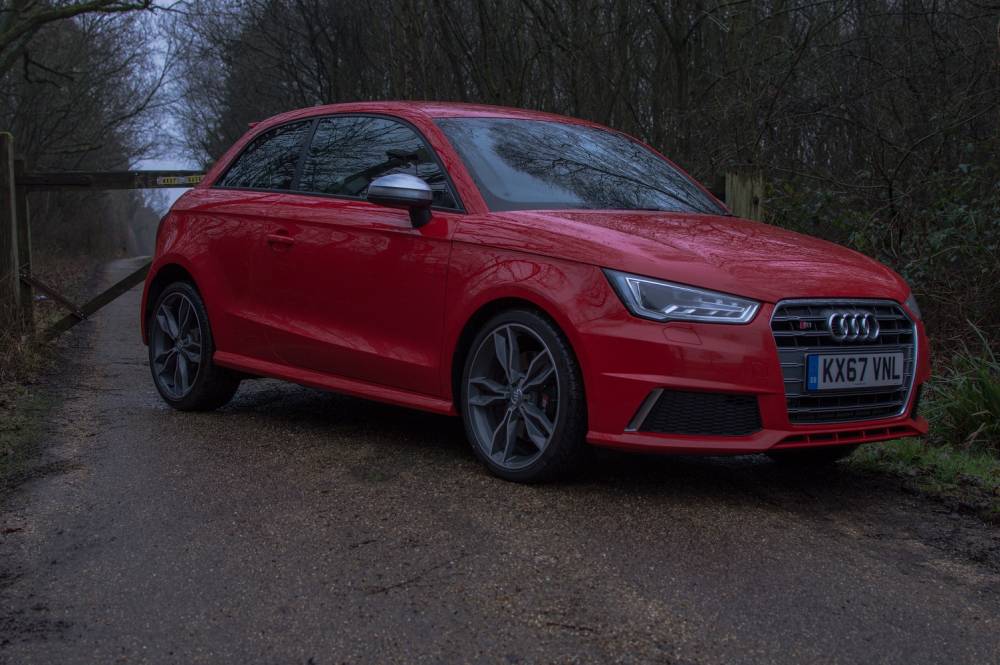
    Audi’s S1 is the smallest and most affordable end of the S series cars. A brand new S1 starts at £27,745.00 ROTR. The S1 is a great package. 4WD, 6-speed manual gearbox, 230bhp / 370Nm torque from a 2.0L EA888 2.0-litre turbo four-cylinder engine and 155 mph limited top speed. Make no mistake, this isn’t a lukewarm shopping car, this is a real driver’s car, an Audi S series car. I was surprised how much attention it gets you, lots of people complimented my choice of car for a change.

    Driving

    Audi’s S1 is a lot of fun and very capable. Being permanent 4WD, I expected it to push on it corners, understeer spoiling the party, but it seems to have a RWD bias which is great fun.

    Pulling out of a junction or accelerating out of a tight corner, a heavy right foot can prompt the tail to kick out. You have to be particularly aggressive as there’s loads of grip. Standard power from the S1 is 230bhp but with a stage 1 map that jumps to 320bhp, however, I know a couple of these engines running over 500bhp.

    Inside

    It’s fairly unremarkable inside but solid and well built. Leather, shell back bucket seats look very good and do a great job of supporting driver and passenger and the controls are well placed. You certainly feel you are in a driver’s car.

    My only criticism was the size. Obviously, it’s a small car, but for me as a grown-up carrying too many kg’s, it was almost too small. The dash is fairly plain but very nice and the quality is superb.

    Living with it

    As you would expect, the Audi S1 has a host of electronic assists such as; cross-traffic assist rear (which will alert you when vehicles cross your blind spot, and even activate the brakes if necessary). Pre sense front (uses a camera and radar sensors to alert you to approaching hazards and can apply the brakes). Park assist (parks for you), cruise control and more.

    It’s fast, fun, well built and looks great. I’d almost go as far as to say it’s in a class of its own with 230bhp in such a small package.

    The Verdict

    If you’re looking for fun in a small package but want a touch of class and quality. The S1 is right up your street. It looks subtle and classy and is very well built. It’s a bit small for me and there’s not a lot of room in the back but so what, I sit in the front.

    Small enough to park anywhere with ease, safe as any modern car with all of the electronics, it sounds great and has huge tuning potential. I’d like to take one on track and see what it’s like there.

    Love

    Performance

    Handling

    Build quality

    Loathe

    Unremarkable inside

    Too small (for me)

    Manual gearbox only, no DSG.


    Lowdown

    Car –  2.0 TFSI 231PS Quattro Competition Nav

    Price – £27,745.00

    MPG – 39.8 (combined)

    0-62 – 5.8s

    Power – 272hp and 330nm torque

    Top Speed – 155.3 mph

    Co2 – 166 (g/km)


  • MOTORBIKE REVIEW | Suzuki V-Strom 250 ABS

    MOTORBIKE REVIEW | Suzuki V-Strom 250 ABS

    ★★★★★ | Suzuki V-Strom 250 ABS

    The bike

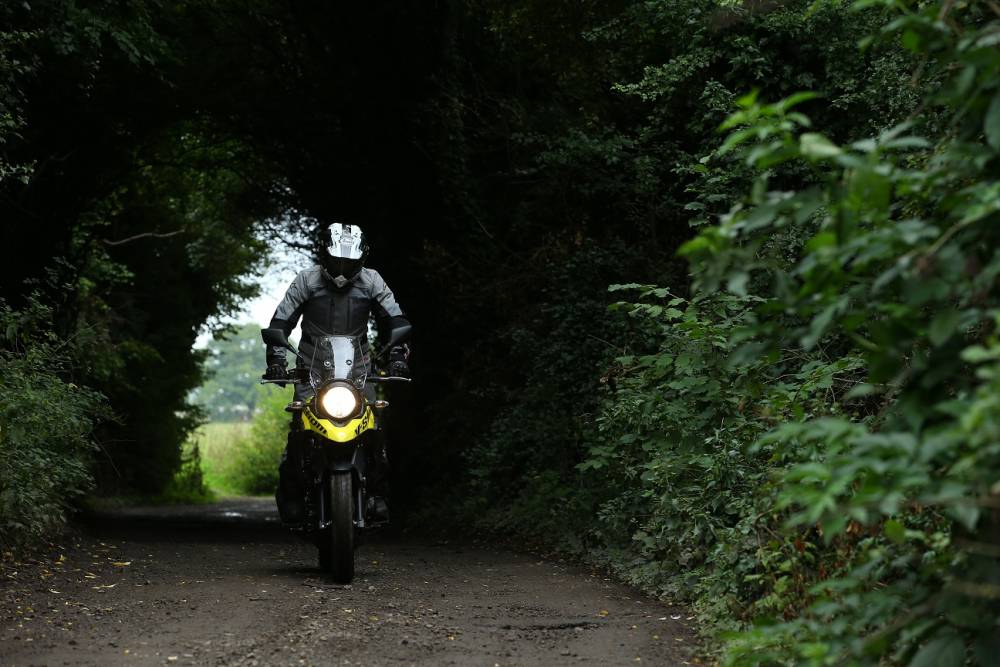
    The bike we have here is a Suzuki V-Strom 250 which falls perfectly into the A2 licence* class. It’s an adventure bike, with longer travel suspension, upright seating position. Think of it like an SUV. Looks good, rugged, can handle all sorts from off road to motorways so it’s perfect for our crappy roads. It has a 248cc parallel-twin engine and is more road-focussed that off road. 248cc, 25bhp and 23.4 Nm torque doesn’t sound like much, but it’s enough to have fun and do whatever you need to do.

    Riding

    It’s not particularly fast with a top speed of 85 mph which means those faster overtakes need a little planning. With such modest power and a fun chassis, it does mean you can exploit the V-Strom pretty much everywhere without constantly looking over your shoulder for blue lights. You won’t believe how easy the little V-Strom is to ride.

    Bars are fairly high and the seat is soft and comfortable, prompting you to sit up straight in a typical adventure bike style.

    It’s big enough to have some road presence and small enough to filter through traffic and it does it all on a thimble full of fuel. This little adventure bike does a staggering 88 mpg which means over 310 miles on a single tank.

    Details

    There’s a 12V DC power outlet for your sat nav or your phone, a very neat reverse-lit full-LCD instrument panel showing; Speedometer, tachometer, odometer, average fuel consumption, fuel gauge, RPM, service indicator, clock, dual trip meters, gear position, coolant temperature and oil pressure. It sounds like a lot of information but it’s very easy to read. There’s a very handy screen in front of you to protect you from the wind too.
    The brakes offer good feel and work well and Bosch ABS is standard. It’s rugged and handsome and doesn’t look like a beginner bike.

    Living with it

    On the road, the bike rides very nicely. The V-Strom turns well and is fun. It’s a very friendly package, helping you to feel safe and confident. If you’re new to bikes or returning, this is a great way to build your confidence. It’s very easy to manoeuvre with good steering lock which makes urban riding simple.  

    Despite its adventure bike looks, it’s a pussycat. With a low seat height, it’s a piece of cake to ride. The upright riding position is very comfortable but it isn’t fast.

    The Verdict

    If you are a new rider or returning to two wheels after a break the V-Strom 250 is great. It looks good, it’s easy to ride, it’s economical and won’t break the bank. It’s not fast so is ideally suited to urban riding and not really ideal for motorway miles.

    There are many benefits to riding a motorcycle. it’s fun, It’s practical and in these times of ever-increasing congestion on our roads, a bike offers a fantastic alternative to sitting in queues of traffic hour after hour. It’s greener too!

    Loves

    Easy to ride & fun

    Uses hardly any fuel

    Rugged, handsome styling

    Loathes

    Not very fast

    A little buzzy when you rev it hard

    Exhaust is quiet

    Lowdown

    Motorcycle –  Suzuki V-Strom 250

    Price – £4.599
    MPG – 88.28 mpg (combined)

    0-62 – 9.3 seconds

    Power – 25bhp and 23.4 Nm torque

    Top Speed – 85 mph
    Co2 – 72 (g/km)

    *if you are over 19 with a full car licence, you can take your CBT (basic test), take your theory test and your practical test (just like a car), then you can ride any bike up to 35kw (47bhp). That’s called an A2 licence.

    https://assets.publishing.service.gov.uk/government/uploads/system/uploads/attachment_data/file/568266/routes-to-your-motorcycle-licence.pdf

  • CAR REVIEW | Honda Civic Type R

    CAR REVIEW | Honda Civic Type R

    ★★★★★ | Honda Civic Type R GT 2.0 VTEC Turbo.

     Honda: The Power of SCREAMS!

    Honda Civic Type R GT 2.0 VTEC Turbo reviewWhat Have We Got

    In 1985, I was collecting a magazine called The Car. Issue 40 was about the Lamborghini Countach. It was a dream car. A supercar with performance figures that spoke for themselves. 0-60 in 5 seconds and a top speed of 183mph. It also did 11mpg.

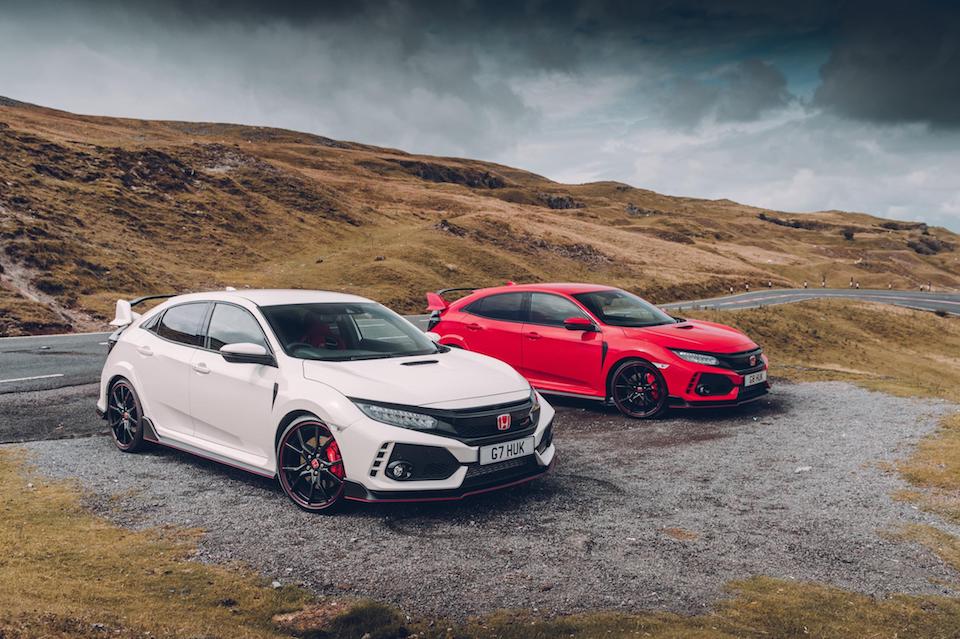
    Fast forward 33 years and suddenly I am confronted with a family hatchback that has similar performance figures and wings. This hatchback has 5 doors, will seat the same and carry luggage. This car is the Honda Civic Type R. 

    Honda Civic Type R GT 2.0 VTEC Turbo review

    Driving

    A lot has been said about the Civic and you can see why it has won so much admiration. So I decided that I’d turn the tables and write about what this bulging shoulder padded winged road warrior was like to live with as a practical car.

    Well, that all went out of the window when I found a suitable route to use the car’s power one night. To say it covers ground quickly is an understatement. This is amplified by an astonishing amount of grip given from the 245/30 20 Continental tyres. In the big scheme of things, the 245 isn’t that wide. What does help is in the thin 30 section side wall. These tyres do no wobble around and quick directional changes are where the Civic Type R excels. 

    No race-ready road car would be complete if it didn’t have an engine that could deliver. That 320PS arrives at high up the rev range at 6500rpm but it’s the 400Nm of torque are there at the max from 2500-4500. From 1500rpm the engine sings and its ability to spin to its maximum is rapid. This equals a lot of fun and an ability to get to legal speeds and beyond very quickly. 

    All cars come with traction control and there are times when switching it off can throw some cars into all sorts of shapes like your father dancing at a wedding. The Civic becomes a hoot to drive. It throws in drama to its already dramatic ways but remains safe.

    Inside

    Honda Civic Type R GT 2.0 VTEC Turbo review

    It’s all very much similar to the standard Civic that we tested recently. It’s roomy, has seats and the confusing heater controls. 

    Where the Type R stands out is in the bucket seats. They aren’t the easiest to get out of but they are far more supportive and comfortable than they look. 

    Living with it

    You need to have a serious talking to yourself before you buy one because you need to ask yourself if you could handle the seduction of its power. It’s an intoxicating frivolity that never tires. You see the hard riding Civic isn’t actually that harsh at all. 

    There are three settings, comfort, sport and R. ‘R’ as you can imagine is where the magic happens. That said, the magic also happens in comfort mode albeit a little more leisurely. ‘Comfort’ mode is noticeably softer and in the day-to-day running around, more than acceptable. 

    The Civic’s other settings are firmer in two stages and yet not internal organ jolting. Put it this way, apart from your stomach coming up in your throat when you first try a 0-60 pull away and your brain smashing around the inside of your skull from the G-forces, the ride won’t alter the locations of kidneys or the liver. 

    Your eyes might fall out of their sockets when you require the assistance of the Brembo brakes but that’s another matter. And I wear glasses so my eyes are never fell far from the sockets!

    Is it any good

    I say it is. Compared with the Golf R, the Civic isn’t perfect. It’s also not subtle in any way. While the Golf is good and doesn’t shout about its power, the Civic does. And when you are talking £30k plus for a fast hatchback, you want something that makes a statement. 

    Civic Type R makes a statement. 

    Love

    Handling

    Fun x 100
    Ability to cruise comfortably 

    Loathe

    Curb loving rims

    Heating controls

    Small fuel tank

    The Lowdown

    Car –  Honda Civic Type R GT 2.0 VTEC Turbo

    Cost – £33,525

    MPG – 36.7mpg (combined)

    Power – 320ps

    0-62mph – 5.8 seconds

    Top Speed –  169mph

    Co2 – 176 (g/km)