Wikipedia has marked The Daily Mail as an “unreliable” source for stories and has banned its thousands of volunteer contributors from using the paper or the Mail Online as a source for facts after its volunteers decided that the 120-year-old newspaper was “unreliable” and that other sources should be cited. The editorial department of the world’s biggest online encyclopaedia have decreed that all references from the paper should be scrubbed and replaced by other sources. The Mail Online is one of the world’s most successful newspaper websites.
In a statement, the editors wrote,
“Based on the requests for comments section [on the reliable sources noticeboard], volunteer editors on English Wikipedia have come to a consensus that the Daily Mail is ‘generally unreliable and its use as a reference is to be generally prohibited, especially when other more reliable sources exist’.
“This means that the Daily Mail will generally not be referenced as a ‘reliable source’ on English Wikipedia, and volunteer editors are encouraged to change existing citations to the Daily Mail to another source deemed reliable by the community. This is consistent with how Wikipedia editors evaluate and use media outlets in general – with common sense and caution.”
It did, however, note that historically the DM had been noted as a reliable source, saying,
The Daily Mail may have been more reliable historically, and it could make sense to cite it as a primary source if it is the subject of discussion. These seem to be good points, but should come up very rarely. Editors are encouraged to discuss with each other and apply common sense in these cases.
Wikipedia went online in 2001 and was created by Jimmy Wales and Larry Sanger. It has become one of the world’s most popular websites. It works by allowing anyone to make edits. This can sometimes lead to false entries or vandalism of pages. It is policed by thousands of volunteers who regularly delete and reedit deliberate and accidental errors.
Max Schutler, whose real name was Jorge Schmeder, has had a long-spanning career as an adult star and has performed for many of of the world’s biggest gay porn studios including Raging Stallion, Lucas Entertainment and Jet Set Men. His career lasted a nearly a decade after starring in his first film in 2007.
The cause of his death has not yet been announced.
In 2008, the star won the Mr Argentina competition. He was asked to withdraw from the International Mr Gay competition after his porn past came to light.
The star worked in gay porn until 2011. He returned in 2015 to star a number of scenes for Lucas Entertainment.
Friends and family have paid tribute to the performer on Facebook.
Jordan Fox, another gay porn actor, said,
‘So sad to die so young and beautiful! RIP, your friends and fans will never forget you.
The murderer of PC Gordon Semple, Stefano Brizzi has been found dead in HMP Belmarsh
Convicted killer Stefano Brizzi has been found dead at the prison where he was jailed for the murder of Gordon Semple, He was just months into the 24-year sentence.
The Ministry of Justice confirmed Brizzi had died in HMP Belmarsh. They have not released the reason for his death. The Daily Mail is suggesting that he is thought to have taken his own life.
Brizzi was found guilty of murder on Monday, 14 November. Brizzi, who was 50 at the time, went to great lengths to dispose of 59-year-old Gordon Semple, by dismembering him and getting rid of him in a manner which “amounts to cannibalism”.
The description of the death and the disposal of his body were so traumatic, the family of Gordon did not attend the hearing.
Police investigating Semple’s death also revealed that they found “a number of bottles of chemicals scattered over the hallway floor and in the bathroom,” when they arrived at Brizzi’s address.
On Friday, 1 April, Gordon Semple, who dedicated 30 years of his working life to the police, was on duty and had been at a meeting in London Bridge. Phone evidence has shown that at just after 14:00hrs that day he used the dating app Grindr to arrange to meet Brizzi for sex at his south London flat. That afternoon, Brizzi strangled Gordon Semple to death and over the following week set about systematically disposing of his body in a bid to either avoid being caught or ensuring that Gordon could never be identified.
I recently received a question from a reader; “Hi, you always look so great day-to-day, where do you get your inspiration from?”
I look to the stars for help. No, I don’t just stare at the sky and wait for inspiration I mean ‘stars’ as in ‘Celebrities’ of course. Guys lets admit it sometimes we all need a little help when it comes to choosing our outfits and picking out on trend styles that are going to turn heads for the right reasons and not because we’ve left the house looking like a crazy birthday cake.
Celebs have stylists and fashion experts on hand to that are paid to do this job for them every day. It’s only fair that we also benefit from this, right?
But be careful, not all celebrities get it right… Ok, ok you’ve twisted my arm, here my list of on-trend celebs that I take inspiration from when delving into my wardrobe. You’re very welcome.
Fan favourite David Beckham has grown to be one the best dress and most looked up to men when it comes to fashion and style. People sometimes forget what it is he’s actually famous for. No, not marrying Victoria I mean that other thing… Oh, what was it? Oh yes, football. Blah. David’s classic, English gentleman style is relaxed and perfect for everyday wear in or out of the house.
JARED LETO
Embed from Getty Images
Slowly becoming one of my favourite men in the spotlight is Jared Leto. This American actor, singer-songwriter, musician, director, producer, activist, philanthropist and businessman (the man gets around) has his own unique style. It’s a mix of punk rock, hipster and couldn’t give a crap I just pulled this t-shirt from a pile on my bedroom floor. It’s modern, sexy and perfect for days when you want to rough up your look.
Who doesn’t love a bit of this man? He’s come a long way since wildcats but let’s face it, we loved him back then as well. His laid back style is effortlessly sexy and masculine. He pairs simple pieces with a natural pallet and classic lines to make this fashion style a comforting choice for any man to wear at any time.
The god of male designers Tom Ford knows what style is and how to werk it! Before launching the iconic Tom Ford brand he lent his powers as creative director of both Gucci and YSL doing great things with them. His style is glamorous, chic, classic and timeless. Perfect for a gent looking to impress.
A FINAL NOTE
Fashion is unique to each individual. Use this guide as a template and play around with trends, patterns and colours to find your own unique look. Most importantly of all have fun with it!
If you have any questions regarding fashion and trends that let me know and I will do my best to answer
Follow Stephen on Twitter at http://www.twitter.com/StephenCroweFit
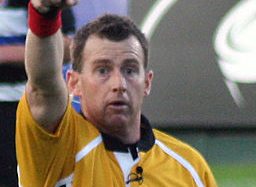
Rugby ref Nigel Owens asked his doctors to be chemically castrated after he realised that he was gay.
By Mark Geater (Own work) [CC BY 3.0 (http://creativecommons.org/licenses/by/3.0)], via Wikimedia CommonsIn a horrifying revelation by one of the world’s only openly gay professional sport’s referees, Nigel Owens, 45, asked his doctor to chemically castrated him when he realised he way gay. He also revealed that he suffered from bulimia and also attempted suicide as a young adult after describing that his sexuality was “totally alien” to him.
“Refereeing that World Cup final between Australia and New Zealand in front of 85,000 people and the millions of people watching at home, scrutinising every single decision you make under a huge amount of pressure, was nothing compared to the challenge of accepting who I was.”
When he released he was gay he went to his doctor and asked, “I do not want to be gay. Can I get chemically castrated?”
He told listeners on the popular BBC radio programme that he had felt great support from the Welsh Rugby Union.
He went on to say,
“Unless you are happy with who you are, you cannot excel and be the best you can be at whatever you are doing. You cannot enjoy life if you are not happy within yourself.”
Owen’s full interview can be heard on Desert Island Discs at 11:15 GMT on Sunday.
Police in Greater Manchester are asking the general public for help in identifing suspects in connection with what they are calling a homophobic attack on a tram in Trafford.
Two men in their 40s were travelling on the Metrolink from Media City into the city centre on the night of Sunday 22 January 2017 when they were allegedly attacked on the tram, just before it stopped at Cornbrook station. Police are looking for one man and two women became involved in a verbal altercation with the victims.
They then launched a violent attack on them, punching and kicking them while subjecting them to homophobic abuse.
Both victims needed hospital treatment.
One of the women is described as a white, with long brown hair in a ponytail and was wearing a dark cap. She was also wearing a black hoody with a white square and white lettering on the front of it.
Detective Constable Claire Phythian, from GMP’s Trafford borough, said,
“This was a disturbing attack on two innocent men as they made their way home.
“We are doing everything we can to find those responsible for it and with that, we need the public’s help with any information about the incident.
“If you recognise the people pictured, or have any information about them, then please contact police. If you were on the tram at the time of the offence and witnessed the attack, please also call us.
“We take all reports of hate crimes extremely seriously and the message is clear – they will not and never will be tolerated in Greater Manchester.”
Anyone with any information should call 0161 856 7677 quoting incident number 2269 of 22 January 2017. Alternatively, information can be passed on anonymously by calling Crimestoppers on 0800 555 111.
Well, now a new controversy is about to hit the news headlines, exactly how much Donald Trump is costing the US taxpayer for his security.
His security is costing a small fortune and he is apparently the most expensive President the US has ever had.
New information has revealed that he is costing $500,000 a DAY.
Sources told CBS2 that the security bill to protect Donald Trump and his family is costing New York taxpayers half-a-mil a day to keep Trump Tower safe.
The security bill for New York reached $35 million the weeks prior to his inauguration. New York has now apparently asked the federal government to reimburse the costs with the NY mayor pledging to send the bill to the White House.
Because of the First Lady Melania Trump’s decision to stay in New York whilst the couple’s son, Barron Trump, taxpayers will be forced to pay for two lots of hugely expensive levels of security.
A full year of protection looks likely to top $180 million.
It does look as though Melania will be leaving New York after the current school year ends for Barron, after Stephanie Winston Wolkoff, the senior adviser to the First Lady told ABC News.
Ian Howley has been confirmed as GMFA’s permanent Chief Executive Officer. Ian has been with GMFA/HERO since 2010 and took over as Interim Chief Executive in August 2016.
Alan Palmer, Chair of Health Equality and Rights Organisation (HERO), the parent organisation of GMFA said,
“I’m delighted that the Board has confirmed Ian Howley as Chief Executive. Since being appointed as Interim Chief Executive, Ian has demonstrated the values, knowledge and commitment needed to lead this organisation. He has managed a hugely successful relaunch of FS as The LGBT Fact Site, enabling HERO to build on our achievements in providing accurate information to gay and bisexual men to ensure that we can do the same for the wider LGBT communities. Under Ian’s leadership, HERO has had its best ever World AIDS Day campaign, raising vital funds to help us continue our work into and beyond our 25th year.”
Ian commenting on his appointment said,
“I am delighted to have been confirmed as Chief Executive of GMFA/HERO after a successful interim period. When I first joined GMFA in 2010 I knew I was part of something special and have given my all to make sure that GMFA and HERO makes a difference to LGBT people. In the last seven years, we have worked hard to help GMFA make a difference in the community. While we are still in uncertain times, and there will be challenges ahead, I promise that GMFA and HERO will fight to help and support LGBT people to create personal and social change in their own lives and community. As GMFA enters its 25th year of existence, we need a focused and united approach to LGBT health inequalities such as the high rate of suicide in gay and bisexual men, mental health support, HIV prevention and sex and relationship education – all of which are important issues in the LGBT community. I’m proud to lead a team that’s dedicated in achieving this.
“There is more to HIV prevention than just telling gay and bisexual men to wear a condom or just take PrEP. How we view ourselves, our self-esteem and self-worth all plays a part. We are also entering a mental health time bomb. Suicide is at its highest it’s ever been for gay men. Chemsex and the affect it has on gay men’s mental health is also becoming an issue. The battle for health equality is still ongoing and we here at GMFA and HERO promise to try our best to create personal and social change for gay and bisexual men and in the wider LGBT community.”
The Labour leader, Jeremy Corbyn seems to think that gay people “chose” their sexuality after he made a speech at LGBT History Month event.
Jeremy Corbin Garry Knight England CC
Opps. Jeremy Corbyn seems to think that the LGBT community has chosen its sexuality in a gaffe at the launch of LGBT History Month.
During his launch speech, he said,
“We’re with you, we’re in solidarity with you,’ he said. ‘Your triumphs are our triumphs.
“Our defence of you is a defence of all of humanity and the right of people to practise the life they want to practise, rather than be criminalised, brutalised and murdered, simply because they chose to be gay, they chose to be lesbian, they were LGBT in any form.”
The video was shot by PinkNews who shared the video via their Facebook page. According to The Sun, the CEO of PinkNews, Benjamin Cohen said the remarks “were being taken out of context”.
A spokesperson for Jeremy Corbyn said to PinkNews,
“Jeremy clearly doesn’t believe that being gay is a choice.
“Jeremy obviously meant people should be able to choose how they live their lives.”
“Obviously” seems to be a strange word in this context… because obviously, the video evidence seems to suggest something else.
People on social media were quick to condem his choice of words, with one saying that his words had “crumbled” her heart.
In this article, we look at the history of marriage in the UK. Our history starts at 410AD, as before this time there were no written records of the history of marriage. Before written records, history was passed down orally from the older generation to the younger one, unfortunately, over time this oral history has been lost.
410AD – The Anglo-Saxons and Other Tribal Groups
For many people, marriage is strongly associated with religion, but this wasn’t always the case. Straight marriages at this time were about peace and prosperity rather than religion. Marriages encouraged good diplomatic relations and the development of trade between two (or more) tribal groups.
It was the fathers who decided who their daughters married and the wishes of the couple were seen as irrelevant.
12th Century – Consent
In 1140 Decretum Grantiani wrote a canon textbook where he introduced the concept of verbal consent to straight marriage and the requirement for a couple to consummate their union to validate their marriage.
In the 12th century, the Roman Catholic Church made verbal consent and consummation necessary for the church to view the straight marriage as legitimate. Some Roman Catholic writers at the time also describe marriage as a spiritual experience tied to God’s presence. While this is not surprising, prior to this very little mention of marriage as a spiritual experience.
1549 – The Vows
The tradition of vows came from Thomas Cranmer’s Book of Common Prayer. Although the book was updated, later on, many of Thomas Cranmer’s words are still used in religious ceremonies today.
These vows laid the foundation for how the Roman Catholic & Protestant churches viewed straight marriage at the time as a partnership.
Thomas Cranmer must have reflected the views of the mainstream population about marriage at the time; otherwise, it would have been unlikely that the church institutions would have accepted and taken on these views.
Roman Catholic Priests at this time were still delivering marriage ceremonies (as all other religious services) in Latin.
However, the Protestant’s began delivering their services in the English language. This is significant as English was the common language and this change made marriage ceremonies (as well as all other religious services) accessible to all.
Today, Protestantism is one the most popular religions practised in the UK. Many historians believe that changing the ceremonies to English played a huge part in making Protestantism a dominant religion.
1563 – Sacramental Marriage
The Roman Catholic Church officially declared that straight marriage was one of the seven sacraments in this year; meaning that it was something undertaken in the presence of god. The other sacraments are: Baptism, Confirmation, Holy Communion, Confession, Ordination and Last Rites.
The Protestant Church didn’t see straight marriage as a sacrament at this time.
1753 – State Involvement
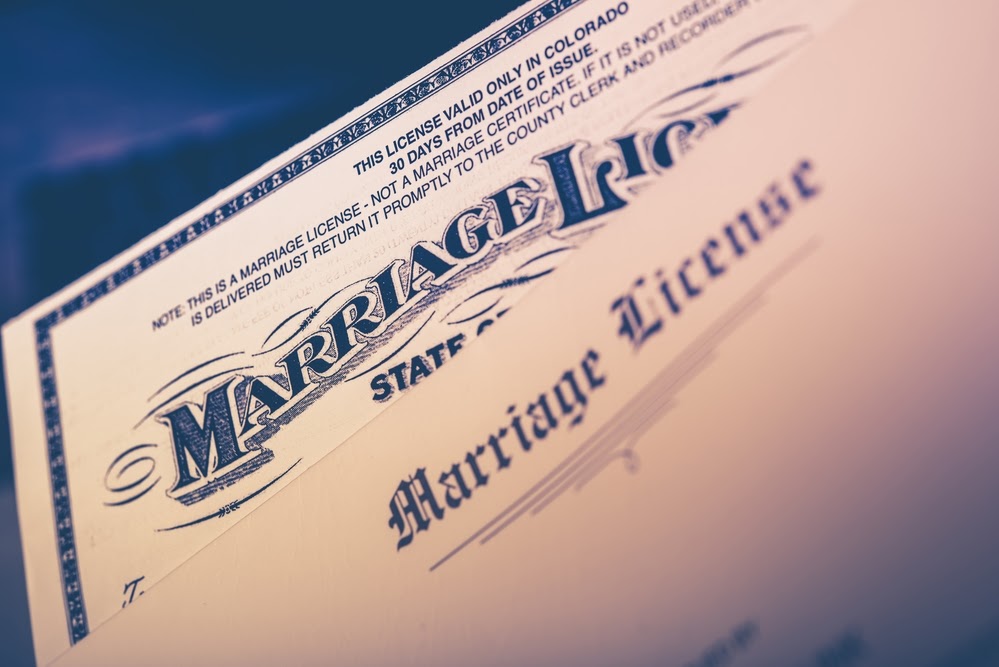
The Clandestine Marriage Act (1753) set out what the state expected in order for a straight marriage to be seen as legal. It required the couple to get married in a church by a minister and issue a formal marriage announcement or to obtain a marriage license.
1836 – Civil Marriages
In 1836 it became legal for straight couples to get civil marriages, which were generally held in Register Offices. This was to accommodate both the religious and nonreligious.
For the religious, it meant that they could get married in a neutral place if for some reason they couldn’t get married in their church. For the nonreligious, it gave them a place void of religion. Prior to this, nonreligious straight couples had to go through a ceremony in a church and undertake practices & traditions that they didn’t believe in.
In 1837 the civil registration of straight marriages started.
1837 – It’s All About Straight Love
Between 1837-1901 it was the Victorian Era. It is said by contemporary historians that the Victorian Era is when marriage became about love, but still only the love between a man and a woman. Gay people weren’t treated well in the Victorian Era in the UK, with laws against sexual acts.
Oscar Wilde – widely regarded as one of the most talented writers of all time; was accused of sodomy by the father of his male lover. He lost the trial and was sent to prison. It was rumoured that he could have escaped to France, but he didn’t. Once he’d served his sentence, he moved to France.
1858 – Divorce
Between the 17th – 19th Centuries there were 300 cases of people wanting to end their marriages. The only way to do this was for an Act of Parliament for each marriage, as there was no accommodation for divorce in marriage law. So in 1858 the government of the time finally made divorce a legal process.
The legal process that meant those who wanted or needed a divorce could have one. But it also signified a shift in the focus of marriage from being a lifetime commitment – for better or worse, to a commitment that could be changed if life’s circumstances changed.
19th Century – Birth Control
By the 19th Century, both the Roman Catholic and Protestant Church’s had promoted procreation as the main reason for straight marriage. But as more children survived childhood, families got bigger and there was a need to use some form of contraception.
In the 1930s the Protestant Church accepted contraception, viewing it as necessary and not a sin or something God would be unhappy with. But the Roman Catholic Church has remained against any form of contraception, as they continue to see the procreation of children as a fundamental aspect of straight marriage.
2005 – Civil Partnerships
In 2005 the first gay civil partnerships took place, a year after The Civil Partnership Act came into law.
It allowed gay people to have legally recognised relationships, which granted them the same rights, protections and benefits of a married straight couple. This included legal rights, such as being one another’s Next of Kin; rights related to their partner’s children and the benefits including those of taxation reductions.
In terms of the actual act, the gay couple could have a civil partnership ceremony that could consist of anything they wanted (within the law). This could be vows, the exchange of rings, their choice in music, etc.
The Civil Partnership Act included a legal process for those gay people who may want to end their civil partnership. It is called ‘dissolution’ and works on similar legal principles to divorce.
This was the first time that the state in the UK legally recognised gay relationships. In the first five, there were 42,778 gay civil partnerships.
Peter Tatchell (Gay Rights Activist), as well as others, criticised The Civil Partnership Act, saying that it wasn’t complete equality as it excluded straight people from being able to be civil partners.
2013 – Gay Marriage
Last year The Marriage (Same Sex Couples) Act has been passed in England and Wales. The first gay marriages are expected in March 2014.
Stonewall said of The Marriage (Same Sex Couples) Act:
‘This is an historic moment for lesbian, gay and bisexual people, their families and their friends. This Act will mean that, for the first time, children growing up to be gay in England and Wales will have full equality in law. We can now proudly claim to be a beacon to the world for gay equality.’
In ancient history, marriage had nothing to do with religion but helped tribes to live and thrive together. Then Christian institutions (both Roman Catholic & Protestant Churches) influenced the definition and meaning of marriage. In the last century, the state has got involved for marriage, allowing marriage to be more flexible and much more inclusive.
Marriage as a concept has evolved to meet the needs and desires of society. Currently, there is some debate as to what role the churches and state play within marriage. It is likely that over the next century the Churches will continue to reside over the spiritual aspect of marriage, whereas the state will continue to be involved with the legal and administrative side of marriage.
Antony Simpson, Writer of this article would like to acknowledge the following sources that supported putting together this article based on fact:
BBC – Ten key moments in the history of marriage
http://www.bbc.co.uk/news/magazine-17351133
Office for National Statistics – Civil Partnerships Five Years On
http://www.ons.gov.uk/ons/rel/…rd/…/ard-pt145-civil-partnerships.pdf
Office for National Statistics – Video Summary: What does the Census tell us about religion in 2011?
http://www.ons.gov.uk/ons/rel/census/2011-census/detailed-characteristics-for-local-authorities-in-england-and-wales/video-summary-religion.html
Peter Tatchell – A setback for equality
http://www.petertatchell.net/lgbt_rights/partnerships/Straight-civil-partnerships-defeated.htm
Stonewall – Equal Marriage to become law – Thank You!
https://www.stonewall.org.uk/what_we_do/parliamentary/5714.asp
Stonewall – Get Hitched! A Guide to Civil Partnership
National Children’s counselling helpline, Childline is receiving around 21 calls a day from children concerned about coming out, acceptance and gender dysphoria and being transgender.
Children’s charity says it’s received a 47 per cent soar in calls from children worried about LGBT matters.
In 2015-16 the charity carried out 7729 counselling sessions with children.
Fear of stigmatisation still a real concern for children between the age of 12 and 15.
Children’s charity NSPCC which runs the national helpline, Childline, has revealed that calls to their counselling service have risen by nearly 50 per cent from children who have concerns about coming out, acceptance, gender dysphoria and being transgender. The charity’s CEO Peter Wanless said, that children as young as 12 fear stigmatisation and anti-LGBT bullying which could leave to serious mental health issues.
He called upon adults such as parents, teachers or relations to encourage young people to “speak out” and to make them feel confident in speaking openly about sexuality or gender identity.
He said,
“Talking about sexuality and gender identity can be daunting for anyone, but especially for children and young people who are still trying to find their place in the world. Fear of being stigmatized or subjected to bullying can force many to bottle up their thoughts and feelings which can leave them feeling isolated, and can trigger serious mental health issues.
“It is vital children and young people feel confident and supported to speak openly about sexuality or gender identity without fear of negative reactions and abuse. Adults, be it a parent, relation, teacher or friend, have a key part to play by helping them navigate these difficult and confusing issues, encouraging them to speak out, if not to them, then to peers or Childline.”
12-15-year-olds were most likely to contact Childline online or over the phone to talk about issues including coming out, self-acceptance and gender dysphoria and transgenderism. In a quarter of counselling sessions about sexuality and gender identity issues, the young person told Childline they had not previously confided in anyone else, many told us they found it difficult to talk openly with peers and family members.
Homophobic bullying was mentioned in almost 450 counselling sessions and can stop young people from speaking out about sexuality or gender identity. In almost a quarter (24%) of counselling sessions about sexuality or gender identity, young people said they suffered from depression, low self-esteem, self-harm or suicidal thoughts.
Dame Esther Rantzen, President of Childline said,
“I have met young people who were desperately unhappy because they couldn’t talk to anyone about issues regarding their sexuality and I am so pleased that they do feel able to talk to Childline and reveal their feelings without being judged or stigmatised. It is not helpful that children use the term ‘gay’ as a common term of playground abuse.
“Furthermore, for years the adult world has created a taboo around these issues which effectively imprisoned young people and in some cases has even led to depression and suicide. Childline is calling upon the adult world to listen sensitively and support young people and protect them from this profound unhappiness and loneliness.”
Any child or young person who wants to talk about sexuality or gender issues can call Childline on 0800 1111 or visit www.childline.org.uk